‘Bulldozer intelligence’: Mahua Moitra calls UP CM Yogi Adityanath a ‘joke’ over Swami Vivekananda’s quote. india news

'Bulldozer intelligence': Mahua Moitra calls UP CM Yogi Adityanath a 'joke' over Swami Vivekananda's quote

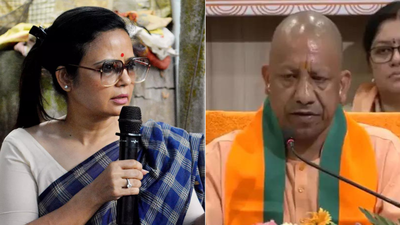
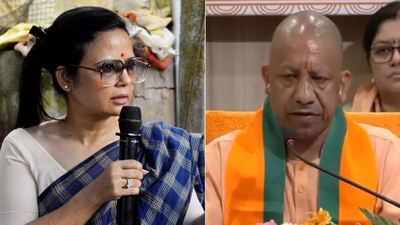
New Delhi: TMC MP Mahua Moitra criticizes UP CM Yogi Adityanath for misrepresenting a famous quote she originally said Subhash Chandra BoseTo Swami Vivekananda At the rally in West Bengal on Monday. “Hello bulldozer buddhi @myyogiadityanath keep your facts straight. Netaji Subhash Bose had said “Give me blood and I will give you freedom”. Swami Vivekananda did not say this. Please go back to drinking Fanta in UP and leave Bengal alone. You are a joke,” the TMC MP said in a post on X.The official handle of TMC shared the video of the UP CM, where he can be heard quoting Swami Vivekananda’s quote ‘Give me blood and I will give you freedom’. The party said that the mistake has been exposed BJP“Shocking ignorance and contempt for the history of Bengal.”PartyHe said, “They cannot tell Swami Vivekananda apart from Netaji Subhash Chandra Bose. They misrepresent quotes. They garland the statue of Swami Vivekananda, calling him Netaji. And yet these same people have the audacity to dream of building ‘Sonar Bangla’. The depth of their ignorance is matched only by their arrogance.”Assembly elections will be held in West Bengal in two phases on April 23 and April 29, with the counting of votes taking place on May 4.There are a total of 294 assembly constituencies in the state and any party needs at least 148 seats to have a majority.

Source link

The Bengal test: Can Mamata hold, or will BJP crack the bastion? | India News

The Bengal test: Can Mamata hold, or will BJP crack the bastion?
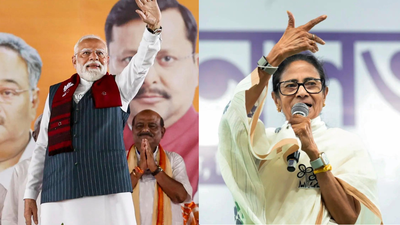
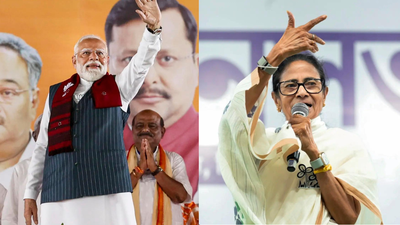
PM Modi and Bengal CM Mamata Banerjee (R)

NEW DELHI: Will West Bengal once again subscribe to Mamata Banerjee’s pitch and emotional appeal built around the formula of ‘maa, mati, manush’? The ever-resilient and energised Bharatiya Janata Party in the state is eyeing her seat of power, hoping to breach the walls of the Bengal bastion after over 15 years of Mamata’s strong rule.The Congress factor, however, despite a decades-long drought, could still prove crucial in shaping the road to Kolkata’s throne.Much like the Congress, the Left, once dominant under towering leader Jyoti Basu in Bengal, is now fighting to regain its lost ground from zero.

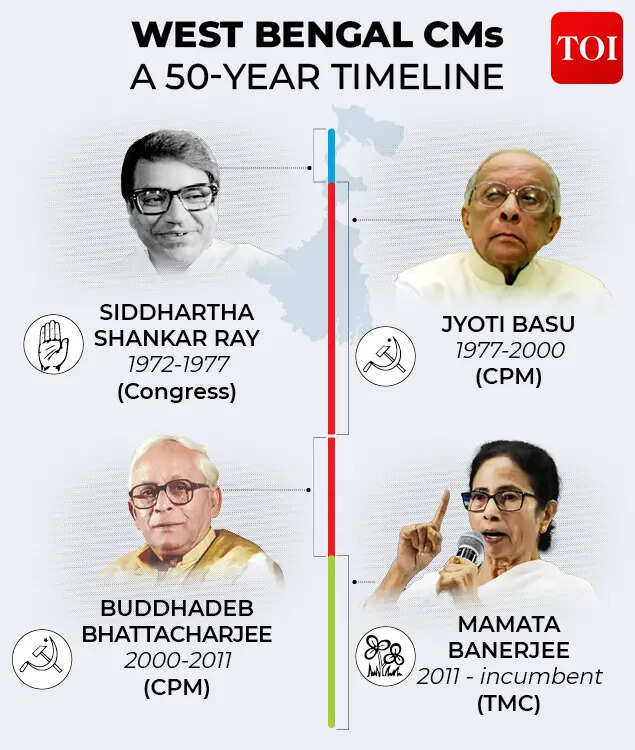
west bengal CMs timeline

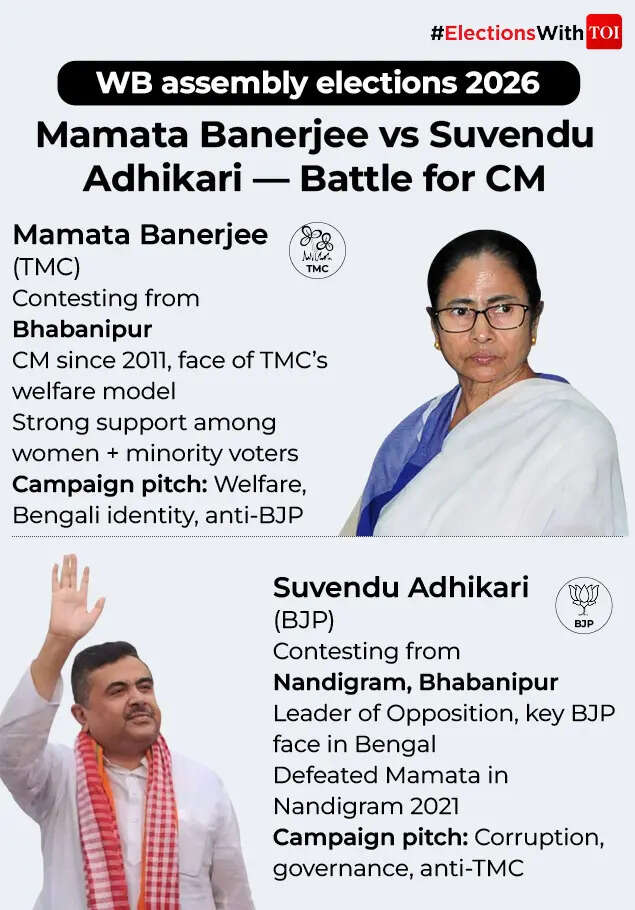
April 23 and April 29 have been set as polling dates, with “Banglar manush” voting in two phases across all 294 seats. Counting and results are scheduled for May 4, alongside elections in three other states and a Union Territory.The buzz around Bengal remains upbeat, as the country’s second-largest Assembly run by a woman chief minister from the Trinamool Congress, has posed a formidable challenge to rivals ever since her dramatic rise in state politics.The battle for the Kolkata throne is largely seen as a bipolar TMC vs BJP contest, with Mamata Banerjee as the lone woman challenger locked in a direct and fiery face-off with the BJP’s top leadership amid Bengal’s election fever.Meanwhile, multiple players, the Congress, the Left, and Humayun Kabir’s AJUP, which is in an electoral marriage with Asaduddin Owaisi’s AIMIM, are vying to shape a third front.The BJP has stepped up its game following its major embarrassment in Parliament, where a united opposition defeated its proposed women’s quota and delimitation bill in Lok Sabha. The saffron party, led by Prime Minister Narendra Modi and home minister Amit Shah, launched a blistering attack on parties such as the Congress, TMC, DMK, and SP.In Bengal, PM Modi held several rallies, seeking to frame Mamata Banerjee’s TMC as an “anti-women” party in a strong bid to woo women voters, urging them not to back Mamata this time, but to hand over the baton of power to a potential debutant BJP.

Faultlines beneath the campaign

This time, the backdrop of elections carries the heavy baggage of riots, violence, social harmony concerns, and law and order questions.

-

The uncomfortable episodes of Sandeshkhali, Murshidabad, RG Kar Medical College and Hospital, constant allegations of facilitating infiltration, and most recently Malda could haunt Mamata’s continuance, and prove bankable assets for rivals like BJP, Congress, Left, and others.

What happened in last elections?

Last time when West Bengal went to assembly polls in 2021, BJP’s ‘Chanakya’ Amit Shah, in his strident voice, set the target of “200 paar” in a 294-seat House in a state with no BJP legacy.The long political history of West Bengal, stretching back to the East India Company era, had little trace of BJP’s presence. Yet, the saffron party, strong at the Centre but historically absent in the state, pushed hard with wide campaigns.

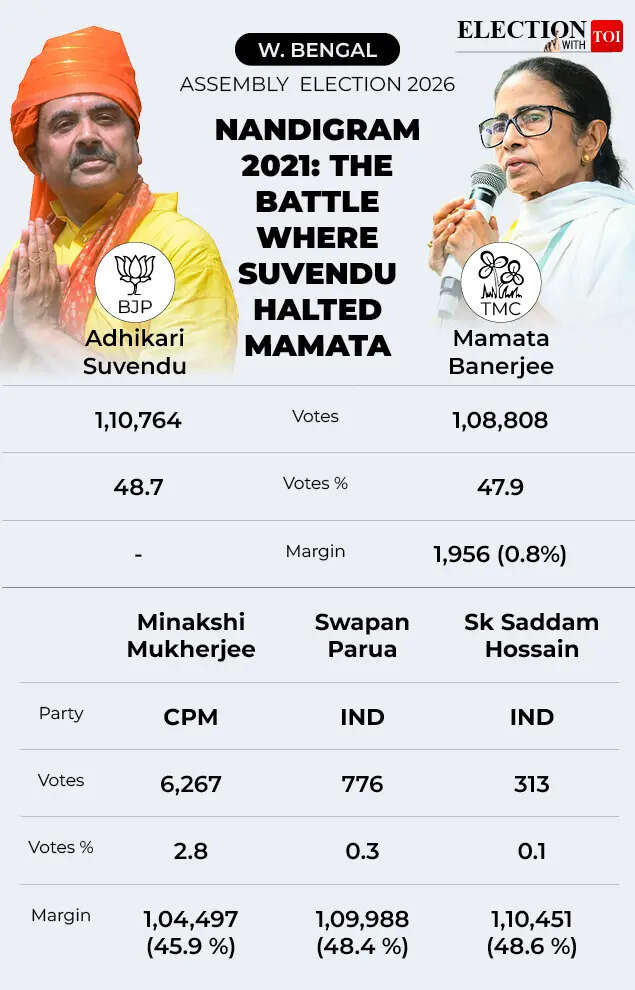
Nandigram 2021- The battle where Suvendu halted Mamata

With key commanders of BJP brigade, PM Narendra Modi and Amit Shah, leading numerous rallies, it managed to crack Mamata’s citadel, winning 77 seats and emerging as a formidable opposition for the first time, overtaking Left and Congress.Mamata’s rise had earlier dismantled the long-standing Left dominance and pushed Congress to the margins. The BJP’s emergence not only made it the prime challenger but also dealt a blow to an already weakened Left-Congress space.

Will this time be a shift?

Is there trouble in paradise for Mamata? Her 2021 victory was followed by a wave of post-poll violence, reinforcing Bengal’s long-standing association with electoral unrest.According to EC data, around 1,300 incidents of violence took place across the state after the 2021 polls. Beyond post-poll unrest, the state has seen episodes like Murshidabad violence, the RG Kar rape case, and Sandeshkhali unrest—among other disturbing chapters in the last five years under Mamata’s rule.These incidents could sway voters and push them towards alternatives in the hope of a different governance trajectory.And a clear, formidable challenger has been steadily building — BJP.

High-stakes contest

A state as politically significant as West Bengal carries sky-high stakes. BJP, in its now familiar expansion mode, continues to deepen its footprint across the country, with Bengal remaining one of its most ambitious targets.For TMC, however, Bengal is its core and only stronghold. Led by Mamata Banerjee, it remains one of the strongest forces countering BJP’s national dominance.Eclipsing TMC in Bengal would be a major strategic win for BJP.The Congress, broadly aligned with the Left Front, is also attempting to regain relevance. However, after recent setbacks like Bihar, where it secured just a fraction of the seats it contested, it remains a distant third in what is largely a bipolar contest.The Left, once dominant, continues to fight for space, keeping alive a long but fading legacy.

BJP’s infiltration pitch on Mamata

BJP has sharpened its attack on Mamata over alleged infiltration, citing Bengal’s long international border with Bangladesh.Amit Shah has accused the Mamata government of enabling “demographic change” in the state.In a January rally ahead of polls, Prime Minister Narendra Modiechoed the same line, calling for “asli poribortan,” stating: “In many areas of Bengal, demography has changed due to infiltration. TMC’s hooliganism and threat politics will stop soon.”The PM added, “Riots are happening in Malda, Murshidabad, and other parts of Bengal due to infiltration.”He also coined the slogan: “Paltano darkar, chai BJP sarkar.”

RG Kar case

The TMC rule suffered yet another blot in 2024 when a junior doctor was brutally raped inside the campus of RG Kar Medical College and Hospital in Kolkata.The incident triggered massive protests, directly questioning the authority of Mamata Banerjee. It raised serious concerns over safety, security, and administrative accountability.BJP, stepping up its attack ahead of elections, fielded the victim’s mother from Panihati, symbolically amplifying the issue against the ruling dispensation.

Sandeshkhali

The same year, Sandeshkhali, a remote riverine area, emerged as a major political flashpoint following allegations of land grab, sexual violence, and intimidation against women, with accusations centred around Sheikh Shahjahan.The issue triggered statewide protests, a fierce political confrontation between TMC and BJP, and multiple investigations.It also brought national attention to governance concerns in the Sundarbans region, highlighting allegations of localised power networks, law enforcement gaps, and the vulnerability of women in remote areas.

Murshidabad violence

Law and order concerns resurfaced in 2025 when violence erupted in Murshidabad during protests against the Waqf Amendment Act, spiralling into widespread clashes and communal unrest.The violence led to deaths, injuries, and displacement, with security forces deployed to restore order.

SWOT analysis: Party-wise

TMC: Welfare strength vs governance pressure

The TMC enters the election as the dominant force, backed by strong grassroots networks and welfare delivery, but it faces mounting anti-incumbency and growing scrutiny over governance. Mamata Banerjee’s long-held influence in state politics is now being challenged by an aggressive BJP campaign, with top leaders such as PM Narendra Modi, Amit Shah, and Rajnath Singh launching direct attacks on her 15-year rule, highlighting issues like rising violence, law and order concerns, migration, infiltration, and alleged demographic change.

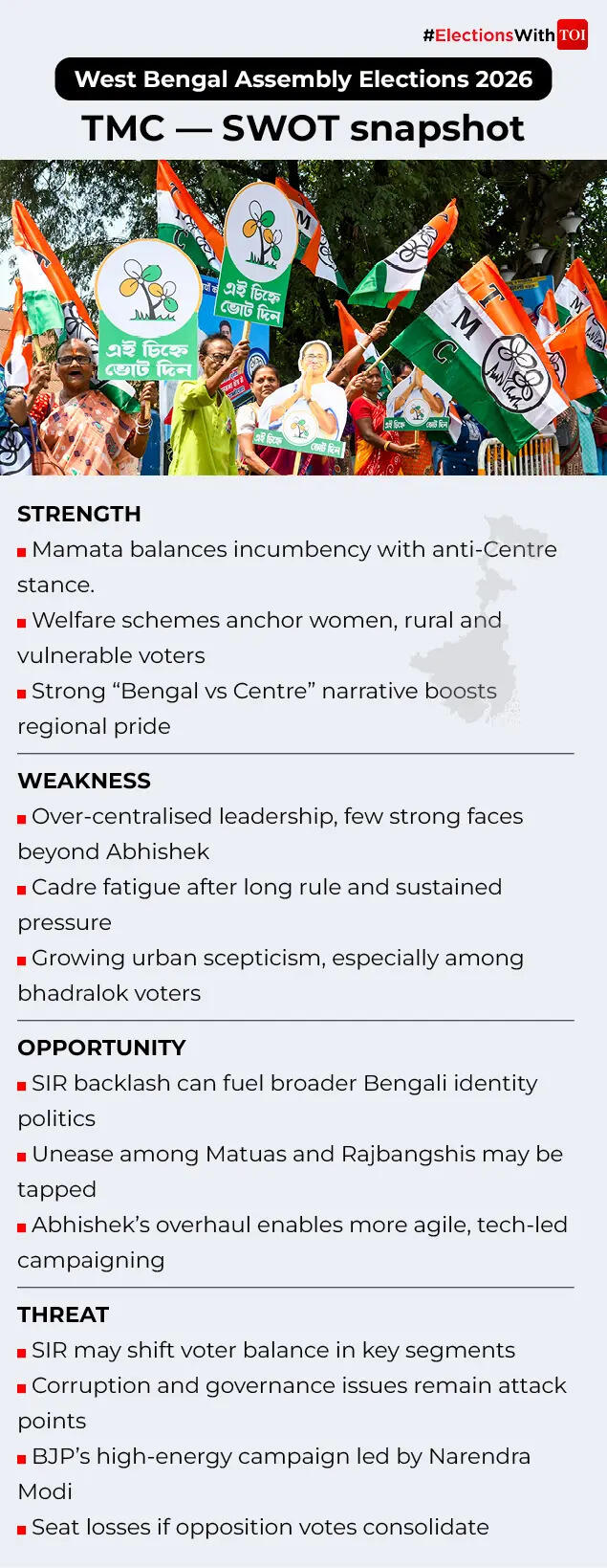
TMC swot

Meanwhile, the Trinamool Congress is also facing criticism from multiple quarters, including INDIA bloc partners like the Congress and the Left, even as it seeks to retain its formidable grip on power in Bengal.

Strengths

  • Mamata continues to enjoy a strong grassroots connect, reinforcing the party’s electoral appeal across regions.
  • The party maintains a robust booth-level organisation that ensures effective mobilisation in both rural and urban areas.
  • Its extensive welfare schemes have created a loyal support base among women and economically weaker sections.
  • Consolidation of minority votes continues to act as a major electoral advantage.

Weaknesses

  • Anti-incumbency sentiment has been building after more than 15 years in power.
  • Repeated allegations of corruption and governance issues have affected the party’s credibility.
  • Internal factionalism and concentration of leadership have created organisational strains.
  • The narrative of political violence and clashes has hurt the party’s public image.

Opportunities

  • A fragmented opposition allows the party to retain its dominant position.
  • The Bengali identity narrative provides a counter to BJP’s perceived outsider image.
  • Welfare beneficiaries offer scope for expanding and consolidating a loyal voter base.
  • Strategic candidate reshuffles can help address local dissatisfaction and anti-incumbency.

Threats

  • The growing organisational and electoral push of BJP poses a significant challenge.
  • Increasing political polarisation risks cutting into established vote banks.
  • Electoral controversies and concerns around voter trust could impact outcomes.
  • Urban centres and border districts are emerging as highly competitive battlegrounds.

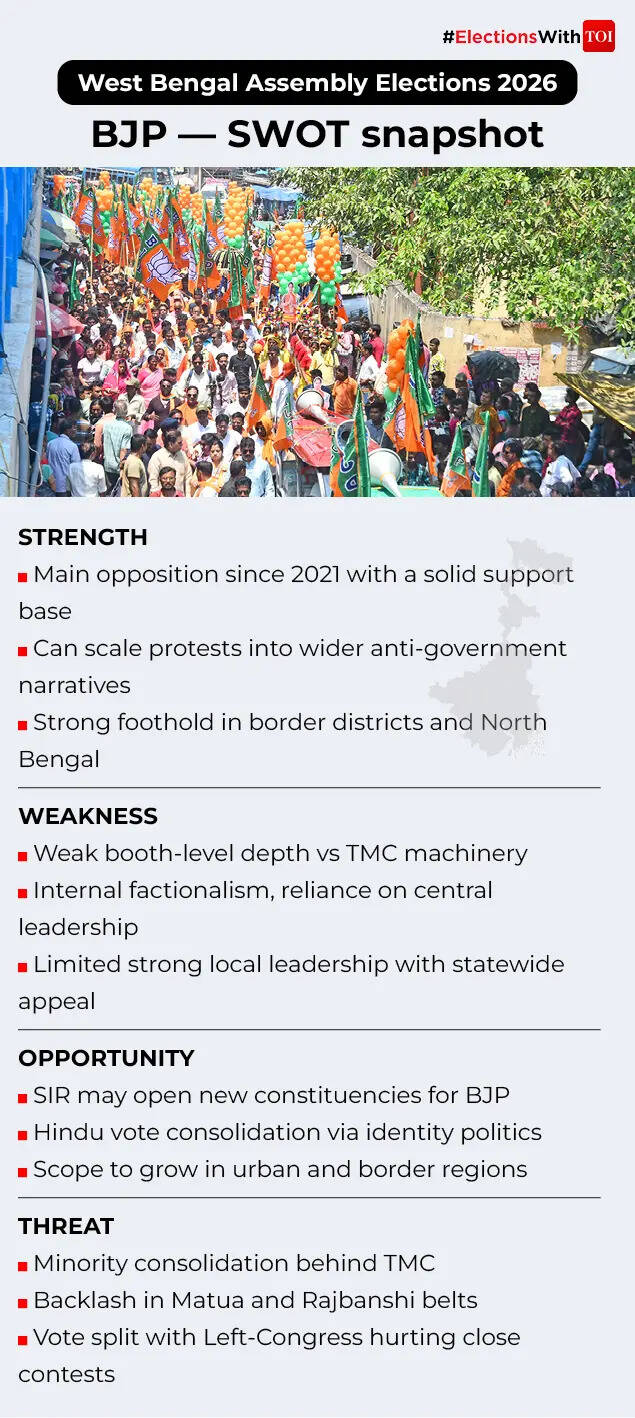
BJP: Momentum vs local gaps

BJP has emerged as the principal challenger, combining national leadership with rapid organisational growth, though local limitations remain.

-

Strengths

  • The leadership of Narendra Modi provides strong national appeal and voter traction.
  • The party has significantly expanded its organisational base since 2019, filling the vacuum left by the Left.
  • Its clear ideological positioning has enabled consolidation of a sizeable section of Hindu voters.
  • A high-intensity campaign machinery ensures strong visibility and outreach during elections.

Weaknesses

  • The absence of a strong and widely accepted chief ministerial face weakens its local positioning.
  • The perception of being an outsider party continues to affect its acceptance among Bengali voters.
  • Internal factionalism, especially between old cadre and new entrants, creates organisational friction.
  • Its grassroots penetration, particularly in rural areas, remains weaker than that of TMC.

Opportunities

  • Anti-incumbency against TMC provides a clear opening for electoral gains.
  • The party has scope to expand its appeal among women and welfare beneficiaries.
  • Consolidation of anti-TMC votes can significantly strengthen its electoral prospects.
  • National issues such as identity and security can be leveraged to mobilise voters.

Threats

  • A backlash driven by Bengali identity politics could limit its growth.
  • TMC’s welfare ecosystem may blunt the impact of anti-incumbency.
  • Excessive polarisation risks alienating swing voters.
  • Congress and Left could divide opposition votes and reduce BJP’s advantage.

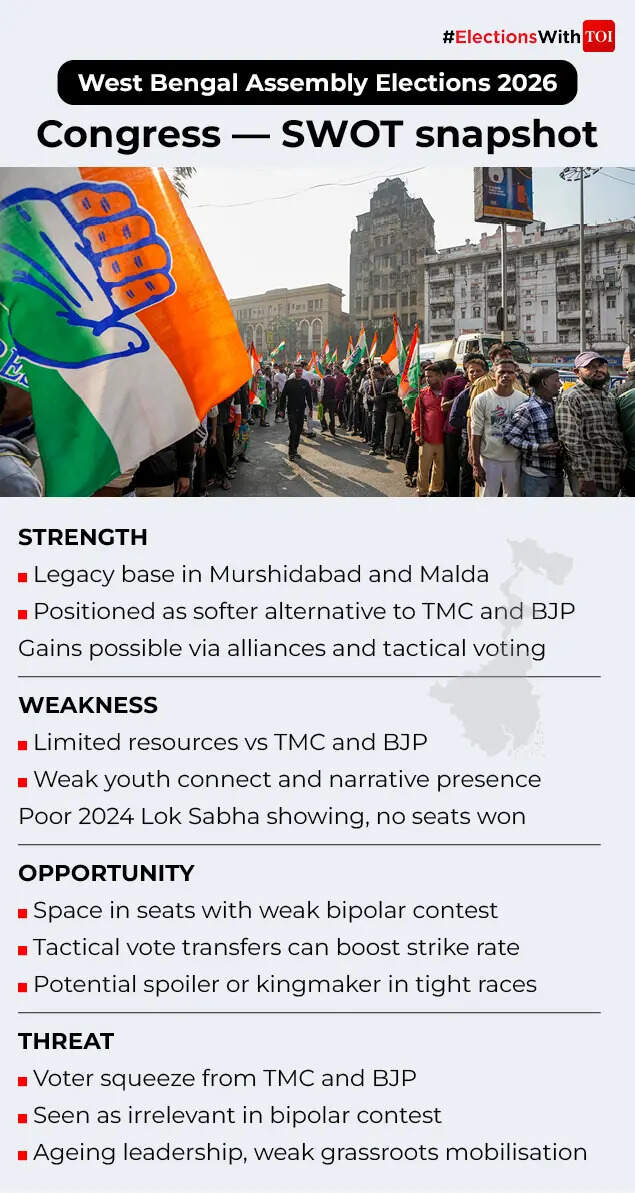
Congress: Relevance vs revival challenge

The Congress, now facing its longest stretch out of power in the state, last formed a government several decades ago, going back to the twentieth century. In the first three decades after independence, the party commanded strong influence in West Bengal, led by legacy figures such as Bidhan Chandra Roy, the state’s first chief minister.However, the party was eventually swept aside by the CPI(M)-led Left Front under the towering leadership of Jyoti Basu, whose dominance continued for decades until it was unseated by Mamata Banerjee in 2011. The rise of Mamata’s TMC further pushed Congress to the margins, and in the last election, the BJP delivered another blow, reducing the party to zero representation in the Assembly.

-

Struggling on multiple fronts, the Congress enters this election with little to lose and everything to gain.

Strengths

  • Congress retains pockets of historical influence in districts like Malda and Murshidabad, which still offer electoral openings.
  • Its legacy brand and national presence continue to provide a base level of voter recognition and credibility.
  • The party maintains some acceptability among minority voters in select constituencies.
  • Its centrist positioning appeals to voters seeking an alternative to both TMC and BJP.

Weaknesses

  • Organisational decline has significantly reduced its electoral competitiveness in recent years.
  • The absence of strong and credible state-level leadership limits its ability to mount an effective challenge.
  • Continuous cadre erosion to TMC and BJP has weakened its grassroots network.
  • It struggles to remain relevant in a largely bipolar political narrative.

Opportunities

  • There is scope to attract voters disillusioned with both TMC and BJP.
  • Targeted campaigning in traditional strongholds could help convert residual support into seats.
  • A softer, moderate political positioning may appeal to voters fatigued by polarisation.
  • Strategic candidate selection could improve performance in closely contested constituencies.

Threats

  • The bipolar contest between TMC and BJP continues to squeeze Congress’s political space.
  • Vote splitting with other opposition players could further damage its prospects.
  • Ongoing cadre migration risks deepening organisational weakness.
  • There is a growing risk of long-term political marginalisation without electoral gains.

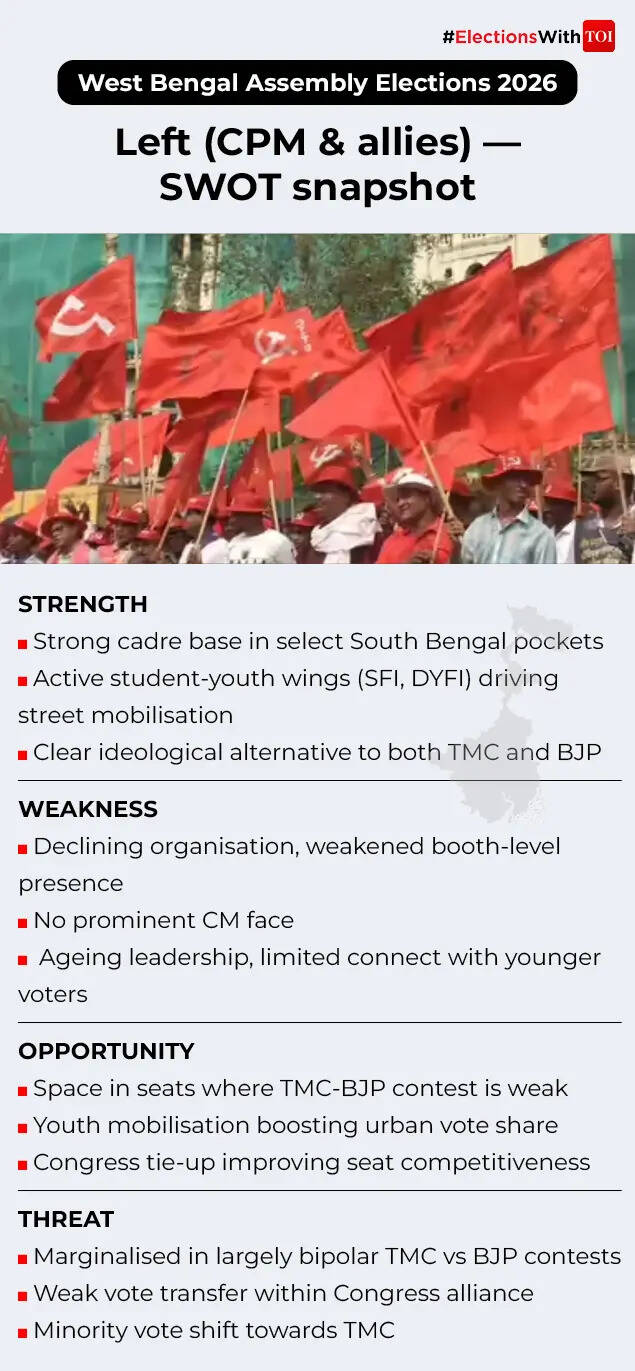
Left: Legacy erosion vs survival fight

The Left ruled West Bengal for decades, with the CPM’s dominance taking shape under the leadership of Jyoti Basu. The Marxist force dismantled the Congress’s long-held grip on power in the state.

-

However, with Mamata Banerjee’s rise to the Kolkata throne, the Left suffered a major setback, gradually losing its electoral footprint. The BJP’s emergence as the second-strongest force in the last elections, behind the incumbent lady, pushed the CPM and its allies further into political insignificance.

Strengths

  • The Left retains a strong ideological base and a committed core cadre despite electoral setbacks.
  • Its historical governance legacy under leaders like Jyoti Basu still resonates with older voter segments.
  • The party maintains organisational discipline in select pockets.
  • It appeals to voters seeking a clear ideological alternative to both TMC and BJP.

Weaknesses

  • The Left has faced a steep electoral decline, with minimal recent success in the state.
  • A shrinking voter base and ageing leadership have limited its mass appeal.
  • Cadre erosion to rival parties has weakened its ground strength.
  • It struggles to connect with younger voters in the current political landscape.

Opportunities

  • There is space to rebuild by mobilising grassroots movements and issue-based politics.
  • Discontent with both TMC and BJP could create openings in select constituencies.
  • Re-engaging youth and student wings could help revive its organisational base.
  • Focused campaigning in traditional bastions may yield incremental gains.

Threats

  • The dominance of TMC and BJP leaves little room for a third force to expand.
  • Continued decline risks pushing the party into political irrelevance.
  • Internal stagnation and lack of reinvention may hinder revival efforts.
  • Fragmentation of opposition votes could further reduce its electoral impact.

Source link

‘More than Rs 100 crore not disclosed’: Madras High Court flags ‘irregularities’ in Vijay’s election affidavit. india news

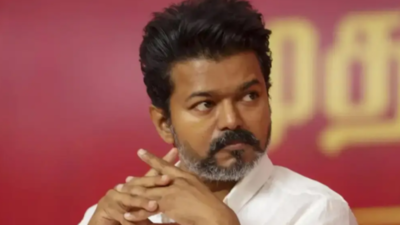
'More than Rs 100 crore not disclosed': Madras High Court flags 'irregularities' in Vijay's election affidavit

New Delhi: A blow to actor-turned-politician Vijay, who is leading TVK’s political debut in the Tamil Nadu elections. Madras High Court On Monday, a petition seeking an income tax probe into his asset declarations was accepted.While hearing the case, the court found irregularities of more than Rs 100 crore in the oral affidavit and issued a notice in the case.“This is an irregularity. More than Rs 100 crore has not been disclosed,” the court orally remarked, according to Live Law.A division bench of Chief Justice SA Dharmadhikari and Justice G Arul Murugan issued notice to Vijay along with the Director General of Income Tax (Investigation). Election Commission of India (ECI), and Returning Officer for Perambur and Tiruchirappalli (East) constituencies.The petitioner has alleged that the disappearance of high value assets is a clear case of suppression of property, which raises serious concerns with regard to beneficial ownership, routing of funds and concealment of material details. It is further argued that such discrepancy between the declarations cannot be attributed to clerical error or guesswork. According to the petition, the only reasonable conclusion is that either one of the affidavits is false or the related corporate filings are false, requiring a thorough investigation in either scenario.If such irregularities are ultimately established, the consequences could be serious. Any proven concealment or false declaration in the election affidavit may invite criminal proceedings under applicable laws, potentially leading to fine or imprisonment, and may result in disqualification from contesting elections under the Representation of the People Act, 1951. Additionally, discrepancies involving undeclared assets can trigger action by income tax authorities, including fines and possible prosecution for tax violations.

Source link

The myth of love jihad that ignores Muslim women. india news

The myth of love jihad that ignores Muslim women

We’re in Prithviraj Market, Delhi, visiting Mirajuddin, the best mutton shop I’ve ever seen. I proceed to place the order. The young man sitting at the counter outside the shop says, “Rajdeep Bhai has not come?” I say he is coming. The owner, wiping his cutting board, asks, “And where is Bhaijaan?” I reply, I am coming. Then he comes and says greetings to everyone. They all welcome him and begin animated conversations. This process is repeated outside the store with other employees and known patrons. He goes there often and everyone knows him. This is the same man who didn’t know how to say ‘Salaam’ when we got married 14 years ago. He is now “closer, closer Muslim”, as our Mirajuddin friend praises him.The ‘Love Jihad’ propaganda that keeps appearing in news cycles says that Hindu women are lured away by scheming Muslim men. They forget Muslim women. Maybe they are also doing love jihad? I can give many examples where Muslim women have inspired their husbands and families towards Islamic traditions while adopting Hindu customs as part of shared family life.My Afghan friend is married to a Sharma from Delhi. They met in Berlin and returned to India. Together they run an Afghan Center at the university, which provides a space for the Afghan people to showcase their talents, food and culture. When his son’s school did not grant holiday on Eid, the father told the principal, “My son is half Muslim. He will stay at home and celebrate the festival with the family.”An Indonesian friend is married to a Tamil Brahmin colleague. She fasts the entire month of Ramzan and people come to her house for Iftar. She once went home with her 13-year-old son during the fasting month. There on the first morning he realized that everyone was up for Sehri and he started his fast early in the morning. No one woke him up because they thought he was not used to it. He became upset and asked, “Why? Am I not part of this family?” He did not eat or drink anything and broke his fast in the evening along with everyone else. After this, he fasted during his stay in Jakarta. Another notable friend, who married his Assamese Muslim girlfriend, named their daughter Inara, which means shine in Arabic. She bears her father’s as well as her mother’s surname and is called ‘Inara Syed Mahapatra’. Finally, my beautiful colleague Nikhat recently had her Nikah and destination wedding in Türkiye. Her Greek partner has learned namaz, kalma and suras to win the hearts of his family in Lucknow.The patriarchal mindset believes that the man’s side is the winning side and that women will lose their identity, religion and customs in interfaith marriages. But when I see interfaith couples around me, this is not true. Women shape their families in decisive ways and have created a blend of Indo-Islamic-Hindu home cultures.They did this by accommodating the belief systems of both their religions. My in-laws do puja for housewarming, put lemon on the car and look for auspicious dates for the journey. To me, this is superstition; This is normal for them. Yet both parties accept each other, enjoying family gatherings and children’s play.My Indonesian friend makes sambar and payasam for her vegetarian husband. The Ganesh idol which his mother-in-law used to worship in Tamil Nadu is now in his house. My Afghani friend along with her husband abstains from meat on Hindu festivals and participates in all family rituals. She also celebrates Eid with all of them. The colleague from Lucknow has merged with her Greek family. She visits them every summer and appreciates their food, customs and culture. As far as baby Inara is concerned, she is going to learn Karl Marx and Foucault before she even hears about Hinduism or Islam.Love never gets old. Every generation sees it afresh and lives it openly. At a time of worldwide war, this is the only solace. Some scared groups may try to harm our lifestyle by calling it love jihad etc. But we are not the aberration that society tolerates, nor are we the exotic, strange species that others find unique. We are the dream of the India that our ancestors saw on the midnight of August 15, 1947. We are the family that Mahatma Phule envisioned in his poem “Christ, Mohammed, Mang, Brahmnaasi, Dharave Potasi, Bandhu Pari” (Translation: Whether they are followers of Jesus Christ or Mohammed, or belong to the Mang or Brahmin community – one should embrace them all with one’s heart like a brother.) As humanity expands, our tribe will grow.Samina Dalwai is a law professor. The name of her upcoming book is ‘Love Jihad: A Feminist Retelling’.

Source link

South Korea working with India to secure Hormuz, security of key maritime routes essential for survival of both nations: President Lee | India News

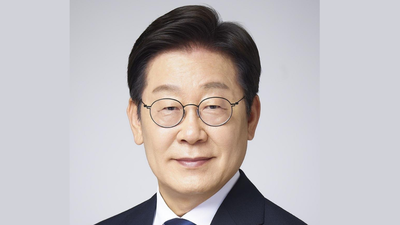
South Korea working with India to secure Hormuz, security of key maritime routes essential for survival of both nations: President Lee
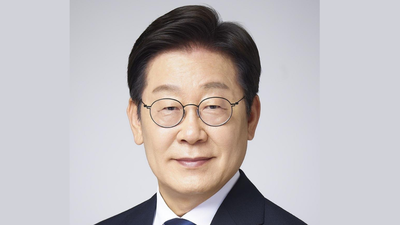
South Korean President Lee Jae Myung

Make in India, Together with Korea: Korean president backs Atmanirbhar BharatAs he arrived in India for a State visit, South Korean President Lee Jae Myung said Koreas and India must work closely as emerging global leaders amid heightened geopolitical uncertainty, and that the 2 countries can give a new direction to multilateralism when it’s faced with mounting challenges. In an exclusive interview to TOI, Lee said while Korea exemplified remarkable economic growth under the multilateral trading system, India stood well placed to shape new global rules with its economic scale and dynamism. On China’s dominance in critical minerals, Lee said that reducing excessive dependence on any single country had become a matter of survival, directly linked to the economic security of both India and South Korea.Speaking on the Hormuz crisis, the president said that ensuring the security of critical maritime routes is essential for the survival of both nations and Korea will work together to ensure freedom of navigation in the key energy waterway. With focus now on defence industrial collaboration, the president said Seoul will fully back India’s “independent production” of defence equipment, while exploring joint technology development and coproduction. In an exclusive interview to Sachin Parashar and Alpyu Singh, South Korean President Lee Jae Myung shared his vision for the special strategic partnership with India in key areas like trade, technology, critical minerals, defence and ship-building in which Seoul is a global leader.

Excerpts:

This is your first visit to India as president. How do you hope to further strengthen the special strategic partnership with India in the current circumstances, especially in key areas like trade, and critical and emerging technology? India – the world’s most populous country, the fourth-largest economy, and a leading voice of the Global South – is an ideal partner for the Republic of Korea. Our partnership rests not only on highly complementary economies, but also on shared core values of democracy and a market economy. At a time of heightened geopolitical uncertainty and mounting challenges to multilateralism, it is more imperative than ever that Korea and India work closely together as emerging global leaders. Building on our Special Strategic Partnership, we will deepen comprehensive ties of cooperation that drives mutual growth and innovation, while expanding our strategic horizons. A key priority is accelerating negotiations to upgrade the Comprehensive Economic Partnership Agreement (CEPA). Beyond traditional sectors such as electronics and automobiles, we will broaden cooperation into shipbuilding, finance, and the defense industry, bringing to life the vision of “Make in India, Together with Korea.” We will also step up collaboration in AI and digital technologies. Korea’s, world-class AI infrastructure and India’s vast pool of AI talent make us natural partners. Together, we will actively identify projects that generate meaningful synergy. At the same time, we will further expand cultural and people-to-people exchanges, the enduring foundation of our relationship. By bringing together India’s rich cultural assets, exemplified by Bollywood, and Korea’s globally influential K-Culture, we aim to create even greater synergy. Since my first meeting with PM Modi in Canada in June last year, I have felt a genuine warmth and familiarity, as if reconnecting with an old friend. I believe in our shared commitment to people-centered politics, holding on to hope even in times of adversity. It’s therefore especially meaningful, and a great pleasure, for me to visit India and meet PM Modi again. I am confident that this visit will mark an important milestone in further strengthening the friendship and trust between our two nations. Like India, South Korea is heavily dependent on safe passage of ships through the Strait of Hormuz for its energy needs. How can both countries work together to aid efforts to keep the key energy route open and minimise the impact of the West Asia crisis on global economy and energy security, as well as to de-risk supply chains globally? Both the Republic of Korea and India depend on the Middle East for a significant share of their energy supplies, including crude oil and natural gas. Accordingly, ensuring the security of critical maritime routes is essential to the safety of our peoples and the very survival of our nations.Korea will maintain close communication with India to ensure that all vessels can navigate the Strait of Hormuz safely and freely. We will also continue to work together in relevant international forums to uphold this shared commitment. Another task that our two countries must undertake together is diversifying energy supply chains. Amid growing uncertainties in the global economy, I am confident that forward-looking and strategic cooperation between Korea and India can substantially further our shared national interests.The strategic defence partnership has been strengthened by the co-production of K9 Vajra howitzers. How do you propose to take this partnership forward, especially in terms of technology-sharing that could boost India’s Atmanirbhar Bharat initiative? The Republic of Korea fully supports India’s Atmanirbhar Bharat initiative. It is a plan of significant industrial and economic potential, and I am confident that it will certainly be realized thanks to PM Modi’s steadfast commitment. However, self-reliance is difficult to achieve entirely on one’s own. Korea’s rapid industrial development and economic growth were made possible through considerable support and assistance from partner countries.In this regard, Korea seeks to serve as India’s key partner in advancing the Atmanirbhar Bharat initiative. In particular, the K9 Vajra howitzer project stands as an exemplary case of our bilateral defense and defense industry cooperation. The contract for the second phase of the K9 Vajra project, signed in April last year, provides for more than 60 percent of the manufacturing process to be carried out in India. It is currently being implemented smoothly, as planned. Building on such examples of cooperation, Korea will continue to provide full support for India’s independent production and operation of defense equipment. Moreover, we will discuss various avenues of cooperation in joint technology development and coproduction as well as operations and maintenance, so that both countries’ defense industry ecosystems can advance together. Both countries are exploring opportunities for cooperation in critical energy transition minerals – amid global efforts for resource diversification to avoid reliance on China – and also in areas like the maritime sector and shipbuilding in which South Korea is a global leader. Is there any roadmap that you have in mind for a more result-oriented partnership in these areas? With global supply chains undergoing reconfiguration, reducing excessive dependence on any single country has become a matter of survival, directly linked to the economic security of both nations. In particular, securing critical minerals, which are essential for cutting-edge industries, and stabilizing the maritime logistics networks for those resources will be key factors in national competitiveness going forward.India possesses critical minerals, while Korea has the capabilities to manufacture them into rechargeable batteries, electric vehicles and other advanced products. This makes our two countries ideal partners for generating synergy. By moving beyond the traditional model of importing raw material and combining Korea’s technology with India’s mining and refining industries, we can work together to establish stable critical-mineral supply chains. There is also boundless potential for bilateral cooperation in the shipping and shipbuilding sectors. For India to emerge as a global logistics and manufacturing hub, securing shipbuilding and maritime transport capabilities is essential.With world-class expertise in shipbuilding and shipping, as well as extensive experience in overseas port projects, Korea is well positioned to become India’s foremost partner. I understand that relevant MOUs are expected to be signed during the upcoming visit. I look forward to the day when vessels jointly built by our two countries sail across the world’s oceans. Now that there are question marks about the US commitment to the Indo-Pacific under President Trump – and with Washington’s focus shifting also to West Asia – how do you propose to work with like-minded countries to ensure a free and open Indo-Pacific? The world today faces complex and multi-layered crises. We are in a time of profound upheaval, as rising protectionism and the restructuring of global supply chains unsettle the foundation of the existing international order.The war in the Middle East has underscored the strategic reality that the Indian and Pacific Oceans form a single, interconnected maritime space – one whose stability no country can secure alone. Despite its intense dynamism and vast potential, the Indo-Pacific, has long remained more a beneficiary than a shaper of the international order, constrained by geopolitical tensions and the lack of institutional frameworks,Today, however, regional countries, including Korea, have the capacity to lead in strengthening multilateralism and advancing a rules-based order. At this critical juncture, Korea will work closely with regional partners, playing a bridging role to foster deeper cooperation and help anchor a more resilient regional order.As strategic coordination and unity across the Indo-Pacific have become ever more vital, my government will continue to expand cooperation with regional partners, including India. In this spirit, we participated this year in the International Fleet Review and the multilateral exercise MILAN hosted by India. We intend to join the India-led Indo-Pacific Oceans Initiative. Peace and prosperity are essential to realizing a free and open Indo-Pacific. To that end, we will deepen cooperation with key partners, including India, in strategic sectors such as shipbuilding, finance, AI, and the defense industry.Both India and South Korea have been at the receiving end of the US tariff policy. While Seoul has signed a trade deal under which it will invest $350 billion in US industries, India’s efforts for a bilateral trade agreement with Washington is still a work in progress. What’s the advice you can offer to New Delhi on managing the trade relationship with the US? Also, how can India and South Korea help in keeping the global trade framework multilateral, rules-based and inclusive?Korea and the US were able to reach a successful trade agreement last year because both sides pursued creative, pragmatic solutions.A key elementof the agreement – “strategic investment in the United States” –was based on a shared understanding that Korea’s manufacturing sector can contribute to the revitalization of U.S. manufacturing. This enabled both countries to address pending tariff issues in an amicable manner, ultimately laying the groundwork for advancing industrial and supply chain cooperation.India possesses vast market potential as well as the geopolitical advantage of being a main pillar of the Indo-Pacific region. Accordingly, I believe that, rather than simply weighing the costs and benefits of opening the market, a more effective strategy would be highlighting India’s pivotal role in global trade. There is no denying that, even as it faces significant challenges today, the multilateral trading system has long stood as a central pillar of the international order, driving shared growth over the past several decades. Going forward, one of our most important tasks will be to safeguard the inclusivity of this system by establishing new rules that reflect the realities of a changing world. In this respect, India and Korea can play especially significant roles. Korea stands as a prime example of a country that achieved remarkable economic growth under the multilateral trading system, while India – with its vast economic scale and dynamism – is well positioned to help shape the new rules. Together, our two countries can take multilateralism in a new direction.The Korean Wave has a growing fan base in India. How can both countries leverage this cultural connect to deepen people-to-people ties through tourism, culture, cinema, music, education and collaborations between more creative industries? Recently, Made in Korea, a Korea–India coproduction set in Korea, topped Netflix India’s weekly film chart, gaining enormous popularity. Beyond just being a successful film, Made in Koreastands as a prime example of our two nations’boundless potential for cultural exchanges.India is emerging as a new hub of the global cultural industry, driven by its young and dynamic demographic structure, abundant creativity and advanced technological capabilities. Last year, HYBE – the agency behind BTS – established a subsidiary in Mumbai, a clear testament to the growing importance of the Indian market for Korea’s cultural industry.Our cultural exchange must now evolve into an era of co-creation. With both countries possessingcompelling cultural assets, technological expertise and outstanding talent, opportunities for cooperation – from content coproductionto talent development –are virtually boundless.There is also considerable potential in cultural heritage. Cooperation between National Museum of Korea and India’s planned Yuge Yugeen Bharat National Museum – envisioned as the largest of its kind in the world – could create a new model for sharing our heritage with future generations.Korea–India cultural cooperation and co-creation are ultimately about building new value together while respecting each other’s stories. At its core are people. Through deeper and broader collaboration across culture, tourism, education and the creative industries, I aim to bring our peoples closertogetherand build a shared future of growth.There is a rising interest among Indians in learning the Korean language. What steps is South Korea taking to support language learning and youth engagement to strengthen long-term cultural connections?Recently, interest in the Koreanlanguage and culture has been growing rapidly in India. A survey conducted last year revealed that approximately 83.8 percent of Indians expressed favorable views toward Korean cultural content. Thisdeepening interest and affection will form the strongest possible foundation for exchanges and cooperation between our two nations. Of great importance is the virtuous cycle that occurswhen learning language enhances cultural understanding, and cultural exchanges go on toincrease interest in the language. Currently, over 5,000 Indian students are studying Korean at the seven Sejong Institutes run by the Korean government and in Korean language classes at 43 primary and secondary schools across India. The Korean government is assisting with dispatchingteachers and distributing textbooks to enable more Indian citizens to learn Korean. Going forward, we plan to helpprovide Indians with Korean language education training. Moreover, we will implement more cultural experience programs at the Sejong Institutes to create synergy between cultural exchanges and language learning. Mutual interest between our younger generations, which stems from an understanding of language and culture, will further enrich our countries’futures. Both countries have strong capabilities in AI, semiconductors and emerging technologies. Are there plans for joint innovation hubs or co-development initiatives to strengthen global competitiveness? What do you see as the biggest challenges hindering deeper India–Korea cooperation today and what structural reforms are needed to boost investor confidence and sustain long-term engagement? We are living in an era of “global technological hegemony,” where national power hinges on cutting-edge technologies like artificial intelligence and semiconductors. In this time of crisis, I am confident that both our countries’national interests will be greatly served if Korea’s world-class, state-of-the-art manufacturing capabilities are combinedwith India’s software and talented individuals. Mahatma Gandhi, the great soul of India, once identified“science without humanity” asone of the “seven social sins.” His words, which resonate today inthe notion of “AI without humanity,” speak to the depth of India’s potential in AI and other advanced technological fields. On the occasion of the upcoming visit, a Korea–India Industrial Cooperation Committee is set to be newly established between Korea’s Ministry of Trade, Industry and Resources and India’s Ministry of Commerce and Industry to discuss ways to enhance bilateral cooperation. In addition, an MOU will be signed between Korea’s Ministry of Science and ICT and India’s Ministry of Electronics and Information Technology to promote policy exchanges and joint research and development in the digital domain. I hope these initiatives will serve as a catalyst for broadening the scope of cooperation between our two countries. There are still severaltasks aheadto deliver tangible results. Most of all, it is essential to streamline complex administrative procedures and regulations centered onthe domestic market to create a free, predictable and transparent business environment. Such structural reforms will help our two countries earn trust from global investors and capital providersand emerge as true technology hubs.

Source link

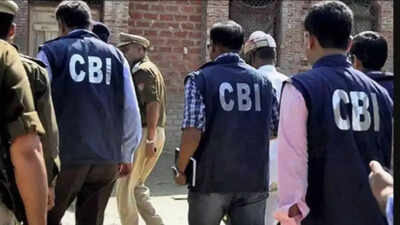
‘Rs 37 lakh cash, gold, silver coins seized’: CBI arrests DGCA Deputy Director General in bribery case. india news

'Rs 37 lakh cash, gold, silver coins seized': CBI arrests DGCA Deputy Director General in bribery case

New Delhi: The Central Bureau of Investigation on Sunday arrested a senior DGCA official and a representative of a private company in a bribery case worth Rs 2.5 lakh.According to an official statement, the officer was the Deputy Director General in the Directorate of Airworthiness at the Directorate General of Civil Aviation headquarters in New Delhi.“The CBI has registered an instant case on 18.04.2026 against an officer of the Directorate General of Civil Aviation (DGCA) as well as a representative of a private company based in New Delhi alleging that the accused public servant of the DGCA had demanded undue favors from private persons in return for clearance of applications and issuance of permissions pending with the DGCA,” the investigating agency said.Later, the central agency also searched premises belonging to the accused and other private persons at four locations.

voting

According to you, what is the main way to reduce corruption in government departments?

“Consequently, searches were conducted by CBI at the premises of the accused public servant and other private persons at 04 locations in Delhi, resulting in seizure of cash, gold and silver coins and several digital devices worth Rs 37 lakh,” the statement said.According to the statement, the searches resulted in the seizure of Rs 37 lakh in cash, gold and silver coins and several digital devices.

Source link

‘Not routine action’: Congress says Tamil Nadu chief kept in ‘detention’ on pretext of IT ‘search’ before election rally india news

'Not routine action': Congress says Tamil Nadu chief kept in 'detention' on pretext of IT 'search' before election rally

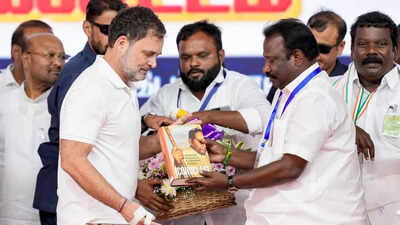
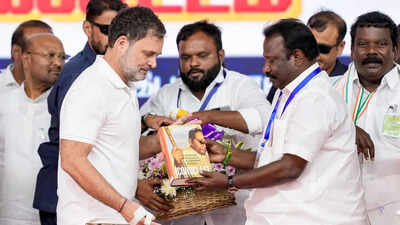
New Delhi: The Congress on Monday said its Tamil Nadu president K Selvaperunthagai was “unlawfully” taken hostage. Income Tax DepartmentAccused the central agency of preventing him from pursuing his political duties Rahul GandhiCampaign in electoral state.In a social media post on Twitter, Congress termed the searches as a “gross misuse” of central agencies and claimed that Bharatiya Janata Party She is intimidating and stopping opposition leaders before voting.“As soon as Leader of Opposition Rahul Gandhi reached Tamil Nadu for election campaign, a shocking incident came to light. Tamil Nadu PCC President K Selvaperunthagai ji was illegally detained in Sriperumbudur by the Income Tax Department in the pretext of ‘search’, thereby preventing him from performing his political duties,” the party said.“This is not routine action. This is a flagrant misuse of central agencies by the BJP to intimidate and obstruct opposition leaders at a crucial moment. Such actions strike at the heart of democracy. Silencing dissent and targeting political opponents through the state machinery is unacceptable. India’s democracy cannot be reduced to intimidation and coercion. The people are watching, and they will respond.”The Income Tax Department is raiding the residence of the Congress leader following complaints alleging that cash meant to be distributed to voters was kept hidden there.Selvaperunthagai also hit out at the BJP and said the action was a clear and deliberate attempt to obstruct democratic functioning and weaken the activities of the opposition.“As soon as Rahul Gandhi ji arrived in Tamil Nadu today for an important election campaign, the Income Tax Department, along with Hindi-speaking officials, under the pretext of ‘searching’, illegally confined me within the Sriperumbudur Assembly constituency, effectively preventing me from discharging my political duties and connecting with the people. This was a deliberate action, taken at a politically sensitive moment,” he said in a social media post on Twitter.He said, “The timing of this intervention exposes its true intent – ​​not enforcement, but intimidation. It reflects a disturbing pattern of using central agencies as an instrument of political pressure to stifle dissent, restrict political participation and create a climate of fear among opposition leaders and activists.”Opposition leader and Congress MP Rahul Gandhi will campaign in the southern districts of Kanniyakumari, Thoothukudi and Tirunelveli on Monday, which will be his second visit to Tamil Nadu ahead of the assembly elections.The high-voltage campaign is scheduled to end at 5 pm on April 21, marking the end of the public campaign. The leaders have outlined their final campaign programs in key constituencies.

Source link

Energy drinks linked to increasing liver damage among young Indians, doctors warn. india news

Doctors warn energy drinks are linked to increased liver damage in young Indians

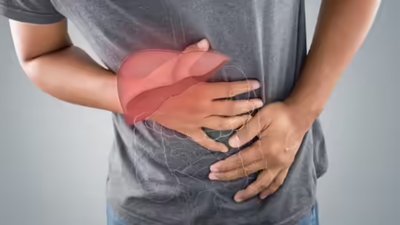
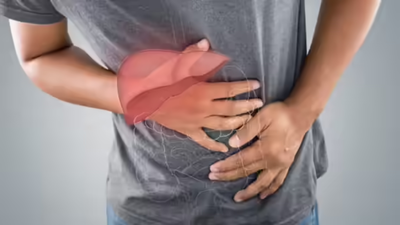
New Delhi: Energy drinks, marketed as instant vitality in cans, are the newest craze among young India. But behind every fizzy sip quietly lurks liver damage. On World Liver Day, liver experts are reporting a rise in cases linked to excessive consumption, raising concerns about the rising health risks among the country’s youth.Doctors cite clinical experience and global evidence. a case in bmj case report Excessive energy drink consumption has been linked to acute hepatitis due to high doses of niacin (vitamin B3), which is known to be hepatotoxic at higher doses. Experts say the mix of sugar, caffeine and additives promote fat buildup, oxidative stress and inflammation in liver cells, increasing the risk of long-term damage, including non-alcoholic fatty liver disease (NAFLD).“Over the last few years, we have seen a significant increase in young patients with liver dysfunction. Energy drinks, alcohol and high-sugar drinks are the main contributors,” said Dr Abhideep Choudhary, President, Liver Transplantation Society of India (LTSI). “Often viewed as harmless, these drinks place extreme stress on the liver. When mixed with alcohol or consumed excessively, they accelerate injury. If the damage progresses, a transplant may become the only life-saving option.”India is witnessing a rise in NAFLD, affecting an estimated 25-30% of the urban population, including young adults. Overconsumption of sugary beverages is a major cause, and doctors say energy drinks are worsening the trend.“We are seeing a demographic change, with patients in their 20s and 30s coming in first,” said Dr Nirav Goyal, president-elect of LTSI and head of liver transplant, hepatobiliary and pancreatic surgery, Indraprastha Apollo Hospital, New Delhi. “Alcohol remains a major factor, but energy drinks and sugary drinks are increasing this burden.”Experts also warn against mixing energy drinks with alcohol, as caffeine can mask its sedative effects, leading to overdosage and toxicity.“Lifestyle choices are directly impacting liver health at an early age,” said Dr Charles Pankel, Secretary, LTSI and Senior Consultant, Hepatology, Aster Medcity, Kochi. “Continued exposure leads to everything from fatty liver to inflammation, fibrosis, and even cirrhosis. Early-stage disease is often reversible.”“Frequent consumption of energy drinks is an under-recognized risk,” said Dr Naveen Ganju, Governing Council – Adult Hepatology, LTSI and Senior Consultant, Hepatology and Integrated Liver Care, Aster RV Hospital, Bengaluru.Experts have called for stronger awareness and lifestyle changes, stressing that cutting down on energy drinks, alcohol and sugary beverages is the key to prevention.

Source link

Ignore BP at 30, pay at 50: Study warns. india news

Ignore BP at 30, pay at 50: Study warns

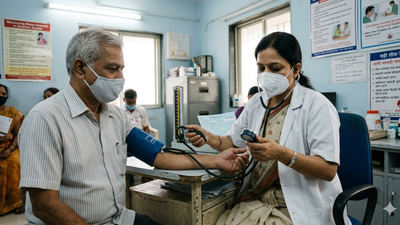
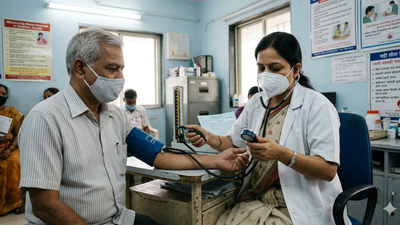
New Delhi: Even a minor spike in blood pressure during your 30s can increase your risk of heart disease decades later, a shocking new study warns.Researchers tracked nearly 6,000 adults for more than 20 years and found that each 10 mm Hg increase in systolic blood pressure was associated with about a 20-22% higher risk of heart disease. Even levels considered “normal” were associated with increased risk.published in American Journal of HypertensionThe findings suggest that mildly increased blood pressure is not as harmless as is often believed. The risk was similar in men and women, a pattern often overlooked in young adults, experts say.Doctors say the findings reinforce that blood pressure is not a fixed cutoff but a persistent risk factor. “The idea that the risk starts only at 140/90 is outdated – vascular damage starts much earlier,” said Dr Mohit Gupta, a cardiologist at the Govind Ballabh Pant Institute of Postgraduate Medical Education and Research. At the same time, he cautioned against overinterpretation. He added, “A relative increase of 20% over decades may still translate into a lower absolute risk for a healthy 30-year-old. These findings should not cause panic or warrant overtreatment.”Neurologist and preventive health advocate Dr. Sudhir Kumar said that even a slight increase in blood pressure in young adults is not benign. “This risk starts earlier than we thought and is similar in men and women, suggesting that high blood pressure may reduce the protective effects of estrogen. Control should begin early, not in middle age – through exercise, a healthy diet, good sleep, and regular monitoring,” he said.The study also points to the role of diastolic blood pressure in young adults, which often rises before systolic levels. However, experts emphasize that this does not require immediate medication. “There is only limited evidence to support aggressive drug treatment in young individuals with elevated diastolic BP,” Gupta said.He emphasized that the takeaway is early prevention. “The message is not to treat quickly with drugs, but to intervene first with lifestyle.”With high blood pressure on the rise among young Indians due to sedentary habits, excess salt intake, stress and poor sleep, experts say timely action can make a significant difference.Doctors say low blood pressure in your 30s isn’t harmless — it could be an early warning sign of future heart danger.

Source link

‘Bengal will remember’: TMC attacks PM Modi over ‘Jhalmuri break’, claims Jharkhand CM had to return | india news

'Bengal will remember': TMC attacks PM Modi over 'Jhalmuri break', claims Jharkhand CM had to return

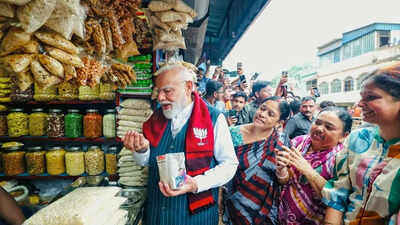
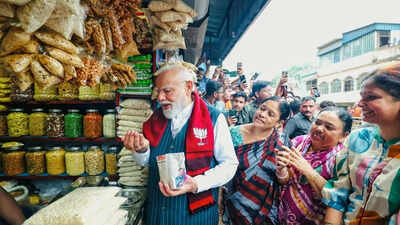
New Delhi: The Trinamool Congress on Monday criticized Prime Minister Narendra Modi over breaking Jhalmuri in West Bengal’s Jhargram and claimed that his decision to extend his stay led to Jharkhand Chief Minister Hemant Soren returning to Ranchi without completing his scheduled campaign for Mamata Banerjee.In a social media post on Twitter, TMC termed the Prime Minister’s apparent break as a “photo opp” and accused him of insulting a tribal leader.The party said, “Narendra Modi’s anti-tribal mindset has been exposed for all to see. Because the ‘Pradhan Sevak’ decided to extend his stay in Jhargram to eat Jhalmuri, Jharkhand Chief Minister Shri Hemant Soren and his wife and MLA Smt. Kalpana Soren were not allowed to fly their helicopter over Jhargram while Modi was present there.”“Two democratically elected leaders. Grounded. Kept waiting for hours. And ultimately forced to return to Ranchi without completing their scheduled programme, all because a Prime Minister’s long snack breaks and photo sessions took priority over their democratic rights and constitutional position. This is Modi’s respect for tribal leaders. This is respect for elected representatives who do not kneel before him. He came to Jhargram to garner tribal votes. He humiliated those people. Whom he claimed to stand with. Bengal saw it. And Bengal will remember it on May 4.”This came as PM Modi took a Jhalmuri leave on Sunday amid the hustle, bustle and political heat of West Bengal, where the BJP, under his leadership, is posing a tough challenge to Mamata Banerjee’s 15-year rule.Also read: ‘Do you eat onions?’ PM Modi took ‘Jhalmuri break’ during Bengal election campaign – seeAfter concluding his address in Jhargram, PM Modi went to a Jhalmuri stall and said, “Brother, feed us your Jhalmuri.”As the vendor prepared the breakfast, the Prime Minister chatted with him briefly and asked, “How much does Jhalmuri cost?” After this he put his hand in the pocket of his Nehru jacket to make the payment.Meanwhile the vendor asked, “Do you eat onion?” The PM replied, “Yes, we eat onions. Just don’t eat our brains.”PM Modi held several rallies across Bengal on Sunday, addressing meetings in Bankura, Purulia, Jhargram and Medinipur, further intensifying the already heated competition between TMC and BJP.In Jhargram, the Prime Minister talked about the bigger national controversy that dominated political discussion all week, the collapse of the Constitution (131st Amendment) Bill 2026, which sought to increase Lok Sabha seats from 543 to 850 and implement the women’s reservation law.PM Modi accused the ruling TMC of being anti-tribal and anti-women and turning a blind eye to local grievances, including illegal land grabs.PM Modi said women of Bengal have been deprived of their rights, security and economic opportunities under the TMC rule, adding that women empowerment remains a key priority for the Bharatiya Janata Party (BJP).The PM said, “You gave 15 years to the ruthless TMC government. What did the ruthless TMC government give you in these 15 years? What did the tribal areas get? Na padai, na kaami, na dawai, na sinchai (no studies, no earnings, no medicines and no irrigation)… If you want to build even a small house, you will have to depend on the TMC syndicate. Whether you are a TMC MP or an MLA. They do not care about your problems, these people are only interested in their own.” Interested in filling the safe. Here TMC has captured hundreds of acres of land of tribals.Elections to the 294-member West Bengal Assembly will be held in two phases – on April 23 and April 29. Counting of votes will take place on May 4.

Source link