The real fight in West Bengal is between SIR and anti-incumbency wave India News
The real fight in West Bengal is between SIR and anti-incumbency

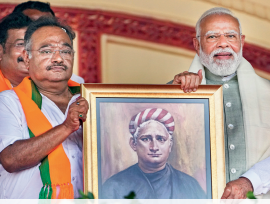
Protecting her bastion West Bengal for the fourth time and extending her tenure from five years to 20 years was never easy for Mamata Banerjee. He was up against a formidable challenger, the Bharatiya Janata Party, with its undoubtedly election-winning organization and immense resources and its star campaigner Narendra Modi.Banerjee was preparing for a fight to remove him from power for five years from 2021. Incidents such as the rape and murder of a junior doctor working at the Government RG Kar Medical College and Hospital, inside the college campus in Kasba, South Kolkata, a few meters away from the police station, and the continuous increase in incidents of violence against women in rural areas automatically brought people to the streets, resulting in an increase in the prevailing discontent. She may have taken to the streets to demand justice for the RG car victim, but that made no impact on voters with anti-incumbency sentiments.
.

.

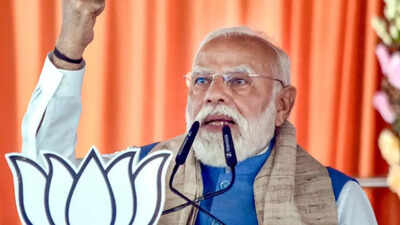
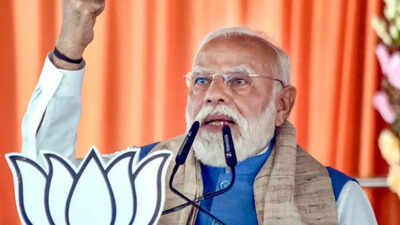
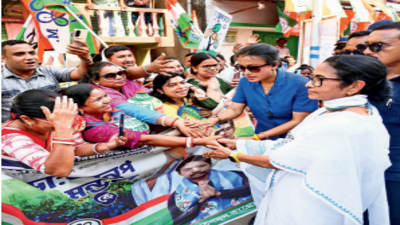
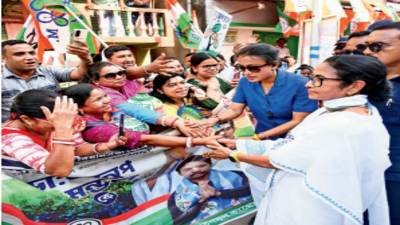
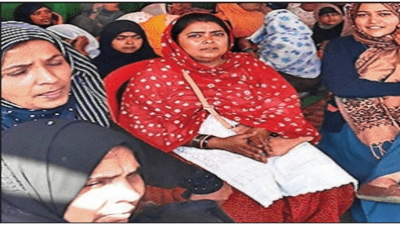
In the regular course, Trinamool Congress Should have been in the dock regarding its performance as a government. Mamta Banerjee has been the Chief Minister for 15 years. Anti-incumbency wave should have been the main issue.Things changed. Instead of being a challenger, BJP He transformed into a persecutor following a nationwide crackdown on illegal Bengali-speaking immigrants, considered infiltrators from Bangladesh. The arrests, and even the deportation of some to Bangladesh, where they were trapped and tortured, angered Bengalis, whether they were loyal to Banerjee, or leaning towards the BJP, as it was the only option against dominance and abuse of power. Trinamool Congress in everyday experiences.The surprise declaration that Bengali is not a language, and the search for a translator of “Bangladeshi language” by the Delhi Police, was considered an attack on the cultural identity, pride and history of Bengalis. According to Bengali perception, BJP became the party involved in this attack, which attacked the idea of ​​Bengali religion: eating fish and meat which in those days were considered important to the code of Sanatan Dharma.The Bengal State Assembly election of 2026 was not a regular election. It was designed as a once-and-for-all confrontation, an exercise to purge the increased number of ineligible voters, who were identified as infiltrators from Bengali-speaking – but mostly Muslim – Bangladesh who had been given asylum by the Trinamool Congress since 2011, when voting was held for the first time. The Election Commission issued warnings, even triggering a special intensive revision of voter lists in Bihar in June 2025, that Bengal would be next.It seems that the deep resentment among a very large and mixed section of voters over CM Banerjee’s Muslim “appeasement” politics has been buried by the SIR-decision-deletion process. Even his temple-building enthusiasm – laying the foundation stone of Jagannath Dham in Digha, or a Mahakal temple in Siliguri in BJP leader of opposition Suvendu Adhikari’s backyard, has faded from the public domain. SIR has become a personal issue for a large number of voters, those adversely affected and others who are troubled by the process of “othering” neighbours, friends, colleagues and acquaintances, as one in 10 people have been removed or placed under adjudication by the Election Commission.Instead, the political discourse has acquired a new classification of voters, termed “under decision”, and it has become so complex that the Supreme Court took the extraordinary step of invoking Article 142 of the Constitution, which gives it the power to “pass such decree or make such order as may be necessary for doing complete justice in any cause or matter pending before it”, because 34.45 lakh people, after the SIR, were required to vote in the Bengal elections. The fundamental right to exercise one’s choice was being deprived. The Election Commission’s decision to freeze the electoral rolls without a hearing has been overturned – which Banerjee has been quick to acknowledge as ‘her victory’ on behalf of the people.The BJP’s blind defense of the SIR exercise as a necessary intensive and customized process to verify the citizenship status of all voters, infiltrators and eligible citizens left its core voters stranded in many districts, covering more than 70 constituencies, including the Matuas, a Scheduled Caste community that had fled in large numbers after 1971. The objective of the SIR, as declared by Union Home Minister Amit Shah in Parliament, is to “detect, remove, deport”.SIR seems to have overtaken anti-incumbency as the major issue in this election. The reason is simple: the effect of SIR is that 91 lakh voters have been either removed or left subject to the decision, which is just under 12%; And the number of voters has decreased from 7.08 crore to 6.44 crore. The election has turned into a clash between the Trinamool Congress and the Election Commission on the one hand and the Trinamool Congress and the BJP on the other. As the only party that has consistently supported the implementation of the SIR process and the Election Commission, even after the Supreme Court invoked Article 142 for the purpose of “doing complete justice”, in the perception of a large number of voters, the Election Commission and the BJP are interchangeable entities.Discontent, which can be generalized as an anti-establishment wave, exists. There is also widespread satisfaction, especially among women, as Banerjee is perceived as someone who meets their needs through direct cash transfer programs like Lakshmi Bhandar and Swasthya Sathi cashless health services. This loyalty is not transactional; This cannot be bought by doubling the cash transfer, as the BJP promised under the Laxmir Bhandar, Matri Shakti Bharosa scheme. The disproportionate deletion of 57 lakh women from the voter list has cut into Banerjee’s most loyal vote bank, as more than 50% of women had voted for her in the last elections. Due to this, they may lean towards BJP as an alternative.The difference between 2021 and now is that there is no bloodshed in Trinamool like before; The process of defection in BJP has ended in 2021. There has been a reverse flow from BJP to Trinamool over the last five years, the most recent and significant being Adhikari’s close aide Pabitra Kar, who is also the Trinamool candidate from Nandigram.Instead of being a challenger offering a better alternative, the BJP – with its double-engine model and its campaign on “zero tolerance for infiltrators” – has become the party that aims to serve Bengal by prioritizing and deporting infiltrators from Bangladesh, most of whom are Muslims. As the campaign is progressing, the Home Minister has made it clear that after the elections are over, every ineligible voter removed by the tribunal constituted on the orders of the Supreme Court will be deported.When the context of a state election is about issues inherited after significant changes in India’s neighborhood and not a direct contest between rival political parties about better governance, politics becomes a competition to strike the most resonant emotional chords. The question is whether the BJP is able to blame Trinamool as the last and worst culprit of legalizing illegal immigrants from Bangladesh on a large scale, or whether Trinamool has accused the BJP of being “anti-Bengali”? The new variable in the electoral battle is the home-grown Indian Secular Front, which won one seat in 2021. The party is now contesting on more than 30 seats and hopes to carve out Muslim and Dalit votes, which it can do only at the expense of Trinamool.The major rivals, the Trinamool Congress and the BJP, have positioned themselves as champions of Bengali nationalism. In the BJP’s version, the Bengali nation needs to be freed from Muslims who have come from Bangladesh, who have been granted asylum illegally and who pose a threat to the Hindu majority. In Trinamool’s version, the idea of ​​Bengal/India, shaped by generations of Bengali nationalist leaders who contributed to the narrative and politics of the freedom struggle, needs to be defended against distortions and mutations that destroy its essence as secular, inclusive and the guardian of that imagined space where the “streams of humanity” meet the ocean of great humanity.Trinamool Congress slogans in the 2026 election boast of how “Bangla” is suffering and how it will win: “Jataoi koro hamla, abar jeetbe Bangla (No matter how many attacks, Bengal will win)” is a war cry. By positioning herself as a champion of the Bengali identity, which includes the cultural pride of being plural and inclusive, Banerjee hopes to sway sentiments in her favor, while burying the perfectly legitimate discontent growing against her local leadership at the grassroots level in urban and rural areas.
Source link

5,446 women will go on Haj without Mehram, the highest since the change in policy. india news

5,446 women will go on Haj without Mehram, the highest since the change in policy.

New Delhi: As the first batch of pilgrims set off on Haj pilgrimage for Saudi Arabia on Saturday, at least 5,446 Muslim women will travel for the pilgrimage as “women without mehram” (male companions), with Kerala again leading the way, with 4,477 women in this category, data showed.This is the largest contingent of women in the LWM category since 2018, when for the first time following a policy change, Muslim women aged 45 and above, who wish to go on Haj but do not have a male Mehram and do not have their ‘School of Thought’ (Maslak) permits, were allowed to travel in groups of four or more. Single women of similar age group can also apply.A total of 1,75,025 pilgrims are expected to undertake Hajj this year. Of the total quota for Government of India (GoI), 70% has been allotted to Haj Committee of India and 30% to Haj Group Organisers.

Source link

South Korea working with India to secure Hormuz, security of key maritime routes essential for survival of both nations: President Lee | India News

South Korea working with India to secure Hormuz, security of key maritime routes essential for survival of both nations: President Lee
South Korean President Lee Jae Myung

As he arrived in India for a State visit, South Korean President Lee Jae Myung said Koreas and India must work closely as emerging global leaders amid heightened geopolitical uncertainty, and that the 2 countries can give a new direction to multilateralism when it’s faced with mounting challenges. In an exclusive interview to TOI, Lee said while Korea exemplified remarkable economic growth under the multilateral trading system, India stood well placed to shape new global rules with its economic scale and dynamism. On China’s dominance in critical minerals, Lee said that reducing excessive dependence on any single country had become a matter of survival, directly linked to the economic security of both India and South Korea. Speaking on the Hormuz crisis, the president said that ensuring the security of critical maritime routes is essential for the survival of both nations and Korea will work together to ensure freedom of navigation in the key energy waterway. With focus now on defence industrial collaboration, the president said Seoul will fully back India’s “independent production” of defence equipment, while exploring joint technology development and coproduction. IIn an exclusive interview to Sachin Parashar and Alpyu Singh, South Korean President Lee Jae Myung shared his vision for the special strategic partnership with India in key areas like trade, technology, critical minerals, defence and ship-building in which Seoul is a global leader. Excerpts: This is your first visit to India as president. How do you hope to further strengthen the special strategic partnership with India in the current circumstances, especially in key areas like trade, and critical and emerging technology? India – the world’s most populous country, the fourth-largest economy, and a leading voice of the Global South – is an ideal partner for the Republic of Korea. Our partnership rests not only on highly complementary economies, but also on shared core values of democracy and a market economy. At a time of heightened geopolitical uncertainty and mounting challenges to multilateralism, it is more imperative than ever that Korea and India work closely together as emerging global leaders. Building on our Special Strategic Partnership, we will deepen comprehensive ties of cooperation that drives mutual growth and innovation, while expanding our strategic horizons. A key priority is accelerating negotiations to upgrade the Comprehensive Economic Partnership Agreement (CEPA). Beyond traditional sectors such as electronics and automobiles, we will broaden cooperation into shipbuilding, finance, and the defense industry, bringing to life the vision of “Make in India, Together with Korea.” We will also step up collaboration in AI and digital technologies. Korea’s, world-class AI infrastructure and India’s vast pool of AI talent make us natural partners. Together, we will actively identify projects that generate meaningful synergy. At the same time, we will further expand cultural and people-to-people exchanges, the enduring foundation of our relationship. By bringing together India’s rich cultural assets, exemplified by Bollywood, and Korea’s globally influential K-Culture, we aim to create even greater synergy. Since my first meeting with PM Modi in Canada in June last year, I have felt a genuine warmth and familiarity, as if reconnecting with an old friend. I believe in our shared commitment to people-centered politics, holding on to hope even in times of adversity. It’s therefore especially meaningful, and a great pleasure, for me to visit India and meet PM Modi again. I am confident that this visit will mark an important milestone in further strengthening the friendship and trust between our two nations. Like India, South Korea is heavily dependent on safe passage of ships through the Strait of Hormuz for its energy needs. How can both countries work together to aid efforts to keep the key energy route open and minimise the impact of the West Asia crisis on global economy and energy security, as well as to de-risk supply chains globally? Both the Republic of Korea and India depend on the Middle East for a significant share of their energy supplies, including crude oil and natural gas. Accordingly, ensuring the security of critical maritime routes is essential to the safety of our peoples and the very survival of our nations. Korea will maintain close communication with India to ensure that all vessels can navigate the Strait of Hormuz safely and freely. We will also continue to work together in relevant international forums to uphold this shared commitment. Another task that our two countries must undertake together is diversifying energy supply chains. Amid growing uncertainties in the global economy, I am confident that forward-looking and strategic cooperation between Korea and India can substantially further our shared national interests. The strategic defence partnership has been strengthened by the co-production of K9 Vajra howitzers. How do you propose to take this partnership forward, especially in terms of technology-sharing that could boost India’s Atmanirbhar Bharat initiative? The Republic of Korea fully supports India’s Atmanirbhar Bharat initiative. It is a plan of significant industrial and economic potential, and I am confident that it will certainly be realized thanks to PM Modi’s steadfast commitment.However, self-reliance is difficult to achieve entirely on one’s own. Korea’s rapid industrial development and economic growth were made possible through considerable support and assistance from partner countries. In this regard, Korea seeks to serve as India’s key partner in advancing the Atmanirbhar Bharat initiative. In particular, the K9 Vajra howitzer project stands as an exemplary case of our bilateral defense and defense industry cooperation. The contract for the second phase of the K9 Vajra project, signed in April last year, provides for more than 60 percent of the manufacturing process to be carried out in India. It is currently being implemented smoothly, as planned. Building on such examples of cooperation, Korea will continue to provide full support for India’s independent production and operation of defense equipment. Moreover, we will discuss various avenues of cooperation in joint technology development and coproduction as well as operations and maintenance, so that both countries’ defense industry ecosystems can advance together. Both countries are exploring opportunities for cooperation in critical energy transition minerals – amid global efforts for resource diversification to avoid reliance on China – and also in areas like the maritime sector and shipbuilding in which South Korea is a global leader. Is there any roadmap that you have in mind for a more result-oriented partnership in these areas? With global supply chains undergoing reconfiguration, reducing excessive dependence on any single country has become a matter of survival, directly linked to the economic security of both nations. In particular, securing critical minerals, which are essential for cutting-edge industries, and stabilizing the maritime logistics networks for those resources will be key factors in national competitiveness going forward. India possesses critical minerals, while Korea has the capabilities to manufacture them into rechargeable batteries, electric vehicles and other advanced products. This makes our two countries ideal partners for generating synergy. By moving beyond the traditional model of importing raw material and combining Korea’s technology with India’s mining and refining industries, we can work together to establish stable critical-mineral supply chains. There is also boundless potential for bilateral cooperation in the shipping and shipbuilding sectors. For India to emerge as a global logistics and manufacturing hub, securing shipbuilding and maritime transport capabilities is essential. With world-class expertise in shipbuilding and shipping, as well as extensive experience in overseas port projects, Korea is well positioned to become India’s foremost partner. I understand that relevant MOUs are expected to be signed during the upcoming visit. I look forward to the day when vessels jointly built by our two countries sail across the world’s oceans. Now that there are question marks about the US commitment to the Indo-Pacific under President Trump – and with Washington’s focus shifting also to West Asia – how do you propose to work with like-minded countries to ensure a free and open Indo-Pacific? The world today faces complex and multi-layered crises. We are in a time of profound upheaval, as rising protectionism and the restructuring of global supply chains unsettle the foundation of the existing international order. The war in the Middle East has underscored the strategic reality that the Indian and Pacific Oceans form a single, interconnected maritime space – one whose stability no country can secure alone. Despite its intense dynamism and vast potential, the Indo-Pacific, has long remained more a beneficiary than a shaper of the international order, constrained by geopolitical tensions and the lack of institutional frameworks, Today, however, regional countries, including Korea, have the capacity to lead in strengthening multilateralism and advancing a rules-based order.As strategic coordination and unity across the Indo-Pacific have become ever more vital, my government will continue to expand cooperation with regional partners, including India. In this spirit, we participated this year in the International Fleet Review and the multilateral exercise MILAN hosted by India. We intend to join the India-led Indo-Pacific Oceans Initiative. Peace and prosperity are essential to realizing a free and open Indo-Pacific. To that end, we will deepen cooperation with key partners, including India, in strategic sectors such as shipbuilding, finance, AI, and the defense industry. Both India and South Korea have been at the receiving end of the US tariff policy. While Seoul has signed a trade deal under which it will invest $350 billion in US industries, India’s efforts for a bilateral trade agreement with Washington is still a work in progress. What’s the advice you can offer to New Delhi on managing the trade relationship with the US? Also, how can India and South Korea help in keeping the global trade framework multilateral, rules-based and inclusive? Korea and the US were able to reach a successful trade agreement last year because both sides pursued creative, pragmatic solutions grounded in mutual trust. A key elementof the agreement – “strategic investment in the United States” –was based on a shared understanding that Korea’s manufacturing sector can contribute to the revitalization of U.S. manufacturing. This enabled both countries to address pending tariff issues in an amicable manner, ultimately laying the groundwork for advancing industrial and supply chain cooperation.India possesses vast market potential as well as the geopolitical advantage of being a main pillar of the Indo-Pacific region. Accordingly, I believe that, rather than simply weighing the costs and benefits of opening the market, a more effective strategy would be highlighting India’s pivotal role in global trade. There is no denying that, even as it faces significant challenges today, the multilateral trading system has long stood as a central pillar of the international order, driving shared growth over the past several decades. Going forward, one of our most important tasks will be to safeguard the inclusivity of this system by establishing new rules that reflect the realities of a changing world. In this respect, India and Korea can play especially significant roles. Korea stands as a prime example of a country that achieved remarkable economic growth under the multilateral trading system, while India – with its vast economic scale and dynamism – is well positioned to help shape the new rules. Together, our two countries can take multilateralism in a new direction. The Korean Wave has a growing fan base in India. How can both countries leverage this cultural connect to deepen people-to-people ties through tourism, culture, cinema, music, education and collaborations between more creative industries? Recently, Made in Korea, a Korea–India coproduction set in Korea, topped Netflix India’s weekly film chart, gaining enormous popularity. Beyond just being a successful film, Made in Koreastands as a prime example of our two nations’boundless potential for cultural exchanges. India is emerging as a new hub of the global cultural industry, driven by its young and dynamic demographic structure, abundant creativity and advanced technological capabilities. Last year, HYBE – the agency behind BTS – established a subsidiary in Mumbai, a clear testament to the growing importance of the Indian market for Korea’s cultural industry. Our cultural exchange must now evolve into an era of co-creation. With both countries possessingcompelling cultural assets, technological expertise and outstanding talent, opportunities for cooperation – from content coproductionto talent development –are virtually boundless. There is also considerable potential in cultural heritage. Cooperation between National Museum of Korea and India’s planned Yuge Yugeen Bharat National Museum – envisioned as the largest of its kind in the world – could create a new model for sharing our heritage with future generations. Korea–India cultural cooperation and co-creation are ultimately about building new value together while respecting each other’s stories. At its core are people. Through deeper and broader collaboration across culture, tourism, education and the creative industries, I aim to bring our peoples closertogetherand build a shared future of growth. There is a rising interest among Indians in learning the Korean language. What steps is South Korea taking to support language learning and youth engagement to strengthen long-term cultural connections? Recently, interest in the Koreanlanguage and culture has been growing rapidly in India. A survey conducted last year revealed that approximately 83.8 percent of Indians expressed favorable views toward Korean cultural content. Thisdeepening interest and affection will form the strongest possible foundation for exchanges and cooperation between our two nations. Of great importance is the virtuous cycle that occurswhen learning language enhances cultural understanding, and cultural exchanges go on toincrease interest in the language. Currently, over 5,000 Indian students are studying Korean at the seven Sejong Institutes run by the Korean government and in Korean language classes at 43 primary and secondary schools across India. The Korean government is assisting with dispatchingteachers and distributing textbooks to enable more Indian citizens to learn Korean. Going forward, we plan to helpprovide Indians with Korean language education training. Moreover, we will implement more cultural experience programs at the Sejong Institutes to create synergy between cultural exchanges and language learning. Mutual interest between our younger generations, which stems from an understanding of language and culture, will further enrich our countries’futures. Both countries have strong capabilities in AI, semiconductors and emerging technologies. Are there plans for joint innovation hubs or co-development initiatives to strengthen global competitiveness? What do you see as the biggest challenges hindering deeper India–Korea cooperation today and what structural reforms are needed to boost investor confidence and sustain long-term engagement? We are living in an era of “global technological hegemony,” where national power hinges on cutting-edge technologies like artificial intelligence and semiconductors. In this time of crisis, I am confident that both our countries’national interests will be greatly served if Korea’s world-class, state-of-the-art manufacturing capabilities are combinedwith India’s software and talented individuals. Mahatma Gandhi, the great soul of India, once identified“science without humanity” asone of the “seven social sins.” His words, which resonate today inthe notion of “AI without humanity,” speak to the depth of India’s potential in AI and other advanced technological fields. On the occasion of the upcoming visit, a Korea–India Industrial Cooperation Committee is set to be newly established between Korea’s Ministry of Trade, Industry and Resources and India’s Ministry of Commerce and Industry to discuss ways to enhance bilateral cooperation. In addition, an MOU will be signed between Korea’s Ministry of Science and ICT and India’s Ministry of Electronics and Information Technology to promote policy exchanges and joint research and development in the digital domain. I hope these initiatives will serve as a catalyst for broadening the scope of cooperation between our two countries.There are still several tasks ahead to deliver tangible results. Most of all, it is essential to streamline complex administrative procedures and regulations centered onthe domestic market to create a free, predictable and transparent business environment.Such structural reforms will help our two countries earn trust from global investors and capital providersand emerge as true technology hubs.

Source link

PM Modi is shedding crocodile tears: Opposition. india news

PM Modi is shedding crocodile tears: Opposition

New Delhi: Opposition accused PM on Sunday Narendra Modi Along with shedding “crocodile tears” over women’s reservation, it also stepped up its attack on her for making a “political speech in the guise of addressing the nation”. Highlighting that the Prime Minister “spewed venom” against the opposition for 29 minutes on Doordarshan, Congress spokesperson Supriya Shrinate said, “How can the Prime Minister use this platform, funded by taxpayers’ money, to further his political agenda when the Model Code of Conduct is in effect… How does the Election Commission not take suo motu cognizance of the exploitation of government machinery for pure political ends?” Accused of “serious violation” of the code of conduct. He said, “The content, tone and message of the address cannot in any way be termed as government communication. It was clearly political, targeted opposition parties… and sought to influence public opinion, including the voters of Tamil Nadu and West Bengal.” CPI Rajya Sabha MP Sandosh Kumar P also wrote a letter to the CEC demanding an investigation.

Source link

TMC will get ‘great punishment’ from mothers and sisters: PM Modi india news

TMC will get 'great punishment' from mothers and sisters: PM Modi

Kolkata: PM Narendra Modi stepped up his attack on the Trinamool Congress, declaring at rallies across Bengal that “mothers and sisters” will punish it for blocking the Women’s Reservation Bill and urging voters to give a “maha-punishment” to what he calls “Maha-Jungleraj”, reports Rohit Khanna. Addressing four rallies in six hours on Sunday ahead of the April 23 phase of assembly elections – Barjora in Bankura, Purulia, Jhargram and Midnapore, Modi accused TMC and Congress of “conspiracy” against women. “Women welfare is Modi’s guarantee,” he said, accusing TMC of being “anti-mother”.Trinamool has betrayed the daughters of Bengal, who wanted 33% reservation to be implemented from 2029, Modi tried to implement it. If women join the legislature in large numbers, they will speak for their rights. TMC thinks that women MLAs from villages and districts will hold them accountable for their misdeeds,” the Prime Minister said, adding that the party has “colluded with the Congress” to stop the amendments. A brief stop at Jhalmudi’s shop in Jhargram during the campaign gained attention online as the BJP emphasized on connecting with last mile voters. Modi outlined the welfare promises, saying pregnant women would get Rs 21,000 and Rs 5,000 after delivery, cervical cancer vaccination would be free, and medicines would be available at huge discounts through Jan Aushadhi shops.Read this also ‘Do you eat onions?’ PM Modi took ‘Jhalmuri break’ during Bengal election campaign – see He also talked about annual assistance of Rs 36,000 for women, free treatment up to Rs 5 lakh and dialysis in government hospitals. Modi accused Trinamool of wanting religion-based reservation. He said, “Muslims are being brought under the ambit of reservation for Other Backward Classes. This is against the Constitution.” He also warned of “infiltration”, saying Bengal was in danger of losing its identity. He said, “Trinamool’s agenda is dangerous. It wants to install a government of infiltrators, which will protect the religion and language of the infiltrators.” Taking aim at the party over tribal outreach, he alleged that it was following “the strategy adopted by Nehru to defeat Babasaheb Ambedkar”. The PM said, “BJP made the country’s first tribal woman the President. Trinamool fielded a candidate against him. “They played a game to stop a tribal woman from becoming president.” He alleged that the tribal districts were under the control of Trinamool and the land was being grabbed by “syndicates”.

Source link

ED searches house of senior Kolkata policeman in ‘laundering scam’ india news

ED searches senior Kolkata policeman's house in 'laundering scam'

Kolkata/New Delhi: Enforcement Directorate (ED) on Sunday raided the residence of Kolkata Police DCP (Special Branch) Shantanu Sinha Biswas and arrested city-based businessman Joy Kamdar in a money laundering probe linked to alleged illegal land deals and extortion. The ED action during the Bengal election season comes days after IT searches at the house of TMC candidate Debashish Kumar and Miraj Shah, one of CM Mamata Banerjee’s nomination proposers from his Bhawanipur seat. At a rally in Tarakeswar on Sunday, Mamata said, “The house of the person who looks after my security has also been raided since this morning. Do you want to kill me? They are raiding us every day. We will file a case for every single incident.” Kamdar, managing director of several companies mainly in the real estate sector, was taken into custody after questioning at the ED office. Searches were conducted at his Behala residence; ED has claimed to have recovered Rs 1.2 crore cash. Earlier he had not attended two ED summons. ED officials also searched DCP Biswas’s house in Ballygunge. Former OC of Kalighat police station, he was not present. His lawyer described the raid as “unexpected”. The investigation relates to alleged illegal land deals and extortion by a syndicate led by history-sheeter Biswajit Poddar alias Sona Pappu. The ED said that during recent searches, a Toyota Fortuner and a US-made revolver were seized. ED sources said the illicit money was routed through fronts and shell companies to be integrated into legitimate channels.

Source link

India moves closer to opening up nuclear power sector to foreign investment after AEC approves FDI policy: Official | india news

India moves closer to opening up nuclear power sector to foreign investment after AEC approves FDI policy: Officials
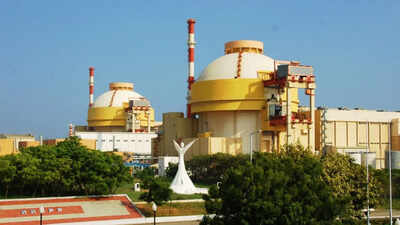
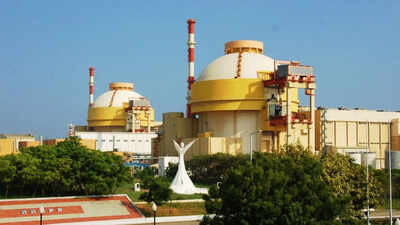
Kudankulam Nuclear Power Plant

New Delhi: India is moving closer to opening up its nuclear power sector to foreign investment, with the Atomic Energy Commission approving a new foreign direct investment (FDI) framework, an official indicated.Speaking at a workshop in Delhi recently, Seema S Jain, Member (Finance), Department of Atomic Energy, said the policy is part of a broader effort to mobilize large-scale financing to increase nuclear power capacity. “The Atomic Energy Commission (AEC) has approved the FDI policy and it is going for ministerial consultation,” he said. He also pointed to the advantages of a “fleet mode” approach, where multiple reactors are developed at the same site to speed up approval and construction timelines.India aims to increase its nuclear power capacity to 100 GW by 2047, which will require massive investment. Despite policy progress, NTPC has seen lower than expected interest from private companies, indicating challenges in bringing in external capital. The proposed FDI policy, backed by the recently enacted Peace Act 2025, aims to garner investments of up to Rs 20 lakh crore from foreign players to accelerate the construction of nuclear reactors.On December 21 last year, the Act was enacted and notified as a single, coherent law, with provisions for private sector participation to drive research and innovations for peaceful applications of nuclear energy under licensing and safety authorisation.The Department of Atomic Energy said in a recent statement that the main reason for the slow expansion of nuclear power capacity in India in the initial days was the technology development stage, coupled with limited availability of resources and having to go through international sanctions and technology denial regimes.

Source link

‘You approved… now you are firing… let me turn back’: Hormuz crisis call caught on tape | india news

'You approved... now you are firing... let me turn back': Hormuz crisis call caught on tape

New Delhi: “Iranian Navy, Iranian Navy. I will turn to starboard and go back, I will turn to starboard and go back, do not fire… SEPA Navy, SEPA Navy, Motor Tanker Sanmar Herald. Sepa Navy, you cleared me, you cleared me to go. My name is second on your list, you allowed me to go. Now you are firing, let me turn back.” The distress call from the captain of the Indian-flagged oil tanker Sanmar Herald clearly reflected the confusion created by the firing in the Strait of Hormuz on Saturday, as Iran reimposed restrictions on passage, impacting the ceasefire and movement of ships through the strait. In an audio recording of more than two minutes on channel 16, the international maritime radio frequency dedicated for emergency, distress, security and calling, the captain of the Indian ship appealed to the Iranian Navy not to open fire and promised to return. Meanwhile, another video recording of radio communication captured and shared on social media shows that the Indian cargo ship Bhagya Lakshmi was approaching the UAE strait when it was stopped. Social media posts showed an IRGC operator telling the crew, “The Strait of Hormuz is blocked and there is no permission for you. You are ordered to return to your departure immediately.” Iranian naval personnel also asked the captain to wait for permission. According to maritime traffic data, no ships were crossing the crucial global energy choke point as of Sunday evening. An Indian very large crude carrier (VLCC) Samnar Herald and another bulk carrier Jug Arnav returned to the Persian Gulf after an incident of firing while transiting the Strait of Hormuz and no crew were reported injured, the shipping ministry said on Sunday.

Source link

From vacation spot to rest spot. india news

from vacation spot to vacation spot

Pahalgam: A year after the terrorist attack that rocked Kashmir’s beautiful hill town, tourist footfall in Pahalgam has declined sharply, reducing the vibrancy of one of the busiest holiday destinations in the region.Before the attack, the city regularly received 3,000 to 5,000 visitors per day. Today, the numbers tell a different story. Official data obtained by TOI from the local tourism center showed that from May 2025 to April 15, 2026, Pahalgam recorded 4,30,495 domestic tourists, a sharp decline from earlier years, when annual tourists were between 12 to 15 lakh, with a monthly average of around 1 to 1.1 lakh visitors.The decline is particularly impressive when compared to April 2025, the month of the attack. By April 22, when the attack occurred, about 1.37 lakh tourists had visited the city in 22 days.The decline in tourist footfall in Pahalgam can also be gauged by comparing the number of tourists visiting this picturesque town from January to April 2025, when the total number of visitors during these four months had reached 463,390. In contrast, data from January to April 2026 shows a steep decline with only 254,930 tourists across all months, nearly 45% less than the same period in 2025. The cumulative decline of more than 200,000 tourists suggests a significant negative trend.Yet, amid the recession, a new and sad milestone has emerged. A martyr’s memorial, established by the Jammu and Kashmir government near the popular “selfie point” of Pahalgam on the banks of the Lidder river, has become a focal point for visitors. The memorial bears the names of all 26 tourists who lost their lives in the attack.For many, the trip is less about leisure and more about recollection.On the banks of the river, tourists gather as usual, some standing on stones to take photographs, some sitting in small groups having breakfast, some dipping their feet in the cool water.However, as they approach the monument, their expressions reveal what has changed in a year. His mood changes. Some people stand silently and read each name written on the monument. Others raise their phones to capture the tragic moment.The list of 26 starts with Atul Srikant Mone. It ends with Yatish Bhai Sudhirbhai Pamar. Number 22 is that of Syed Adil Hussain Shah, a local pony rider who was killed while trying to save tourists during the attack.Ravi C, a tourist from Karnataka, said this was his first visit to Pahalgam and despite what had happened last year, he had come here. He was taking pictures of his young child, who was saluting the monument.Ayaan from Mumbai, who was traveling with his family, said the violence has not kept him away. “Incidents keep happening,” he said.Driver Kuldeep Singh from Punjab had brought the visitors from Punjab. They were also reading the names. Kantrajpa, a retired army officer from Bengaluru, said he wanted to see the place for himself. The attack hasn’t stopped him, he said.Tourism department officials at the tourist welcome center across the road said tourists have started returning to Pahalgam. He said there were almost no tourists at the resort in the four months after last year’s attack. “The hoteliers had closed their hotels. But with the continued efforts of the government, things have started improving,” an official said.Tourism infrastructure in the area remains adequate, with about 107 hotels, 100 guest houses and an equal number of homestays registered by the tourism department. However, officials say a large number of unregistered lodges are operating outside formal records.

Source link

Babban Khan, creator of blockbuster comic drama ‘Adrak Ke Panje’ passes away. india news

Babban Khan, creator of blockbuster comic play 'Adrak Ke Panje' passes away
Babban Khan staging a play

In August 1965, when India and Pakistan were engaged in a desperate war on the northern borders, a penniless 22-year-old young man wrote a play in a little over three hours under the street-lights of the old city of Hyderabad. By the time its final curtain rose in 2001, more than three and a half decades later, “Ginger Ke Panje” had been performed more than 10,000 times in more than 60 countries and in dozens of languages ​​- often to full houses, and sometimes requiring lathi charge to control the crowd.Babban Khan, who wrote, produced, directed and starred in the central role of a bank clerk in that iconic and blockbuster comedy, died after a brief illness at a hospital in Hyderabad on Friday night. He was 83 years old.In the 1960s and 70s, family planning was the focus of government health policy. The government slogan, “Two or three children…enough”, was common on billboards and was a frequent subject of radio jingles. Later, this phrase became more strict “one or two”. “Ginger Ke Panje” (literally, Ginger’s Claws) addressed the problematic and provocative issue of family planning but in a funny and dirty way. Perhaps this was why the play – the title is an allegory of uncontrolled birth – caught the public’s pulse and tickled it.The protagonist clerk (Ramatu) has eight children and many debtors; From milkman to school master. Yet he never loses his lighthearted sense of humor and carefree zest for life. The set of the play was basic. Production costs were minimal. But like a hit Hindi film, ‘Adrak Ke Panje’ will get huge advance booking. The actor was also invited to Radio Ceylon’s popular programme, “S. Kumar’s Filmi Muqaddam”, which was usually reserved for Hindi film celebrities. In time, the play would also enter the Guinness Book of Records and be seen by film director Francis Ford Coppola, actor Rex Harrison, and thriller writer Frederick Forsythe, among others.A 1970 article in ‘The Illustrated Weekly of India’ stated, “Film comedian Johnny Walker said he had been making film audiences laugh for 15 years, but here was a play that made him laugh!”Babban was untrained in theater and had dropped out of college. ‘Ginger Ke Panje’ was born out of real life experiences and characters. His father, who worked in the fire department, died when he was six years old. “All my brothers and sisters died at an early age…I somehow survived to tell the tale,” the playwright told TOI in 2001.Speaking to TOI in 1995, the playwright revealed that he had sold his mother’s only piece of wedding jewelery for Rs 275 to finance the play. “I paid Rs 200 for theater rent, Rs 30 for printing tickets, Rs 2.50 for an umbrella and Rs 18 on material for the sherwani which was stitched by the tailor in exchange for a pass to the show,” he said. The first show held in September 1965 was a flop. But the second one was not; This never happened after that.Analyzing the play, Bilquiz Alladin wrote in the Weekly, “‘Ginger Ke Panje’ can hardly be called a play in the true sense of the word. There is no plot, no tense dramatic situation, and no conflict. It is a series of jokes from beginning to end. Yet one sits through it, laughing, and wonders why the end, which is really two hours away, has come so quickly. It is very Hyderabadi in essence and flavour, in location, in thought and manner, and in its every little joke. For lovers of old Hyderabad and its Urdu dialects, this play offers a glimpse of a now-lost, picturesque style of speech.The immense success of the play made Babban a millionaire at a time when beggars were happy with a donation of five paisa. In an interview with TOI in 1979, Babban Khan admitted to owning three houses in Banjara Hills, Hyderabad, selling his Mercedes to buy a Volkswagen, and decorating his house with Persian carpets, chandeliers and marble statues. By then, he had written another play “Gumbad ke Kabootar” (The Pigeons of the Dome) which dealt with corruption.In later years, Babban’s house in Shantinagar served as a training center for upcoming drama artistes and film actors. He trained the students personally. Hundreds of stage lovers and fans attended the funeral on Saturday. Cricket commentator Harsha Bhogle wrote on It ran for over 30 years and I wish I could look back at it now and celebrate the humor that comes naturally to Deccan speaking people.”(With inputs from Syed Akbar in Hyderabad)

Source link