2 tankers with Iranian crude oil reached India. india news

2 tankers carrying Iranian crude reached India

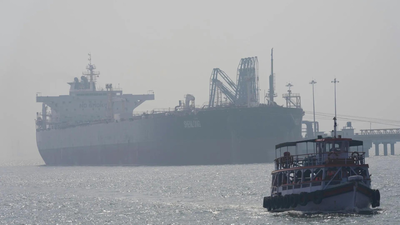
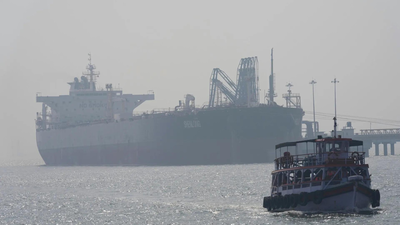
New Delhi: Two tankers carrying Iranian crude oil have reached Indian ports, the first such deliveries since May 2019. Felicity, a much larger crude carrier carrying about two million barrels of oil, was anchored near Sikka off the coast of Gujarat late Sunday, according to ship-tracking data from Kepler. Another tanker, Jaya, also carrying the same quantity of crude oil, grounded near Paradip off the Odisha coast at around the same time. Both Felicity and Jaya were loaded at Kharg Island, Iran’s largest port, which handles about 90% of the country’s oil exports. While Felicity picked up cargo in mid-March, Jaya was loaded in late February, before military tensions between the US-Israel coalition and Iran escalated. However, the Shipping Ministry said it had no information about the two ships.

Source link

A person born in India has the right to remain in the voter list, to vote: Supreme Court. india news

A person born in India has the right to remain in the voter list and vote: Supreme Court

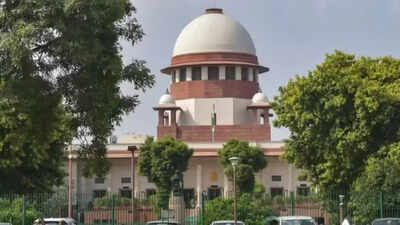
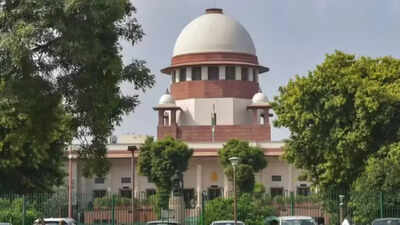
New Delhi: In which political hold can be given TMCThe Supreme Court on Monday said that a person born in India has the right to be included in the electoral roll and vote to elect the government. Justice Joymalya Bagchi, a member of the bench led by CJI Surya Kant, said, “Somewhere we are being blinded by the dust and fury of the impending elections. The right to remain in the country where you were born and the right to vote is something that is not only constitutional but also emotional. It is the greatest expression of nationalism and patriotism that you are in the participatory process of electing a democratic government. “This is something we need to think seriously about.” Justice Bagchi also said that the original SIR did not contemplate examining the 2002 rolls

If the victory margin is 2% and the elimination rate is 10%, we will consider again: SC

The judge did not say whether a person born to illegal immigrants in India would have the same right to vote as a person born to a citizen. However, the bench rejected the plea to allow those found eligible by the appellate tribunal to vote. Senior advocate DS Naidu, appearing for the Election Commission, said there was nothing unusual about the SIR in West Bengal as the deletion rate was at par with the percentage figures of voter deletion from voter lists of other states. The debate arose when senior advocate Rauf Rahim argued that people found eligible by the appellate tribunal should be allowed to vote despite the freeze on the electoral rolls. Justice Bagchi said, “We are not concerned with Bengal being isolated or forming part of the general subject matter of the SIR. But logical inconsistency has not been a category in other states. There is facility of hearing in appropriate cases during scrutiny, which is not afforded by the judicial authorities during scrutiny, mainly due to heavy workload and proximity of elections.” Justice Bagchi said that if 10% voters in a constituency turn away, but the victory margin is 15% or thereabouts, the election result would appear to be in order. “However, if the victory margin in a constituency is 2% and extinction is 10%, we will consider such cases,” he said. “If one considers the original SOP of the Election Commission on SIR, there was no question of touching the people included in the 2002 voter list. But now you have examined cases where the identities filled in the enumeration form did not match the names in the 2002 voter list. That is why we exercised extraordinary powers and engaged judicial officers to investigate the huge task of examining claims and objections and related documents. “We cannot rush this process,” he said, adding that this is why an expanded appellate forum was created by the Supreme Court, which wanted to ensure a fair process without the intention of expanding or reducing the voter list. More than 34 lakh appeals have been filed so far. When Naidu said the delay was due to the state’s failure to deploy adequate number of high-ranking officials for the investigation, Justice Bagchi said, “This is not a battle between the state and the Election Commission. This is not a blame game. This is a question of voters being caught between constitutional institutions. From the Election Commission’s point of view, it has tried its best. The state is alert. In such a situation, the purpose of the court is to enable and not to determine who is right and who is wrong.” Is. CJI Surya Kant ended the debate by saying that there is no need for any academic exercise at present. In its order, the bench said, “We will not entertain any plea for inclusion before deciding the appeal. Let the tribunal decide the appeal, and we will determine the future course of action.” It asked the petitioner to approach the tribunal and demand an out-of-turn hearing. 19 appellate tribunals started working in full strength on Monday. The SC also asked the EC and the state to continue to provide security through the state police and Central Armed Police Forces to the WB judicial officers participating in the SIR work. “His security cover will not be withdrawn without the prior permission of the Supreme Court,” the bench said, adding that it could be increased after assessing the security threats.

Source link

PM Modi says Parliament is on brink of history as it prepares to take up women’s bills India News

PM Modi says Parliament is on the brink of history as it prepares to consider women's bills

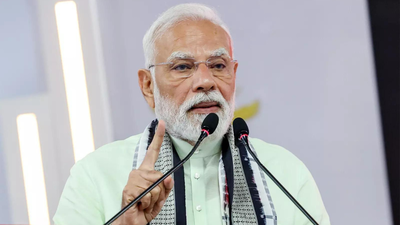
New Delhi: Parliament is on the verge of making history, PM Narendra Modi said on Monday in the Lok Sabha and Rajya Sabha before considering his government’s bills to implement women’s reservation in legislatures from 2029, as he expressed confidence amid protesting voices from the Congress and its allies that the opposition will support the measures to ensure unanimous support.While several opposition parties have criticized the government for “rushing” the bills in the midst of state elections and questioned the delimitation proposal, Modi avoided delving into the issue at an event and instead spoke of the cross-party support the proposal has enjoyed for a long time.

The credit for passing the Women’s Quota Bill will go to every political party: PM Modi

Prime Minister Narendra Modi spoke of the cross-party support the resolution on women’s quota has had for a long time, including through 2023 when the original law was made, and said credit for its passage would be given to every political party. Addressing successful women from different walks of life at the Nari Shakti Vandan programme, which also included former Congress Lok Sabha Speaker Meira Kumar, the PM said India is going to take one of the most important decisions of the 21st century and the decades-long wait for reservation for women in one-third of the seats in the Lok Sabha and Assemblies will end during the three-day sitting of Parliament from April 16. “The Parliament of our country is on the verge of creating history,” he said, emphasizing his commitment towards women empowerment since his days as Gujarat Chief Minister when he launched several schemes targeting various sectors for their welfare. There were smiles and applause all around when he noted that his measures to economically empower women, including getting houses built in their names with government assistance, had given them a say in their family’s decision-making. Modi said that when the law was made in 2023, everyone wanted its early implementation, with opposition MPs especially vocal about implementing it from 2029. He said that the government also seriously considers what the opposition says. He said, “Our priority is that this time too it should be done through dialogue, cooperation and everyone’s participation.” The government needs the support of at least a section of opposition parties to pass the constitutional amendment bill, which requires a two-thirds majority, but none of the BJP’s main rivals including the Congress, TMC, DMK and SP – the four parties with enough MPs to block its passage in the Lok Sabha – have so far pledged unequivocal support.

Source link

In first major outreach, Balen accepts PM Modi’s invitation to visit India india news

In first major outreach, Balen accepts PM Modi's invitation to visit India

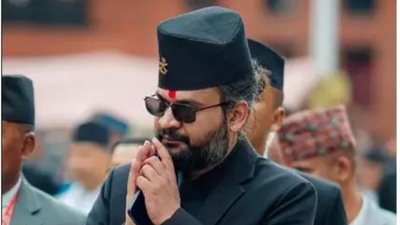
New Delhi: Nepal Prime Minister Balendra “Balen” Shah accepted Prime Minister Narendra Modi’s invitation to visit India while he launched a sweeping and radical 100-point governance agenda targeting VIP culture at home, political influence in campuses and bureaucracy, public service delays, free health care access for the poor, safe public transport for women and stress-free schooling for young children. Foreign Minister Shishir Khanal said, “The government of Nepal has accepted the invitation and the foreign ministries of both countries are now preparing for the visit.” He indicated that the visit to New Delhi would be Shah’s first major diplomatic outreach since assuming office. The last official visit of a Nepalese PM to India was by Pushpa Kamal Dahal “Prachanda” in June 2023. Meanwhile, introducing a number of changes, the new government in Kathmandu has proposed to cut the number of federal ministries, ban political affiliations for sections of the state machinery and replace party-affiliated student bodies with non-partisan platforms. The reform plan directly aims at political influence in education and the civil service. Under the new mandate, party-affiliated student organizations in schools and universities are to be dismantled within 90 days and replaced with non-partisan student councils or “student voice” platforms. Announcing the move, Shah said, “Schools and colleges will no longer serve as grounds for political activity, but will function solely as centers of learning.

Source link

West Bengal elections: 77-year-old man dies of ‘heart attack’ after fighting with polling officials at home. india news

West Bengal Elections: 77-year-old man dies of 'heart attack', family members fight with polling officials at home

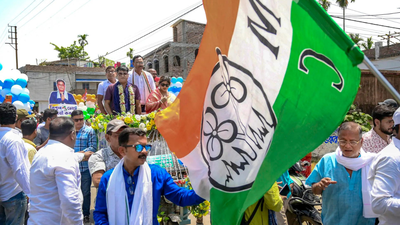
MALDA: The 77-year-old wife of an 85-year-old voter died of a suspected heart attack during her family’s altercation with election officials visiting the homes of senior citizens to register their votes in a village in Bengal’s North Dinajpur on Monday.After the news of Tafijan Bibi’s death spread, local people including others became angry. TMC The workers confined the election officials to Viti Katihar village for some time.Since 8-year-old Kalu Shaikh is blind, his family demanded that their disabled daughter be allowed to stay in the room during voting, but the Election Commission team rejected the request, leading to an argument with villagers and TMC workers.Tafijan suddenly fell ill and fainted badly. Suspecting a heart attack, he was taken to Raiganj Medical College, where doctors declared him dead.His family alleged that officials forced Sheikh to vote.Whereas District Election Officer Mohd. Vivek Kumar “There has been a misunderstanding, the inhumane Election Commission has not only deprived a person of his vote but has also taken the life of another voter,” TMC’s Krishna Kalyani alleged.

Source link

Bengal Elections: 45% booths in Kolkata North tagged ‘highly sensitive’. india news

Bengal elections: 45% booths in Kolkata North tagged 'highly sensitive'

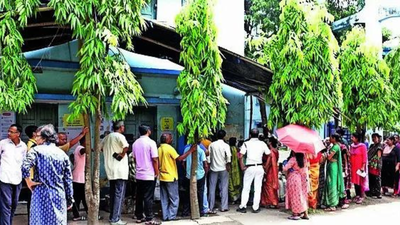
Kolkata: The Election Commission has designated 837 of the 1,835 booths under Kolkata North parliamentary constituency as ‘highly sensitive’, citing fears of possible irregularities. At hundreds of these booths, 150 or more names were removed from the voter list during the SIR process. Kolkata North District Election Officer (DEO) Smita Pandey said on Monday, “The Election Commission fears that people left out of the voter list may take to the streets to vent their anger against the deletion of names.” “The polling body has identified 837 out of 1,835 booths under the parliamentary constituency as ‘highly sensitive’. Of the seven assembly constituencies under Kolkata North, Shyampukur has the maximum number of such hyper-sensitive booths (80),” he said. According to Pandey, apart from removing booths, “those creating unrest, violating law and booths in densely populated places” are also factors considered before deciding on giving them the ‘highly sensitive’ tag. An Election Commission official admitted that the number of ‘highly sensitive’ booths was quite high, amounting to about 45.6% of the total. The Election Commission has declared 264 out of 583 polling precincts in seven assembly constituencies as ‘highly sensitive’. Pandey said the Election Commission is planning to use drones in densely populated streets of northern parts of the city “to ensure free and fair elections”. Kolkata Police Commissioner Ajay Nand, who attended a press conference organized by the DEO of Kolkata North, said that police and paramilitary personnel have started the route march as a confidence building measure. Preventive arrests are also being made and unaccounted cash is being seized, he said. Kolkata South DEO Randhir Kumar said that out of 1,093 polling stations in the four assembly constituencies under the parliamentary seat, more than 400 were identified as ‘critical’ or ‘unsafe’. Kumar said enforcement agencies have so far seized unaccounted cash and articles worth Rs 8.9 crore, including Rs 80 lakh recovered on the first day. Also 32 weapons and 83 rounds of ammunition were seized. Kumar said around 30 companies of CAPFs have been deployed in the city to ensure free and fair elections.

Source link

West Bengal Elections: 2 of three Congress workers arrested by NIA for Malda siege | india news

West Bengal Elections: NIA arrests two of three Congress workers for Malda siege

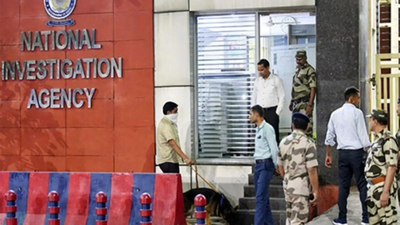
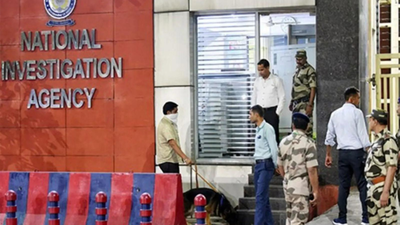
Malda: The NIA has made its first arrest in the case of siege of judicial officers involved in SIR verification in Mothabari, Malda on April 1, detaining two Congress members and one ISF member. On Sunday, Congress’s Sahadat Hussain and Asif SK were taken into custody along with ISF’s Golam Rabbani. Local Congress candidate Saim Choudhary was also interrogated but later released. NIA’s preliminary findings suggest that the siege was pre-planned and involved a multi-layered conspiracy. Investigators found that Rabbani had held a meeting the day before the violence, while Asif and Sahadat were present during the movement. All three were presented in the NIA court in Kolkata. Sahadat is an official of Congress Trade Union INTUC. Asif is the district chief of the Chhatra Parishad, the youth wing of the state Congress. Rabbani is a Panchayat member. Congress candidate Chaudhary alleged a TMC-BJP nexus behind the arrests and described the protest as a peaceful demonstration against the deletion of voters’ names. TMC candidate Nazrul Islam rejected the allegation. Before the NIA stepped in, Bengal Police had registered 12 cases and arrested 49 people. These include ISF’s Mothabari candidate Maulana Shahjahan Ali.

Source link

Jammu and Kashmir: The last tanga moved again in Srinagar, a 70 year old man kept the past alive. india news

Jammu and Kashmir: Last tanga runs again in Srinagar, 70 year old man keeps the past alive

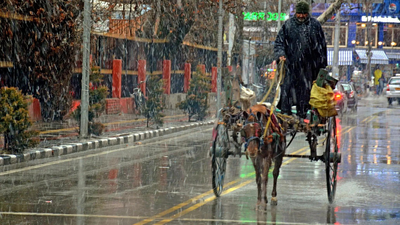
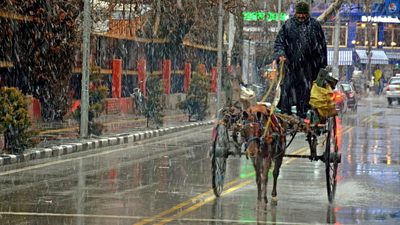
Srinagar: Clip-Clop. Hooves tap the asphalt. The engines fall silent as the horse-drawn carriage slips into traffic that has long been forgotten.Ghulam Rasool Kumar is roaming alone on his horse carriage in the old city of Srinagar amidst the crowd of horns and headlights. At 70, he is back on the streets he left behind once the horse-drawn carriages stopped paying.“I had a license of 1968. I was 12 years old,” he said, holding up a paper from another era – “Sadiq sahib’s time… what more do you want.” [late Ghulam Mohammad Sadiq, CM from 1965 to 1971]Kumar left the job in 1986. Returned last year. It became a curiosity overnight. Tourists climbed on it, influencers filmed reels, photojournalists chased it through the narrow streets. CM Omar Abdullah posted about him on X. For many young riders, it’s not transportation. It’s memory on wheels.Then the Pahalgam terrorist attack of April happened. The tourists disappeared. Earnings are over. Kumar stopped again.Earlier this month, he returned – a horse with a fine black coat brought from Sopore in north Kashmir, a carriage with a shiny canopy from Anantnag in south Kashmir – adding to a business that refuses to end quietly.He does not charge any fixed rent. “Pay whatever you want,” he tells riders.Tall, lean, wearing dark glasses, he looks younger than his age. He talks – about roads, traffic, loss. “This road was not a road, it was a stream called Nala Mar,” he said while guiding on the Bohri Kadal-Sekidafar road.Near Nava Kadal bridge, words slow. There is silence. “My two sons drowned in this river. The river has taken away both my sons.”He moves forward. The sound becomes stable. “There were cars then, but not like today. “Very few people had cars.”Drivers now drive slowly not out of irritation but out of curiosity. The tanga is magnificent in modern Srinagar. Kumar asks for one thing – patience. “No breaks,” he said. “People should be considerate.” they are. The horns soften around him.His favorite stories are from another time – when queues of horse-drawn carriages ran across the city, when the tourist reception center was bustling with horse-drawn carriages, when ministers enjoyed what he still calls “luxury”.In a city that moved forward, Kumar stayed. People shout “the last of the tangs” when the bells ring and the slow, steady beat of the hooves – this sound was from the 1930s to the 1960s when such carts ruled the streets of Srinagar. The traffic now swallows the echo, but for a few fleeting minutes, the city listens to its past.

Source link

Vikram’s ‘hop’ exposed surface ‘layers’ near the Moon’s south pole region. india news

Vikram's 'hop' exposes surface 'layers' near Moon's south pole region

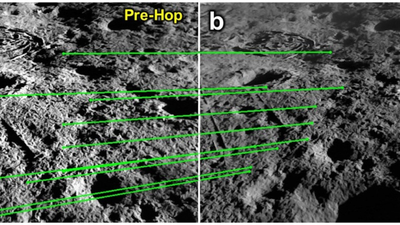
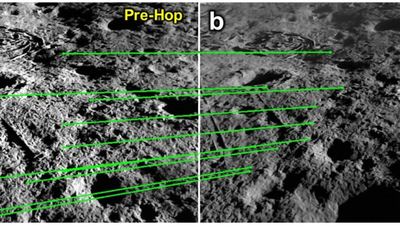
Bengaluru: When Vikram, India’s moon lander, briefly flew by and returned to the Moon in 2023, it was a small but significant moment in the Chandrayaan-3 mission. Now, that short “hop,” which lasted about 3 minutes, is helping scientists piece together what lies just beneath the lunar surface, with very precise measurements.The maneuver performed at the end of the mission moved the lander by about half a meter, giving researchers a rare opportunity to study a nearby piece of untouched land and compare it with the original landing location.Once the lander was stable, a temperature probe called ChaSTE (Chandra’s Surface Thermophysical Experiment), a key instrument on the lander, was pushed into the soil again. This time, only five of its ten sensors managed to penetrate the ground, as the new location was on a slightly steeper slope, within a small crater. Nevertheless, it recorded how heat moved through the ground during a brief period before sunset – about one lunar hour of observation, with some gaps due to mission constraints.The findings come from a study led by K Durga Prasad at the Physical Research Laboratory (PRL), published in The Astrophysical Journal.The results show that the Moon’s surface is not uniform. Instead, it is made up of layers that behave differently. The top few centimeters form a layer that conducts heat more easily, while the material beneath is less conductive. This layered structure changes how the surface heats up during the day and cools down as night falls.Hop also changed the land itself. When Vikram fired its engines, the force appeared to cause about 3 cm of topsoil to blow away, exposing the denser material below. In fact, the lander inadvertently “dug” into the surface without using any drills. Interestingly, such local disturbances over distances of just over half a meter were unexpected – soil properties are generally uniform over such short distances.This revealed another key feature. Soil becomes more dense with depth. Near the surface, it is loose and porous, but within just a few centimeters, it becomes denser and more tightly packed. Such variations can affect how stable the ground is for landers and rovers. These measurements also differ significantly from those found at equatorial sites decades earlier by the Apollo and Surveyor missions, showing that the polar region has its own distinct character.The investigation also detected changes in temperature during twilight. As sunlight diminished, the land became steadily cooler before the temperature dropped rapidly. The upper layers react faster than the lower layers, again pointing to differences in composition.These findings have implications beyond this single experiment. The Chandrayaan-3 landing site is located in the south polar region of the Moon, an area of ​​interest because it may contain frozen water. Understanding how heat moves through soil can help scientists predict where such ice might survive and remain stable.The study also shows how sensitive the moon’s surface is. Even a brief firing of the engine changed the top layer enough to expose what lay beneath. Future missions, especially those aimed at collecting samples or building infrastructure, will need to take such impacts into account.In the end, the jump, which lasted about three minutes, has produced a clear picture of the moon’s surface, showing that even small movements can provide valuable scientific clues.

Source link

Wife reneges on promise of divorce with consent, SC invokes Article 142 to grant divorce. india news

Wife reneges on promise of divorce with consent, SC uses Article 142 to grant divorce

New Delhi: In a classic case of how court proceedings are misused in matrimonial disputes – a woman agreed to a divorce and signed a financial settlement for separation, but after receiving a huge chunk of money from her husband, she not only reneged on the promise, but also filed a criminal case against him and his family members. Supreme Court On Monday, it used its extraordinary jurisdiction under Article 142 to dissolve the marriage and also quashed the domestic violence case, ignoring her protest.Although the wife said she withdrew her consent because the husband did not return her jewelery worth Rs 120 crore and gold biscuits worth Rs 50 crore, which were not mentioned in the agreement so as to “avoid alerting the Income Tax Department”, a bench of Justices Rajesh Bindal and Vijay Bishnoi refused to give credence to her allegation by observing that the issue was not mentioned anywhere, including in the WhatsApp chats between the estranged couple.The court said that if any settlement deed or compromise agreement has been entered into between the parties with respect to the complete and final settlement of their disputes, then in that case it is not open to the party to deviate from the terms and conditions agreed upon between them. As per the agreement, the husband had paid her Rs 75 lakh as first installment and Rs 14 lakh to buy the car and also returned the jewelery mentioned in the agreement.“It is common law that once the parties have entered into a settlement agreement, which has been duly certified by the arbitrator, in case of any flexibility from the terms agreed in the agreement, the opposing party will have to bear the burden of heavy costs. Any deviation from the terms of the agreement arrived at in mediation and subsequently confirmed by the Court must be dealt with strictly as such deviation attacks the very foundation of the entire process of arbitration,” the bench said.Referring to the wife’s claim regarding gold worth Rs 170 crore that she had agreed to exclude these terms from the settlement agreement only at the instance of the husband in order to alert the Income Tax Department and avoid any liability towards wealth tax, the court termed her arguments as “extremely serious”. “We are appalled by the audacity to appear before the court and condemn the clear disregard for the legal system displayed,” it said.The court said that she failed to mention any specific incident of violence committed by the husband or his mother to justify her criminal case and said that the case was registered only after she had withdrawn her consent for mutual divorce. “A criminal complaint regarding domestic violence merely mentioning the names of the family members or the husband without any specific allegation, pointing to their active participation in such act of violence, will be quashed at the outset,” the bench said.“While we are conscious of the fact that the parties to a long-standing matrimonial dispute are often driven by emotions, we cannot allow such emotions to take such a big form as to permit outbursts of emotions to form the basis of criminal prosecution. If such criminal prosecution is allowed, it will lead to abuse of law and oppression.”The court dissolved the marriage and directed the husband to pay the final installment of Rs 70 lakh and also quashed all civil and criminal cases filed by the couple against each other. The court accepted the plea of ​​the husband, who had approached the court through his lawyer Prabhjeet Johar for divorce.

Source link