
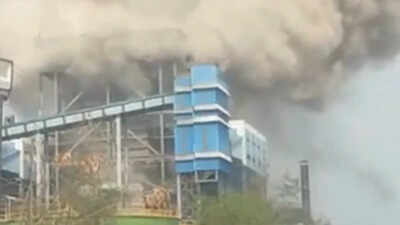

Nine employees killed, 15 injured in boiler explosion at Vedanta power plant in Chhattisgarh. india news
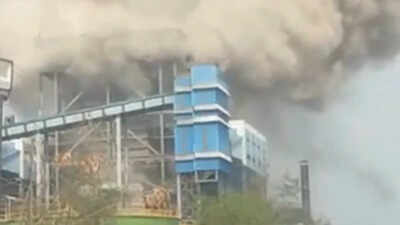 Sakti Superintendent of Police Prafulla Thakur said, “Nine workers have died and 15 have been injured.” He said the explosion occurred in the afternoon.The SP further said that immediately after the blast, local administration and police teams reached the spot and rescue operations were immediately launched to search for survivors.According to police, three victims died on the spot, while the others died in hospitals. The injured workers have also been admitted to hospitals in neighboring Raigarh district for treatment.Raigarh SDM, Mahesh Sharma said that the exact cause of the accident is being investigated. He said, “A heart-wrenching incident has taken place at the Vedanta Power Plant today, in which some employees have been injured and are undergoing treatment. Our investigation is ongoing.”
What Yoga Training Really Means in 2026 india news

There is a certain kind of person who comes to Sattva Yoga Academy not because they have heard that it is transformative, but because something in them is tired of change as a product. He has done workshops, a 200-hour training, retreats with silence and set meals. And something still feels incomplete.The questions they come up with vary. Not “What will I learn?” But “Will this really change the way I live?” Not “How do I become a yoga teacher?” But, more calmly: “How do I become a more honest person?”That transformation, from acquisition to inquiry, is at the heart of what Sattva Yoga represents.
What is Sattva Yoga?
Sattva Yoga is a living tradition rooted in the classical Himalayan lineage, brought into contemporary form Anand Mehrotra -Born and brought up in Rishikesh, a visionary who was immersed in the classical disciplines of yoga, breathing exercises and meditation from a young age.This is not a style of yoga. It is a holistic system of practice, integrating asana, pranayama, kriya, mantra, kundalini, and inner inquiry, that is oriented toward what its teachers call sattva: clarity, stability, and the quality of perception devoid of reactivity.Where most modern yoga begins and ends with the body, Sattva Yoga uses the body as a gateway. The destination is how you truly live: your reactions under pressure, the quality of your focus, your ability to remain present when it is uncomfortable.so Sattva Yoga Academy Rishikesh has attracted serious practitioners from around the world, not because the training is dramatic, but because it doesn’t pretend to be anything other than what it is: rigorous, honest, and demanding real effort.
A conversation at Sattva Yoga Academy
The reflections that emerge from an in-depth conversation with Anand Mehrotra, founder of Sattva Yoga Academy, take a nuanced look at what yoga training means in 2026. Beyond the surface of posturing and certifications, this dialogue explores who such training is really for, what it actually demands of those doing it, and what deeper change it seeks to initiate.Who are the people attracted to the teachings of Sattva and what are they really looking for?They’re not all looking for the same thing. But there is a pattern: They have usually tried many things that promise depth and surface. The answer they give here is honesty. We do not characterize this passage as joyful or transformative in any dramatic sense. We say it’s hard, slow and sometimes normal. People get some relief after hearing this.We are not interested in preparing yoga teachers. We’re interested in practitioners who understand that what happens off the mat is just as important as what happens on it.What are the main pillars of Sattva training?Five things remain constant regardless of program format:
- Practice – a daily, non-negotiable practice. Not because discipline is perfect, but because consistency produces real changes in the nervous system.
- Breath and Energy – taught carefully, progressively. Breathwork is powerful and should be done without shortcuts.
- Meditation – not as a form of relaxation or escape, but as a form of meditation training. Learning to see clearly before acting.
- Wisdom – Philosophy applies to your actual experience, not recited by memory.
- Integration – How you live when the practice is over. Without this, yoga becomes a demonstration.
These are not five subjects to study. They are five dimensions of the same practice.What does “entity” actually mean – not as a definition, but as a living thing?It is not mysterious. Sattva is seen in how you react when you are excited, how you speak when you are tired, whether you can pause before reacting and whether that pause comes naturally or you still have to make an effort.Clarity without harshness. Discipline without aggression. Ability to function without unnecessary noise.Most people understand this more clearly when they realize what sattva is not: it is not feeling calm all the time, or achieving any particular meditative state. It is this inherent quality that makes honest action possible.How is Sattva Yoga training different from what most people are used to?Most training is outcome-based: can you teach, demonstrate, demonstrate? Sattva Yoga training is process-driven: Can you sit, listen, pause?We call this not education but initiation. Not because there is anything mysterious in this term, but because what is happening is much more fundamental than learning new information. You are being asked to look at your patterns – how you handle discomfort, how you relate to authority and peers, what happens to your practice when no external structure prevents it.Certification is secondary. The primary question is: how do you live?Do you need to teach to attend any training?no way. Some of the most committed practitioners here have no intention of teaching. They’re professionals, parents, creatives, people whose lives feel overstimulated and whose attention spans are scattered. Training becomes a way to regain rhythm and depth.Whether someone teaches yoga later or not, what they are developing is focus, discipline, flexibility, which is used in every context.What is the atmosphere like during training?Simple, structured, deliberate. early mornings. Continuous practice. Study. silence. Time for contemplation.Rhythm itself is not about intensity. This is for clarity. A certain kind of clarity only emerges when noise is consistently removed.The community itself is part of the learning. Being and practicing with others highlights things that solitary practice doesn’t: impatience, comparison, the gap between how we think and how we actually behave. Sattva Yoga Academy is less a retreat and more a mirror.It is not designed to make you feel good all the time. It is designed to help you see honestly.What changes do people see after serious training?The changes are structural rather than dramatic. Low reactivity. Better attention. Clean sleep. Decisions taken more thoughtfully. The compulsion to gather experience, recognition, or external validation is diminished.People often say that it looks cool from the outside, and that’s right. Internal consistency does not announce itself. But the effects are complex: the quality of relationships changes, tolerance for distractions decreases, and practice deepens not because you’ve learned more, but because you’ve simplified.What are the most common misconceptions about kriya and advanced exercises?That they speed up progress. More technology means more development.Actions are not shortcuts. It is a precision instrument and precision instruments in the wrong circumstances cause harm rather than healing. These practices require preparation: moral, physical, and psychological. Without that foundation, they may create excitement rather than clarity.This is why we are careful about when and how to introduce advanced practices. Not for the gatekeepers, but because preparation is practice. Readiness to receive a teaching is the measure of how far the teaching has worked.What preparation should one realistically do before training?Mostly internal readiness. Ask yourself honestly: Can I sit with the discomfort without immediate distractions? Can I follow a simple routine without external accountability?Practically: some basic mobility helps, a brief daily practice helps more, and reducing digital overstimulation helps more than most people realize. You do not need to arrive early. You need to be available.When is it better not to train yet?If you’re dealing with an injury and aren’t willing to slow down – wait. If you are in a period of severe instability, physically or psychologically, first stabilize. If you’re looking for an escape or expecting rapid, dramatic change, stop by.Training doesn’t solve abstinence. This reveals it. This is not a warning meant to be discouraging; here is the information. The right time to train is when you are ready to be honest with yourself.What happens after the training is over?The structure collapses and this is deliberate. The practice should now stand on its own. This is where people discover what they are really made of.Support continues, but dependency must end. Yoga is to make you self-reliant. The proof of any training is not how you perform during it. This is how you live in the months that follow – with no schedule, no community, no teacher to see how your practice goes.Integration into normal life like work, relationships, small decisions is where training proves itself.What is the most important quality in a person who will really benefit from this path?Stability. No talent. No prior experience. There is no strong desire for change.Whether a person shows up every day, especially when it’s uncomfortable, unmotivated, or unclear, is the most reliable indicator of whether the practice will reshape them.When practice becomes truly consistent, it changes the nervous system, the perception, the baseline response to difficulty. It stops being something you do and becomes something you are. That is not poetic language. The teaching points in this direction.
key takeaways
- Training is about clarity and discipline, not performance or recognition
- Sattva is not a feeling; It is an efficiency: the ability to perform a task without unnecessary noise
- Honesty and consistency matter more than intensity or technique
- Actions and advanced exercises require preparation – they are not shortcuts.
- Most real changes are subtle, structural, and visible in ordinary moments
- Many people train not to become teachers, but for personal clarity and this is completely valid.
- The real measure of training is what continues after it ends
If you are considering training in 2026
Don’t start with anything dramatic. Start with something you can actually sustain – a short daily practice, a quiet morning, a little more honesty about your meditation.Proper training will not give you a new identity. It will easily, and gradually, remove what was never true.For current training schedules, program formats and faculty details, visit sattvayogaacademy.com. This article is for educational purposes only and does not constitute medical or therapeutic advice.Disclaimer – The above content is non-editorial, and TIL disclaims any and all warranties, express or implied, relating to it, and does not guarantee, endorse or necessarily endorse any content.
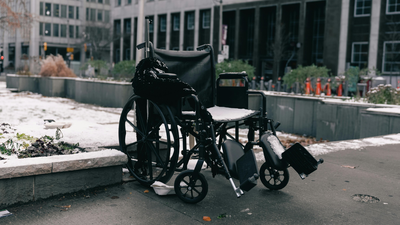
NCPEDP urges disability reservation before upcoming Women’s Reservation Bill in special Lok Sabha session. india news
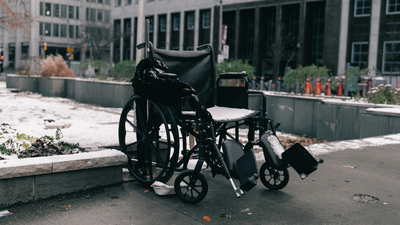 Calling the proposed law an important step towards increasing women’s political participation, the organization said it also provides an opportunity to address the under-representation of persons with disabilities in legislative bodies.NCPEDP has written to the President, Vice President, Prime Minister, Lok Sabha Speaker and leaders of all political parties, urging them to consider political reservation for persons with disabilities within the broader framework of electoral reforms.Arman Ali, Executive Director, NCPEDP, said, “While the Women’s Reservation Bill is a transformative step, it should also open the doors to broader inclusion. Persons with disabilities remain under-represented in decision-making spaces. Ensuring their participation is essential for a truly inclusive democracy.”The organization pointed out that “political barriers” are clearly recognized under the Rights of Persons with Disabilities Act, 2016, and said disability-related concerns are often ignored in policy making due to lack of representation.The letter also said that the proposed increase in the number of legislative seats could create space for such inclusion without affecting the existing reservation categories.Ali said, “India has one of the largest populations of persons with disabilities. As per the 2011 census, more than 2.68 crore persons were identified as persons with disabilities, a number that is widely underestimated. With updated data expected in the upcoming census, the need for direct political representation has become increasingly urgent.”NCPEDP highlighted its efforts to promote political participation among persons with disabilities, including the development of a “Manifesto for and by persons with disabilities” during the 2024 general elections, which included countrywide consultations and engagement with major political parties.The organization also cited initiatives such as its MP Forum on Disability and dialogue platforms such as “Empowering Inclusion”, which aims to strengthen the discussion on disability inclusion during the Parliament session.It further said that states like Tamil Nadu and Rajasthan have implemented political reservation for persons with disabilities at the local level.The NCPEDP has urged Members of Parliament to raise the issue during the ongoing session and consider integrating such provisions in electoral reforms, saying increased representation will contribute to a more inclusive and participatory democracy.Parliament is scheduled to meet from April 16 to 18 to consider the bill, which will also include an expansion of seats.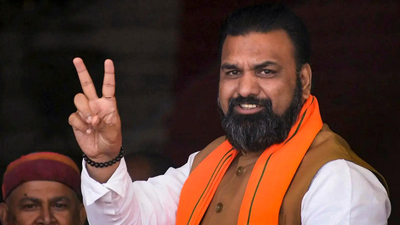
New Chief Minister of Bihar: Samrat Chaudhary elected leader of BJP legislature party. india news
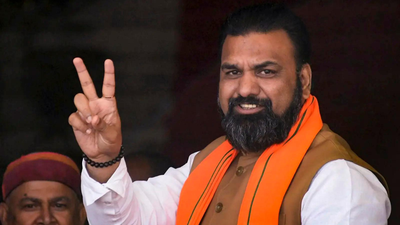
New Delhi: Bharatiya Janata Party, the largest party with 89 MLAs in the 243-member Assembly, has elected Samrat Choudhary as the leader of its legislative party. After this, Nitish Kumar resigned from the post of Chief Minister of Bihar after the recommendation to dissolve his cabinet.Kumar, Bihar’s longest-serving chief minister, informed his cabinet colleagues of the decision to dissolve the council of ministers, which is a constitutional requirement, before formally submitting his resignation to the governor.The 202-member National Democratic Alliance includes 85 MLAs from the Janata Dal (United), along with 19 from the Lok Janshakti Party (Ram Vilas) and five from the Hindustani Awam Morcha led by Union ministers Chirag Paswan and Jitan Ram Manjhi.The alliance also includes five MLAs of the Rashtriya Lok Morcha, whose president is Rajya Sabha MP Upendra Kushwaha.
West Bengal Assembly Elections 2026: Never seen a ‘dirty party’ like BJP, Mamata Banerjee said; Flags of ‘logical inconsistency’ in SIR process india news
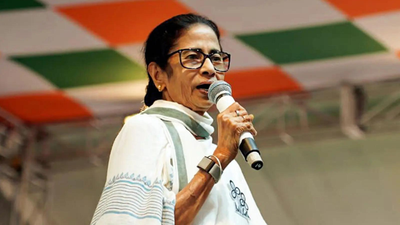
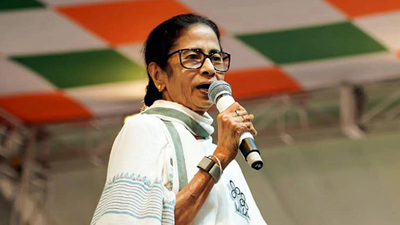
New Delhi: Chief Minister of West Bengal Mamata Banerjee On Tuesday once again took a dig at the Election Commission and BJP Amidst the ongoing war of words regarding the SIR process.Addressing a public rally at Pingla in Paschim Medinipur district. TMC The chief alleged that “logical anomaly” under the SIR exercise is not an officially recognized term under the EC framework and it was selectively applied in West Bengal as opposed to Bihar to benefit the BJP. He further criticized the saffron party, saying that he had not seen a “dirty party” like the BJP.The West Bengal Chief Minister appealed to the people to vote against the BJP, saying, “The BJP has snatched everything from you… Voting against it will be your only way of revenge.”He further claimed that the BJP was organizing rallies at places with direct rail connectivity to Uttar Pradesh and Bihar to facilitate bringing people from those states to the rally sites.Earlier in the day, Mamata had launched another scathing attack on the BJP, accusing it of trying to divide and weaken the people of the state, while urging voters to support TMC for the fourth consecutive time.Sharing a video of her election rally on X, Mamata cited her rallies in Birbhum, East Bardhaman, West Bardhaman and Bankura, calling on voters to support TMC candidates and expressing confidence in returning to power. He said, “My brothers and sisters are my greatest asset. The source of my strength. They are the backbone of whatever we have built together in these fifteen years… I am confident that our Maa-Mati-Manush government will come back for a historic fourth consecutive term.”In an indirect reference to the BJP, Banerjee alleged that forces were working to “divide and humiliate” the people of West Bengal and snatch away democratic rights. Calling on voters to unite, he said, “Those conspiring to divide our people, defame our state, snatch away democratic rights and exploit and insult the people of Bengal will not succeed. Not unless we stand together.”He also called for a strong political pitch, urging people from different communities to come together against “anti-Bangla landlords”. “I call on every caste, every creed, every class, every religion to stand as an immovable force against the anti-Bangla landlords who threaten everything we stand for,” she said.Mamata appealed for support for several TMC candidates in all constituencies, naming candidates from Suri, Bolpur, Rampurhat, Labpur, Ausgram, Galsi, Durgapur Purba, Durgapur West, Asansol North, Jamuria, Pandabheshwar and Bankura.Voting in West Bengal will be held in two phases on April 23 and 29, the results of which will be declared on May 4. The contest is expected to be a high-stakes battle between the incumbent TMC, which is seeking a fourth term, and the BJP, which is aiming to expand its presence in the state after making gains in the last election.
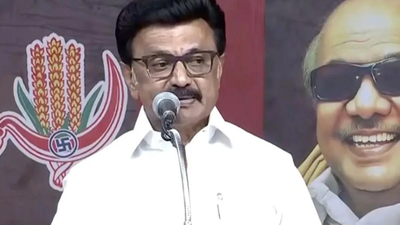
Tamil Nadu Assembly Elections: CM Stalin went door-to-door campaigning in Vellore. india news
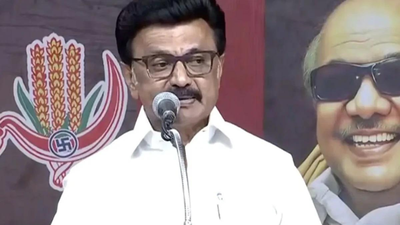
New Delhi: Tamil Nadu Chief Minister MK Stalin conducted a door-to-door campaign in Vellore on Tuesday ahead of the upcoming assembly elections in the state.During his campaign, Dravida Munnetra Kazhagam The leader stopped at a local tea stall, where he drank tea and interacted with residents of Vellore, often called the fort city of Tamil Nadu.The DMK has fielded sitting MLA P Karthikeyan from the Vellore constituency, contesting again against SRK Appu of the All India Anna Dravida Munnetra Kazhagam (AIADMK). In the 2021 assembly elections, Karthikeyan defeated Appu by a margin of 9,181 votes or 5.1 percent.The Muslim community is expected to play a significant role in the constituency with a population share of 24.28 per cent in Vellore city as per 2011 census.Earlier on Monday, Stalin had said that the DMK would defeat the NDA alliance in the assembly elections, adding that the “Tamil Nadu team” would prevail over the “Delhi team”.Addressing a public meeting in Ranipet district, he alleged Bharatiya Janata Party (BJP) is raising the delimitation issue to divert attention from concerns like LPG shortage and depreciation of the Indian rupee against the US dollar.According to news agency ANI report, Stalin said, “In the democratic war of 2026, I have come so that we will defeat the Delhi team and make the Tamil Nadu team win. The BJP is now taking the delimitation issue into its own hands. People are facing trouble without gas, and the Indian rupee has gone high against the dollar. So, to divert attention, the BJP is now trying to raise the issue of delimitation. This delimitation is the biggest in Indian history. Big. If they are hiding it and trying to implement it, then definitely they are against Tamil Nadu.”She described the party’s election manifesto as a “superstar” and announced a welfare scheme for women voters. Under the proposal, the DMK plans to provide a coupon of Rs 8,000 to women to purchase new home appliances or exchange existing appliances.Tamil Nadu will go to polls in a single phase on April 23 and counting of votes will take place on May 4.The main contest is expected to be between the DMK-led secular progressive alliance, comprising Indian National CongressDMDK and VCK, and the AIADMK-led NDA as well as BJP and PMK. Actor-turned-politician Vijay is also set to make his electoral debut with his party TVK, which could lead to a triangular contest.
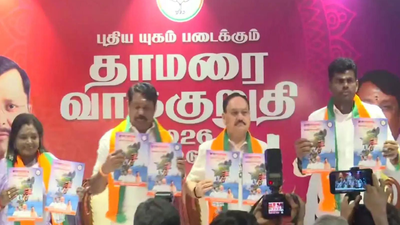
Free LPG cylinder, Rs 2,000 and more for women: What BJP promises in Tamil Nadu election manifesto india news
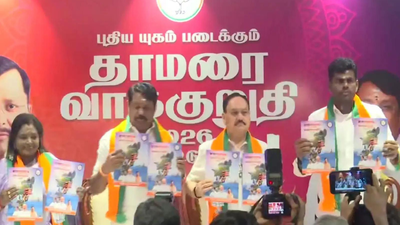
Bharatiya Janata Party On Tuesday unveiled its manifesto for the upcoming assembly elections in Tamil Nadu, promising monthly assistance of Rs 2,000 for female heads of families and one-time assistance of Rs 10,000 per family.Announcing the move, Union Minister JP Nadda outlined key proposals aimed at financial assistance, security and economic empowerment of women. “The main points of the manifesto are that when we come to power under the leadership of AIADMK, we will provide monthly assistance of Rs 2,000 to all women heads of families and a lump sum amount of Rs 10,000 to each family,” he said.Apart from the above promises, the party also promised to provide free LPG cylinder annually and Rs 25,000 assistance to eligible women to purchase e-scooters. It also proposed interest-free loans of up to Rs 50 lakh for women-led cooperative societies, self-help groups and MSMEs, and also ordered that 20% of procurement in manufacturing units would be made from such groups.The party has also proposed women safety measures like zero FIR reporting, victim-witness protection and special fast-track courts for heinous crimes including sexual offences, in its manifesto. The party also promised 100% blind spot-free CCTV coverage in buses, schools and universities along with better utilization of the Nirbhaya fund.For farmers, the BJP said it will increase benefits under the Pradhan Mantri Kisan Samman Nidhi by adding a top-up of Rs 3,000 to the existing annual assistance of Rs 6,000.Tamil Nadu will go to polls in a single phase on April 23 and counting of votes will take place on May 4.The main contest is expected to be between the DMK-led secular progressive alliance, which has Indian National Congress, DMDK and VCK, and the AIADMK-led National Democratic Alliance, which has allies BJP and PMK.
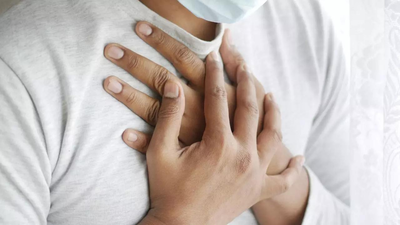
Packaged food, daily damage: Global heart body flags diet-related risks as crisis grows in India india news
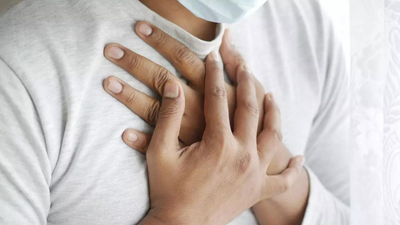
New Delhi: That evening snack, that quick packet meal, that sugary drink you don’t think twice about – doctors say they’re silently creating your next health crisis.The American Heart Association (AHA) has issued a dire warning that everyday eating habits, especially the increasing reliance on ultra-processed foods, are promoting heart disease, diabetes and early death.The warning, published as a 2026 scientific statement, comes at a time when the disease burden is already rising in India. Cardiovascular diseases cause approximately 28% of all deaths, while more than 100 million people are living with diabetes, and millions more are at risk. “One in five deaths in India is directly attributable to poor diet,” said Dr Ambuj Roy, professor of cardiology at AIIMS, Delhi.In its latest guidance, the AHA shifts the conversation away from diet trends and quick fixes to what people actually eat every day. It requires a diet composed of vegetables, fruits and whole grains, as well as healthy protein sources such as lentils, beans, nuts and fish. It also recommends using plant-based oils in place of butter and animal fats and choosing minimally processed foods.Dr. Roy said that such principles can be adopted at the local level. He pointed to the Mediterranean diet as a proven model for reducing heart risk, and said a similar anti-inflammatory Indian diet could be created using locally available ingredients such as mustard oil, peanut oil, seasonal fruits, vegetables, millets, legumes, nuts and traditional spices. “Reducing ready-to-eat packaged foods, biscuits and snacks can reduce the risk of heart disease by 30%,” he said.Additionally, the AHA calls for limiting ultra-processed foods, added sugars, added salt and saturated fats. Packaged snacks, sugary drinks, refined flour items and processed meats are major contributors to obesity, diabetes and heart disease.Reiterating this, Dr Ravinder Goswami, Department of Endocrinology, AIIMS, said that conditions like diabetes, hypertension and coronary artery disease often overlap and require similar lifestyle changes. He emphasized portion control – “eat a little less than your hunger” – as well as being mindful about what you eat and avoiding distractions like screens during meals.He also cautioned against refined carbohydrates like flour-based foods and advised to reduce the consumption of fried foods and frequently heated oils. Choosing whole fruits instead of juice and roasted snacks instead of fried snacks can make a significant difference, he said.Urban lifestyles are increasing the risk, with food delivery and quick-trade making high-calorie, high-salt foods readily available. The AHA also recommends limiting alcohol and says people should not start drinking alcohol for purported heart benefits.“Simple habits like daily walking, exposure to sunlight and keeping an eye on your weight are as important as what you eat,” Dr. Goswami said. He said that weight gain in itself is a warning sign.Doctors say the risk increases over time because of daily habits, not occasional indulgences, and with lifestyle diseases on the rise among young Indians, what you eat every day shapes your long-term health.
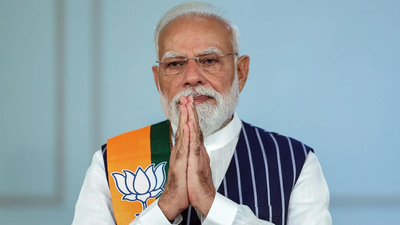
Women’s Reservation Bill: ‘If there is a delay, it will be a grave injustice’: PM Modi urges support for Women’s Reservation Bill ahead of Parliament session | india news
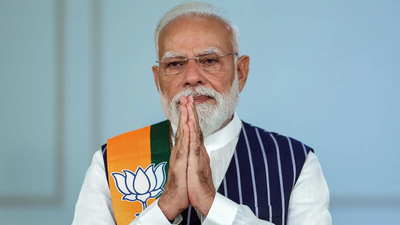
New Delhi: Prime Minister Narendra Modi on Tuesday shared a detailed letter addressed to the women of India, dedicated to “women power” and reiterated the government’s push for reservation for women in legislative bodies. Posting the letter on Twitter, the Prime Minister said women across the country are appreciating the initiative to ensure their representation, terming it a long overdue reform and urged support from the public ahead of the special Parliament session from April 16 to 18.Posting the letter on Twitter, the Prime Minister said women across the country are appreciating the initiative to ensure their representation, calling it a long overdue reform.
In his letter, PM Modi lauded Dr Babasaheb Ambedkar on the occasion of his birth anniversary, remembering his contribution to nation building and constitutional values.The Prime Minister said that Parliament will meet again on April 16 to consider the constitutional amendment related to the Nari Shakti Vandan Act, expressing hope that it will be passed. She said there is “tremendous enthusiasm” among women across the country about the prospect of greater participation in shaping a “developed India”.In the letter, the Prime Minister highlighted the growing presence of women in sectors including startups, science, innovation, education, arts and sports and described it as one of the most significant developments in recent times. He said that Indian women athletes are winning medals, breaking records and inspiring the young generation.She also pointed to grassroots efforts like self-help groups and “Lakhpati Didis” as examples of expanding women-led empowerment and self-reliance across the country.PM Modi said the issue has seen widespread consensus for decades but it has not reached its “logical conclusion”. She noted Vallabhbhai Patel’s early efforts to reserve seats for women and compared India’s early adoption of equal voting rights with the delays seen in other countries.Looking to 2047, when India will complete 100 years of its independence, the Prime Minister said participation of women in policy-making is “absolutely non-negotiable” to achieve the goal of a developed nation. He said this principle guided the passage of the Nari Shakti Vandan Act in 2023 and underpins the current push for constitutional amendment.She wrote, “As the people of India continue to realize the dream of a developed India, let us ensure that justice is done to the aspirations of India’s women power, who constitute almost half of our population. When they become active participants in policy making and decision making, the journey towards a developed India is strengthened.”The PM stressed that timely implementation is important, saying further delays would be “unfortunate” and unjust for women. “It is important that we all come together and ensure that women’s representation in legislative bodies is implemented in letter and spirit as soon as possible. Our democracy will become stronger and more vibrant if the 2029 Lok Sabha elections and various assembly elections in that year are held with complete women’s reservation. And for this the law coming in the Parliament should be passed. “Any further delay would be unfortunate and would be a grave injustice to the women of India,” the PM wrote.She also expressed the view that elections in 2029 could be held with full women’s reservation if the law is passed, while also urging citizens, especially women, to write to their local MPs to support the measure, and described the upcoming Parliament proceedings as historic.
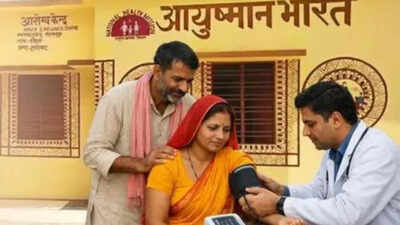
Digital boost for primary care: Center launches CHO app, steps up emergency response india news
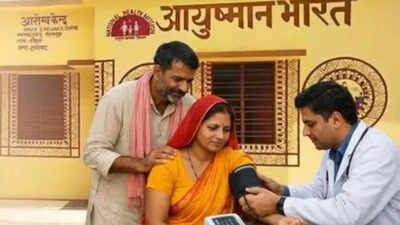
New Delhi: With an aim to strengthen last mile healthcare and improve response during medical emergencies, the Center on Monday launched a mobile application for community health officers (CHOs) that enables real-time patient management and faster referrals to Ayushman Bharat health and wellness centres.The app introduced by the Union Health Ministry is designed to digitalize the clinical workflow at the primary care level. It will allow CHOs to register patients, access medical histories, and update treatment records in real-time, replacing largely manual processes that often slow down care delivery.Officials said the platform will also aid in early identification of high-risk cases and emergencies, enabling frontline providers to initiate quick referrals to higher facilities. This is expected to be important in conditions such as cardiovascular events, stroke, maternal complications and serious infections, where timely intervention can significantly improve outcomes.Public health experts said delays in documentation and communication at the primary care level can impact both routine care and emergency response. With instant access to patient data and standardized digital records, the app can help CHOs track older patients more effectively, ensure continuity of care, and flag complications early.The rollout is part of the government’s broader digital health push under Ayushman Bharat Digital Mission, which aims to build an integrated health data ecosystem across the country. By digitally connecting primary care providers with higher centres, the initiative is expected to streamline referrals and improve coordination at different levels of care.Officials said the application will also strengthen supervisory oversight, allowing administrators to monitor service delivery patterns, identify gaps and assess response timelines, including emergency situations.India currently has more than 1.6 lakh Ayushman Bharat health and wellness centers serving as the first point of contact for a large section of the population, especially in rural and deprived areas. CHOs, usually trained nurses or physicians, play an important role in providing preventive, promotive, and basic curative services at these facilities.