FSSAI tightens food safety rules for gram flour, seafood and seed oil. india news

FSSAI tightens food safety rules for gram flour, seafood and seed oil

New Delhi: From gram flour and edible oils to shrimp and cold-pressed seed oils, India’s food regulator is tightening safety standards across a wide range of food items consumed daily in households amid growing concerns over contamination, adulteration and chemical residues.Food Safety and Standards Authority of India (FSSAI) has issued revised and draft rules covering heavy metals, toxins, antibiotic residues and quality standards for both commonly used food items and emerging food products.Under the revised rules to come into effect from December 1, 2026, FSSAI has expanded the lead and cadmium-related contamination standards to also include pulses, including pulse flour and packaged mixes like besan.The regulator has also updated the limits for aflatoxins – toxins produced by certain fungi – in oils, oilseeds and ready-to-eat oilseed products. It has additionally revised the testing criteria for arsenic in fish oil and updated the standards for safrole, a naturally occurring substance found in foods and beverages containing nutmeg and mace.In another significant change, amid growing global concern over antimicrobial residues entering the food chain, FSSAI has introduced residue limits for antibiotics such as trimethoprim and oxolinic acid in seafood products including shrimp, prawn and fish products.Monita Gehlot, a dietician at AIIMS Delhi, said strict contamination standards were important as chronic exposure to heavy metals like lead, arsenic and cadmium can increase the risk of kidney damage, neurological disorders and cancer over time. He said expanding surveillance from pulses to pulse flour is important as products like gram flour are now widely used in packaged snacks, ready-to-cook foods and home cooking.Gehlot also warned that if antibiotic residues persist in seafood for long periods of time, it could lead to antimicrobial resistance, allergies and reduced effectiveness of life-saving drugs.In a separate draft notification, FSSAI has proposed quality and safety standards for underutilized edible oils made from chilli, tomato, melon and okra seeds as demand for cold-pressed oils, seed-based snacks and plant-based nutrition products is increasing.The proposed norms require these oils to be kept free from adulteration, harmful impurities, rancidity and mineral oil contamination, while limits are also set for moisture, acidity and metal content.According to experts, the popularity of cold-pressed and specialty seed oils has grown rapidly in urban India, but regulation has not kept pace with market growth, leading to concerns over adulteration, misleading labeling and inconsistent nutritional quality.The draft rules also include edible seeds such as watermelon, cucumber, pumpkin, sunflower, sesame and flax sold in raw, roasted or salted form, which are required to be cleaned and free from insects, fungus and visible contamination before sale.FSSAI has invited public comments for 60 days before finalizing the draft rules.

Source link

Haifa Port: A strategic maritime link for India amid Middle East tensions india news

Why has Israel's Haifa port become important for India's trade and strategic ambitions?
Haifa Airport (Image Source: ANI)

As tensions continue to escalate across the Middle East, Haifa port is being seen as a vital link in India’s growing strategic and economic engagement with the region.Located in a natural, protected bay in northeastern Israel, the Port of Haifa is one of Israel’s three major international ports and handles the transportation of goods, cargo, and tourists.Officially opened in 1933, the port has the capacity to handle approximately 30 million tons of cargo annually, including 1.5 million TEU (twenty-foot equivalent units) shipping containers.Why does Haifa Port matter to India?In 2023, industrialist Gautam Adani meets Israeli Prime Minister Benjamin Netanyahu during the official handover ceremony of Haifa Port. Adani Group. A consortium of Adani Ports and Special Economic Zone (APSEZ) and Israel’s Gadot Group won the bid to privatize Haifa Port for US$1.18 billion, with Adani Group holding a 70 percent stake in the consortium.The acquisition was widely seen as one of India’s most significant foreign infrastructure investments and a major strategic move in West Asia.Despite the uncertainty, operations at the port are reportedly continuing uninterrupted, highlighting its importance not only to Israel’s economy, but also to India’s long-term connectivity and trade ambitions.In March 2026, Adani Group said in a statement that its Haifa port in Israel is completely safe and in working order amid the escalating military conflict in Iran. Adani Ports and Special Economic Zone said all port assets and infrastructure are completely safe.Major exports between India and IsraelAccording to the Indian Embassy in Israel, while bilateral trade has traditionally been dominated by diamonds, petroleum products and chemicals, cooperation in sectors such as electronic machinery, high-tech products, communication systems and medical devices has been growing in recent years.India also remains a major focus country for Israel’s trade expansion efforts.1. India’s major export to IsraelThese include pearls and precious stones, automotive diesel, chemicals and mineral products, machinery and electrical equipment, plastics, textiles and apparel, base metals, transport equipment and agricultural products.2. Israel’s main export to IndiaThis includes diamonds and precious stones, chemicals and fertilizers, machinery and electrical equipment, petroleum oils, defence-related products and transport equipment.Could further escalation of tensions affect Israel’s trade with India? For India, stability in the Middle East is directly linked to trade, energy security and regional connectivity.Haifa Port is also expected to become one of the most important hubs in the India-Middle East-Europe Economic Corridor (IMEC).Under the proposed corridor, goods from Indian ports would travel by sea to the UAE and then travel through a railway network in West Asia before reaching Haifa, creating a faster trade route connecting India to Europe.Any prolonged conflict in the region could disrupt shipping routes, impact maritime movements and slow down IMEC-related strategic projects.linked to india through historyIn 1918, Indian cavalry soldiers fought in the Battle of Haifa during World War I and helped liberate the city from Ottoman control.Haifa is strategically important because of its port and railway connections. Its capture would allow the Allied forces to maintain supply routes while continuing their advance deeper into Ottoman territory.India also celebrates Haifa Day on 23 September every year to honor the Indian soldiers who participated in the war.Statues and monuments associated with Indian cavalry regiments exist in both countries, while Indian Army units tracing the lineage of those regiments continue to preserve the memory of the battle.

Source link

From Deputy to CM: After Siddaramaiah’s departure, Congress’ trouble-shooter DK Shivakumar finally got Karnataka’s top post. india news

From Deputy to CM: After Siddaramaiah's departure, Congress' trouble-shooter DK Shivakumar finally gets Karnataka's top post

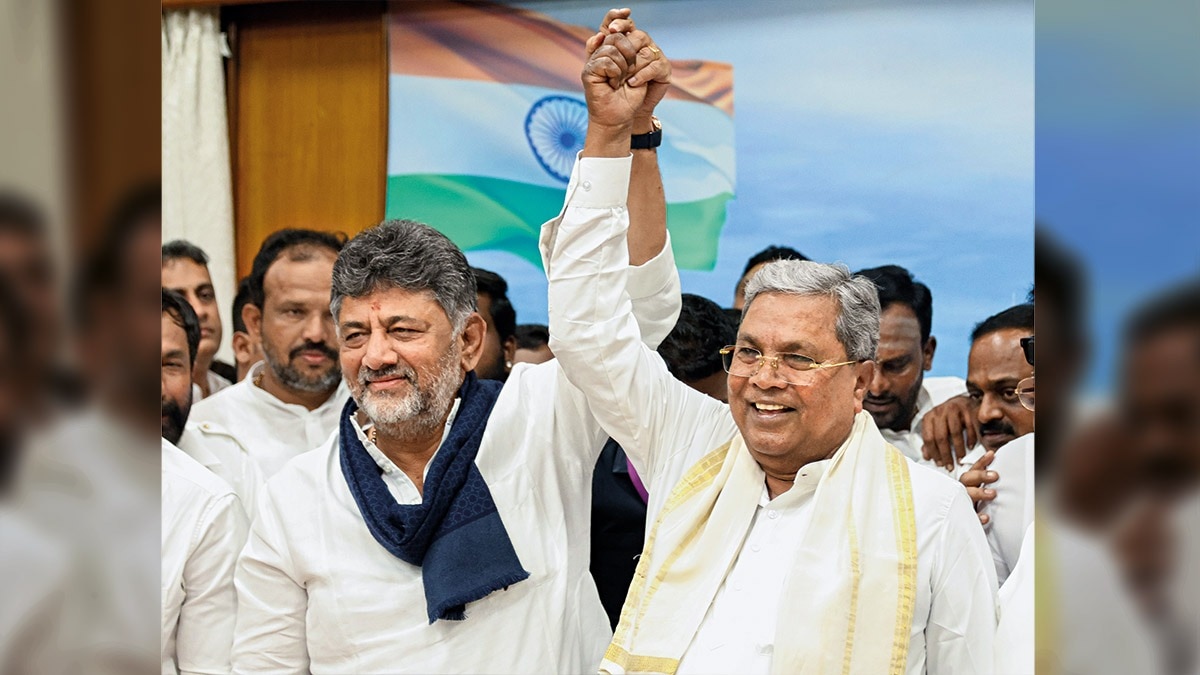
DK Shivakumar Finally ready to take charge as Chief Minister of Karnataka Siddaramaiah His resignation from the top post on Thursday was the culmination of the decades-long political journey of the Congress leader, who emerged as the party’s trusted troubleshooter and mass leader in the state.After the two leaders visited Lok Bhavan earlier in the day, DK Shivakumar’s supporters celebrated by distributing sweets outside his Bengaluru residence.In Kalaburagi, Indian Youth Congress members performed a special puja at the Sri Sharan Basaveshwara Temple and demanded that Karnataka minister Priyank Kharge be appointed deputy chief minister if Shivakumar holds the top post.

The rise and rise of DKS

From student politics in Bengaluru to becoming one of the most powerful organizers of the Congress party in Karnataka, DK Shivakumar has built a political career defined by flexibility, loyalty to the party high command and an unmatched reputation as a trouble-shooter.Known as a mass leader with keen organizational skills, Shivakumar began his political journey at the age of just 18 when he joined the National Students Union of India (NSUI), the student wing of the Congress. Between 1981 and 1983, he served as the president of the Bengaluru district unit of NSUI while studying at Rama Narayana Chellaram College, Bengaluru. He later joined the Youth Congress and became the general secretary of its Karnataka unit.His entry into electoral politics was absolutely easy. In 1985, the Congress fielded young Shivakumar against veteran Janata Dal leader and future Prime Minister HD Deve Gowda in the Sathanur assembly constituency. Although he lost, Shivakumar attracted attention by putting up a tough fight against one of the tallest leaders of Karnataka.Two years later, in 1987, he was elected to the Bengaluru Rural District Panchayat from Sathanur. In 1989, he won his first assembly election from Sathanur on a Congress ticket, beginning a winning streak that cemented his position as one of the party’s strongest leaders in old Mysore.

Rise of DKS within Congress

Shivakumar’s rise within the Congress was rapid in the early 1990s. He played a key role in bringing the S Bangarappa-led government to power in Karnataka and was rewarded with a ministerial berth. As Jail Minister, he became one of the youngest ministers in the state cabinet.Even setbacks failed to stop his political rise. Denied a Congress ticket in the 1994 assembly elections, Shivakumar contested the election as a rebel candidate and won, underscoring his independent political strength and grassroots support.By 1999, Shivakumar had emerged as an influential strategist within the Karnataka Congress. He supported SM Krishna during his rise in the party and played a major role in the Congress campaign that won the assembly elections with 139 seats. Shivakumar organized a large campaign during the campaign and was credited with garnering support across the state. He won the Sathanur seat for the third consecutive time and was inducted into the cabinet as Cooperation Minister.Over the years, Shivakumar held several key portfolios, including urban development and energy. As Chairman of the State Planning Board and Cabinet sub-committees, she pioneered youth empowerment and women-centric initiatives such as Rajiv Yuva Shakti and Stree Shakti.His reputation as the crisis manager of the Congress Party continued to grow. Be it protecting MLAs during times of political instability or negotiating delicate alliances, Shivakumar has time and again proved his importance to the Congress leadership. In 2004, after the Congress-JD(S) alliance came to power in Karnataka, he played an important role in the internal negotiations despite not getting a place in the cabinet.Shivakumar also developed a reputation for rivaling the Deve Gowda family politically. In 1999, he defeated Deve Gowda’s son HD Kumaraswamy in Sathanur, despite the national stature of the JD(S) patron after his tenure as Prime Minister.

time of disputes

However, his political journey was not without controversies. In August 2017, the Income Tax Department had raided properties belonging to him. In September 2019, Shivakumar was arrested by the Enforcement Directorate in an alleged money laundering case, spending several weeks in jail before being granted bail. The episode triggered a massive show of support from Congress workers, further cementing his image as a leader who had weathered political and legal storms.

DKS revives Congress in Karnataka

Soon after his release, the Congress leadership reiterated its confidence in him. On March 11, 2020, Sonia Gandhi appointed Shivakumar as the President of the Karnataka Pradesh Congress Committee (KPCC), and tasked him with rebuilding the party in the state where it was struggling against the BJP.Shivakumar threw himself into reviving the organisation, by running an aggressive campaign coupled with grassroots mobilisation. Along with senior Congress leader Siddaramaiah, he led the party’s campaign in the 2023 Karnataka Assembly elections. The Congress registered a decisive victory and ended the BJP’s rule in the only southern state it ruled.The victory also intensified speculation about the chief ministerial post, with Shivakumar emerging as one of the strongest contenders due to his organizational role and electoral success. Although Siddaramaiah was ultimately selected as Chief Minister, Shivakumar was named Deputy CM – a recognition of both his political clout and his years of loyalty to the Congress.For many within the party, the appointment is the culmination of the decades-long journey of a leader who evolved from a student activist to the Congress party’s trouble-shooter in Karnataka politics.

Source link

Trauma Care Access: Supreme Court of India declared the right to access trauma care as constitutional. india news

India gets constitutional right to trauma care; Supreme Court orders sweeping changes in nationwide emergency response
India gets constitutional right to trauma care; Supreme Court orders improvement in nationwide emergency response (Image credit: ANI)

Mumbai/New Delhi: In a landmark judgment with far-reaching implications for motorists, hospitals and emergency responders, the Supreme Court has recognized access to trauma care as an integral part of the right to life under Article 21 of the Constitution and ordered a timely overhaul of India’s fragmented emergency care system.Order passed in SaveLife Foundation and Ors. The Union of India on May 26, among others, could reshape the way accident and trauma victims are treated across the country – from the moment of injury to definitive hospital care.The court’s directions are binding on all 36 states and union territories and cover the entire spectrum of trauma, including not just road accidents but also falls, burns, drowning, industrial accidents, fires, explosions and disaster-related injuries.For millions of Indian motorists – especially in dense urban areas like Mumbai and across Maharashtra, where traffic congestion and delays in emergency response remain a constant concern – this decision could prove to be game-changing.According to the NCRB data cited before the court, around 4.67 lakh accidental deaths are recorded annually in India. Road accidents alone cause approximately 1.77 lakh deaths every year. These figures become even more troubling when viewed against long-standing evidence that many of these deaths are preventable.The Law Commission’s 2019 report had earlier concluded that nearly half of road accident deaths could be averted by timely medical intervention, while the 2021 Niti Aayog-AIIMS Emergency and Injury Care Report found that delays in emergency care contribute to at least 30% of trauma-related deaths.Despite this burden, India had no unified and enforceable trauma-care architecture. The responses of 34 states and union territories placed before the court revealed a patchwork system marked by multiple emergency numbers, disparate ambulance standards, inadequate trauma registries and inconsistent implementation of existing central schemes.It was this systemic gap that prompted SaveLife Foundation to approach the apex court in October 2024, seeking recognition of trauma care as a constitutional right and stronger implementation of the existing emergency framework.A bench of Justices JK Maheshwari and Atul S Chandurkar stopped short of creating an entirely new statutory regime, but issued broad directions to translate the policy framework into enforceable obligations.Perhaps the most visible change for citizens will be the integration of multiple emergency helplines into a single national number 112 within three months. Numbers like 100, 101, 102, 108, 1033 and 1091 are to be integrated technically and operationally with large-scale media awareness campaigns.The court has also ordered states to set up physical and digital grievance redressal systems for good Samaritans – citizens who help trauma victims at accident sites. Although protected under Section 134A of the Motor Vehicles Act and Good Samaritan rules, many spectators remain afraid of police questioning or legal implications.For road users, ambulance improvements could be equally important. All registered ambulances – public and private – must adhere to the National Ambulance Code, install GPS or vehicle tracking systems and integrate with helpline 112. States have been directed to conduct structured audits covering response time, equipment, quality of care and patient outcomes.The order also addresses a long-recognized shortage of trained emergency personnel. States will have to adopt the standardized emergency medical technician curriculum notified by the National Commission for Allied and Health Care Professions within three months.Another major reform is the creation of state stroke registries linked to a coordinated national registry. Health experts have long argued that India’s inability to systematically record trauma cases has hindered policy planning and resource allocation.The court directed states to grade and designate public and private hospitals according to trauma-care capacity. Importantly, this classification is no longer limited to national highways alone, but extends to state highways, district roads and urban and suburban areas – an important provision for cities like Mumbai where severe trauma cases often occur away from highway corridors.Equally important is the effort to implement the Centre’s cashless treatment scheme for road accident victims – PM Rahat. States have been given eight weeks to complete hospital designation and related digital systems. The court made it clear that failure to implement the scheme would be a violation of the Motor Vehicles Act.The Supreme Court has maintained constant monitoring of the case. Copies of the order are to be sent to the Chief Secretaries of all States and Union Territories, who will have to submit action taken reports within the specified timelines. The case is expected to come back before the court after four months for further directions.Piyush Tiwari, founder of SaveLife Foundation, called the verdict a watershed moment for public health and constitutional rights and said it ensures that no citizen should be denied timely emergency care after suffering a traumatic injury.For India – where stroke remains a silent public-health crisis and where survival often depends on opportunity, geography and affordability – this decision signals a shift from policy aspiration to constitutional promise.

Source link

Karnataka Chief Minister likely to step down; DKS, Siddaramaiah Bonhomme: What happened in the main breakfast meeting? | india news

Karnataka Chief Minister likely to step down; DKS, Siddaramaiah Bonhomme: What happened in the main breakfast meeting?

New Delhi: Chief Minister of Karnataka Siddaramaiah Met Deputy CM on Thursday DK Shivakumar At breakfast at his official residence ‘Kaveri’, where several state cabinet ministers were also present. During the meeting, Siddaramaiah reportedly informed his ministers that he would step down from the post, clearing the way for DK Shivakumar and ending the months-long tussle over the top chair.Shivakumar, as his successor, warmly hugged the Chief Minister upon his arrival. He then touched Siddaramaiah’s feet and took his blessings, giving rise to speculations about the expected handover.

Siddaramaiah’s resignation, Shivakumar’s promotion

After the meeting, ministers confirmed that Siddaramaiah has formally announced his decision to step down during the day and DK Shivakumar is set to take charge as the next chief minister.“The Chief Minister will resign at 3 o’clock. CM Siddaramaiah said that we will make DK Shivakumar the new CM. He will become the CM,” HK Patil told reporters after the meeting at Siddaramaiah’s official residence ‘Kaveri’.As ministers and MLAs started leaving the residence after the breakfast meeting, Karnataka minister Ishwar Khandre said the Governor had already been informed about Siddaramaiah’s decision.“The Governor has been informed. Siddaramaiah will meet him at 3 pm. I attended the meeting. We all thanked the Chief Minister for guiding us for so many years. He will talk to you himself. He has already called a press conference and will explain everything to you,” Khandre told reporters in Bengaluru.Video | Bengaluru: Ministers and MLAs leave from Karnataka CM Siddaramaiah’s residence after breakfast meeting.Minister Ishwar Khandre says, “The Governor has been informed. Siddaramaiah will meet him at 3 pm. I attended the meeting. We all thanked the Chief Minister…” pic.twitter.com/r9ekTRcu4A– Press Trust of India (@PTI_News) 28 May 2026There were also indications that Siddaramaiah may travel to New Delhi to seek approval from the Congress high command on the selection of deputy chief ministers in the new government.

Siddaramaiah informed ministers about his resignation

The breakfast meeting at Siddaramaiah’s residence became the focal point of Karnataka politics as senior ministers gathered amid growing speculation over Congress leadership change.According to the leaders present in the meeting, Siddaramaiah informed his cabinet colleagues about his decision to step down from the post of Chief Minister. This announcement came soon after the completion of three years of the Congress government’s tenure.Senior ministers including Priyank Kharge, KJ George, MB Patil, Ramalinga Reddy and HK Patil attended the meeting, while security around the residence was tightened in anticipation of major political developments.

Shivkumar points towards Siddaramaiah

Deputy Chief Minister and Karnataka Congress president DK Shivakumar arrived at the residence along with several cabinet ministers and senior Congress leaders considered close to Siddaramaiah.In a moment that immediately took on political significance, Siddaramaiah warmly welcomed Shivakumar before touching the chief minister’s feet as a mark of respect. Later both the leaders hugged in front of party colleagues and ministers.Photographs of the conversation were released by the offices of both the leaders and later shared on social media by Karnataka Congress.Sharing the pictures, Karnataka Congress wrote, “That day, this day, forever… Unity is our strength! Public service is our eternal commitment!”The post was widely seen as an attempt by the party to display unity at a time of change within the Karnataka government.

State Home Minister hints at CM’s resignation

Ahead of the meeting, Karnataka Home Minister G Parameshwara said Siddaramaiah had invited ministers for breakfast to thank cabinet colleagues before stepping down.Responding to a question on whether Siddaramaiah could enter national politics or the Rajya Sabha after resigning, Parameshwara said any such decision would depend on the Congress leadership.“That’s it now, this decision has to be taken by the high command. So, at this point of time, I don’t know whether he was offered any post in Delhi or not. It is up to the high command,” he said.

Celebration has started outside Shivakumar’s residence

As news of Siddaramaiah’s decision spread, celebrations broke out outside DK Shivakumar’s residence in Bengaluru, where supporters distributed sweets in hopes of him becoming the chief minister.Amidst the increasing political turmoil, Shivakumar’s brother former MP DK Suresh also reached the residence.In Kalaburagi, Indian Youth Congress workers performed a special puja at the Sri Sharan Basaveshwara Temple, demanding that Karnataka minister Priyank Kharge be appointed deputy chief minister if Shivakumar holds the top post.


Source link

Government health expenditure tripled in decade, domestic medical burden fell. india news

Government health expenditure triples in decade, domestic medical burden falls

New Delhi: Government expenditure on health care in India has almost tripled in the last decade, while the amount spent directly by households on treatment out of pocket has declined sharply, according to the latest National Health Accounts (NHA) estimates released by the Union Health Ministry.The report showed that government health expenditure (GHE) is expected to increase from ₹1.30 lakh crore in 2013-14 to ₹3.85 lakh crore in 2022-23, indicating a large increase in public investment in healthcare.Government health expenditure as a share of GDP increased from 1.15% to 1.43% during this period, while its share in total health expenditure increased from 28.6% to 43.7%.One of the biggest changes highlighted in the report was the decline in out-of-pocket expenditure (OOPE) – the money that families spend directly on medicines, hospitalization and treatment. OOPE as a share in total health expenditure to decline from 64.2% in 2013-14 to 43.4% in 2022-23.The ministry said the decline reflects better access to public health services and financial security schemes, including the expansion of more than 1.8 lakh Ayushman Arogya Mandirs that provide free medicines, diagnostics and primary health care close to communities.The report also cited findings of the NSO’s 80th round of survey, which showed a decline in household medical expenditure, including zero average out-of-pocket expenditure for outpatient care at public health facilities.Officials said medicines and health supplements remain the largest contributors to domestic medical expenses. To reduce this burden, the government expanded free medicine schemes and increased access to low-cost medicines through Jan Aushadhi Kendras, Amrit Pharmacies and price control measures.Government spending on health care got an additional boost, rising to 1.84% of GDP in 2021-22 to support emergency response measures and the nationwide vaccination programme.The report also revealed that government expenditure on primary health care more than doubled from ₹0.5 lakh crore in 2013-14 to ₹1.4 lakh crore in 2022-23, while per capita government health expenditure increased from ₹1,042 to ₹2,786.Social security expenditure on health care, including Ayushman Bharat PM-JAY and government-funded insurance schemes, increased from 6% to 9.9% of total health expenditure during the decade.

Source link

‘Verbal abuse, misogyny’: TMC MP Kakoli Ghosh Dastidar writes letter to Om Birla against party MP Kalyan Banerjee. india news

'Verbal abuse, misogyny': TMC MP Kakoli Ghosh Dastidar writes letter to Om Birla against party MP Kalyan Banerjee
Kakoli Ghosh Dastidar and Kalyan Banerjee

New Delhi: East Trinamool Congress MP Kakoli Ghosh Dastidar on Thursday lodged a formal complaint with Lok Sabha Speaker Om Birla against party MP and current Chief Whip Kalyan Banerjee, alleging that he had ‘repeatedly verbally abused’ her inside Parliament.“I seek your permission to file a formal complaint for redressal against AITC Lok Sabha member Kalyan Banerjee, who has repeatedly verbally abused me inside the Lok Sabha. This misogyny is against many women members and needs to be punished,” Dastidar said in his letter to the Speaker.The complaint comes amid rising tension within the Trinamool Congress following Dastidar’s recent resignation from key organizational posts and public criticism of some sections of the party leadership following the party’s poor performance in the 2026 assembly elections.The four-time MP from Barasat resigned from all organizational responsibilities in TMC on Wednesday, a day after attending the former chief minister’s event. Mamata BanerjeeAsked not to attend the administrative review meeting in Kalyani despite alleged instructions from the party.Dastidar, who earlier served as the national president of the TMC women’s wing and was associated with the party’s ‘Banga Janani’ programme, informed state party president Subrata Bakshi that she would no longer hold organizational roles. The party is yet to officially comment on his latest move.Taking ‘moral responsibility’ for TMC’s defeat in Barasat, he resigned from the post of president of the party’s Barasat organizational district unit. The resignation was accepted by the party, which later appointed Tapas Chatterjee as the new district chief.Dastidar had also publicly attacked political consultancy firm I-PAC and accused it of pressurizing party leaders and workers and contributing to the party’s electoral decline.He had said, “The way this organization has operated and mistreated us, the way they have pressured us, this is not the way to operate. Wherever they go, I think they will deliver dangerous results in the elections.”Veteran TMC leader Dastidar, considered close to Mamata Banerjee for a long time, was removed from the post of party chief whip in the Lok Sabha after the defeat in the assembly elections and Kalyan Banerjee was appointed in his place.He had alleged increasing ‘criminalisation’ within the party and urged the leadership to once again rely on ‘honest, experienced and dedicated’ workers to rebuild the TMC’s image after the electoral setback.

Source link

PM Modi celebrated Eid-ul-Adha with warm wishes for unity and prosperity. india news

PM Modi wishes the nation on Eid-ul-Azha: 'Prayers for everyone's success and good health'

New Delhi: Prime Minister Narendra Modi on Thursday greeted the nation on the occasion of Eid ul-Adha, as India celebrated Bakrid with special prayers and charitable festivities.“Happy Eid-ul-Azha! May this occasion deepen the spirit of brotherhood and happiness in our society. Praying for everyone’s success and good health,” Modi posted on Twitter.Rahul Gandhi also shared his wishes on social media regarding this auspicious occasion. He wrote, “Wishing you and your family a very happy Bakrid. May your home be filled with warmth and togetherness today. Eid Mubarak.”

Celebration and preparations all over India

Special prayers were offered at Fatehpuri Masjid in Old Delhi, while large crowds gathered at Jama Masjid in New Delhi and various Eidgahs to offer prayers.Joint Commissioner of Police Madhur Verma, during routine security patrolling, said that the celebrations have been completely incident-free so far and hoped that the trend would continue.Eid-ul-Azha prayers were conducted peacefully under police surveillance in Sambhal district of Uttar Pradesh. Temple attendant Om Prakash said the Hindu and Muslim communities have co-existed harmoniously for generations, with the temple and the Eidgah sharing a common wall.Jannati Darwaza was opened early in the morning at the Dargah of Khwaja Garib Nawaz in Rajasthan, where a huge crowd gathered to offer namaz.The festival is also being celebrated peacefully in other states including Maharashtra, West Bengal, Bihar and Rajasthan.In Uttar Pradesh, Joint Commissioner of Police Bablu Kumar said 46 officers of additional SP rank and about 14 officers of deputy SP rank have been deployed with the police force of about 1,500 personnel. Meetings were held with peace committees by all SHOs and ACPs of all zones.Chandannagar Police Commissioner in West Bengal Sunil Kumar Yadav said 12 companies of the Central Reserve Police Force (CRPF) along with Rapid Action Force (RAF) and Emergency First Response (EFR) teams would be deployed. About 22 coordination meetings were held with community leaders.“All qurbani (sacrifices) will be done only in closed areas. Meat distribution will also be done in strictly closed areas only. Traffic flow will be normal,” Yadav said.

Source link

Take care of yourself, help others: PM Modi’s heat protection tips. india news

Take care of yourself, help others: PM Modi's advice on heat protection

New Delhi: As a large part of India grapples with heat wave conditions, PM Narendra Modi on Wednesday urged people to take adequate precautions and help others and later in the Cabinet meeting called for a whole-of-nation approach to deal with the scorching heat and asked various departments to take measures to provide relief to citizens.Modi told his cabinet colleagues that collaborative effort of the central and state governments, various departments, private sector and citizens is the need of the hour.“Each ministry and department was urged to see what actions and steps they can take to provide relief to citizens and especially ministries like health and water resources,” Information and Broadcasting Minister Ashwini Vaishnav told reporters at a cabinet briefing.The PM directly contacted citizens on social media and asked them to seek guidance from compassion in this “extreme heat”, while also stressing the need to help people and animals and birds around them by keeping water bowls outside their homes.He said, “…some parts of India are witnessing rising temperatures and the challenges that come with it. This summer is harsh on all of us and I urge you all to be as careful as possible. Please stay hydrated, carry water with you when you step out. Give a glass of water to others. In such weather, such kindness goes a long way.”

Source link

An Indian citizen living illegally in the US was arrested by federal authorities for ‘attacking a man with a baseball bat’. india news

Indian citizen living in US illegally arrested by federal authorities for 'attacking a man with a baseball bat'
Indian citizen living in US illegally arrested by federal authorities for ‘attacking a man with a baseball bat’

An Indian citizen who entered the US illegally has been arrested by authorities for attacking another man with a baseball bat.Dhawal Amaratbhai Patel was initially arrested by the Worcester Police Department in Massachusetts on May 16 and charged with assault and battery with a dangerous weapon. According to the police report, Patel got into an argument with a customer at the liquor store where the accused worked, which allegedly escalated to such an extent that he grabbed a baseball bat and attacked the man.However, the United States Department of Homeland Security (DHS) said in a statement on Wednesday that “sanctuary politicians in Massachusetts” did not cooperate with U.S. Immigration and Customs Enforcement (ICE) law enforcement, and Patel was released from jail without notifying ICE law enforcement.ICE arrested Patel on May 18.The statement said Patel entered the United States illegally at an unknown date and time.Acting Assistant Secretary of State Lauren Biss said, “The illegal immigrant from India thought he could beat people up with a baseball bat. Sanctuary politicians released him from jail after his arrest on charges of assault and battery with a dangerous weapon.” “Sanctuary politicians must stop releasing criminals into our communities and work with DHS to deport criminals. By refusing to cooperate with ICE law enforcement, sanctuary politicians are putting the safety of their citizens at risk.

Source link