‘In the interest of sports and justice’: Delhi HC allows Vinesh Phogat to participate in Asian Games selection trials. india news

'In the interest of sports and justice': Delhi HC allows Vinesh Phogat to participate in Asian Games selection trials
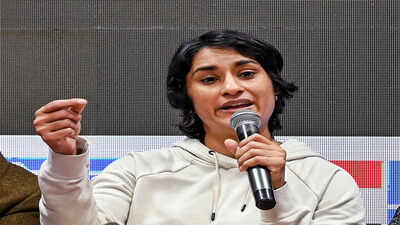
Vinesh Phogat (file photo)

New Delhi: The Delhi High Court The famous wrestler has been allowed Vinesh Phogat to participate in the upcoming Asian Games selection trials, noting that allowing him to participate in the trials was necessary “in the interest of sport and justice”. A bench of Chief Justice DK Upadhyay and Justice Tejas Karia also directed the WFI to video-record the trials to be held on May 30 and 31. The court further ordered that independent observers from the Sports Authority of India (SAI) and the Indian Olympic Association (IOA) be present during the process. “The Appellant shall be permitted to participate in the selection trials for the Asian Games, 2026, which are scheduled for 30.05.2026 and 31.05.2026,” the court said in its order uploaded on Saturday, a day after it was passed. “The policy and circular are clearly exclusionary in nature as they do not give any discretion to the respondent No. 1 (WFI) to consider eminent players like the appellant in view of the sabbatical taken on account of her maternity leave,” the bench said. The court also observed that the grounds cited in WFI’s show cause notice to Phogat appear to be “pre-determined” and amount to reopening of settled issues. The order came on Phogat’s appeal against the May 18 decision of a single-judge bench which had refused to grant him interim relief with regard to his participation in the trials. Phogat, an internationally acclaimed wrestler, was disqualified from the women’s 50kg final at the 2024 Summer Olympics in August 2024 after she was found 100 grams overweight during the morning weigh-in.(With PTI inputs)

Source link

‘I am neither unemployed nor lazy but…’: Sonam Wangchuk calls herself an ‘honorary cockroach’ india news

'I am neither unemployed nor lazy but...': Sonam Wangchuk calls herself 'honorary cockroach'

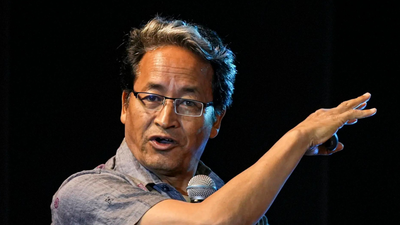
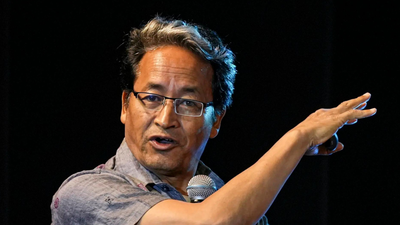
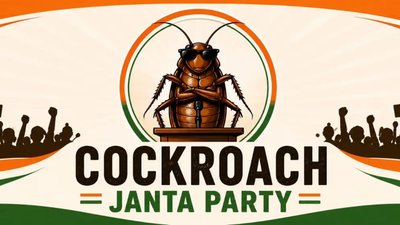
environmentalist and educationist Sonam Wangchuk On Saturday expressed support for the online “Cockroach” movement led by the self-styled “Cockroach Janata Party” (CJP) and described himself as an “honorary cockroach”. He also urged the government to pay attention to the concerns of the youth instead of suppressing their digital expression.When asked if he would formally join the movement, Wangchuk responded that he was not eligible for membership, but identified with the message being put forward by the group.He said, “I have been asked from many quarters to speak on this. Some people are saying that I should also become its member.” “I feel I am not eligible – I am neither unemployed nor lazy. Sadly, I am not a member. But I consider myself an honorary cockroach,” Wangchuk was quoted as saying by PTI.Online campaigns using satire and the image of a cockroach have gained momentum in recent times. Its founders have alleged a crackdown on their social media presence, claiming account suspension and hacking attempts.The movement has gained attention online, basing itself around issues such as unemployment, exam paper leaks and public accountability. Wangchuk said the campaign should be seen as a democratic response rather than a threat.“First of all, I am very impressed. Such creative expression of our youth is nothing to worry about and nothing to fear. The government should take the message – don’t kill the messenger. If we kill the messenger, the message will not go away.”Drawing comparisons to political cartoons and newspaper caricatures, Wangchuk said that dissent expressed through humor and symbolism is a legitimate democratic tool.He said, “Like cartoonists in newspapers, you don’t shoot them because they have drawn a caricature of the Prime Minister, the Home Minister or the Defense Minister. Similarly, this is also satire. Look at it as a reaction.”Wangchuk also praised the non-violent and imaginative approach of the movement, saying that youth in the country have chosen digital creativity rather than confrontation – something he said reflects the idea of ​​India being a “Vishwaguru”.“I’m impressed that India’s youth want to vent their frustrations in such a creative way – not on the streets with stones, as has happened in other countries,” he said. “It is the duty of the Government of India to respect it, look at it with love and take its message.”At the same time, Wangchuk cautioned that suppressing online spaces for expression could increase frustration among youth. Referring to reports that social media accounts linked to the movement were being shut down, he said authorities should avoid silencing dissent.He said, “Otherwise, what will happen? I hear that their accounts are being closed. Then this anger can go anywhere.”Drawing comparisons to the political unrest in Nepal, Wangchuk argued that restricting creative expression online could have unintended consequences.Wangchuk appealed to the youth to continue their expression peacefully, while also urging the government not to push them into a corner.“This is my message to the government – ​​don’t put pressure on them,” Wangchuk said.He said, “And I request the youth to never go towards violence. Keep raising your voice, no matter how much you talk, never go towards violence. On the other hand, the government should not force them to adopt the path of violence.”Meanwhile, the “iconic” website of the self-styled Cockroach Janata Party (CJP) was removed on Saturday, founder Abhijit Dubke claimed, as he accused the BJP-led Center of working in a “dictatorial” manner.Dipke, whose unconventional digital movement has gained popularity among young social media users, took to Twitter to accuse the government of “dictatorial behaviour”. He claimed that nearly 1 million people had signed up as members of the platform, which has emerged as a Gen Z- and millennial-driven space focused on satire, sarcasm and meme culture targeting the system.The controversy also comes amid outrage over the alleged NEET-UG paper leak, an issue that has sparked anger among lakhs of medical aspirants across the country. Dupke claimed that six lakh members of the Cockroach Janata Party had signed a petition demanding the resignation of Union Education Minister Dharmendra Pradhan over the examination controversy.

Source link

Explainer: BJP mastered the north – why south still resists the saffron wave | India News

Explainer: BJP mastered the north - why south still resists the saffron wave
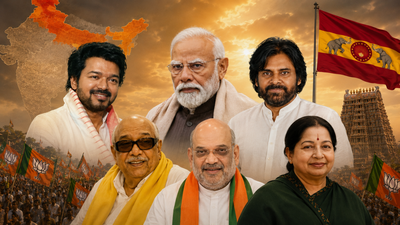
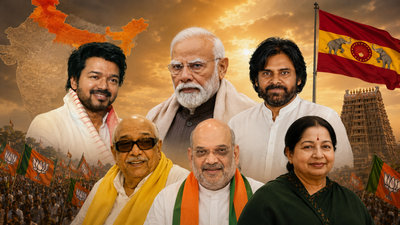
This image is used for representation purpose only (AI-image)

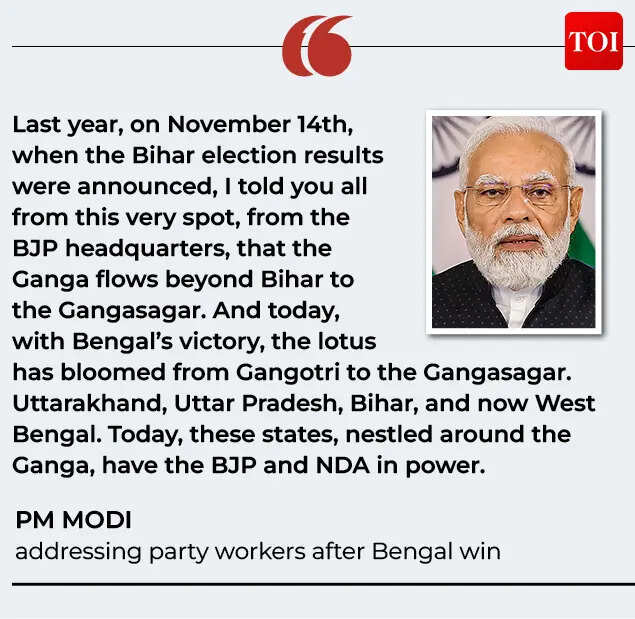
NEW DELHI: It was May 4. Bharatiya Janata Party had scripted one of its biggest political breakthroughs in eastern India. In West Bengal, BJP dethroned Mamata Banerjee and ended the dominance of the Trinamool Congress in a result that dramatically altered the state’s political landscape. The slogan once weaponised against the BJP – ‘Khela Hobe’ appeared to come full circle as the saffron party celebrated a historic victory in Kolkata.Addressing jubilant party workers after the win, Prime Minister Narendra Modi declared, “Ganga se Gangasagar tak BJP ki vijay yatra ne naye itihaas ka nirman kiya hai.”
.

.

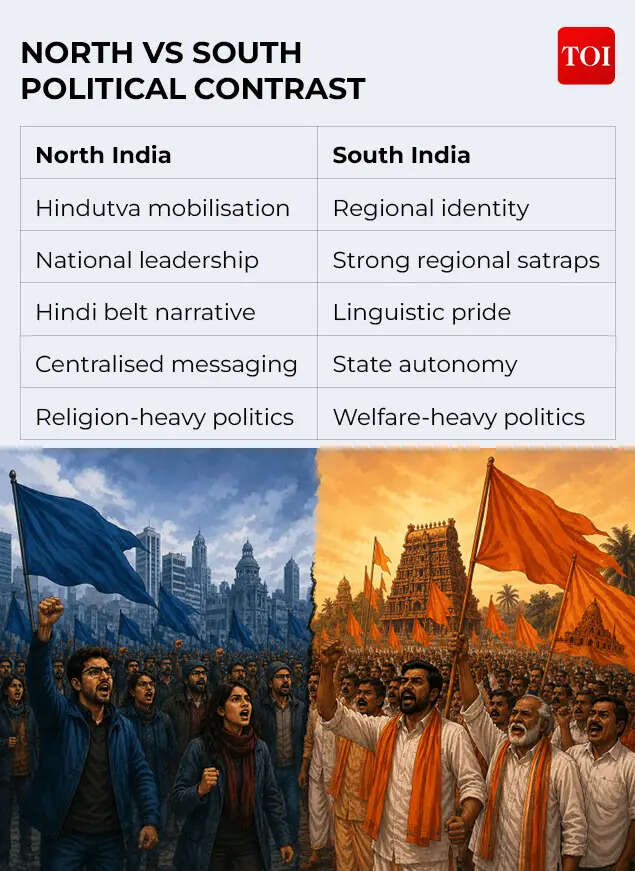
On the same day, the BJP-led NDA also secured a third consecutive victory in Assam, further consolidating the party’s hold in the Northeast. “Assam blesses BJP-NDA once again!” PM Modi posted on X soon after the results.Yet, even as celebrations erupted across the two states, the electoral map in southern India told a sharply different story.In Tamil Nadu and Kerala, the BJP once again failed to translate aggressive campaigning and high-decibel outreach into a major electoral breakthrough. Despite months of political mobilisation led by PM Modi and Union home minister Amit Shah, the party failed to secure double-digit victories in the southern states that remain its most difficult political frontier.The setback was particularly striking in Tamil Nadu, where the BJP had hoped anti-incumbency against the ruling DMK and its alliance arithmetic would create space for expansion. Instead, the emergence of Vijay and his TVK dramatically reshaped the contest. The 2026 assembly elections once again underlined a political reality that has persisted despite the BJP’s rapid national rise: while the party has succeeded in expanding geographically across much of India, the South continues to operate through a distinctly different political grammar.Southern politics is shaped by regional identity, linguistic pride, welfare politics, strong state leadership and the enduring influence of cinema.
.

.

Still, the BJP insists the southern story is unfinished. After the results, party president Nitin Nabin asserted confidently, “South India will also bloom with BJP’s lotus.”For BJP, however, the 2026 verdict raised a larger question: why does a party that dominates vast stretches of India continue to struggle in crossing the southern political barrier?

Southern wall BJP still cannot cross

Despite its extraordinary electoral expansion across northern, western and parts of eastern India over the last decade, BJP continues to face its most persistent resistance in southern India.Karnataka is still the party’s only major and durable success story in the region. Built through decades of Rashtriya Swayamsevak Sangh (RSS) groundwork, Lingayat support, urban consolidation and organisational depth, Karnataka gave the BJP a stable southern base that no other state has yet replicated.Elsewhere, the party’s growth has remained uneven.In Tamil Nadu, the party has struggled to independently emerge as a dominant force despite years of aggressive expansion efforts.In Kerala, it managed to secure its first-ever Lok Sabha seat only in 2024 through actor-politician Suresh Gopi’s victory in Thrissur but continues to struggle in assembly politics dominated by the Congress-led UDF and CPI(M)-led LDF. In Andhra Pradesh, the BJP’s fortunes have largely depended on alliances with the Telugu Desam Party (TDP) and Jana Sena Party (JSP), while in Telangana, an initial surge after the 2019 Lok Sabha elections lost momentum following the Congress resurgence in 2023.The BJP also attempted to counter accusations that it represented a ‘north Indian political imagination’ disconnected from southern linguistic and cultural sensitivities.PM Modi repeatedly invoked Tamil civilisation in speeches, praised Tamil as one of the world’s oldest languages and elevated Tamil cultural symbols onto the national stage. The installation of the Sengol in the new Parliament building and initiatives such as the Kashi Tamil Sangamam formed part of that broader outreach.Yet the electoral conversion remained limited.One major reason is that southern politics often prioritises regional identity, state autonomy and local leadership over centralised national narratives. For the BJP, the challenge in the South is no longer visibility. It is becoming organically rooted within political cultures that remain deeply regional in character.South campaign lacked Bengal-like intensityUnlike West Bengal, where the BJP ran an extraordinarily aggressive and centralised campaign, its southern push lacked the same electoral intensity and sustained ground mobilisation. In Bengal, Amit Shah spent nearly 15 days on the ground overseeing booth-level strategy, while the party deployed its full organisational machinery during the Special Intensive Revision (SIR) exercise and the election campaign. That same level of intense campaigning was found missing in the South.

Identity before ideology: Why southern politics works differently

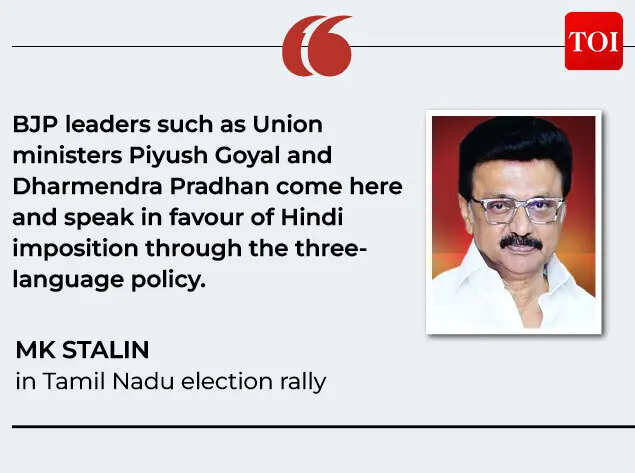
One of the BJP’s biggest challenges in southern India lies in the region’s deeply entrenched linguistic and cultural politics, where regional identity often outweighs religious consolidation in shaping electoral behaviour.This divergence is most visible in Tamil Nadu, where the Dravidian movement transformed politics around Tamil identity, social justice and resistance to perceived central domination from Delhi.The anti-Hindi agitations of the 1960s continue to influence political discourse even today. Resistance to Hindi is often framed not merely as a language debate but as a defence of regional identity and state autonomy.This explains why issues such as the three-language policy, NEET and delimitation continue to generate sharp political reactions.Ahead of the 2026 elections, DMK chief MK Stalin repeatedly accused the BJP of attempting to impose a northern cultural framework on southern states.“BJP leaders such as Union ministers Piyush Goyal and Dharmendra Pradhan come here and speak in favour of Hindi imposition through the three-language policy,” Stalin said during an election rally.
.

.

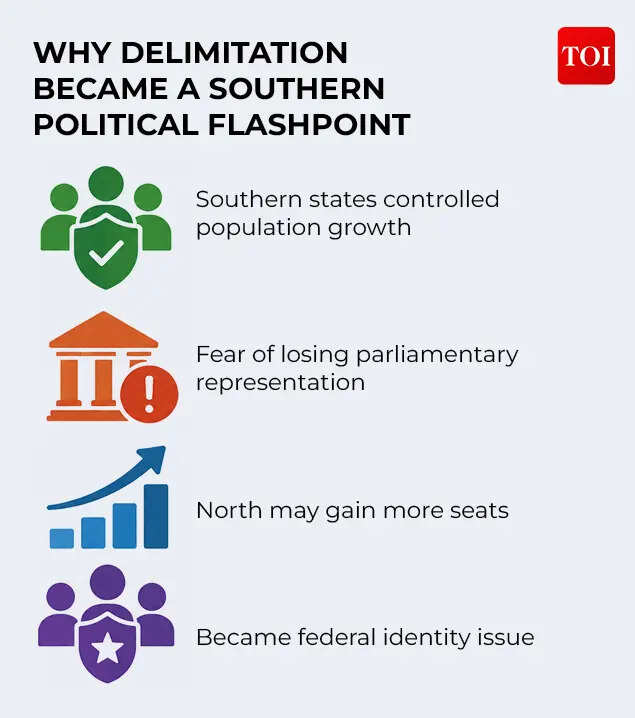
The proposed delimitation exercise further intensified concerns across the South, with regional parties arguing that states which performed better on population control could eventually lose parliamentary representation.The ‘North versus South’ political narrative has also expanded beyond language into economic debates surrounding taxation and fiscal devolution.Tamil Nadu leaders repeatedly argued that the state receives disproportionately low financial returns despite contributing heavily to national tax revenues.
.

.

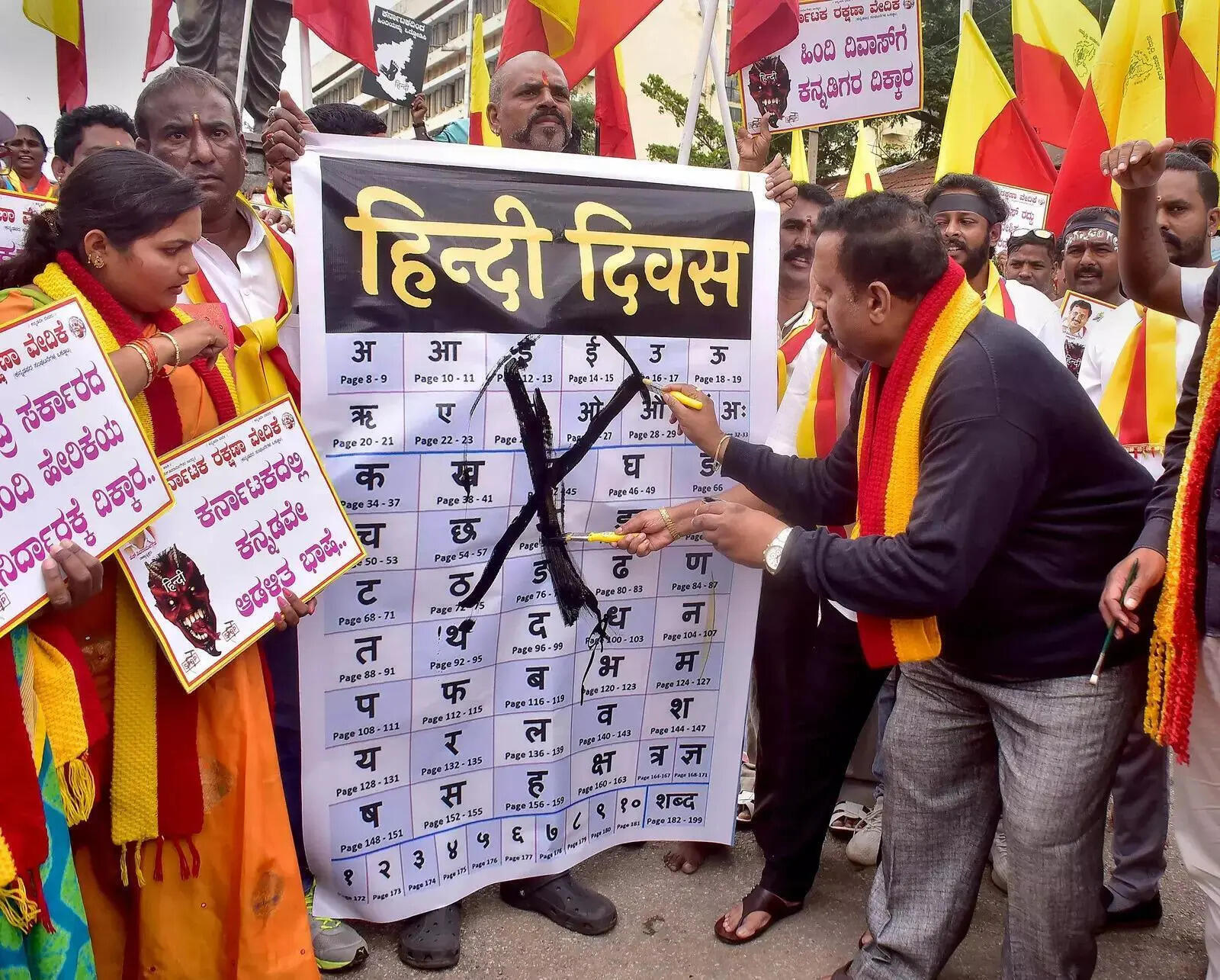
DMK leader TKS Elangovan alleged that while Tamil Nadu receives ‘27 paise’ for every rupee contributed in taxes, states such as Uttar Pradesh receive significantly higher returns. Karnataka chief minister Siddaramaiah similarly accused the Centre of causing a loss of over Rs 45,000 crore to the state through reduced tax devolution after the 15th Finance Commission.Even Karnataka has witnessed visible language assertion movements. In Bengaluru, pro-Kannada groups blackened Hindi signboards and protested against what they described as ‘growing linguistic imposition’.

Cinema, charisma and the southern political imagination

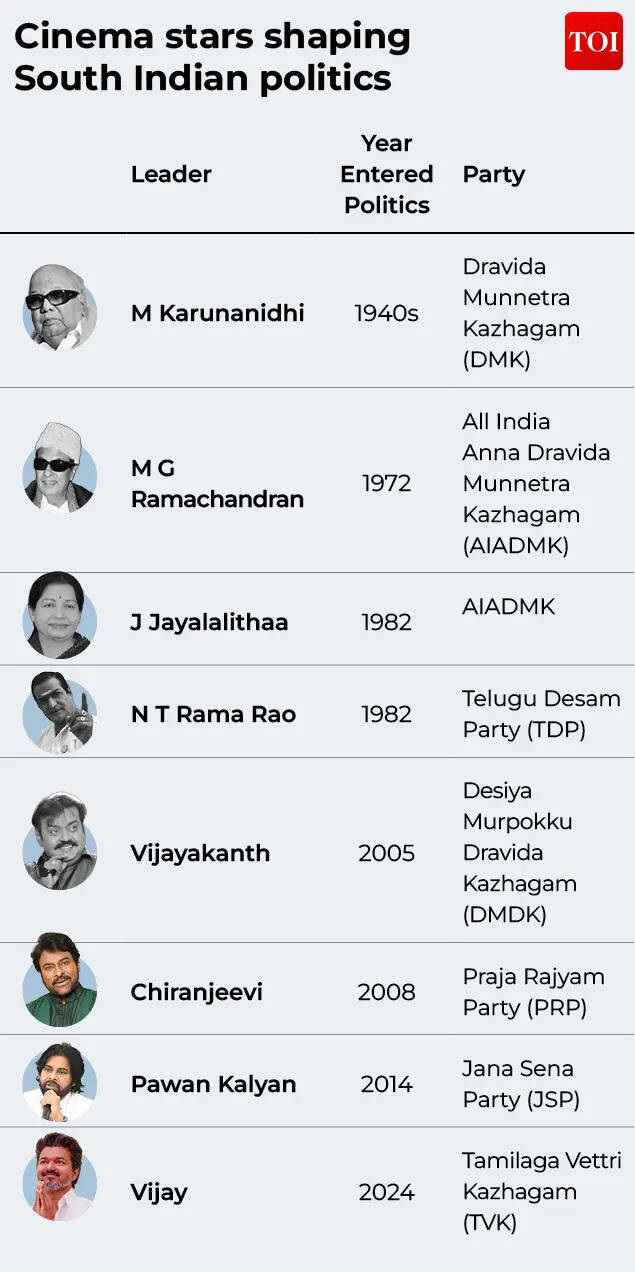
If regional identity shapes southern politics, cinema often shapes its emotional imagination.Few regions have witnessed as seamless a transition from film stardom to political leadership as South India. For decades, cinema has functioned not merely as entertainment but as a powerful vehicle of political mobilisation.Tamil Nadu and Andhra Pradesh pioneered the actor-politician model through leaders such as M Karunanidhi, M G Ramachandran (MGR), J Jayalalithaa and NT Rama Rao (NTR), all of whom converted cinematic popularity into long-term political influence.Their success demonstrated how emotional familiarity and cultural connection could often outweigh ideological mobilisation.That political tradition continues even today.
.

.

In Andhra Pradesh, actor Pawan Kalyan emerged as a key political player through the Jana Sena Party and later became deputy chief minister. In Kerala, actor Suresh Gopi delivered BJP its first-ever Lok Sabha seat from the state in 2024.The latest and perhaps most consequential entrant, however, is Vijay.Through TVK, Vijay transformed one of Tamil cinema’s largest fan bases into an organised political force that reshaped the 2026 electoral landscape in Tamil Nadu.Fan associations in southern India have historically functioned as proto-political organisations conducting welfare activities, building local networks and cultivating long-term emotional loyalty.For parties such as the BJP, this creates a distinct challenge. While PM Modi remains personally popular and capable of drawing large crowds, southern politics has historically rewarded leaders who are viewed as culturally embedded within the state itself rather than nationally projected figures alone.

Tamil Nadu: BJP’s 2026 reality check

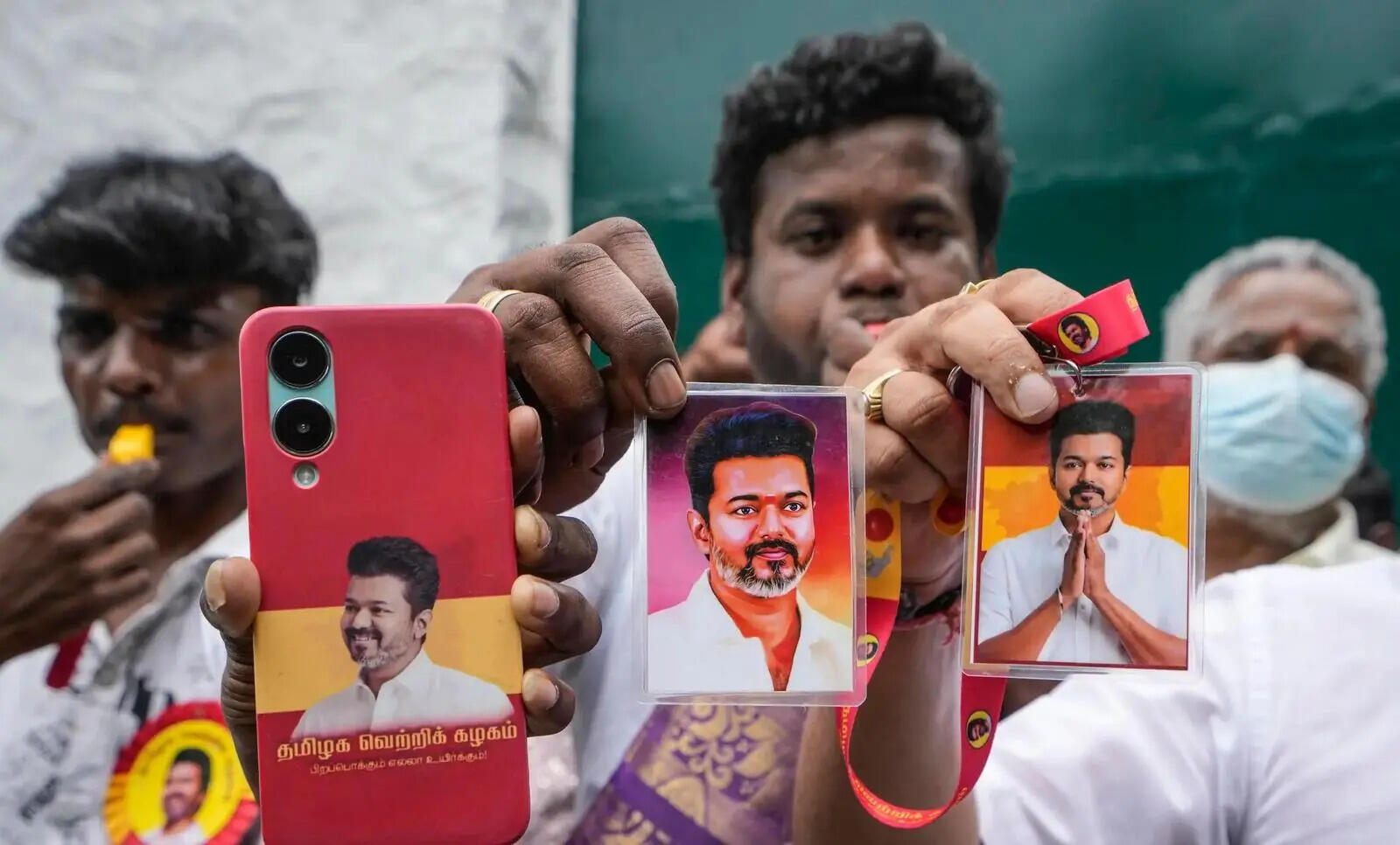
The 2026 Tamil Nadu assembly elections exposed the limits of the BJP’s expansion strategy despite years of aggressive campaigning and organisational investment in the state.While the BJP celebrated landmark victories in West Bengal and Assam, its performance in Tamil Nadu remained modest. Contesting as part of the AIADMK-led NDA, the BJP won just one seat out of the 27 constituencies it contested. This reflected a decline from the four seats it held after the 2021 assembly elections.But the biggest political development was the rise of Vijay’s TVK.Within BJP circles, there had been expectations that Vijay’s entry would primarily split anti-DMK votes and indirectly aid the NDA. Instead, TVK emerged as an independent political force capable of attracting first-time voters, sections of youth and even portions of the traditional Dravidian support base. Vijay’s appeal went beyond conventional electoral arithmetic. Much like earlier actor-politicians in Tamil Nadu, he benefited from emotional familiarity, fan-club mobilisation and the perception of representing a fresh political alternative outside both the BJP and the established Dravidian parties.His rise also signalled the possibility that Tamil Nadu may slowly be entering a more fragmented post-DMK-versus-AIADMK political phase.
.

.

Welfare politics and federal fault lines

Another major obstacle for the BJP in southern India has been the region’s deeply entrenched welfare-driven political culture, where elections are often shaped more by governance delivery and state-specific economic concerns than by ideological mobilisation alone.Across southern states, regional parties have historically built durable voter loyalty through expansive welfare programmes, subsidised services and targeted social schemes. From Tamil Nadu’s long-standing welfare model and Jayalalithaa’s ‘Amma’ schemes to Telangana’s cash-support programmes, governance delivery has remained central to electoral success.This has allowed regional parties to position themselves as protectors of state interests against what they describe as excessive centralisation by Delhi.There have been disputes over the Centre’s handling of education funding and language-linked policy. Tamil Nadu repeatedly accused the Union government of withholding funds under schemes such as the Samagra Shiksha Abhiyan (SSA) over disagreements surrounding the National Education Policy and the three-language formula.Left parties, particularly the CPM, also framed the BJP’s governance model as excessively centralised and argued that federal institutions were increasingly being weakened.

Kerala, Telangana and Andhra: BJP’s uneven southern experiment

Beyond Karnataka, the BJP’s southern expansion has remained uneven, highly state-specific and often dependent on alliances rather than independent organisational dominance.In Kerala, the party continues to face perhaps its toughest electoral terrain. The state’s politics has long been dominated by the Congress-led United Democratic Front (UDF) and the CPIM-led Left Democratic Front (LDF), leaving limited political space for a third force.

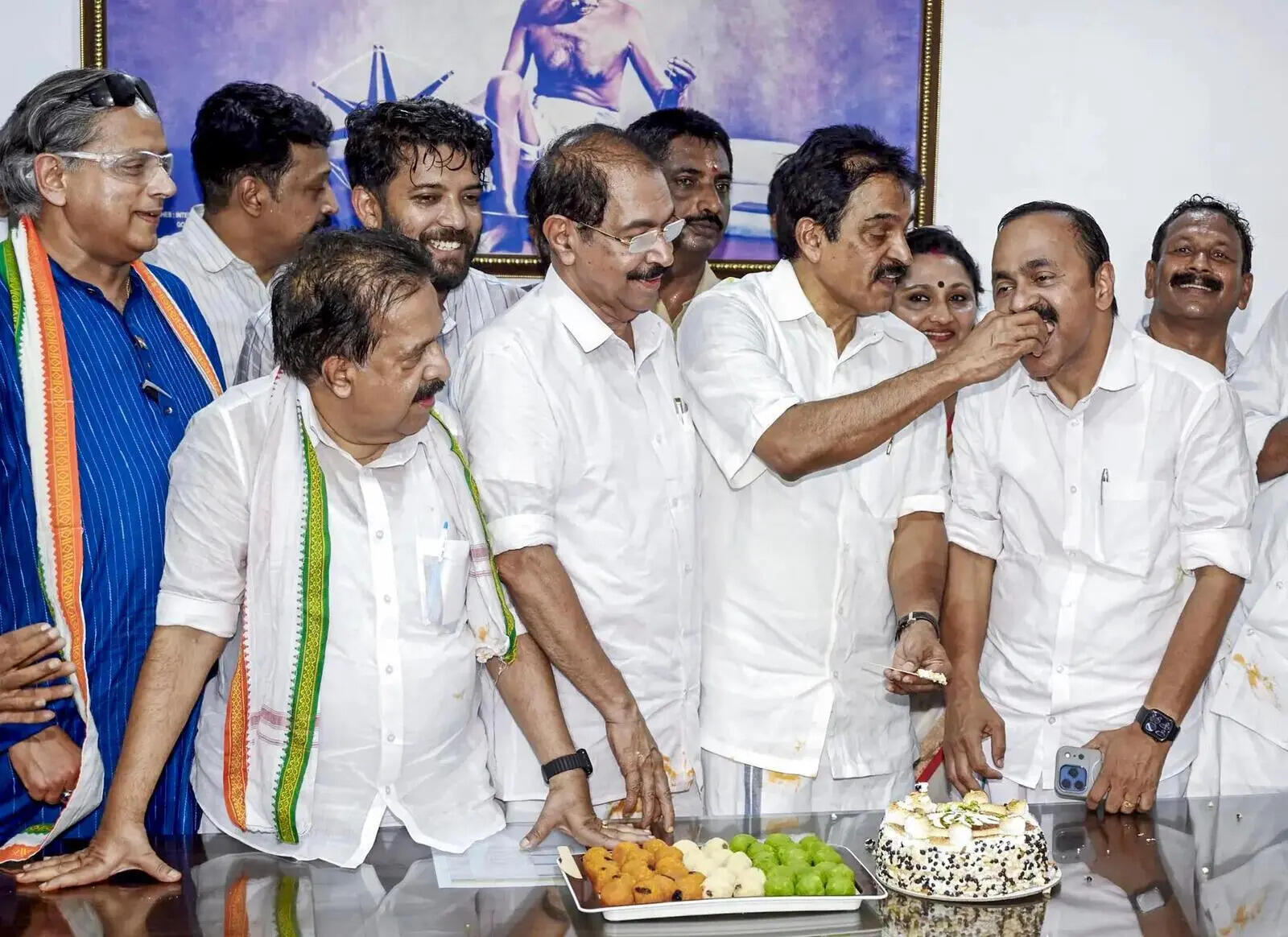
Congress led UDF victory in Kerala (Image/PTI)

The 2026 Kerala assembly elections offered the BJP a modest but symbolically significant breakthrough. The party won three assembly seats for the first time in the state’s history.In Telangana, the BJP appeared to emerge as a major force after its strong 2019 Lok Sabha performance, when it won four parliamentary seats and positioned itself as the principal challenger to K Chandrasekhar Rao’s Bharat Rashtra Samithi (BRS). However, that momentum slowed significantly after the Congress returned to power in the 2023 assembly elections under Revanth Reddy.Internal leadership changes also affected the party’s momentum. The replacement of Bandi Sanjay Kumar with G Kishen Reddy as state BJP chief triggered dissatisfaction within sections of the cadre base, while the Congress successfully consolidated anti-incumbency sentiment against the BRS.In Andhra Pradesh, the BJP’s position has remained heavily dependent on alliances with Chandrababu Naidu’s Telugu Desam Party (TDP) and Pawan Kalyan’s Jana Sena Party (JSP). The party has struggled to recover from backlash over the long-standing Special Category Status issue, with many voters viewing the BJP as having failed to fulfil promises made during Andhra Pradesh’s bifurcation.

Karnataka: BJP’s southern exception

Karnataka remains the BJP’s most successful and durable experiment in southern India and the only southern state where the party has managed to build an independent, long-term political base.The BJP’s rise in the state was built gradually through decades of RSS organisational work, particularly in coastal Karnataka and urban centres such as Bengaluru. The party also consolidated strong support among sections of the influential Lingayat community while expanding its appeal among urban middle-class voters.Unlike Tamil Nadu or Kerala, Karnataka proved more receptive to national political narratives and Hindutva mobilisation.Even when the BJP lost assembly elections in Karnataka, it has historically remained highly competitive in parliamentary contests. This pattern became visible again after the Congress secured a sweeping victory in the 2023 assembly elections, winning 135 seats with around 43 per cent vote share, while the BJP was reduced to 66 seats.Karnataka too continues to display strong regional assertion.Pro-Kannada groups have repeatedly protested against the growing use of Hindi in public spaces, including incidents where Hindi signboards in Bengaluru were blackened during demonstrations.

Image/PTI

That contradiction is politically significant. Karnataka shows that while the BJP can succeed in southern India, regional identity and linguistic sensitivity continue to remain powerful political forces even within the party’s strongest southern bastion.

Conclusion

The BJP’s southern challenge is no longer simply electoral. It is a contest against deeply embedded political ecosystems shaped by language, welfare politics, cinema, federal identity and regional pride.In much of northern India, the BJP successfully built a broad national political imagination. In the South, however, voters continue to reward parties and leaders who are seen as protectors of state identity and regional autonomy.The question now is whether the BJP can evolve from being viewed as a powerful national force into a party that southern voters also see as culturally rooted within their states. Because in southern India, electoral success is rarely decided by ideology alone, it is determined by who best understands the emotional, linguistic and political soul of the region.

Source link

Strategic Agreement: India and Cyprus seek to secure trade routes, supply chains and regional security in the backdrop of the China-Türkiye-Pakistan axis. india news

Strategic Agreement: India and Cyprus seek to secure trade routes, supply chains and regional security in the backdrop of the China-Türkiye-Pakistan axis.

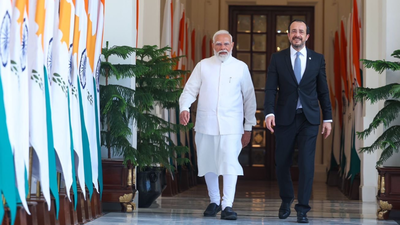
Announcing the elevation of their bilateral relations to a strategic partnership, India and Cyprus wish to open a new chapter in bilateral relations. The announcement came after talks between PM Modi and visiting Cyprus President Nicos Christodoulides in New Delhi. According to senior Cypriot officials, both sides are looking to promote bilateral investment, including Indian investment in Cyprus in sectors ranging from defense to tourism.Given Cyprus’ geostrategic position on the edge of West Asia and the Eastern Mediterranean, and Russia’s aggression against Ukraine and the conflict in Iran, Nicosia wants to enhance its defense capabilities using financial assistance from the EU SAFE program – Cyprus is entitled to a loan of 1.2 billion euros under this item. Importantly, not being a NATO member, Cyprus enjoys greater flexibility in defense procurement as opposed to rigid NATO standards. This opens up opportunities for Indian defense manufacturers. Plus, the elephant in the room is the turkey. India fully supports the sovereignty and territorial integrity of Cyprus. This situation overshadows the internationally unrecognized Turkish Republic of Northern Cyprus. Additionally, since India’s Operation Sindoor last year and Türkiye’s overt and covert stance towards Pakistan, New Delhi-Ankara relations have cooled. This in turn is providing impetus to geo-strategic projects such as the India-Middle East-Europe Economic Corridor or IMEC, which Ankara opposes. IMEC has received further impetus in the light of the Iran war, which has promoted the search for alternative trade routes and supply chains. Cyprus, as the entry point to Europe, is a key pillar of IMEC. Notably, there is no Chinese stake in Cyprus ports. At the same time, as Cyprus has worked to virtually eliminate the Russian stake in the Cyprus banking system – Russian deposits have declined from 87% to about 1% – Nicosia has given strong, principled support to Ukraine in the face of Russia’s aggression against that country. Nicosia is now looking to begin construction of IMEC’s ​​foundational blocks, particularly through attractive private investment. True, the Iran war and the existing complications between Saudi Arabia and the United Arab Emirates act as obstacles. That is why Cyprus is ready to start work on the European part of the corridor first. For India, IMEC presents a huge opportunity, especially in the light of the recent India-EU Free Trade Agreement. But competing trade corridors such as China’s Belt and Road could undermine IMEC’s ​​takeoff. The China-Pakistan-Russia-Türkiye corridor directly challenges the US-backed India-Middle East-Cyprus-Europe. In this backdrop, India and Cyprus are coming together to secure supply chains, diversify trade routes and promote regional security, acting as a counter force against China’s weaponisation of economic interdependence, Turkey’s maneuvers in West Asia and Pakistan’s machinations.

Source link

Center turns on West Bengal fund tap after Suvendu Adhikari’s visit to Delhi. india news

Center turns on West Bengal fund tap after Suvendu Adhikari's Delhi visit

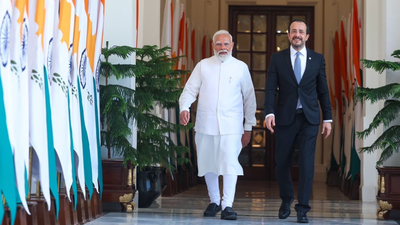
Kolkata: Opening its purse to Bengal following Chief Minister Suvendu Adhikari’s first visit to Delhi after taking charge on May 9, the Center on Friday agreed to release Rs 39,000 crore for schemes under the Union Water Resources Ministry. at o’clock Narendra ModiDuring his meeting with the official, he also assured support in implementing central projects, many of which were stalled under the previous Trinamool Congress government. Mamata Banerjee.“The Prime Minister assured utmost cooperation and support from the Central Government in economic development, industry development, employment generation and taking West Bengal forward,” the official posted on his social media account after meeting Modi. He said the PM has told him that the development and progress of Bengal is one of the Centre’s top priorities.The new phase of Centre-State collaboration focused on welfare and development paved the way for the rapid implementation of health and wellness centers under Ayushman Bharat, Mohalla Clinics and the launch of VB G-RAM G assuring 125 days of wage employment per rural household from July 1.Union Health Minister JP Nadda on Saturday will hold a virtual meeting with key officials of the state health department to set up Ayushman Arogya Mandir (health and wellness centers under Ayushman Bharat).The officials reached Delhi on Thursday night and went straight to a meeting with Home Minister Amit Shah at his residence. Sources said the CM held a detailed discussion on the security parameters at the Bangladesh border and Shah gave him ‘guidelines’ to stop infiltration. The officer also met President Draupadi Murmu and Defense Minister Rajnath Singh on Friday.

Source link

PM Modi’s employment fair: 51,000 appointment letters distributed to promote employment of youth. india news

Youth Employment Promotion: PM Modi distributed more than 51,000 appointment letters in the 19th Employment Fair

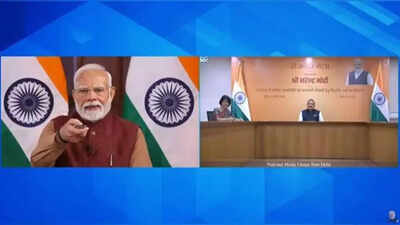
New Delhi: As part of the government’s broader effort to boost job creation, Prime Minister Narendra Modi on Saturday distributed over 51,000 appointment letters to newly entrants at the 19th Rojgar Mela through video conferencing.Union Minister Dr. Jitendra Singh said that since the launch of the Employment Fair series by PM Modi on October 22, 2023, the number of appointments in government jobs has increased, there has been transparency in the recruitment system and the confidence of the candidates has increased. He said that the discipline of deadlines and deadlines in the recruitment process has also increased and the qualification of candidates appointed through the job fair has been better.Inspired by Modi’s initiative, many state governments have also started organizing similar job fairs. More than 5.5 to 6 lakh jobs have been created through employment fairs in states including Uttar Pradesh, Rajasthan, Bihar, Assam, Maharashtra, Gujarat, Uttarakhand, Odisha, Haryana, Madhya Pradesh and Tripura.Since its inception, approximately 12 lakh recruitment letters have been issued through 18 job fairs across the country. The 19th Rojgar Mela was held across 47 locations, attended by recruiters from various ministries including Railways, Home Ministry, Health, Financial Services and Higher Education.Addressing the gathering, PM Modi said, ‘I have returned from a trip to five countries just two days ago. It was a trip to only five countries, but during this time I spoke, had detailed discussions and met leaders of major companies from dozens of countries and everywhere I felt one thing was the same: the world is very excited about India’s youth and India’s technological progress. Today the world wants to be a part of India’s development journey. India is also partnering with various countries around the world. I also want the youth of my country to get global exposure.”He also spoke about how his recent five-nation tour – including the UAE, Netherlands, Sweden, Norway and Italy – led to a conversation about the industries that will dominate in the coming years and how they will benefit Indian youth.Modi said, “Today, sectors related to clean energy, critical minerals, green hydrogen and sustainable manufacturing are also growing rapidly. Partnerships related to these are opening doors to new opportunities in the new economy. Collaboration in green transition and sustainable technology is also increasing with countries like Sweden, Norway and Italy. Partnership with UAE and Norway will strengthen India’s shipbuilding ecosystem.”India is becoming a reliable supply chain partner. The ASML-Tata agreement makes India one of the few countries with this strategic partnership, which will create numerous employment opportunities and open the doors to becoming a next generation technology hub.Sweden’s collaboration on technology and AI and UAE’s collaboration on supercomputing will strengthen India’s technological prowess and also create employment opportunities.Ports, shipping and maritime infrastructure agreements have been worked out with the UAE and Norway. Shipbuilding infrastructure will strengthen the need for skilled manpower, thereby creating further demand and employment opportunities.Modi said, with every partnership, India is creating opportunities for startups and young professionals to connect with the world, access advanced expertise, global markets and growth opportunities.

Source link

‘No access to any of our platforms’: Cockroach Janata Party’s Instagram page hacked india news

'No access to any of our platforms': Cockroach Janata Party's Instagram page hacked

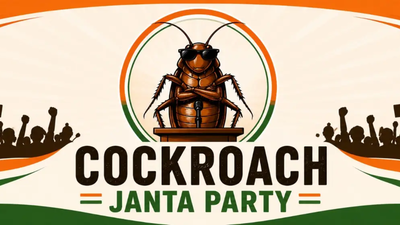
New Delhi: Cockroach Janata Party founder Abhijit Dubke on Saturday claimed that his Instagram account and party page were hacked, days after a satirical campaign launched by him went viral and attracted massive online engagement.Dipke said the alleged hacking was part of a wider ‘crackdown’ on his online presence as several accounts linked to him were affected.In a post on X, Dipke wrote:“Cockroach crackdown on Janata Party.Instagram page hacked.My personal Instagram got hacked.Twitter account blockedThe backup account was also deleted.”He also said that the party does not have access to any social media platform and any post should not be considered as an official statement of CJP. He wrote, “Please note that we currently do not have access to any of our platforms. Any posts made hereafter should not be considered as an official statement of the Cockroach Janata Party.” Dupke, a Boston University student and former Aam Aadmi Party associate, launched the satirical digital campaign barely a week ago. Since then, the platform has gained significant popularity online, with its Instagram account reportedly gaining over 19 million followers.The trend of ‘Cockroach Janata Party’ emerged following the controversy over comments allegedly made by Chief Justice of India Surya Kant during the hearing of a petition seeking senior designation for a lawyer. According to Dipke, the idea was inspired after reports claimed that the Chief Justice had used the words ‘parasite’ and ‘cockroach’ while criticizing individuals who entered the legal profession through fake degrees. The Chief Justice later clarified that he was misquoted and that the comments were specifically directed at people obtaining ‘bogus and bogus degrees’.Regardless of the explanation, the Cockroach Janata Party – using the cockroach as its symbol – quickly went viral online through memes, satire, graphics and political commentary.The platform’s content largely focuses on issues affecting youth, including unemployment, exam paper leaks and education, presented in the form of satirical manifestos and campaign-style posts. Dubke has described the movement as ‘the voice of the lazy and unemployed’.Earlier, Dipke had claimed that he received death threats on WhatsApp soon after the platform gained online attention.While sharing the screenshot of the message, he wrote, “Now I am receiving death threats.”According to Dipke, the sender allegedly threatened him over the operation of the Cockroach Janata Party account and pressured him to close it or join the BJP.

Source link

BRS leader Chinthalapady Madu found dead in sack in Suryapet, Telangana. india news

BRS leader Chinthalpadi Madu found dead in sack in Telangana's Suryapet
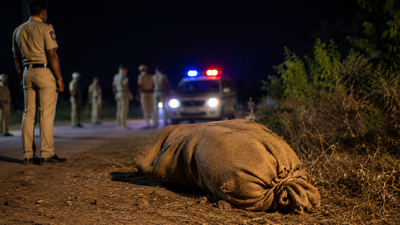
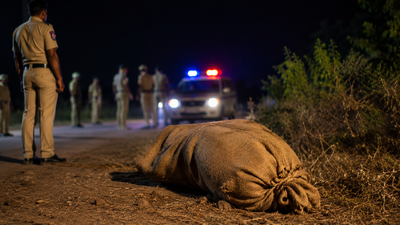
AI image used for representation

New Delhi: Chinthalpadi Madu, a local BRS leader, was found dead inside a gunny bag near the Yerkaram stage in Telangana’s Suryapet district, the district police said on Sunday.Police suspect that the body of the 42-year-old man was dumped at the spot before he was murdered by unknown persons. The body of the Bharat Rashtra Samiti leader was later taken for post-mortem and a case has been registered. According to a police officer, “Unidentified persons brutally murdered a 42-year-old man named Chinthalapady Madhu and threw his body in a sack near the Yerkaram stage. The deceased’s wife is a former sarpanch from the BRS party. The deceased was attending an event.” murder case In 2008, in which he allegedly murdered a former sarpanch named Ravinder of the same village.”“We have registered a case and the body of the deceased has been sent for post-mortem. We are investigating the case and searching for the accused,” officials said.Investigations are being conducted to identify and arrest those involved.

Source link

‘Betraying its own citizens’: Congress criticizes Modi government for increasing petrol, diesel prices by Rs 5 in 9 days. india news

'Betraying its own citizens': Congress criticizes Modi government for increasing petrol, diesel prices by Rs 5 in 9 days

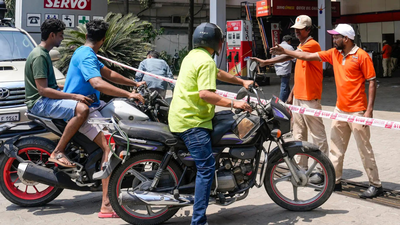
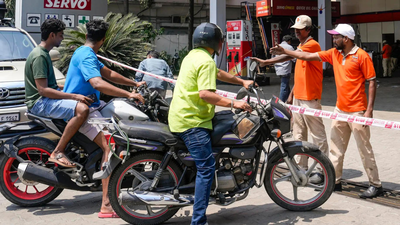
New Delhi: Congress on Saturday launched a scathing attack on the Prime Minister amid the third increase in fuel prices in just 10 days. Narendra ModiHe termed Modi as “Mehengai Man” and accused the Center of giving priority to oil companies over common citizens.The attack took place after the prices of petrol, diesel and CNG were increased again in the early hours of Saturday.In a strongly worded post on Twitter, Congress wrote, “‘Inexpensive Man’ Modi has increased the prices of petrol and diesel by Rs 5 in just 9 days. Today again petrol has been made costlier by 94 paise and diesel by 95 paise.”The main opposition party said, “Modi only cares about the profits of oil companies. While governments across the world are providing relief to their people, the Modi government is busy looting its own citizens. Think once about the welfare of the people – for how long will you continue to benefit the capitalists?”Meanwhile, state fuel retailers raised petrol and diesel prices by less than Rs 1 per liter on Saturday, the third revision this month, according to Reuters, as the government seeks to cushion the blow from higher global crude prices amid the Iran conflict.According to dealer data, petrol prices in New Delhi rose by Rs 0.87 per liter to Rs 99.51, while diesel prices rose by Rs 0.91 to Rs 92.49 per litre. CNG prices also increased by Re 1 per kg from May 23.

Source link

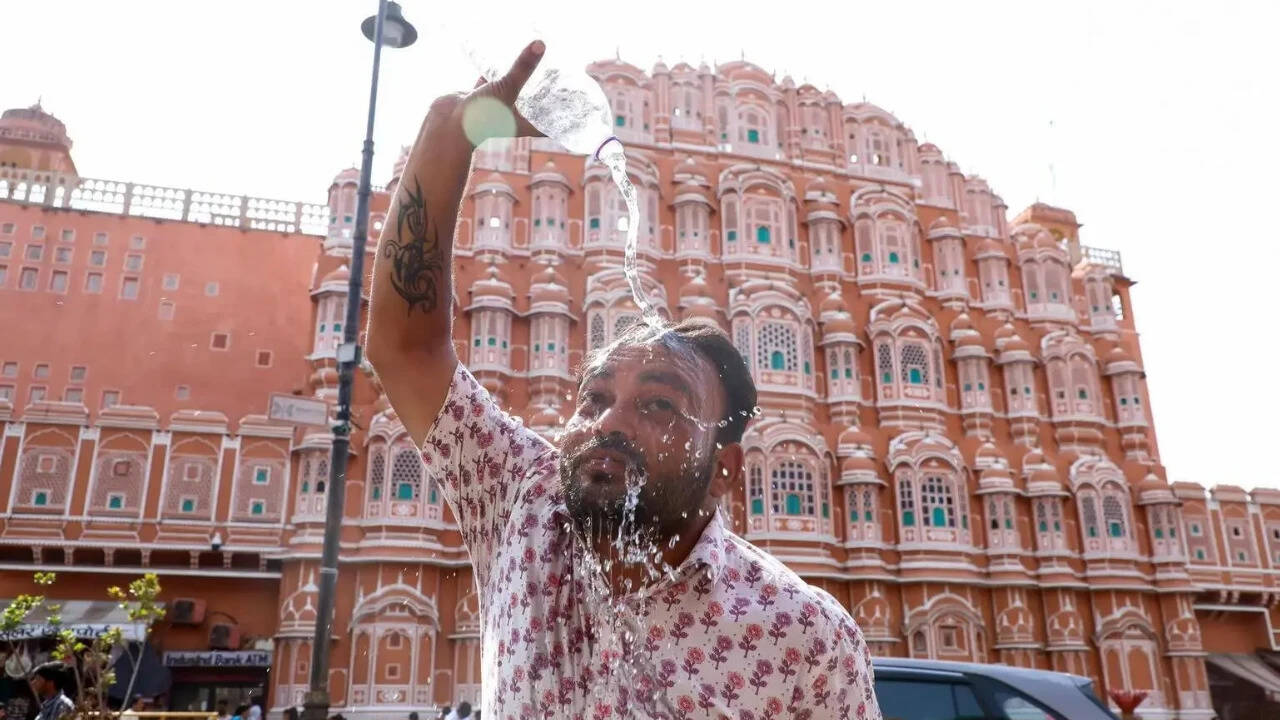
India on heatwave alert: Temperature near 48°C: India battling severe heatwave conditions; Alert across the country till 28th May. india news

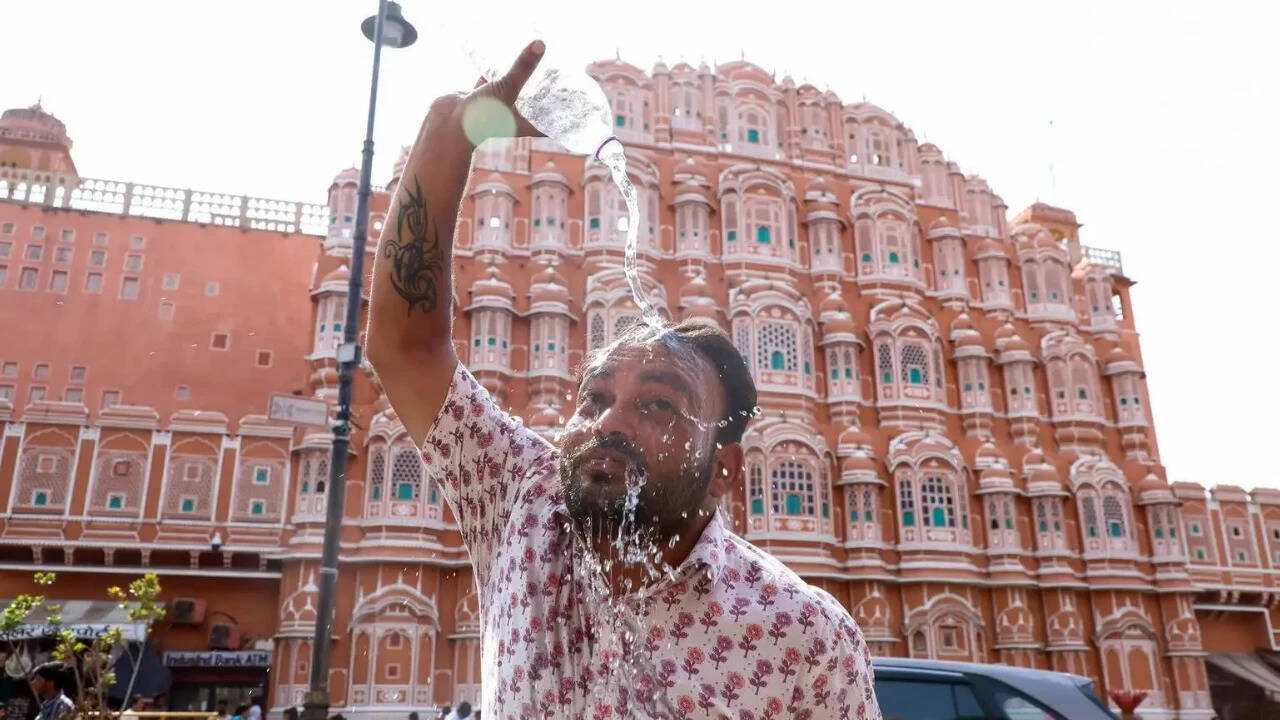
New Delhi: Large parts of the country remained in the grip of scorching heat on Friday, with temperatures touching 48 degrees Celsius in many areas, prompting authorities to issue health advisories. He warned that prolonged exposure to extreme heat has increased concerns across the country. India Meteorological Department (imd) has warned that heat wave to severe heat wave conditions are likely to continue over parts of northwest, central, eastern and peninsular India till May 28.Rising daytime temperatures and unusually warm nights have significantly increased heat stress levels, especially in densely populated urban centers and areas dependent on outside labour. Meteorologists have warned that the lack of cool nights at night is worsening the effects of the ongoing heat wave and increasing health risks for vulnerable groups.

IMD’s advice: Heat wave alert till May 28

According to IMD, heat wave conditions are expected to persist over large parts of northwest, central and eastern India for the next six to seven days. Severe heat conditions are likely to persist over eastern Uttar Pradesh and eastern Madhya Pradesh between May 22 and May 28.The weather department has also predicted heatwave conditions in Punjab, Haryana, Chandigarh and Delhi during the same period, with a possibility of severe heatwave between May 24 and May 27. Extreme heat is likely to continue over Rajasthan, with western Rajasthan likely to face severe heatwave conditions between May 24 and May 28.Many other areas including Vidarbha, Chhattisgarh, Jharkhand, Odisha, Telangana, coastal Andhra Pradesh and parts of the Himalayan states are also expected to see heat wave conditions on different days during the week.IMD warned of “hot night” conditions in parts of Uttar Pradesh, Vidarbha, Odisha and Telangana. Conditions where temperatures remain abnormally high even after sunset are considered particularly dangerous because they prevent the body from recovering from the heat of the day.

Delhi-NCR: Scorching days, some relief ahead

Delhi is in the grip of extreme heat and temperatures in most parts of the national capital remain well above normal. Safdarjung, the city’s primary weather station, recorded a maximum temperature of 43.3 degrees Celsius, while the temperature at the Ridge Observatory reached 44.4 degrees Celsius, the highest in the capital.The IMD has issued a heatwave alert for Delhi till May 28, warning that the temperature may rise further and reach 45 degrees Celsius in the coming days. Although the change in temporary wind patterns brought some relief in some areas, weather experts said the hot desert winds are likely to intensify again.Light rain or thundershowers may occur in isolated parts, but officials said this is not likely to bring any significant drop in the day temperature.

Uttar Pradesh: Banda was hottest in India with 47.6°C.

Uttar Pradesh has emerged as one of the most affected states amid the scorching heat. The highest temperature in the country was recorded at 47.6 degrees Celsius in Banda, while it was 46.6 degrees Celsius in Prayagraj and 45.6 degrees Celsius in Varanasi.IMD has issued a red alert for 10 districts of the state, warning of severe to very severe heat. Authorities in Banda took unusual measures to reduce people’s exposure to the scorching heat, including closing traffic signals during afternoon peak hours to reduce waiting times for commuters under direct sunlight.

Rajasthan, Punjab, Haryana: Extreme heat increases

North-west India is in the grip of extreme heat as hot and dry winds blow across Rajasthan, Punjab and Haryana. The temperature in Haryana’s Rohtak was recorded at 45.3 degrees Celsius, while in some parts of Faridabad the temperature crossed 45 degrees.Temperatures in Gurgaon were recorded above 42 degrees Celsius, prompting authorities to issue an orange alert from May 24 to May 27. Dry conditions and strong hot winds are expected to continue, with only light rain possible, weather officials said.

Madhya Pradesh and Central India: Continued critical situation

Central India, especially Madhya Pradesh, has been experiencing severe heat for a long time. According to IMD, East Madhya Pradesh will face severe heat wave during the forecast period.High night temperatures are complicating the situation, increasing heat stress and limiting respite from extreme daytime temperatures. Health experts warn that prolonged exposure to such conditions can lead to dehydration, heat exhaustion and heatstroke.

Eastern India: Increasing heat and humidity

Eastern states like Jharkhand, Odisha and West Bengal are facing a dangerous combination of heat and high humidity levels. Heat wave conditions are expected to persist in parts of Odisha and Jharkhand throughout the week.The IMD has also warned of hot night conditions in Odisha till May 26, which will increase the suffering and health risks of the people. Meteorologists said that due to increase in humidity levels, the heat is being felt more intensely, especially in the coastal and low-lying areas.

Peninsular India: Heat spreads in the south

The heat wave has increased in some parts of South India also. Coastal Andhra Pradesh, Yanam and Telangana are likely to witness heat wave conditions for several days in the coming week.In Vijayawada, civic authorities installed green shade nets at major intersections to provide respite to commuters and traffic personnel facing long exposure to sunlight during afternoon rush hours.

Himalayan states: unusual heat patterns

Even the Himalayan states, which usually remain cool during this time of the year, are seeing unusual heat patterns. The IMD has predicted isolated heatwave conditions over Jammu and Kashmir, Himachal Pradesh and Uttarakhand, underscoring the widespread nature of the current heat event.

Why is this heatwave more dangerous?

Climate experts have linked the increasing intensity and duration of heat waves in India to climate change. According to studies, the duration of heatwaves in the country has increased by about 0.44 days per decade.Experts also said rising night temperatures and rising humidity levels have made recent heat waves significantly more dangerous. Unlike earlier heat events, where temperatures would drop after sunset, night temperatures are now rising steadily in many areas, reducing the time it takes for the human body to recover.The combination of extreme daytime heat, hot nights and humidity is increasing the risk for vulnerable populations, including the elderly, infants, outdoor workers and people with pre-existing medical conditions. Authorities in several states have urged residents to avoid direct exposure to sunlight during peak hours, stay hydrated and follow health advisories issued by local administrations.

Source link