Cockroach Janata Party founder says sites, web accounts blocked India News
Cockroach Janata Party founder says sites, web accounts have been blocked

New Delhi: Online satire movement Cockroach Janata Party (CJP) suffered another blow on Saturday when founder Abhijit Dubke said the official website of the organization has been taken down by the Centre, days after its main X handle was blocked in India following a legal demand.However, there was no statement from the Center till the filing of this report and a counter-narrative was running on social media that Dipke was playing the “victim card” by deleting his website. Deepke did not respond to messages and DMs.Dipke alleged that the website was removed after the movement grew rapidly among young users online and amid the petition over NEET-UG paper leak. “The government has taken down our iconic website,” he wrote, adding that “10 lakh cockroaches” had registered and “6 lakh cockroaches” had signed a petition demanding the resignation of Union Education Minister Dharmendra Pradhan. In another post, Dubke stepped up his attack on the Centre, asking, “Why is the government so afraid of cockroaches?” He said the episode was exposing India’s youth to “dictatorial behavior”.In another X post, he said that the party’s Instagram page, his personal Instagram account and a backup X handle have also been hit. “You can hack and block accounts but you can’t hack this movement,” Dupke wrote. He stressed that the campaign would continue online.According to sources, the original CJP handle on X was blocked in India after the Ministry of Electronics and IT took action under Section 69A of the Information Technology Act on Intelligence Bureau inputs citing sovereignty and national security concerns. Neither X nor the Ministry of Home Affairs and Information Technology provided any official confirmation.X’s own policy states that an “account frozen” notice reflects action taken in response to a valid legal demand or local law. After the ban, the party soon launched a handle called Cockroach is Back.The viral, meme-driven movement emerged following the controversy over Chief Justice of India Surya Kant’s comments that sparked outrage online, before he clarified that his comments were aimed at people using “bogus and bogus degrees” and not unemployed youth. On Saturday, BJP’s Rajiv Chandrashekhar alleged that CJP’s overtures were part of a cross-border “influence campaign”, a charge Deepke denied.
Source link

3 Army officers, including Major General, survive Cheetah helicopter crash in Leh; Selfie of May 20 accident goes viral. india news

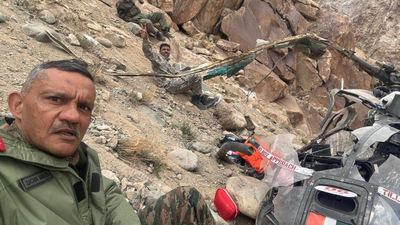
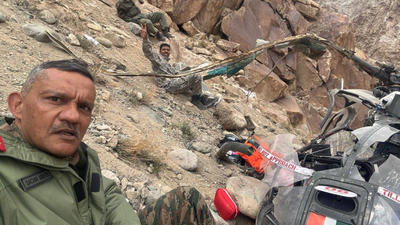
3 Army officers, including Major General, survive Cheetah helicopter crash in Leh; Selfie of the accident that happened on May 20 went viral

New Delhi: Three Indian Army officers had a narrow escape when their helicopter crashed in the mountainous Tangste near Leh in Ladakh.A Major General, a Lieutenant Colonel and a Major survived the crash but sustained injuries when the Cheetah helicopter fell down. “The helicopter crashed on May 20. All three officers are safe. An inquiry has been ordered,” officials familiar with the matter told TOI.An officer’s selfie after the May 20 accident has now gone viral. All three came out of the debris on their own. The single-engine HAL Cheetah helicopter was piloted by a Lieutenant Colonel and a Major, while Major General Sachin Mehta, who commands the 3 Infantry Division, was on board as a passenger.The accident occurred while flying in the high altitude area of ​​Ladakh. The specific cause of the incident is still under investigation.Cheetah helicopters, inducted into service in 1976, have been a vital asset for the Indian Army, especially in high altitude and forward areas such as the Siachen Glacier. The Cheetah, which is vital for the armed forces for high-altitude logistics and reconnaissance missions, has been the subject of ongoing technical scrutiny due to its aging fleet.Over the past decade or so, more than 15 Cheetah and Chetak helicopters have been involved in accidents, resulting in the loss of many pilots’ lives.Due to these security issues, the Army plans to phase out the old Cheetah and Chetak helicopters within the next 1 to 2 years, to be gradually replaced by new generation Light Utility Helicopters (LUHs) over a period of 8 to 10 years.Hindustan Aeronautics Limited (HAL) is playing a key role in this transformation. The Army has already placed orders for six limited-series-production LUHs, which are designed to reach a top speed of 220 kmph, a service range of 6.5 km and an operational range of 350 km.

Source link

Rubio invited PM to visit America on behalf of Trump, said- America will not let Iran hold the energy market hostage. india news

Rubio invited PM to visit America on behalf of Trump, said America will not let Iran hold the energy market hostage

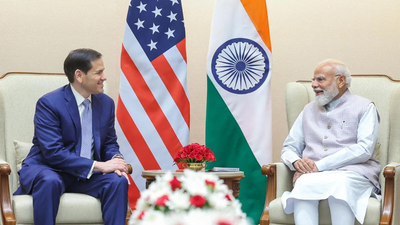
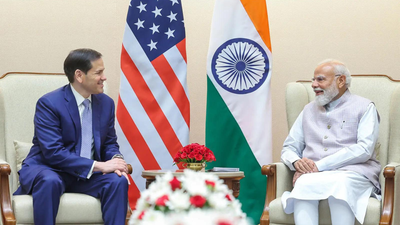
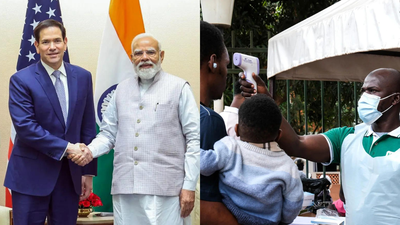
New Delhi: After a rocky last 12 months, the US and India are trying to stabilize ties, with visiting Secretary of State Marco Rubio meeting Prime Minister Narendra Modi and inviting President Donald Trump to visit the US “in the near future”. As the two sides discussed the situation in West Asia, according to the US readout, Rubio stressed that the US will not let Iran hold the global energy market hostage and affirmed that US energy products have the potential to diversify India’s energy supply. Speaking at a US Embassy event later, Rubio, who will attend the Quad foreign ministers’ meeting on Tuesday, also said the India-US relationship “is the cornerstone of our vision for the Indo-Pacific”. The announcement about the invitation was made by US Ambassador Sergio Gore, who accompanied Rubio on what he described as a “productive” discussion with Modi on ways to deepen US-India cooperation in security, trade and critical technologies – areas that “strengthen both our countries and advance a free and open Indo-Pacific”. Although India is open to the idea of ​​Modi visiting the US, it is learned that the government will wait to get more information from Washington about the possible schedule of the visit. Modi may in any case travel to Florida for the G20 summit, which will be hosted by the US in December this year. Officials are tight-lipped on what the invitation could mean for the Quad summit, for which Trump’s presence in India has been long awaited. The Indian readout or Modi himself did not mention the invitation. “India is an important partner of the United States,” Gore said in a post on Twitter after the meeting. Rubio said he also discussed efforts to secure energy and supply chains with Modi. According to an Indian readout, Rubio also briefed Modi on the US perspective on regional and global issues, including the situation in West Asia. It said Modi reiterated India’s continued support for peace efforts and called for peaceful resolution of conflicts through dialogue and diplomacy. Rubio’s visit comes amid hectic efforts to secure a US-Iran peace deal, and the threat of imminent US military action if these efforts fail. “Delighted to welcome US Secretary of State Mr. Marco Rubio. We discussed the continued progress in the India-US Comprehensive Global Strategic Partnership and issues related to regional and global peace and security. India and the United States will continue to work together for global good,” Modi said in a post on Twitter. The Indian readout also said Rubio briefed Modi on “continued progress in bilateral cooperation” across a range of areas, including defence, strategic technologies, trade and investment, energy security, connectivity, education and people-to-people ties. Rubio began his visit to India in the morning from Kolkata, before reaching Delhi for a scheduled meeting with Modi in the afternoon. His bilateral meeting with External Affairs Minister S Jaishankar is scheduled to be held on Sunday. At the US Embassy event, she recalled that her first assignment as Secretary of State was the meeting of Quad Foreign Ministers. “And we were going to renew it. We wanted to do it here, not only because of our commitment to that structure of work, but as a concrete signal of how important a role India plays in the United States and in our approach, and our approach to the Indo-Pacific,” Rubio said, adding that this commitment was implicit in the relationship between Modi and Trump. Rubio said, “The relationship between the leaders is incredibly important. These are two very serious leaders who are focused not just on the short-term, but the long-term. And so, I think that’s important to note, because it’s an important part of the foundation of the relationship between our countries.”

Source link

Government asks Gymkhana Club to hand over premises, citing national security needs. india news

Government asks Gymkhana Club to hand over premises citing national security needs

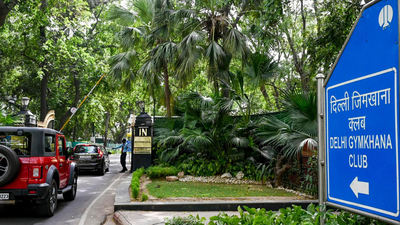
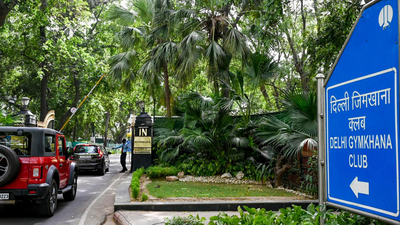
New Delhi: The central government has ordered Delhi Gymkhana Club (DGC), one of the oldest clubs in India, located next to the PM’s residence in Lutyens’ Delhi, to hand over the premises by June 5 for “strengthening and security of defense infrastructure and other critical public safety purposes”.The government had given 27.3 acres of land on permanent lease to DGC in 1928. The Land and Development Office (L&DO) under the Ministry of Housing and Urban Affairs said it has ordered “re-entry” of the property with “immediate effect” – meaning premature termination of the lease and repossession.It added that on such “re-entry”, the entire plot of land, with all its buildings, structures, lawns and fittings, would “fully vest” in L&DO. The order directed the DGC to “hand over peaceful possession of the premises”; In case of non-compliance, possession will be “taken away in accordance with law”.The club has been operating from 2, Safdarjung Road since 1913, when it was called the Imperial Delhi Gymkhana Club. After independence its name was changed to Delhi Gymkhana Club. The current buildings were constructed in the 1930s. For over a century, entry into the DGC has been less about money and more about fitting into Delhi’s ‘elite class’, as it is a symbol of power and privilege.The move to take back the land parcel comes at a time when L&DO has issued similar instructions to those living on other government lands along Lok Kalyan Marg. While the exact purpose of the move is not yet known, people aware of the development have not ruled out the possibility of this land parcel, along with other lands vacated around the area, being used for redevelopment, including the construction of highly secure residences and establishments for top government officials.L&DO said in its notice that the club is located in a very sensitive and strategic area of ​​Delhi. “The land is necessary to meet immediate institutional needs, governance infrastructure and public-interest projects, integrated with the restoration of surrounding government lands,” it says.In a message sent to members, DGC Secretary General said the General Committee (GC) held an urgent meeting on Saturday and decided to send an “urgent response” to L&DO requesting clarity on the issues in the interest of members and employees. He said the committee members would demand an immediate meeting with ministry officials. “The immediate priority of the GC is to ensure that the operations of the Club continue without any disruption,” it said.Recently, the Center had defended in the Delhi High Court its move seeking eviction of the Indian Polo Association, which runs the Jaipur Polo Ground opposite the PM’s residence. The government, citing the sensitive situation of the area and national security concerns, had argued that it was also taking steps to acquire other such land parcels in the area for larger public purposes.A senior DGC member said, “A strong case will be made against L&DO’s order to seek relief from the court. But let’s see how much we can oppose the government’s claim of taking back the land for defense and security purposes. Moreover, the order comes near the expiry of the current lease.”

Source link

Center tightens control on pregabalin amid rising abuse among youth. india news

Center tightens control on pregabalin amid rising abuse among youth

New Delhi: Amid growing reports of young people abusing pregabalin due to its sedative, euphoric and dissociative effects, the Center has brought the widely prescribed pain and nerve drug under the strict Schedule H1 category, tightening rules on its sale and prescription.The Union Health Ministry amended the Drugs Rules, 1945 through the Drugs (Second Amendment) Rules, 2026 to include pregabalin under Schedule H1. The final notification was issued on 13 May and published in the Gazette of India on 20 May.The ministry said the decision was taken following the seizure of illegally stockpiled and unauthorized sold supplies in some parts of the country, as well as reports from several states about the misuse of pregabalin.Pregabalin is prescribed for chronic pain, nerve disorders, fibromyalgia, and certain neurological conditions. However, authorities said recreational abuse of the drug is on the rise due to its sedative and “high”-inducing effects.Dr Rajesh Sagar, department of psychiatry, AIIMS, said abuse of pregabalin is emerging as a serious public health concern, especially among young people, as many users wrongly view it as a safe drug rather than an abuse-prone substance.She said families should keep an eye out for warning signs such as unusual sleepiness, slurred speech, dizziness, changes in behavior, decline in academic or work performance and mixing the drug with alcohol or other sedatives. Dr Sagar said bringing pregabalin under Schedule H1 will help strengthen prescription control and monitoring, but regulation alone will not be enough to prevent abuse.The revised classification means that the drug can now be sold only on a valid prescription issued by a registered medical practitioner. Pharmacies will also have to maintain a separate register to record prescriptions and sales details.The ministry said the move is aimed at preventing unauthorized access, strengthening prescription monitoring and curbing illicit trafficking.This amendment was made after consultation with the Drug Technical Advisory Board (DTAB). Under the amended rules, Pregabalin has been inserted as serial number 51 under Schedule H1 of the Drugs Rules, 1945, and the amended rules will come into force 180 days after its publication in the Official Gazette.

Source link

SC takes suo motu cognizance of Twisha Sharma death case; The CJI-led bench will hear the case on Monday. india news

SC takes suo motu cognizance of Twisha Sharma death case; CJI-led bench will hear the case on Monday

New Delhi: The Supreme Court took suo motu cognizance of Twisha Sharma death case on Saturday. News agency ANI reported that a bench headed by Chief Justice of India Surya Kant is likely to consider the matter on Monday.The case included allegations of dowry harassment and abetment of suicide against Tvisha’s husband and in-laws, including a retired district judge. Also read: Twisha Sharma case timelineNoida-based model-turned-actress Tvisha Sharma married lawyer Samarth Singh, son of retired District Judge Giribala Singh, in December 2025 and moved to Katara Hills area of ​​Bhopal.On May 12, Twisha was found dead at her in-laws’ house in Katara Hills. Her family later accused her husband and in-laws of dowry harassment and abetting her suicide.The police had registered an FIR on May 15 against the retired judge and his lawyer son in the alleged dowry death case. The next day, the police formed a six-member SIT to investigate the case.As public attention on the case grew, Twisha’s family staged a brief protest outside the Chief Minister’s official residence on 17 May after not being able to meet him.On May 18, a sessions court in Bhopal had rejected the bail plea of ​​Samarth Singh. Bhopal Police also announced a reward of Rs 10,000 for information leading to his arrest.Tvisha’s family demanded an independent investigation into the case on 19 May, questioning the police investigation and alleging a “posthumous character test” of the deceased by the accused party while speaking to the media.A day later, the family met the Chief Minister, who assured them that he would demand a CBI inquiry into the case. The same day, a Bhopal court rejected a petition seeking a second post-mortem investigation, while the police increased the reward for the arrest of Samarth Singh to Rs 30,000.Police later issued a third and final notice to Giribala Singh to record his statement, while Samarth Singh filed a fresh bail plea before the court.According to his lawyer, on May 22, Jabalpur police took Samarth Singh into custody from the district court premises when he had reached there to surrender.

Source link

‘There is no place for genital mutilation in modern society, and this is not just a Bohra issue’ india news

'There is no place for genital mutilation in modern society, and this is not just a Bohra issue'

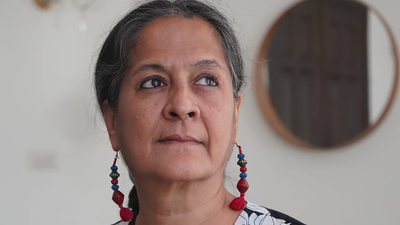
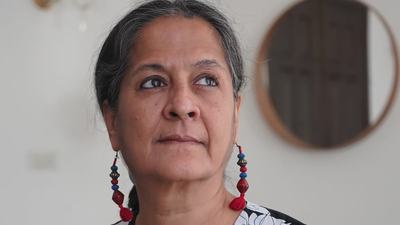
More than a decade ago, when Masooma Ranalvi First to speak publicly about being subjected to circumcision (the local term for female genital mutilation) fgm) at the age of seven, he helped bring the practice within the Dawoodi Bohra community in India into the national spotlight. As the Supreme Court resumes hearing in the long-pending case in which he is a petitioner, fresh evidence from Kerala is also widening the debate beyond the Bohra community. Ranalvi, founder of WeSpeakOut, spoke Mahua Das On why she believes the fight in India could enter a new phaseHas there been any change in the way the court views FGM?It felt different. Even before this, a three-judge bench – Justices Dipak Misra, Chandrachud and Khanwilkar – had made very positive comments. Before the issue moved into religious territory, he raised questions about bodily integrity and talked about child rights. This time, the main issue before the nine-judge bench is the conflict between Articles 25 and 26 of the Constitution – religious freedom of the individual versus the right of a sect to manage its own religious practices. We submitted that when a child is subjected to physical alteration and mental suffering in the name of religious observance, it enters into constitutional and criminal scrutiny. On this, Justice Bagchi commented that as far as FGM is concerned, the words ‘health’ and ‘public health’ may suffice. What we are expecting is a recognition from the court that this is a child rights violation, a criminal act, and something that affects physical integrity. If this happens, it will create pressure within the community and on the government to change policy, run awareness campaigns, educate doctors, support survivors and spread awareness about the harms of FGM. It also gives courage to those in the community who are still struggling.The FGM petition has now taken years to wrangle between constitutional benches and questions related to religious practices. What does this lengthy legal bind mean for survivors and activists on the ground?This is an excellent question because no one cared what happened in the intervening seven years. We were really disappointed. More importantly, the practice continued and many girls suffered something that probably could have been avoided had the case been heard earlier. Nobody really sees the urgency of the issue. This is irreparable damage to a child’s body. There should be no room for something like this in a modern society that claims to care about the rights of women and children. Also, the delay forced us to regroup and rethink our strategies. We realized that this is an uphill battle because we are up against a very powerful religious hierarchy, politically and economically. They have made every effort to stop progress on this issue. So, we began to look outward, learn from global movements, and build coalitions. FGM exists in 94 countries and there is conflict everywhere. In Africa, 29 countries have laws against FGM. Last year, WHO released updated guidelines for health workers after almost a decade. Type III infibulation (the most severe type of FGM) receives the most attention, but there are other forms, including notching and pricking.How are Indian groups connecting with the growing Asian network you have created around FGM?Over the past five years, we have been building alliances and learning from each other. An important aspect of this network is that it is telling the world that FGM is not just an African issue. It is also present in many parts of Asia. But in most places, religion is used as justification for maintaining this practice.For years, FGM was seen solely as a Dawoodi Bohra issue. What prompted WeSpeakOut to look into reports of FGM emerging from Sunni communities in Kerala?There were whispers about this practice in Kerala and parts of Tamil NaduBut there was no direct evidence or survivor testimony. Then, around 2017, there came a story about the Kozhikode clinic and a survivor who talked about it. There was a huge reaction against him. After this the matter cooled down again. But we decided to explore it further. Evidence is almost impossible to obtain. In the Bohra community, some of us came forward and gave interviews, so the conversation started. However, our yet-to-be-released exploratory study provides enough evidence to show that more research, data collection, and intervention strategies are needed.What differences did you notice in Kerala compared to the Bohra context?The biggest difference is age. In the Bohra community the age limit is around seven years. In Kerala, FGM is performed around the 40th day after birth. At that age, the area involved is so small that even skilled surgeons will struggle. The possibility of damage to the clitoris is very high. The other difference is who does it. In Kerala, it is the ‘Osathi’ community, women from the barber community traditionally do this work. There are also clinics in some places which points to increasing medicalization. Women survivors talked about difficult sexual experiences, but they did not necessarily connect them to the FGM they had undergone. This understanding comes much later when you begin to understand the function of the clitoris.After working on this issue for over a decade, do you see more Bohra parents choosing not to subject their daughters to circumcision, even if they don’t say so publicly?Absolutely. Wherever we have been able to reach out to women through talks, literature, campaigns or media coverage, it has had a positive impact. But there are still many women who have not heard or engaged in these debates, especially in small towns and rural areas of Maharashtra, Gujarat, Rajasthan and Madhya Pradesh where many Bohras live. There is also another section which openly says that this is their belief and their right, and they want this practice to continue. That’s why outreach matters. The more conversations there are, the more likely it is that this practice will decrease over time.

Source link

Prachanda vs Apache: How India’s indigenous attack helicopter stacks up against America’s deadly AH-64E. india news

Prachanda vs Apache: How does India's indigenous attack helicopter stack up against America's deadly AH-64E?
How did India’s indigenous attack helicopter face America’s deadly AH-64E?

Recently, in a deal worth more than US$198.2 million, the US State Department approved the potential sale of support services and relatedEquipment for Boeing AH-64E Apache attack helicopters to India. The State Department said the sale will improve India’s ability to respond to current and future threats, strengthen its homeland defense, and deter regional threats.In April, Army Chief General Upendra Dwivedi flew in India’s indigenously built combat helicopter, the Light Combat.The helicopter (LCH), ‘Prachanda’, is assessing its performance, agility and mission readiness. This raises a question: If India has its own combat helicopters, why does it continue to rely on its Russian and American counterparts? And how does it compare to Apache LCH?

numbers and capacity

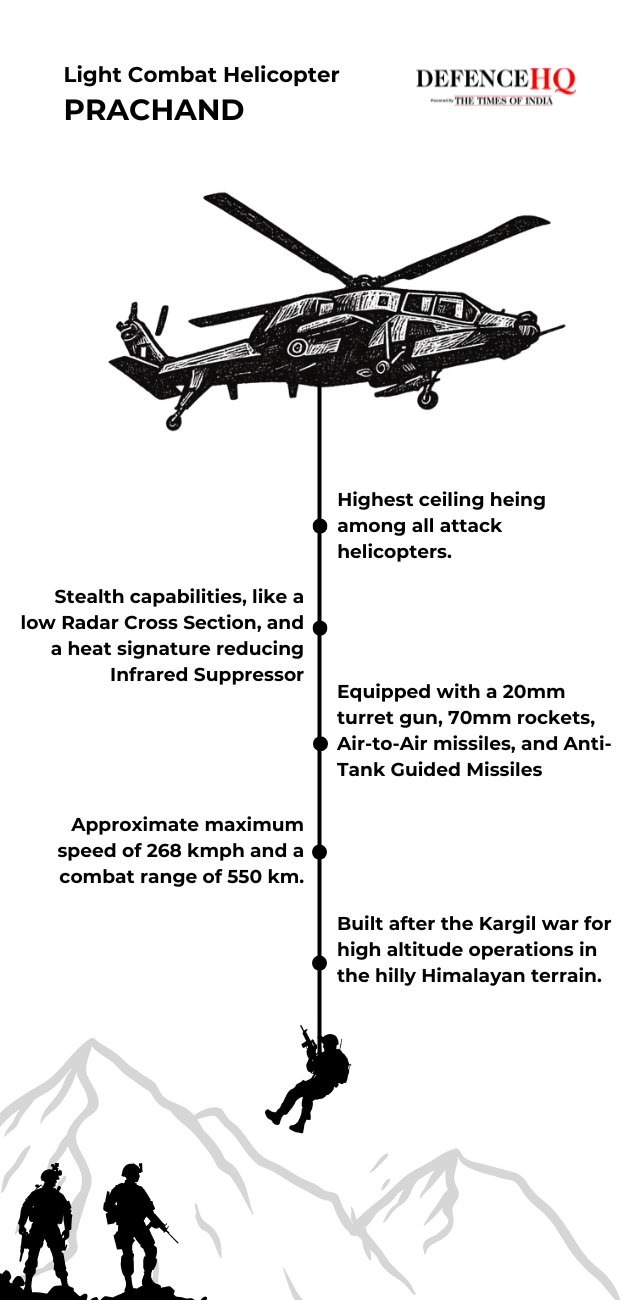
According to Hindustan Aeronautics Limited, Prachanda has a 2-pilot crew, maximum take-off weight 5,800 kg, maximum speed 280 km/h.km/h, a cruise speed of 260 km/h, payload-dependent operational range between 550 and 700 km, a climb rate of 12 meters per second, and the world’s highest operational ceiling of 6,500 metres.On the other hand, according to Boeing, the twin-seater US-made Boeing AH-64E Apache has a maximum take-off weight of 10,432 kg.Speed ​​of 300 km/h, cruise speed of 265 km/h, combat range of 480–500 km, service ceiling of 6,400 m and climb rate of about 14.2 meters per second.Compared to the Apache, the Prachanda has almost the same cruise speed, a larger operating range (the highest), and a larger operational range.Apache excels in terms of double the maximum take-off weight, top speed and faster climb rate. However, combat helicopters have specifications regarding their operational requirements.

various operational requirements

According to HAL, Prachanda has the distinction of being the first attack helicopter to land in Siachen, the world’s highest battlefield. itIt was specifically designed after the need for a light combat helicopter was realized during the Kargil war, which could operate in the high and harsh Himalayan terrain of Siachen, Ladakh and Arunachal Pradesh. It weighs just 5.8 tonnes, which is almost half the weight of the Apache.

Light Combat Helicopter, Prachanda

Light Combat Helicopter, Prachanda

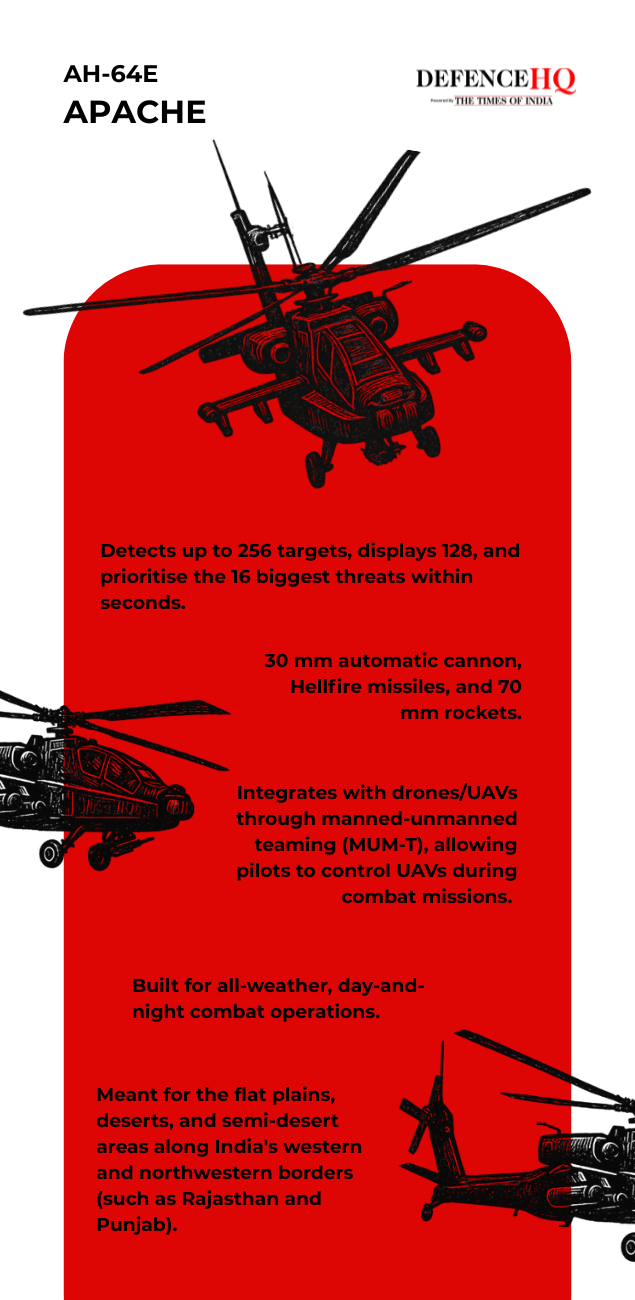
The American equivalent is for the flat plains, deserts, and semi-desert areas along India’s western and northwestern borders.(Like Rajasthan and Punjab). Which explains its almost double maximum take-off weight compared to the LCH. India requires the capabilities of both helicopters for its overall operational requirements.

AH-64E, Apache

AH-64E, Apache

replacement of aging fleet

The entire Air Force is undergoing a modernization process, with the aging fleet being actively replaced. during inductionAt the ceremony of Apache helicopters in 2019, the then Air Chief Marshal BS Dhanoa had said, “Apache combat helicopters are being purchased to replace the Mi-35 fleet. Apaches have been an integral part of many historical campaigns around the world. These aircraft have been specially modified to meet the exacting standards demanded by the Indian Air Force.Highlighting India’s military capabilities, the US State Department said, “India will have no difficulty in integrating these goods and services into its armed forces.”Regarding the deal the US State Department said, “This proposed sale will support foreign policy and national security objectivesOn behalf of the United States by helping to strengthen the US-India strategic relationship and improving the security of a major defense partner“Remains an important force for political stability, peace and economic progress in the Indo-Pacific and South Asia regions.”Earlier on April 9, the Indian Army had demonstrated the combat power of AH-64 Apache during the live firing exercise ‘Brahmastra’.Pokhran Firing Range. The Army’s performance underlined its growing focus on high-precision, network-centric warfare.The Boeing AH-64 Apache is one of the world’s most advanced multi-role combat helicopters. It is equipped with 30mm chainThe gun can carry Hellfire anti-tank missiles and Hydra rockets, and has advanced targeting systems such as Longbow radar and night-vision sensors. Like Prachanda, Apache AH-64E also has the capability to operate in all weather conditions including night.

Source link

Emerging Roles in AI: Unlocking the Future: Impact of AI on Jobs and Workforce Transformation in India | india news

Center of Policy Research and Governance and AI4India publish report on 'Future of Jobs' in the era of AI
Center of Policy Research and Governance and AI4India publish report on ‘Future of Jobs’ in the era of AI

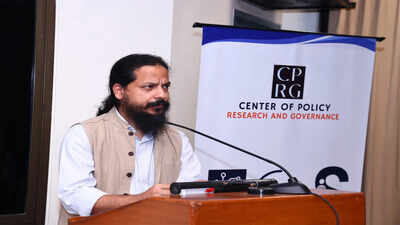
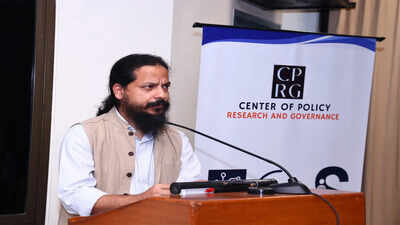
New Delhi: Center of Policy Research and Governance (CPRG) and AI4India have published the Future of Jobs in the Age of AI, Emerging Roles, New Opportunities report, a landmark study on the impact of Artificial Intelligence on employment and workforce transformation.According to CPRG, “The report is based on an analysis of active job descriptions and secondary research, as well as primary interviews with AI startup founders, technology and service industry leaders, applied AI practitioners, HR professionals, and academics. It maps emerging roles in the AI ecosystem, from data infrastructure and model development to deployment, governance, and workforce training. Rather than treating job displacement as the key outcome, the report documents a more uneven transition. IS: New roles are appearing while existing roles are being reshaped, many of which are only beginning to be defined.CPRG Director Ramanand said, “Every major technological shift has restructured the workforce, and AI is no different. What is different this time is the speed. The displacement narrative is too simple, and this report shows why. New roles are emerging across the entire AI value chain, and India needs to lead the way now, starting with how we skill our students. CPRG’s work is to build the evidence base that informs India’s policy response to these shifts. Is, and this report is part of that effort.”The CPRG further said that “India is uniquely positioned in this transformation. We have a young workforce, a growing technology sector, and the scale of manufacturing for these roles that few other countries can do. This is an opportunity that India is well placed to lead.”CPRG Visiting Fellow Pranab Gupta said the ‘Future of Jobs’ report is an effort to examine new, emerging opportunities due to rapid AI proliferation. It is important to note that these opportunities will not be limited to core AI development and deployment roles. “Rather, the various forward and backward linkages of the AI ​​industry will also contribute to job creation.”CPRG Director Ramanand further said, “This report is important in the current global scenario. Across all economies, there is a fundamental question about where jobs are coming from and where they are being lost, and AI is at the center of that transformation. This report is CPRG’s attempt to systematically look at the job landscape and highlight where opportunities are emerging and where changes are taking place.The report is part of CPRG’s Future of Society initiative, which examines how emerging technologies reshape society and the economy. As the official knowledge partner of the IndiaAI Mission for the India AI Impact Summit 2026, CPRG has hosted several summit events and a series of global and domestic pre-summit events.CPRG was also the only Indian NGO to host an official side event at the Paris AI Action Summit 2025, and its work has been recognized at the Belgrade GPAI Summit 2024.The Center of Policy Research and Governance (CPRG) is a policy research think tank that aims to promote responsive and participatory policy-making. As an institute recognized by the Indian Council of Social Science Research (ICSSR), it has established itself as a leading voice in technology policy through its ‘Future of Society’ initiative.

Source link

Evening News Wrap: US Secretary of State Marco Rubio talks to PM Modi; Uganda confirms 3 new cases of Ebola and more india news

Evening News Wrap: US Secretary of State Marco Rubio talks to PM Modi; 3 more new cases of Ebola confirmed in Uganda
  • U.S. Secretary of State marco rubio Met Prime Minister Narendra Modi in New Delhi as India and the United States push to deepen cooperation on defence, trade and Indo-Pacific.
  • Police secured seven-day remand for Samarth Singh in the Twisha Sharma death case, as investigators intensified the probe into allegations of dowry harassment and mental torture.
  • Uganda confirmed three new Ebola cases, raising concerns over the spread of the rare Bundibugyo strain amid World Health Organization warnings.
  • Security forces launched a joint operation in Rajouri, Jammu and Kashmir after contact was established with suspected terrorists in Gambhir Mughlan area.
  • Founder Abhijeet Dubke claimed that the Cockroach Janata Party website was taken down, leading to youth discontent and an online controversy linked to the NEET-UG controversy.

Here are the top 5 news of the day

Rubio-Modi talks focus on Indo-Pacific, trade and defense ties

US Secretary of State Marco Rubio held talks with Prime Minister Narendra Modi in New Delhi on Saturday and the two countries sought to strengthen strategic cooperation in defence, trade, technology and regional security. Rubio’s visit, which will also include meetings with Quad ministers, comes amid growing India-US engagement in the Indo-Pacific and expanding discussions on energy and critical technologies. Read the full story

Samarth Singh sent on seven days police remand in Twisha Sharma death case

Police on Saturday obtained seven-day remand of Samarth Singh, the main accused in the death case of his wife Twisha Sharma, after producing him in a Bhopal court following his arrest in Jabalpur. The investigators said the accused was not cooperating in the investigation, while the authorities also warned of action against anyone providing shelter to him during the period he was absconding. Read the full story

Uganda confirms three new cases of Ebola as concerns over outbreak grow

Uganda has confirmed three new Ebola infections, bringing the total number of cases in the current outbreak to five, as authorities step up efforts to trace contacts and stop the spread of the Bundibugyo strain. The World Health Organization has warned that the outbreak poses a high regional risk, particularly due to the absence of a vaccine for this strain and continued cross-border movement involving the Democratic Republic of the Congo. Read the full story

Joint anti-terrorism operation underway in Rajouri after contact with suspects

The Army said contact with suspected terrorists was established in the critical Mughlan area of ​​Rajouri during a joint operation by the Army, Jammu and Kashmir Police and CRPF. Security forces launched a cordon and search operation following intelligence inputs, while additional forces were deployed as the encounter continued. Read the full story

Cockroach Janata Party founder claims website removed amid online controversy

Abhijit Dubke on Saturday claimed that the website of the Cockroach Janata Party has been taken down and accused the BJP-led Center of “dictatorial behaviour”. The meme-driven online movement, which has gained popularity among young users amid the outrage over the alleged NEET-UG paper leak, has established itself as a platform for satire, criticism and digital activism. Read the full story

Source link