Free bus travel for women, ‘Annapurna’ scheme approved
Big decisions of West Bengal Cabinet: Free bus travel for women, 'Annapurna' scheme approved

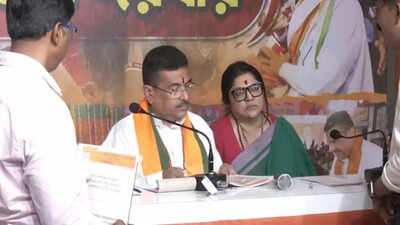
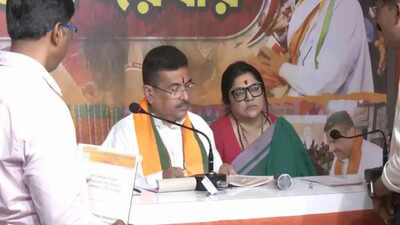
New Delhi: The West Bengal cabinet led by Chief Minister Suvendu Adhikari on Monday decided to stop government aid to groups based on religious classification from June, while also approving a new monthly financial assistance scheme for women and free bus travel in state-run buses.The development comes after CM Adhikari held a ‘Janata Darbar’ at the BJP office in Kolkata’s Salt Lake City, where he interacted with citizens and heard their grievances. The official also reiterated that Bengali culture will again gain global prominence after years of repression under the previous regime.

What are the big decisions of Bengal Cabinet?

  • Addressing a press conference after the Cabinet meeting, Minister of State Agnimitra Paul said, “The Bengal Cabinet has decided to stop government aid to groups based on religious classification from June.”
  • He also announced that the state government has approved the ‘Annapurna’ scheme under which eligible women will get Rs 3,000 per month from June 1.
  • “The Cabinet approved the ‘Annapurna’ scheme of providing monthly assistance of Rs 3,000 to women from June 1. It also approved the proposal to allow free travel for women in government-run buses from June 1,” he said.
  • He said women who had applied for citizenship under the CAA and approached tribunals to be included in the voter list would also be eligible for benefits under the Annapurna scheme.
  • Paul said the government has also decided to scrap the existing state OBC list following the Calcutta High Court verdict and will set up a scrutiny panel to determine the quota eligibility.
  • The Cabinet also approved the constitution of the 7th State Pay Commission for government employees, employees of affiliated statutory bodies, education boards and employees working in state-run educational institutions.
  • The BJP won a landslide victory in the recent West Bengal Assembly elections by winning 206 seats in the 294-member House, while the All India Trinamool Congress came second with 80 seats. On 9 May, Suvendu Adhikari was sworn in as the ninth Chief Minister of West Bengal after defeating former Chief Minister Mamata Banerjee from the Bhabanipur seat.
Source link

Former minister Semmalai resigns, citing internal conflict

Fresh blow to AIADMK: Former minister Semmalai resigns, citing internal discord
File photo: AIADMK general secretary Edappadi K Palaniswami (left) and S Semmalai.

New Delhi: Senior All India Anna Dravida Munnetra Kazhagam (AIADMK) leader S Semmalai on Monday resigned from the party citing dissatisfaction over recent developments within the party and expressing concern over its current situation.has addressed the AIADMK general secretary in his resignation letter Edappadi K PalaniswamiSemmalai, popularly known as EPS, said he was “extremely mentally pained” by the developments in the party after the elections.He wrote, “The series of events taking place in the AIADMK after the elections has caused me immense mental pain. Lakhs of party workers, who have been striving for this movement since the day of its inception, are also in a similar state of mind.”He said that neither past nor ongoing events within the party were satisfactory and were instead “only causing concern”.Announcing his exit from the party, Semmalai told reporters, “I am very concerned about the developments within the party. The party is in a delicate situation. The present situation is not comfortable for me. Therefore, I have decided to leave the party.”

Raises questions on the current direction of the party

Semmalai referred to the legacy of former Tamil Nadu chief ministers MG Ramachandran and J Jayalalitha while questioning the current state of the party.“Is this the fate of the movement created by the golden-hearted revolutionary leader MG Ramachandran and protected by the revolutionary leader Amma J Jayalalitha?” He has written.The veteran leader also claimed that reports of infighting have damaged the image of the AIADMK, with even English newspapers mocking the party over internal disputes.Semmalai said that the condition of the party has deteriorated to such an extent that internal conflicts are being openly ridiculed in media reports.

‘I was blocked after Jayalalitha’s death’

Reflecting on his political career, Semmalai said that both MGR and Jayalalitha had given him opportunities and recognition in public life.He wrote, “Both the revolutionary leader (MGR) and Amma (Jayalalitha) gave me many opportunities and also gave me a stable identity in politics.”He further alleged that he was sidelined after Jayalalitha’s death but continued to work for the party in a disciplined manner.“After the demise of revolutionary leader Amma, many opportunities were denied to me and many were blocked. Nevertheless, I did not worry about it. Without expressing my disappointment, I remained disciplined and continued working under the party leadership,” the letter said.Semmalai said, “I was blocked. However, I continued to work obediently without expressing my feelings.”

Ended long political association

Saying that current circumstances no longer allow him to continue in the movement, Semmalai announced his resignation from both the party and his post.He wrote, “My heart no longer allows me to continue my journey in this movement. My heart is very sad.” He wrote that he was stepping down “with a heavy heart.”Semmalai served as the Health and Education Minister of Tamil Nadu between 2001 and 2004. He was elected to the Tamil Nadu Legislative Assembly from Taramangalam in 1980 as an independent candidate before joining the AIADMK at an early age.He was also known for opposing free distribution by political parties and advocating alternative measures to strengthen state finances.

Source link

Kerala gets new government after UDF returns after 10 years; VD Satheesan took oath as CM

Kerala gets new government after UDF returns after 10 years; VD Satheesan took oath as CM

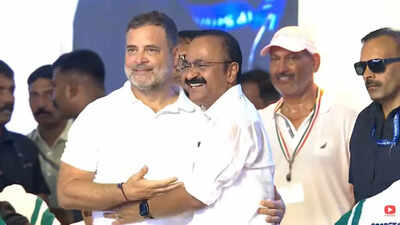
New Delhi: VD Satheesan took oath Chief Minister of Kerala The Congress-led United Democratic Front returned to power after a decade at the Central Stadium in Thiruvananthapuram on Monday.Kerala Governor Rajendra Vishwanath Arlekar administered the oath of office to Satheesan and his 20-member council of ministers. Meanwhile, 14 ministers have become ministers for the first time in the new cabinet.Many leaders of Congress ruled states including Congress chief Mallikarjun Kharge, Rahul Gandhi and Priyanka Gandhi Vadra attended the event. Outgoing Chief Minister Pinarayi Vijayan and BJP leader Rajiv Chandrashekhar were also present on the stage, with Satheesan greeting leaders across party lines after taking the oath.The new cabinet includes senior Congress figures like Ramesh Chennithala, K Muraleedharan and Kerala Pradesh Congress Committee chief Sunny Joseph. The Indian Union Muslim League (IUML) government has five ministers, including PK Kunhalikutty, KM Shaji, PK Bashir, N Shamsuddin and VE Abdul Ghafoor.Other ministers include Mons Joseph, Shibu Baby John, Anoop Jacob, CP John, AP Anilkumar, T Siddiqui, PC Vishnunadh, Rosy M John, Bindu Krishna, M Lijju, KA Tulsi and OJ Janish. Satheesan also announced the appointment of Thiruvanchoor Radhakrishnan as president, Shanimol Usman as vice-president and Apu John Joseph as government chief whip.The UDF secured a decisive mandate in the assembly elections by winning 102 out of 140 seats in Kerala. Congress emerged as the largest party with 63 seats, while IUML won 22 seats. The Left Democratic Front (LDF) was reduced to 35 seats, while the BJP won three constituencies.Satheesan, credited with the Congress’ comeback in Kerala after two consecutive LDF tenures, emerged as the choice for the chief ministerial post after intense internal deliberations within the Congress. The party’s central leadership had reportedly favored Congress general secretary KC Venugopal for the post, but strong support from grassroots workers, IUML and public sentiments ultimately tilted the decision in Satheesan’s favour.

Source link

SC objects to order denying bail to Umar Khalid

'Bail is the rule, jail is an exception even in UAPA cases': Supreme Court objects to order denying bail to Umar Khalid

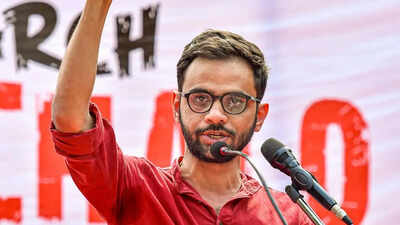
New Delhi: The Supreme Court On Monday, it expressed serious objection to the judgment given by another division bench of the apex court which had refused to grant bail to Umar Khalid in the Delhi riots case.A bench of Justices BV Nagarathna and Ujjwal Bhuyan made these observations while allowing the bail plea of ​​Syed Iftikhar Andrabi, who has been in custody for over 5 years in a case under UAPA for alleged narco-terrorism.The apex court said, “The principle of bail being the rule and jail being the exception applies even under special laws like UAPA.”The apex court said a division bench is bound by the decisions of larger benches and the decision of a three-judge bench in the Najeeb case, which had held that an accused cannot be detained indefinitely, is binding on a division bench.Justice Bhuiyan said, “The extensive study of Najeeb shows that mere passage of time, if it arises from all the surrounding circumstances, automatically entitles an accused to acquittal.”It states that the right to freedom is not a statutory slogan but a constitutional provision which must be followed in all circumstances.The apex court also expressed objection to its January judgment by which Umar Khalid and Sharjeel Imam were barred from seeking bail for a year.

Source link

Ordinance issued for 33 to 37 Supreme Court judges

Ordinance issued for 33 to 37 Supreme Court judges

New Delhi: The President on Saturday issued an ordinance – the Supreme Court (Number of Judges) Amendment Ordinance 2026 – to increase the number of judges of the apex court from 33 to 37 with immediate effect. With this amendment, the strength of SC has now increased to 38 judges including the CJI.The ordinance will be brought before the Lok Sabha and Rajya Sabha when they convene for the monsoon session. It will be replaced by an amendment bill and the government will have to get it passed by both houses. The Union Cabinet on May 5 had approved the proposal to increase the number of SC judges. This has been done in view of the increasing number of pending cases – more than 90,000 cases are pending for disposal before the apex court. In 1950, the SC was established for the first time with eight judges including the CJI.

Source link

WHO declares Ebola outbreak a global health emergency

WHO declares Ebola outbreak a global health emergency

New Delhi: As the World Health Organization announced on Sunday Ebola outbreak Public Health Emergency of International Concern (PHEIC) in Congo and Uganda, Indian health experts said there is no need to panic as Ebola does not spread like COVID-19, however vigilance and early detection is important.Health ministry officials said no case of Ebola has ever been reported in India, except for one international traveler who tested positive in 2014. The National Center for Disease Control is closely monitoring the situation.Former AIIMS director Dr Randeep Guleria said Ebola is spread through direct contact with infected body fluids, blood, vomit, secretions or contaminated material, while Covid-19 is spread through regular droplets.Guleria said, “There is no need to panic.” He said Ebola requires close physical contact to spread and hence is unlikely to cause a pandemic like COVID-19.Recalling India’s preparedness during the 2014 Ebola outbreak, Guleria said officials had conducted workshops and screening exercises across the country. He also mentioned an Indian traveler returning from Sierra Leone who was quarantined in Delhi after recovering from Ebola after viral particles were confirmed in body fluid samples. The person remained in isolation for about three months as a precaution, although no transmission occurred.Guleria said Ebola outbreaks are often linked to infected fruit bats or wild animals and can also spread during handling of infected carcasses. He stressed that it is important to screen travelers coming from affected areas and monitor them during the incubation period of up to 21 days.Experts said India has the laboratory capacity to rapidly detect Ebola through specialized RT-PCR testing at designated centers under the Indian Council of Medical Research and NCDC, although early clinical suspicion and prompt reporting are essential.“The overall risk is low, but in today’s interconnected world, infectious outbreaks are literally just a flight away,” said Dr. Neeraj Nischal, professor of medicine at AIIMS, underscoring the importance of airport surveillance, travel screening and emergency response systems.He said Ebola patients typically become infectious soon after symptoms begin, especially when fever, vomiting, diarrhea or bleeding develop. Health care workers and caregivers are at greater risk without adequate protective equipment and infection-control practices.Nischal said the early symptoms of Ebola can resemble other febrile or viral illnesses, making travel and exposure history important for diagnosis. He said contact tracing is one of the most effective ways to prevent transmission and added that lessons from Covid-19 – including surveillance, rapid testing and hospital preparedness – have strengthened India’s outbreak response capacity.“Public cooperation, honest reporting of travel history and timely medical consultation are important to prevent the outbreak from escalating,” he said.

Source link

Fire breaks out in Bihar passenger train; No casualties reported

Fire breaks out in Bihar passenger train; No casualties reported

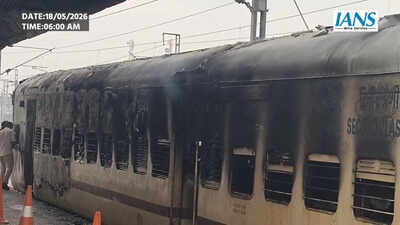
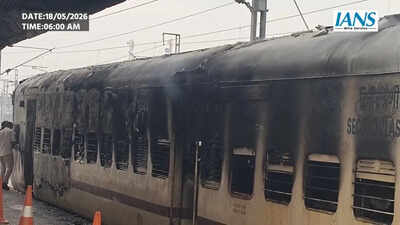
Sasaram-Patna passenger train caught fire due to suspected short circuit at Sasaram Junction on Monday. Bihar.No casualties have been reported yet.This comes a day after the fire in Trivandrum Central-Hazrat Nizamuddin Rajdhani Express (train number 12431) in Ratlam district of Madhya Pradesh.While all 68 passengers in the affected coach were evacuated safely, a relief vehicle going to the spot later met with an accident, seriously injuring more than five railway employees.

Source link

PM Modi, Christerson exchange unique gifts

Tagore's legacy strengthens India-Sweden ties: PM Modi, Christerson exchange unique gifts

New Delhi: Prime Minister Narendra Modi and his Swedish counterpart Ulf Kristersson on Sunday exchanged special commemorative gifts to celebrate the heritage. Rabindranath Tagore.According to a statement, Christerson gifted two facsimiles of handwritten aphorisms by Tagore, along with a short explanatory text and a photograph of Tagore taken during a visit to Uppsala University in 1921.“The original copies recently discovered in the Swedish National Archives were made by Tagore during his visits to Sweden in 1921 and 1926,” the statement said.Meanwhile, PM Modi gifted Christerson a set of collected works of Rabindranath Tagore, along with a specially handmade bag from Santiniketan, which Gurudev had chosen to empower local artisans.“The bag symbolizes Tagore’s philosophy that art is not meant to be confined to galleries, but to breathe life into everyday objects, bridging the gap between the intellectual and the functional,” the statement said.Tagore, the first non-European Nobel laureate, was unable to travel to Sweden in 1913 to receive the Nobel Prize. He was later welcomed by King Gustav V during his visit to Sweden in 1921.The exchange of gifts also coincides with the centenary of Tagore’s historic visit to Sweden in 1926.PM Modi reached Sweden on Sunday on a two-day visit. PM Modi was also awarded the ‘Royal Order of the Polar Star, Degree Commander Grand Cross’ for his extraordinary contribution to India-Sweden relations and his visionary leadership.During the delegation-level talks, both sides reviewed the entire dimension of bilateral relations and explored new avenues of cooperation to increase bilateral trade to reach US$ 7.75 billion by 2025.In their talks, both sides focused on promoting bilateral relations in the areas of green transition, artificial intelligence (AI), emerging technologies, startups, resilient supply chains, defence, space, climate action and people-to-people ties.

Source link

17 strategic agreements secured from PM Modi’s visit to Netherlands

17 strategic agreements secured from PM Modi's visit to Netherlands

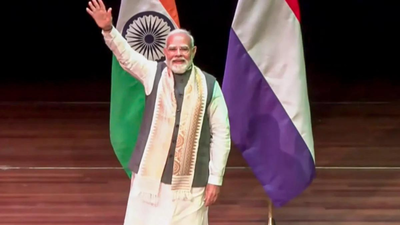
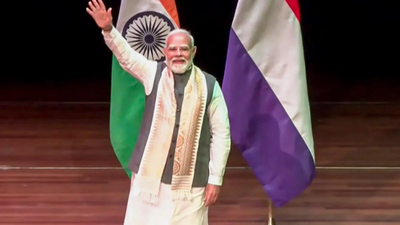
New Delhi: PM Narendra Modi’s visit to the Netherlands ended on Sunday with a total of 17 outcomes, including agreements on migration and mobility, green hydrogen and defense cooperation.As well as the war in Ukraine, Modi and Dutch PM Rob Jetten also discussed the situation in West Asia, opposing any restrictive measures, calling for freedom of navigation and global flow of commerce through the Strait of Hormuz, and reaffirming their support for ongoing efforts and initiatives in that regard.Welcoming the ceasefire announced on April 8, a joint statement said, “The two leaders expressed deep concern over the situation in West Asia, noting its serious implications for the region and the wider world, including enormous humanitarian suffering and disruption of global energy supplies and trade networks.”The government dismissed questions from local media on the Dutch PM’s reported comments on minority rights and press freedom in India. Sibi George, Secretary (West), Ministry of External Affairs, said, “We face these types of questions basically because of the lack of understanding of the person asking. You need to understand more about India to appreciate what India is.” He also clarified that he has not seen any such statement from the Dutch PM.The visit saw the two countries upgrade their ties to a strategic partnership and sign an agreement to support India’s semiconductor fabrication plant in Gujarat.According to the joint statement, Jeten strongly condemned the Pahalgam terror attack and expressed the Netherlands’ solidarity and unwavering support to India in the fight against terrorism, including cross-border terrorism. “Both Prime Ministers unequivocally condemned terrorism in all its forms and manifestations. He called for a zero-tolerance approach towards terrorism and rejected double standards in countering terrorism,” it said.The countries also signed a letter of intent to advance defense industrial cooperation, including the possibility of establishing a roadmap for manufacturing defense equipment, components and other key capabilities through co-development, technology transfer and joint ventures.

Source link

India has expressed concern after Iranian attacks targeting UAE nuclear facility

'Dangerous escalation': India expresses concern after Iranian attacks targeting UAE nuclear facility

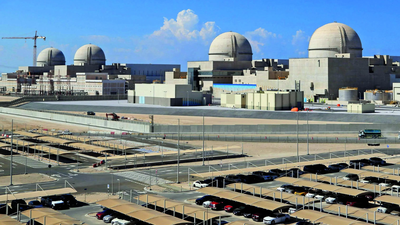
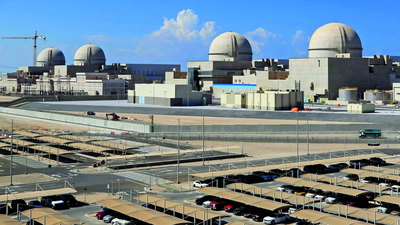
New Delhi: The External Affairs Ministry on Sunday expressed deep concern following the Iranian attacks targeting the Barakat nuclear facility in the United Arab Emirates, terming the attack as a “dangerous escalation” amid rising tensions in the Gulf.“India is deeply concerned by the attack targeting the Barakat nuclear facility in the UAE. Such actions are unacceptable and represent a dangerous escalation. We call for immediate restraint and a return to dialogue and diplomacy,” the Ministry of External Affairs said in a statement.Also read: Drone attack causes fire at nuclear plant in UAEThe reaction came after a fire broke out at the Barakah Nuclear Power Plant in Abu Dhabi following a drone strike. Emirati officials said the attack hit an electrical generator outside the plant’s inner perimeter, although there were no injuries or radiological leakage. Officials confirmed that security systems were intact and all units were operating normally.The attack has raised concerns over the fragile armistice between Iran, Israel and the United States, with diplomatic efforts also appearing strained. The UAE accused those behind the attack of carrying out an “unprovoked terrorist attack” and warned that it would not tolerate threats to its sovereignty.The UAE Foreign Ministry said, “These attacks are a dangerous escalation, an unacceptable act of aggression and a direct threat to the country’s security.”The International Atomic Energy Agency said the strike caused a fire near the facility after emergency diesel generators were supplying power to a reactor. The UN nuclear watchdog urged “maximum military restraint” around nuclear sites and said it was closely monitoring developments.The UAE Defense Ministry said three drones had entered its airspace from the western border with Saudi Arabia, with two being intercepted before reaching their targets. Authorities have not officially blamed any countries, although the UAE has previously accused Iran and allied groups of targeting energy infrastructure in the Gulf during the current conflict.The $20 billion Baraka plant, built with South Korean aid and scheduled to become operational in 2020, is the Arab world’s only nuclear power station and supplies about a quarter of the UAE’s electricity needs.The latest attack comes as the rhetoric between Tehran, Washington and Tel Aviv continues to escalate. US President Donald Trump warned Iran that “time is running out”, while Iranian officials insisted their forces were ready, despite diplomatic channels remaining open.

Source link