
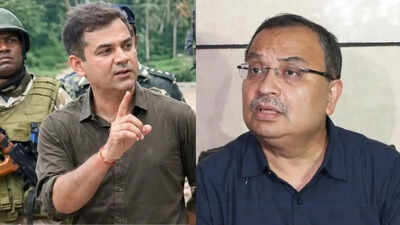

‘He’s a rat’: TMC’s Kunal Ghosh criticizes ‘Singham’ cop Ajay Pal Sharma over Falta repoll, demands suspension india news
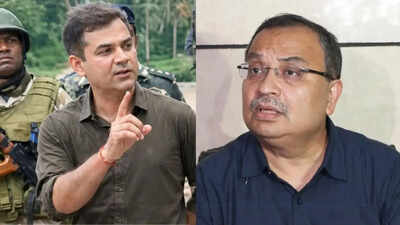
‘He’s a rat’: TMC’s Kunal Ghosh criticizes ‘Singham’ cop Ajay Pal Sharma over Falta repoll, demands suspension
New Delhi: Trinamool Congress Leader Kunal Ghosh on Sunday launched a scathing attack on IPS officer Ajay Pal Sharma, known as ‘Singham’, and demanded his suspension over alleged large-scale rigging in West Bengal’s Falta assembly constituency.“If there was massive rigging in Falta, what were they doing on the election day? What were ‘Singham’ officers doing if there was massive rigging during polling? If the entire constituency was rigged in Singham’s area, then he is not Singham, he is a rat. He should be suspended first. There should be accountability. What was the Army doing when the entire constituency was rigged?” Ghosh asked.
This attack happened after Election Commission Ordered a full re-poll at all 285 polling stations in the Falta constituency on 21 May, citing “serious electoral crimes and subversion of the democratic process” during the 29 April voting.
Why did EC order repoll?
The detailed order of the Election Commission revealed that the preliminary inquiry conducted on April 30 was deeply flawed. The investigation relied primarily on paperwork and formal reports, while complaints filed by candidates and agents were not examined in detail. Importantly, video footage from polling stations was not thoroughly reviewed.The BJP had earlier claimed that its party symbol was allegedly pasted on electronic voting machines (EVMs) at several booths in Falta, thereby preventing voters from choosing its option. Party leaders including Suvendu Adhikari raised the issue with the senior leadership.
voting
Should IPS officer Ajay Pal Sharma be suspended on charges of rigging in Falta assembly constituency?
‘Singham’ officer
Sharma, a 2011 batch Uttar Pradesh-cadre IPS officer, was deployed as an observer by the Election Commission for the second phase of voting in West Bengal. Known for his tough policing image, he had previously sparked controversy when a purported viral video showed him warning alleged “troublemakers” that they would be given “appropriate treatment” if they attempted to disrupt voting in Falta.Fresh voting will take place on May 21 and counting will take place on May 24.

Galaxy enhances India’s remote sensing capability, launches world’s first OptoSAR satellite. india news

Bengaluru: When Bengaluru-based space startup GalaxyEye launched its first commercial satellite, Vision, into orbit on SpaceX’s Falcon-9 rocket on Sunday, it was more than just another launch for India’s private space sector. Drishti, considered India’s largest privately developed Earth observation satellite and the world’s first OptoSAR satellite, also added a rare new capability to the country’s Earth observation fleet: a satellite that can “see” through clouds, darkness and bad weather while simultaneously capturing conventional optical imagery. Suyyash Singh, co-founder and CEO of Galaxy, told TOI: “It will become only the 16th remote sensing satellite available for India, placing it in a small group of spacecraft. “It also has capabilities considered useful for strategic and security applications, for which there are only a few satellites in orbit to date.”Drishti is the world’s first company to carry a “Syncfused OptoSAR” payload combining electro-optical imaging and synthetic aperture radar (SAR) on a single platform. Optical satellites provide conventional high-resolution images but are affected by clouds and darkness. Radar satellites, on the other hand, can operate day and night and penetrate clouds, smoke and rain, although their visualization is harder to interpret.GalaxyEye says that by synchronizing and combining both streams of data the satellite can generate more consistent and useful imagery for users on the ground.The spacecraft is expected to support applications ranging from border surveillance and defense surveillance to disaster response, agriculture, infrastructure planning and insurance assessment. For example, during floods, cyclones or landslides, radar imaging can continue to operate even when cloud cover prevents optical satellites from capturing images.Indian Space Association (ISPA) Director General Lieutenant General (Retd) AK Bhatt said, “It marks a significant shift in India’s approach towards Earth observation. It serves as a definitive proof-of-concept for India’s private space sector reforms and signals the transition from small-scale testing to sovereign, all-weather monitoring capabilities critical for national security and disaster response.”AI processing and first imagesAnother key feature onboard is artificial intelligence processing powered by Nvidia’s Jetson Orin computing platform. Instead of sending large amounts of raw imagery back to Earth for analysis, some parts of the processing will take place directly in orbit. The aim is to reduce the time taken to transform satellite imagery into actionable information.GalaxyEye says the satellite can provide imagery at a resolution of 1.5 meters and revisit locations globally every seven to ten days. The spacecraft, approximately the size of a compact refrigerator, also carries a deployable antenna spanning approximately three and a half metres.Following its successful deployment and commissioning, initial imagery is expected to be delivered to customers in the coming weeks. “The satellite has already generated significant interest among government and commercial stakeholders internationally for access to high-quality, high-frequency Earth observation data,” GalaxyEye said after the launch.Following the launch of Vision, the startup plans to build a larger constellation of 8-12 satellites over the next four years, with future versions targeting even sharper imagery.Pawan Goenka, chairman of the Indian National Space Promotion and Authorization Center (IN-SPACe), India’s space regulator, said: “Continued efforts over the last five-six years on confidence-building, capacity-building and commercialization of India’s private space technology ecosystem are now showing concrete results. Vision is a good example of this – the world’s first OptoSAR satellite from an Indian private company.“
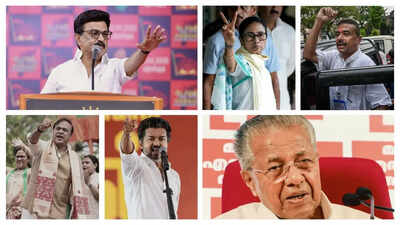
Assembly Elections 2026: From East to South, a look at the major battlegrounds. india news
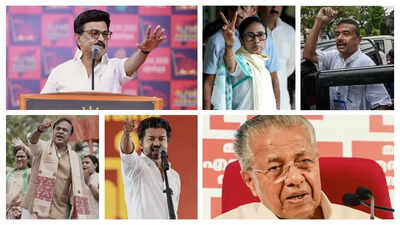
New Delhi: The multi-state electoral verdict on May 4 will be shaped not only by wide swings, but also by a set of constituencies where margins are thin, candidates are high profile and local dynamics are unusually intense. Once counting begins and trends emerge, these seats provide early indications of momentum, coalition cohesion and voter sentiment that could spread across the region. From prestige competition involving chief ministers to testing new entrants in urban battlegrounds, the results from these constituencies will help explain whether power stands or is broken. They also reflect how local issues such as welfare distribution, identity, urban infrastructure and leadership credibility interact with broader political narratives. Keeping a close eye on these seats will provide a clearer read of the decision than just the main seat numbers. This increased relevance can also be gauged from the strong voter participation across various regions, with voter turnout being strong and led by West Bengal’s historic participation of over 92 per cent as well as Tamil Nadu’s turnout in the mid-80s, Kerala’s turnout at over 78 per cent, Assam’s high turnout at almost 90 per cent. PuducherryReflects extraordinary voter mobilization.
Crown vs Challenger: Round 2
In West Bengal, a set of high-visibility contests are likely to shape the narrative early in the day. Bhawanipur remains central, where Chief Minister Mamata Banerjee is defending her long-held bastion against an emerging challenge linked to her ex-protege Suvendu Adhikari and his camp. The seat’s mixed electorate and sharp margins in recent cycles make it a sensitive indicator of urban consolidation for Trinamool. Congress (TMC) and Bharatiya Janata Party (BJP).Nandigram again attracts attention as a prestige battleground linked to the earlier rivalry between Banerjee and Adhikari. Identity, local networks and candidate credibility intersect here, and even a small change can carry symbolic weight beyond the constituency. Noapara, located in the Barrackpore industrial area, reflects the churning among working-class voters and the impact of leadership change. The contest there remains a continuation of efforts to re-establish local leadership.Tollygunge and Rashbehari represent urban Kolkata seats where infrastructure claims and governance assumptions are directly tested. BJP’s efforts to expand its footprint in urban areas are facing pressure from TMC based on development and welfare delivery. Together, these seats will indicate whether the BJP can translate its organizational advantage into sustained urban traction or whether the TMC maintains its lead among urban voters. Moreover, maximum eyes will be on the South 24 Parganas region, which has 31 constituencies, making it electorally decisive in the state. Which will play an important role in determining the outcome of the big battle of Bengal.In the 2021 assembly elections, TMC won 215 out of 294 seats, confirming the scale of dominance that the BJP is attempting to challenge.
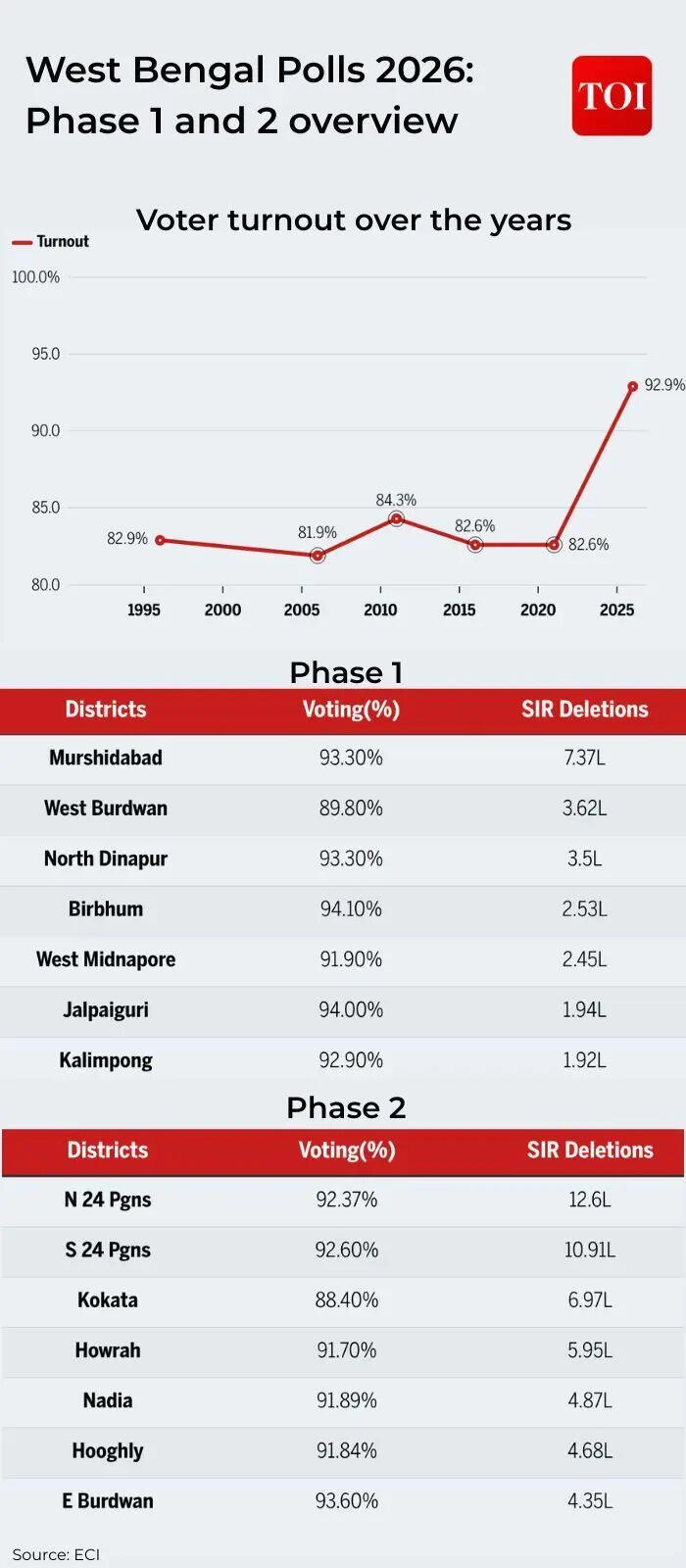
Overview of West Bengal Elections
Big upsets and survival tests?
In Assam, the focus is on a set of constituencies that tie the leadership stakes with narrow margins. Jalukbari, which is represented by Chief Minister Himanta Biswa Sarma, is a nod to the urban strength and organizational reach of the ruling coalition. A decisive result in the constituency will strengthen the perception of stability around the current leadership.Jorhat and Nazira are closely watched due to their competitive history and low margins of victory. Jorhat has seen a tight contest between the BJP and the Indian National Congress, which will reveal whether the opposition can translate its presence into seats. Nazira has a legacy dimension associated with the Congress leadership and has made very little difference, which could again prove to be decisive. In the last election, this seat was decided by a margin of just 683 votes, making it one of the closest contests in the state.Barachalla and Golaghat add to the competitive map of the state. Barachala reflects the concerns of rural and semi-urban voters, including agricultural issues and community dynamics, while Golaghat conjures up a larger voter constituency with a history of close contests. The results from these seats will indicate whether the BJP-led alliance can maintain its gains in all areas or whether the Congress can narrow the gap in key areas.
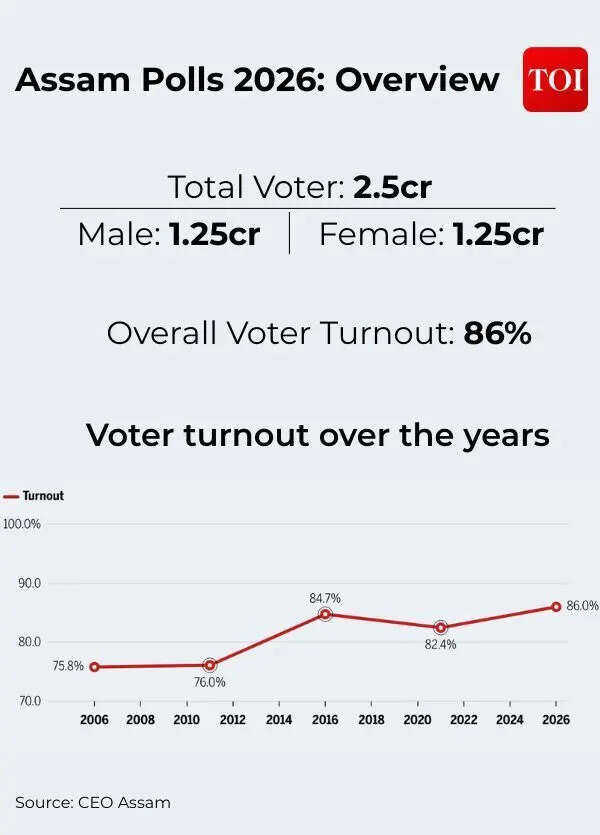
Overview of Assam Elections
In the 2021 election, the BJP-led alliance won 75 out of 126 seats and formed the government with a clear majority.
A new challenger to test the old strongholds?
In Tamil Nadu, key contests bring together leadership, legacy and the entry of a new political force. Kolathur, represented by Chief Minister MK Stalin, is a central test of the ruling party’s urban base. A strong performance will underline the durability of Dravida Munnetra Kazhagam (DMK) support in Chennai.Chepauk Thiruvallikeni has its own weightage with the Deputy Chief Minister Udayanidhi Stalin An attempt is being made to strengthen the party’s position on a seat which has been associated with DMK for a long time. Tiruchirappalli East and Perambur gain prominence due to the presence of Victory and Tamilaga Vetri Kazhagam, who are attempting to disrupt the established alignment. These constituencies will indicate whether a new entrant can convert visibility into electoral attraction.Edappadi K. Edappadi is critical of the All India Anna Dravida Munnetra Kazhagam, represented by Palaniswami. A strong result would indicate that the party has retained a solid base despite recent setbacks. Together, these seats will show whether the state’s political system remains intact or has begun to change with the entry of new actors.In 2021, the DMK-led alliance won 159 seats out of 234, with Stalin’s party securing 133 seats, marking its return to power after a decade.
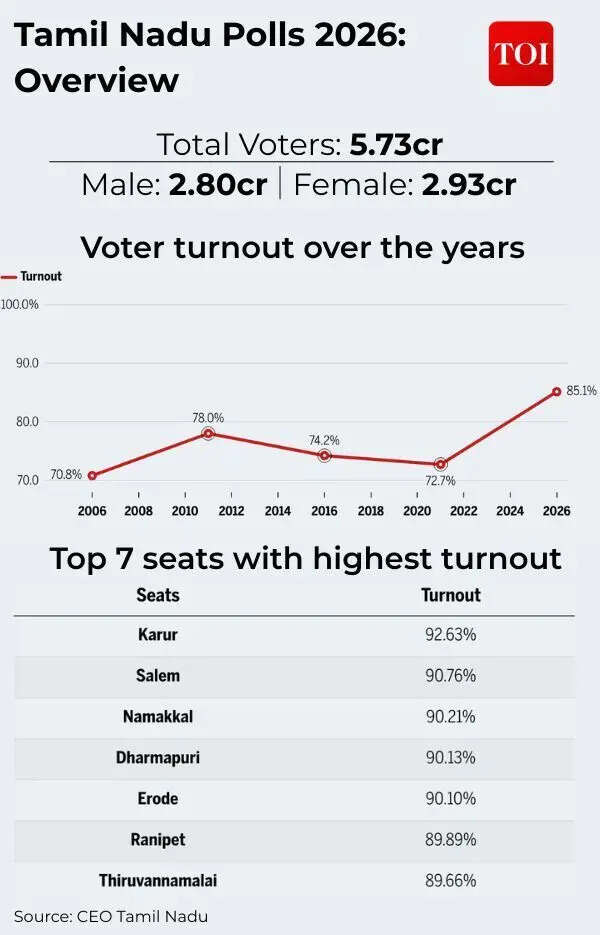
tamilnadu voting overview
cycle vs continuity
In Kerala, key seats reflect the layered nature of competition shaped by both continuity and challenge. Nemom stands out as a highly competitive suburban constituency where the Left Democratic Front (LDF), the Congress-led United Democratic Front (UDF) and the BJP-led alliance all have a presence. The result here may indicate whether the BJP can maintain relevance in the triangular setting.Thrissur, often described as a politically sensitive urban centre, reflects changes in voter alignment and the impact of recent electoral trends. Vattiyoorkavu and Puthupalli represent opposite dynamics, with urban infrastructure issues on the one hand and heritage-driven loyalty on the other. Puthuppalli, in particular, holds emotional and historical significance for the Congress.
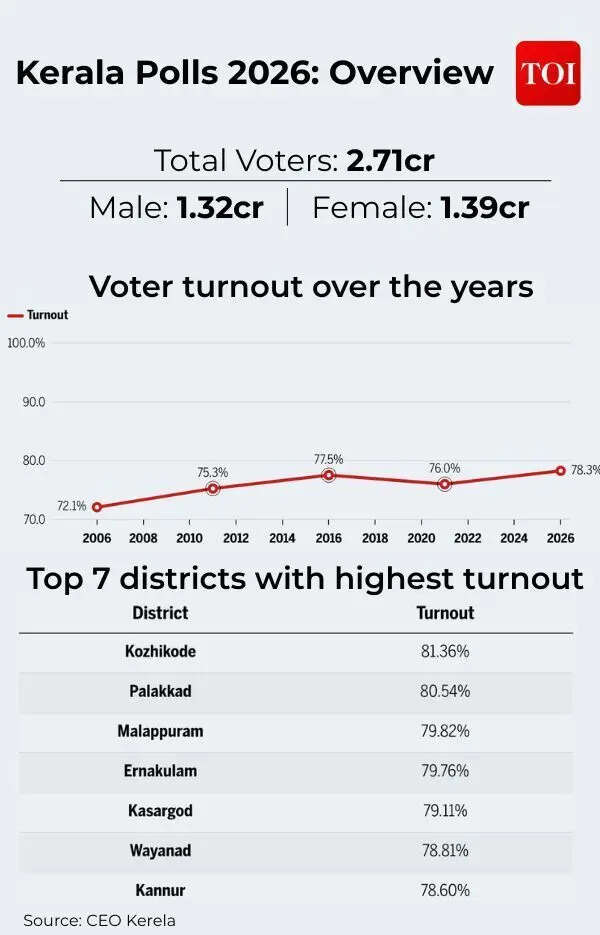
Kerala polling overview
Kony adds a rural and plantation dimension to the mix, where economic concerns and local development issues are prominent. The combined results from these seats will help determine whether Kerala returns to its alternative pattern or whether the current front can buck that trend.
Power, prestige at stake?
In Puducherry, a smaller electoral map still provides a set of decisive contests. Thattanchavady is at the centre, with Chief Minister N. Rangasamy is defending his base against a challenge from a former chief minister. The outcome will impact the continuity of leadership in the Union Territory (UT).
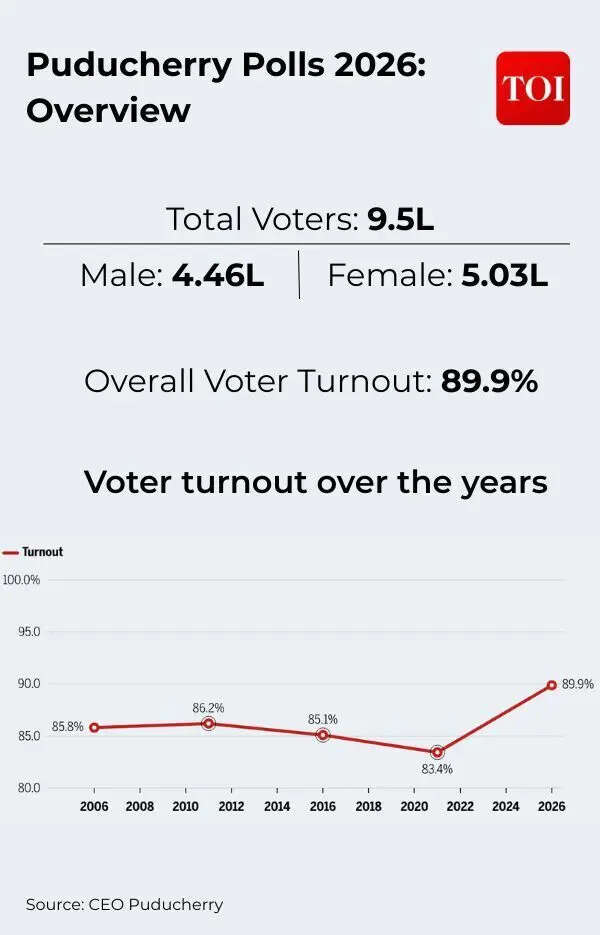
puducherry polling overview
Mannadipet, with its semi-urban and agricultural mix, is known for close margins and could impact the broader outcome. Raj Bhavan reflects the changing political landscape following leadership changes, making it a seat to keep an eye on for realignment. Lospet, with its educated and urban voters, has shown instability in recent cycles, while Mahé brings a different demographic profile that often creates tight competition.Puducherry recorded nearly 90 per cent voter turnout in 2026, the highest in the country for this election cycle.These constituencies together will indicate whether the ruling coalition can maintain its position or whether the opposition can enter a compact but competitive political space.Within these five areas, the identified constituencies combine leadership stakes, competitive histories, and changing voter preferences. Their results will provide early indications about whether power holds, whether the opposition’s efforts will translate into gains and whether new entrants can reshape established equations. As the count progresses, these seats will provide a detailed understanding of the decision, helping to explain not only who wins, but how and why the outcome took shape.
‘All TMC officials’: BJP alleges irregularities after phone found in envelope near Asansol College strong room; Anarchy spreads. india news
New Delhi: While West Bengal awaits the results to be declared tomorrow, there was panic after a mobile phone sealed in an envelope was found near the strong room campus of Asansol Engineering College.Along with mobile phones, several documents related to Raniganj assembly constituency were also recovered, which raised suspicion and led to a brief ruckus at the site. A BJP leader alleged that officials were working in favor of TMC and raised concerns over possible irregularities.Claiming that a person attempted to enter the premises with a phone, the BJP leader said, “Someone was attempting to enter here with a mobile phone. Our people caught him. Mobile phones are prohibited. I don’t know what the police is doing. A mobile phone was being taken inside so we stopped it and that is why we are standing here. We will not allow any unethical work to happen here. All the officials are from TMC.”The incident comes amid heavy security deployment outside strong rooms across the state to prevent clashes and ensure the safety of EVMs ahead of the counting day.West Bengal Chief Electoral Officer Manoj Kumar Aggarwal said all arrangements have been made as per the Election Commission guidelines, with a three-tier security system involving central forces, local police and state police. He also warned that strict action would be taken against any negligence.The development comes in the backdrop of a tense election cycle in the state, which has been marred by allegations of violence, voter intimidation and irregularities during voting. Incidents of clashes and vandalism were reported from many areas including Chhapra, Shantipur, Neemtala and Bhangar.In a significant move, the Election Commission ordered fresh polling in the entire Falta assembly constituency citing ‘serious electoral crimes’ and subversion of the democratic process during the April 29 polling phase. Re-polling was also conducted at select booths in South 24 Parganas amid tight security, with officials aiming to restore confidence in the electoral process.The West Bengal Assembly elections were held in two phases on 23 April and 29 April. The results of the high-stakes election will be declared on May 4.
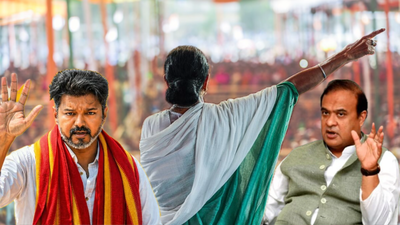
Fish, fury & 90 lakh voters: What stood out in assembly election 2026 campaign trail | India News
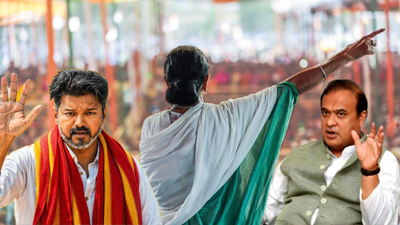
The dust has finally settled on the EVMs across five distinct corners of India. From the rain-washed palm groves of Kerala to the tea-stained hills of Assam, the 2026 Assembly Elections have been a marathon of high-decibel rhetoric, shifting loyalties, and a digital-age makeover of the classic Indian padyatra.While the results remain locked in the strongrooms until counting day on May 4, the campaign itself has already written a story of an India in transition—where regional pride, welfare economics, and the “star power” of new entrants collided in a spectacular display of democratic fervor.
Tamil Nadu ’s biggest entry
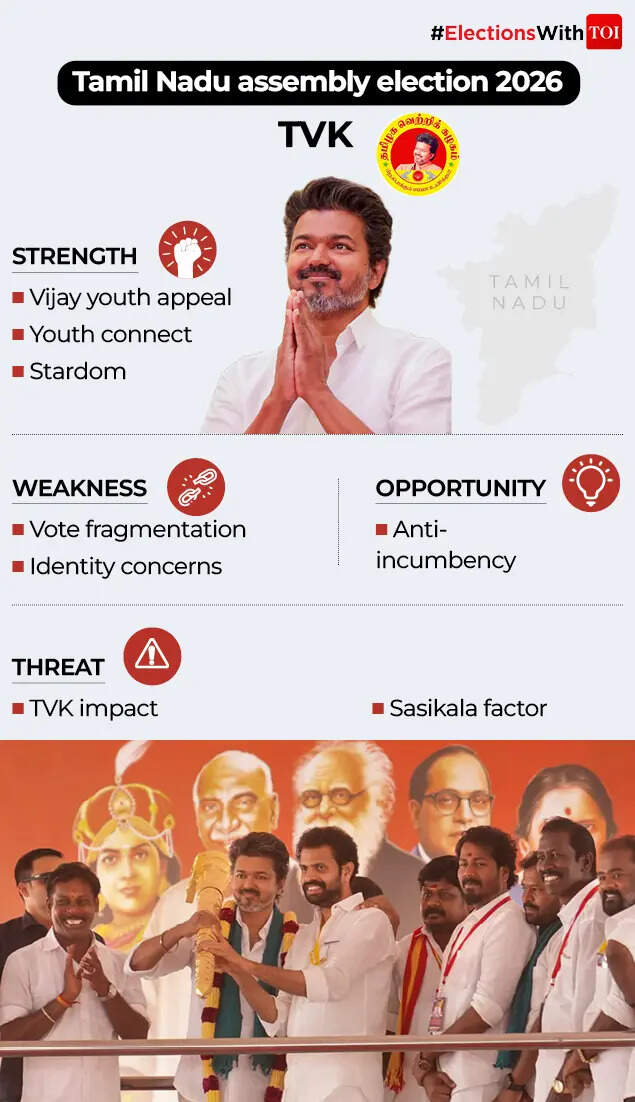
Before a single vote was cast, Tamil Nadu’s 2026 election was already marked by tragedy and it cast a shadow over everything that followed.On 27 September 2025, Vijay, Tamil cinema’s reigning megastar and founder of the two-year-old Tamilaga Vettri Kazhagam (TVK), held a rally in Karur. He was supposed to arrive around noon. He arrived more than six hours late. By then, tens of thousands of people had packed a venue permitted for 10,000. When his convoy finally appeared, the crowd surged. Then again. Then again. Forty-one people were killed. The dead included children. Tamil Nadu had not seen a death toll like that at a political rally in living memory.cTVK leaders were booked for culpable homicide. The CBI was called in. The campaign that was supposed to announce Vijay as Tamil Nadu’s great political disruptor had instead produced its darkest pre-election moment.And yet, because this is Tamil Nadu, and because Vijay is Vijay, the crowds kept coming.Sources inside the party said Vijay had become highly cautious about attending large public gatherings following the Karur tragedy. Several scheduled events were cancelled despite election permissions being granted. In Tiruverumbur, a TVK candidate campaigned with a Vijay cut-out. In Kolathur, another used a lookalike to attract crowds. The DMK, sensing weakness, pounced. Deputy Chief minister Udhayanidhi Stalin mocked the limited schedule openly, describing the approach as a “work-from-home” campaign.The permission battles became their own subplot. With less than a month to go for polling, TVK applied for a rally at Perambur’s Mullai Nagar junction. On the eve of the event, Chennai Corporation officials allegedly dug pits at the venue and erected iron barriers, rendering the site unusable. A police inspection concluded the location couldn’t accommodate 3,000 people. Vijay condemned the turn of events furiously, calling it a “fascist attack on democracy” and accusing certain officials of colluding to disrupt the rally. The DMK called it routine administration. Nobody believed either side entirely.Vijay chose to personally contest from Perambur — the constituency where he grew up — and from Tiruchirappalli East, both seats currently held by the DMK with comfortable margins. TVK leaders framed this as a marker of confidence rather than caution. The sitting MLA in Tiruchirappalli East dismissed Vijay as a non-factor. The voters, it seemed, had not got the memo.
Assam: ‘Point-blank shot’
In Assam, the defining campaign moment wasn’t a rally or a speech. It was an 18-second clip that the ruling party posted, deleted, and then, in an act of extraordinary brazenness, partially brought back.On February 7, the BJP‘s Assam unit shared a video on X that showed chief minister Himanta Biswa Sarma symbolically shooting Muslims. The clip contained what looked like real footage of Sarma wielding an air rifle, interspersed with AI-generated images of two individuals in skullcaps and beards being shot at. The post was captioned “Point blank shot.” Before it disappeared from the platform, the video had amassed over a million views.Congress called it a call to mass violence. The CPI and CPM went to the Supreme Court. When asked in the state assembly about his discriminatory policies, Sarma was characteristically unrepentant- “I will take sides. Won’t let ‘Miya’ Muslims take over Assam.”“In a rickshaw, if the fare is Rs 5, give them Rs 4. Only if they face troubles will they leave Assam.” Defending the remarks subsequently, Sarma insisted he was referring to illegal immigrants from Bangladesh.His government simultaneously announced a policy of arms licences for natives in remote areas. When asked if this risked turning Assam explosive, his answer was direct, “I want the situation in Assam to be explosive.”The particular irony at the heart of this story is that Sarma is an unlikely extremist. When he was sworn in as Assam’s chief minister in 2021, nobody could have pointed to an ideological biography that predicted what followed. He had served three consecutive terms on a Congress ticket and been a minister in the Tarun Gogoi government, holding portfolios ranging from health to finance to agriculture. He had no deep roots in the RSS. By the measure of the movement he eventually joined, he was a latecomer. And yet, since joining the BJP in 2015, his rhetoric has regularly outpaced that of many politicians with lifelong Sangh Parivar roots.Woven into the Assam campaign was also the name of Zubeen Garg.Garg, 52, was the state’s most beloved singer, a voice that had travelled well beyond language, into the daily life of the Northeast. On September 19, 2025, he died while swimming off an island in Singapore. A coroner’s court there called it accidental drowning. Sarma did not accept that. He claimed Garg was “murdered as part of a conspiracy.”Congress saw the opening and took it. It promised voters justice in Garg’s death within 100 days of coming to power. Sarma pushed back- the judiciary, he said, was not a campaign promise, and no party could guarantee a court outcome on an election timeline. But in Assam, where Garg’s songs were less entertainment than memory, that kind of correctness had limited reach.
The 90 lakh question
In West Bengal, the most extraordinary number of the campaign season wasn’t a seat projection or a vote-share figure. It was 90 lakh — the number of voters erased from the electoral rolls before a single vote was cast.The Special Intensive Revision of electoral rolls resulted in close to 90 lakh names being removed from West Bengal’s voter lists, many of them concentrated in border areas and non-elite rural, caste, and minority-heavy districts. Of those who filed appeals, roughly 27 lakh individuals sought restoration of their voting rights. Just about 1,400 voters were actually able to secure relief through the tribunals set up to review cases — leaving almost all applicants without restoration.1,400 out of 27 lakh. The TMC said the exercise risked disenfranchising genuine voters. The BJP said it was a necessary correction of bogus entries and names of illegal migrants. The matter went to court. Against this backdrop, West Bengal recorded its highest-ever voter turnout. The first phase saw a 92.8% turnout, a record, arriving after the 90-lakh reduction in the voter roll earlier in the year. Mamata Banerjee, seeking a fourth consecutive term, delivered one of the most-quoted lines of the entire election season. At a rally in Kolkata’s Chowringhee, she said: “Remember this, you cannot defeat us. We fight against injustice; we fight for our rights. I was born in Bengal, and I shall breathe my last in this very Bengal. I will take over Delhi once I have secured victory in Bengal. I will do so by rallying all the political parties together. I won’t want the seat of power; I want the complete dismantling of the BJP in Delhi.” Amit Shah, campaigning in Kolkata at the same time, responded with a laugh, saying she had nothing left in Bengal, so how would she go to Delhi. The exchange dominated headlines for days.
Fish, identity and political theatre
But if one image captured the texture of West Bengal’s 2026 campaign more vividly than any speech or slogan, it was a fish.Koustav Bagchi, a lawyer-turned-politician and the BJP’s candidate from Barrackpore, moved from door to door in crisp white and red traditional attire, a fish in hand. Drums thudded behind him as supporters chanted his name. A few kilometres away in Kolkata’s port area, another BJP candidate, Rakesh Singh, staged a similar spectacle, dressed for effect and flanked by party workers, hoisting a fish repeatedly as he moved through early-morning crowds, taking on city mayor Firhad Hakim in one of the state’s high-profile contests.In Bengal, fish is more than food. It is the bloodstream of the cuisine. In 2026, that resonance was being staged as political theatre, with candidates brandishing it to quell a very specific anxiety.
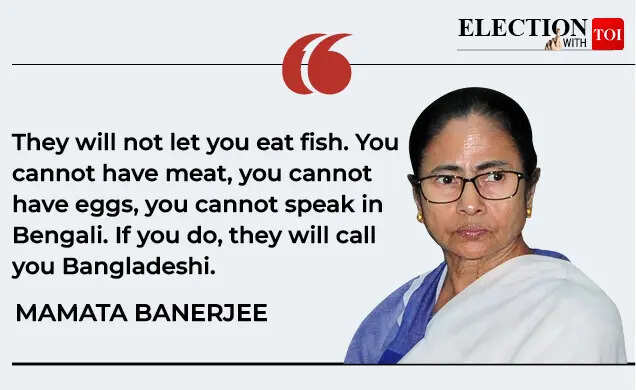
The anxiety had been created by Mamata Banerjee herself. At a rally in Basirhat’s Swarupnagar, she tore into what she called the BJP’s fish “lies”, saying Bengal “eats up what it produces,” and questioned the saffron party’s silence on the “targeting of meat and fish shops” if it was such a big fan of the aquatic vertebrate. “In their states, they will not allow you to eat fish, meat and eggs. Who are they to decide what people will eat?” she thundered. She also reminded the audience of how “people are tortured and lynched in BJP-governed states for speaking in Bengali.”The BJP scrambled to answer on its own terms. BJP MP Anurag Thakur participated in a public show of eating fish during a poll campaign. Seen eating fish and meat with party workers at a local hotel in Kolkata, he said: “The BJP has Chief Ministers in 16 states. There, people can eat whatever they want and they can practice whichever religion they want. We do not want to impose restrictions on food or religion.” He then accused Banerjee of spreading misinformation to malign his party’s image.From PM Modi to Amit Shah, the fish debate reached the campaign speeches of even the top brass of the BJP as they tried to shed their “outsider” and “vegetarian” image in Bengal. The campaign had reduced, at one level, to a contest over who could more convincingly claim the right to a plate of hilsa.
Triangular tussle in God’s own country
Kerala has had a simple political rule since 1982: Left wins, Left loses. Congress wins, Congress loses. Swap. Repeat. Pinarayi Vijayan broke it in 2021 by winning two terms in a row. In 2026, he was going for three — something no Kerala government has ever done.That was one story. The bigger story on the campaign trail was the BJP. For the first time in the state’s political history, a strong three-way contest was visible in nearly every constituency. Unlike previous elections, where the LDF and UDF often benefited from tacit cross-voting to keep the BJP at bay, both fronts this time found themselves under genuine pressure from the NDA. The closing days of the campaign were marked by controversy on all sides. In Palakkad, BJP workers were allegedly caught distributing cash, with videos circulating widely. The Congress, meanwhile, faced allegations over the misuse of funds collected for housing landslide victims in Wayanad. Both stories spread fast. Both were loudly denied. What also stood out was the spectacle of two national INDIA bloc partners spending much of the campaign attacking each other rather than the BJP. Each alliance accused the other of colluding with the BJP and compromising Kerala’s secular tradition. The campaign period was also unusually short- just three weeks. Despite that, Prime Minister Modi, home minister Amit Shah, and Rahul Gandhi all visited the state multiple times. Everyone wanted Kerala. Everyone treated it like it could actually change hands.
Hotel lobby, lottery king’s son and Puducherry’s magnificent chaos
And then there is Puducherry — proof that you don’t need millions of voters to generate industrial quantities of political drama.The standout moment of the Puducherry campaign happened not at a rally or in a manifesto but in a hotel lobby where a Union minister sat, waited for nearly two hours and was stood up.Chief Minister Rangasamy’s AINRC had placed two firm conditions for staying in the NDA: opposition to the inclusion of the newly formed Latchiya Jananayaga Katchi of Jose Charles Martin — son of lottery king Santiago Martin — in the alliance, and a renewed demand for statehood for Puducherry. The BJP agreed to neither. Union Minister Mansukh Mandaviya arrived at a hotel in the UT for alliance talks. Rangasamy did not attend the meeting. Until that Thursday evening, there was genuine speculation that Rangasamy might exit the NDA entirely to form an alliance with Vijay’s TVK. The BJP immediately dispatched Mandaviya to Puducherry on a special flight to persuade him. The alliance eventually held. Jose Charles Martin remained one of the most-watched figures of the Puducherry contest. His father Santiago Martin built one of India’s largest lottery businesses. The son launched a party from scratch ahead of these elections and negotiated his way into the ruling alliance. In a union territory with 30 constituencies and fewer than a million voters, where individual constituencies have between 30,000 and 50,000 electors, the dynamics of money, access, and influence operate differently from larger states. Despite everything, Puducherry recorded 89.87% voter turnout- the highest since 1964, the year of the first election after the territory’s merger with India. When political stakes feel personal, people show up. In Puducherry, they always do.
What it all adds up to
Across five states, India’s 2026 election season was less a referendum on any single policy than a vivid exhibition of what this democracy looks and feels like when it runs at full throttle.A megastar’s mania turned lethal before his campaign officially began — and he kept campaigning anyway, more cautiously, in the shadow of 41 deaths. A chief minister posted an AI-generated video of himself shooting at a religious minority, watched it go viral, watched it get deleted and then defended it. Ninety lakh voters were struck from a list, those who remained on it showed up in record numbers, as if to answer the deletion with defiance. And in Puducherry, a Union minister sat alone in a hotel lobby, stood up by an ally in India’s smallest electoral theatre, over a dispute involving a lottery baron’s son.
UP water tank accident: One dead, two injured while filming reel; Indian Air Force helicopter rescues stranded children. india news
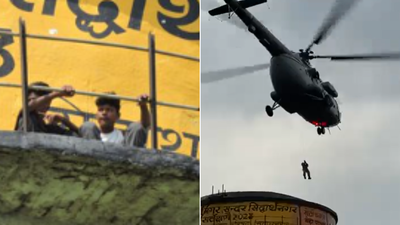
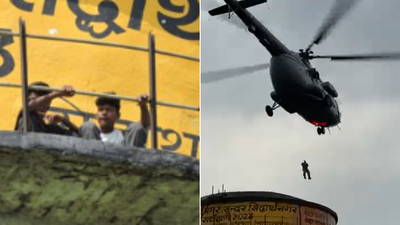
New Delhi: An IAF Mi 17 V5 of the Central Air Command (CAC) was deployed to rescue two stranded children, who were stranded on top of a water tank in Siddharth Nagar. gorakhpurUttar Pradesh This happened when five children climbed onto a water tank to record a social media reel and the stairs veered off course, resulting in the death of one child.“On the request of state government officials, an IAF Mi 17 V5 of Central Air Command (CAC) was deployed to rescue two stranded children above a water tank at Siddharth Nagar, Gorakhpur, Uttar Pradesh. The children were stranded at night due to the ladder of the water tank being damaged. The rescue operation was, once again, a testament to the professionalism of the IAF and its quick response at the time of need to save lives,” the CAC IAF said in a post on Twitter. “demonstrates commitment.” Videos of the rescue operation were also shared.District Magistrate Shivasharanappa told ANI that three children fell down when the structure collapsed, while two others were left trapped on top of the tank.“An incident occurred when five children climbed a water tank to record a reel and when the stairs broke, three of them fell from the water tank. One child died, and two others are being treated at the medical college,” he said.He said that due to difficult terrain and poor road access, rescue operations for stranded children require coordination between the fire department and the Indian Air Force.Sivasharanappa said, “For the rescue operation of the two children, who were still on top of the tank, we first called a fire engine from Gorakhpur. Because the soil was very dirty and the road was not well-made, we consulted the Air Force officer in Gorakhpur as a plan B. He sent a helicopter around 5 am today, and both the children were rescued safely and sent to their parents’ home. We thank the Chief Minister’s Office, whose coordination with the Air Force Provided support to the Army and ensured successful, prompt operations.”
voting
Should there be strict rules on climbing dangerous structures for social media?
Officials confirmed that the two children who were safely rescued are in medical care while more information is awaited.
Seats less, stakes high: Is BJP quietly expanding in Kerala? | india news
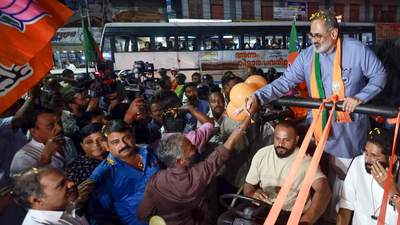
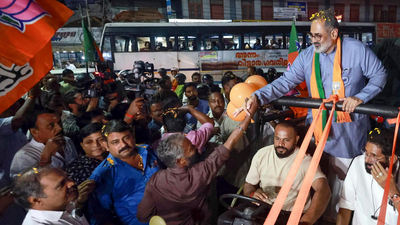
New Delhi: As Kerala awaits election results on Monday, the bigger political question may not be whether the BJP can win power in the state, but whether it has begun to disrupt Kerala’s long-standing two-front system. For decades, politics in the state has been strongly bipolar, with power alternating between the CPM-led Left Democratic Front (LDF) and the Congress-led United Democratic Front (UDF). In the 140-member assembly, strictly managed vote transfer, strong cadre networks and local caste-community equations left little room for the emergence of a third force.But recent elections show that the BJP is gradually making political inroads in some parts of the state. Its first Lok Sabha victory in Thrissur in 2024, increase in vote share, lead in local body elections and growing presence in urban constituencies like Thiruvananthapuram and Palakkad have indicated a gradual change in Kerala’s electoral landscape. Although the party is still far from a statewide challenge, its strategy of focusing on select constituencies has started turning the traditional LDF-UDF contests into a triangular fight, enough to make the BJP a significant factor in Kerala politics.
Is BJP the third wheel in LDF vs UDF?
For nearly four decades, elections in Kerala followed a script that was so consistent it seemed almost structural. Every five years, power changes between the CPM-led Left Democratic Front (LDF) and the Congress-led United Democratic Front (UDF), turning the state into one of India’s most tightly sealed two-front political systems.In the 140-member assembly, contests were often decided by local equations and disciplined vote transfers, leaving little scope for a third force to gain a permanent footing.That political cycle broke in 2021. Breaking the strong pattern of Kerala’s anti-incumbency wave, the Chief Minister Pinarayi Vijayan Returned to power with an overwhelming mandate, the LDF gained 99 seats, while the UDF was pushed to 41 seats. The verdict was read not only as an endorsement of the regime during the crisis years, but also as evidence of how strongly the two-front structure dominated Kerala politics.Yet, beneath that binary, the BJP is trying to make quiet political inroads. Far from the sweeping successes achieved elsewhere, the party’s Kerala project has been incremental, focused less on immediate power and more on deepening vote share in certain constituencies, expanding organizational networks and establishing itself as a disruptive third pole in contests traditionally controlled by the LDF and UDF.
Quiet rise of BJP
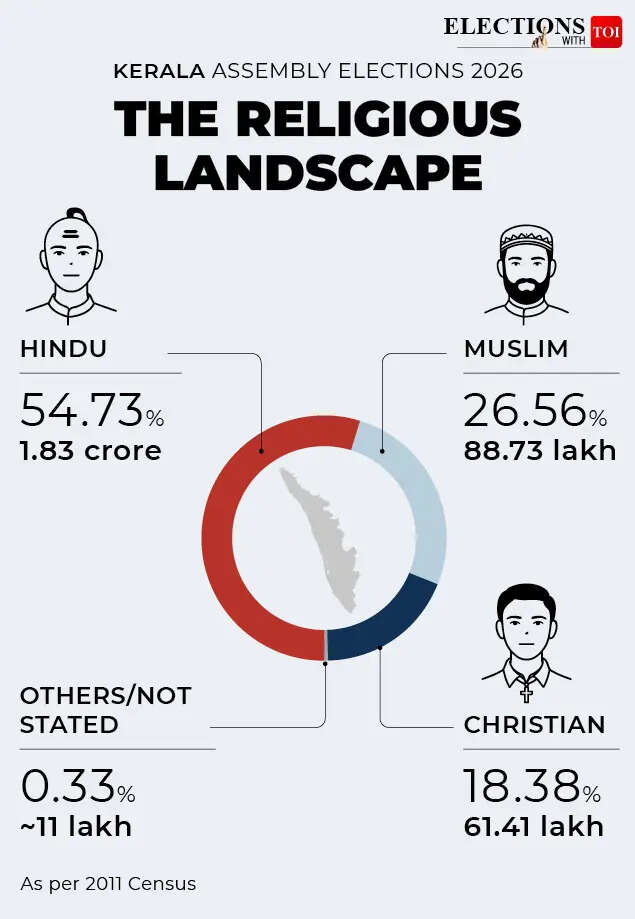
BJP’s expansion in Kerala has started moving beyond symbolism. A party that struggled for decades to gain a foothold in the state’s entrenched LDF-UDF political structure has started registering measurable gains in both vote share and representation in the last few election cycles.The turning point came in the 2024 Lok Sabha elections, when the BJP won its first parliamentary seat in Kerala through the victory of actor-turned-politician Suresh Gopi in Thrissur. Along with winning the seat, the NDA increased its vote share in the state to 19.24 per cent from 15.64 per cent in 2019, indicating that the party’s support base has expanded beyond isolated localities.This increase is in contrast to the CPM’s declining presence in the parliamentary elections. The party, which had won 12 Lok Sabha seats from Kerala in 2004, saw its seats drop to four in 2009 and five in 2014, before being reduced to one seat in both 2019 and 2024. While the Left has retained its dominance in assembly politics, the Lok Sabha results show a gradual weakening of its national-level electoral influence in the state.The BJP’s lead has also become more visible in local body elections, which are often seen as an indicator of organizational strength ahead of assembly elections. In Thiruvananthapuram, the BJP-led NDA ended CPM’s three-decade control of the municipal corporation, and emerged as the single largest front with 50 wards out of 100. The result marked one of the BJP’s most significant urban gains in Kerala and signaled a change in contests that have traditionally been bipolar.The party’s strategy has focused on expanding its presence in the constituency rather than attempting statewide success. Its gains have been concentrated in urban centers and Hindu-majority areas, while the BJP has also attempted to reach out to sections of the Christian community in central Kerala.Demographically, Hindus constitute 54.73 percent of the population of Kerala, while Muslims constitute 26.56 percent and Christians 18.38 percent. The BJP’s growth in some parts of the state has increased the pressure on the Left, especially in Hindu-dominated constituencies where triangular contests are beginning to affect the traditional LDF-UDF vote equations.
Which seats is BJP eyeing?
The BJP’s Kerala strategy is no longer focused on achieving statewide success. Instead, the party is concentrating resources on a handful of constituencies where it believes organizational growth, demographic gains and recent electoral gains can be translated into winnable contests.At the center of that strategy are districts like Thiruvananthapuram, Palakkad, Thrissur, Kasaragod and parts of Pathanamthitta – areas where the BJP has either established its grassroots presence or seen scope for social consolidation.In Thiruvananthapuram, the BJP’s confidence stems from its growing urban influence. The party-led NDA won control of the municipal corporation in 2025, ending the CPM’s decades-long dominance in the capital. The result gave the BJP a significant administrative and organizational foothold in the district where it has consistently improved its vote share in successive elections.Palakkad has emerged as another major focus area. The BJP first made inroads there in 2015, when it secured the post of municipal president for the first time in Kerala’s history – a feat it repeated in 2020 and 2025. Over the past few years, the constituency has transformed from a traditional LDF-UDF contest to a competitive triangular fight.Palakkad Assembly seat is now considered to be one of the most closely watched contests. Known as the “Gateway to Kerala”, the constituency’s urban-rural mix and proximity to the Tamil Nadu border has made it politically isolated from most parts of the state. The BJP sees Palakkad as one of the few constituencies where its cadre network, municipal presence and expanded vote base can translate into an assembly victory.
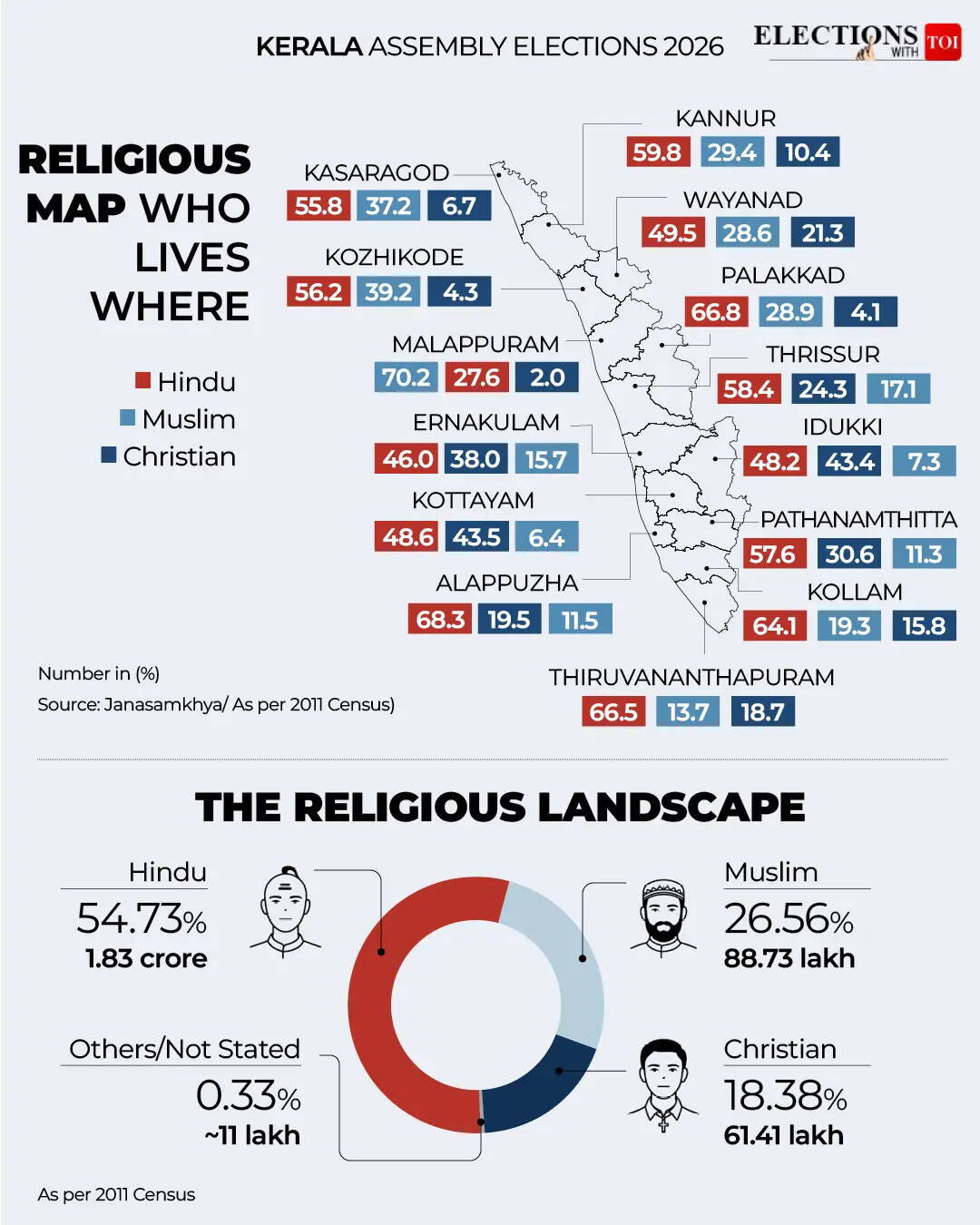
The party has fielded senior NDA leader Sobha Surendran, who had earlier emerged as a strong challenger in the constituency during the 2016 assembly elections and 2024 Lok Sabha elections. His campaign has focused heavily on infrastructure and urban development, with the BJP believing that these themes resonate with Palakkad’s rapidly growing urban electorate.Thrissur remains central to BJP’s Kerala calculations after Suresh Gopi’s Lok Sabha victory in 2024 gives the party its first parliamentary seat in the state. The victory strengthened the BJP’s belief that focused campaigns in socially mixed urban constituencies could deliver results even within Kerala’s bipolar political structure.In Kasaragod, the BJP is counting on the support of Kannada-speaking voters and its organizational proximity to coastal Karnataka, where the party has traditionally been strong. Meanwhile, Pathanamthitta remains politically sensitive due to the Sabarimala issue, with the BJP seeing the district as fertile ground for Hindu solidarity politics.Rather than spreading itself across all 140 assembly constituencies, the BJP’s approach reflects a more targeted calculation – deepening influence in a limited number of seats, creating triangular contests and gradually building durable regional strongholds.
Assembly Election Result 2026: Assembly Election Result 2026: A decisive test for BJP, Congress and regional satraps. india news
New Delhi: On paper, the 2026 assembly elections are straightforward: five constituencies, 824 seats and a familiar roster of parties vying for power. West Bengal (294 seats), Tamil Nadu (234), Kerala (140), Assam (126), and Puducherry (30) Taken together this constitutes an important, but not unprecedented, electoral practice.Still, this is no regular election cycle.Time gives importance to it. By May 3, 2026, BJP-led NDA rules 21 out of 31 states and union territories. The areas where voting has just taken place – especially in the south and east – are among the last major areas where the BJP has not completely won power. That alone turns it into a test of geographical expansion.The scale of voter participation intensifies that sense of importance. Nearly 91% voting took place in West Bengal, the highest ever. Tamil Nadu witnessed 85.1% voting, a remarkable jump. Assam has recorded around 86%, Kerala has remained steady around 80%, and Puducherry has touched almost 90%. These are not numbers that indicate voter fatigue. Instead they point to politically active voters invested in the outcome.However, high turnout remains an ambiguous signal. This may indicate an anti-incumbency wave, but it may also reflect strong mobilization by the ruling parties. This may point to enthusiasm for new entrants, or consolidation of traditional vote banks. In 2026, it all appears to be coming together – which is what makes it difficult to predict the outcome just hours before the counting begins.
Question of BJP’s expansion
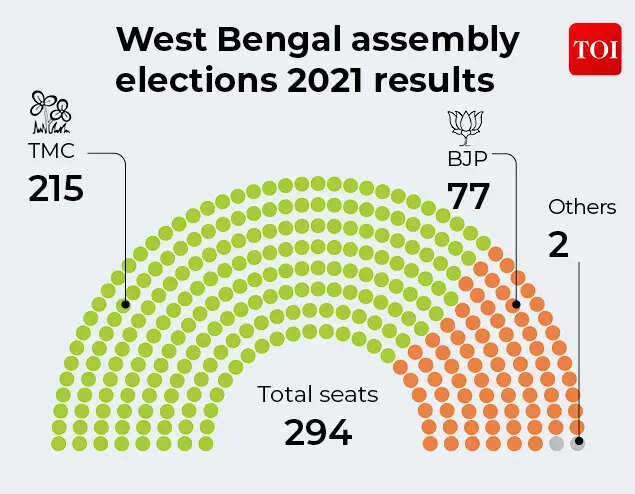
For the BJP, the 2026 elections are as much about the immediate results as it is about the long-term trajectory. The party has already achieved national dominance, but its map remains uneven. The Hindi heartland and parts of the West are firmly in its grip, while the South and East are continuing to offer resistance.This election is a test of whether that resistance is softening.BJP is no longer an outsider in West Bengal. Its rise from a marginal presence to a strong challenger in 2021 – when it secured 77 seats and more than 38% vote share – marked a structural shift. The question now is whether this growth can translate into power, or at least vote share that will decisively push it into the mid-40s.
The challenge is different in Tamil Nadu. BJP remains a secondary player but is gradually trying to expand. Even incremental gains – a higher vote share or a stronger assembly presence – would carry political significance by breaking the perception that the state is impenetrable.Assam is a test of integration. There is BJP government here. If it improves its standalone performance, it would suggest a move beyond alliance dependence towards deep dominance.In these states, the BJP faces a key question: can it translate national strength into a similar regional presence, or is it closer to a natural ceiling in culturally distinct regions?
Congress and the fight for its relevance
If the BJP’s question is about expansion, the Congress faces a more fundamental question: relevance.The party remains a major player, but is no longer the default pole of the opposition. Instead, it operates in a fragmented landscape, often as part of a coalition rather than a central force.In Kerala, it remains a major contender. A win would confirm its ability to compete independently. Defeat would weaken its claim to be a national alternative, especially in the South.
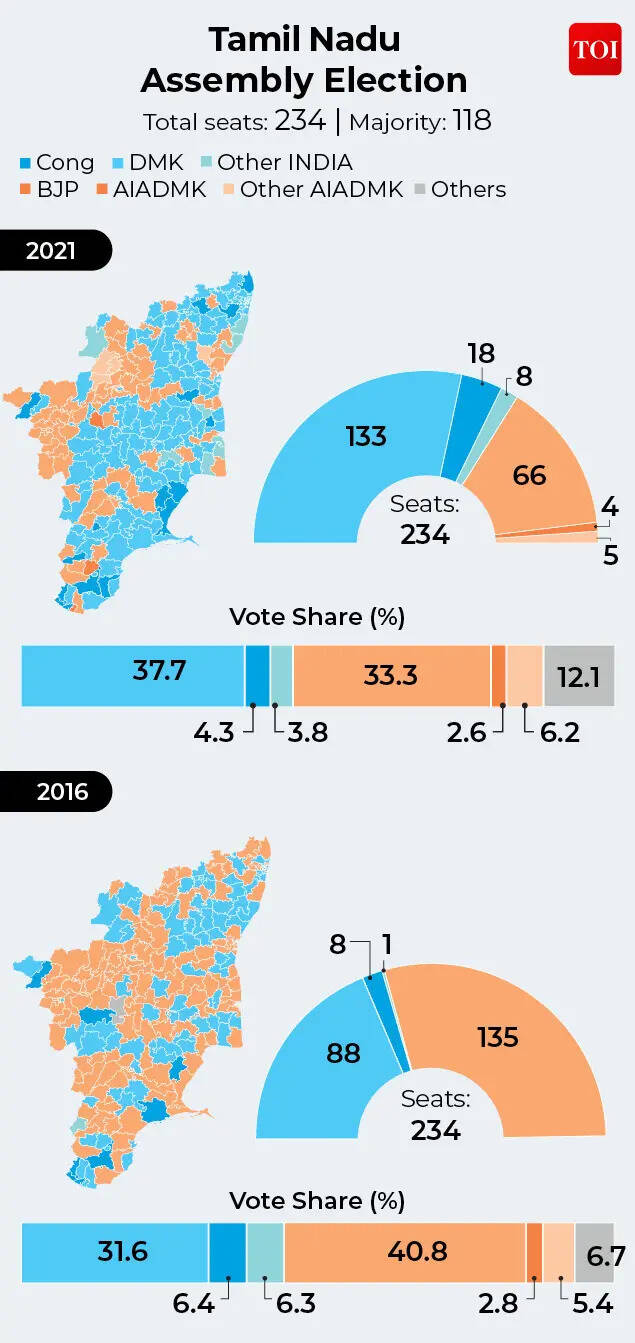
In Assam, it is challenging the strong BJP but faces the complexities of a multi-cornered contest, where vote division could dilute its influence.In Tamil Nadu, it is a junior partner dependent on the DMK. In West Bengal, it has grown alone but remains a marginal force.The underlying question is clear: Can the Congress rebuild as a primary force in key states, or will it remain an essential but secondary player within the alliance?
Regional stronghold under pressure
While national parties dominate the narrative, these elections are equally about the resilience of regional forces.
In West Bengal, Mamata Banerjee’s Trinamool Congress is defending not just a government but also a political model built on welfare, identity and leadership. The scale of its victory in 2021 ensured dominance, but the rise of the BJP means that dominance is now under pressure. Even a slim majority can have consequences beyond numbers.In Banerjee’s case, in the final phase of the campaign a leader is not just contesting an election but also contesting a narrative. In the last few days after polling ended, Banerjee shifted focus from big rallies to hyper-local mobilization, focusing on booth-level management and direct voter contact. The post-polling session became increasingly elaborate – the Chief Minister reviewed constituency-wise feedback, marked sensitive booths, and stressed the cadre to ensure turnout among key support groups. His visits to the strong room and repeated public warnings about election vigilance reinforced this view, indicating a strategy to win votes as well as protect them.
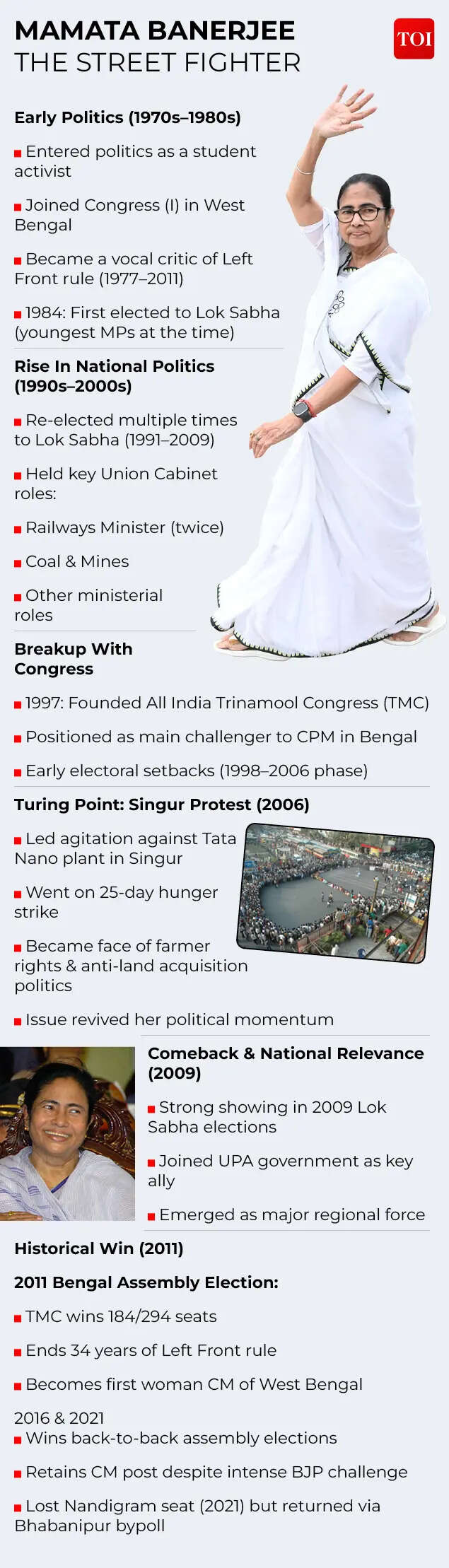
The campaign message was also intensified this time: from broad welfare claims to more explicit appeals about identity, rights and alleged voter list exclusion. By putting forward issues such as special intensive vetting and positioning herself as the protector of the “vote”, Banerjee tried to convert organizational strength into electoral security. For the Trinamool Congress, this last mile effort is important. In a contest where margins may be tight, the effectiveness of booth-level mobilization – ensuring that every identified supporter actually votes – may ultimately matter as much as the broader political narrative.Tamil Nadu is seeing a disruption in its traditional DMK-AIADMK binary. Rise of Tamilaga Vetri Kazhagam (TVK) led by actor VictoryHas shown unpredictability. Even without a sweeping victory, its vote share could change the outcome in all constituencies.In Kerala, the stakes are structural. The Left, under the leadership of Pinarayi Vijayan, is seeking a third consecutive term. For Congress, stopping this is central to its political relevance.Assam already represents a changed system, where the BJP is dominant and the question is whether opposition forces can regroup.Across states, a common thread has emerged: regional parties remain powerful, but they are laboring under increasing pressure from national expansion and changing voter behavior.
a moment before the verdict
By this time tomorrow the numbers will start to settle. Governments will take shape. Winners and losers will become clear.But there may be a deeper story hidden behind the results.If BJP expands, it strengthens its sphere of national dominance. If regional parties do this, it indicates the flexibility of India’s federal diversity. If Congress benefits then it is a sign of improvement. If new entrants like TVK make an impact, it signals an appetite for disruption.What makes this election moment special is that all these possibilities remain open on the eve of vote counting.This is why the choice feels existential – not because of any one outcome, but because of what the combination of outcomes would mean.As the countdown begins on May 4, one question will remain beyond the trends:Is India moving towards a more centralized political system, or will its regional diversity continue to define its democracy?The answer will emerge seat by seat.
Tamil Nadu Assembly Elections: From MK Stalin to EPS and Vijay; Major candidates will be in focus on May 4. india news
Tamil Nadu’s political battle will enter its decisive phase with the counting of votes on Monday, as the focus turns to whether the DMK retains its grip on power. AIADMK Makes a strong comeback, or TVK manages to change the traditional equation of the state.However, beyond individual contests, this election is being closely watched to see how new political entrants and coalition dynamics reshape traditional voting patterns.
from the Chief Minister mk stalin Actor turned leader to defend his area Thalapathy Vijay Making his electoral debut, and with AIADMK leader Edappadi K Palanisamy fighting to regain relevance, the 2026 election was filled with high-stakes battles across all constituencies.Here are the leading candidatesMK Stalin: The Chief Minister is contesting from Kolathur and is pitted against AIADMK’s Santhana Krishnan. Kolathur has been a DMK stronghold since 2011, when Stalin won from the seat for the first time.He retained it in both the 2016 and 2021 assembly elections. In 2021, he won against Aadhi Rajaram of AIADMK by a huge margin of around 1,00,000 votes.Udhayanidhi Stalin: MK Stalin’s son and Tamil Nadu Deputy Chief Minister Udhayanidhi Stalin is contesting from Chepauk-Thiruvallikeni against AIADMK’s Aadhi Rajaram. In 2021, he won the seat against PMK’s Kasali with 68.92% vote share.Ahead of the assembly elections, Udhayanidhi evolved from a campaign face to a key strategist and emerged as the DMK’s youth outreach leader. His performance is being closely watched as a measure of both his leadership and the future direction of the party.Thalapathy Vijay: The actor-turned-politician has made his electoral debut and is being seen as the biggest disruptor in the race. He is contesting from Tiruchirappalli East and Perambur. His party, launched in February 2024, has fielded candidates in all 234 constituencies.Edappadi K Palanisamy: The AIADMK leader is contesting from Edappadi in Salem district. He has worked to strengthen the party by bringing back former rivals including TTV Dhinakaran.This time, he has also formed a broad alliance including BJP and PMK, aiming to cash in on the anti-incumbency wave against the DMK and regain lost ground.Hey Panneerselvam: Once a close confidant of former chief minister J Jayalalithaa, he has forged an alliance with the DMK ahead of the elections. The ruling party has fielded him from Bodinayakkanur, a constituency he has represented several times.Nainar Nagendran: The BJP state unit chief is contesting from Sattur. In 2021, he won from Tirunelveli assembly constituency.
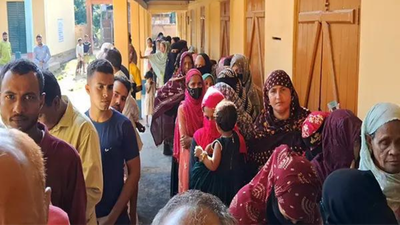
Assam Election Results 2026: Date, time and where to watch live vote counting – complete schedule india news
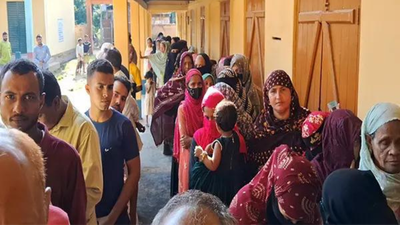
New Delhi: Assam assembly elections were held in one phase on April 9 with over 85% voter turnout, one of the highest in recent years. In an important match in Assam Bharatiya Janata Partyunder the Chief Minister Himanta Biswa SarmaSeeking third consecutive term. Meanwhile, the Congress, under the leadership of Gaurav Gogoi, son of former chief minister Tarun Gogoi and currently the deputy leader of opposition in the Lok Sabha, has started a determined effort to regain its hold in the state.
when and where to watch
Initial trends will start coming in from 8 am on May 4 as counting of votes begins in all 126 constituencies in the state. Real-time data will be available on the Election Commission website, along with live updates, analysis and seat counts on The Times of India.Follow complete election coverage Here
What voting predict
Exit polls released on Wednesday evening for the Assam contest suggest a clear majority for the current government led by Himanta Biswa Sarma, with a majority of pollsters supporting the BJP winning the tea-producing state for the third consecutive time. The projections have sidelined the Congress, leaving the party in a weak position and giving little boost to its campaign under the leadership of Gaurav Gogoi in Assam. Overall, projections from various agencies indicate a comfortable victory for the BJP-led government, pointing to the possibility of a third consecutive term for the party under Himanta Biswa Sarma.
how to count
The vote counting process is conducted systematically and closely monitored. It begins with the counting of postal ballots, after which the votes recorded in electronic voting machines are counted. For each constituency, counting takes place in multiple rounds, with updates issued after each round. Once all the rounds are over and verified, the returning officer announces the final result. Security at the counting centers is tight, with strong rooms being constantly monitored and entry restricted only to authorized personnel and representatives of the candidates. While electronic voting machines enable faster vote tabulation, the need for verification and round-by-round counting means that the entire process continues throughout the day.