TCS Nashik case: Anticipatory bail plea of ​​accused Nida Khan rejected. india news

TCS Nashik case: Anticipatory bail plea of ​​accused Nida Khan rejected

New Delhi: The anticipatory bail plea of ​​Nida Khan, the key accused in the case of alleged sexual harassment and forced religious conversion at the Tata Consultancy Services (TCS) unit in Maharashtra’s Nashik, was rejected by a court on Saturday as the prosecution insisted on the need for her custodial interrogation. According to PTI, government lawyer Ajay Misar told reporters, “The crime is serious. Nida Khan is one of the main accused and hence her custodial interrogation is necessary. The court rejected her bail plea.” According to the FIR, Khan advised female employees to “dress and behave as per Islamic traditions”. The petitioner, who is absconding, had sought pre-arrest bail citing her pregnancy. Police said a search is on for Khan in different parts of Maharashtra. A special investigation team (SIT) of the Nashik police is probing nine cases of alleged sexual harassment of female employees by their male colleagues at the company’s Nashik unit. SIT has registered nine FIRs and arrested eight people including a woman operations manager. TCS has long maintained a “zero-tolerance policy” towards any form of harassment and coercion.

Source link

‘Manuvadi, anti-women mentality’: Rahul Gandhi targets BJP over ‘Pallu’ comment on Congress MP Geniben Thakor. india news

'Manuvadi, anti-women mentality': Rahul Gandhi targets BJP over 'pallu' comment on Congress MP Geniben Thakor

New Delhi: Leader of Opposition in Lok Sabha Rahul Gandhi Gujarat BJP chief Jagdish Vishwakarma was targeted over his alleged “Pallu” remark targeting Congress MP Jenniben Thakor during the local body election results in the state on Saturday.Addressing X, Rahul accused the BJP of hiding behind a “mask of women veneration” and in a scathing post described the party as “Manuvadi and anti-women”.He said, “The BJP President of Gujarat has made indecent remarks about our woman MP Geniben Thakor ji. The mask of ‘Nari Vandana’ has fallen. This is not only shameful – it reflects the anti-women mentality of the BJP.”He questioned BJP’s commitment towards women empowerment and asked whether the party can provide rights or respect to women. Rahul also alleged that women who challenge those in power are often targeted and said such comments expose a “perverted mentality”.mention of prime minister Narendra ModiRahul said the BJP should remember its words on respect for women, warning that women in Gujarat and across the country will respond strongly to such insults.The controversy stems from comments made by Jagdish Vishwakarma at a meeting in Banaskantha on Thursday, where he said that the BJP had taken control of the district panchayat after 30 years with the “pallu” of Thakor’s saree.Earlier, another Congress MP had also criticized Vishwakarma over his alleged remarks on Jenniben Thakor.

Source link

BJP-dominant India or…? Understanding the layers of saffron dominance across the country. india news

BJP-dominant India or...? Understanding the layers of saffron dominance across the country

The political map of India today looks decided – almost decided. Under whose rule is the major part of the country? BJP Or its coalition partners. As of May 2026, the BJP-led NDA is in power in 21 of the 31 states and union territories – numbers that point to the dominance of the BJP-led ruling coalition.But politics rarely works in a straight line.Look closer, and the picture becomes more layered. The BJP is clearly the most powerful political force today, but the tone of its dominance is not uniform everywhere. In some states, this is excessive. In others, it depends on colleagues. And in some areas, it is still trying to break in.This is what makes the current situation of politics interesting. The BJP is not just winning elections – it is spreading its footprint across the country. When the results of assembly elections in five states and Puducherry will be declared on May 4, it will be interesting to see how much benefit BJP and its allies get in this phase of political battle.Here’s how BJP has slowly spread its influence across the country

Garh: Where BJP sets the rules

Let’s start with the Hindi belt and parts of the west. This is where BJP doesn’t just compete, it defines the competition.States like Uttar Pradesh, Madhya Pradesh and Gujarat remain its biggest power centers at present. In Uttar Pradesh, the BJP won a comfortable majority in 2022 with over 250 seats and around 41-42% vote share despite anti-incumbency. In Madhya Pradesh, it returned to power in 2023 with 163 seats out of 230 and nearly 48% vote share, one of its strongest performances in the state. Because of the Prime Minister, Gujarat remains its safest stronghold. Narendra Modi. In the 2022 election, the BJP won a record 156 seats out of 182, with the vote share exceeding 52%, turning the once competitive state into near one-party dominance.

Photo-Slider Visualization

Add to this Rajasthan, Chhattisgarh and Haryana, where the BJP has grown stronger in recent years. In Rajasthan (2023), it crossed the majority mark with 115 seats and more than 42% vote share. In Chhattisgarh, it returned with 54 out of 90 seats and about 47% vote share.In many of these states, the BJP’s vote share is around or above 45%, creating a ‘winner-takes-all’ dynamic where a divided opposition struggles to hold on.What explains this continuity? For the BJP, it is a mix of Hindutva politics and welfare delivery – often called ‘beneficiary’ politics. Schemes reaching out directly to beneficiaries have helped convert support into loyalty in these states.

How BJP expanded beyond its base

If the Hindi belt is the BJP’s comfort zone, its real political story lies in how it moved beyond it.For years, states like Odisha and Maharashtra were seen as strongholds of regional parties. This has changed in the last 12 years.The BJP has steadily evolved from a marginal force to the ruling party in Odisha. In the 2019 assembly elections, it increased its tally to 23 seats and about 32% vote share, and emerged as the principal opposition. By 2024, this translated to a rise to power, effectively ending the decades of regional dominance of Biju Patnaik’s Biju Janata Dal (BJD).Maharashtra was a more complicated story where in the end, the BJP appointed its own Chief Minister in the state. In the 2019 assembly elections, BJP became the largest party by winning 105 seats with 26% vote share. Since then, through divisions among regional powers Shiv Sena And by managing the NCP and Mahayuti alliance, the BJP has ensured that it remains the central force in the government. This is where BJP has shown flexibility. It is not dependent on any one route to power. In some states, it wins outright. In others, it rearranges the coalition equations to emerge on top.A major part of the strategy has been social – expanding beyond dominant caste groups and targeting smaller OBC groups and communities. Over time, this has helped the BJP weaken its traditional regional vote banks.

The fine print: Where BJP still needs allies

Despite clearing the map, BJP’s dominance in many states comes with some conditions.The current Modi government 3.0 at the center is dependent on allies like TDP and JDU.In Bihar, the BJP is no longer just a junior partner – it has managed to convince Nitish Kumar Had to step aside and now has its own Chief Minister. In the 2025 assembly elections, the alliance swept the state, and the BJP emerged as the largest party with 89 seats, its strongest ever performance in the state. Nitish Kumar’s exit confirmed the BJP’s dominance, paving the way for Samrat Chaudhary to become the chief minister, the party’s first direct leadership in a state government.The BJP also strengthened its position in the 2024 Lok Sabha elections, winning 12 seats, similar to its ally JD(U), with a 21% vote share, contributing to the NDA’s total 47% vote share in the state. Although the BJP now has a party member as Chief Minister, Bihar is still not a “pure” BJP state. The party still needs the numbers from JD(U) and Chirag Pawan’s parties, as it does not stand at the majority figure on its own. In Andhra Pradesh, the BJP’s electoral presence remains limited (single-digit vote share), and it acts as a junior partner in the TDP-led system.In the Northeast, the BJP has built an extensive governance network through the North-East Democratic Alliance (NEDA). In Assam, it is strong on its own – winning 60 out of 126 seats in 2021 with about 33% vote share (more with allies). But in states like Nagaland and Meghalaya, it rules with regional partners and has a lower seat share.In these areas the influence of BJP is shared and negotiated.

Incomplete map: Where BJP is still making efforts

Despite all these expansions, there are still major flaws.South remains the biggest challenge for BJP.In Tamil NaduWith the first phase of voting already underway on April 23, the BJP’s vote share in 2021 stood at 2.6%, though it has increased in pockets since then. However, the party remained structurally dependent on the AIADMK in the recently concluded 2026 elections, relying on the alliance to remain electorally relevant against key Dravidian players. Despite efforts to build an independent base, the BJP is still some way away from emerging as a single force in the state.In Kerala, the BJP has struggled to reach the bipolar contest. In 2021, it failed to win a single seat with 11.4% vote share, showing attendance but no conversion into seats.West Bengal is the main battlefield. In the 2021 assembly elections, the BJP took a huge leap – winning 77 of the 294 seats with a vote share of 38.4%, which was almost negligible a decade ago. But it still fell short of ousting the ruling party, which secured 215 seats with about 48% vote share.This gap between strong vote share and actual power is what the BJP is trying to reduce in 2026.These states show that while the BJP is expanding, there are still parts where regional identity and leadership matter.

2026 elections: the real test

This is why the 2026 assembly elections are important.States like West Bengal, Tamil Nadu, Kerala will test whether the BJP can convert presence into power.In Assam, the BJP under Chief Minister Himanta Biswa Sarma wants to retain power based on its performance in 2021.The stakes are highest in West Bengal. BJP is trying to convert its 38.4% vote base into majority.In Tamil Nadu, even a 15-20% vote share or 20-30 seats would mark a sea change.In Kerala, the focus remains on incremental gains – expanding vote share beyond the existing base. In Puducherry, the test for the BJP will be whether it can move beyond alliance dependence and expand its standalone footprint in the Union Territory.These elections will show whether BJP’s growth is still increasing, stabilizing or decreasing.So, is India BJP-dominated?Short answer: yes and no.Yes, because at present no party matches the reach of BJP. It rules most states, is at the center and thus often sets the national political agenda. But also not, because this dominance is not uniform. There are still many states where BJP is not in power. More recently its power was challenged during a special Parliament session. For the first time, the Modi government failed to get a bill passed in the Lok Sabha as it did not have the two-thirds majority (272) for the Constitution Amendment Bill. In 2014 and 2019, BJP had this number with 282 and 303 seats respectively. India is not a one-party system at present and probably will not be in the future. The BJP is clearly leading the political landscape today – but there are still some shortcomings as some key regional players still hold on to their strongholds. The map is mostly saffron, but not completely. And we will know on May 4 whether the map becomes more saffron or takes a different colour.

Source link

US threatens sanctions if shipping companies pay fees to Iran for Strait of Hormuz passage India News

US threatens sanctions if shipping companies pay fees to Iran for Strait of Hormuz passage

The United States has warned shipping companies they could face sanctions if they pay Iran for safe passage through the Strait of Hormuz.The alert issued by the US Office of Foreign Assets Control on Friday comes amid rising tensions over control of the strategic waterway.

Watch

Iran ignores US warships? Satellite images show ‘oil tankers loading’ at Kharg; ‘Nothing can stop…’

The Strait of Hormuz, through which about a fifth of global oil and natural gas trade usually passes in peacetime, has been heavily disrupted. Iran has effectively banned normal traffic after the attacks launched by the US and Israel on February 28, attacking and threatening ships.Iran later began offering safe passage by sending some ships close to its coastline and charging a fee for the service. The US described the system as a “tollbooth” arrangement and said payments are now the focus of its sanctions warning.The Office of Foreign Assets Control said payment demands could include cash, digital assets, offsets, informal swaps, in-kind payments, charitable donations or payments into Iranian embassies. It said, “OFAC is issuing this alert to warn U.S. and non-U.S. persons about the sanctions risks when making these payments to, or seeking guarantees from, the Iranian regime for safe passage. These risks exist regardless of the payment method.”In response to Iran’s actions, the US imposed a naval blockade on April 13, blocking Iranian tankers from passage and cutting off oil revenues. US Central Command said 45 commercial vessels had been ordered to turn back since the blockade began.The surge has further strained global energy markets, driving up prices and creating shortages linked to oil supply routes passing through the region.Amid continuing tensions, US President Donald Trump also rejected Iran’s latest proposal to end the conflict.“They want to make a deal, I’m not satisfied with it, so we’ll see what happens,” Trump said at the White House on Friday. He also said, “This is a very disjointed leadership,” adding, “They all want to make a deal, but they’re all a mess.”Iran’s state-run IRNA news agency reported that the proposal was presented to mediators in Pakistan on Thursday night. Talks continue between the two sides through indirect channels, even as both accuse each other of violating the fragile ceasefire.

Source link

‘BJP can’t win on its own’: Gaurav Gogoi claims ‘theft’, criticizes Assam exit polls | india news

'BJP can't win on its own': Gaurav Gogoi claims 'theft', criticizes Assam exit polls

Assam Congress president Gaurav Gogoi has alleged lapses in election security, claiming that BJP workers were seen inside strong rooms in remote parts of the state.He said, “We are seeing BJP workers in strong rooms in remote areas of the state… What are the ECI and its security forces doing?…It is clear that the BJP cannot win on its own and it just wants to save itself through theft,” he said, as quoted by ANI.

Watch

Assam Exit Poll 2026 Analysis: NDA leads in Axis, JVC, People Pulse and other polls

Speaking on exit polls, Gogoi said, “These are just a TRP game now…and that is why they need some introspection.”He also claimed that support is moving away from the BJP, adding that people are reaching out to say that they no longer want to work with him. Himanta Biswa SarmaAnd that there has already been a shift in favor of the Congress within the party and its allies.Gogoi said, “People will move away from the BJP because they are already calling and saying that they do not want to work with Himanta Biswa Sarma… There has already been a change in the BJP and its political allies; they have moved to the Congress.”In a high-stakes contest in Assam, exit polls released on Wednesday evening indicated a clear majority for the current government led by Himanta Biswa Sarma, with most pollsters projecting a third consecutive term for the Bharatiya Janata Party in the tea-producing state.estimate place Indian National Congress On the margins, it provides little momentum to the Gogoi-led campaign.Voting took place in all 126 constituencies in Assam on April 9, with over 85% turnout, one of the highest in recent years.Notably, an increase in turnout was seen not only in rural areas but also in urban centres, reflecting widespread and enthusiastic voter participation across the state.The Bharatiya Janata Party led by Chief Minister Himanta Biswa Sarma is trying to regain power for the third consecutive time.Meanwhile, the Indian National Congress is attempting to regain its hold in the state under the leadership of Gaurav Gogoi, son of former chief minister Tarun Gogoi and deputy leader of the opposition in the Lok Sabha.With exchanges between the two leaders, the campaign has largely taken the form of a direct contest between Sarma and Gogoi.

Source link

‘Remind those who misuse state power’: Kheda praised SC’s anticipatory bail, said- truth will prevail. india news

'Remind those who misuse state power': Khera lauds SC's anticipatory bail, says truth will prevail

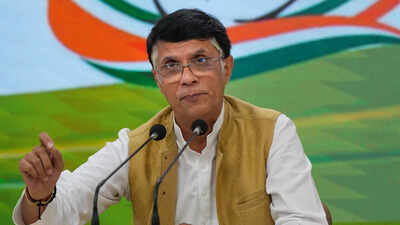
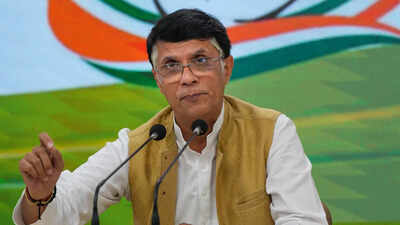
New Delhi: Congress leader Pawan Khera welcomed the Supreme Court’s decision to grant him anticipatory bail and called it a protection of “individual liberty”. Responding to the X a day after the order, Kheda wrote, “I thank the Honorable Supreme Court for upholding the rule of law…For the second time, Dr. Singhvi and his swift team…have protected my freedom amidst constant threats and intimidation by the Assam CM.In the post, he described the relief as more than personal relief. “My bail is not only a personal victory and a source of relief, but also a warning to those who abuse state power that as long as we remain a constitutional democracy, individual liberty cannot be sacrificed for political vendetta,” he said, ending with “Satyamev Jayate”.The Supreme Court, while granting pre-arrest bail, said the case appeared to arise out of “political rivalry” and stressed that the right to personal liberty under Article 21 must be protected with a high threshold for interference. A bench of Justices JK Maheshwari and AS Chandurkar said the criminal process should be implemented with “impartiality and caution” to ensure that it is not influenced by political considerations.Kheda was accused of making allegations against the wife of Assam Chief Minister Himanta Biswa Sarma, including claims of multiple passports and undeclared foreign assets. The court noted that both parties had exchanged allegations, and said that custodial interrogation was not required at this stage in the case, adding that the veracity of the claims could be tested during the trial.Setting aside the Gauhati High Court’s earlier order, the bench held that its observations were “erroneous” and appeared to place the burden unfairly on the accused. Also, the court directed Khera to cooperate fully in the investigation, appear before the authorities when required and refrain from influencing evidence or leaving the country without permission.In his post, Khera thanked senior Congress leaders including Sonia Gandhi, Mallikarjun Kharge, Rahul Gandhi and Priyanka Gandhi for their support, while also thanking party workers who “stood by me with their voices and prayers.” He further said, “No matter how terrible a lie may seem, the truth always wins.”

Source link

‘No further order necessary’: Special SC bench rejects TMC’s plea on counting staff | india news

'No further order necessary': Special SC bench rejects TMC's plea on counting staff

New Delhi: The Supreme Court The Supreme Court on Saturday rejected TMC’s plea challenging the deployment of central government and PSU employees as counting observers for the West Bengal Assembly elections. Election Commission of Indiahas stated that its April 13 circular will be implemented in letter and spirit.The petition was filed against the order of the Calcutta High Court, which had earlier rejected TMC’s challenge on the vote counting arrangements.A special bench of Justices PS Narasimha and Joymalya Bagchi heard the case, with the counting of votes scheduled to take place on May 4.

Watch

‘BJP’s devious strategy’: TMC targets re-polling on 2 seats in West Bengal

During the hearing, the bench said that TMC representatives will be present during the counting of votes and said that the Election Commission’s circular is not contrary to the rules.senior lawyer Kapil SibalSenior advocate Meenakshi Arora, appearing for TMC, questioned the direction and said the April 13 circular came to the notice of the petitioner only on April 29, despite claims of prior information. He also raised questions on the basis of suspicion of wrongdoing by the Election Commission.Senior advocate DS Naidu, appearing for the Election Commission, said the returning officer, a state government employee, exercises broad control over the counting process and selects the personnel. He said the April 13 circular on posting of central government employees would be followed in letter and spirit and argued that the concerns raised were based on “wrongful apprehensions”.He said one state government employee and one central government employee would be appointed as counting observers and counting assistants.Justice Bagchi said that describing a counting officer as a nominee of the Central Government “hardly makes sense” and said such decisions fall within the subjective satisfaction of the Election Commission of India. He also said that party-appointed enumeration agents will remain in place and the enumeration framework already includes a micro-observer who is a central government official, as well as enumeration observers and assistants.Which was led by Trinamool Congress Mamata BanerjeeHe moved the Supreme Court on Friday after the High Court rejected his petition challenging the vote counting system.

Source link

Frantic wait for life jackets: Video captures panic and chaos before MP cruise boat capsizes india news

New Delhi: A video recorded from inside the ill-fated cruise ship at Bargi Dam in Jabalpur has surfaced, giving a glimpse of the moments before the ship capsized, as questions are raised over safety lapses and alleged negligence.The footage shows the boat already in rough waters, with two people seen hurriedly unbuckling their life jackets. However, many passengers are seen without them, which reinforces survivors’ statements that safety gear was not delivered in time. Also read: Last moments of mother and son found holding each other in MP boat tragedySo far, nine people have died in this incident that took place on Thursday evening, while six people are still missing. Rescue teams from the Army, NDRF and SDRF are continuing search operations, even as disturbing information is emerging about the last moments on board the ship. Survivors have alleged that life jackets were initially put away rather than released, leading to panic as the ship became unstable.During the rescue, the body of 39-year-old woman Marina Massey was found, who was holding her four-year-old son in her lap. Authorities believe he attempted to rescue her as water quickly flooded the lower cabin where they were trapped. Both were wearing life jackets, but due to limited space, their chances of escape were less.Witnesses said high winds had made the water even more rough, leading passengers to urge the crew to turn back. However, these warnings were either ignored or acted upon too late. One survivor claimed that the boat was overcrowded and that children without tickets were also on board.The Madhya Pradesh Tourism Department has since dismissed several employees and launched an investigation, while Chief Minister Mohan Yadav has announced a ban on similar cruise operations pending the investigation. Prime Minister Narendra Modi also expressed condolences and announced compensation for the families of the victims.

Source link

Allahabad HC: No unilateral authority over public land for religious ceremonies. india news

Allahabad HC: No unilateral authority over public land for religious ceremonies

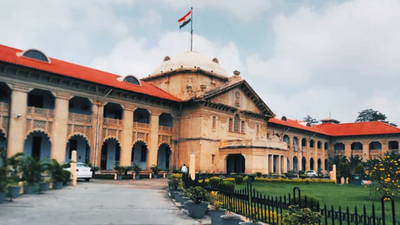
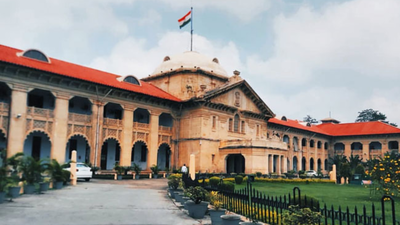
New Delhi: The Allahabad High Court ruled that public land cannot be claimed by any individual or group for exclusive religious use, holding that such activities, including offering namaz, must remain subject to public order and the rights of others.The observation was made by a division bench of Justice Saral Srivastava and Justice Garima Prasad while dismissing a petition filed by Asin, a resident of Ikauna under Gunnaur tehsil of Sambhal district, who had sought relief regarding the use of land for offering namaz.As per ANI report, the Court clarified that “public land cannot be used unilaterally for religious purposes by any one party,” adding that all persons have equal rights over such property and its exclusive use is not legally permissible.Reiterating the broader legal position, the bench said that “the right to practice religion is subject to public order” and cannot be exercised in a manner that violates the rights of others. It further states that religious freedom is not absolute and remains subject to the rights of others.Citing earlier judgments including Munazir Khan v. State of Uttar Pradesh and others, the Court held that genuine religious practices within private premises are protected and cannot be arbitrarily interfered with, but such protection does not amount to a “complete carte blanche” for organized or regular mass religious activities.The Court further held that when such activities transcend private boundaries and begin to affect the public sphere, regulatory intervention by the State is permissible. “It cannot be interpreted to imply that there is an unrestricted right to convert private premises into unregulated gathering places for regular gatherings,” it said.

Court warns of ban on Namaz gathering

In examining the present case, the Bench held that the petitioner was not seeking to preserve an existing long-standing tradition but was attempting to introduce regular mass gatherings involving participants from within and outside the village.The Court noted that historically, prayers were offered at the site only on specific occasions such as Eid, and added that any expansion beyond this limited practice would be outside the scope of protected activity and therefore open to regulation.It further commented that the State has the right to intervene where activities deviate from established traditions and affect public order. The Division Bench also held that even if the land was considered to be private property, the petitioner would not be entitled to the relief sought.In its order, the Court said that if public land is transferred illegally and later used for seeking organized Namaz meetings, such sale deed would be considered illegal and would not be sustainable in law.

Source link

The Election Commission ordered re-polling at 15 booths on two seats in Bengal. india news

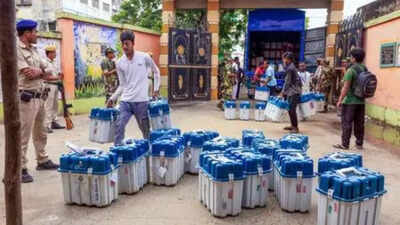
चुनाव आयोग ने बंगाल की दो सीटों पर 15 बूथों पर पुनर्मतदान का आदेश दियाRe-polling is scheduled for Saturday (May 2) from 7 am to 6 pm, a notification said. In the notification, after reviewing the reports of the returning officers and election observers, the voting to be held on April 29 at these booths has been declared cancelled.Due to allegations of irregularities in the second phase, demand for re-polling was raised in 77 booths of four assembly constituencies. There was no re-polling at any booth in the first phase of voting.According to sources, special observer Subrata Gupta, who visited Diamond Harbor on Thursday to monitor the checking and verification process, had recommended repolling at 11 booths in Magrahat West, four in Diamond Harbor and 30 in Falta.“During the investigation, several disturbing findings emerged, including allegations that CCTV cameras at several polling stations were switched off, preventing real-time monitoring from the control room due to network disruption,” sources said.There were also complaints that EVMs were tampered with by using tape to cover party symbols at some booths, except in one party. “Although the presiding officers reportedly removed the tape around 1 pm, by then around 58% of the voters’ voting had already been recorded,” sources said.There are a total of 285 polling booths in Falta Assembly constituency, with some booths reportedly recording 100% voting.

Source link