Meghalaya ‘honeymoon murder’ case: Court grants bail to Sonam Raghuvanshi. india news

Meghalaya 'honeymoon murder' case: Court grants bail to Sonam Raghuvanshi
Sonam Raghuvanshi and Raja Raghuvanshi

Shillong: A Shillong court has granted bail to Sonam Raghuvanshi, the main accused in the murder of her husband Raja Raghuvanshi during their honeymoon trip at Sohra in Cherrapunji on May 23, 2025, citing failure of the police to disclose the reasons for her arrest.Additional DC (Judicial) Dashlin R Kharbateng granted the relief on a surety bond of Rs 50,000 and surety amount of like amount. However, the court ordered Sonam Raghuvanshi to remain in Shillong and appear in the court during the hearing.Soon after the court order, the victim’s family announced plans to move the High Court to cancel the bail.Raja Raghuvanshi’s brother Vipin Raghuvanshi and mother Uma Raghuvanshi expressed anguish, alleging injustice.This was Sonam’s fourth appeal for bail.

Source link

UN, multilateralism and international law under attack: UNGA President india news

UN, multilateralism and international law under attack: UNGA President

New Delhi: Foreign Minister S Jaishankar talked to visiting united nations Annalena Baerbock, President of the General Assembly (UNGA) on Tuesday spoke on a range of issues including the implications of AI and the Middle East conflict.Jaishankar said in a post on X that he stressed during the discussion the need for reformed multilateralism that reflects today’s realities, particularly those of the Global South, and thanked Baerbock for his leadership and contributions. Baerbock later told a press conference that the world is witnessing rising geopolitical tensions, increasing fragmentation and pressure on the three pillars of the United Nations: peace and security, development and human rights. “Today the United Nations, multilateralism and international law are not only under pressure, but under direct attack,” he said.“No country, no matter its size or power, can solve today’s complex global challenges – such as climate change, the global pandemic and the economic impact of the Russian invasion of Ukraine or the closure of the Strait of Hormuz – on its own,” he said.Baerbock rejected US President Donald Trump’s Peace Board plan that envisages permanent membership fees. He said, “Because every country, no matter how big or small, no matter how powerful or rich, has a seat at the table; because you won’t get peace for anyone in the world if you have to pay a fee to join in.” Trump’s Board for Peace for Gaza has been presented as a potential rival to the United Nations.On the need for reform of the United Nations, he said that although the United Nations is indispensable, it must reform itself to be more efficient, more agile and perform better on the ground.

Source link

Money laundering case: ED attaches Anil Ambani’s Mumbai flat and farmhouse. india news

Money laundering case: ED attaches Anil Ambani's Mumbai flat, farmhouse

New Delhi: In the latest action against Anil Ambani The ED on Tuesday said it has attached other properties worth Rs 3,035 crore of his family, including a flat in Usha Kiran Building in Mumbai and a farmhouse in Khandala (Pune), along with around Rs 20,000 crore in the ongoing money laundering case.The latest attachment has been made as part of the ED investigation Reliance Communications (RCom), which, the agency said, has defaulted on bank loans worth more than Rs 40,000 crore while misappropriating public funds. “The temporary attachment under PMLA has been done to prevent wastage of assets and to protect the interests of banks and the public,” the ED said.While Anil Ambani’s spokesperson claimed that the flat in Usha Kiran and the farmhouse in Khandala belonged to his mother Kokilaben Ambani, the ED has said that the flat is registered in the name of Anil Ambani and the farmhouse in the name of Luna Trust and his son Jai Anshul Ambani. The agency said a land in the name of Mudra Foundation for Communications Research and Education (MICA) has also been attached in Sanand, Ahmedabad.“Besides these, shares worth Rs 7.7 crore of Reliance Infrastructure Limited held by Raizai Infinity Pvt Ltd, a group entity of Anil Ambani under Raizai Trust, a private family trust of Anil Ambani’s family members, were also seized,” the ED said.“Under Section 8 of the PMLA, the seized assets shall be returned to the legitimate claimants who have suffered losses, including the aggrieved banks. Thus, attachment preserves the value, so that after due legal process, public money can be brought back and restored to the banks and ultimately to the general public in accordance with law,” the ED said.

Source link

SIPRI says India to be 5th largest military spender with over $92 billion in 2025 India News

SIPRI says India is the 5th largest military spender with over $92 billion in 2025

New Delhi: India was the fifth-largest military spender globally in 2025 as the country increased its military spending by 8.9% to $92.1 billion in 2025, according to a report released on Monday by arms monitoring group SIPRI.According to the report, the India-Pakistan conflict in May 2025 – which involved the use of fighter aircraft, drones and missiles – increased India’s military spending during the year.According to SIPRI’s annual “Trends in World Military Expenditure” report, “Pakistan’s military expenditure increased by 11% to $11.9 billion in 2025. The increase was mainly due to new orders for aircraft and missiles placed with China in 2025 following the armed conflict with India in May, as well as payment for earlier procurement contracts nearing completion.”China, the world’s second largest military spender, increased its military expenditure by 7.4% to $336 billion. It was the 31st consecutive year-on-year increase as China continued its military modernization drive.“The renewed campaign against corruption in military procurement does not appear to prevent spending,” the report said.At $954 billion, military spending by the US was 7.5% lower in 2025 than in 2024. The decline was primarily because no new financial military aid was approved for Ukraine during the year. This was in sharp contrast to the previous three years, when a total of $127 billion was approved.The five largest spending countries in 2025 were the US, China, Russia, Germany and India, which together accounted for 58% of world military spending, totaling $1,686 billion.Global world military expenditure is set to reach $2,887 billion in 2025, an increase for the 11th consecutive year.

Source link

Government orders improvements in NIT Kurukshetra. india news

Government orders improvements in NIT Kurukshetra
Education Minister Dharmendra Pradhan

New Delhi: The education ministry on Tuesday ordered corrective measures to improve campus governance and student welfare at NIT Kurukshetra after a high-level review, although senior professor Brahmjit Singh was appointed acting director as the resignation of director BV Ramana Reddy was accepted.The development comes in the backdrop of four student suicides on the campus in the last two months, including three in April. Protests erupted after the death of a 20-year-old second-year student on April 16, with students alleging negligence and demanding an investigation. Following the unrest, authorities suspended academic activities and asked students to vacate hostels, though select batches have been asked to return from May 9.The review, chaired by Union Education Minister Dharmendra Pradhan, examined the academic environment, campus life and hostel management, with immediate steps being taken to strengthen student engagement, faculty accountability and overall institutional culture. Immediate measures include hostel upgradation, structured faculty training on guidance and student welfare and SOPs to institutionalize student engagement.In a related move, the institute has suspended joint registrar Gyan Ranjan Samantrai after a central team visited the campus. Haryana Human Rights Commission has taken suo motu cognizance seeking report from the institute and district authorities.Officials said the leadership change follows the Union Education Ministry’s decision to take back Reddy’s administrative and financial powers.

Source link

Bengal becomes fort for second phase of voting: 2.3 lakh CAPFs and 38,297 state police personnel deployed. india news

Bengal turned into a bastion for second phase of voting: 2.3 lakh CAPFs and 38,297 state police personnel deployed
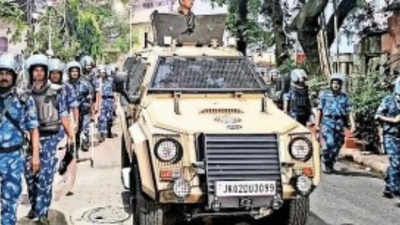
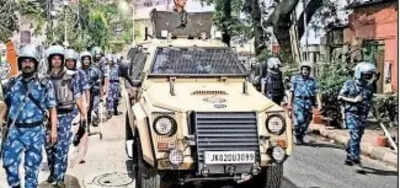
An armored vehicle and CAPF personnel on patrol in Kolkata on Tuesday

Kolkata: The final phase of assembly elections in West Bengal is being concluded under a security grid rarely seen in Indian elections, spread across 142 constituencies across seven districts. The numbers define the scale – over 2.3 lakh Central Armed Police Forces personnel, 38,297 state police, 142 general observers, 95 police observers, 100 expenditure observers and NIA teams are deployed in sensitive areas.A massive crackdown preceded Wednesday’s voting – an election day marked by heavy force, tight surveillance and a clear message: Voting must remain fear-free and fair.More than 800 arrests were made on Monday night alone, leading to an increase in preventive detention. Central teams also visited sensitive areas and warned local political officials to stay within the law or face consequences.In 72 hours, 2,348 alleged miscreants have been jailed under Election Commission directions, including TMC councilors in Panihati and Burdwan. Another 653 non-bailable warrants were issued. “The EC has asked the police to ensure that no miscreants remain outside till morning,” a source said.Kolkata is at the center of deployment. At least 274 companies of central forces – 22,500 personnel – supported by 7,250 city police, will guard 5,172 booths in 1,961 premises, the highest deployment recorded in the city. East Burdwan (263 companies) and Hooghly Rural (236) also recorded a heavy presence, reflecting previous flashpoints and risk assessments.Out of 41,001 booths, about 12,000 have been kept in the sensitive category. Additional CAPF quick-response teams will cover Bhangar, Canning, Falta and Sonarpur in South 24 Parganas and Nadanghat and Ketugram in East Burdwan. The security plan has been adjusted constituency wise, with a focus on sensitive areas and hinterland.NIA teams have spread across all eight electoral districts, including Khagragarh, where two alleged terrorists were killed and three injured in the 2014 blast. Their presence underlines the increased vigilance in areas with a history of extremist activity.

Source link

90-year-old refuses to settle defamation case, Bombay HC adjourns it to 2046 | india news

90 year old man refuses to settle defamation case, Bombay HC adjourns it till 2046

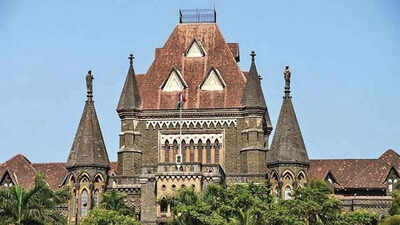
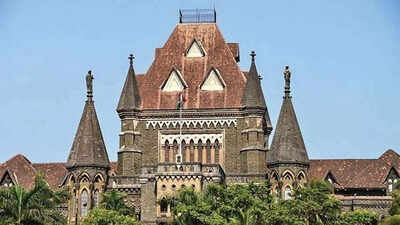
Mumbai: The Bombay High Court on Tuesday adjourned to 2046 the Rs 20 crore defamation suit filed by a senior citizen, aged around 90, and his daughter against the managing committee members of a South Mumbai housing society. “I don’t want to say anything except that this matter should not be taken up for the next 20 years,” Justice Jitendra Jain, sitting alone, said after attempts at a compromise failed and he insisted on going ahead with the trial.This controversy reportedly arose about a decade ago.On April 20, the HC urged both parties to try and reach a compromise, saying the case could be resolved with an unconditional apology by the defendants. On Tuesday, when the matter came up as scheduled, the then committee members, represented by ALMT Legal, said they would tender an unconditional apology without causing any prejudice.However, the nearly 90-year-old woman still insists on going ahead with the legal battle, as the HC order, a one-page one, said on Tuesday.The High Court said, “This is one of those cases where the ego battle between the parties in the last days of life clogs the system, preventing the court from taking up cases that really require greater priority.”The dispute was over alleged collection of funds for the repair and maintenance of the society. In the minutes of the meetings, he was called a “defaulter”, leading to a defamation suit.

Source link

India’s fourth S400 system will arrive as Russian ship units in mid-May; Possibility of deployment in Rajasthan. india news

India's fourth S400 system will arrive as Russian ship units in mid-May; Possibility of deployment in Rajasthan
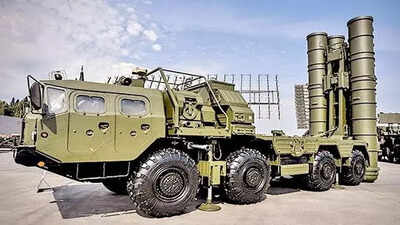
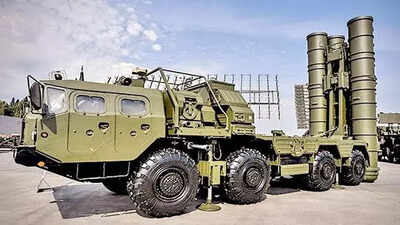
An S-400 air defense system

New Delhi: Russia has shipped the fourth batch of S-400 Triumf defense systems which will “reach India by mid-May”, soon after the May 7 anniversary. Operation SindoorA defense source told TOI. The fifth S-400 system is expected to arrive in India in November. The Russian S-400 system had proven its capability to protect India’s military and civilian assets from Pakistani missiles during last year’s conflict.“Pre-dispatch inspection by IAF officers of the incoming S-400 systems was completed by April 18,” Russian state-owned news agency TASS quoted a source as saying. “The fourth Russian S-400 air defense system is coming to India and is expected to be received at the Indian port by mid-May. The new system is planned to be deployed in Rajasthan to strengthen missile defense along the Pakistan border. A fifth system will be deployed along the border with China, TASS said.While the first two batches of S400 systems were deployed along the Pakistan border, the third has been deployed in the eastern region.In 2018, India signed a deal to procure five S-400 squadrons worth $5.43 billion to strengthen its missile defence. Impressed by its highly effective role against Pakistan last year, the Defense Acquisition Council (DAC) on March 27 this year approved the acquisition of additional five Russian S-400 systems, which is likely to expand the missile shield in the country.India has also decided to purchase 280 short and long-range S-400 missiles to replenish the stockpile used during Operation Sindoor as well as to build up a long-range weapons stockpile. It is estimated that India has fired 11 long-range S-400 missiles at Pakistan, which shoot down fighter planes, early warning systems and transport aircraft.After Sindoor, India is in the process of developing a multi-layered integrated air and missile defense system ‘Sudarshan Chakra’ (India’s own Iron Dome), comprising the S-400 (long range), Barak-8 (medium range), and the indigenous Project Kusha (extended range air defense system), to create an advanced, home-grown “Iron Dome” comprehensive defense against various threats such as ballistic missiles, drones, and hypersonic weapons. India also plans to purchase Russian Pantsir-S1M short-range air defense systems to protect its S-400 Triumf batteries from small threats such as drones.

Source link

AAP MLA Mehraj Malik released from jail after J&K HC cancels PSA custody. india news

AAP MLA Mehraj Malik released from jail after J&K High Court cancels PSA custody
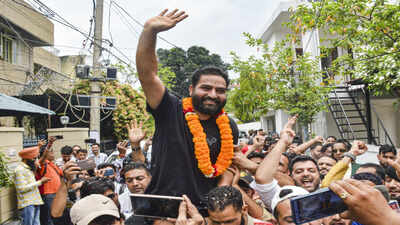
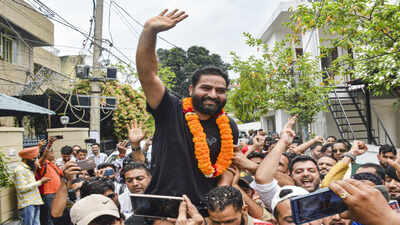
Jammu: Aam Aadmi Party MLA Mehraj Malik at the Center welcomed in Jammu after his release from Kathua jail after Jammu and Kashmir High Court canceled his detention under the Public Safety Act. (PTI photo)

AAP MLA from Doda (East) Mehraj Malik was released from Kathua district jail on Tuesday after almost eight months following the Jammu and Kashmir High Court’s order canceling his detention under the Public Safety Act (PSA).His family and supporters described the court order as a “triumph of truth”, while the MLA thanked the judiciary and his supporters and pledged to continue fighting for the people.On Monday, Justice Mohammad Yousuf Wani quashed the detention order issued by the Doda deputy commissioner, calling it legally untenable and based on “non-application of mind”. Malik, president of AAP’s Jammu and Kashmir unit and the only MLA in the union territory, was detained under PSA on September 8 last year on charges of disturbing public order.Malik’s family members, supporters and partisans including Delhi MLA Imran Hussain were present outside the jail to welcome him. As soon as he came out after completing the formalities, they garlanded him, raised slogans and danced to the beats of dholak. His father Shammas Deen said, “Truth always wins. God above is watching everything.”Malik had filed a habeas corpus petition in the HC on September 24, 2025, challenging his detention and seeking Rs 5 crore as compensation. The court had reserved its decision on 23 February.

Source link

Second phase of trust vote in West Bengal: Who will win the Matua vote? | india news

Second phase of trust vote in West Bengal: Who will win the Matua vote?

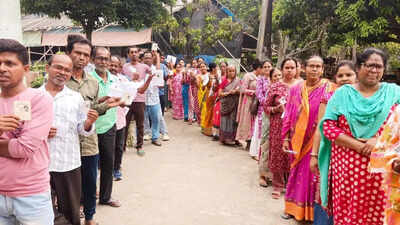
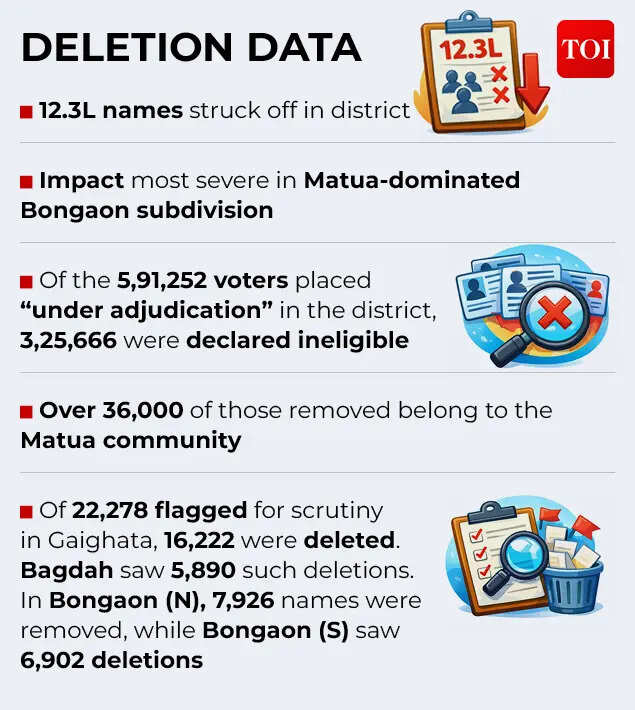
New Delhi: As West Bengal goes to vote for Phase 2 on Wednesday, the Matua community could emerge as kingmakers in this high-stakes election.In Phase 2, the Motua-dominated belt of North 24 Parganas and Nadia could be the deciding factor in the big battle of TMC versus BJP. However, ahead of voting, a large section of voters are unsure whether they will be able to vote.The uncertainty has arisen from the Special Intensive Revision (SIR) of electoral rolls, which has led to significant deletions in Matua-heavy constituencies. In North 24 Parganas alone, around 3.25 lakh names have been removed from the voter list. Data from the main Matua pocket, Bongaon subdivision, shows that the deletion rate among those placed under the decision ranges between 67 per cent and 88 per cent.

Watch

Who are Matua-Namasudras? Citizenship, SIR and their role in West Bengal elections

In Gaighata, 16,222 out of 22,278 marked voters were deleted, while in Baghdadh more than 15,000 deletions were recorded. Similar patterns have been reported in Bongaon North and South.In Nadia constituencies like Krishnanagar North, Krishnanagar South and Ranaghat areas, more than 90 per cent of the people who came under scrutiny did not make it to the final list. Administrative estimates show that a large proportion of the affected people are from the Matua Namasudra community.The scale of the extinction comes at a time when the community is in the midst of a long-delayed citizenship process.

worrying overlap

Of the nearly 1.12 lakh applications filed across West Bengal after the Citizenship Amendment Act (CAA) rules were notified in March 2024, only 15,000 have been approved so far. Of these, more than 50,000 applications are from North 24 Parganas and Nadia, the same districts now witnessing large-scale voter boycott.This overlap has raised concerns at the ground level. In many localities, residents who have been living and voting in these areas for decades say their names have been marked as “pending” or removed altogether.
deletion data

sir data

“We were promised citizenship but never got it. Now we are helpless,” Sukhomoy Halder, a resident of Gaighata, told TOI.Ramesh Gayen of Baghdad, who applied for citizenship months ago, said delays in the process mean he won’t be able to vote in this election. Yogesh Biswas from the same area said he had earlier refrained from applying in the hope of clarity, but now he too was at risk of being excluded.

politics on purification

The political reaction has been sharp and contradictory. The Trinamool Congress (TMC) has alleged that the SIR exercise is designed to disenfranchise Matua voters, while local BJP leaders and workers in some constituencies have also criticized the scale of deletion.In Baghdad and Gaighata, protests and defection have been reported, with some party workers openly protesting the selection of candidates and linking their anger to being excluded from the voter list. However, at the national level, the Prime Minister Narendra Modi Tried to reassure the community. Addressing rallies in Bengal, he said the Matua and Namasudra families would get citizenship and “all the benefits that an Indian citizen is entitled to” under the Citizenship Amendment Act (CAA). PM Modi also offered prayers at the Matua Thakur temple in North 24 Parganas and reiterated his government’s resolve to rapidly provide Indian citizenship to its members at a public meeting.While the PM in his rally on Sunday asked Matua and other Hindu refugees from Bangladesh not to pay heed to TMC’s claims, Home Minister Amit Shah and other BJP campaigners have been emphatic in underlining the party’s commitment to their welfare.The assurance comes as the Bharatiya Janata Party (BJP) is attempting to retain support in the region that significantly contributed to its rise from 2 Lok Sabha seats in 2014 to 18 in 2019. Yet, at the ground level, the immediate concern is not long-term policy but current entitlements. In North 24 Parganas, where the Matuas constitute almost 30 per cent of the population and affect 33 assembly seats, many voters are grappling with the question of whether their names will be restored on time or whether applying for citizenship will affect their status and whether they will be able to participate in the April 29 voting process.

Can the group swing Bengal?

The risk of this uncertainty is very high due to the electoral weight of the community. The population of Matua Namasudra is estimated to be about 17 to 18 percent of the population of West Bengal, with a higher concentration in the border districts. Their presence extends to North and South 24 Parganas, Nadia, Howrah, Cooch Behar and parts of North Bengal.Election analysts estimate that Matua voters influence the results on 60 to 65 assembly seats. In the second phase alone, they are a significant factor in 21 constituencies. In hotly contested elections, this scale of influence gives the community an advantage that political parties cannot ignore.This is clear from recent election trends. In 2019, the BJP made big gains in Bengal, winning 18 Lok Sabha seats, driven by support in Matua dominated areas like Bongaon and Ranaghat. In the 2021 assembly elections, it won 9 out of the 21 seats where Matua voters are the deciding factor. Even in 2024, when its numbers declined, it still retained the lead in many of these segments. The TMC, which had earlier built strong support through welfare measures and refugee resettlement, has been seeing the community at the center of its election strategy. The result is fierce competition for a vote bank that is both large and increasingly vocal.

From caste margin to political center

The political importance of the Matua Namasudra community lies in its history. The Namasudras were once among the most marginalized caste groups in East Bengal, occupying the lowest rung of the social hierarchy. Their claim began in the nineteenth century under the leadership of Harichand Thakur, who founded the Matua movement as a rejection of caste discrimination and a call for respect and equality.His son Guruchand Thakur expanded the movement by promoting education and political awareness. Matua identity became a religious and social force, offering an alternative to both caste oppression and religious conversion pressures.Partition disrupted this trajectory. Over several decades, especially during the riots of the 1950s and the war of 1971, large numbers of Namasudras migrated to East Pakistan and later Bangladesh. They arrived in West Bengal as refugees, often settling in colonies with limited infrastructure and economic opportunities.Thakurnagar in North 24 Parganas emerged as the center of the Matua movement in India, which weaves together faith, memory and identity. Over time, this shared experience of displacement transformed into political consciousness.

an unfulfilled promise

For decades, the question of citizenship remained unresolved for many in the community. The CAA was seen as a turning point, providing a path to formal recognition for non-Muslim refugees from neighboring countries.This was not just a legal provision for the Matuas. It was linked to their history of displacement and their search for belonging. The promise of citizenship holds both practical and symbolic significance.In districts like North 24 Parganas and Nadia, where over 50,000 applications have been submitted, many applicants are still waiting just as 15,000 out of 1.12 lakh have been approved across Bengal.This gap between promise and promise has created disappointment. The SIR exercise has heightened that frustration by bringing questions of documentation and eligibility into sharp focus.

sir purification

Special Intensive Review (SIR) has turned into a flashpoint in Matua dominated areas. Although officially an administrative process, its impact has been deeply political and social.In many constituencies, entire groups of voters have been marked as “under trial” and subsequently removed. Residents say the process has been difficult to navigate, with limited clarity on documentation requirements and timelines.“My parents and grandmother have been voting since 2002. I was born and educated here, yet our name has been removed,” a resident of the area told TOI.For many, the concerns go beyond voting. Electoral identity is linked to access to welfare schemes and state recognition. Losing a place in the voter list creates the fear of losing other rights as well.Another resident said, “I get old age pension and fear I may lose it if I am no longer an enrolled voter.”These fears reflect deep insecurities. For a community shaped by migration and delayed recognition, verification processes are not considered routine. They are experienced as a test of belonging.

an internal partition

The response to SIR has exposed divisions not only between parties but also within them. TMC has accused BJP of using this exercise to weaken its key voter base. While defending this process at the central level, the BJP has faced criticism from a section of its own local leadership.There have been reports of protests and defection in constituencies like Bagdah and Gaighata. Some leaders have contested the elections as independents, citing dissatisfaction over both candidate selection and voter deletion.The Thakur family, which holds symbolic power within the Matua community, is itself divided on political lines. Different members are associated with different parties, reflecting widespread fragmentation within the community.This division has an impact on voting patterns. The Matua vote, once considered capable of uniting behind a single political force, now appears more fluid.

beyond arithmetic

Despite these divisions, the Matua Namasudra community remains one of the most politically aware groups in the state. Its voting behavior is shaped not just by immediate benefits but by a strong sense of history and identity.This identity includes memories of caste discrimination, the reformist movement led by Harichand and Guruchand Thakur, and the experience of displacement after Partition. It also involves attempting to rebuild life in a new state while seeking recognition and respect.These factors influence how the community responds to political messages. Citizenship promises are effective because they address a long-standing issue. Also, administrative actions such as SIRs are closely scrutinized because they affect immediate rights.

A question behind the vote

As West Bengal goes through its election cycle, the Matua belt is coming to the fore not only for its electoral significance but also for the questions it raises.The competition in these constituencies is not only between political parties. It is also between promise and process. Between long-term assurance and immediate experience.For many voters, the choice is no longer just which party to support. It’s about whether they will be able to participate in the first place.The Matua Namasudra community has come a long way from caste marginalization in East Bengal to becoming a decisive force in the politics of West Bengal. Its journey reflects resilience and adaptation.This election reflects that journey at a moment of tension. A moment where citizenship remains incomplete and electoral participation itself has come under question.As April 29 approaches, the mood in the Matua bastion is defined less by campaign rhetoric and more by a simple, unresolved worry about whether they will be counted.Read this also In search of Indian ‘Porichoy’: Will Matua-Namasudra rewrite ‘Poriborton’ in Bengal elections?


Source link