


EO charging collapse: Financial stress, global expansion to blame for shutdown

EO charging collapse: Financial stress, global expansion to blame for shutdown
fall and causeOn April 8, EO charging stopped working. PwC executives as well as leaders said that its rapid entry into global markets led to huge financial stress. Most employees lost their jobs, 69 out of a total of 93. A handful of people stayed behind, handling closing tasks and helping existing users exit. What started with development plans has now ended in closure. The company expanded operations to the United States, Australia, New Zealand and Italy in recent years. Tough markets hit; Expenses increased due to going abroad.How management and employees are affectedEdward Williams, a spokesman for PwC, announced the launch of administration proceedings with his partner. Immediately, their team gets to work guiding customers through the transition to new providers. A main objective is to preserve whatever value exists in current holdings. This was followed by the loss of his job, which he admitted took its toll; Due to this, many people face uncertainty about their next steps. Williams took a role alongside Ross Connock and Victoria Hatton when administrators took over Juice Ltd, then known as EO Charging. Through shifts, employees still help customers move forward while handling the steps to close down operations.Market position and wider impactOne moment it was everywhere; Now it is gone. Over seventy-five thousand Chargers came out of their factories. More than thirteen thousand public stations opened in approximately thirty-five countries. Domestic efforts were boosted through team-ups, such as with an Oxford firm. Together they wired parts of Oxfordshire for everyday charging needs.Medium-sized players face tough conditions as rivals grow and costs rise in the EV charging landscape. Those with deep pockets can corner independents unable to keep pace overseas.

Indian-origin Meenu Batra, who has been living in the US for 35 years, detained by ICE: ‘This doesn’t mean you can stay here forever’

Meenu Batra, an Indian-origin woman who worked as an interpreter in Texas courts, was detained by ICE.
Meenu Batra, a 53-year-old Indian-origin woman who had been living in the US for the past 35 years, was detained by ICE agents in Texas, who asked her if she knew she had a deportation order and was in the country illegally. The Texas Observer reported that Batra is Texas’ only licensed Hindi, Punjabi and Urdu legal interpreter and is often contracted to help South Asians through the immigration court system. On March 17, while she was traveling to Wisconsin for a case, she was detained by ICE as she was going through security at Harlingen International Airport.Batra said in his statement that the people who arrested him did not have any visible badges and were not wearing uniforms. One of the agents asked her if she knew she was illegal. She replied that her work authorization status, for which she had regularly applied after being granted the legal status called a stay of removal by a New Jersey immigration judge decades ago, was good for the next four years. The agent replied, “That doesn’t mean you can stay here forever.” Batra told the Texas Observer that she had read a lot of news and so she followed their orders because she understood that if she said anything, they would accuse her of trying to avoid arrest. Deepak Ahluwalia, a California and Texas-based immigration lawyer representing Batra, filed the habeas petition.After handcuffing her, agents took Batra to ICE’s field office in Harlingen, where she was a familiar face as she had worked on many cases that required translation. “Batra was taken to various holding cells for 24 hours without food or water, first in Harlingen and then to the El Valle Detention Center outside Raymondville in neighboring Willacy County. “As of mid-April, she remains there without the consistent medical care she needed after surgery in December,” the Texas Observer reports.
Batra’s youngest son is in the army
Batra’s lawyers said the US government never told him it planned to deport him. One of Batra’s children recently joined the army and she filed a parole application for him. His lawyers have also filed a temporary restraining order to prevent ICE from moving him to another detention center. The Department of Homeland Security denied this and said that Batra had received a final order of removal from an immigration judge in 2000 and that she would remain in ICE custody until her removal.Ahluwalia said, “What is completely bizarre about this case (along with others) under the current administration is that they are detaining these individuals without any notice or resolution, and circumventing the laws by removing them to countries like Sudan. This is a clear violation of our laws and our client’s rights and we will fight until she is released.”
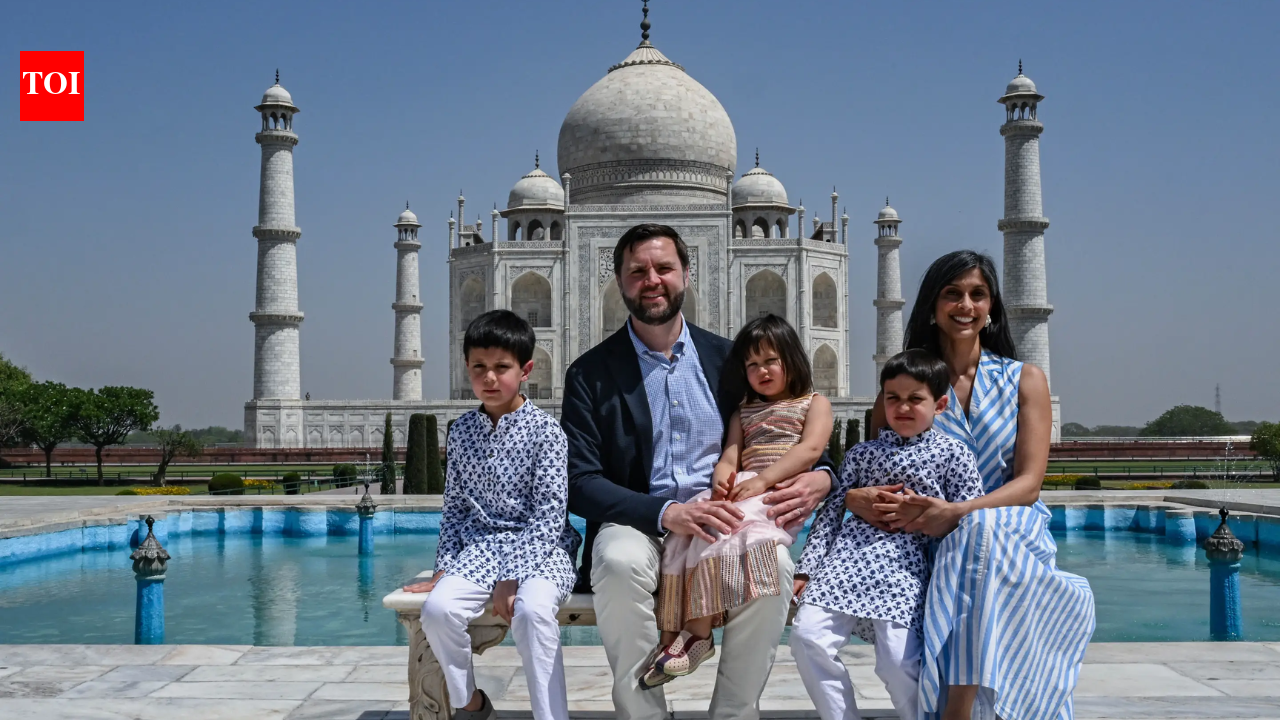
IIT to H-1B: JD Vance calls out academic in-laws for red flagging green cards without loyalty test

TOI correspondent from Washington: US Vice President JD Vance on Tuesday doubled down on the Trump administration’s restrictive immigration stance, signaling deep skepticism towards the H-1B visa program that considers national “loyalty” as the ultimate litmus test for immigrants.Speaking at a TurningPointUSA townhall in Georgia, Vance sidestepped a question from an Indian-origin student about the decades-long green card backlog, instead pointing to systemic fraud in the program and cultural expectations of assimilation, instead offering policy prescriptions for the estimated million-plus Indians currently stuck in the permanent residence queue.
The US Veep, who has long portrayed the H-1B program as a tool for “big tech” to suppress American wages – despite being financed by big tech early in his political career – told the young audience that the system is currently rife with abuse. He recalled his wife, Second Lady Usha Vance, and his parents as role models for successful assimilation, saying, “You can believe that there has been a lot of H-1B fraud, and also believe that there have been people who have come to the United States who have enriched this country.”“Look, I’m married to the daughter of immigrants from India… I love my in-laws and they have made great contributions to the United States. I also think that when you become an American citizen, whether you have nine generations of lineage or zero, one of your obligations is to think about the best interest of your country, not the best interest of the country you came from.” Expressing his irritation at a Ukrainian-American who pressured him to supply arms to Ukraine, he said that his father-in-law, who moved to the US and became a US citizen, never told him that he should take any decision because it was in the best interest of the country he came from. Vance argued, “The extent to which this attitude prevails among the new generation (of immigrants) makes Americans feel welcome. Being an American means taking care of Americans first, and that is the perspective we need to adopt in our immigration policy.” Vance’s in-laws, Radhakrishna “Krish” Chilukuri and Dr. Lakshmi Chilukuri, immigrated from Andhra Pradesh, India in the late 1970s. Krish Chilukuri, a mechanical engineer who studied at IIT Madras, is a lecturer in aerospace engineering at San Diego State University. Dr. Lakshmi Chilukuri is Professor of Molecular Biology at the University of California, San Diego. Both have built distinguished academic careers in California after arriving legally decades ago.While the student’s question concerned law-abiding, high-tax-paying professionals waiting decades for a green card because of country-based quotas, Vance ignored the issue, avoiding any promises to raise the 7% per-country cap, which favors smaller countries (like Nepal and Sri Lanka, whose immigrants get residency faster). Instead, he suggested that massively reducing immigration across the board was the only way to unify the American social fabric.“The system only works if everyone thinks of themselves as Americans first,” Vance said, effectively ending the exchange without addressing the specific legislative hurdles currently in the backlog.These comments were enthusiastically praised by the MAGA wing of the party, which has recently become more vocal about curbing legal immigration as well. But it was condemned by critics, some of whom pointed out that the loyalty test does not apply to Jewish Americans, many of whom openly and vocally lobby for Israel. As the 2026 midterms approach, Vance’s deliberate stance reflects the tightrope the Trump administration has walked: satisfying its restrictionist base without alienating the tech and business sectors that rely on H-1B talent.
Meet Indian-American Randeep Dhillon who ‘wants to recreate affordable California’ but MAGA doesn’t like his English
Indian-origin Randeep Dhillon wants to ‘make California affordable again’.
Dr. Randeep S. Dhillon is one of the lesser-known Republican candidates for California’s gubernatorial election who wants to make the state affordable. As he released his campaign videos ahead of the primaries in June, he was trolled for his English and MAGAs on social media distanced themselves from Republicans because of his Indian origins. A social media post shared Dhillon’s recent video saying, “Meet Randeep Dhillon, who is running for Governor of California. His latest campaign ad shows him barely speaking English while claiming he wants to somehow fix literacy in CA. No, this is not sarcasm. Yes, this is very real.” Dhillon said that if he wins, he will recognize children who maintain GPA levels 3.87, 3.93, support first car purchases after graduating from school, and give a $505 credit. There will be a waiver on registration fees for the first year, Dhillon said while unveiling his MACA scheme. Another social media handle said, “This guy is running on fixing literacy in CA but can’t speak English to advertise. This is real.” “It’s almost ridiculous but seriously worrying. Who is letting these people run for office?” One wrote. One wrote defending Dhillon and requesting people not to judge him based on the way he speaks, “He may not be fluent, but he is saying something that most people ignore. That’s what really matters.” Many people pointed out how he was openly trying to buy votes by promising free cars to 16-year-olds.
Who is it Dr. Randeep Dhillon ?
Indian-born Randeep Dhillon is an economist, farmer and sociologist who came to America in 1986. According to his website, he has built, owned, worked for, and advised numerous small businesses and farming operations. “After immigrating to California from Punjab, India in 1986, he built his future through education, hard work, and entrepreneurship. He earned bachelor’s, master’s, and PhD degrees in finance and economics in California and developed a practical understanding of how families, farmers, workers, and business owners succeed or struggle in the real economy,” his website reads.

American YouTuber Johnny Somali jailed in South Korea for kissing ‘comfort woman’ statue

Seoul Court sentenced American YouTuber Johnny Somali to 6 months in jail for objectionable stunt.
American YouTuber Johnny Somali has been sentenced to six months in prison for an act of public nuisance in 2024 after he filmed himself kissing a statue commemorating Korean wartime sex slaves. South Korean authorities charged the 2024 Somali, whose real name is Ramsey Khalid Ismail, with violating public order and disrupting trade and banned him from leaving the country.In October 2024, the 25-year-old YouTuber posted several videos provoking South Koreans. He sang the North Korean national anthem, spread noodles inside a convenience store, had several heated arguments with strangers, etc. She then uploaded a video of herself kissing and gyrating near a statue commemorating Korean women forced into sexual slavery by Japanese occupation forces before and during World War II, known as “comfort women” in Japan. As the incident sparked massive reaction, Somali apologized and said he was not aware of the statue’s significance. The trial, originally scheduled for March 2025, was delayed as prosecutors added additional charges alleging that Ismail shared AI-generated sexual content with deepfakes with a female YouTuber. “The defendants repeatedly committed crimes against unspecified members of the public to make profits through YouTube and distributed content in disregard of Korean law,” the court said during the trial. Prosecutors sought a three-year prison sentence.Following his indictment, Ismail re-shared the video on his YouTube account in which he claimed this was the reason for his charges.In a video posted in January titled “They want me in Korean prison for this…” Ismail recorded himself in black robes and hood similar to a Ku Klux Klan member and provoked several heated debates.In his bio on X, Ismail calls himself a “political prisoner in South Korea on trial for freedom of speech and expression.”

‘150 years’ for green card? How long does it take for an Indian to get permanent residence in the US?

The average waiting time for a green card for Indians is now 25-30 years.
An Indian-origin student recently asked Vice President JD Vance at an event at Turning Point USA what the Trump administration is doing to ease the long waiting list for Indians to get green cards in the US. The 20-year-old woman introduced herself as the daughter of immigrant parents who came from India on an H-1B visa, and who were still waiting for permanent residency in the US. The conversation went viral as JD Vance praised his Indian in-laws and explained how immigrant groups should think about America First, not the country they are originally from. An interesting part of the conversation was when the woman said that under the Biden administration it will take about 150 years for Indians to get green cards. The Donald Trump administration is known for its anti-immigration stance, and here’s how long it takes for Indians to get a green card in the US.eb2 (Common for those with a master’s degree or higher): The final action date is around July 15, 2014, which means if your priority date is before then, you are now eligible. So if someone applies for a green card in this quota, the waiting time for a visa number to be available will be 11 to 12 years, plus additional processing time. eb3 (Graduate + Skilled Work): Last action date is around 15 November 2013. The waiting time for new applicants will be approximately 12 to 15 years. These are both the most commonly used routes by H-1B Indians to get a green card and due to the huge demand, there is a massive backlog. The current waiting time in both these categories is on average 25-30 years.
‘150 years’ wait for green card!
The ‘150-year wait time’ stems from an analysis by the Cato Institute, which said in a 2023 report that 400,000 Indian workers hoping for employment-based green cards in the US face a wait of 134 years. The US has an annual cap of 140,000 employment-based visas and a 7% quota for each country. The study said that 18 lakh cases are pending and of these, 11 lakh are from India. “New applicants from India will have to wait a lifetime and more than 400,000 will die before they can get a green card,” the report said.Wait times vary depending on various factors. Many applicants upgrade from EB-3 or EB-2 to EB-1, which is a faster route, freeing up some slots. Some people choose the EB-5 category which is for investors in the US. Some eventually leave the queue and settle in other countries.

“You betrayed Charlie”: Candace Owens claims the President betrayed Charlie Kirk as she makes explosive criticism in viral comment.

Owens gives one of her harshest criticisms after Candace donald trump Still, a new divide is getting a lot of attention in conservative media circles. Comments he made during his livestream on April 13 show that people who used to agree on many things are now more divided. What started as a policy disagreement has now turned into deeply personal and moral allegations. This is making people question the loyalty, power and future of Trump’s media support base.Owens was very open natured. He used religious language, talked about his political frustration and expressed his personal disappointment, making the moment go viral on social media. The strength of his words reflects a sea change in the right-wing media, where voices that used to agree are now increasingly debating about foreign policy choices and leadership direction.
Candace Owens’ explosive comments deepen conservative rift
During the broadcast, Owens said:“Candace Owens (host): I mean, you guys obviously know my perspective. Trump is very clearly under demonic influence. I think Paula White probably put some kind of spell on him. I mean, the irony is he’s surrounded by the same thing he accuses me and Meghan and Tucker of, because we’re calling for peace.
We’re calling for peace, and he’s like, these people are crazy. And then they have people like Laura Loomer as their number one advisor, who was put on forced psych 5150 hold. She said that I am giving her advice. We have Paula White, who is telling him that he is like Jesus Christ, which is absolutely reprehensible, and he thinks these people are totally sane. Then, it’s very scary to go this far into the cave.He’s so in the cave, he’s so sure of his invincibility. It is completely unfounded that he was deeply troubled by the Pope telling him the truth. The Catholic view is that it is an unjust war, because it is obvious.What you’re doing in the Middle East is morally outrageous, okay? And forget the part that you went against every promise you made, betrayed your base, betrayed the people who were out there trying to get votes for you, betrayed charlie kirkYou betrayed Megyn Kelly, you betrayed Tucker Carlson, you betrayed me.”The result goes beyond a monologue. Owens’ comments highlight growing friction between prominent conservative voices like Megyn Kelly and Tucker Carlson, many of whom are reevaluating their stances on Trump’s recent decisions.This moment feels different. This is not just criticism. It is a public revelation of the alliances that once defined a powerful media ecosystem.
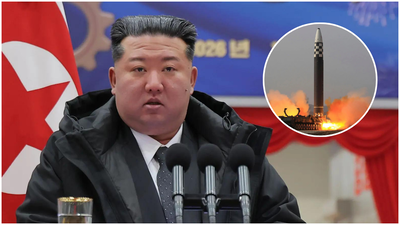
North Korea’s nuclear weapons: ‘Very serious increase’: UN monitor highlights sharp increase in North Korea’s nuclear activity at Yongbyon
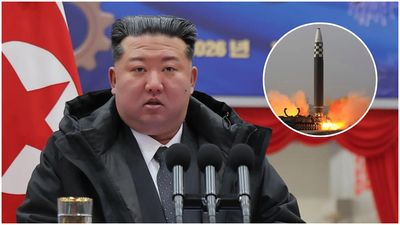 IAEA chief Rafael Grossi said during a visit to Seoul on Wednesday that the monitoring indicated a “rapid increase in operations” at the Yongbyon nuclear complex, the central hub of Pyongyang’s nuclear program.“In our periodic assessments, we have been able to confirm that there has been a rapid increase in reactor operations at Yongbyon,” Grossi said, warning that all signs point to an expansion in North Korea’s weapons production capacity.
Increasing activity in Yongbyon raises concerns
The UN watchdog has noticed an increase in activity not only at the five-megawatt reactor but also at the reprocessing unit and light-water reactor at Yongbyon, news AFP reported. Grossi said the activation of additional facilities further underscores the scale of the expansion.“All this points to a very serious increase in the DPRK’s capabilities in the field of nuclear weapons production,” he said, noting that the program is now estimated at “a few dozen weapons.”The agency has explored the construction of a new uranium enrichment facility similar to an existing uranium enrichment facility, which suggests a significant increase in production capacity. Satellite imagery cited by the Center for Strategic and International Studies supports this assessment, indicating the possibility of completion of a plant capable of producing weapons-grade materials.
Promotion incentives and global concerns
According to Reuters, experts say uranium enrichment offers North Korea an alternative and potentially more effective route to plutonium reprocessing as well as weapons-grade material.Grossi said that while direct inspection is not possible – since Pyongyang expelled IAEA inspectors in 2009 – external analysis of the facilities indicates a “significant increase in enrichment capacity” of the country.Despite concerns over growing ties between Moscow and Pyongyang, Grossi said the agency had not seen “anything in particular” suggesting Russian assistance in North Korea’s nuclear weapons program.North Korea, which conducted its first nuclear test in 2006, is under heavy UN sanctions and has repeatedly said it will not give up its nuclear arsenal, raising concerns about regional security and global nuclear proliferation.
US-Iran peace talks: US sets new conditions ahead of next Iran talks in Pakistan: Report
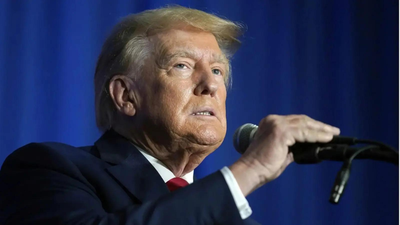
File photo: US President Donald Trump
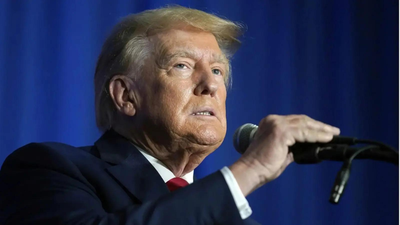
The United States has reportedly put forward two new conditions ahead of the second round of peace talks with Iran to be held in Pakistan on Thursday.According to a report by Israel Hayom, Washington wants the full and unrestricted reopening of the Strait of Hormuz.
The report claims that the Americans stand by the position of reciprocity. In other words, if the Iranians block the movement of ships and tankers through the Strait of Hormuz, their own ships and tankers will also not be allowed through it. Citing diplomatic sources, the report said the US also wants the Iranian delegation to receive full authorization from the Islamic Revolutionary Guard Corps before the two sides reach an agreement.Reportedly, two senior Revolutionary Guard officers, Ahmed Wahidi and Ali Abdullahi, did not allow the political delegation present in Pakistan to respond to the Americans. Following this, Pezeshkian reportedly demanded that Parliament Speaker Mohammad Bagher Ghalibaf, who is leading the Iranian delegation, take a stand and “save Iran from complete economic collapse”.This comes as US and Iranian delegations are scheduled to return to Pakistan this weekend to resume the second round of talks to end the war that began on February 28.However, there was no immediate confirmation from US officials about the plans, which Iranian and Pakistani officials discussed on condition of anonymity.A source involved in the talks said a proposal had been sent to Washington and Tehran for the delegations to return to Islamabad to resume discussions. No date has been decided yet but both the countries can return by the end of this week.An official at the Iranian Embassy in Islamabad said, “The upcoming round of talks could take place at the end of this week or early next week. But nothing has been finalized yet.”Earlier, a senior Iranian source told Reuters: “No specific date has been set, the delegations are open from Friday to Sunday.”A senior Pakistani official said Islamabad had contacted Iran and “we have received a positive response that they are ready for another round of talks.”The official and a second Pakistani source said Islamabad is in talks with both sides about the timing of the next round, and the meeting is likely to take place over the coming weekend.

Six arrested for smuggling endangered Komodo dragons in Indonesia. world News

Komodo dragon, representative image only (Photo credit: AFP)
Surabaya: Indonesian authorities said on Wednesday they have arrested six people allegedly involved in the smuggling of endangered Komodo dragons, native to the archipelago and destined for Thailand.Two suspects were arrested in February in the port city of Surabaya on the east coast of Java island after they disembarked from a ship with three live Komodo dragons – the world’s largest living lizards.Further investigation led to four more arrests in the coming weeks.Police said the animals were obtained from “suppliers or hunters” in Indonesia’s East Nusa Tenggara province, where they are native to a handful of small islands.The suspects are accused of buying the dragons for 5.5 million rupees (about $320) and selling them for six times that price, apparently to be shipped to customers in Thailand.According to East Java police, the suspects have smuggled and traded at least 20 Komodo dragons since January last year, making about $33,000.They face up to five years in jail and a fine.The International Union for Conservation of Nature lists the Komodo dragon as endangered, with a global population of about 3,400, including juveniles.The fearsome reptiles, which can grow up to three meters (10 feet) long and weigh up to 90 kilograms (200 pounds), are under threat from the destruction of their habitat by human activity and climate change.Hunters collect them to sell as pets or as performance animals.Wild Komodo dragons are found only in Indonesia’s World Heritage-listed Komodo National Park and the neighboring Flores island.Police said on Wednesday they also arrested two suspects accused of smuggling 140 kilograms of pangolin scales from the northwestern province of Riau to Surabaya.Pangolins are among the world’s most endangered species, and their scales are prized in countries such as China and Vietnam, where they are used in traditional remedies, even though they do not provide scientifically proven medicinal benefits.