British Sikh community expresses condolences to Henry Novak family, urges no prejudice during ongoing trial World News

British Sikh community expresses condolences to Henry Novak family, urges no bias during ongoing trial

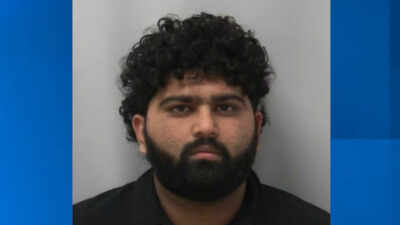
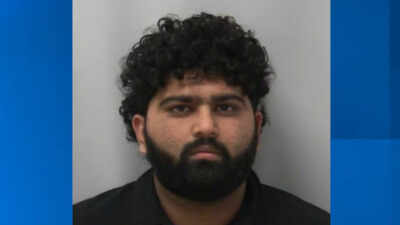
Sikh organizations across the UK have issued a public statement urging people not to associate Sikhism with the ongoing murder trial involving the death of 18-year-old University of Southampton student Henry Novak.A statement issued by the British Sikh Federation expressed condolences to Novak’s family and described the incident as inconsistent with Sikh teachings and values.“On behalf of Sikh organizations and communities across the country, we express our deepest condolences for the tragic loss of life,” the statement said.“Our thoughts and prayers are with the Novak family and loved ones during this extremely difficult time.”The organizations said the case should not be used to make broad assumptions about Sikh beliefs or religious practices.“The incident as reported is not in keeping with the Sikh faith, the Sikh community or its principles,” the statement said.“Sikh teachings are based on compassion, justice, humility, responsibility and service to humanity.”The statement described the Sikh community as peaceful, well-integrated and an important part of British society.Community leaders urged the public to allow the legal proceedings to proceed without prejudice and called for restraint in public discussion of the case.“We respectfully urge everyone to allow the judicial process to proceed fairly and without prejudice and to refrain from making blanket assumptions or judgments about the Sikh faith or Sikh religious practices based on an individual case,” the statement said.The comments came during the trial of 23-year-old Vikram Digva at Southampton Crown Court.Following the fatal stabbing of Henry Novak in Belmont Road, Southampton on 3 December 2025, Degua denied murder and denied carrying a blade in public.The court heard that Novak, of Chafford Hundred, Essex, suffered five wounds from a 21cm kirpan, a ceremonial Sikh blade, including a fatal wound to the chest.DeGwa claims she acted in self-defense after an altercation in which she alleges Novak racially abused her, punched her, pulled off her turban and grabbed her hair during a confrontation after a night out.The defendant told the court that he feared Novak would use the saber against him.His mother Kiran Kaur is also accused of allegedly helping a criminal by removing weapons from the crime scene. She denies the allegation.The case is going on.

Source link

France sanctions Israeli minister Ben-Gvir for mocking detained Gaza flotilla activists

France sanctions Israeli minister Ben-Gvir for mocking detained Gaza flotilla activists
FILE – Israeli far-right lawmaker Itamar Ben-Gvir gestures after the release of election exit poll results at his party’s headquarters in Jerusalem on November 2, 2022. (AP Photo/Oren Ziv, File)

France announced it has banned Israeli National Security Minister Itamar Ben-Gvir from entering the country after he released videos mocking and intimidating pro-Palestinian activists detained from a Gaza-bound aid flotilla. The video shared by the Israeli minister has also drawn widespread international condemnation and renewed calls for European sanctions against the far-right minister.The French foreign minister announced the move in a post on Twitter, accusing Ben-Gvir of “inexplicable” behavior towards French and European citizens, who were among hundreds of activists stopped by Israeli forces in international waters earlier this week. Barrot wrote, “To date, Itamar Ben-Gvir is prohibited from entering French territory. This decision follows his unspeakable actions towards French and European citizens who were passengers on the Global Sumud Flotilla.”“We cannot tolerate that French citizens can be intimidated, threatened or brutalized in this way – even more so by a public official,” he said, adding that he also urged the EU to impose bloc-wide sanctions on the Israeli minister.The ban comes after a video shared by Ben-Gvir on Wednesday sparked outrage across Europe and rights groups. In a post on Twitter, he shared a video of detained flotilla activists and captioned it, “This is how we accept supporters of terrorism. Welcome to Israel.”In one clip, the minister is seen waving a large Israeli flag over prone detainees, whose hands appeared to be tied. Another clip of the video shows him shouting “Am Yisrael Chai” – Hebrew for “the nation of Israel lives”) at a kneeling activist with zip-tied wrists.The footage also showed detainees kneeling with their foreheads pressed to the ground inside an outdoor holding area while the Israeli national anthem played and armed guards surrounded them. The footage was titled “Welcome to Israel”.Israeli forces intercepted the flotilla in international waters when the convoy attempted to break the Israeli naval blockade of Gaza. The activists set sail from Turkey aboard about 50 ships as part of the Global Sumud Flotilla initiative, saying they were delivering humanitarian aid and protesting the blockade imposed on Gaza since 2007.According to French authorities, the detained activists included 36 French citizens. Israel later said the detainees would be deported.Barrot criticized the flotilla mission itself, saying that France did not support the activists’ viewpoint.They wrote, “We reject this flotilla approach, which produces no useful effect and imposes an additional burden on diplomatic and consular services.”Despite that criticism, France said the treatment of detainees crossed a line. Barrot said he was coordinating with Italy in pursuing EU sanctions against Ben-Gvir.Spain has also urged the European Union to impose sanctions on an Israeli minister, while the United Kingdom has summoned Israel’s most senior diplomat to London over what it described as an “inflammatory video”.Netanyahu distanced himself from the video but refrained from taking action against his coalition partner. The Israeli Prime Minister said Ben-Gvir’s conduct was “not in line with Israel’s values ​​and norms”, although he retained him in his Cabinet, news agency AP reported.At the same time, Netanyahu defended Israel’s interception of the flotilla, previously describing the aid mission as a “malicious plan” aimed at supporting Hamas.Israel has maintained tight control over all entry points into Gaza for nearly two decades. The blockade is facing increasing international scrutiny during the ongoing Gaza war, as there are severe shortages of food, medicine and other essential supplies in the area. Aid agencies have repeatedly warned of worsening humanitarian conditions, particularly during the period when Israel completely halted aid distribution.The latest flotilla operation follows a similar attempt last month that was stopped by Israeli authorities in international waters near Greece, with most of the activists later expelled to Europe.

Source link

Pakistan train blast: 24 killed, over 50 injured in blast near railway track in Quetta

Pakistan train blast: 24 killed, over 50 injured in blast near railway track in Quetta

At least 24 people were killed and more than 50 injured in a powerful blast that targeted a train carrying military personnel near the Chaman Fatak railway station in Pakistan’s Balochistan province on Sunday, officials said.According to police officials, the blast occurred near railway tracks in Quetta and caused partial damage to a train, while at least 10 vehicles parked nearby were also damaged.GeoTV reported that the impact of the explosion shattered windows and glass panels of nearby buildings. Many injured people were taken to nearby hospitals for treatment.According to AFP, army personnel were also among those killed in the attack in Quetta, the provincial capital of Balochistan.The train carrying army personnel and their family members was on its way from Quetta to Peshawar for the Eid holidays when the blast occurred.The official said the train was crossing the signal at Chaman Pattak when the explosive-laden device hit a compartment, causing a powerful explosion.Images and video from the site showed a damaged train carriage lying on the ground and people climbing over the debris in search of survivors. Several injured victims were seen being carried on stretchers as armed security personnel cordoned off the area.Following the incident, authorities declared an emergency in government hospitals in Quetta and called in additional doctors and medical staff to deal with the situation.Railway officials said that after the blast, Peshawar-bound Jafar Express was stopped at Quetta railway station as a precautionary measure.Provincial Home Minister’s spokesman Babar Yousafzai said all concerned institutions have been put on high alert after the blast.He also urged people to avoid gathering near the blast site so that rescue and emergency teams can continue operations without any hindrance.Immediately after the blast, security personnel and rescue teams reached the area and started relief and investigation operations.Balochistan, Pakistan’s largest but poorest province, has long suffered from instability and underdevelopment. The region has also seen a long-running insurgency, with separatist groups accusing the federal government of exploiting its rich natural gas and mineral resources without sufficient local benefits.

Source link

US-Iran ceasefire agreement: From Hormuz to nuclear talks – What to expect in 60-day US-Iran ceasefire proposal

From Hormuz to nuclear talks – what to expect in a 60-day US-Iran ceasefire proposal

According to US media outlet Axios, the United States and Iran are close to signing a proposed deal that would extend the current ceasefire for 60 days, reopen the Strait of Hormuz and allow Iran to resume oil exports, while negotiations continue over Tehran’s nuclear program.According to the report, the draft memorandum of understanding (MoU) will allow ships to pass through the Strait of Hormuz without tolls during a period of 60 days while Iran will clear mines deployed in the waterway to restore shipping traffic.In return, the US would lift its blockade of Iranian ports and issue sanctions relief, allowing Iran to sell oil freely, Axios reported, citing a US official.The proposed agreement would include negotiations on curbing Iran’s nuclear activities.

Key points of the proposed deal

60 day ceasefire extension:

  • The US and Iran will sign a 60-day memorandum of understanding (MOU), which can be extended if both parties agree.

Strait of Hormuz to reopen:

  • Iran will reopen the Strait of Hormuz and remove mines deployed in the waterway to allow free movement of ships and oil tankers.

No toll on shipping:

  • Commercial ships will be allowed to pass through the strait without tolls or restrictions.

America will reduce economic pressure:

  • In return, the US would lift its blockade of Iranian ports and issue sanctions relief so Iran could freely export oil.

‘Relief for Performance’ Model:

  • The Trump administration will only provide sanctions relief and free up Iranian funds after Tehran makes verifiable concessions.

Nuclear commitments by Iran:

Iran will commit to:

  • never pursue nuclear weapons
  • Negotiations on suspension of uranium enrichment
  • Discussion on removing its highly enriched uranium stockpile

Further nuclear talks during the ceasefire:

  • The two sides will continue negotiations on a comprehensive nuclear agreement and permanent sanctions relief during a period of 60 days.

US troops will remain in the area temporarily:

  • US forces deployed in recent months will remain in the Middle East during the negotiation phase and will return only after a final agreement.

Israel-Hezbollah conflict will end:

  • The draft agreement reportedly includes the understanding that fighting between Israel and Hezbollah in Lebanon would stop.

Israel retains the right to take action against Hezbollah’s threats:

  • According to US officials, Israel would still be allowed to respond if Hezbollah attempted to retreat or attack.

Possible widespread reestablishment in relationships:

  • If Iran accepts Trump’s nuclear demands, the US could move toward restoring economic ties and helping Iran reintegrate economically.

Nuclear talks remain central

The proposed agreement reportedly includes Iran’s commitments that it will never build nuclear weapons and that it will negotiate to suspend uranium enrichment and remove its stockpile of highly enriched uranium.According to Axios, Iran has already provided verbal commitments through mediators about the concessions it wants to make on enrichment and nuclear materials.The development comes after a New York Times report cited two US officials as saying that a key element of the proposed deal is an “explicit commitment” by Tehran to give up its stockpile of highly enriched uranium.According to the report, how Iran will surrender its uranium reserves will be discussed in the subsequent rounds of nuclear talks. According to the International Atomic Energy Agency, Iran currently has about 970 pounds of uranium enriched to 60%.Iranian officials had previously opposed including the uranium issue in the early stages of talks and wanted it to be delayed to later talks.

Trump says deal close, Iran alert

US President Donald Trump said on Saturday that a “massively negotiated” peace memorandum was near completion and claimed the Strait of Hormuz would reopen under the deal.“The final aspects and details of the deal are currently under discussion and will be announced soon,” Trump wrote on Truth Social.However, Iran’s Fars news agency refuted Trump’s claim regarding the strait, saying that Iran would continue to manage the waterway and described Trump’s comments as “inconsistent with reality”.Iranian Foreign Ministry spokesman Ismail Baghai said, “There are still issues that need to be discussed through mediators,” stressing that Tehran’s priority is to end threats of new US attacks and address the conflict in Lebanon.

Mediation efforts led by Pakistan

Pakistan has emerged as the main mediator in the talks. Pakistan Army Chief Asim Munir recently met senior Iranian leaders, including top negotiator Mohammad Baqer Qalibaf and Foreign Minister Abbas Araqchi, in Tehran.The leaders of Saudi Arabia, Qatar, the UAE, Egypt, Türkiye and Pakistan backed the emerging framework during a conference call with Trump on Saturday.The proposed framework is expected to be unveiled in phases, starting with formally ending the war, reopening the Strait of Hormuz and opening a 30-day negotiating window for a comprehensive nuclear deal.Axios further reported that US forces mobilized to the region will remain deployed during a period of 60 days and will return only after a final agreement is reached.

Concerns over Israel, global oil markets

According to Axios, Israeli Prime Minister Benjamin Netanyahu reportedly raised concerns over parts of the proposed agreement during a call with Trump, particularly provisions related to ending the Israel-Hezbollah conflict in Lebanon.The agreement is being closely watched globally as the Strait of Hormuz handles a large share of global oil shipments. Global energy markets had been severely disrupted by the closure of waterways since the beginning of the war.Oil prices and shipping routes remain volatile amid uncertainty over conflict and negotiations.Under the talks, Iran has demanded an end to the US blockade on its shipping and relief from sanctions.

Source link

Russia attacks Ukraine’s capital Kiev with missiles, drones, schools, residential buildings affected; 1 dead

US issues alert on threat of imminent Russian airstrikes after Ukrainian hostel attack in Luhansk

Apartment interiors in a damaged residential building are exposed after a Russian missile strike in Kiev, Ukraine, on Sunday, May 24, 2026. (AP Photo/Efrem Lukatsky)

Russia launched a massive overnight missile and drone attack on Kiev early Sunday, hitting residential areas, a school and commercial buildings in the Ukrainian capital, as Moscow vowed to retaliate for Ukrainian attacks on the Russian-held territory that it said killed 18 people. The barrage injured at least 10 people, sparked fires in several districts and forced residents into underground shelters as air raid sirens echoed across the city for hours.The attack, which Ukrainian officials described as a “mass ballistic missile attack”, continued Sunday morning and officials warned that additional missiles and drones were still approaching the capital.“The capital has been hit by a massive ballistic missile attack,” Timur Tkachenko, head of the Kiev city military administration, wrote on Telegram. “There are currently reports of at least 4 locations affected by the attack: Shevchenkivsky, Dniprovsky and Podilsky districts. There are preliminary reports of fires and damage to residential buildings.”“Strike drone attacks continue; ballistic missile threat still persists. Stay in shelters!” He added.According to Associated Press journalists on the ground, powerful explosions were heard throughout central Kiev overnight, including near government offices. The impact of the attacks shook buildings and thick smoke spread over many parts of the city.Kyiv Mayor Vitaliy Klitschko said a school building in the Shevchenkivskyi district was damaged, while civilians were sheltering inside. “A school has been damaged in the Shevchenkivsky district,” Klitschko posted on Telegram. He told that there is a fire.Emergency crews were also dispatched to Kyiv’s Podilsky district after debris fell in a non-residential area, while a fire broke out near residential buildings in the Shevchenkivskyi district, damaging windows and surrounding structures.Officials said damage was reported in at least nine districts of the capital, with supermarkets, warehouses and residential complexes also affected. Regional governor Mykola Kalashnik said several communities in the wider Kyiv region also suffered damage.The attacks came after Russia warned of retaliation for recent Ukrainian attacks in Russian-occupied eastern Ukraine. Moscow had earlier accused Kiev of carrying out an attack on a college dormitory that reportedly killed 18 people.Before the attack, Ukrainian President Volodymyr Zelensky, citing intelligence shared by the United States and Western allies, warned that Russia could launch a major air strike involving the Oroshnik hypersonic ballistic missile. Ukraine’s air force later issued a warning about a possible Orashnik launch, though it was not immediately clear whether the missile was used in Sunday’s attack.Russia first deployed the Oreshnik missile against the Ukrainian city of Dnipro in November 2024 and used it again in the western Lviv region earlier this year.Russian President Vladimir Putin has claimed that the nuclear-capable missile travels at a speed of Mach 10 and can penetrate underground bunkers several floors deep. Describing the weapon as traveling “like a meteorite”, Putin has also said that the missile is immune to existing air defense systems and that many conventional attacks using the weapon could match the devastation caused by a nuclear attack.

Source link

Iran rejects Trump’s ‘largely negotiated’ deal, claims control of Hormuz

Iran rejects Trump's 'largely negotiated' deal, claims control of Hormuz
Donald Trump and Mojtaba Khamenei (R)

US President Donald Trump claimed on Sunday that the United States and Iran have “negotiated” a comprehensive deal that could reopen the Strait of Hormuz and potentially end the months-long conflict launched under “Operation Epic Fury”.However, Iran does not appear to be aligned with the MAGA supremo on the Hormuz question in what Trump is calling a “largely negotiated” agreement.“An agreement has been substantially negotiated and is subject to finalization between the United States, the Islamic Republic of Iran, and various other countries,” Trump wrote on Truth Social.The announcement signaled possible progress toward reducing tensions after months of military escalation in the region. However, Trump also told his aides and regional allies that he still reserved the option to resume military strikes if Iran fails to comply with the terms of the temporary agreement under discussion, The Wall Street Journal reported.However, Iran rejected Trump’s claims. The Strait of Hormuz will remain under Iranian control under the latest proposal exchanged between Tehran and Washington, state-affiliated Fars news agency reported.Iranian media also said the proposal was still awaiting final approval from the office of Supreme Leader Mojtaba Khamenei.According to CNN, the latest draft of the memorandum of understanding being negotiated would gradually reopen the Strait of Hormuz, ease the US blockade of Iranian ports and halt hostilities between the two countries.The proposed agreement would also trigger at least 30 days of further talks focused on unresolved issues related to Iran’s nuclear program, particularly Tehran’s stockpile of near-weapons-grade uranium.Trump said discussions were still ongoing and warned that parts of the agreement could still change.Prime Minister of Pakistan Shahbaz Sharif A post on Twitter praised Trump’s peace efforts, although he did not directly mention the agreement or the Strait of Hormuz.Instead, Sharif noted the “very useful and productive telephone calls” made by Trump with the leaders of the Gulf countries, Turkey, Egypt, Jordan and Pakistan, who were represented by Army Chief Asim Munir.“The discussion provided a useful opportunity to exchange views on the current regional situation and how to advance the ongoing peace efforts,” Sharif said.Fars News again rejected Trump’s comments on reopening the Strait of Hormuz, calling them “not true” and “inconsistent with reality.”“Although Iran has agreed to allow the number of ships passing to return to pre-war levels, this in no way means ‘free passage’ as it existed before the war,” the outlet reported.Trump later said that talks with regional leaders focused on a memorandum involving Iran and “peace”.According to CNN, regional leaders urged Trump to move forward on the proposed framework deal. A diplomat involved in the discussion described the talks as encouraging.“The call was very positive. Good progress is being made. Regional leaders were supportive of the progress and the success achieved by President Trump in the talks,” a regional diplomat told CNN.Trump also revealed that he spoke separately with the Israeli Prime Minister benjamin netanyahu.“The final aspects and details of the deal are currently under discussion and will be announced soon. In addition to many other elements of the agreement, the Strait of Hormuz will be opened,” he said.However, Israel remains cautious. According to an Israeli source cited by CNN, Tel Aviv is concerned that any interim agreement could reopen the Strait of Hormuz and ease sanctions on Iran without fully addressing Tehran’s nuclear program and enriched uranium reserves.The US has reportedly assured Israel that the uranium issue will remain a priority in the talks.Netanyahu is expected to hold a high-level security meeting with ministers and intelligence officials to discuss the latest developments.Earlier, in an interview with Axios, Trump had described the chances of securing a deal with Iran as “solid 50/50” ahead of his talks with Gulf and regional leaders. He warned that negotiations could either lead to a “good” deal or the US could “force them to come to the States.”Officials from both the US and Iran indicated they may now be close to a temporary framework agreement after mediators from Qatar and Pakistan met in Tehran on Saturday. A regional source told CNN that the two sides are moving toward a broad future agreement.

Source link

Taiwan military activity: Taiwan detects Chinese military aircraft, naval ships near the island for the second consecutive day

Taiwan detects Chinese military aircraft, naval vessels near island for second consecutive day

Taiwan’s Ministry of National Defense said it detected four flights of Chinese military aircraft and six naval vessels around the island as of 6 a.m. local time on Sunday.The ministry said three of the four aircraft crossed the midline of the Taiwan Strait and entered Taiwan’s southwestern and southeastern air defense identification zone (ADIZ).In a post on Twitter, the ministry said, “4 flights of PLA aircraft and 6 PLAN ships operating around Taiwan were detected as of 6 a.m. (UTC+8) today. 3 of the 4 flights crossed the midline of the Taiwan Strait and entered the ADIZ in the southwestern and southeastern parts of Taiwan. The ROC Armed Forces have monitored the situation and responded.

Chinese military activity increased near Taiwan

The latest activity comes a day after Taiwan detected 16 Chinese military aircraft and eight naval ships flying around the island.Of the 16 planes detected Saturday, 13 crossed the center line of the Taiwan Strait and entered Taiwan’s northern, central, southwestern and eastern ADIZ zones.Taiwan’s Defense Ministry said its armed forces monitored the activities and responded accordingly.There have been repeated incursions amid rising tensions between China and Taiwan, with Beijing continuing military operations near the self-ruled island.

Taiwan remains a major flashpoint in US-China relations

Taiwan was a major issue during the recent talks between US President Donald Trump and Chinese President Xi Jinping.China considers Taiwan as part of its territory under the “One China Policy”, while Taiwan operates with its own government, military and democratic system.Taiwanese President Lai Ching-te recently said that US arms sales and security cooperation with Taiwan are vital to maintaining regional peace and stability.

Strategic importance of Taiwan

Taiwan remains strategically important due to its location in the Indo-Pacific region and dominance in semiconductor manufacturing.Taiwan is home to Taiwan Semiconductor Manufacturing Company, the world’s largest contract chip manufacturer, producing advanced chips used in smartphones, artificial intelligence systems, automobiles and military equipment.The United States maintains defense and trade relations with Taiwan under the Taiwan Relations Act, despite officially recognizing China diplomatically in 1979.Tensions around Taiwan have increased in recent years due to US arms sales, visits by US lawmakers and repeated Chinese military exercises near the island.

Source link

SpaceX’s Starship flight hits most targets in pre-IPO testing

SpaceX's Starship flight hits most targets in pre-IPO testing

STARBASE: SpaceX on Friday completed a largely successful test flight of its next-generation Starship rocket, deployed a constellation of simulated satellites and executed a controlled splashdown in the Indian Ocean in a high-level debut of the new advanced vehicle as Elon Musk’s company prepares to go public.The latest uncrewed launch of Starship – which is designed to launch Starlink satellites more frequently and send future NASA missions to the Moon – achieved a significant milestone for the vehicle after months of testing delays. The result could also boost investor confidence ahead of SpaceX’s initial public offering next month, which is expected to be the largest in history.Starship, which SpaceX has spent more than $15 billion developing as a fully reusable spacecraft, is key to Musk’s goals of cutting launch costs, expanding his Starlink business and pursuing ambitions ranging from deep space exploration to orbital data centers — all factored into his targeted $1.75 trillion IPO valuation.Friday’s launch marked SpaceX’s 12th test flight of the Starship prototype since 2023 and the first flight of its V3 iteration, a major upgrade of both the cruise vessel and its Super Heavy booster, as well as the first blast-off from a specially designed launch pad for the new rocket.meaningful stepSpaceX was counting on a successful test flight to bolster its claim that the largest and most powerful rocket ever flown is close to commercial readiness after years of explosive setbacks and development delays. Friday’s test appears to have achieved most of its key objectives.The massive vehicle, which consists of an upper stage Starship spacecraft mounted atop a Super Heavy booster rocket, blasted off at about 5:30 a.m. CT (2230 GMT) from SpaceX facilities at Starbase, Texas, on the Gulf of Mexico near Brownsville.A few minutes later, the two stages apparently separated, allowing the Starship vehicle to ascend to its cruise stage despite the loss of one of its six engines, then eject its simulated satellite payload before surviving fiery atmospheric re-entry and splashdown. Its flight lasted more than an hour in total.This is a Reuters story

Source link

may Day! SA scientists identify hantavirus outbreak in 24 hours

may Day! SA scientists identify hantavirus outbreak in 24 hours

JOHANNESBURG: When South African infectious disease expert Lucille Blumberg checked her email on the morning of May 1, as the country was celebrating the Labor Day holiday, an urgent message caught her attention.A UK-based affiliate, which monitors diseases in remote British overseas territories in the South Atlantic Ocean, wrote about a passenger on a cruise ship sailing thousands of miles across the Atlantic who was admitted to a Johannesburg hospital with suspected pneumonia. Other people on board the ship were also ill. Blumberg and other experts at South Africa’s National Institute for Communicable Diseases were suddenly thrown into a race to identify the cause of the outbreak on the Dutch cruise ship MV Hondius. Despite the holidays, “it got busy,” she says. Within 24 hours, they had determined that the man’s illness was caused by hantavirus, a rare rodent-borne virus. But first, Blumberg and his colleagues had to rule out several other possible infections before narrowing down the root cause. At first, they thought it might be Legionella, a bacterium that causes pneumonia, a severe form of bird flu. “Legionella has been well described in outbreaks in hotels and on cruise ships, and influenza certainly has.” The tests on all of them were negative. The experts also ran a comprehensive panel of tests for other respiratory diseases. Also, all negative.The team then began tracking bird watchers more closely and reportedly went to parts of South America where there were birds, but also rodents. This pushed South African disease experts toward another theory: a rare, rodent-borne hantavirus infection, which is found in parts of South America. “In Chile and Argentina this is a well-characterized virus, not common,” Blumberg said. Timely help also arrived – hantavirus experts from South America and the United States, assisted by WHO, the United Nations health agency, were a Zoom call away. “That was quite extraordinary,” she said.By then it was Saturday morning. Blumberg was said to head South Africa’s only laboratory that can test for hantavirus. “I said, we want to do hantavirus, and she said, ‘Yes, I’m coming.'” Tests conducted on blood samples from the sick man came back positive for hantavirus that afternoon. And the team conducted a second set of tests to confirm this.

Source link

White House shooting scare: Footage shows journalists running for cover

White House shooting scare: Footage shows journalists running for cover

Tension prevailed at the White House complex on Sunday after a series of gunshots were heard near the presidential complex, prompting journalists to flee to safe shelter areas while heavily armed law enforcement personnel sealed off parts of the area. This incident came to light when US President Donald Trump was staying inside the Oval Office amid sensitive talks related to Iran.The US Secret Service ordered journalists to immediately vacate their reporting positions on the North Lawn of the White House and proceed to the press briefing room.ABC journalist Selina Wang said in a post onThere were no immediate reports of any injuries, and the Metropolitan Police Department had not issued any official statement at the time of publication.

Source link