
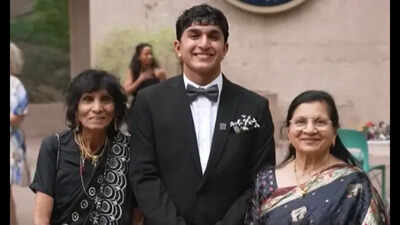

Indian-origin Texas teen brought two grandmothers to prom, says choice to take bae and mom was simple
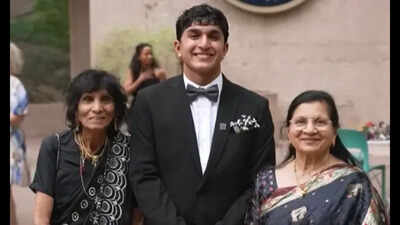
Indian-origin Texas teen Ryan Mistry takes his two grandmothers to the prom.
High school senior Ryan Mistry didn’t have to think twice about who he’d ask to his prom, as two grandmothers attended their first prom at a small private school in Edison, Texas. These were his father and mother, two grandmothers from Africa and India. The two women posed for photos wearing sarees with Mistry, celebrating the school’s decision to break with tradition, WFAA reported.There were only 17 seniors in this year’s graduating class at Westwood School – 12 girls and five boys. Ryan said his decision was simple though emotional because he wanted to take his two grandmothers who shaped his life.But Mistry’s mother remembered a childhood promise that Ryan had actually made. Ryan’s mother, Trisha Mistry, said that as a child, Ryan would tell his grandmother that he would take her to the prom dance.Trisha told WFAA about the preparations both grandmothers made to attend the big day in Ryan’s life, “They did their hair, did makeup, did their nails. I felt like I had two daughters.”“Not only was he raised by me, but he was raised by a village. The days I couldn’t see him, [his grandmas] There were,” Trisha said.Ryan said, “I’m having fun with my grandma. This is my way of showing gratitude for everything my grandma did for me.”Head of school Heather Lursey praised Ryan’s way of thinking and said: “We could definitely use more Ryan.”Ryan’s parents Jignesh ‘Jay’ Mistry and Trisha Mistry also attended their son’s prom event.
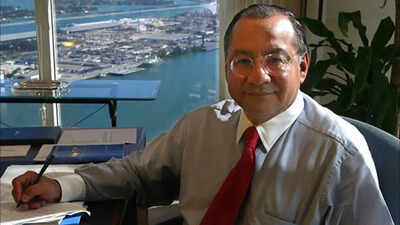
Who is Victor Manuel Rocha, the former US diplomat who will lose US citizenship for spying for Cuba?
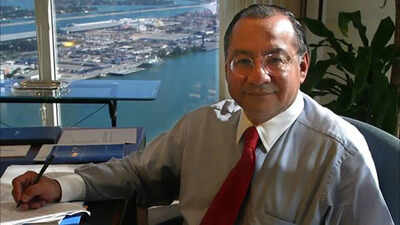
Former US diplomat Victor Manuel Rocha will be deported from the US on charges of spying for Cuba for 40 years.
As the Donald Trump administration cracks down on individuals fraudulently obtaining US citizenship and publishes a list of 12 such people who have come under fire, one name has clearly emerged. He is Victor Manuel Rocha, the former US ambassador to Bolivia. He was arrested in 2023 and admitted to working as a Cuban secret agent for 40 years.A native of Colombia, Rocha grew up in New York City, graduated from Yale, pursued post-graduate studies at Harvard, and became a U.S. citizen in 1978. Three years later, Rocha began working for the US State Department in 1981. His first posting was as a political officer at the US Embassy in the Dominican Republic, then Honduras, then he served as First Secretary of the US Embassy in Mexico City.In 2000, President Bill Clinton appointed Rocha as US Ambassador to Bolivia.The Justice Department said in its denaturalization complaint that Rocha lied in his citizenship process because he had already been working as an agent since 1973.“Under no circumstances should an agent of a foreign adversary be allowed to hold the status of a U.S. citizen,” said Assistant Attorney General Brett Shumate. “Our mission is clear: to root out these fraudsters and preserve the sanctity of the naturalization process for those who follow our laws. Anyone who lies during the naturalization process to gain a foothold in this country will be prosecuted to the fullest extent of the Justice Department.“U.S. Attorney for the Southern District of Florida Jason A. Redding Quinones said, “Victor Manuel Rocha was no low-level operative. He was a former United States Ambassador and senior government official who admitted that he secretly served the Cuban regime for decades.” “The Southern District of Florida helped take down one of the most powerful Cuban spies ever exposed in the United States. This civil denaturalization case is about to finish the job. The complaint alleges that Rocha obtained U.S. citizenship through lies, concealment, and fraud. A person who secretly serves communist Cuba should not retain the privileges of United States citizenship even while in prison.
Cuban unregistered agent
Rocha was working as an unregistered agent for the Republic of Cuba. When he applied for naturalization, Rocha represented under penalty of perjury that he had not committed crimes for which he had not been arrested; He was not affiliated with the Cuban Communist Party; He had neither advocated, believed in, nor knowingly supported or advanced the interests of communism; And he believed in the American Constitution and the American form of government, none of which were true.The DOJ said Rocha was ineligible for naturalization for several reasons, including having committed illegal acts, committing perjury during his naturalization examination, not being held to the principles of the US Constitution and America’s good order and happiness, being affiliated with the Cuban Communist Party, and advocating communism. It said the US will also seek to revoke his naturalization because he obtained his citizenship by concealing material facts or knowingly misrepresenting a number of facts in naturalization proceedings related to espionage for Cuba.
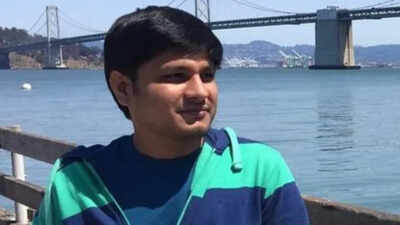
Indian man dies in America, family says he struggled with valley fever for a month
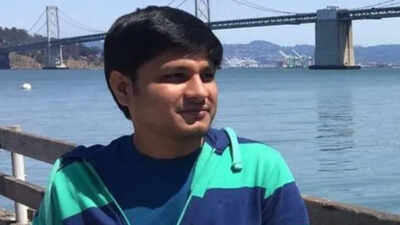
An Indian dies of valley fever in America
Indian man Chiranjeevi Kolla, 37, died in California after a month-long battle with Valley Fever, his family said at a fundraiser. His cousin Ram Koteswara Rao said that Chiranjeevi felt like the common flu in April, but it got worse and he went to the emergency room. Doctors suspected a case of severe pneumonia but after testing it was confirmed to be Valley fever. Chiranjeevi is survived by his wife Pavni Marela and five-year-old son Vihaan.“The doctors did everything medicine could. After thirty long days of machines, monitors and prayers, his exhausted body could no longer fight,” the fundraiser said, describing Valley Fever as a fungal infection caused by Coccidioides, which was picked up by the air in California soil. “Most people who have it never know,” the cousins wrote. “In his case, it put pressure on his lungs.”“Chiranjeevi was the heart of their home and its primary provider. With his demise Pavani not only lost the love of her life, but suddenly found herself bearing the entire burden of the family – a mortgage, daily life with a 5-year-old, hospital bills and last rites after being in the ICU for a month, with the family expecting respect in both California and India,” the fundraiser said.“If you know Chiranjeevi, you already know what we have lost. He was a man who never raised his voice, never took no for granted and never made anyone feel small. He gave his best for two things: the company he worked for, and the family he came home to. He was respected by everyone who worked with him. Everyone who knew him loved him.”
what is valley fever ? Is this very common in America?
According to the CDC, valley fever is a lung infection caused by breathing in spores of Coccidioides, a soil-dwelling fungus in some areas of the southwestern U.S. and south-central Washington state. Typically, people who become ill with valley fever recover on their own, but it is often misdiagnosed, leading to delayed treatment.In the US, Coccidioides lives in soil and dust in the Southwest and parts of the Pacific Ocean. Historically, Valley Fever has spread in Arizona, California, Nevada and New Mexico, according to the CDC. It is most common in California and Arizona. Approximately 20,000 cases of valley fever occur in the United States.
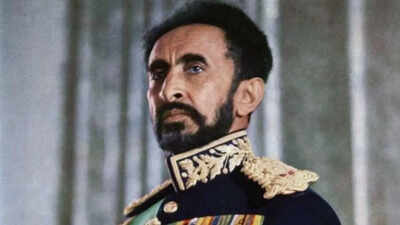
Quote of the Day by Haile Selassie: “We must become greater than ever before: bolder, greater in spirit, larger in outlook. We must overcome petty prejudices and become members of a new race, giving our ultimate allegiance not to nations but to our fellow men within the human community.” | world News
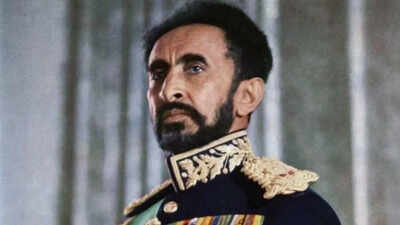
There are quotes that have survived decades, not just because they were poetic, but because they stood the test of time across generations. An example of this are the words of former Emperor Haile Selassie of Ethiopia, whose words on courage, humanity and unity continue to resonate in discussions on leadership, conflict, prejudice and global responsibility. His quote is memorable, not only because of its content but because of the time in history when it was spoken.The statement is not about politics or nationalism. It is about personal growth, social harmony and the need for people to go beyond divisions. As countries around the world struggled with war, colonialism, racial discrimination, and political instability, Haile Selassie spoke repeatedly about the importance of shared humanity. Even today, this quote is widely cited in books, speeches, classrooms, and on the Internet because many people still feel that it reflects the challenges that modern society faces.At the same time, this line also has emotional weight as it asks people to think beyond narrow identities and personal prejudices. The quote urges people to see themselves as part of a larger human community rather than focusing solely on borders, race, religion or nationality. That message still resonates with readers looking for meaning in a time of division and uncertainty.
Quote of the Day by Haile Selassie
“We must become bigger than ever before: bolder, bigger in spirit, bigger in outlook. We must overcome petty prejudices and become members of a new race, giving our ultimate allegiance not to nations but to our fellow men within the human community.”
The deeper meaning behind Haile Selassie’s quotes
The quote begins with a powerful call for change: “We must become greater than ever before. It is not about physical strength or power. It is about emotional maturity, moral development and a greater understanding of humanity.When Haile Selassie talks about becoming “more courageous,” he means having the courage to face hatred, prejudice, injustice, and fear. Courage in this case is not limited to the battlefield or politics. It also applies to everyday human behavior, such as standing up against discrimination, helping individuals, and choosing compassion in difficult times.The phrase “great in spirit” refers to inner strength. It reflects the idea that society progresses not only through technology or economic development, but also through empathy, kindness, patience, and understanding.Throughout history, many leaders have said that material progress alone will not solve human conflict unless people develop emotionally and morally.Perhaps the most important phrase in the quote is the last one, “larger in outlook.” It inspires people to think beyond narrow perspectives and think globally. Haile Selassie believed that divisions based on race, nationality or status often get in the way of societies achieving peace and cooperation. He suggests that when you look at the bigger picture, you see people’s shared humanity rather than just seeing differences.
Why do Haile Selassie’s words still matter today?
Although this quote was said decades ago, many people feel that the message is quite relevant to contemporary society. Countries around the world are still grappling with political polarization, social conflict, racial tensions, and questions of identity. And in that environment, messages of unity and common humanity often rise to the top again.While modern communications have made people more connected to each other than ever before, isolation remains strong. Debates on social media, political disagreements, and international conflicts often reveal how difficult it is for societies to overcome prejudice. This is why Haile Selassie’s quote is still widely shared on the internet. Many readers have interpreted it as a message of human evolution, that it is not just about money and science, but also about kindness and respect for each other.This quote is also attractive to the younger generation because it emphasizes personal responsibility. Instead of simply blaming systems or governments, it encourages people to think about how they treat others and how they view the world around them.
The historical person behind Haile Selassie’s quote
Haile Selassie ruled Ethiopia during one of the most turbulent periods of the twentieth century. Born Tafari Makonnen in 1892, he became Emperor of Ethiopia in 1930 and remained an important international figure for decades.During his time, Ethiopia had major political and military problems, such as the Italian invasion led by Benito Mussolini in the 1930s. Haile Selassie became a world celebrity when he appealed to the League of Nations for help against fascist invasion. His speeches at that time had worldwide appeal, as they were primarily concerned with justice, collective responsibility and resistance to oppression.Many historians consider him one of Africa’s most internationally recognized political figures in the twentieth century. But he also had an important symbolic role for the Rastafari movement, which views him as a figure of great spiritual importance.His speeches often focused on human dignity, equality, peace and cooperation between nations. The quote about becoming “big in outlook” echoes many of the themes he repeatedly emphasized throughout his public life.
How does this quote connect to modern conversations about prejudice
A key element of the quote is its complete rejection of “petty prejudice”. This phrase still persists, as prejudice continues to affect society in many forms, such as racism, religious discrimination, nationalism and social intolerance.Psychologists and sociologists have long argued that prejudice is often rooted in fear, misinformation or a lack of connection between communities. Haile Selassie’s words imply that overcoming these divisions requires people to think beyond inherited prejudices and see their shared humanity.Today, such ideas are often at the center of conversations about inclusion and equality. Academic institutions, social movements, and international organizations often advocate empathy with people of different backgrounds. This quote is very appropriate for these conversations because it focuses on broadening one’s horizons.This quote is also seen by many readers as a reminder that humanity shares many global problems, including climate change, poverty, migration crises, and conflict. These are not matters that can be easily resolved by isolation or prejudice. They need cooperation across borders and communities.
Leadership lessons hidden inside quotes
The quote is often shared as a philosophical statement, but it also contains important lessons about leadership. Haile Selassie argues that true leadership requires a vision that goes beyond the limits of narrow interests of personal ambition or nationalist concern.The term “big in spirit” reflects emotional resilience, and “big in outlook” indicates strategic thinking and a long-term perspective. Leaders who think only about short-term gains often fail to make lasting progress. On the other hand, those who think about larger human consequences tend to leave stronger legacies.Today, many leadership experts cite emotional intelligence, empathy, and adaptability as important qualities for successful leadership. Haile Selassie’s quote was given long before modern leadership theory became popular, but it is very much in line with these ideas.
Why do inspirational quotes continue to attract readers?
Big ideas are contained in a few memorable sentences and that is why such quotes are popular. Readers, when feeling stressed, uncertain, or reflective, often turn to inspirational quotes. Sometimes a short sentence expresses feelings or ideas more clearly than longer explanations.In today’s digital world, these quotes spread quickly through social media, motivational pages, podcasts, and educational platforms. But it is usually the quotes tied to actual historical experience that endure the longest. Haile Selassie’s words carry greater weight because they were spoken by a man who experienced war, colonial pressure, world diplomacy and political turmoil first-hand.In modern crises, people also revisit old quotes as they seek wisdom that seems timeless. Words about unity, courage and humanity often remain relevant, no matter what the era.
How does this quote reflect the idea of a shared human community
The last part of the quote speaks of a pledge of allegiance “not to nations, but to our fellowmen within the human community.” It symbolizes a worldview that places humanity above division.Nations, cultures and traditions still matter, but Haile Selassie believed that people should not let these identities fuel hatred or conflict. His words are words of cooperation, not separation.”This perspective has become important in an increasingly globalized world where economies, communication systems and environmental challenges are all interconnected. Events in one country can immediately affect people around the world. Thus, many thinkers argue that humanity must learn to cooperate better on cultural and political grounds.This notion is expressed simply but memorably in the words of Haile Selassie. This means that progress requires thinking of people not just as citizens of individual nations but as members of the larger human family.
Other famous quotes from Haile Selassie
“Throughout history, it has been the inaction of those who could act that has made possible the triumph of evil.”“Peace demands the united efforts of all of us. Who can imagine what spark might ignite the fire?”“Knowledge is power. If it is not properly used for creation, there is no doubt, it will destroy.”“Education develops intelligence; intelligence distinguishes man from other creatures.”“Until the philosophy of considering one race superior and another inferior is finally and permanently discredited and abandoned, war is war everywhere.”
Why this quote continues to inspire readers generation after generation
Its beauty and timelessness lies in its simplicity and honesty. It doesn’t promise easy answers. Rather, it asks people to become better versions of themselves through courage, understanding, and openness.A lot of inspirational quotes focus solely on personal success. What makes Haile Selassie’s statement unique is that it combines personal development with general responsibility. It tells us that individuals and societies become stronger when they rise above fear, prejudice and narrow-mindedness.Today, the reader can find quotes both personal and global. It makes you think about yourself on some level. On the other hand, it is concerned with the future of mankind.Perhaps that is why this quote keeps coming up in discussions of leadership, peace, education and social progress. Decades after it was first spoken, its core message remains incredibly relevant: humans must continue to think bigger, care deeper, and learn to live together with greater understanding.
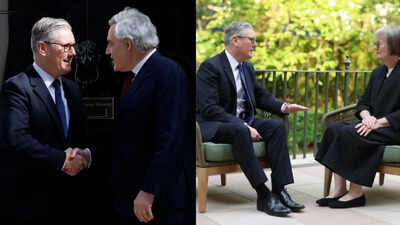
Starmer appoints Gordon Brown, Harriet Harman as advisers on post-election transition after Labor defeat
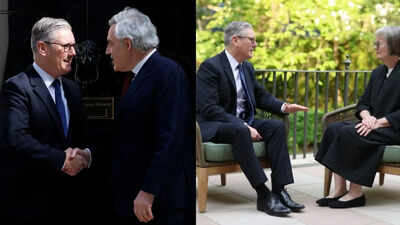
Starmer appoints Labor veterans as advisers
Following Labour’s landslide defeat in the 2026 local elections, Prime Minister Keir Starmer has turned to senior party stalwarts to stabilize the situation, and appointed former Prime Minister Gordon Brown and former deputy leader Harriet Harman to key advisory roles.In a surprise move, Gordon Brown has been appointed special envoy on global finance, while Harriet Harman has been named adviser on women and girls.Starmer said, “I am delighted to appoint Harriet Harman as my adviser on women and girls. Harriet is a strong advocate for women and girls and I know she will deliver great opportunities for women in public life.”
Big shock in local elections
Labor suffered major defeats in local elections, losing over 1,300 council seats across England. Key areas including Manchester, Salford, Wigan and Oldham fell away from Labor control, while the party lost control of the Welsh Senedd for the first time and performed poorly in Scotland.The results triggered criticism within the party and increased pressure on Starmer, although senior leaders have publicly supported him.Following the appointments of Brown and Harman, Starmer posted a video on Twitter, titled: “Together, we will build a stronger and fairer Britain.”
Brown returns as global finance ambassador
Brown will advise the government on international financial cooperation and help develop partnerships to support defense and economic security. Former Chancellor and Prime Minister Brown will also engage with global institutions and leaders in this unpaid, part-time role.Downing Street said his experience during the financial crisis made him suitable for the job.
Harman will focus on women and girls
Harman will work on issues affecting women and girls, including violence against women, job opportunities and representation in public life. She will also push for cultural changes within government systems.While the appointments are seen as an attempt to reset the government’s image after the election shock, questions remain within Labor about its direction.Senior figures have urged focus and unity, even as pressure mounts after a poor election performance.
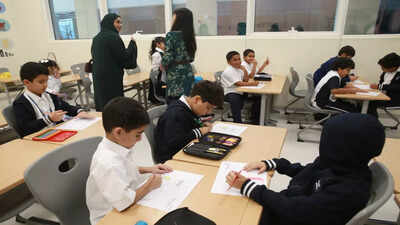
UAE education: UAE to decide on remote or in-person classes on May 10 as schools and universities remain on alert World News
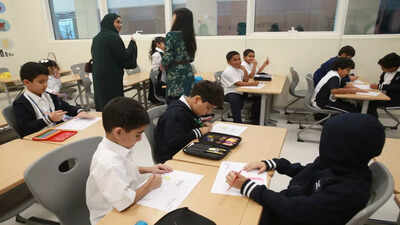
Students, parents and teachers in the UAE are awaiting a key announcement on May 10 that will determine whether schools and universities will continue with remote learning or return to classes fully next week.The UAE Ministry of Education confirmed that the country’s learning model for the upcoming period, whether online or in-person, will be announced after authorities complete a nationwide security assessment in coordination with relevant agencies. The Ministry of Higher Education and Scientific Research said universities and higher education institutions would also receive updated instructions on Sunday evening.Dubai’s Knowledge and Human Development Authority (KHDA) is expected to issue separate guidance for private schools and educational institutions in the emirate. Officials said the decision prioritizes two things: protecting students and staff and ensuring that education continues without disruption.The announcement comes after UAE schools, nurseries and universities moved back to remote learning from May 5 to May 8 due to renewed regional tensions and emergency alerts across the country.Officials stressed that all examinations and international assessments will continue in-person as per the approved schedule, even as a review of the broader teaching model is underway.
Why did UAE schools return to e-learning?
The latest shift to online learning follows heightened regional security developments linked to renewed Iranian attacks earlier this month.On 4 May, the UAE emergency alert system was activated several times after authorities confirmed the interception of ballistic missiles, cruise missiles and drones launched from Iran. Officials later confirmed that UAE air defense systems had successfully shot down 12 ballistic missiles, three cruise missiles and four drones.As a precautionary measure, education officials immediately ordered a nationwide transition to remote learning in public and private schools, universities and nurseries.The UAE’s education sector has now become highly adaptable to the rapid shift between classroom and online learning following years of operational planning following the COVID-19 pandemic. School leaders say institutions are now able to change learning models within hours while maintaining full academic schedules.Many schools immediately resumed regular online timetables, digital attendance systems and virtual classroom teaching without any major disruption.Officials repeatedly stressed that student safety remains the country’s top priority while ensuring educational continuity during a period of uncertainty
UAE’s flexible learning model
The UAE’s ability to rapidly transition between online and classroom learning is being seen as one of the strongest results of the country’s post-pandemic education reforms.Earlier this year, UAE students recently returned to physical classrooms on April 20 after nearly seven weeks of remote learning linked to regional tensions. Authorities conducted extensive safety inspections, operational checks and employee preparation programs before reopening campuses nationwide.Even after campuses reopened, regulators instructed schools and universities to be prepared for immediate changes if circumstances change again.Many universities adopted hybrid systems, allowing some students to continue learning remotely depending on course requirements and operational preparation. Institutions including Middlesex University Dubai and the American University of Sharjah implemented flexible approaches combining online and physical teaching.Education authorities have also introduced a strict framework for the quality of distance education.In Abu Dhabi, the Abu Dhabi Department of Education and Knowledge (ADEK) instructed schools to maintain full teaching standards during online education. Schools were required to conduct live interactive lessons, monitor attendance daily and conduct regular student welfare checks.Officials stressed that distance education should provide the same academic quality as classroom teaching, and not an abbreviated or simplified program.
What can you expect next?
At the moment, schools and universities across the UAE are in a state of readiness as authorities monitor the development.Education regulators said institutions are ready to pursue distance learning, hybrid systems or full classroom reopening depending on the outcome of ongoing safety reviews.Parents have largely embraced the UAE’s increasingly flexible education system, although many keep a close eye on updates due to concerns about exams, transport, child care arrangements and student welfare.School operators say one of the biggest changes since the pandemic is how quickly teachers, parents and students can now shift between learning methods with minimal disruption.The upcoming May 10 decision is expected to impact lakhs of students in public schools, private institutions, universities and nurseries across the country.Until then, officials will continue to emphasize peace, preparedness and continuity as the UAE balances education stability with emerging regional development.
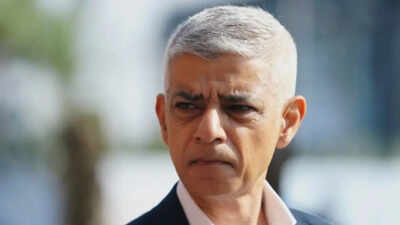
London election results: Sadiq Khan warns Labor faces ‘existential threat’ as Greens take lead across capital
London Mayor Sadiq Khan has called for a change of direction for Labor after the party suffered a huge setback in London local elections, saying the results reflect “far-reaching disillusionment” among voters and an “existential” threat if it fails to change course.In a strongly worded statement after the results, Khan described the results as “extremely disappointing for Labor in London” and acknowledged that many traditional supporters had turned away from the party.“Many people who voted for Labor in the last general election are clearly feeling angry, disillusioned and disappointed,” the Mayor of London said. He said voters were disappointed with the “slow pace of change” under the current leadership.
‘Without a change of course, the threat is existential’
Khan stopped short of explicitly endorsing Labor leader Keir Starmer, instead calling for a major rethink in both political strategy and delivery.“Without a change in course and an acceleration in delivery, the threat to labor is existential,” Khan warned. “We risk repeating what happened in Scotland in London, Wales and across England, from which we have still not recovered.”The comments are being seen as one of the sharpest public interventions yet by a senior Labor leader following the party’s poor performance in local elections.
Progressive vote shift reshapes London’s map
The elections saw Labor lose control of several councils across the capital, while rival progressive parties made large gains in areas traditionally considered Labor strongholds.For the first time, the Green Party won control of London councils and also took over mayoral posts in several boroughs, highlighting a major shift among young and urban voters. Labor also suffered a setback in areas of North London, long considered a safe area.In parts of Tottenham and Haringey, Green candidates made significant gains, while in Camden, the Prime Minister’s own constituency, Labor retained control but lost a large number of seats to opposition parties.Meanwhile, Nigel Farage celebrated Reform UK gaining control in Havering, marking the party’s first council success in the capital. The Conservative Party also regained control of Westminster City Council.
Khan says labor achievements eclipsed
Khan argued that Labour’s achievements in government were overshadowed by “fundamental mistakes” and a failure to clearly communicate its progressive values.“Many of the government’s achievements have been overshadowed by fundamental mistakes and a failure to boldly assert our progressive values,” he said.Acknowledging that midterm elections can often prove difficult for ruling parties, Khan stressed that the scale of the losses could not be dismissed as simply routine voter frustration.
Pressure has increased on Starmer
The fallout from the results has increased pressure on Starmer within Labor ranks. Deputy Labor leader Lucy Powell acknowledged that the party “has to do much better”, although she insisted that Starmer would remain leader.“The prime minister is accepting responsibility,” Powell told the BBC. “He listens to what people are saying.”Simon Ofer became one of the first Labor MPs to publicly call on Starmer to step down, and warned that the party risked being “killed” at the next general election if there was not a leadership change.Also, all 11 unions affiliated with Labor have demanded an urgent meeting with the party leadership, calling for a “fundamental change of direction” on economic policy and political strategy.In a joint statement, the unions said voters had given a “clear message” that the government had failed to bring about the change expected by the people.
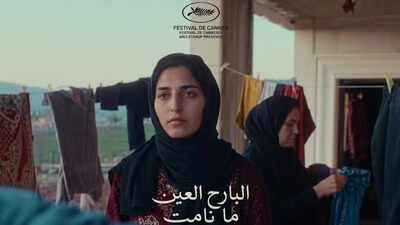
Cannes Film Festival 2026: Arab cinema shines at Cannes 2026 as Gulf filmmakers lead major festival categories world News
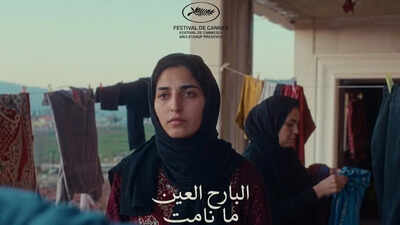
The 79th edition of the Cannes Film Festival 2026 is shaping up to be one of the strongest years ever for Arab and Middle Eastern cinema. From Palestinian and Moroccan stories to Egyptian industry collaborations and Iranian writers competing for the Palme d’Or, this year’s Cannes is sending a clear message: regional cinema is no longer on the sidelines, it is now the center of global filmmaking conversations.The festival, which runs from May 12 to May 23 on the French Riviera, leans heavily on international auteur-driven cinema rather than Hollywood spectacle. Critics and industry observers say the 2026 lineup reflects a broader global shift toward emotionally layered, politically aware and culturally rooted storytelling.Arab cinema is directly benefiting from that change.This year’s official selections include films from Morocco, Palestine, Egypt and Iran in key festival sections including Competition and Un Certain Regard. Industry insiders believe the presence of these films is another major step towards breaking down long-standing barriers for filmmakers from the Middle East and North Africa.The increasing momentum is visible beyond screening. Producers, distributors, investors and talent agencies are increasingly looking to Arab creators as audiences around the world demand more authentic and regionally based stories.
Cannes 2026 focuses on auteur cinema
Unlike recent editions filled with major studio premieres and blockbuster campaigns, Cannes 2026 is being described as a return to pure cinema.Festival organizers unveiled a lineup filled with acclaimed global filmmakers, including Pedro Almodovar. Asghar FarhadiHirokazu Kore-eda and Ryusuke Hamaguchi.Iranian director Farhadi’s new film Parallel Tales is one of this year’s most anticipated competition entries, especially given the ongoing tensions in West Asia. Observers say its inclusion highlights Cannes’ continued desire to stage politically and emotionally resonant cinema from the region.Meanwhile, Moroccan filmmaker Laila Marakchi earned a place in the Un Certain Regard section with La Mas Dulce, reinforcing North Africa’s growing influence at major international festivals. Palestinian filmmaker Rakan Mayassi also achieved selection in the same section with Yesterday I Didn’t Sleep.Industry watchers on Reddit and film forums have praised the lineup for prioritizing “arthouse cinema” and giving greater visibility to international voices over commercial studio franchises.The festival’s jury reflects the global direction of Cannes. The 2026 contest jury is led by South Korean filmmaker Park Chan-wook and includes members such as Demi Moore, Chloé Zhao and others. Ruth Negga.
Arab cinema expands presence at Cannes
The biggest sign of the growing influence of Arab cinema is the growing role of the Arab Cinema Center in Cannes.The organization returns to the festival with a four-day program created in collaboration with the Marché du Film, Cannes’s giant international film market. The initiative will bring together filmmakers, producers, distributors, talent agents and executives from the Arab world and beyond.This year the panels and discussions will focus on leadership, innovation, talent development, streaming opportunities and cross-border partnerships. Organizers say the event comes during a period of “rapid change” for the global entertainment business.Additionally, Egypt is strengthening its visibility at Cannes through the return of the Egyptian pavilion at the Marché du Film. Supported by the Cairo International Film Festival, the Egyptian Film Commission and El Gouna Film Festival, the pavilion is expected to serve as a networking and business hub for regional filmmakers.The pavilion won the Best Pavilion Design Award last year and returns with expanded partnerships involving production companies, film foundations and regional studios.
Indian cinema in Cannes 2026
India is also maintaining a visible presence at Cannes this year, albeit in a more organized and artistic form.A restored 4K version of the Malayalam classic Amma Ariyan has been selected for the Cannes Classics, marking the fifth consecutive year that an Indian restored film has entered the prestigious section. The restoration work was done by the Film Heritage Foundation.Emerging Indian talents are also gaining popularity. A student film from the Film and Television Institute of India was selected for La Cinéf, Cannes’ student-focused section dedicated to emerging filmmakers from around the world.Bollywood actress Tara Sutaria is also expected to make her Cannes debut this year amid international buzz about her upcoming project Toxic: A Fairytale for Grown-Ups.Overall, Cannes 2026 is committed to celebrating cinema that is intimate, artistic and globally diverse. And with Arab filmmakers commanding some of the festival’s most powerful conversations, this year could prove to be a defining moment for regional storytelling on the world stage.
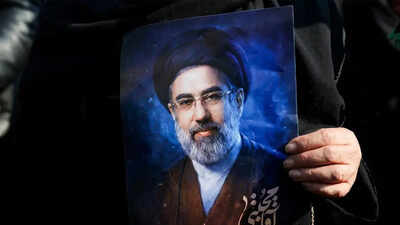
‘He was on the stairs’: Iran claims Mojtaba Khamenei was injured in US blast but ‘recovering’
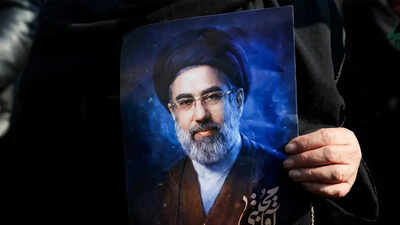
supreme leader of iran Mojtaba Khamenei Senior Iranian officials dismissed growing speculation over his condition and ability to rule, saying on Friday that he was in “good health” and suffered only minor injuries during the February 28 attacks.Officials insisted Khamenei is actively involved in state affairs and accused Iran’s enemies of spreading “rumors and false claims” about his health following the attack that reportedly killed his father, former Supreme Leader Ali Khamenei, and several senior Iranian figures.Mazhar Hosseini, head of protocol in the Office of the Supreme Leader, said Mojtaba Khamenei suffered only limited injuries during the attack. According to Iran International English, Hosseini said Khamenei suffered injuries to the knees, lower back and the area behind the ears.“Khamenei was not at the place where the attack took place. They attacked his house where his wife died. He was going up the stairs when the missile hit him. He was on the stairs when the explosion knocked him to the ground,” Hosseini said while addressing supporters, according to the Iranian International English report.He said, “Thank God, he is in good health. The enemy is spreading all kinds of rumors and false claims. They want to see him and find him, but people should be patient and not rush. He will talk to you when the time is right.”Hosseini also admitted that “a small piece of shrapnel had hit him behind his ear” but insisted that the wounds were healing and that Khamenei was now “completely healthy”.The comments come amid increasingly contradictory reports on Mojtaba Khamenei’s medical condition, with several international media reports claiming he suffered serious injuries during the attacks.Earlier this month, Reuters, citing three people familiar with his inner circle, reported that the 56-year-old cleric suffered serious facial injuries and serious wounds to one or both legs during an attack on the supreme leader’s compound in central Tehran.The report also claimed that many of Ali Khamenei’s family members, including his wife and close relatives, were killed in the attack.According to the report, Mojtaba Khamenei remains mentally alert and continues to participate in major state decisions via audio conference, including discussions related to the ongoing conflict and negotiations with Washington.A separate CNN report, citing US intelligence assessments, said Mojtaba Khamenei has emerged as a central figure in shaping Iran’s war and negotiation strategy following recent US and Israeli attacks.The report said US intelligence agencies have not confirmed Khamenei’s whereabouts since he assumed leadership following the death of his father.CNN further reported that Khamenei is avoiding electronic communications during medical treatment for burns and other injuries affecting parts of his face, arms, torso and legs and instead relying on trusted couriers and face-to-face meetings.Meanwhile, Donald Trump on Friday said the United States expects a response from Iran regarding Washington’s proposal aimed at ending the ongoing conflict in West Asia. “We’ll probably hear from them tonight,” Trump told reporters ahead of a trip to Virginia.Asked whether Iran was deliberately delaying the process, Trump said, “We’ll find out soon enough.”Trump also rejected suggestions that Washington had only made a “one page offer” to Iran. Trump said, “Well, it’s more than a one-page proposal. It’s a proposal that basically says they’re not going to have nuclear weapons; they’re going to hand us nuclear dust and a lot of other things that we want.”Asked if Iran had accepted the terms, Trump responded, “They have agreed. When they agree, it doesn’t mean much because the next day they forget they agreed.”
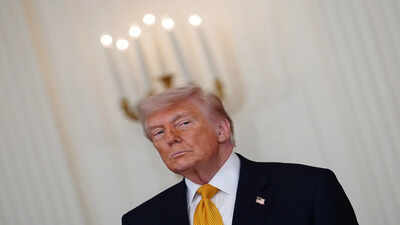
More hunting, fewer borders: Trump lifts restrictions on national parks and wilderness areas
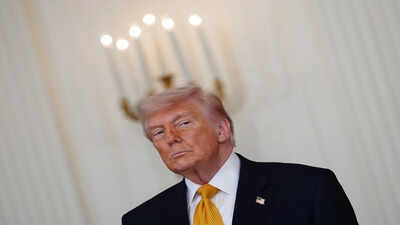
The Trump administration is pushing to expand hunting and fishing access in national parks, wildlife refuges and wilderness areas by rolling back many existing restrictions on federal lands.In January, Interior Secretary Doug Burgum directed agencies under the U.S. Department of the Interior to remove “unnecessary regulatory or administrative barriers” to hunting and fishing. Agencies must also justify any restrictions they wish to place.“Expanding opportunities for the public to hunt and fish on Department-managed lands not only strengthens conservation outcomes, but also supports the rural economy, public health, and access to America’s great places,” Burgum wrote. “The Department’s policy is clear: public and federally managed lands must be open to hunting and fishing unless a specific, documented, and legally supported exception applies.”
What changes can happen in the parks
The order applies to 55 National Park Service sites in the lower 48 states, according to the National Park Conservation Association.Its review found that some places have already begun lifting restrictions on hunting stands that damage trees, training hunting dogs, using vehicles to retrieve hunted animals, and hunting on trails.Specific park changes include:
- Cape Cod National Seashore in Massachusetts may allow hunting during spring and summer
- Lake Meredith National Recreation Area in Texas may let hunters clean up after animals in park bathrooms
- Jean Lafitte National Historical Park and Preserve in Louisiana may allow alligator hunting
The move comes as hunting participation in the US continues to decline.According to the US Fish and Wildlife Service and US Census data, only 4.2% of Americans over the age of 16 identified as hunters in 2024. This has reduced revenues for state wildlife agencies that depend on hunting license sales and taxes on guns and ammunition.Hunting advocates and conservative policymakers are looking for ways to keep hunting active by expanding public land access, creating more hunting opportunities, and encouraging women and children to participate.
Current hunting access on National Park Service lands
Hunting is already permitted on approximately 51 million acres of National Park Service land in 76 sites, although only about 8 million acres are in the United States, the rest primarily in Alaska.Fishing is permitted at 213 sites.While national parks generally follow state hunting and fishing laws, they often add strict local rules to protect visitor safety and wildlife, including limits on hunting near trails or buildings.Dan Wenk, former superintendent of Yellowstone National Park and former deputy operations director of the NPS, said the rules were created through years of public discussion and collaboration.“The process with this administration never gets in the way of many things,” Wenk said in a telephone interview with The Associated Press. “It was never a big issue. I would love to know the problem we are trying to solve. Then I can understand the cost of solving it in terms of resources and visitor safety.”Ellen Leslie, former head of the National Park Service’s Biological Resources Division, also criticized the move, saying it undermines science-based management.“I don’t want to take my young grandchildren to a park unit to see a hunter drag a dead elk into the visitor center parking lot. Nor do I want to go into a restroom where hunters are cleaning up their game,” Leslie said in a text to the AP. “There is a time and place for hunting, trapping and fishing… But this does not mean that every space has to be open to every activity, especially at the expense of others and at the expense of our public resources.“
Interior Department defends order
Interior Department spokeswoman Elizabeth Peace called the order a “general approach to public land management.”He said any closures or restrictions necessary for public safety, legal compliance or resource conservation will remain in place.“For decades, sportsmen and women have been some of the strongest stewards of our public lands,” he said, “and this order ensures that their access is not unnecessarily restricted by outdated or overly broad limits that are not required by law.”Hunting and conservation groups that support expanded access have praised the order. The Theodore Roosevelt Conservation Partnership states that it supports both wildlife management and outdoor traditions. Ducks Unlimited also supported the move, saying, “This process will streamline federal regulations, make them more consistent with existing state regulations, and provide greater public-land access for outdoor recreation. “Secretary Burgum, thank you for putting America’s hunters and fishermen first.”