

No one country can ensure balance of power in Asia, India’s role indispensable: US official india news
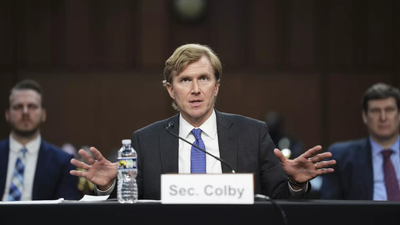
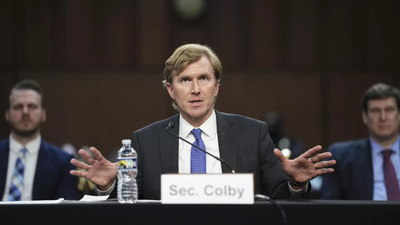
Signaling a more transactional and interest-driven focus in its relations with India, the US has said it aims to work with India to ensure peace and stability in the Indo-Pacific that is not founded in naivety or “grotesque abstractions” like the rules-based international order, but in strength, reason and rigorous cooperation. As he laid out the US vision for relations with India in the geopolitical and defense spheres, Under Secretary for War Policy Elbridge Colby on Tuesday said no single country can maintain a stable balance of power in Asia. Instead, he said, stability will depend on the collective contribution of capable states that have an interest in maintaining a free and open Indo-Pacific. Notably, while he underlined India’s “indispensable” role in maintaining a free and open Indo-Pacific, Colby in his speech made no mention of the Quad, the key US Indo-Pacific initiative first revived by the Trump administration. However, this mechanism appears to have lost some of its importance with Washington after the President returned to the White House as the US focus shifted from soft power initiatives to shared security outcomes and burden-sharing. The top US official was addressing an event at Ananta Centre. Since there is no information yet on whether Trump will come to India for the Quad summit this year, hopes for the leaders’ meeting are now pinned on the France G7 summit in June, which is likely to be attended by leaders of all the Quad countries. Colby took a dig at Europe and stressed that the US is still a rising power under Trump, but the same cannot be said about some of Washington’s traditional partners, while the US urges them to reinvent themselves. India, he said, is very different as a “rising power”. “As a result, the United States believes that India will play a central role in ensuring a favorable balance of power in the Indo-Pacific. In this context, a strong, confident India is not only good for the Indian people. It’s good for the Americans too,” said Colby, who is in India to discuss the implementation of the US-India Major Defense Partnership Framework. The official suggested that the US may not be interested in building a relationship based only on shared democratic values, as he said the Indian-US partnership is rooted in pragmatism. Colby said, “Consistently, the US approach to strategic partnerships is interests-based and realistic, shaped by geopolitics and incentives as opposed to cosmetic aspirations or detached idealism.” He said Washington wants partnerships with strong, self-confident states, not dependence. Colby also supported External Affairs Minister S Jaishankar’s remarks that a nationalist foreign policy approach is likely to approach the world with more confidence and more realism, saying this approach resonates with the US. Underscoring the importance of “strategic candor” in the relationship, Colby said strong partnerships benefit from honesty, respect and strategic clarity. As bilateral relations are showing signs of improvement after one of their worst phases in recent times, Colby also said the US and India do not need to agree on everything to cooperate effectively, as long as their interests and objectives are increasingly focused on the most basic issues. Differences and even disputes are fully compatible with deep alignment and cooperation on strategic matters, he said. The official also underlined the strategic centrality of military power to a stable balance in the region and the importance of defense industrial cooperation between India and the US.