
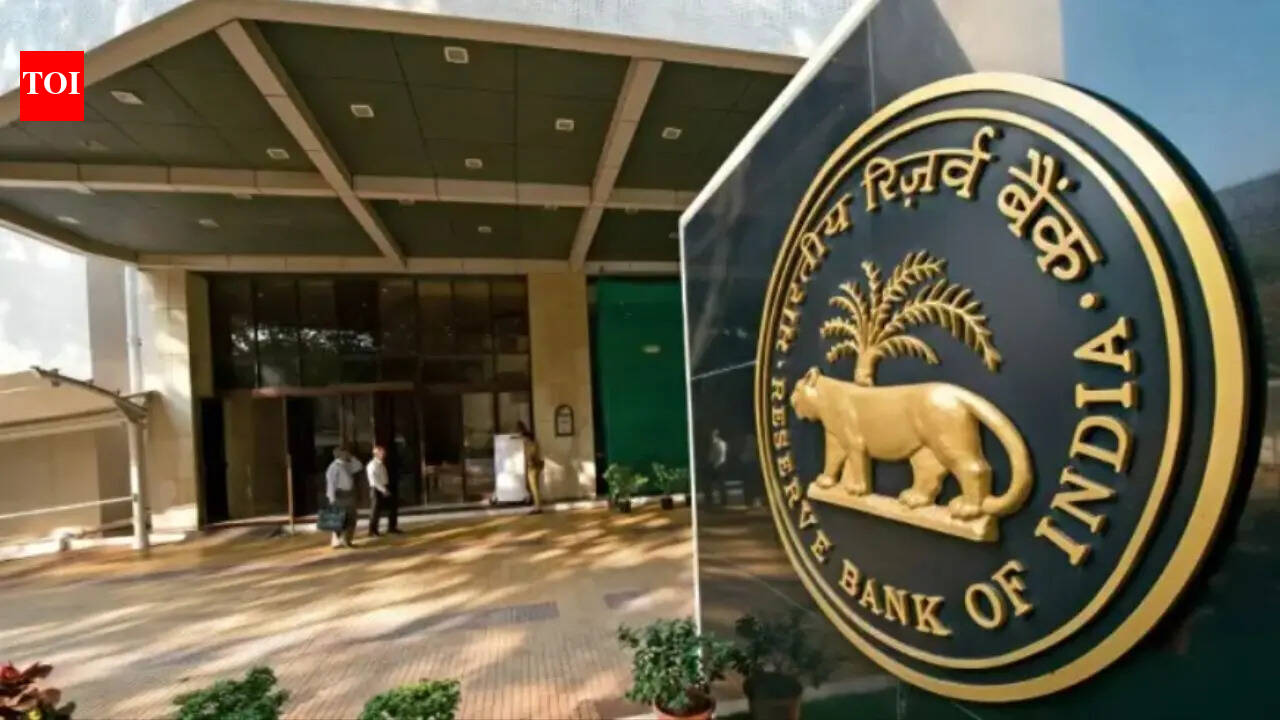

RBI cuts growth rate due to West Asia crisis, increases inflation forecast
MUMBAI: Caught between a slowing economy and the threat of fresh price hikes due to conflict in West Asia, the RBI on Friday left the repo rate unchanged at 5.25%, cut its growth forecast for fiscal 2027 and raised inflation estimates, while signaling that inflation risks could spread beyond fuel and commodities to the entire economy if supply-side pressures persist.Governor Sanjay Malhotra refrained from tightening policy but left no doubt that the central bank is wary of “normalizing” inflation. While high oil prices and disrupted supply chains have already begun to drive up costs, the Monetary Policy Committee preferred to wait for more clarity on the duration and intensity of the conflict before taking action.“Although the impact of cost pressures is beginning to be visible, further disruptions are likely to weigh on economic activity, including increases in energy and other input prices,” the governor said.The MPC voted unanimously to keep the policy repo rate unchanged at 5.25% and maintain the neutral stance. The decision reflects an effort by the central bank to balance inflation risks against emerging signs of a slowdown in economic activity. Citing the deteriorating global environment, the RBI has reduced its growth forecast for fiscal year 2027 to 6.6% from the earlier estimated 6.9%. Quarterly growth is now estimated at 6.6% in Q1, 6.3% in Q2, 6.5% in Q3 and 6.8% in Q4. The downgrade marks the RBI’s acknowledgment that the economic fallout from the conflict is no longer limited to energy markets. “Disruptions in global supply chains, volatility in global financial markets and weather-related shocks are posing downside risks to the domestic growth outlook,” Governor Malhotra said.The inflation outlook has deteriorated further. The RBI raised its FY27 CPI inflation forecast to 5.1% from 4.6%, a 50-basis-point revision that largely reflects the rise in crude oil prices. The Indian basket has averaged around $110 a barrel over the past two months, much higher than the $85 assumption used in the April policy review. Malhotra hinted at policy action if prices remain stable. Food inflation is further threatened by a weak monsoon-El Nino combination. RBI now sees inflation at 4.2% in Q1, 5.1% in Q2, 5.9% in Q3 and 5.4% in Q4, with core inflation at 4.7%. At present, Mint Road is on fire. But if input-cost inflation spreads and expectations tighten, growth support could be helpful in fighting inflation. The RBI argued that India is entering this turmoil with stronger fundamentals than previous oil shocks and is ready to readjust policy as the situation evolves.