


H-1B visa fraud: Two Indian-origin men plead guilty in California; hired people for non-existent positions

Two Indian-origin men pleaded guilty in the H-1B scam in California, where they promised people jobs at the University of California – and fooled both the beneficiaries and USCIS.
Two Indian-origin men have pleaded guilty to conspiring to commit H-1B visa fraud where they hired foreign nationals at the University of California by promising them jobs when the university had no such requirement. Sampath Rajidi, 51, and Sridhar Mada, 51, submitted H-1B visa petitions for multiple beneficiaries between June 2020 and January 2023. After these petitions were approved, both of them gave these H-1Bs to other customers. Sampath Rajidi operated two visa servicing companies, S-Team Software Inc. and Uptrend Technologies LLC. Maada’s position as Chief Information Officer of the California University of Agriculture and Natural Resources helped the duo plan this fraud. MADA had inside information about the university and had supervisory authority but could not hire H-1B workers for his department without permission from higher officials. But as part of the conspiracy, Mada supplied his name and position on H-1B petitions, leading USCIS to believe that he was actually recruiting for the university. Court documents claimed they both knew the positions listed in the petitions did not exist and supplied H-1Bs to other clients. “They submitted false information knowing that such information was material to U.S. Citizenship and Immigration Services (USCIS) visa granting decisions. As a result of their conspiracy, Rajidi and Mada gained an unfair advantage over other companies and depleted the pool of H-1B visas available to competing companies,” court documents state. Both defendants face a maximum statutory penalty of five years in prison and a $250,000 fine. The administration has launched a crackdown against H-1B visa abuse, in what has turned out to be a complex operation involving fraud at multiple levels. Some staffing companies like Sampath take money from H-1Bs while others take regular cuts in their payouts. Some scams run on fake promises where beneficiaries do not get the jobs they were promised.
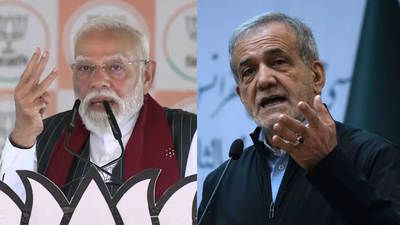
Evening News Wrap: PM Modi promises free healthcare worth Rs 5 lakh for women in Bengal; Iran attacks America on nuclear rights and other issues. india news
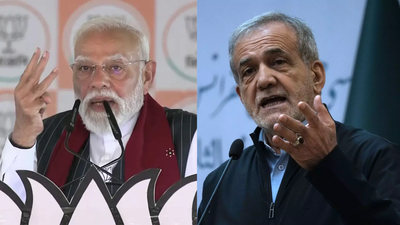
- PM Modi hit out at TMC as he intensified his Bengal campaign and promised free healthcare worth Rs 5 lakh and women-centric benefits.
- Iranian President Pezeshkian criticized the US and Donald Trump, questioning their authority to restrict Iran’s nuclear program.
- Two Indians were shot dead near Gurdwara Mata Sahib Kaur Ji in Italy during the Vaisakhi gathering late on Friday night.
- Deepika Padukone and Ranveer Singh announced their second pregnancy through a social media post.
- Kolkata Knight Riders’ score quickly reached 21/2 as Jofra Archer and Nandre Berger dismissed Tim Seifert and Ajinkya Rahane in quick succession.
Here are the top 5 news of the day
PM Modi targeted TMC Promised Rs 5 lakh Free healthcare for women in bengal
PM Modi stepped up his election campaign in West Bengal, focusing on women-centric welfare schemes and criticizing Trinamool Congress for opposing the Women’s Reservation Bill. At a rally in Bankura, he promised free healthcare up to Rs 5 lakh, financial assistance for pregnant women and free dialysis if the BJP comes to power. Read the full story
‘Who is he?’: Pezeshkian hits out at Trump over nuclear remarks
Iranian President Massoud Pezeshkian questioned the US authority to restrict Iran’s nuclear program and said Washington has no legal basis to deny Iran access to its technology. He also criticized Donald Trump, asking, “Who is he who deprives a country of its rights?” Read the full story
Shooting in Italy: Two Indians killed near place of worship in Bergamo
Two Indian men were shot dead in Covo in Italy’s Bergamo province while they were coming out of a warehouse being used as a place of worship during Vaisakhi celebrations. The firing took place late Friday night. The victims were identified as Raginder Singh, 48, of Covo, and Gurmit Singh, 48, of Agnadello. Read the full story
Deepika Padukone, Ranveer Singh announce second pregnancy
Deepika Padukone and Ranveer Singh announced their second pregnancy through a heart-touching social media post. The post features a family photo which seems to hint at Deepika’s baby bump, which has created a stir among fans and the film industry. Read the full story
IPL 2026: KKR made a splash in the beginning while chasing the target of 156 runs against Rajasthan Royals
KKR, chasing the target, got off to an early start as Rajasthan Royals clean bowled Tim Seifert for a golden duck with Jofra Archer on the very first ball. Nandre Berger then reduced the damage by dismissing Ajinkya Rahane for a duck on his second ball, leaving Kolkata Knight Riders at 21/2 after 3 overs while chasing 156 against the Royals. Follow live updates
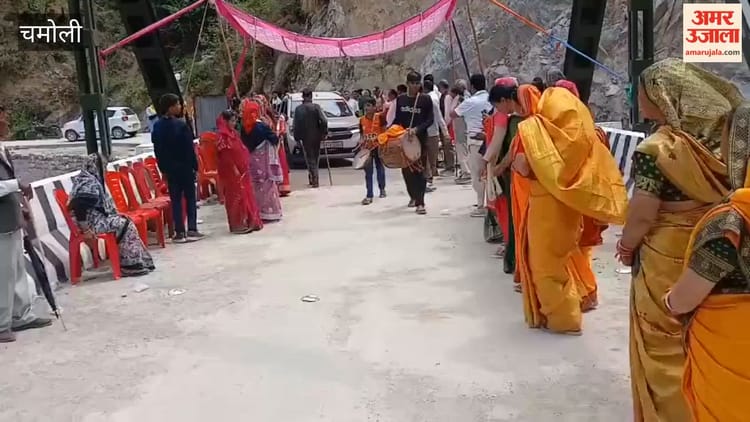
वीडियो: चांदपुर पट्टी क्षेत्र के 30 से अधिक गांवों को जोड़ने वाले नवनिर्मित पुल का उद्घाटन, 16 वर्षों से प्रतीक्षित – चांदपुर पट्टी क्षेत्र के 30 से अधिक गांवों को जोड़ने वाले नवनिर्मित पुल का उद्घाटन
अमर उजाला प्रीमियम वीडियो केवल ग्राहकों के लिए उपलब्ध है
प्रीमियम वीडियो
सभी विशेष आलेख
मुफ़्त ई-पेपर
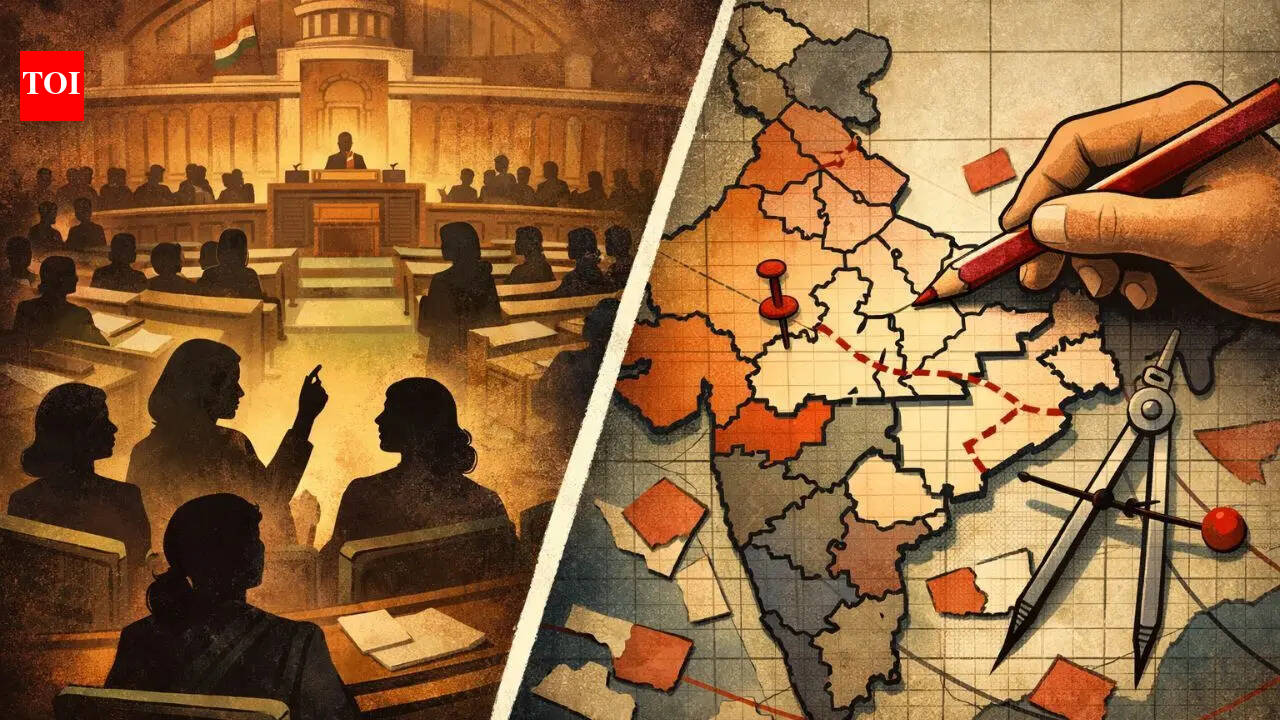
Delimitation decoded: What the Centre tried to do, why opposition shot it down & what happens next | India News
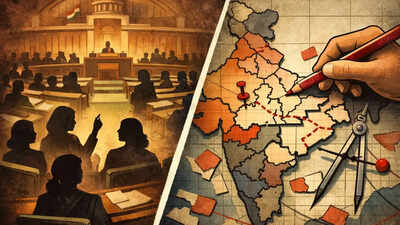
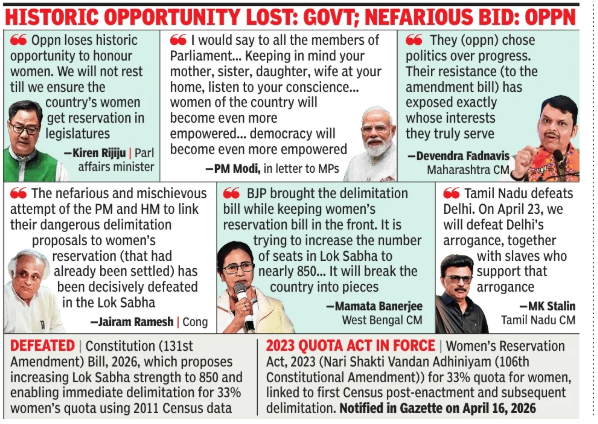
NEW DELHI: Parliament has voted down the government’s proposal to expand the Lok Sabha from 543 to 850 seats, implement 33% reservation for women, and redraw constituencies accordingly, but the defeat has not closed the issue. If anything, it has exposed how a once-technical constitutional mechanism has become one of the most consequential unresolved questions in electoral politics.It is important to note that the Women’s Reservation Act 2023, which provides for a 33% reservation for women in the Lok Sabha and state legislative assemblies, came into force on April 16, 2026 amid the ongoing debate on proposed bills.The opposition was unambiguous about these bills. “This defeat is not of women’s quota but of delimitation by the backdoor,” said Revolutionary Socialist PartyMP N K Premachandran. Samajwadi Party chief Akhilesh Yadav called it a “defeat of BJP’s malice.” Trinamool Congress, whose 21 MPs had been urgently mobilised by the INDIA bloc, proved critical to the margin. After the vote, Congress’s Rahul Gandhi spoke personally with TMC’s Abhishek Banerjee to thank him for the support.Congress’s Priyanka Gandhi Vadra was direct: “PM Modi maliciously linked women’s quota to delimitation based on the 2011 census. His hollow attempt to pose as the messiah of women has failed today.”CPI MP Sandosh Kumar put the charge differently- that women should “see through BJP’s approach of delaying women’s quota by linking it to the census and delimitation.”On the government side, home minister Amit Shah, as the bill’s fate became clear, offered to adjourn the House and return with an amended bill. “I have the amendment prepared,” he said, pressing the government’s commitment to the 50% seat expansion. Prime Minister Narendra Modi made a final appeal before voting, asking MPs to “reflect on your conscience” and act on behalf of women across the country.The bill failed. Two related pieces of legislation, including the one to set up a delimitation commission, were not tabled in the Rajya Sabha. Parliament was adjourned.
What government proposed
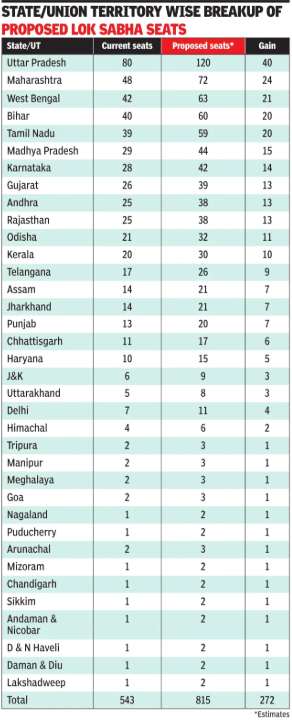
The government’s plan was architecturally different from any previous delimitation exercise. Its central proposal was to increase total Lok Sabha seats by 50%, from 543 to 850, while keeping each state’s proportional share of seats unchanged. Uttar Pradesh, which currently holds 80 seats, would have received 120; Tamil Nadu, with 39, would have received 58 or thereabouts.The mechanism for women’s reservation flowed from this expansion. If every state’s seats increased by 50%, one-third of the new total — 33% — could be reserved for women, equalling precisely the one-third of the expanded total. The arithmetic was designed to be self-contained: no state would lose share, and the reservation obligation would be met without redistributing existing seats.The proposed delimitation commission, as described in the bill circulated to lawmakers, would be headed by a former Supreme Court judge, with the chief election commissioner or a nominee as a member, consistent with past practice.The exercise for the Lok Sabha, government sources made clear, was to be delinked from the 2011 census. Constituency boundaries would be redrawn; the proportional shares of states in the Lok Sabha would not change. In that structural sense, it was closer to the 2008 delimitation exercise than to the full reallocation exercises of 1952, 1963, or 1973.
.
Why opposition read it as threat
The bill’s legal architecture contained a provision that drew sustained fire. As Vidhi Centre for Legal Policy’s Swapnil Tripathi, lead at Charkha (Centre for Constitutional Law), explained: “Currently, Article 82 requires that delimitation of constituencies and readjustment of seats among states be undertaken after completion of every census, using population data of that census. The present bill removes this obligation and instead leaves it to parliament to determine both timing of delimitation and census to be used for the exercise. Importantly, this transforms what was a constitutional obligation into a matter of legislative discretion.”That shift from constitutional mandate to parliamentary choice was the provision that most alarmed critics. It would have allowed parliament to decide, at will, which census data to use and when to act, stripping Article 82 of its periodic, automatic character.Congress lead speakers Gaurav Gogoi and K C Venugopal accused the government of using women’s quota as “cover” for a larger electoral reengineering. Gogoi invoked the American term explicitly- BJP was using delimitation “like gerrymandering in the US, where seats are redrawn for political exploitation.” He pointed to what he called precedents in Jammu & Kashmir, where a delimitation commission used census 2011, and in Assam, where the election commission used census 2001, bypassing norms of geographical contiguity and uniformity. “What was done in Assam and J&K, government wants to do it in the entire country,” he said.DMK chief M K Stalin, who had led protests in Tamil Nadu, said his party’s concern was squarely about delimitation–”which requires careful thought to ensure it is fair, especially for southern states.” He said the government should have delinked women’s reservation from delimitation entirely.Congress challenged the government to implement women’s reservation immediately in the existing 543-seat House without linking it to census or delimitation. The government declined.
.
Stakes for southern states
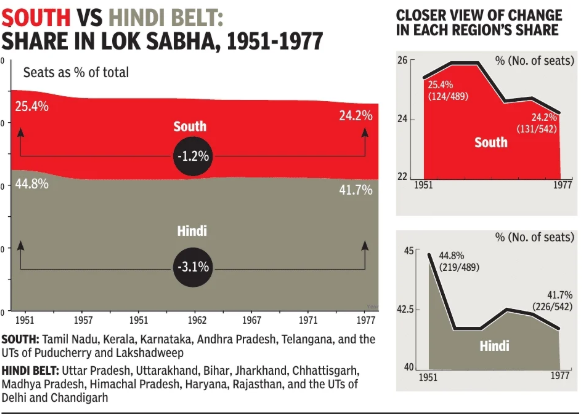
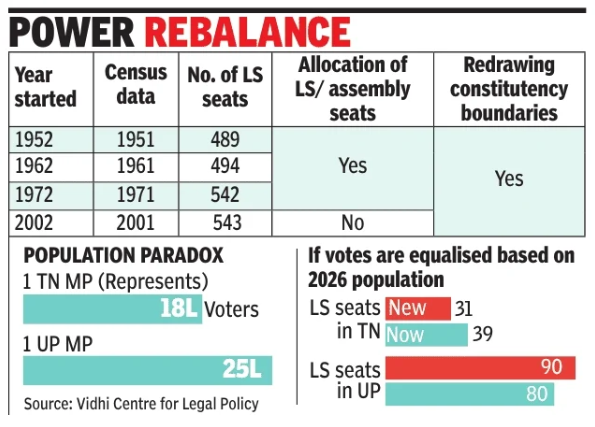
The underlying anxiety that animated the southern bloc is rooted in demography and mathematics that are not in dispute.India’s seat allocation in the Lok Sabha has not been updated since 1977. It rests on the 1971 census. In the five decades since, population growth has been sharply uneven. Northern states Uttar Pradesh, Bihar, Madhya Pradesh, Rajasthan grew faster. Southern states Tamil Nadu, Kerala, Karnataka, Andhra Pradesh invested earlier in public health and fertility reduction, and their populations stabilised sooner.Based on 2011 census data, Tamil Nadu has a population of approximately 7 crore and sends 39 MPs to the Lok Sabha. Uttar Pradesh has a population of roughly 20 crore, nearly three times as large, and sends 80. A Tamil Nadu MP represents approximately 18 lakh voters; and a UP MP represents approximately 25 lakh.Vidhi Centre for Legal Policy’s research quantifies what a strict population-based delimitation could produce: going by projected 2026 population, Tamil Nadu could fall to 31 Lok Sabha seats while Uttar Pradesh could rise to 90. More populous northern states have reason to argue their representation has been frozen unjustly. But southern states–which implemented family planning successfully, raised literacy, and reduced fertility–fear they are being penalised for effective governance.The government’s expansion plans–keeping proportional shares frozen while growing the overall House–was presented precisely as the resolution to this conflict. Each state keeps its share; all states gain seats; women get their quota. Critics, however, argued that the real issue was not the immediate arithmetic of the current bill, but the constitutional discretion it would have created for all future delimitation exercises.
.
What delimitation actually means
The word is used loosely in political debate to describe three distinct processes. The first is the allocation of seats among states — how many of the Lok Sabha’s total seats each state receives. This is the most consequential dimension and the one frozen since 1977. The second is the redrawing of constituency boundaries within states — carving a state’s allotted seats into geographic units of roughly equal population. The third is the reservation of specific constituencies for Scheduled Castes and Scheduled Tribes, placed in areas where those communities form the largest share of the local population.These three processes have different constitutional triggers and very different political stakes. The 2008 delimitation exercise, for instance, redrew boundaries within states using 2001 Census data — but left the inter-state seat distribution entirely untouched. The current debate is almost entirely about the first category, which has not moved in over five decades.
The Constitutional framework
The architecture begins with Article 81 — seats in the Lok Sabha shall be allocated broadly in proportion to state populations. Article 82 mandates that upon completion of each census, allocation and constituency division shall be readjusted by such authority as Parliament may by law determine. Article 170 mirrors this for state assemblies.Article 327 empowers Parliament to make laws on all matters relating to elections, including delimitation. Article 329(a) removes courts from the picture: the validity of any law relating to the delimitation of constituencies or the allotment of seats “shall not be called in question in any court.”The original design was automatic: every census triggered a readjustment, keeping representation tethered to population. It was a commitment to equal citizenship — one person, one vote, one value.
The Freeze: Why it happened
In 1976, the 42nd constitutional amendment suspended inter-state seat revision until after the 2001 census, freezing Lok Sabha seats at 543. The stated rationale was protective — states that had successfully implemented family planning should not be penalised in representation relative to faster-growing states.In 2001, the 84th constitutional amendment extended the freeze to the first census after 2026. The delimitation commission’s own guidelines, issued in 2002 under Secretary Shangara Ram, recorded the consequence plainly: “the total number of existing seats as allocated to various states in the House of the people on the basis of 1971 census shall remain unaltered till the first census to be taken after the year 2026.“The 87th constitutional amendment (2003) permitted a partial exercise using 2001 data — constituency boundaries within states could be redrawn, and SC/ST reserved seat calculations updated — without altering state-wise seat totals. The 2008 delimitation order resulted from this partial exercise. It redrew boundaries. It did not reallocate seats. India has now operated under 1971 population figures for over five decades.
.
How a delimitation exercise proceeds
When the next exercise is triggered, it will follow a structured, multi-stage procedure documented in the delimitation commission’s official guidelines.Parliament first enacts a new delimitation act — each exercise requires fresh legislation, and the old act is repealed. The Union government then constitutes a delimitation commission, chaired by a retired Supreme Court judge, with the chief election commissioner and relevant state election commissioners as ex-officio members. For each state, the commission associates five MPs and five MLAs as nominated members. These associate members can attend hearings, consult on working papers, and submit dissenting notes. They cannot vote. They cannot block final orders.The commission then prepares working papers covering district-wise population data, seat entitlements, SC/ST population distributions, and proposed constituency boundaries. Guidelines specify that constituencies must be “geographically compact areas” with regard to “physical features, existing boundaries of administrative units, facilities of communication and public convenience.” A deviation of 10 percent plus or minus from the state or district average population is permissible where geography demands it.Draft proposals are published in the Gazette of India and in state gazettes, in at least two vernacular newspapers per state, with a deadline for public objections. Public sittings follow in each state. A final order, signed by the full commission, is then published. Copies are laid before the Lok Sabha and state assemblies, but — as the guidelines confirm — “no modification shall be permissible therein by them.” Parliament receives the orders. It cannot change them.The last such exercise, covering 28 states, took over six years from commission to final order.
The courts cannot intervene — and why
The insulation of delimitation from judicial review was definitively established in Meghraj Kothari vs Delimitation Commission (1967). The petitioner challenged a notification that converted his constituency, Ujjain, from a general to an SC-reserved seat, removing his right to contest it. The Madhya Pradesh High Court dismissed the petition on the short ground that Article 329(a) barred any such challenge. The Supreme Court upheld the dismissal.The court held that delimitation commission orders, once published in the Gazette, carry the same force as law made by Parliament itself under Article 327. The practical reasoning was explicit: if such orders could be challenged in courts, “any voter, if he so wished, could hold up an election indefinitely by questioning the delimitation of the constituencies from court to court.” Section 10(2) of the Delimitation Commission Act reinforced this — every such order “shall have the force of law and shall not be called in question in any court.“This does not mean all constitutional questions are foreclosed. Whether Parliament had authority to enact a particular enabling statute, or whether a commission exceeded its mandate, remains theoretically arguable in narrow circumstances. But courts have historically exercised great deference in this space, and the constitutional design strongly discourages litigation that would delay elections.
What happens next
The defeated bill has not resolved the underlying questions–it has deferred them. The census itself is overdue. Scheduled for 2021, it was delayed by the pandemic and houselisting of census has been started this year. The ‘caste census’–which was accepted by the government after opposition parties demanded it–will be done in the second phase. Without published census figures, the constitutional trigger under Article 82 cannot fire. Whether it will be completed in time to enable delimitation before the 2029 general election is uncertain.If delimitation proceeds, Parliament will determine what form it takes. An expansion of the House, constitutionally permissible, could soften proportional losses for southern states while meeting the women’s reservation mandate. A full population-based reallocation within the existing 543-seat cap would produce the gains and losses that drove this week’s confrontation. A further extension of the freeze remains a third option.The bill defeated in Parliament had proposed to strip Article 82 of its mandatory character, giving Parliament discretion over both timing and census data. That change is now off the table. But the underlying tension — between the democratic principle that each citizen’s vote should count equally, and the federal principle that states should not be penalised for effective governance — has not been resolved. It has been sent back to Parliament, and to the constitutional negotiation that will have to happen before 2029.Delimitation has never been purely about constituency boundaries. It is India’s recurring constitutional effort to reconcile two things that periodically fall out of alignment: the democratic imperative that every citizen’s vote count equally, and the federal imperative that the compact between states remain intact.The freeze of 1976 resolved that tension by choosing federation over arithmetic. The 84th amendment of 2001 extended that choice for another quarter-century. What happens after 2026 will define which principle governs India’s political geography for decades to come
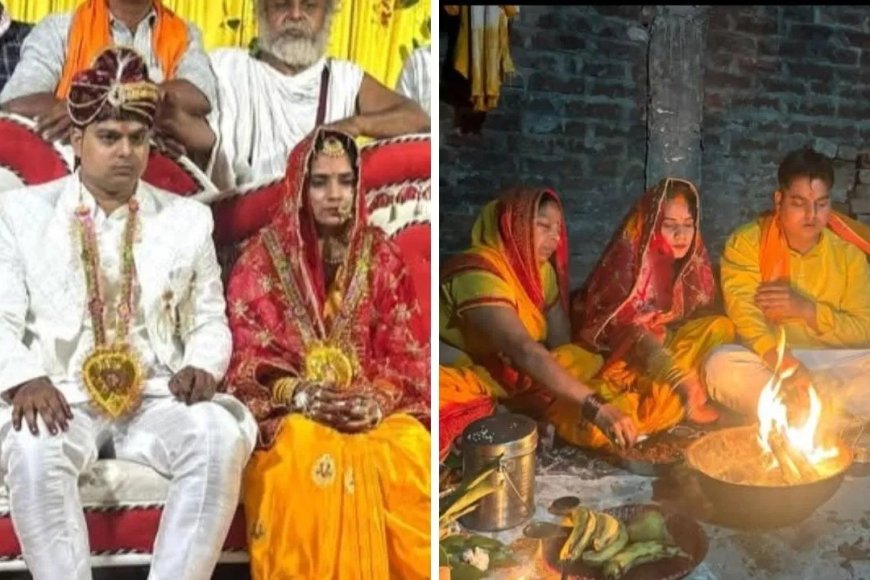
गाजीपुर में अंतरधार्मिक विवाह चर्चा में मुस्लिम लड़की ने हिंदू रीति-रिवाज से सात फेरे लिए
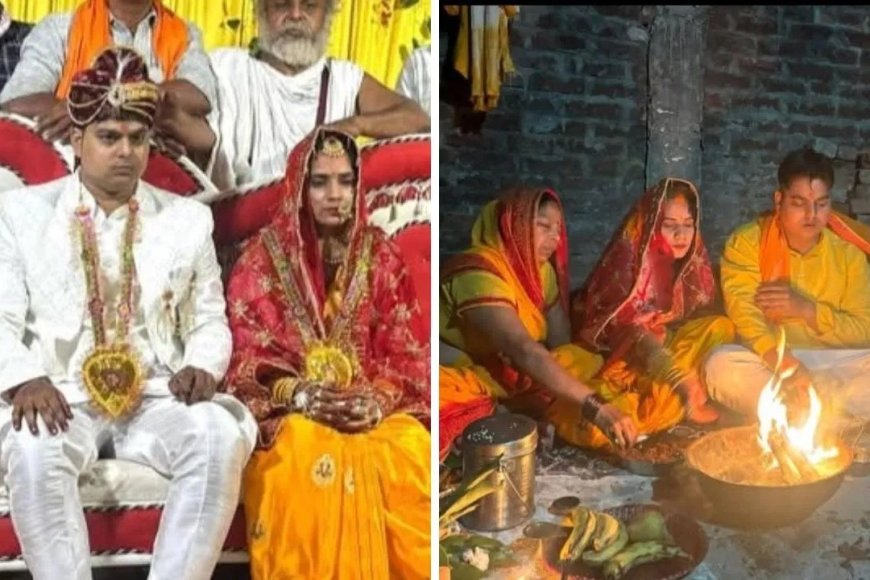
गाजीपुर जिले में एक अनोखी शादी इन दिनों चर्चा का विषय बनी हुई है. यहां एक मुस्लिम लड़की ने सनातन परंपरा के अनुसार हिंदू लड़के से शादी की। शादी में अग्नि के सात फेरे, सिन्दूर दान और वैदिक मंत्रोच्चार जैसी सभी रस्में पूरी की गईं। खास बात यह थी कि इस शादी के लिए शादी के कार्ड भी छपवाए गए थे, जिसमें लड़की का बदला हुआ नाम अंजू लिखा था। इस शादी को लेकर पूरे इलाके में उत्साह और चर्चा का माहौल है.
कैसे हुई ये अनोखी शादी?
यह मामला करीमुद्दीनपुर थाना क्षेत्र के विशंभरपुर ग्राम पंचायत का है. यहां के निवासी चंचल कुमार गौड़ की शादी भरौली कला निवासी स्वर्गीय निजामुद्दीन अंसारी की बेटी अंजू (बदला हुआ नाम) से हुई। दो-तीन दिन पहले लट्ठूडीह स्थित एक मैरेज हॉल में शादी हुई थी. मुस्लिम लड़की ने सनातन धर्म अपनाकर हिंदू रीति-रिवाज से शादी की और पूरे रीति-रिवाज के साथ सात फेरे लिए।
मंत्रोच्चार और परंपराओं के बीच विवाह
विवाह समारोह में मंडप के नीचे वैदिक मंत्रोच्चार के साथ सात फेरे और सिन्दूर दान की रस्म पूरी की गई। इस दौरान दूल्हा-दुल्हन दोनों बेहद खुश नजर आए. कार्यक्रम में शामिल लोगों ने नवविवाहित जोड़े को आशीर्वाद दिया और उनके उज्ज्वल भविष्य की कामना की. शादी में गांव के लोगों के साथ-साथ कई सामाजिक संगठनों के सदस्य भी मौजूद थे.
काफी समय से प्रेम संबंध था
जानकारी के मुताबिक दोनों के बीच काफी समय से प्रेम संबंध था. कुछ समय पहले ही दोनों ने घर छोड़ दिया था और इस रिश्ते से उनका एक बच्चा भी है। अब इस बच्चे को सामाजिक मान्यता दिलाने और रिश्ते को कानूनी जामा पहनाने के लिए दोनों परिवारों की सहमति से ये शादी कराई गई.
पारिवारिक सहमति एवं वर्तमान स्थिति
युवक के पिता हरिशंकर गौड़ ने बताया कि परिवार ने अब उनके बेटे और बहू के रिश्ते को स्वीकार कर लिया है. लड़की के माता-पिता और भाई भी इस शादी से सहमत हैं और समय-समय पर बेटी से मिलने आते हैं। फिलहाल ये नवविवाहित जोड़ा अपने परिवार से दूर किराए के मकान में अपनी जिंदगी गुजार रहा है.
समाज में चर्चा का विषय
यह अंतरधार्मिक विवाह पूरे इलाके में चर्चा का विषय बन गया है. कई लोग इसे सामाजिक सौहार्द और व्यक्तिगत फैसले की मिसाल मान रहे हैं. वहीं कुछ लोग इसे बदलते समाज की नई सोच के तौर पर भी देख रहे हैं.

Indian heritage spirits Mahua and Goa Feni debut in UK market. world News

Traditional Indian spirits Mahua and Goan Feni have entered the UK market this week, as demand for heritage and craft beverages grows.The launch is led by UK-based retailer Maharaja Drinks, which has introduced a new range featuring three feni variants and one Mahua spirit.Feni, a Goan spirit made from cashew apple or coconut palm juice, is represented through the offerings of Goenchi Feni and Goa Heritage Distillery, which also includes a spicy version, Oro de Goa. Products are made using small-batch distillation methods and natural ingredients.Mahua, a flower-based spirit traditionally associated with tribal communities in central India, is being introduced in Andhra Pradesh through a version produced by Desmondji.“India is home to spirits with extraordinary heritage, each rooted in centuries of craftsmanship and storytelling,” Maharaja Drinks CEO Annabel Jamieson was quoted as saying by news agency PTI. He said there is a growing interest in authentic country flavors among UK consumers.The producers said the move was aimed at attracting Indian expatriates to the UK as well as bringing the sentiment of Indian heritage to a wider audience. Yash Savardekar, co-founder of Goenchi Feni, said the expansion will help establish Feni as a globally recognized spirit.Desmond Nazareth, founder of Desmondji Mahua, described the drink as a long-overlooked product with deep cultural roots. “Mahua is a national treasure of India which has been hidden,” he said as quoted by PTI.Maharaja Drinks said the launch coincides with the expansion of its wider portfolio in the UK, which includes Indian vermouth and liquors made from botanicals, spices and fruits.The company, founded by Ipay and Adam Jacob, has been focusing on curated Indian wines, beers and spirits in the UK for the past two years.The move reflects a broader trend of increasing global interest in traditional and craft spirits.

‘You can’t violate a contract you never got’: Muzarabani’s camp condemns ‘excessive’ PSL ban | cricket news

New Delhi: Zimbabwean fast bowler blessings to muzarabani has found himself at the center of a growing controversy and his agency has strongly denied pakistan super leagueDecision to ban him for two years. The fast bowler, who is currently representing Kolkata Knight Riders in IPL 2026, was penalized for walking out of the PSL deal. IPL opportunity. However, their representatives have now issued a concrete clarification, insisting that no formal contract was ever signed, making the ban unfair.Muzarabani was initially included in the PSL as a replacement signing, reportedly on a deal worth PKR 11 million, before opting to join KKR as a replacement. Mustafizur Rahman. The move triggered disciplinary action from the Mohsin Naqvi-led PSL citing breach of commitment. But the player’s agency, the World Sports Exchange, has strongly protested, arguing that the basis of the punishment is flawed.
‘No contract, no breach’: Muzarabani’s agency calls ban excessive
In a detailed statement, the agency clarified that although Islamabad United had approached Muzarabani, the agreement remained conditional and was contingent on securing a no-objection certificate from Zimbabwe Cricket. Crucially, he pointed out that such an NOC requires a valid, signed contract – something that was never provided. “You cannot breach a contract you have never received,” the statement said, directly challenging the PSL’s stance.The agency further revealed that when KKR approached Muzarabani on February 27, there were no binding obligations preventing him from accepting the IPL offer. He described the ban as “incredibly excessive” and inconsistent with previous cases involving actual contractual violations. Calling it an administrative lapse, he urged the PSL to “politely withdraw the ban” and rectify what he called an error on the part of the league.Amidst the storm off the field, Muzarabani has started to make his mark on the field. After going wicketless on debut, he made an impressive comeback by taking four wickets against Sunrisers Hyderabad, underlining his importance to KKR despite limited opportunities so far.
voting
How do you see the role of agencies like World Sports Exchange in player contracts?
Jaipur Nikah, Kashmir Trail: How LeT’s ‘Khargosh’ used fake passport to flee India. india news
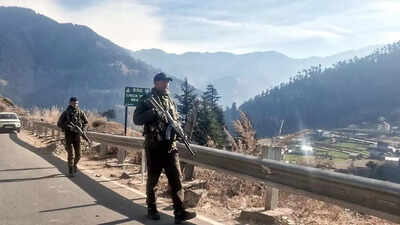
a top operator of Lashkar-e-TaibaOmar Harris alias “Khargosh” (Rabbit), who has roots in Khyber Pakhtunkhwa, is now believed to be in Saudi Arabia after fleeing India using a fake passport, officials told PTI on Sunday. The document was issued under the name “Sajjad”, in which Harris described himself as a resident of Rajasthan. Officials said the investigation into the Lashkar-e-Taiba terror module is being led by Srinagar Police, which has shared details with central agencies, raising concerns over systemic lapses enabling such abuses.The case registered by Jammu and Kashmir Police earlier this month is likely to be handed over National Investigation Agency (NIA). Meanwhile, important details have already been shared with the state police forces to take prompt action and plug critical deficiencies, officials told PTI.Contrary to earlier reports linking Omar Harris to Karachi, investigators have now established that he hails from Khyber Pakhtunkhwa, Pakistan.He reportedly joined Lashkar-e-Taiba to escape police action, before the terrorist organization pushed into Jammu and Kashmir in 2012, with several arson cases pending against him in Karachi.Harris earned the nickname “Rabbit” due to his ability to move quickly and avoid safety nets. According to investigators, after infiltrating the Kashmir Valley from the northern side, he stayed in Bandipora and Srinagar, and eventually married the daughter of a Lashkar-e-Taiba Over Ground Worker (OGW). The Nikah was conducted in Jaipur under his fake identity “Sajjad”.Officials said the marriage documents later became crucial in supporting his application for an Indian passport, a revelation that has raised serious questions about flaws in the verification systems. The revelation of the interstate module by the Srinagar Police has exposed systemic flaws, particularly how passports can be issued in Rajasthan despite established checks. Also read: Not card but code, identification is done through QR in terror affected PahalgamInvestigators believe Harris fled to Indonesia and later went to Saudi Arabia between 2024 and 2025 using another forged travel document. Efforts are now underway through diplomatic channels to secure his deportation.Fresh details emerged as Srinagar Police busted a “deep-rooted” inter-state LeT module with the arrest of five operatives, including Pakistani terrorist Abdullah alias Abu Huraira, who was on the run for 16 years and had established bases outside Jammu and Kashmir.The arrest of Abdullah along with another Pakistani national Usman alias Khubaib is a major breakthrough, coming six months after we dismantled a “white-collar” terror cell linked to Faridabad’s Al Falah University.During questioning, Abdullah revealed details of his and Harris’s activities across India, particularly in Rajasthan, Haryana and Punjab. This included a Jaipur wedding, after which the bride’s father was detained for allegedly knowing about Harris’s real identity, officials said.The operation, launched on March 31 and closely monitored by DGP Nalin Prabhat, has also thrown light on LeT’s financing and financial networks. Investigators say the group relied heavily on forged identities and documents to build a multi-state network.Those arrested included three residents of Srinagar, Mohammad Naqeeb Bhat, Adil Rashid Bhat and Ghulam Mohammad Mir alias Mama, who were accused of providing shelter, food and logistics support. The network began to be exposed with the arrest of Naqeeb Bhat from Pandach area, where police recovered a pistol and incriminating material.During interrogation, Bhat admitted his links with Lashkar-e-Taiba, saying he purchased weapons from another associate, Adil Rashid of Zakura, and provided support to foreign terrorists. His revelations led the police to Mir and Rashid Bhat, both active operatives, and helped uncover several hideouts in the forested areas around Srinagar.Officials told both pakistani terrorist They are classified as ‘A+’ terrorists and had infiltrated into India about 16 years ago, and have been active in the Kashmir Valley over the years, “commanding” about 40 foreign terrorists, most of whom have been neutralized.The bust comes nearly six months after the “Al Falah module” was exposed in November 2025, when a Srinagar Police investigation revealed a network of radicalized professionals, many of whom were doctors.One of the accused, Omar-un Nabi of Al Falah University, was behind the blast in a car packed with explosives outside the Red Fort on November 10, killing more than a dozen people. Officials said he had previously made an unsuccessful attempt to join terrorist groups in 2016 and 2018.
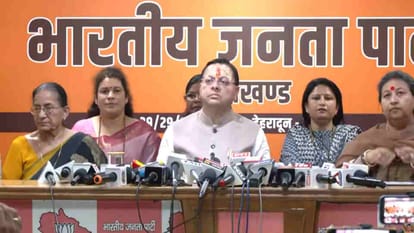
सीएम धामी ने की प्रेस कॉन्फ्रेंस: महिला आरक्षण बिल के विरोध को लेकर विपक्ष पर लगाए आरोप, कहा- ये नारी शक्ति का अपमान – सीएम धामी ने देहरादून में की प्रेस कॉन्फ्रेंस, महिला आरक्षण बिल के विरोध पर लगाए कई आरोप
द्वारा प्रकाशित: अलका त्यागी
अद्यतन रविवार, 19 अप्रैल 2026 03:43 अपराह्न IST
महिला आरक्षण बिल को लेकर सीएम धामी ने कहा कि जिस तरह से बिल का विरोध किया गया वह पूरी नारी शक्ति का अपमान है.

सीएम धामी ने प्रेस कॉन्फ्रेंस की
– फोटो : अमर उजाला ब्यूरो

Ram Gopal Varma described ‘Mafia Queens of India’ as an excellent aspect of crime storytelling. events movie news
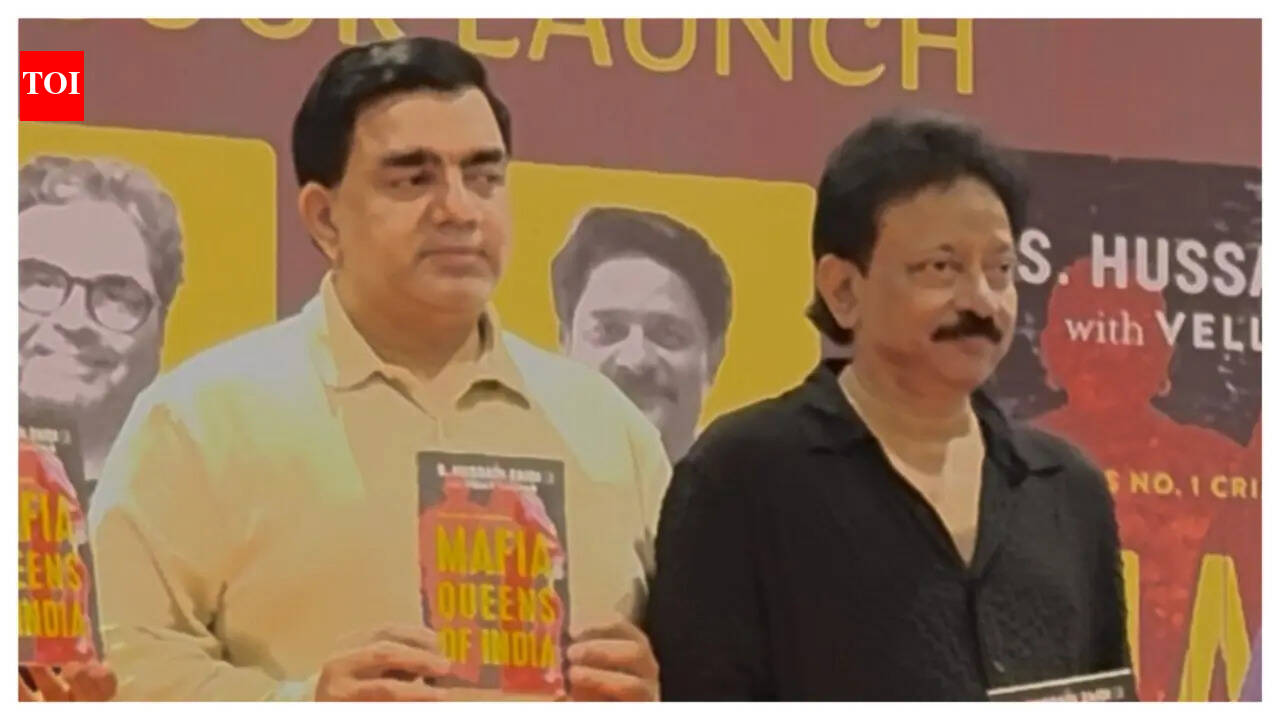
At the launch of S Hussain Zaidi’s latest book Mafia Queens of India, which he has co-written with his wife and veteran journalist Veli Thevar, filmmaker. Ram Gopal Verma There was sharp commentary on why this book stands out in a genre long dominated by familiar tropes.
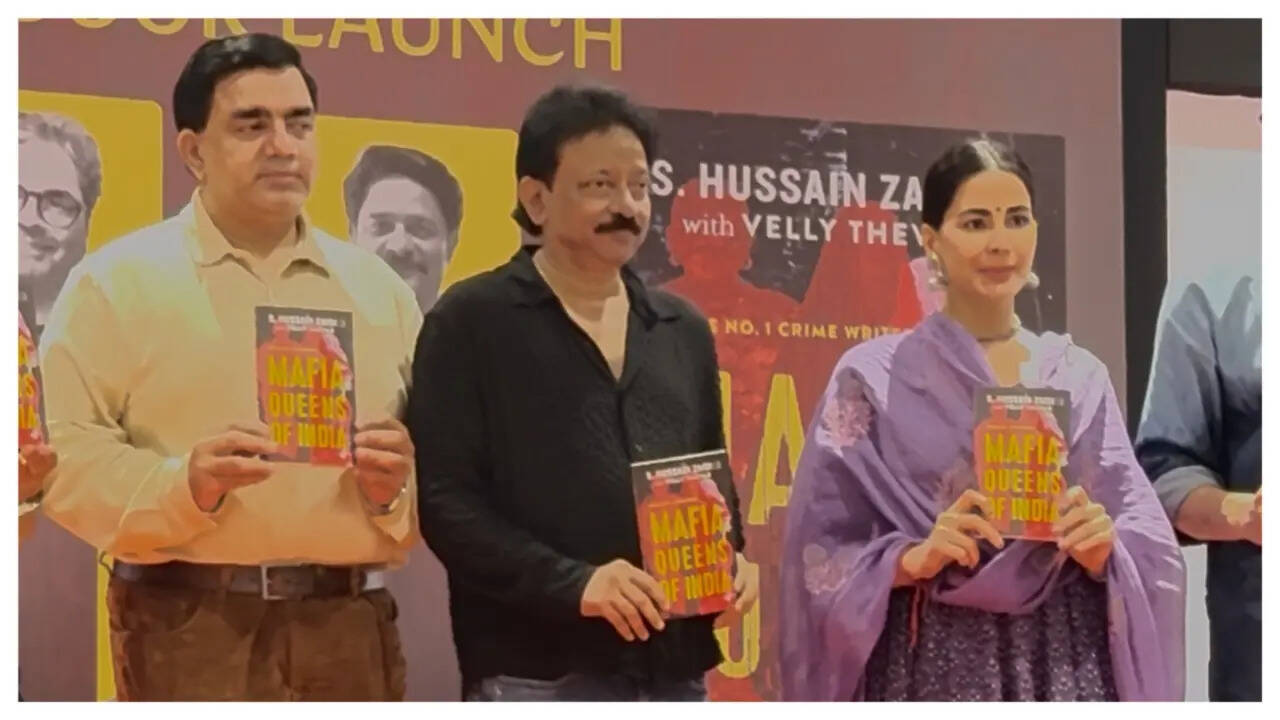
(L-R) S Hussain Zaidi, Ram Gopal Varma and Kirti Kulhari In a panel discussion moderated by actress Kirti Kulhari, Varma focused on what he sees as the book’s defining strength; Its focus is on the women of the underworld. “When you hear the word ‘mafia,’ the first thing you rarely think of is women,” she said, underscoring how deeply ingrained this notion is in the popular imagination. For him, that change in perspective is what gives the book its edge. “I think it’s a great angle in itself,” commented Varma, pointing to the narrative novelty of exploring the crime through female characters instead of the usual male characters. Drawing attention to the author’s background, Verma highlighted the depth of reporting behind the work. He said that S. Hussain Zaidi’s experience lends authenticity to the stories, making them more than dramatic retellings of criminal life. “Going through these stories will be a whole new kind of experience,” he said. Throughout his remarks, Verma maintained a measured, analytical tone, focusing less on sensationalism and more on the craft of storytelling. His comments suggest that although the underworld has been widely explored in Indian cinema, such approaches have remained relatively unused. By framing the book as a reimagining of how mafia narratives can be told, Verma established it as both a literary and cinematic opportunity that challenges conventions while opening the door to new interpretations of crime and power.