

Big boost to maritime power: Navy gets delivery of 2 warships, 1 survey vessel in a day. india news
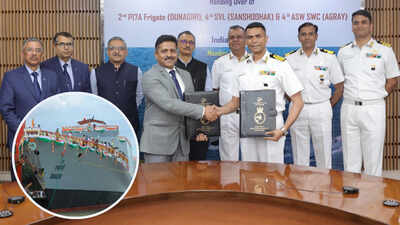
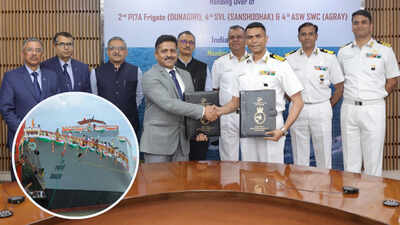 While Dunagiri is the fifth Nilgiri-class frigate built under Project 17A and delivered to the Navy in the last 16 months, Aggrey is the fourth of the eight Arnala-class anti-submarine warfare shallow water warships that will enhance the navy’s anti-submarine and mine-warfare and coastal surveillance capabilities (ASW-SWC). The modifier, on the other hand, is a larger survey vessel capable of full-scale coastal and deep-water hydrographic surveys of harbors and port approaches and determination of navigational channels and routes.
Defense Minister Rajnath Singh launched the Dunagiri project at GRSE, Kolkata on July 15, 2022. It is a 149-metre-long, 6,670-tonne guided-missile frigate equipped with state-of-the-art weapons and sensors, enabling multi-dimensional operations across air, surface and sub-surface domains, an official said. “Equipped with advanced defense systems as well as BrahMos anti-ship and land attack cruise missiles, Dunagiri represents a significant leap in naval offensive and defensive capabilities,” an official said.Designed by the Warship Design Bureau and maintained by the Warship Maintenance Team (Kolkata), the P17A frigates represent a generational leap in indigenous ship design, stealth, survivability and combat capability. The experiences gained from building the first four P17A ships have enabled the construction period of Dunagiri to be reduced to 80 months compared to 93 months for the first class (Nilgiri). With 75% indigenization content, the project involves more than 200 MSMEs.Agre is one of the largest waterjet powered naval warships (77 m length) and is equipped with state-of-the-art lightweight torpedoes, indigenous rocket launchers and shallow water sonar, enabling it to effectively detect and engage underwater threats. Manufactured in line with the government’s vision of ‘Self-reliant India’, Agre has more than 80% indigenous content.With a displacement of approximately 3400 tonnes and an overall length of 110 metres, the modifier is equipped with state-of-the-art hydrographic equipment such as data acquisition and processing systems, autonomous underwater vehicles, remotely operated vehicles, differential GPS long-range positioning system and digital side scan sonar.The modifier is part of the contract for four survey vessels (large) that was signed on October 30, 2018. The previous ships of the same class, INS Sandhayak, INS Direkthak and INS Ikshak, were commissioned in February 2024, December 2024 and November 2025, respectively. In addition to coastal and deep water hydrographic surveys, the ship’s role also includes collecting oceanographic and geophysical data for defense and civil applications. The modifier has more than 80% indigenous content in terms of cost.GRSE is currently building several warships, including one Project 17A advanced stealth frigate, four ASW-SWCs and four next generation offshore patrol vessels. In addition, the shipyard is building 30 other ships, 13 of which are export platforms. GRSE is also in the advanced stages of concluding a prestigious contract to manufacture five next-generation Corvettes.
Saudi authorities bust illegal fitness drug racket, detain gym trainers. world News
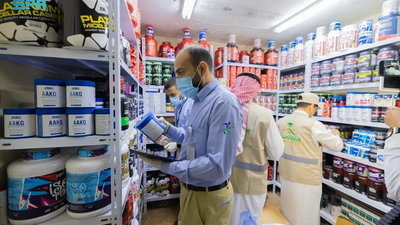
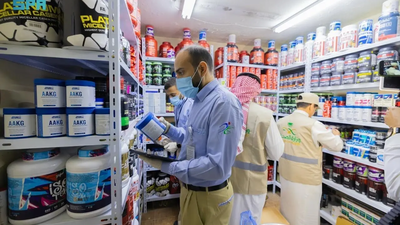
Saudi Arabia’s Health Ministry has detained several gym trainers from Arab countries for selling and promoting unregistered weight loss drugs, hormonal drugs and peptide substances, according to a report by the Saudi Press Agency. The action was taken in coordination with the Saudi Food and Drug Authority and other relevant agencies after monitoring social media for regulatory violations. The investigation led to a sting operation that traced the supply chain to a warehouse storing hormonal supplements, peptide ingredients and retatrutide, a substance still undergoing clinical trials with no confirmed safety record. Officials said the products were stored in improper conditions, raising concerns about potential health risks. Legal action has been initiated against those involved and the cases have been referred to the competent authorities for prosecution. Under the Law on Practice of Healthcare Professions, penalties may include imprisonment of up to six months and a substantial fine, along with additional penalties under other applicable laws. The ministry has urged gyms and sports centers to strengthen internal monitoring and ensure that employees follow health rules. Athletes and gym users are advised to obtain medical products only from licensed sources and under professional supervision. The public has also been warned against using or purchasing products promoted on social media without verification. Violations can be reported to the ministry’s unified call center 937.
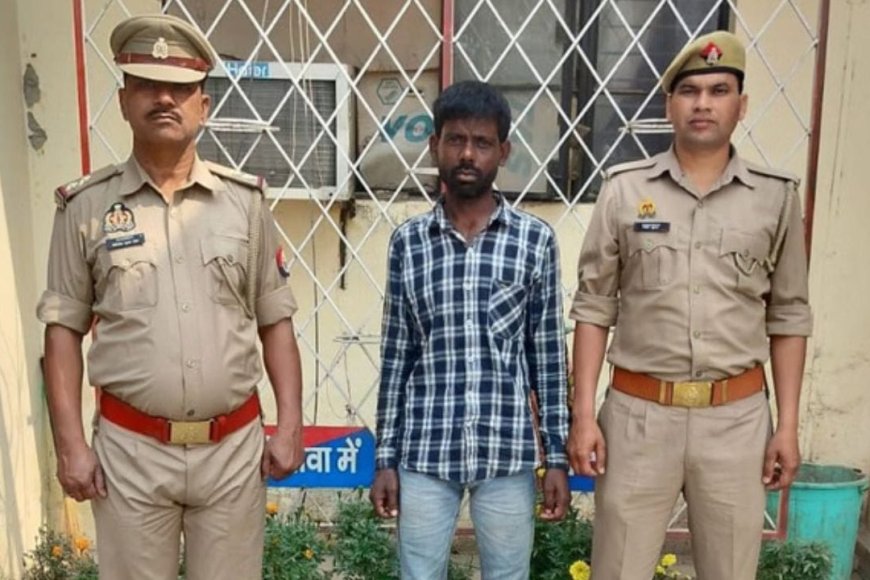
मासूम बच्चे को उसकी मां और उसके प्रेमी के साथ आपत्तिजनक स्थिति में देख लिया गया… जिसके बाद उसकी हत्या कर दी गई.
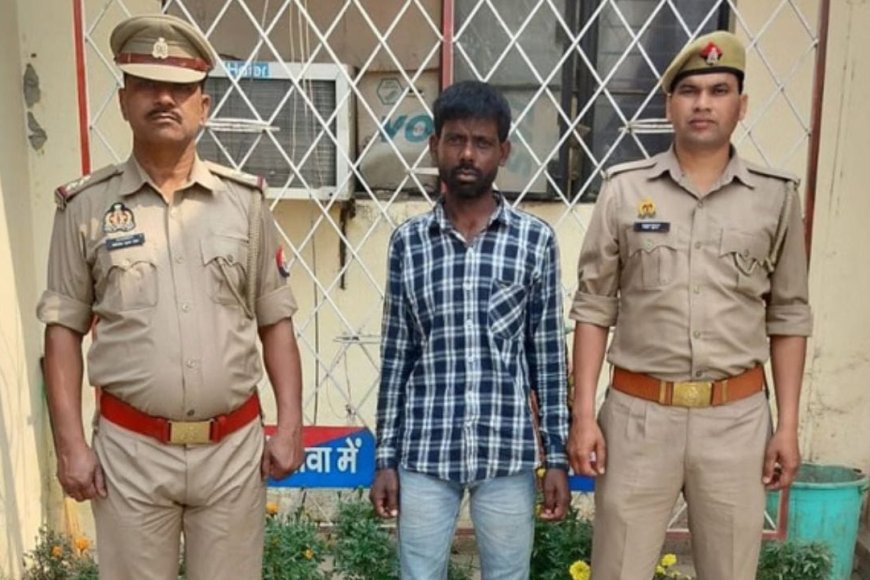
उत्तर प्रदेश समाचार: कुशीनगर में 12 साल के मासूम की हत्या के मामले का पुलिस ने खुलासा कर दिया है. दो दिन पहले हुई इस घटना के बाद पुलिस लगातार जांच कर रही थी. अब पुलिस के मुताबिक इस सनसनीखेज हत्याकांड को अंजाम देने वाला कोई और नहीं बल्कि बच्चे की मां का प्रेमी ही निकला. पूछताछ में आरोपी ने अपना जुर्म कबूल कर लिया है. पुलिस ने उसे गिरफ्तार कर लिया है और आगे की कार्रवाई शुरू कर दी है.
दो दिन से लापता था मासूम बच्चा, झाड़ियों में मिला शव
जानकारी के मुताबिक, मृत बालक राजवीर यादव कुसुम्हा टोला कतरवां थाना रामकोला का रहने वाला था. वह अपनी मां रीना देवी के साथ गोपालपुर बिरैचा में अपने मामा आदित्य यादव के घर पर रह रहा था. दो दिन पहले राजवीर अचानक गायब हो गया था, जिसके बाद से पुलिस उसकी तलाश कर रही थी. रविवार की रात उसका शव देवरिया देहात गांव के पास झाड़ियों में मिला, जिससे इलाके में सनसनी फैल गई।
पूछताछ में खुला राज, आरोपी ने कबूला जुर्म
शव मिलने के बाद पुलिस को हत्या की आशंका हुई और आसपास के लोगों से पूछताछ शुरू की. इसी बीच पुलिस का शक बच्ची की मां के प्रेमी पर गया. पहले तो आरोपी पुलिस को गुमराह करता रहा, लेकिन जब उससे सख्ती से पूछताछ की गई तो वह अपने ही बयानों में उलझ गया और आखिरकार अपना गुनाह कबूल कर लिया.
आपत्तिजनक स्थिति देख बनाई हत्या की योजना
पुलिस के मुताबिक आरोपी ने बताया कि राजवीर ने उसकी मां और उसके प्रेमी को आपत्तिजनक हालत में देख लिया था. इसके बाद आरोपी ने बच्चे को तरह-तरह का लालच दिया, लेकिन वह अपने मामा को सब कुछ बताने की जिद पर अड़ा रहा. इसी डर से आरोपी ने उसकी हत्या की योजना बनाई.
सुनसान जगह पर ले जाकर गला घोंटकर हत्या कर दी
घटना वाले दिन बच्चे की मां ने उसे कपड़े खरीदने के लिए बाजार भेजा था. इसी दौरान आरोपी उसे अपनी बाइक पर बैठाकर सुनसान जगह पर ले गया और झाड़ियों के बीच गमछे से उसका गला घोंट दिया, जिससे उसकी मौत हो गई. इसके बाद शव को वहां फेंक दिया गया.
आरोपी गिरफ्तार, पुलिस आगे की कार्रवाई कर रही है
मामले में कोतवाल संजय कुमार दुबे ने बताया कि संदेह के आधार पर गोपालपुर बिरैचा निवासी डब्लू गोंड को हिरासत में लिया गया है. पूछताछ में उसने हत्या की बात कबूल कर ली। उसकी सूचना पर पुलिस ने राजवीर का शव बरामद कर लिया। फिलहाल पुलिस ने आरोपी को गिरफ्तार कर लिया है और आगे की कार्रवाई कर रही है. यह घटना एक बार फिर समाज में बढ़ते अपराध और बच्चों की सुरक्षा पर गंभीर सवाल उठाती है.
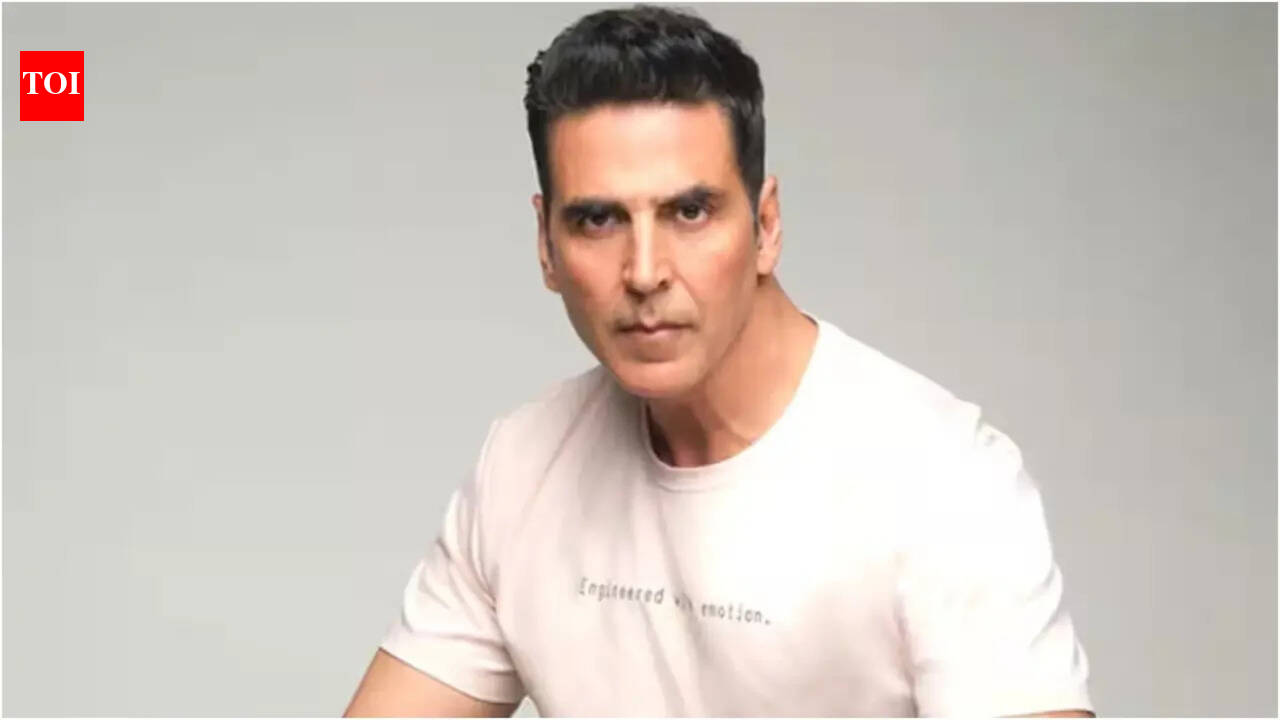
Akshay Kumar feels inferior in front of educated people: ‘Sometimes I feel very small’. hindi movie news
Akshay Kumar Recently he told that whenever he interacts with highly educated persons he often feels inferior. The actor further added that sometimes he thinks that he should start studying again. However, he revealed why he can no longer do it.
Akshay Kumar says he feels inferior in front of educated people
In the recent episode of his reality show ‘Wheel of Fortune’, Akshay Kumar was interacting with a highly educated contestant named Sonali and he praised her for the same. The actor said that he sometimes feels very small in front of people who have received good education and have many academic degrees.
IANS quoted him as saying, “Any human being, especially someone like me who is not very educated – feels very small sometimes in front of people like you.”The ‘Khiladi’ actor further said, “Sometimes I think I should study. Now I feel that I wish I had studied. But now I can’t read even when I want to because I don’t like reading, that’s the simple thing.” I have become educated. But even now when I want to read, I can’t – because I just don’t enjoy it that much.”He further told about his wife also Twinkle Khanna Being a writer and said, “My wife is a writer, she writes books. Not one, not two, not three, has written four and is now writing one more. You won’t believe it, I haven’t read a single book (My wife is a writer; she writes books. Not one, not two, not three – she has already written four and is now working on another one. You won’t believe it, but I haven’t read a single book).”He further said, “Whenever I sit down to study, I don’t know what happens, tears start coming out of my eyes.”Akshay Kumar’s revelation came when he introduced the contestant and also mentioned the many degrees he has.He concluded his conversation by saying, “I just want to say that study, studying is very important. Mujhe jaise ko follow mat karo, Sonali jaise log ko follow karo (I just want to say that study; studying is very important. Don’t follow someone like me; follow people like Sonali).”
More information about Akshay Kumar
The actor is currently gearing up for the release of his next film ‘Bhoot Bangla’, which he has directed Priyadarshan. The film is scheduled to release in theaters on 17 April 2026.
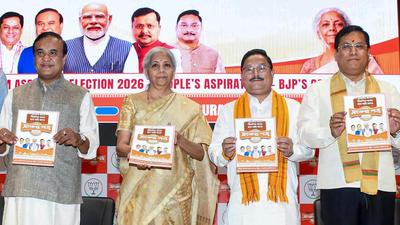
Assam Assembly Elections 2026: What is BJP offering in its election manifesto? india news
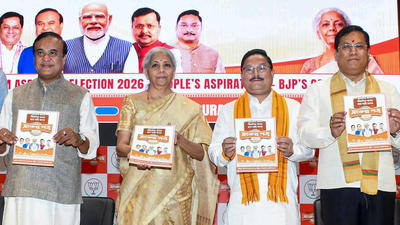
New Delhi: The Bharatiya Janata Party on Tuesday unveiled its manifesto for the Assam Assembly elections 2026, outlining an ambitious mix of cultural, economic and governance promises aimed at consolidating its position in the state. The document, released by Finance Minister Nirmala Sitharaman, presents 31 commitments under the party’s “resolution manifesto”.The central plank of the manifesto is a promise to protect the land, heritage and dignity of the indigenous communities of Assam. The BJP has also promised strict action against encroachment, including recovery of land allegedly occupied by illegal residents. Additionally, the party has proposed measures to implement a uniform civil code and strengthen law and order, calling these essential for long-term stability.On the economic front, the BJP has promised an investment of Rs 5 lakh crore to turn Assam into a major economic hub and the eastern gateway to India. The manifesto emphasizes infrastructure expansion, job creation for youth and sustained development, with the leadership highlighting what it calls a decade of transformation under its rule. The party also claims that better opportunities are encouraging Assamese youth to return to the state from global careers.
What are BJP’s ’31 promises’resolution letter ‘?
The BJP has promised the following commitments in its manifesto:
- We will protect the land, heritage and honor of the original people of Assam
- We will strengthen legislative protections to preserve the civilization, heritage and rights of the people of Assam
- We will invest Rs 5 lakh crore to establish Assam as the eastern gateway to India, supported by the Assam Gati Shakti Master Plan to ensure timely completion of projects.
- With the help of Central Government we will start Assam Nagar Upgradation Campaign
- We will launch Flood Free Assam Mission with an investment of over Rs 18,000 crore to make Assam flood free.
- We will provide employment and self-employment opportunities to the youth
- We will empower the youth of Assam to become self-reliant
- We will continue to provide rice, masoor dal, sugar and salt 08 at subsidized rates including mustard oil and will also provide free ration to the poorest families.
- We will launch One District, One University initiative and ensure wide coverage of medical and engineering colleges in each district to enhance quality higher education in Assam.
- We will transform education in Assam by ensuring education for all, building world-class institutions and expanding the teacher workforce
- We will strengthen the dignity, security and economic independence of Assam women
- We will ensure promotion, preservation and protection of the indigenous culture of Assam
- We will strengthen income security for farmers
- We will provide financial assistance to fish farmers while ensuring income support during the fishing period.
- We will launch Assam Krishi Unnayan Abhiyaan to modernize and strengthen agriculture market infrastructure and supply chain management
- We will actively urge the Central Government to implement the recommendation of the Group of Ministers (GoM) regarding scheduling of the six communities of Kochrajbongshi, Tai Ahom, Adivasis and Tea tribes, Chutia, Moran and Matak while protecting the constitutional, social and economic rights of the existing ST communities.
- We would urge the Central Government to consider including seven communities, Bishnupriya Manipuri, Bhar or Rajbhar, Newar, Bhujel, Sabar, Satnami and Kiranshekh, in the central list of Other Backward Classes, in line with their existing recognition in the state OBC list.
- We will work towards granting constitutional status to the autonomous councils of Missing, Rabha, Sonowal Kachari, Thengal Kachari, Deori, Tiwa and Boro Kachari tribes.
- We will ensure inclusive growth and land security for tribals and indigenous people
- We will ensure holistic development of tea tribe communities
- With the completion of more than 22 lakh houses under the Pradhan Mantri Awas Yojana (Rural and Urban), we will construct an additional 15 lakh houses to ensure that every family gets a permanent home with basic amenities.
- We will launch Nijut Sipini to provide financial assistance to 10 lakh traditional weavers to support their livelihood and strengthen handloom production.
- Building on our rapid economic growth since 2016, we will double Assam’s economy to $150 billion by 2031 and grow it to $300 billion by 2036.
- We will provide a wage subsidy of Rs 10,000 per employee to new industries investing in Assam to support the training and employment of local youth, along with enhanced incentives for enterprises set up under Advantage Assam.
- We will launch Assam Tourism Development Campaign to establish Assam as a leading tourist destination.
- We will ensure timely implementation of all signed peace agreements
- We will focus on welfare of government employees, promoting good governance and strengthening law and order
- We will ensure holistic development of sports across the state with targeted interventions
- To develop Dibrugarh as the second capital of Assam
- To ensure overall development of Barak Valley
- Building on Assam’s incremental health investment of Rs 2,600 crore in 2016 to Rs 8,900 crore in 2025, we will strengthen the medical infrastructure in the state.
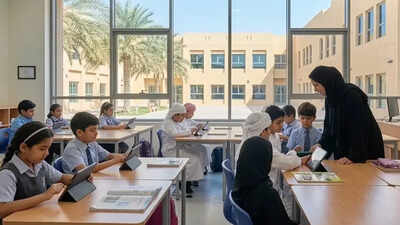
UAE distance learning extension: UAE extends distance learning till April 17; Ministry confirmed that schools and universities will remain online. world News
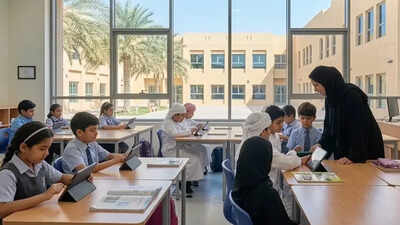
The UAE has officially extended remote learning in all educational institutions until April 17, 2026, keeping millions of students out of classrooms for at least two more weeks.The decision was announced by the UAE Ministry of Education, which confirmed that the extension applies to nurseries, kindergartens, public and private schools across the country, as well as teaching and administrative staff.Officials said the move is aimed at ensuring the safety and well-being of students and teachers while maintaining continuity in learning through digital platforms. The situation will be reviewed weekly, meaning the April 17 deadline could be revised depending on developments.
Why did UAE extend online classes again?
The latest expansion is part of a longer shift toward remote learning that began in March.Schools across the UAE initially began online learning between March 2 and March 4, followed by an early spring break from March 9 to March 22, which was brought forward due to regional developments.When Term 3 was due to start on 23 March, officials decided to continue with remote learning rather than reopening campuses. The initial plan was to resume physical classes by early April, but the new announcement has now pushed that timeline to mid-April.This gradual and evolving approach reflects how UAE authorities are responding in real time, rather than committing to a fixed reopening schedule.
Schools and curriculum affected
This expansion affects a wide range of institutions across different courses.Many Indian curriculum schools including
- Delhi Private School Dubai
- Credence High School Dubai
Online classes have continued till the end of the academic session, with students attending classes virtually rather than returning briefly before the new session.Similarly, schools with British, IB and US curriculums in Dubai and other emirates initially planned to reopen on staggered dates in early April, but those plans are now on hold.Following instructions from local regulators such as the Sharjah Private Education Authority (SPEA), many schools in Abu Dhabi, Sharjah and the Northern Emirates had already started the new 2026-27 academic year online.For younger students, including kindergarten children, schools held mock online sessions over the weekend to help families adapt to digital learning platforms.
university program
While schools are completely online, universities in the UAE are taking a more flexible approach.Under the guidance of the Ministry of Higher Education, some institutions have started a phased return to campus from March 30, but only for courses that require physical presence, such as:
- clinical training
- laboratory work
- Practical or field-based programs
On-campus examinations are also permitted where necessary.However, many major institutions continue to operate remotely.
American University of Sharjah Will remain completely online until further notice- American University of Ras Al Khaimah extends remote learning until early April
- American University in Dubai continues virtual classes
This hybrid model highlights the shift toward flexible education systems rather than a one-size-fits-all reopening.
How is online learning conducted?
Schools across the UAE have now settled into structured digital routines, with many institutions replicating full-day schedules similar to physical classes. Students are attending live virtual lessons, completing online assignments and participating in regular assessments through dedicated learning platforms.Also, schools have strengthened communication with parents to ensure that students remain academically engaged and on track. Authorities had previously issued detailed Term 3 guidelines that encouraged flexible timetables, continuous assessment methods and close coordination between teachers and families.This approach has helped minimize disruption and maintain continuity of learning, even if campuses remain closed for extended periods.
Will schools reopen after April 17?
At present, the probable date of return is April 17, but officials have made it clear that the situation is being constantly reviewed.Any decision to resume in-person classes will depend on regional conditions, safety assessment and approval from authorities such as Dubai’s Knowledge and Human Development Authority (KHDA).Schools seeking to reopen early must submit detailed requests, which are reviewed on a case-by-case basis before approval.Until then, distance learning remains the primary mode of education in the UAE, leading to one of the most extended and structured online learning phases since the pandemic era.



Money can’t buy happiness – Times of India

If money could buy happiness, the richest people on earth would be happy, but if we look around us, we will find that many of them are unhappy. They worry, fear and suffer. They are stressed. Some are sad. Some people end their lives. Why? Because happiness is not a product that can be bought. We can have everything and still be unhappy or we can have nothing and still be happy. Happiness does not depend on what we have but on how we feel.Money belongs to the outside world. Happiness belongs to the inner world. You may have read this a thousand times but it’s nothing but the truth: Money can buy a bed but not sleep. He can buy a ring but not love. Medicine can be bought with this but not health. With this you can buy a house but not a house. With this you can buy a watch but not time. Therefore, money can buy things, but not happiness. We have been conditioned to believe, ‘If I get more, I will be happy.’ More money, more success, more wealth, more recognition. But as soon as we get what we want, the mind asks for more. We move from one desire to another. We are on what is called the hedonic treadmill: we keep chasing pleasures but getting nowhere. Desires can never quench our thirst. They can only tear us apart. It’s like trying to fill a vessel that has a hole in the bottom. No matter how much we pour into it, it will never be filled. The problem is that we mistake happiness for happiness. Money creates pleasure, comfort and convenience – but not happiness. Happiness is temporary. Happiness is permanent. Joy excites. Completes happiness. Happiness comes from sense gratification, wealth, achievement, success. It is fleeting. We need something else. We should go beyond happiness towards peace, which is the basis of happiness. And finally, to purpose, which is to realize the ultimate goal of life – Who am I? That’s why I write happiness with the 3 P’s – reflecting the 3 keys to happiness: Joy, Peace, and Purpose. True happiness begins when we go beyond the mind and into awareness or consciousness. In this state of awareness we experience peace. The intellect replaces the mind – which is the source of our suffering. When we stop chasing material things and start appreciating what we have; When gratitude replaces greed; When we live a full life, when we live with satisfaction, we are peaceful and happy. A poor man who is satisfied can sleep peacefully. A rich man suffering from anxiety may toss and turn all night. Between these two – who do you think will be happier? This does not mean that money is useless. We all need it to survive. To earn livelihood. It can also create opportunities to serve and share; It can be used for the betterment of humanity. The problem is greed, our lust for money, our love for money. And the mistake we make is that we expect money to do the job it was never meant to do – to make us happy. Happiness is not a pursuit, it is a race to become an ace. This is an option. Instead of saying, ‘I want to be happy,’ we should say, ‘I choose to be happy.’ Happiness is not about money, but about moments and minutes. It’s about the joy of being in the now, the present moment. It’s about making others happy. And when we awaken to our true self – the ultimate truth that we are not body, mind and ego but soul, a part of God, we experience a happiness that no market can sell and no currency can measure. A happiness that comes from deep within, unaffected by events, circumstances, a state of eternal peace and bliss.

सरकार हमारी भी शादी करा दो…गाजीपुर के 1784 कुंवारों की गुहार, जानें पूरा सच

उत्तर प्रदेश समाचार: उत्तर प्रदेश में मुख्यमंत्री सामूहिक विवाह योजना के तहत आवेदन करने वाले 1784 जोड़े अपनी शादी की तारीख का बेसब्री से इंतजार कर रहे हैं। इन युवाओं ने योजना के लिए आवेदन किया था, लेकिन कई माह बीत जाने के बाद भी विभाग की ओर से कोई स्पष्ट जवाब नहीं मिला है. ऐसे में उनकी उम्मीदें अधर में लटक गई हैं. यह योजना गरीब और जरूरतमंद परिवारों के लिए शुरू की गई थी, ताकि उन्हें वित्तीय सहायता के साथ सम्मानजनक तरीके से शादी करने का अवसर मिल सके। लेकिन अब देरी के कारण कई परिवार परेशान नजर आ रहे हैं.
योजना बनी सहारा, बढ़ी लोगों की रुचि
मुख्यमंत्री सामूहिक विवाह योजना गरीब परिवारों के लिए बड़ी राहत मानी जा रही है। पहले इस योजना के तहत एक जोड़े की शादी पर 51 हजार रुपये खर्च किये जाते थे, जिसे पिछले वित्तीय वर्ष में बढ़ाकर एक लाख रुपये कर दिया गया. रकम बढ़ने के बाद इस योजना में लोगों की दिलचस्पी तेजी से बढ़ी है और बड़ी संख्या में आवेदन आने लगे हैं.
यह योजना धर्म और जाति से परे है
इस योजना की खास बात यह है कि इसमें किसी धर्म या जाति का कोई बंधन नहीं है. हिंदू जोड़ों की शादी पारंपरिक रीति-रिवाजों के अनुसार कराई जाती है, जबकि मुस्लिम जोड़ों की शादी काजी के माध्यम से कराई जाती है। इस कारण यह योजना सभी वर्गों के लिए समान रूप से उपयोगी सिद्ध हो रही है।
गाजीपुर में हजारों शादियां हो चुकी हैं
यह योजना ग़ाज़ीपुर जिले में 2017 से लागू है। अब तक इस योजना के तहत 7967 जोड़ों का विवाह कराया जा चुका है। पिछले वित्तीय वर्ष में 799 शादियां कराने का लक्ष्य रखा गया था, जिसके सापेक्ष 796 शादियां कराई गईं। यानी लक्ष्य लगभग पूरा हो गया, लेकिन इसके बावजूद कई आवेदन लंबित रह गये.
1784 आवेदन अभी भी लंबित हैं
विवाह के लिए आवेदन पूर्णतः ऑनलाइन प्रक्रिया से किये जाते हैं। फिलहाल पोर्टल पर 1784 ऐसे जोड़े हैं जिन्होंने आवेदन तो कर दिया है, लेकिन उनकी शादी की तारीख तय नहीं हुई है. वित्तीय वर्ष समाप्त होने के कारण इस वर्ष का लक्ष्य पूरा हो चुका है, इसलिए नये आवेदनों पर कार्रवाई अभी संभव नहीं है. अब इन सभी को अगले वित्तीय वर्ष का इंतजार करना होगा.
अधिकारियों ने आश्वासन दिया
जिला समाज कल्याण अधिकारी राम नगीना यादव के मुताबिक अगले वित्तीय वर्ष में सभी लंबित आवेदनों को प्राथमिकता दी जाएगी। जैसे ही नया बजट जारी होगा और तारीखों की घोषणा होगी, सभी जोड़ों की शादी उनके धर्म के अनुसार कराई जाएगी.
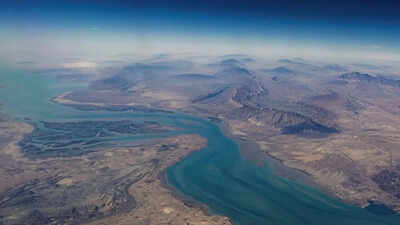
As India diversifies to bridge the Strait of Hormuz, energy imports from Africa continue to grow. india news
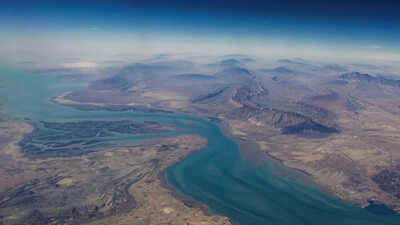 Officials said India has diversified its sourcing of crude oil and gas to address shortages caused by the disruption in the Strait of Hormuz, while prioritizing LPG and LNG supplies to keep retail consumers and critical sectors unaffected. “Energy availability has definitely improved and we are in a much better position than we were a month ago,” said Sujata Sharma, joint secretary in the petroleum ministry.
India imports 5.5-5.6 million barrels of crude oil per day; Before the conflict, 40–45% came through the strait. For LPG, India meets about 60% of its 31 million tonne annual demand through imports, with 90% met through the strait. Natural gas consumption is 191 MMSCMD, of which 51% is imported, about 60 percent from West Asia.Another official said India is using the US, Russia, Canada, Norway and West African countries like Nigeria, Algeria and Angola for LPG and countries like Cameroon, Equatorial Guinea and Mozambique for LNG. Cargo has already been procured from some sources, while negotiations with others are in the final stages.
voting
Are you worried about the delivery time of domestic LPG cylinder?
Officials said imports from Africa have been rising steadily, even as West Asia remains dominant. India has diversified its crude oil sourcing from 27 to 41 countries in a decade, reducing its dependence on the Strait from 45 percent to about 30 percent.Sharma said, adequate stock of petro products and LPG is available. The delivery time for domestic cylinders has increased to 4-5 days due to panic booking, but no dry-out has been reported, and the timeline is expected to reduce soon.