

The shocking reality of 100 families living under Manila highways in the Philippines. world News
In some parts of northern Manila, the sound of traffic never stops completely. Below the elevated expressway, where thousands of vehicles pass every day, narrow settlements remain in the shadow of concrete pillars and drainage channels. Families cook there, children sleep there, clothes hang near broken support beams, and daily life goes on within meters of constant movement.Some residents have spent years living beneath the motorway infrastructure in Manila as formal housing remains economically out of reach. What appears to be temporary from the outside has gradually become something more settled. The entire routine exists beneath the streets.
Inside a hidden motorway settlement in Manila, philippines
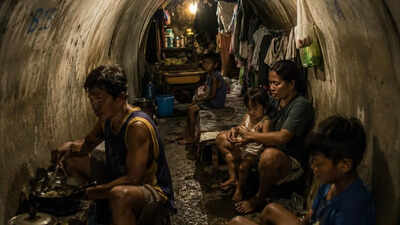
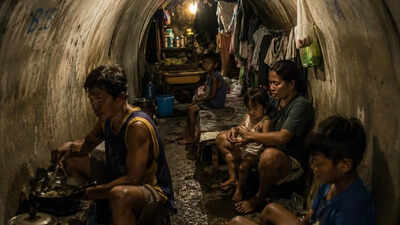
This settlement is located in those places where most of the people usually pass without paying attention. Concrete pillars divide small areas into makeshift homes made of plywood, corrugated metal sheets, tarpaulin and salvaged wood. Some structures are so low that adults have to bend slightly when entering. Others lean directly against maintaining walls blackened by exhaust fumes and rainwater stains.according to a Youtube video According to Drew Binski, the people living there have adapted to conditions that are generally considered unlivable. Mattresses are spread on wooden planks to protect the ground from moisture during floods. Electrical wires run through instantaneous connections between houses. Plastic containers collect water where public access is inconsistent. Motorways shape daily life. Conversations stop when heavy trucks pass overhead. Dust keeps accumulating continuously. During hot afternoons, the concrete traps beneath the street become hot and the air cools. Yet this settlement is functioning like a tightly packed neighbourhood. People know each other’s daily routine, share meals from time to time and keep an eye on nearby children.
Daily life under Manila highways revolves around food, work and survival
Food is arranged according to what the residents can afford that day. Many adults rely on irregular work, including street vending, collecting recyclable materials, construction work or small repair jobs, the Sun reports. Some people leave before sunrise and return late at night, with only enough money for basic food. Cooking generally takes place outside shelters because indoor space is limited and ventilation is poor. Small charcoal stoves and portable gas burners are placed along paths where people move carefully to avoid spilling water or walking into drainage ditches. Rice remains central because it is more widespread than most alternatives. Dried fish, instant noodles and cheap vegetables are often seen.It becomes difficult to wash clothes during rainy days. Water quickly accumulates beneath certain stretches of road, making roads dirty and carrying garbage into residential areas. YouTube footage showed residents drying clothes on ropes tied between poles or hanging from open metal railings above. Children still prepare for school in these environments. The uniforms are carefully washed and reused. Some families place mirrors on broken walls or wooden boards next to sleeping areas, creating small routines of normality in cramped conditions.
Challenges faced by families beneath the Manila Motorway
There is also continued uncertainty regarding eviction. Many residents do not legally own the land beneath the motorway. Some people have lived there for years without formal recognition, while others have arrived there after losing their previous residence elsewhere in the city. People frequently repair and rebuild structures because materials deteriorate rapidly when exposed to rain, heat, and pollution. Safety concerns extend beyond weather and sanitation. Traffic noise never completely disappears, and the streets above are active day and night. Children play in places surrounded by debris, exposed wires and uneven concrete. Yet families continue to organize their lives around these risks because options are limited.
Why are families living under the Manila Motorway despite hardships?
For many residents, location matters almost as much as shelter. Settlements below the motorway are close to markets, transport routes and areas where informal work can be found. Going further afield could mean losing out on daily income opportunities altogether. According to YouTube videos, some families came after being displaced from other informal communities sanctioned for development projects or infrastructure expansion. Others moved to Manila in search of work and found few affordable housing options within reach of the city center. The cost of renting even a small formal room in some parts of Metro Manila can exceed the steady earnings of many workers. Living under an expressway reduces monthly rent for some families, even if it comes with different hardships. From his perspective the compromise is harsh but practical. With time, people have also built social relationships there. Neighbors share electricity connections, look after children, lend cooking supplies and warn each other during floods or inspections. They make the relationship deal feel less temporary than it does to outsiders.
Small moments of happiness still survive beneath Manila’s motorways
The reports do not merely present solutions to the difficulty. There are still ordinary moments in daily life that resemble any crowded urban neighborhood. Children laugh while playing improvised games between the support pillars. Teenagers gather around mobile phones and watch videos. Small shops sell snacks and cigarettes on wooden counters along the roadside.As shown in YouTube footage, residents decorate small spaces with family photos, curtains, religious items and potted plants despite the harsh surroundings. Some people talk casually and comfortably about neighbors they have known for years. Others smile while cooking or talking about their children’s schooling. The happiness there does not look grand or dramatic. This comes through small pieces of routine, familiarity and stability within an unstable environment. Families continue to celebrate birthdays, share meals, and maintain daily habits despite the constant traffic movement. Motorways hide much of that life from passing drivers. From above, most people see only concrete streets and moving vehicles. Below, an entire community lives quietly out of sight.