
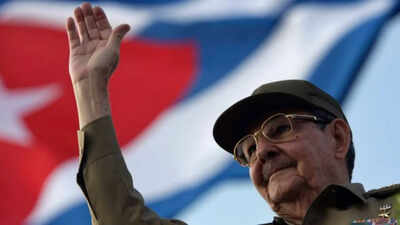

Will the indictment of Raul Castro for the 1996 downing of civilian airliners bring the US and Cuba closer to war?
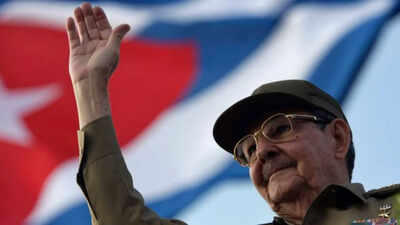
The US indictment of Raul Castro in the 1996 shooting down of civilian planes has heightened tensions between Washington and Havana, with some analysts warning that the move could take the two Cold War rivals closer to open conflict.Charges against the 94-year-old former Cuban president were announced this week in Miami, where Cuban exile groups welcomed the verdict as they awaited long-awaited justice for the deaths of four Cuban Americans when Cuban fighter planes shot down two planes operated by Brothers to the Rescue in 1996.But in Cuba, Raul Castro is still seen by supporters as one of the main symbols of the communist revolution he founded along with his revolutionary brother Fidel Castro.“He is the living embodiment of the revolution,” former US diplomat Ricardo Zuniga told CNN.Zuniga was involved in secret talks that restored diplomatic relations between the US and Cuba during the Obama administration. He warned that the indictment could cut off communications between the two governments and make tensions even more dangerous.“Ultimately, frustrations on both sides could lead to conflict as Washington cuts off communications with the Cuban government through this indictment,” he said.The allegations come at a time when Cuba is already facing one of the worst economic and humanitarian crises in decades. Fuel shortages, food shortages and lengthy power outages have fueled growing despair across the island, while new US sanctions and embargoes have increased pressure on Havana.US President Donald Trump has criticized the Cuban government in recent months and has also suggested he is open to a possible deal.“Whether you change the regime or not, I can (make the deal). It’s been a harsh regime and they killed a lot of people,” Trump said Tuesday.POTUS said: “But this is a country that really needs help. They can’t turn on the lights, they can’t eat. We don’t want to see that.”At the same time, Secretary of State Marco Rubio, a Cuban-American and longtime critic of the Castro family, has taken a much tougher stance. He believes that the current Cuban leadership should be removed from power.The indictment has emboldened anti-Castro groups in Miami, many of whom believe Cuba’s communist government is weakening and could eventually collapse under the pressure.“Castro’s time is over,” Cuban-American congresswoman Maria Elvira Salazar said on X.For Cuban exile communities, the 1996 shootings remain one of the most painful chapters in US–Cuba relations. Brothers to the Rescue aircraft were flying missions involving Cuban refugees and had previously dropped anti-government leaflets in Havana. Cuban officials at the time insisted that the planes violated Cuban airspace and called the attack an act of national sovereignty.Now, if the US attempts to pursue Castro more aggressively, the impeachment could lead to a direct confrontation. The charges could theoretically provide a legal basis for extradition efforts or further action against senior Cuban officials.Cuban President Miguel Diaz-Canel has responded boldly, accusing Washington of trying to impose political change on Cuba. The Cuban military has stepped up exercises across the country, CNN reports, while a state message warned citizens to prepare for possible aggression.Diaz-Canel also warned that a “blood bath” would await any attacking force.Analysts say that despite Cuba’s weak military position, any military conflict would carry enormous risks. Unlike Venezuela, where the US has recently increased pressure on the government of Nicolas Maduro, Cuba’s political and military leadership has been tied for decades to the revolutionary system created by Fidel and Raul Castro.Even though Raul Castro officially stepped down from power several years ago, he still holds tremendous symbolic influence within Cuba. He is regularly referred to as the leader of the revolution, and senior officers continue to consult him on major decisions.Zuniga warned that completely isolating Cuba’s leadership could make the situation more unstable rather than less.“By cutting off communications, they may fail to understand on the Cuban side that the next step could be some type of attack from the United States,” he said.He added: “But there is nothing to destroy that is not already in disrepair.”