BJP hits back at Rahul Gandhi’s ‘economic tsunami’ warning amid Iran war: ‘Stop selling panic’ india news
BJP hits back at Rahul Gandhi's warning of 'economic tsunami' amid Iran war: 'Stop selling panic'

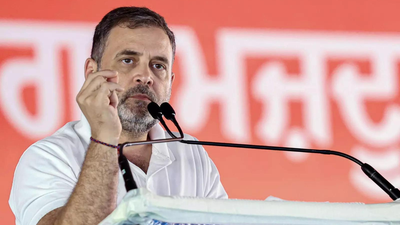
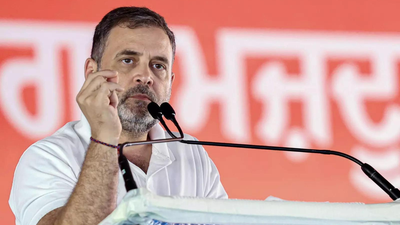
New Delhi: The Bharatiya Janata Party (BJP) on Thursday hit back strongly against Rahul Gandhi’s warning of an “economic tsunami” for India, dismissing it as “classic fear mongering”.The leader of the opposition in the Lok Sabha had expressed concern over the escalating situation in the Middle East and its possible impact on India.Responding sharply, BJP IT cell chief Amit Malviya rejected Rahul’s claims and argued that India is well placed to withstand any economic fallout from the Iran war. Citing several economic and strategic indicators, Malviya stressed that “India is not defenceless” amid the ongoing crisis in the Middle East.In a post on Twitter, Malviya cited a range of economic indicators to refute Rahul’s claims. He said e-way bill generation grew by 12.9% in May 2026, while manufacturing and services activity remained strong with PMI readings of 56.6 and 58.9, respectively. Retail inflation in April stood at 3.48%, below the Reserve Bank of India’s target, while gross foreign direct investment (FDI) inflows reached a record $94.5 billion in FY26.Pointing to the strength of India’s external sector, Malviya said comfortable foreign exchange reserves and strong services exports have been providing stability amid global volatility.“These are not signs of an economy without shock absorbers. These are signs of resilience. The government has also taken direct measures to protect citizens, businesses and jobs,” Malviya said.The BJP leader also highlighted the steps taken by the Center to protect consumers and businesses from global economic shocks.“When global crude oil prices rose, cuts in excise duty on petrol and diesel provided relief to consumers. Supply side interventions and export restrictions were used when necessary to protect domestic availability and control inflation. Through ECLGS 5.0, MSMEs receive 100% guarantee coverage, while non-MSMEs and airlines receive 90% coverage. Additional credit support up to 20% of maximum working capital, Limited to Rs 100 crore, available to eligible borrowers,” he said.“Airlines facing fuel price volatility may get assistance up to Rs 1,500 crore per borrower. The objective is clear: to protect jobs, maintain supply chains and ensure uninterrupted production,” he said.Malviya further said that the Union Cabinet has approved Rs 37,500 crore for surface coal and lignite gasification projects, with an aim to create 75 million tonnes of gasification capacity and attract investments of Rs 2.5-3 lakh crore.“These are not actions of the government eliminating shock absorbers. These are actions of the government actively strengthening them,” he said.Launching his attack on the previous UPA government, Malviya cited economic indicators from 2009 to 2014. He claimed that the rupee depreciated by 36% during this period, while foreign exchange reserves declined from about $294 billion in July 2011 to about $256 billion in August 2013.“Foreign exchange reserves declined from about $294 billion in July 2011 to about $256 billion in August 2013. Import cover declined by more than six months by September 2013, down significantly from 17 months in March 2004,” he said.“The foreign exchange reserves-to-external debt ratio declined from 95.8% in FY2011 to 68.8% in FY2014. The RBI was forced to open the FCNR (B) window and offer attractive incentives to attract dollar deposits. India ultimately raised $26.6 billion through the scheme, almost twelve times the size of the 1991 IMF bailout.”Malviya urged Rahul to “stop spreading terror”, claiming that India’s economic security had weakened during the UPA era, long before any external shocks emerged.His comments came in response to Rahul’s warning that India was heading towards an “economic tsunami” due to the BJP government allegedly dismantling the country’s economic “shock absorbers” amid ongoing tensions in the Middle East.Rahul had said, “An economic tsunami is coming. The reason for this is that the BJP government has removed India’s safety net, which was the shock absorber from the international economy. A dangerous economic tsunami is coming, prices are rising and this is just the beginning.”

Source link

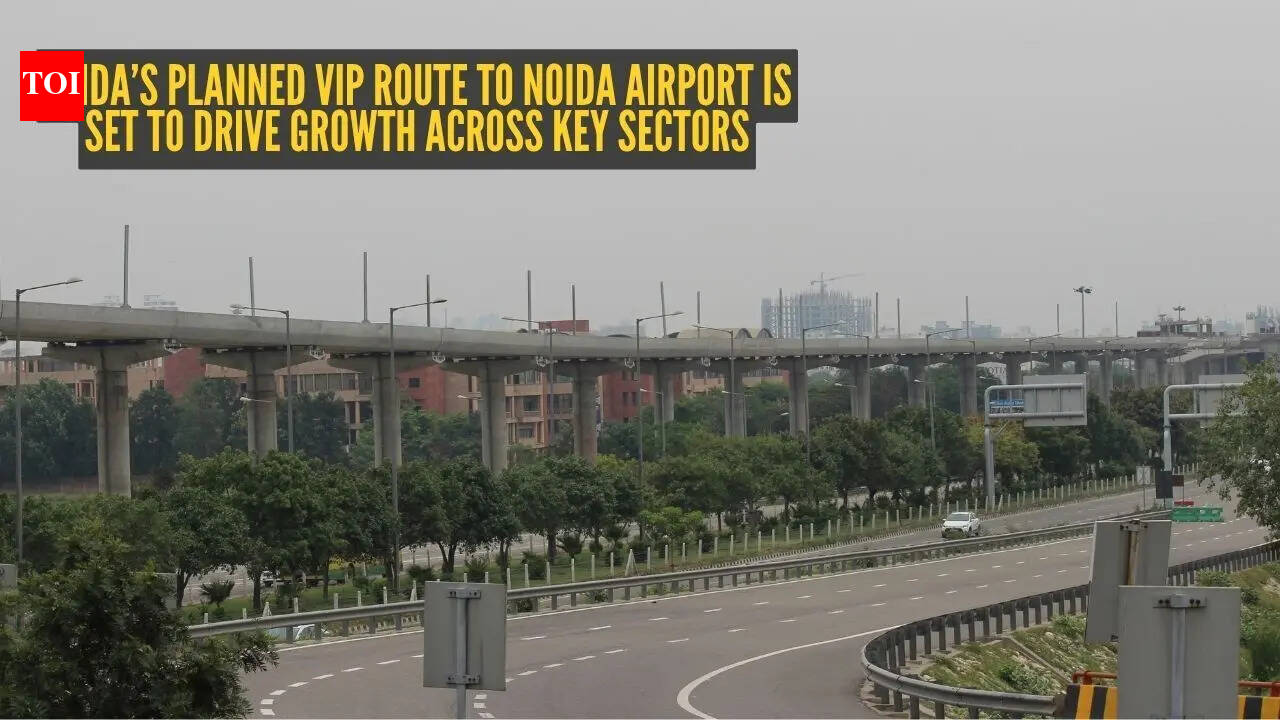
Yamuna Expressway Industrial Development Authority’s planned VIP route to Noida Airport is set to boost development in key areas

Yamuna Expressway Industrial Development Authority's planned VIP route to Noida Airport is set to boost development in key areas

The Noida International Airport in Jewar is already reshaping the real estate landscape along the Yamuna Expressway. Now, the 120-metre-wide VIP route proposed by the Yamuna Expressway Industrial Development Authority (YEIDA) is expected to further strengthen the investment appeal of the region by improving connectivity to the airport and surrounding economic hubs. Planned as part of YEIDA’s Master Plan 2041, the approximately 15 kilometer corridor will provide a direct access route to the airport while connecting to major road networks including the Delhi-Mumbai Link Expressway. As the infrastructure around the airport continues to take shape; The new road is expected to become a major driver of property demand in many residential, commercial and industrial areas.

Better connectivity is likely to increase demand for property

Connectivity remains one of the strongest factors influencing real estate development and the proposed VIP route is expected to significantly increase accessibility in the YEIDA area. Faster travel to the airport can increase the attractiveness of areas around Noida for home buyers, investors and businesses. Sectors 22A to 22F, which are witnessing residential and institutional development, may benefit from increased interest among buyers looking for well-connected locations near a major international airport. Better infrastructure often translates into better livability, making these areas increasingly attractive to both end users and long-term investors.Also, increased connectivity can encourage the development of supporting infrastructure such as retail centres, educational institutions, health care facilities and hospitality projects, thereby creating a more self-sustaining urban ecosystem. This will help in the overall development of the surrounding areas.

Noida

Image Credit: Canva

Industrial and commercial sectors will benefit

The impact of the new route is not limited to residential development. Industrial areas like 24 and 24A are expected to benefit from easier movement of goods and better access to regional transport corridors. Improved logistics infrastructure could attract additional industrial investment; Strengthening the region’s role as a manufacturing and trade destination.Commercial areas including 23A to 23E are also expected to see increased activity as businesses seek locations closer to the airport. Better road connectivity often encourages corporate offices, warehouses, retail developments and service-oriented enterprises to establish presence in emerging growth corridors.The combination of airport-led development and upgraded road infrastructure could create new opportunities for commercial real estate developers and investors looking to meet future demand.

A long-term catalyst for real estate appreciation

Historically major infrastructure projects have played a significant role in increasing land values ​​and property prices. With connectivity projects to Noida Airport moving forward simultaneously, the Yamuna Expressway area is steadily emerging as one of the most promising real estate destinations in the National Capital Region (NCR).The proposed VIP route is expected to directly benefit more than 13 areas in the Yamuna Expressway region. These include Sectors 24, 24A, 25, 22A-22F and 23A-23E, which include residential, institutional and mixed-use industrial developments. Better connectivity is likely to increase accessibility in these emerging growth areas.This VIP route is expected to improve accessibility, reduce travel bottlenecks and aid future urban expansion. This will help in real estate development as well as daily commuters in Delhi NCR. As a result, areas located along and around the corridor may experience increased buyer interest and strong long-term appreciation potential.For investors, developers and home buyers; The project represents another step in the transformation of the Yamuna Expressway belt from a developing corridor into a major residential, commercial and industrial hub supported by world-class infrastructure.(Source: Information compiled from recent Magicbricks report.)

Source link

Bees helped scientists create tiny drones that navigate without GPS and find their way home

Bees helped scientists create tiny drones that navigate without GPS and find their way home

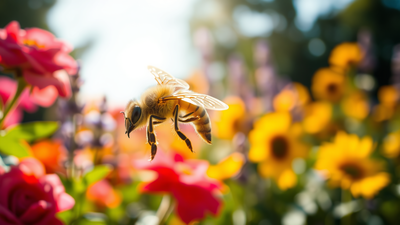
Most drones rely on GPS and powerful computers to find their way. This makes them heavy, expensive, and power hungry, which is basically not practical for anything small. But bees? They navigate perfectly with brains smaller than a grain of rice. Now, scientists at Delft University of Technology have discovered their secret and have created drones that do the same thing. The system, called B-Nav, allows small drones to fly hundreds of meters away and still find their way home without using almost any computing power. It all started with a simple question: If bees can do it with almost nothing, why can’t our robots? The answer always turned out to be hidden in nature, just waiting for someone to look closely enough.

How bumblebees find their way home: the inspiration behind B-Nav

Here’s what happens when a bee leaves its hive for the first time. It doesn’t fly and fly away just to find flowers. Instead, it takes a short learning flight right near home, memorizing the landmarks and the layout of its neighborhood. After those initial scout flights, the bee can fly far along winding, winding paths and still return almost straight home. It’s like stepping out of your house for the first time, walking down some streets, remembering what they look like, and then being able to walk back out of nowhere in the city.Scientists have understood its basics for years. Bees use something called odometry; They keep track of how far they have gone and in what direction, such as counting steps while walking. But odometry gets messed up over time. Small measurement errors add up. So bees also remember what their environment looks like in important places, especially around the house. They combine these two methods: approximate distance and direction estimation and visual memory. And it works brilliantly.The challenge was to discover what and how bees learn visually. That was the gap that needed to be filled. Researchers led by Guido De Kroon at Delft University wanted to know whether imperfect distance and direction estimation could still be enough for a machine to learn to come home. Could a small neural network store only visual memories without the need for detailed maps? This became the basic idea behind the B-Nav.

Building drones that think like bees: the Bee-Nav system explained

The research team included roboticists from Delft University and biologists from Wageningen University in Germany and Carl von Ossietzky University of Oldenburg. Together, they created something that mimics the actions of bees, in the same order that bees do it.First, the drone makes a short learning flight near its starting point. When it flies, it uses a tiny omnidirectional camera to capture 360-degree images of everything around it. These images are not stored in much detail. They’re processed by a compact neural network, basically a stripped-down AI brain that learns how the house looks from different angles and distances.Once the drone has completed its learning flight and collected its visual memories, it is ready to explore. The drone flies away from home on whatever path is available, using odometry to track its speed. But like the bee, the drone doesn’t rely solely on odometry. As it approaches a familiar area, it begins to use its learned visual memories to correct errors it made during its journey. The visual network says “Hey, I recognize this place” and guides the drone back home.according to Nature paper published in May 2026The system works remarkably well. The drone returned within 0.5 meters of home in 100 percent of flights between 30 and 110 meters. Even on long flights between 200 and 600 meters it was successful in 70 percent of the cases. These are solid numbers for something so light and simple.

The memory trick that makes everything work: why 42 kilobytes is enough

Here’s the part that blows people’s minds: The entire neural memory required for this system is only 42 kilobytes. This is not a typing error. It’s about the size of a small email attachment from the 1990s. For short flights in controlled environments, the memory requirement drops to only 3 kilobytes.Most autonomous drone systems use large-scale computers and continuous mapping systems. They require powerful processors, huge memory storage and lots of power. Bee-Nav does the same thing with a smaller fraction of the same. The philosophy is simple: don’t store what you don’t need. Store only what is important for navigation.This difference means everything when you’re trying to build a really small, lightweight drone. The whole approach assumes you can solve navigation with less hardware and better thinking. This is the kind of insight that only comes from carefully studying biology. Bees did not evolve brains specifically to navigate; They developed brains for many tasks. But somehow they are incredibly skilled at this particular task.

Real-world uses: Where these drones actually work

The most obvious application is greenhouse and agricultural monitoring. Lightweight drones can inspect tomato crops, detect diseases or pests early and help farmers increase yields while reducing wastage. These drones should be safe for people working nearby. You can’t move heavy machines around workers. Bee-Nav makes this possible.Disaster areas are another area where GPS fails. Search and rescue teams working after earthquakes or floods can use these drones to explore areas before sending people. Warehouse inspections, building surveys and even exploring caves where GPS signals don’t reach are all made practical with truly autonomous, lightweight drones.Scalability is also interesting. Researchers say that today you can easily install B-Nav on a drone weighing 30 to 50 grams. Ultimately, they want to reach true bee-sized drones, although this will require solving other problems such as small batteries. But the intelligence part? He is ready to go.

Why this matters for the future of robotics and autonomous systems

This research proves something important: You don’t need massive computational power and detailed maps to achieve autonomous navigation. You need clever algorithms and inspiration from nature. It’s a lesson the robotics field is learning again and again: The best solutions sometimes come from looking at what nature has already figured out.For a world that wants smaller, cheaper, safer autonomous robots, Bee-Nav is a step forward. This shows that small drones can be really smart without being expensive or dangerous. They can explore, learn and return home. It’s the foundation of everything engineers want to build on top. It turns out that bees were doing advanced robotics millions of years before humans invented computers.

Source link

Kerala welcomes monsoon: Rainy season begins amid concerns of El Nino. india news

Monsoon arrives in Kerala, signals beginning of rainy season in India

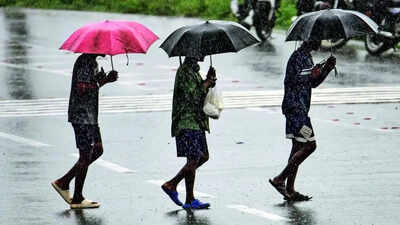
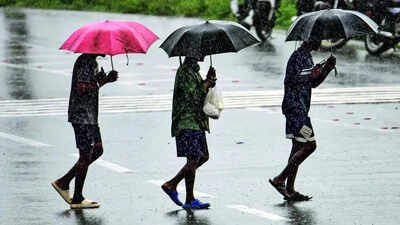
New Delhi: The IMD said the south-west (summer) monsoon reached Kerala on Thursday, three days later than its normal date. Monsoon generally enters Kerala on June 1, marking the beginning of the rainy season in India as well as sowing operations.Last year, the monsoon reached Kerala eight days earlier, on May 24. However, the early or late arrival of the monsoon has nothing to do with the overall quantitative or spatial rainfall during the four-month rainy season. The overall position of the monsoon and its progress depends on many climatic factors.Amid the growing threat of El Nino, the IMD has already predicted that monsoon rainfall this year will be ‘below normal’ with a 60% chance of it being ‘deficient’, raising fears of drought.

.

Announcing the onset of monsoon over mainland India, the IMD said, “Southwest Monsoon will advance over remaining parts of southwest and southeast Arabian Sea, parts of west-central and east-central Arabian Sea, entire Lakshadweep Islands, Kerala and Mahe, parts of Karnataka and Tamil Nadu, remaining parts of Comorin area, southeast Bay of Bengal and some more parts of southwest, west-central, east-central and northeast Bay of Bengal on June 4.” Has increased.”“Conditions are favorable for further advance of Southwest Monsoon into some more parts of central Arabian Sea, entire Goa, parts of Maharashtra and Andhra Pradesh, some more parts of Karnataka, remaining parts of Tamil Nadu, southwest Bay of Bengal, some more parts of west central, east central and northeast Bay of Bengal, some parts of northeast states during next 2-3 days,” it said.The IMD had earlier predicted the arrival date of monsoon in Kerala as May 26 (+/- with a model error of 4 days). However, the forecast made on 15 May did not prove correct.The Meteorological Department has been issuing operational forecasts for the onset date of monsoon in Kerala since 2005. An indigenously developed state-of-the-art statistical model with a model error of ± 4 days is used for this purpose.

Source link

Can a balcony garden really reduce indoor heat? Here’s what the science says

Can a balcony garden really reduce indoor heat? Here's what the science says

Plants cool their surroundings through a process called evapotranspiration, essentially, they release moisture through their leaves, and that moisture pulls heat from the surrounding air as it evaporates. On a sunny balcony in the middle of summer, this process matters more than most people realize. And the research supports it quite clearly.A StudyAn investigation of residential greenery in a tropical apartment, published in Energy & Buildings, found that the combination of potted plants and a living wall on the balcony reduced indoor air temperatures by 2.5°C, while balcony surface temperatures dropped by 5.5°C. This is not a minor difference, especially in cities like Mumbai, Chennai or Delhi where temperatures in summer regularly go above 40 degrees Celsius and air conditioners run almost all day.“The summers in India are becoming unbearable and deadly year after year. While external climatic conditions like the El Nino effect are often blamed, day-to-day lifestyle choices are ignored. A man-made health and wellness disaster, the Urban Heat Island (UHI) effect, is rapidly painting our cities gray and depriving us of our most basic survival need, greenery. It’s time to bring those exotic plants home. The frenzy is compounded by the many benefits of cleaning/cleansing, which do very little towards helping biodiversity while still being high on maintenance, Peeple founder and garden designer Deepti Agarwal told The Times of India.She says that tackling this issue at the level of city infrastructure is a tough task, but anyone can address the issue with smart and sustainable greenery efforts in their home gardens.Particularly for Indian households, the evidence is encouraging. A Study Greater Noida found that rooftop gardens can reduce rooftop temperatures by 2°C to 3°C in winter and 5°C to 7°C in summer.Agarwal says native and hardy species form quick, dense green cover of leaves and provide a cooling effect. “Popular exotic plants like bougainvillea are often chosen in home gardens. However, one must differentiate heat-resistant plants from plants that can reduce heat in the environment. Bougainvillea, despite being loved globally, often fails to maintain a thick, green appearance with its small and sparse leaves, thus being counter-productive to reducing urban heat,” she suggests.

Experts share some guidelines on this:

  • Selecting the right species of plants that provide shade with their canopies, cool and purify the air with their large leaf structures or create a natural green curtain can go a long way in reducing urban heat.
  • Simple garden design elements like trellis for balconies or terraces can help create a natural green wall or vertical garden, including fast-growing climbing plants like Thunbergia grandiflora, Madhumalti (Combretum indicum), Aparajita (Clitoria ternatea), Jasmine (Jasminum officinale), etc.
  • Another effective technique is layered planting which uses a combination of different plant heights in descending order. Like forests, this cascading effect helps to create overlapping canopies and filter sunlight before it reaches the bottom. For example, one might combine a tall palm or champa plant with medium flowering shrubs such as ixigorous or jasmine to create a layer of visual relief and respite from the heat.

What practical advice would you give to homeowners or apartment dwellers who want to create a balcony garden specifically to deal with the heat indoors during summer?

“Choosing native plants that have broad leaf structure, deep root systems, dark green leaf color can help cool the environment through the evaporation process. Releasing moisture, increasing air flow, blocking sun rays, thus reducing internal temperatures are some of the many benefits of creating a well-planned balcony garden,” she suggests. “The wider the leafy surface area you can add to your garden space, the better the cooling effect you can ultimately create. At the individual household level, this cooling effect can be gradually felt with the right plant mix and low-maintenance gardening materials to maintain the health and appearance of the garden.

some examples:

The founder says that for balconies, decks or terraces that receive direct sunlight, exotic foliage plants should be replaced with native flowering plants. Some examples of medium height shrubs include Ixora (Ixora coccinea), Son Champa (Magnolia champaca), Nag Champa (Plumeria pudica), Parijat (Nyctanthes arbor-tristis), Hibiscus (Hibiscus rosa-sinensis), Kaner (Nerium oleander). Even edible plants like lemon, curry leaves, which have thick leaves, can serve the purpose. Such plants not only help in improving your indoor environment but also support biodiversity. On the other hand, for locations that receive partial direct sunlight (indirect bright light), one can opt for Areca palm (Dypsis lutescens), Raphis palm (Rhapsis excelsa), and Ficus varieties of palm trees (although most of them are non-native).So yes, a balcony garden can indeed reduce indoor heat. It will not replace an air conditioner on a 45°C afternoon. But it will reduce heat gain, reduce your cooling load, and make your home more livable during the summer. Plants, which you grow anyway, do something useful all day long.

Source link

Inside Onkalo: The world’s first nuclear waste vault built for 100,000 years of isolation world News

Inside Onkalo: The world's first nuclear waste vault built for 100,000 years of isolation

Beneath the pine forests of south-west Finland, rock comes before anything else. It is old in a way that makes human construction temporary, shaped by geological time rather than anything built on the surface. According to PBS, the underground facility known as the Onkalo nuclear repository is located near Eurajoki, where nothing above ground really gives any indication of what’s happening hundreds of meters below. At depth, tunnels lack the essentials: moist air, rocky walls, cables running over uneven surfaces, and the faint echoes of motion. This is not a place for relaxation or spectacle. It is built around a much more final thing, the long-term management of nuclear waste that cannot be easily forgotten or moved elsewhere.

How Finland is planning to seal nuclear waste inside ancient bedrock

Reportedly, the idea behind the site is less about storage in the usual sense and more about gradual removal from human access. The spent fuel is first sealed in corrosion-resistant copper canisters, then encased in bentonite clay, which expands when exposed to moisture. The purpose of this arrangement is to reduce movement, seal the gap, and limit any slow interaction with groundwater.Each canister is lowered into drilled holes cut into the tunnel floor. Once filled, the sections are permanently sealed with layer-by-layer reinforced plugs. The tunnels will eventually close one by one until there is nothing left to access the surface infrastructure. A capacity of approximately 6,500 tonnes of uranium fuel is planned, covering production from Finland’s existing reactor fleet.As reported by PBS, “We are now about 430 meters (1,411 feet) below zero,” geologist Tuomas Perre said as he drove a car through a maze of man-made tunnels. “We’re passing through rock that’s 1.9 billion years old.”

Nuclear waste disposal project in Finland has reached the final regulatory phase

The project has taken decades to reach its current stage, through design changes, political shifts and repeated safety reviews. The final regulatory assessment is now with the Finnish Radiation and Nuclear Safety Authority, known as STUK, which is expected to complete its final assessment before an operating license can be granted.The companies behind the site, including Posiva and utility operator Teolisuden Voima Oyj, have described a cautious start to operations after receiving approval. Initial fuel transfers are expected to begin gradually, with material already stored in nearby facilities awaiting underground transportation. Even at this stage, there is very little sense of completion. The system is built, but not yet fully activated, as if it is waiting for the point where the engineering turns into routine burial work.

Designing nuclear security across thousands of years

As reported in the study published in ScienceDirect, titled, ‘Awaiting Doom: Nuclear Imagination and the Politics of the Distant Future in Finland‘, what sets Onkalo apart is the time frame around which it is made. Security models extend 100,000 years into the future, by which time current infrastructure, languages, and political systems will have changed beyond recognition.Engineers focus on slow processes rather than sudden failures. Copper degradation, soil stability, groundwater flow and the potential for seismic changes during future ice ages are all part of the long-running assessment. No single factor is expected to cause failure on its own, but the interactions between them over vast time periods are treated with caution.The fuel will be safely stored more than 1,300 feet below the Earth’s surface in corrosion-resistant canisters, according to a YouTube video from the U.S. Department of Energy.

Public trust and quiet acceptance in Finland

In Finland, the attitude towards reserves has become established over time as a practical acceptance. Initial opposition existed, especially when the concept was first discussed decades ago, but it softened as the project moved from theory to visible construction.Researchers note that trust in national regulators and long-term scientific assessment have played a role in that change. There is also a legal requirement that nuclear waste produced in Finland must remain within the country, eliminating the option of exporting the problem elsewhere. Still the worries have not completely ended. Environmental groups continue to argue that no engineered system can be guaranteed to be safe over such an extended period of time, where natural processes and human oversight will inevitably fall apart.

Source link

Vegetarian foods to get official FSSAI logo from July 2027 india news

Vegetarian foods to get official FSSAI logo from July 2027

New Delhi: Consumers buying vegan food products will soon find it easier to identify them on store shelves. The Food Safety and Standards Authority of India (FSSAI) has notified a standardized vegan logo that will be mandatory on all approved vegan food packages from July 1, 2027.The move aims to create a uniform national identity for vegan products and help consumers distinguish them from conventional foods containing ingredients of animal origin. Under the amended Food Safety and Standards (Vegetarian Foods) Regulations, every approved vegan food package must display a green “vegan” logo in a format prescribed by the regulator. The logo consists of a green square-framed symbol consisting of a stylized “V” with a sprouting leaf, indicating that the product is certified vegan and free of animal-derived ingredients.Under an amendment notified on May 21, 2026, FSSAI has introduced a standard vegan logo and prescribed specifications for its use on packaging. The requirement will become mandatory from July 1, 2027.Monita Gehlot, a dietitian at AIIMS Delhi, said the introduction of a dedicated vegan logo is important as it provides consumers with a clear, government-recognized identification mark for vegan foods and establishes a transparent framework to prevent misleading claims. “Consumers following a vegan diet often have to spend a lot of time examining ingredient lists to determine whether a product is truly free of animal-derived ingredients. The new logo will help them instantly identify products that comply with FSSAI’s vegan standards and make informed choices with more confidence,” she said.Vegan foods are products that do not contain animal-derived ingredients, additives or processing aids. Unlike vegetarian foods, which may include milk, dairy products, ghee, cheese and honey, vegan foods do not contain all animal-derived ingredients and rely solely on plant-based foods such as fruits, vegetables, grains, legumes, nuts, seeds and plant-based milk alternatives. “All vegetarian foods are vegetarian, but not all vegetarian foods are vegetarian,” said Dr.The range is increasingly gaining acceptance among health-conscious consumers, those with ethical concerns about animal welfare and those seeking environmentally sustainable diets.The emphasis on clear vegan food standards comes with another recent FSSAI reform targeted at the plant-based food sector. In a separate notification, the regulator lifted the ban on the use of sal-seed fat, an edible vegetable fat derived from the sal tree, other than in bakery and confectionery products. The move is expected to boost innovation in India’s growing vegan and plant-based food market.

Source link

Kylian Mbappe, Erling Haaland, Lamine Yamal and the stars who should shine at the FIFA World Cup 2026

The World Cup season is upon us and the superstars of the game are all set to entertain the world on the biggest stage. As always, All attention has turned to Lionel Messi and Cristiano RonaldoAnd fight between them for the ultimate prize.

But these two are not the only superstars of the game who will be in the mix this time. Players like Erling Haaland, Kylian Mbappe and Lamine Yamal will be players that teams will look to for that one moment of magic.

But with the pressure of the nation bearing down on them, the one thing these superstars cannot afford is to miss out on the grandest stage of them all.

We look at six superstars for whom World Cup failure is not an option and who need to keep their promise.

erling holland

If you start talking about Erling Haaland, chances are you’ll run out of adjectives. He remained a goalscoring machine for Manchester City during the 2025–26 campaign as he finished with 27 goals in the Premier League. With nine assists for the entire season, another eight were added in the Champions League.

Haaland will be key to Norway’s chances at the World Cup (Courtesy: Reuters)

But his real test will now be in the World Cup 2026. Norway are back in the tournament after a long wait of 28 years and they will need their talisman to make it a memorable one.

Haaland scored 21 goals in 14 World Cup qualifying games for his country and for him this tournament could cement his legacy as one of the greatest players of modern times.

kilian mbappe

This will be Mbappe’s second World Cup campaign and the first time he will captain France on the big stage. In 14 games at the World Cup, the Real Madrid forward has 12 goals to his name and will be aiming to leave Qatar 2022 in the dark.

Mbappe single-handedly changed the course of the final with a sensational hat-trick against Argentina, ultimately losing only two on penalties.

Mbappe has scored 12 goals in 14 matches at the World Cup (Courtesy: Reuters)

Since 2022, Mbappe has gone from strength to strength, but his last campaign with Real Madrid was marred by a lot of off-field controversy.

Despite scoring 42 goals in 44 matches for Los Blancos, he saw a petition signed calling for his exit from the club. But France has always been a safe haven for the 27-year-old.

And now, it’s time for him to step up.

Lamin Yamal

Lamine Yamal has been the golden boy of world football for some time now. At the age of 16, he announced himself on the big stage as he helped Spain win Euro 2024.

Two years later, he may still be young, but this time the expectations will be even higher. The Barcelona forward scored 24 goals and made 18 assists in a stellar campaign as the Blaugrana won the LaLiga title.

Can Yamal set the World Cup stage on fire? (Courtesy: Reuters)

This will be their first taste of the World Cup and Spain will have a lot of the game looming over them. He is no longer a boy and will have the weight of the entire nation on him as they try to add another star to their peak.

harry kane

England and Thomas Tuchel faced a lot of slack for team selection, but the first name on the team sheet will be Harry Kane. The Three Lions would like their captain to step up and ensure the trophy comes home.

It was a record-breaking campaign for him at club level, scoring 61 goals in 51 matches for Bayern Munich. At times he even played as number 10 and always worked for better linkups with his teammates.

Kane scored 61 runs in 51 matches for Bayern this season (Courtesy: Reuters)

If England are to progress in the tournament, Kane will have to work hard in every way. He has 8 goals in the World Cup and was the Golden Boot winner in 2018.

Given the form he has been in in the World Cup, no one would bet on him winning the accolade once again.

bruno fernandes

This will be Bruno Fernandes’ third World Cup and he will be a creative force for Portugal. Expectations will be high from the 31-year-old after a record-breaking campaign with Manchester United in which he got 21 assists.

Fernandes appears to be at the peak of his powers at the moment. While Ronaldo will always be Portugal’s main man, Fernandes could be the force that creates a spark that can bring magic on the field.

The Euro 2016 champions come into the tournament as early favorites and aim to give Ronaldo the puzzle missing from his trophy cabinet.

If that is to happen, Fernandes will have to work hard and provide assists.

Vinicius Junior

It was an indifferent campaign for Vinicius Jr. with Real Madrid. Despite scoring 16 goals in 36 matches for Los Blancos in La Liga, His club campaign dominated by off-field drama. Now, they will need to step out in the colors of Brazil as they look for inspiration.

Will Winnie be able to create some magic in the World Cup? (Courtesy: Reuters)

While Neymar is back for the World Cup, it remains to be seen whether he will be fully fit for the competition. This means Vinnie Jr. Will be an outlet on the left for goals and assists, something he will need to improve for the Seleção.

In 48 games, the forward has nine goals and nine assists and the World Cup could be the ideal platform for him to mount a sensational campaign on the grandest stage of them all.

– ends

Published on:

June 4, 2026 12:45 IST

Source link

Virat Kohli likely to miss Afghanistan ODI; Suspense continues on Rohit Sharma. cricket news

Virat Kohli likely to miss Afghanistan ODI; Suspense continues regarding Rohit Sharma

New Delhi: Virat Kohli India is likely to miss the upcoming three-match ODI series against Afghanistan due to a hamstring injury. Although the exact recovery timeline is unclear, the former India captain is expected to be unavailable for the series. It has been reliably learned that Kohli is holidaying in Europe after winning the IPL with Royal Challengers Bangalore (RCB).Kohli was in great form in the tournament – ​​scoring 675 runs at an average of 56.25, hitting one hundred and five fifties – and top-scored with an unbeaten 75 in the title clash against Gujarat Titans. He felt discomfort in his right hamstring while batting on 31 May and that area was extensively taped before resuming his innings.Meanwhile, uncertainty continues over Rohit Sharma’s participation. The former India captain is yet to report to the BCCI Center of Excellence (CoE) for fitness assessment and clearance, putting his availability in doubt. Rohit and Hardik Pandya were selected in the squad based on fitness clearance and while the all-rounder has checked in, the former captain is yet to reach Bengaluru.It is worth noting that the men’s senior selection committee, headed by Ajit Agarkar, had considered resting the two stalwarts for the three matches, but they were included due to a late change of heart.The selectors and team management had suggested trying Yashasvi Jaiswal at the top of the order along with Shubman Gill but Rohit managed to retain his place.

How important is it for Rohit Sharma to report for fitness clearance before the series?

Interestingly, both the players are suffering from hamstring problem, which may leave two vacancies in the team. With Virat completely out and Rohit yet to get the nod, Jaiswal may be a late inclusion in the squad and the selectors may also consider including Ruturaj Gaikwad, Devdutt Padikkal or Tilak Verma in the middle-order.A decision is expected in the coming days as key decision-makers meet on June 6 to choose the squad for the upcoming white-ball tour of Ireland and England.

IND vs AFG ODI Series Schedule

1st ODI: June 14, 2026 – Dharamshala – 1:30 PM IST2nd ODI: June 17, 2026 – Lucknow – 1:30 PM IST3rd ODI: June 20, 2026 – Chennai – 1:30 PM IST

Source link

Intelligence in an insect: Bumblebees break new ground with timing skills that astound researchers.

Intelligence in an insect: Bumblebees break new ground with timing skills that baffle researchers

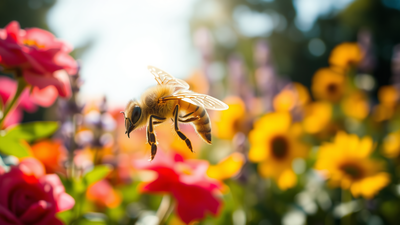
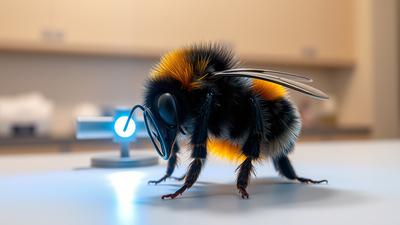
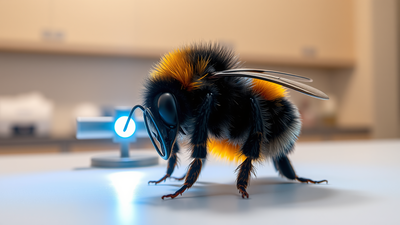
For years, scientists believed that only humans and a handful of vertebrates could tell the difference between short and long periods of time, a skill as fundamental as reading the dots and dashes of Morse code. But researchers at Queen Mary University of London have turned that notion upside down, proving that buffalo-tailed bumblebees can do something previously thought impossible for insects: distinguish between light flashes of different lengths and use that information to find food. These tiny creatures, with brains no bigger than a poppy seed, learned to recognize the difference between quick flashes and long pulses in exchange for a sweet treat. The discovery challenges everything we thought we knew about the intelligence of insects and suggests that complex time processing may be more common in nature than anyone previously imagined. It’s a reminder that nature often surprises us when we delve deeper.

The big secret of the tiny brain: how bumblebees learn time and discrimination

Timing is everything in the natural world. When a hummingbird visits a flower, it needs to know when the nectar can return. When a cricket calls to a potential mate, the length of its chirp has meaning. When an animal runs away from a predator, a fraction of a second can mean the difference between life and death. Yet how insects actually process these small intervals of time remains one of the great mysteries of biology. Most researchers assumed that their brains were not designed for such precision. research teamLed by Alexander Davidson, a PhD candidate, and Dr. Elisabetta Versace, a senior lecturer at Queen Mary University, it was decided to test whether bumblebees could handle temporary tasks. They chose the buff-tailed bumblebee, Bombus terrestris, a common species found across Europe and many other parts of the world. What happened next surprised everyone involved. The bees did not fail. He did not struggle. He learned what scientists considered impossible.

Understanding Duration Resolution Test and Light Flash Experiments

The experimental setup was extremely simple. Bumblebees were housed in a specially designed wooden nest box, which was kept at a constant temperature on a normal day-night cycle. From this nest, they could access acrylic tunnels leading to an observation area and a testing chamber. Inside the testing room were three small boxes, each of which displayed bright yellow circles on a dark background in front of a monitor.The researchers controlled precisely when these circles blinked on and off. In one set of experiments, they tested whether bees could distinguish between a 5-second flash and a 1-second flash. In the second, they tested for 2.5 seconds compared to only 0.5 seconds. Each period was paired with either a tasty and beneficial sugar solution or a quinine solution that tasted bitter and unpleasant. Bees quickly learned to associate one period with sweetness and the other with something that should be avoided.Here it is noteworthy: the researchers made sure that brightness could not be the decisive factor. He designed some tests where a short flash was repeated several times adding up to the same total brightness as a longer flash. Even when this potential trick was introduced, bumblebees continued to choose correctly based on how long each flash lasted. They did not depend on cumulative light; They were actually processing time with real cognitive capacity.

Why did scientists expect insects to fail at this cognitive task?

Before this research, the scientific consensus was clear: This task should be impossible for insects. It was believed that discrimination of time on the second and sub-second scale required a brain of significant complexity. Humans can obviously do this. Vertebrates such as macaques and pigeons have shown this ability in previous studies. But insects? Their entire nervous system consists of about one million neurons, compared to 86 billion in the human brain.Scientists understand that the ability to process temporal information is important for animal activities such as foraging, mating, and defense against predators. But he believed that insects controlled time through circadian rhythms, biological clocks that control day-night cycles and seasonal patterns. They work on a scale of hours and days. How could such mechanisms possibly handle the precision required to distinguish between a half-second flash and a two-and-a-half second flash?There was also the issue of evolutionary relevance. In nature, bumblebees do not have to face flickering lights. They have no natural reason to develop this ability. Unlike some skills that obviously help with survival, this seemed like pure cognitive flourishing. If bumblebees can somehow do this, what does it say about how we have categorized intelligence in the animal kingdom?

Training Method: Sugar Rewards and Behavioral Success Rates

The training protocol followed the classical conditioning approach. To maintain consistency in the research, one bee from each colony was tested daily. Initially, bees were rewarded for choosing the correct period; Their preference was reinforced with sucrose solution. The team kept the bees in this learning phase until they reached a specific threshold: 15 correct choices out of 20 consecutive trials.That’s when the real test came. The prizes disappeared. The sugar solution was gone, and the bitter quinine remained. Will bees continue to discriminate between durations even without incentives? The answer was a resounding yes. Bees that were trained to recognize longer flashes still chose the longer flashes much more often than expected. Bees trained on smaller brightness still choose the smaller brightness. He had actually learned something, not only memorized the Chinese way, but also understood the underlying rule.The researchers tested 41 bees in 10 different colonies. They used a perfectly balanced design, meaning they trained some bees to expect a reward with a long-term incentive and others with a short-term incentive. This careful methodology ruled out the possibility that they were observing bees reacting to a preferred stimulus type.

What does this reveal about insect intelligence and neural efficiency

The implications of this work extend far beyond bumblebees. If a tiny insect’s brain can handle temporal discrimination at this level, it suggests that neural plasticity is more common than we expected. This marks the first time time-based visual discrimination has been demonstrated in insects, according to a groundbreaking study published in biology paper.The real revolution in thinking comes in efficiency. It’s not that bumblebees can do it, it’s that they can do it with an incredibly small nervous system. How do bees solve temporal problems without the vast interconnected networks of the vertebrate brain? What shortcuts does their neural architecture take? Is there something fundamentally different in the way tiny brains handle information that actually makes them more efficient than we expect?Engineers looking to create efficient artificial intelligence systems can learn from the way insect brains handle complex information with so few neurons. Bumblebee shows that you don’t need billions of neurons to solve complex problems. Sometimes, beauty comes from simplicity.

Source link