

Tamil Nadu Elections: AIADMK on the verge of collapse? Revolt against EPS after defeat in Tamil Nadu elections. india news
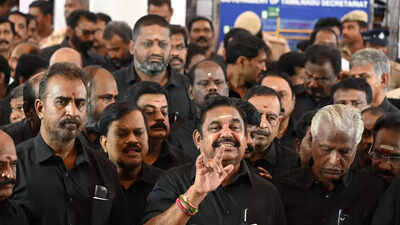
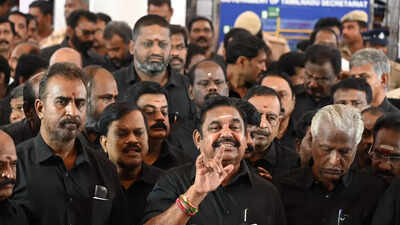
New Delhi: The AIADMKDravid was once the undisputed pole of politics Tamil NaduThere are clear signs of tension after the disappointing performance in the 2026 assembly elections. Just days after the party was reduced to 47 seats in the 234-member assembly, internal divisions have come out into the open, exposing disagreements over leadership, strategy and even whether the party should support the ruling Tamilaga Vetri Kazhagam (TVK) led by Chief Minister C Joseph. Victory.The emerging cracks became visible on the very first day of the new assembly. In a departure from the long-established AIADMK convention, the party’s newly elected MLAs arrived at the Assembly in two separate groups for the swearing-in ceremony on Monday.One faction, including former ministers KP Munusamy and Thalavai N Sundaram, was with AIADMK general secretary Edappadi K Palaniswami (EPS). News agency PTI reported that another camp led by former minister SP Velumani arrived separately along with former minister Dr C Vijayabaskar. Senior leader C Ve Shanmugam, who has emerged as the focal point of dissent within the party, also did not reach out to the EPS camp.Normally, AIADMK MLAs enter the Assembly together as a display of unity and organizational discipline – this tradition was developed during the era of MG Ramachandran and later J Jayalalitha. Therefore, the recent scenes were interpreted by many in Tamil Nadu political circles as more than symbolic, indicating that the AIADMK was struggling to maintain internal cohesion after a severe electoral setback.In the April 23 elections, AIADMK contested 167 seats, but managed to win only 47 seats, slipping further from its dominant position in state politics. AIADMK’s vote share also declined from 33.5% in 2021 to 21.21% in the 2026 elections.The result not only deprived the party of power, but also caused it to lose major opposition status in the assembly – with many within the organization reviling the EPS leadership for this.In the days following the election, several closed-door meetings were held within the party. According to AIADMK sources, those meetings revealed deep disagreements over the future course of the party.A section strongly opposed any move to support Vijay’s TVK government, arguing that supporting a rival regional power would further weaken the AIADMK’s independent identity. However, another faction favored supporting TVK from outside, believing that cooperation with Vijay could help the party maintain political relevance and prevent a further decline in its support base.The division has also intensified demands for a change of leadership.Some MLAs reportedly demanded EPS to step down as party chief, arguing that the AIADMK had faced repeated electoral setbacks under Jayalalithaa’s leadership since her death. Several senior leaders, including Velumani and Shanmugam, did not attend meetings called by the EPS after the results, leading to speculation that an organized rebellion was underway.Former AIADMK leader KC Palanisamy openly claimed that there has been a “clear split” in the party and urged EPS to “voluntarily step down” in order to re-unite the organization before the next election cycle.The discontent appears to stem not only from the latest defeat, but also from a larger existential concern within the AIADMK. Since Jayalalithaa’s death in 2016, the party has been struggling to project a unique commanding figure capable of holding together its powerful regional satraps and caste-based support factions. EPS emerged as the dominant leader after a long internal battle between O Panneerselvam and the Sasikala faction, but critics within the party say he has failed to revive the AIADMK electorally.The rise of Vijay’s TVK has deepened that crisis. For decades, Tamil Nadu politics revolved around the DMK-AIADMK binary. The emergence of TVK as the ruling party has disrupted that structure, leaving AIADMK leaders divided over whether confrontation or accommodation offers a better path to survival.According to party insiders, Shanmugam and Velumani had mooted the idea of supporting TVK immediately after the election decision. EPS reportedly initially rejected the proposal, leading to resentment among senior leaders who believed that the AIADMK needed to quickly adapt to the changed political landscape.Sources said some sections of the rebel camp also sought communication channels with TVK leaders. An AIADMK leader claimed that Shanmugam approached TVK general secretary N Anand to express his willingness among some MLAs to support the Vijay government.However, TVK’s response reportedly made the matter more complicated. According to AIADMK sources, Vijay was unwilling to accept only outside support from AIADMK MLAs while maintaining his party identity. Instead, he is said to have insisted that any MLA wishing to support TVK should resign and seek re-election under TVK’s ‘whistle’ symbol.That proposal appears to have worried many AIADMK MLAs. While some are reportedly ready for strategic cooperation with the TVK, some are willing to resign and risk by-elections out of fear of backlash from their constituencies and uncertainty over their political future.Even as rumors of rebellion gained momentum, AIADMK leaders publicly attempted damage control.Party MLA Esakki Subaya dismissed reports of a crisis and insisted that the AIADMK would remain united and intact. “Everything is going well within the party. No one can break the party,” he told reporters outside the assembly.He denied claims of widespread discontent and labeled reports of the split as “false news”, while also dismissing questions about a possible leadership change.Nevertheless, political observers believe that such public claims are common in Tamil Nadu politics at moments of internal churning. He argues that the more obvious development lies in the leaders’ apparent isolation, parallel meetings and coordinated absence from EPS-led events.Political analyst Satyalay Ramakrishnan told news agency PTI that the situation remains volatile and can still be resolved if senior leaders prioritize unity. “I think the party is united till now because all the AIADMK MLAs were sitting together in the assembly,” he said. “Senior leaders of AIADMK should ensure that there is no division in the party.”Still, the challenge before AIADMK is big. Beyond immediate leadership questions, the party faces a deeper ideological and structural dilemma: how to redefine itself in the post-Jayalalitha era, where a new political force has captured the public imagination.The coming weeks may prove decisive for EPS. If he manages to retain the loyalty of most MLAs, he may avoid this latest bout of discontent. But if more MLAs move towards the Velumani-Shanmugam camp, there could be another internal rift in the AIADMK since Jayalalitha’s death.