

Protecting life: Poland spends millions on an artificial island to protect rare birds and conserve wildlife world News
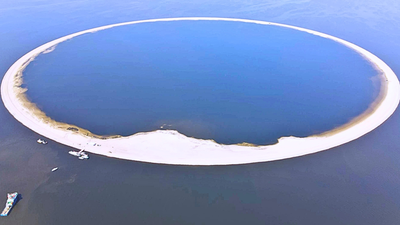
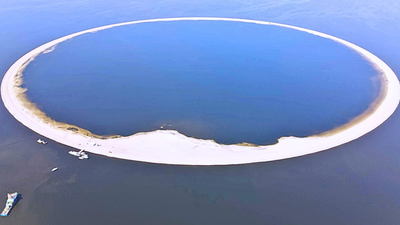
In an era when artificial islands are usually associated with luxury developments, airports or tourism projects, Poland created an island for an entirely different purpose. Emerging from the waters of the Szczecin Lagoon near Świnoujście, the artificial island known as Wispa Jana Zabawi-Wroblewskiego was created using sand dredged from a major shipping project. But instead of converting the new land into a commercial area, the authorities closed it to the public and turned it into a protected sanctuary for birds and wildlife. Today, scientists are watching as nature slowly reclaims the barren island, turning it into one of the Baltic region’s most unusual conservation experiments.
How the island was created to protect life and wildlife
The island was formed during the deepening of the Szczecin–Świnoujście Shipping Channel, a major infrastructure project designed to allow large cargo ships to travel more easily between the Baltic Sea and the port of Szczecin. As engineers excavated the lagoon floor, they removed millions of cubic meters of sand and sediment from the waterway.Rather than dispose of the material elsewhere, Polish authorities used it to build a new artificial island in the Szczecin Lagoon. The island was completed in 2021 and covers approximately 180 hectares, spanning approximately 1.2 kilometers at its widest points.What makes this island unusual is that it was never intended for tourism or development. Public access was restricted almost immediately after construction as the area was to serve as a protected habitat for rare water birds and delicate wetland ecosystems.
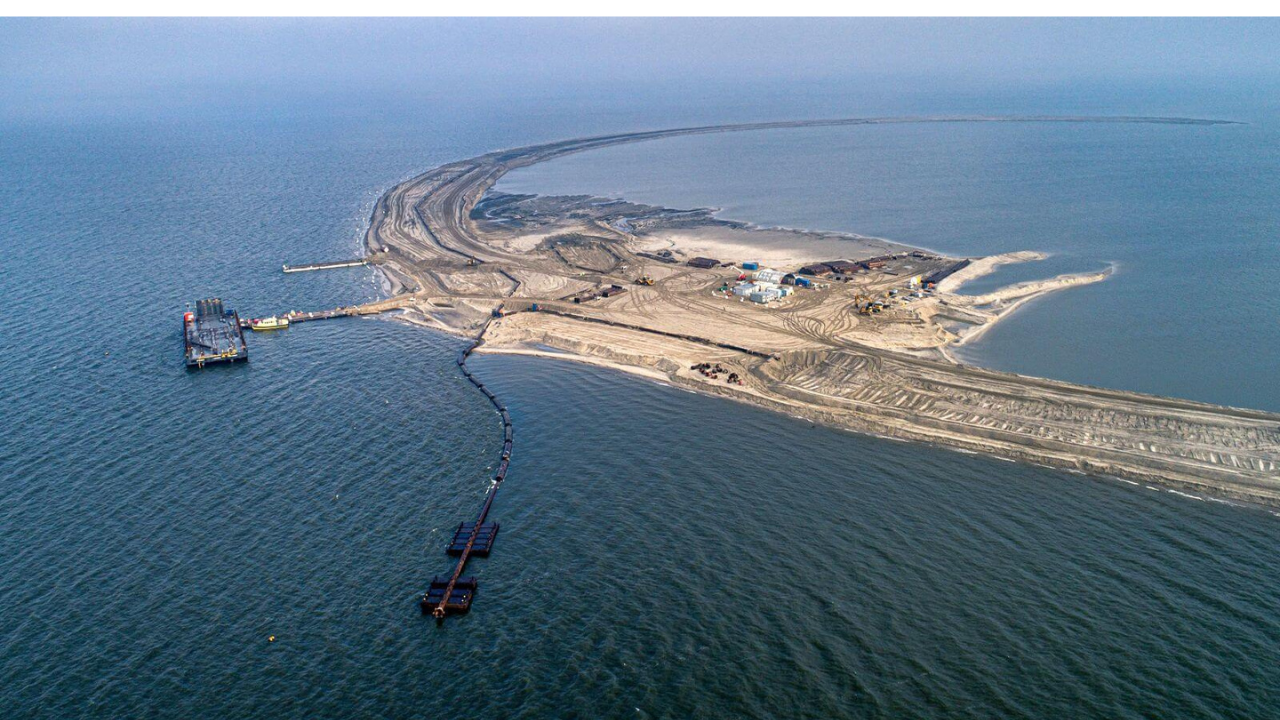
Environmental experts saw the project as an opportunity to address some of the ecological disruption caused by dredging. Over time, the sandy terrain and shallow waters surrounding the island began to attract gulls, terns and migratory birds looking for undisturbed places to nest.Instead of roads, hotels or marinas, the island was deliberately left largely untouched so that wildlife could gradually establish itself.
A real-time ecological experiment
Scientists monitoring the island have described it as a rare example of ecosystem formation occurring almost from scratch. When the project was completed, the island consisted mostly of open sand and sediment. Since then, populations of plants, insects and birds have gradually begun to inhabit the area through a natural process called ecological succession.Researchers are particularly interested in how quickly birds adapt to newly created habitats in the Baltic region, where coastal ecosystems have long been transformed by industry, shipping and urban expansion.Since humans are largely absent from the island, scientists have a rare opportunity to observe how wildlife react when given protected space to evolve naturally.
Naming controversy around the island
The island also became the center of a local naming controversy. During a public vote, many residents supported the name “Brisna”, a historical Slavic name associated with the area. However, Polish authorities later officially named the island after Jan “Zabawa” Wroblewski, a participant in the Warsaw Uprising during World War II.Although the official name remains Wyspa Jana Zabawy-Wroblewskiego, many local and regional media outlets still continue to use Brysna unofficially.
Transforming infrastructure into conservation
The project is increasingly being seen as an example of how large infrastructure developments can incorporate environmental protection rather than simply reshaping landscapes for industrial purposes. While dredging operations often raise concerns about habitat destruction and ecological damage, Poland’s artificial island demonstrates how that impact can be redirected into conservation initiatives.Today, the island is closed to tourists and largely untouched by human activity. What began as a practical solution for excess dredged sand has evolved into a growing refuge for wildlife, where birds flocked long before any human visitors were allowed to set foot on the shore.