
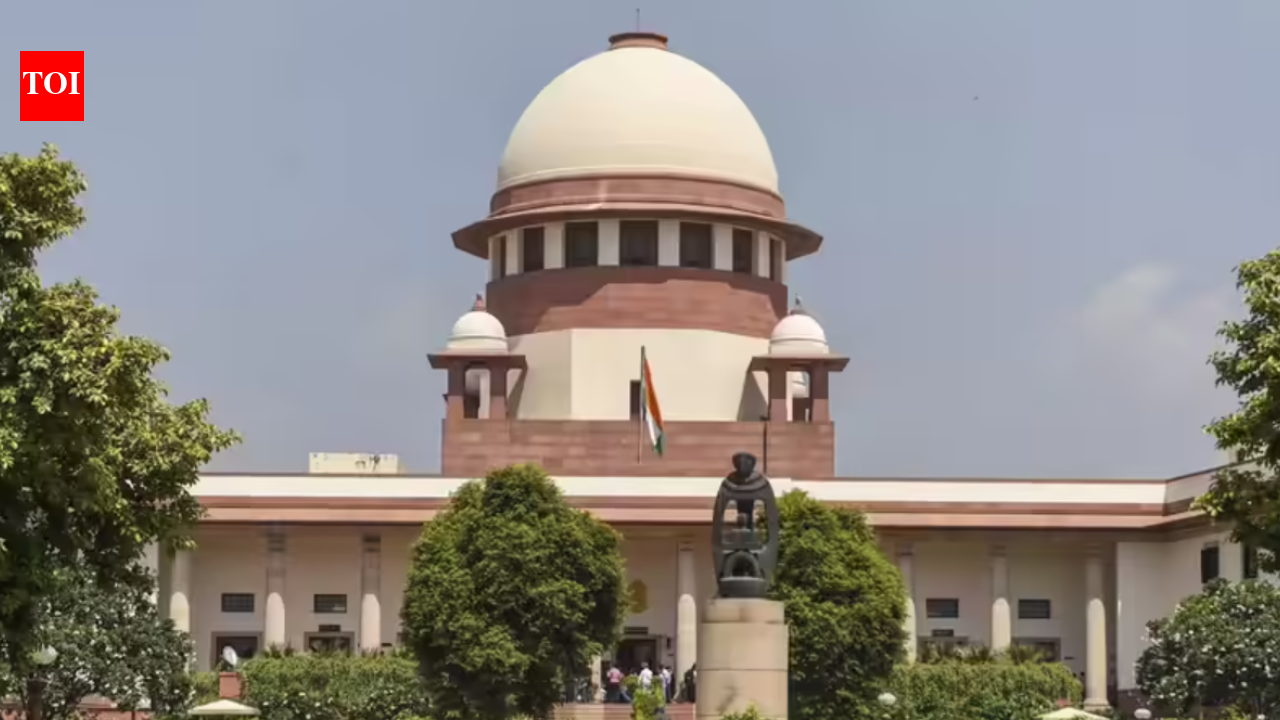

SC: Courts should be cautious in reviewing rituals. india news
New Delhi: Nine judges Supreme Court On Wednesday, the bench appeared to be in agreement with the government on the narrow scope of judicial review of religious practices and said constitutional courts should be extremely cautious in questioning the collective religious beliefs of a sect.The remarks came from a bench comprising CJI Surya Kant and Justices BV Nagarathna, MM Sundaresh, Ahsanuddin Amanullah, Arvind Kumar, AG Masih, PB Varale, R Mahadevan and J Bagchi when Solicitor General Tushar Mehta said there was a multiplicity of sects and sub-sects with distinct religious practices and rituals, even if they were part of one sect.Mehta said, every sect, sect and sub-sect is entitled to practice its specific rituals and if certain secular activities are associated with these religious practices, then while testing the validity of a law restricting the secular part of that religious activity, the courts should be inclined towards protecting the religious practices while maintaining the identity of the sect, sect or sub-sect.Giving an example for his argument, the SG said, “The right to light ‘diyas’ is undoubtedly a matter of religion. However, if in a particular sect, it is mandatory to light 100 diyas every day, the question would be whether a ban can be imposed by the State limiting the quantity of ghee that can be purchased per day. Although purchase of ghee is a secular activity, it is intrinsically linked to something that is a matter of religion and, therefore, the State. It cannot be interfered with.”Justice Nagarathna and Justice Sundaresh said that they were of the view that constitutional courts should not question the collective religious beliefs of the followers of a sect. Mehta said reforms by a state through legislation should be on constitutional grounds – public order, morality and health.Responding to senior advocate Sanjay Hegde’s stand on rationalists that the right to freedom of conscience and the right to freedom of religion allows a person to “wake up as a Hindu, have lunch as a Muslim and sleep at night as a Christian”, Mehta said that if such a thought comes to a person’s mind, he “needs psychiatric treatment”.The bench reserved its decision on the reference related to the faith versus fundamental rights dispute.