IRS officer’s daughter murdered: Autopsy shows ‘multiple scratches, nose fractures’ and signs of physical struggle before death | india news

Former domestic worker arrested for murder of Delhi IIT graduate; related to alwar case

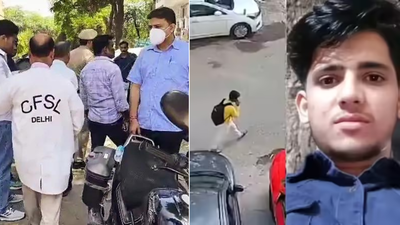
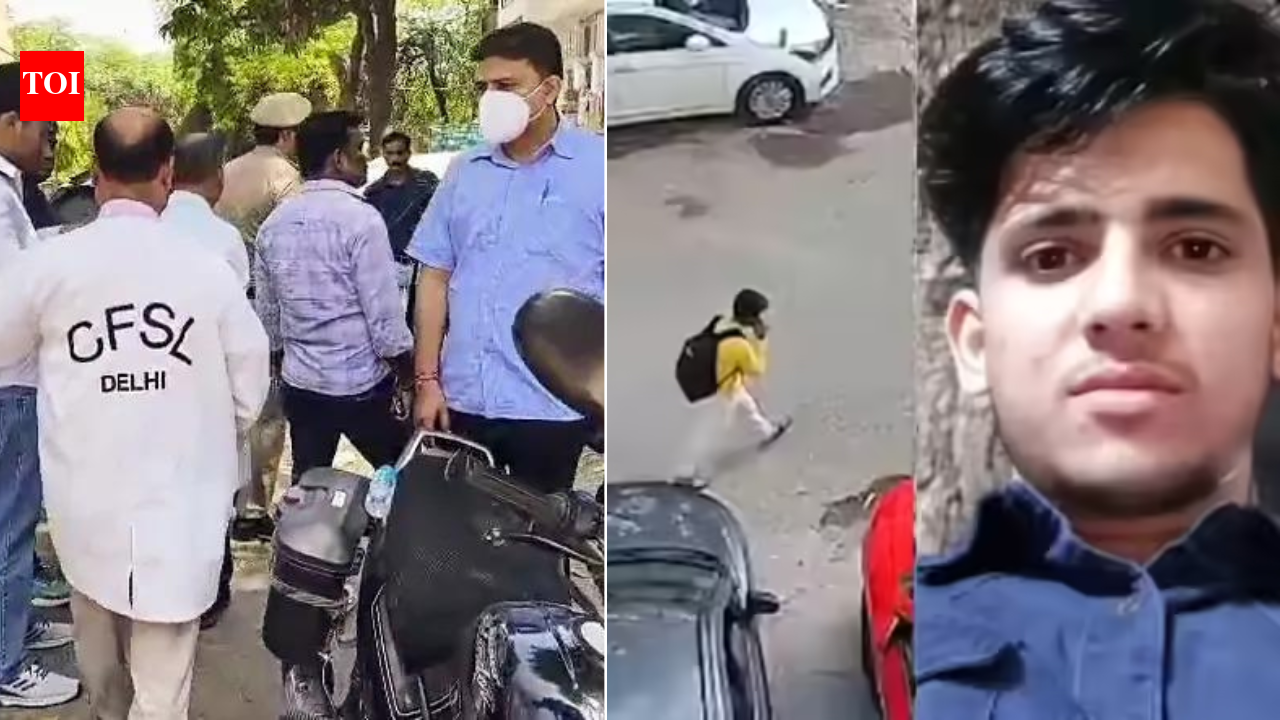
New Delhi: In the investigation into the rape and murder of an IRS officer’s daughter, autopsy findings have revealed a pattern of multiple injuries that point to a violent attack and struggle before death, news agency ANI reported citing Dr Sudhir Gupta, head of forensic medicine at AIIMS Delhi.The news of the 22-year-old woman’s death had come a day earlier on Wednesday and the accused Rahul Meena was later arrested from Dwarka, Delhi.

Watch

Former domestic worker arrested for murder of Delhi IIT graduate; related to alwar case

According to Dr. Gupta, external examination revealed multiple abrasions and scratches on both arms, hands and legs, consistent with the victim’s resistance. “External examination revealed that multiple scratches and abrasions were present on both arms, hands and legs, indicating a struggle,” he said.He also noted facial injuries, including a nasal bone fracture, indicating blunt force trauma. “Multiple abrasions were found on the face, as well as a fracture to the nasal bone – blunt force impact,” Dr Gupta said.During internal examination, significant findings were revealed in the neck area. “On neck dissection – intramuscular hemorrhage was found in the sternocleidomastoid, sternothyroid and sternohyoid muscles,” he said.For further forensic analysis, viscera samples, nail fragments and blood samples have been preserved at the request of the investigating officer to help determine the exact cause and sequence of events.Police sources said the accused allegedly entered the Kailash Hills apartment in south Delhi using a spare key and went straight to a rooftop study, where he assaulted the victim and dragged her blood-soaked body down.The accused, who worked as a domestic help, is suspected of attempting to strangle her before the attack escalated. Police said the victim is suspected to have been sexually assaulted after rendering her unconscious, followed by multiple fatal blows with a heavy object.Sources said he allegedly ran away with cash and valuables, attempted to avoid detection by using fake calls and destroyed mobile phones to destroy digital evidence. He was later traced to Palam railway station, where he tried to escape but failed to board the train.Meanwhile, a Saket court sent the accused to four-day police custody, allowing further interrogation. He was produced in the court after the police sought his custody to continue the investigation.The victim, an IIT Delhi graduate and civil services aspirant, was preparing for her first UPSC attempt and had set up a separate study room on the terrace for focused preparation.A case has been registered under charges of rape, murder and robbery and further investigation is underway.

Source link

Delhi Chief Minister inspects Aruna Asaf Ali Hospital for summer preparations. india news

दिल्ली के मुख्यमंत्री ने अरुणा आसफ अली अस्पताल का औचक निरीक्षण किया; ग्रीष्मकालीन तैयारियों के निर्देश

Delhi Chief Minister conducts surprise inspection of Aruna Asaf Ali Hospital

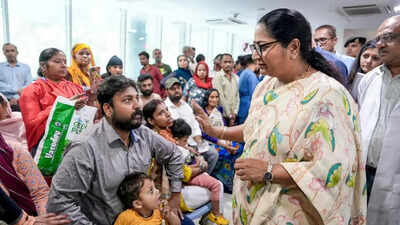
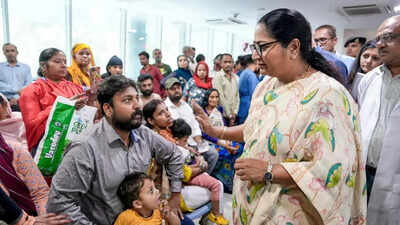
New Delhi: Delhi Chief Minister Rekha Gupta on Thursday conducted a surprise inspection of Aruna Asaf Ali Hospital and took feedback on the services and availability of doctors at the facility.The Chief Minister directed the hospital administration to ensure medicines, drinking water, cleanliness and other facilities as per the summer season.He also interacted with doctors and hospital staff and directed for modernization of health services, making it faster and citizen-centric.“Our resolve is that every citizen of Delhi should experience a healthcare system that ensures timely treatment, availability of modern facilities, clean environment and respectful care to patients,” Gupta said in a post on X.He said that his government is working towards providing reliable health services to every home and making every hospital a center of service, sensitivity and trust.

Source link

Mallikarjun Kharge: ‘Let the notice come, we will respond’: Congress leader Kharge’s reaction to Election Commission’s ultimatum on ‘terrorist’ remarks. india news

'Let the notice come, we will respond': Congress leader Kharge's reaction to Election Commission's ultimatum on 'terrorist' comment
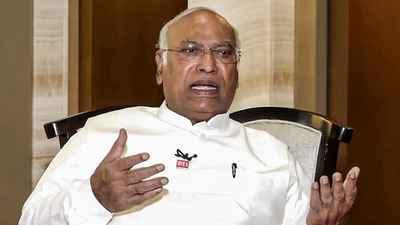
Mallikarjun Kharge (PTI photo)

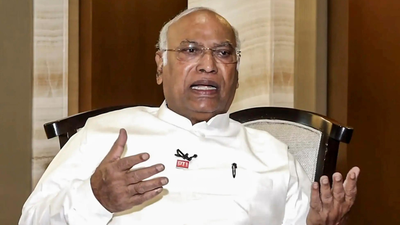
New Delhi: Congress chief Mallikarjun Kharge responded to the strict notice on Thursday Election Commission“Our people will respond to this,” he said. The Election Commission had issued an ultimatum to the veteran leader a day earlier over his “terrorist” remarks Prime Minister Narendra Modi.On the notice, Kharge said, “Let the notice come. We will reply to it in the evening…our people will reply to it.”The Election Commission said the remarks prima facie violate the Model Code of Conduct (MCC) and its guidelines for maintaining decency in campaign discourse. It has asked Kharge to clarify his stand within 24 hours, warning that failure to do so will result in appropriate action.Kharge made the controversial statement at a press conference in Chennai on the last day of campaigning for the Tamil Nadu Assembly elections. He was criticizing the government led by Edappadi Palaniswami AIADMK On his alliance with PM Modi Bharatiya Janata Party.“How can they (AIADMK) associate with Modi? He is a terrorist. And he does not believe in equality. His party will not believe in equality and justice. And these people are associating with him, it means they are weakening democracy, they are weakening the philosophy of Annadurai, Kamaraj, Periyar, Kalaignar and Baba Saheb Ambedkar,” he said.Asked about the context of his remarks, Kharge clarified, “I want to clarify that Modi always threatens. Institutions like ED, IT and CBI are in his hands. So I say, in that context, I say he is terrorizing people and political parties,” the veteran politician said.

Source link

Tamil Nadu Elections: Star-studded voting day, Vijay appeals to Election Commission, Robot welcomes voters – Major developments. india news

Tamil Nadu elections: Voting day decorated with stars, Vijay appeals to the Election Commission, robot welcomes voters - Major developments

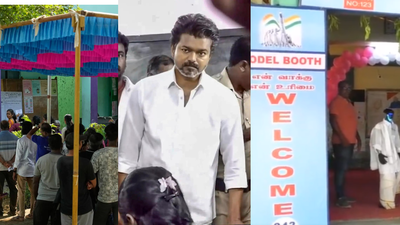
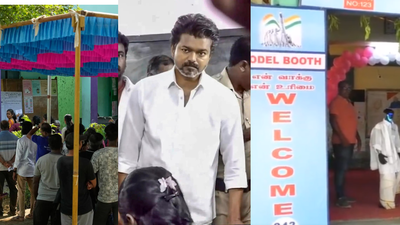
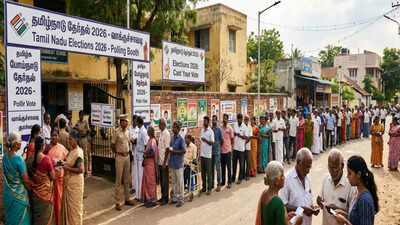
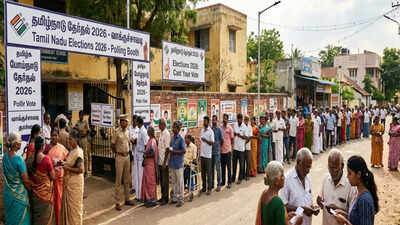
The Tamil Nadu Assembly elections saw strong participation in voting across 234 constituencies, with long queues seen at many polling stations and steady turnout in urban and rural areas.The day saw high-profile voting, with top political leaders, celebrities and first-time voters turning out to vote in large numbers in Chennai, Salem, Coimbatore and other districts.TVK chief Vijay had also written a letter to the Election Commission demanding extension of voting time, citing delays and slow pace due to long queues at many booths.In a notable attraction, a robot dressed in traditional Tamil attire was deployed at a Chennai polling booth to welcome voters, adding a tech-driven charm to the voting process.Over 5.7 crore voters are deciding the fate of over 4,000 candidates in the triangular contest between the DMK-led alliance, the AIADMK-led NDA and actor Vijay’s TVK, which is set to kick off the polls.

Stable voting in all districts

Polling stations across Tamil Nadu witnessed continuous voting throughout the day, with long queues reported in many areas. Election Commission data indicated that participation has been increasing since the morning, reaching 56.81 per cent by 1 pm, with many districts recording brisk voting activity in urban and rural areas.

Top leaders cast their votes early

Chief Minister MK Stalin, Deputy CM Udhayanidhi Stalin, AIADMK chief Edappadi K Palaniswami, TVK chief Vijay and senior leaders including P Chidambaram, Kanimozhi, Anbumani Ramadoss were among the early voters. Stalin urged citizens to participate, saying, “Tamil Nadu will win.”

Star power dominated the voting day

Kollywood celebrities added major visibility to the election process. Rajinikanth, Kamal Haasan, Vijay, Sivakarthikeyan, Ajith Kumar, Suriya, Dhanush, Vikram, Jeeva, Sasikumar, RJ Balaji, Trisha, Anirudh Ravichander and many others cast their votes in Chennai and other districts. Many actors also encouraged responsible voting and civic participation.

Vijay hints at delay, demands more time for voting

TVK chief Vijay, who is contesting the elections, has written a letter to the Election Commission demanding extension of polling time by two hours, citing long queues and slow voting at many booths in Tamil Nadu. In his letter to the Chief Election Commissioner, he said, “There are reports from polling centers that voters are waiting in long queues to cast their votes, but the voting process is slow,” and urged intervention to prevent inconvenience to voters.He also called for better supervision and deployment of designated officers to ensure smooth crowd management and more efficient polling, and said delays could discourage voters from exercising their franchise.

Robot welcomes voters at Vellore booth

A robot dressed in traditional Tamil attire was deployed to welcome voters at a polling booth at the Government Muslim Higher Secondary School in Vellore. The initiative attracted attention as it welcomed citizens to come to vote and highlighted a tech-driven approach to voter participation.

Triangular political competition has intensified

The main contest is between the ruling DMK-led Secular Progressive Alliance and the AIADMK-led NDA, while actor Vijay’s TVK is attempting to emerge as the third force in its electoral debut. DMK leader A Raja claimed that the alliance could get more than 200 seats, while opposition leaders expressed confidence of returning to power.

Voting Logistics and Security

The Election Commission deployed central and state forces along with EVM and VVPAT systems at over 75,000 polling stations. With over 3.6 lakh personnel on election duty, special facilities were arranged for elderly voters, first-time voters and persons with disabilities.

Results on 4th May

Voting will end at 6 pm, counting of votes will take place on May 4. The outcome will determine whether the DMK will retain power, the AIADMK will make a comeback, or whether the TVK will disrupt the traditional Dravidian political system in Tamil Nadu.

Source link

Women’s entry into Sabarimala: Supreme Court says it won’t rely on ‘Whatsapp University’ in religious freedom cases India News

Women's entry into Sabarimala: Supreme Court says it won't rely on 'Whatsapp University' in religious freedom cases
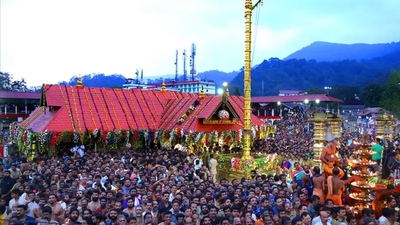
Sabarimala Temple (Kerala Tourism Photo)

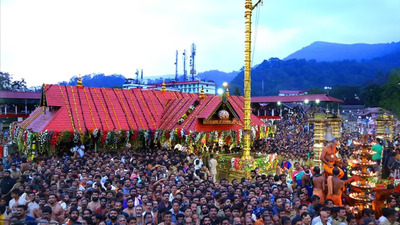
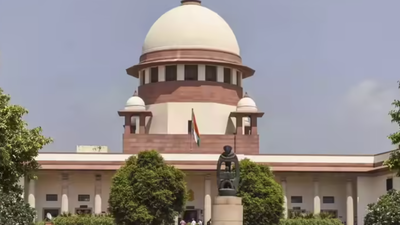
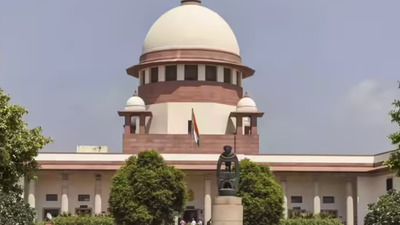
New Delhi: Hearing a case of gender discrimination in temples like Sabarimala, the Supreme Court on Thursday said it respects the views of eminent writers and thinkers but cannot rely on information from ‘WhatsApp University’.The comments came from a nine-judge Constitution bench led by Chief Justice Surya Kant, which was hearing petitions on the scope of religious freedom among different religions. The bench comprised Justices BV Nagarathna, MM Sundaresh, Ahsanuddin Amanullah, Arvind Kumar, Augustine George Masih, Prasanna B Varale, R Mahadevan and Joymalya Bagchi.During the hearing, senior lawyer Neeraj Kishan Kaul, appearing for the Dawoodi Bohra community chief, referred to an article by Congress leader Shashi Tharoor on judicial restraint in religious relief cases.Responding, Chief Justice Kant said the court respects eminent persons and jurists, but personal opinions are just that.Kaul argued that knowledge from all sources should be welcomed. He said, “If knowledge comes from some source, some country or university, it should be accepted. We are too rich as a civilization to reject knowledge.”Justice Nagarathna, in a light-hearted moment, said: “But not from WhatsApp University.”Kaul replied that he was not concerned with evaluating sources, reiterating that the main thing is to accept knowledge wherever it comes from.A day earlier, the top court had said that it is extremely difficult – if not impossible – for courts to define what is an essential religious practice.In a 4-1 judgment in September 2018, a five-judge Constitution bench had lifted the ban on entry of women aged between 10 and 50 into the Sabarimala Ayyappa temple, declaring the practice unconstitutional.

Source link

CGHS patients: CGHS patients face life-threatening delays in treatment approval. india news

When files stop, disease doesn't stop: CGHS patients stuck in life-threatening delays

New Delhi: For thousands of elderly and seriously ill patients dependent on the Central Government Health Scheme (CGHS), the biggest threat is now not just the disease itself, but also the delay in getting approval for treatment.A memorandum sent to Union Health Minister Jagat Prakash Nadda highlighted how life-saving procedures and medicines are getting stuck in the slow-moving approval system, forcing patients to wait for 45 to 120 days – which many do not have.Under the existing mechanism, even after a government specialist prescribes urgent treatment, cases involving high-cost or unlisted treatments must be cleared by a Central Standing Technical Committee (STC) in Delhi. The process involves multiple layers of file movement and depends on meetings that may be held only once a month.For diseases such as cancer, heart failure and advanced kidney disease, such delays can be decisive.“Delay in treatment means loss of life. The condition of patients is deteriorating pending approval,” said TK Damodaran, general secretary of CGHS Beneficiaries Welfare Association of India.The association has documented cases where critical treatment windows were missed. In liver cancer, about 23% of patients saw tumors become inoperable while waiting for approval for ablation procedures. In lung cancer patients requiring immunotherapy, disease progression was reported in more than 40% of cases while waiting. Heart failure patients requiring advanced equipment faced delays of more than three months, while deaths were reported while files were pending.Doctors say such delays impair clinical judgment. “These treatments are time-bound. If the intervention is delayed, the outcomes get significantly worse,” said a senior specialist at a government hospital.Attempts to contact the CGHS director for comments received no response. He neither answered calls nor responded to questions sent to him on WhatsApp.This issue raises serious legal concerns. In the case of Parmanand Katara vs. Union of India, the Supreme Court held that preservation of life is paramount. In Paschim Banga Khet Mazdoor Samiti v. State of West Bengal, it ruled that failure to provide timely treatment is a violation of the right to life under Article 21.Despite advances in digital health systems, approval remains centralized, with decisions for patients across the country being taken by a Delhi-based panel. Health policy experts say this creates inequity and turns a patient’s right to treatment into a lengthy administrative process.The association has urged immediate reforms, including decentralizing approval powers, setting strict timelines and introducing deemed approval if decisions are not taken within a few days. It has also sought automatic clearance and emergency provisions for life-saving care for elderly patients.As India pushes for faster, technology-driven healthcare delivery, the gap between medical urgency and administrative response is becoming harder to ignore.“Doctors prescribe immediately. The system responds months later,” Damodaran said.

Source link

Jaggi murder case: Supreme Court stays the High Court’s decision giving life imprisonment to the son of former Chhattisgarh CM Ajit Jogi. india news

Jaggi murder case: Supreme Court stays the High Court's decision to give life imprisonment to the son of former Chhattisgarh CM Ajit Jogi.

New Delhi: The Supreme Court on Thursday stayed the Chhattisgarh High Court order that sentenced Amit Jogi to life imprisonment in the 2003 murder case of Ram Avtar Jaggi.The case, which is more than two decades old, relates to the fatal shooting of Jaggi in June 2003. Jogi, son of former chief minister Ajit Jogi, was acquitted by a special court in 2007 due to insufficient evidence. After this, the challenges of CBI and the victim’s family were rejected by the High Court in 2011.This is a developing story. details to follow…

Source link

Bengal phase 1 elections: TMC, Humayun Kabir workers clash; A crude bomb was thrown last night – what is happening in Murshidabad? | india news

Bengal phase 1 elections: TMC, Humayun Kabir workers clash; A crude bomb was thrown last night - what is happening in Murshidabad?

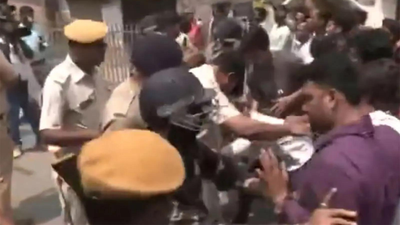
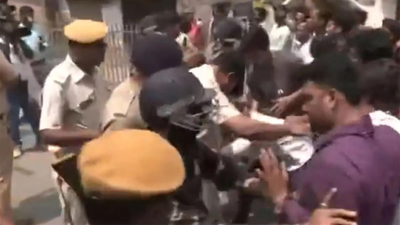
New Delhi: The first phase of voting got off to a turbulent start in West Bengal’s Murshidabad district with clashes, allegations of voter intimidation and technical glitches.West Bengal Phase 1 Voting – Follow Live Updates Tension erupted overnight when crude bombs were reportedly hurled near Shivnagar Primary School, injuring at least one person and spreading panic. A victim told news agency ANI, “I had gone out to offer Namaz at around 8 pm last night...I was standing…two boys came and threw a bomb near my feet. Humayun Kabir’s party workers have done this…” Violence spread on voting day on Thursday. A scuffle broke out between the two Trinamool Congress (TMC) activist and Aam Janata Unnayan Party (AUJP) founder Humayun Kabir visited the affected area. However, Kabir rejected the allegations, saying, “Peaceful elections are being held on all the 22 seats of Nauda, ​​Rezinagar and Murshidabad. But here some incident happened overnight at booth number 9 and 10 of Nauda. They snatched the bags of the local police.In Domkal, many voters alleged that they were threatened and prevented from reaching polling stations. Residents of Raipur village claimed that armed men were present since morning, creating an atmosphere of fear. The allegations were leveled at the ruling TMC, which did not immediately react. Election Commission A report was sought, and later heavy security was deployed to escort voters to the booths when polling resumed.Voting was delayed or stopped due to EVM malfunction at several booths in Murshidabad, including Beldanga, Samsherganj and Kandi. Similar issues were also reported in Nandigram, Malda, Cooch Behar and Siliguri. Congress candidate Sanjay Adhikari said, “We have already filed a complaint… Hundreds of voters are already standing in the queues… and there is no Election Commission representative here who can tell us when the elections will resume.”Voting began at 7 am in 152 constituencies, with 18.76 percent voting recorded till 9 am.

Source link

MK Stalin: Stalin maintains lead, but hidden Rustom Vijay keeps rivals guessing. india news

स्टालिन बढ़त बनाए हुए हैं, लेकिन छुपा रुस्तम विजय प्रतिद्वंद्वियों को अनुमान लगाता रहता हैVictory‘s TVK could tilt the balance.The campaign began as a contest over governance and welfare, and gradually transformed into a larger political argument about identity, federalism and the state’s place in the union. Thanks to Stalin’s efforts to make it a Centre-State fight, the campaign maintained a nationalized tone punctuated by political idioms specific to Tamil Nadu.DMK Started the campaign with the advantage of a strong coalition, a governance track record and visible welfare delivery. Chief Minister and DMK president Stalin, who symbolically launched his campaign from Tiruvarur, the ancestral residence of his father M Karunanidhi, put forward schemes for women and youth. As days passed, his message transformed into a sustained attack on the BJP-led central government. Increasingly, Stalin reminded voters of the “injustice” done to the state by the Centre, and warned voters of what it might do if its ally ADMK returned to power.Gradually, monthly cash transfers and free bus travel for women and free breakfast schemes for school students took a back seat due to an intense political pitch. At the peak of the campaign, Stalin wore a black shirt and dramatically set fire to a copy of the Delimitation Bill, thereby viewing the election as a defense of Tamil Nadu’s rights against Delhi. Yet, in his quiet, direct approach – his morning walks and impromptu meetings with beneficiaries – he returned to the language of welfare and distribution.At the end of the election campaign, Stalin attempted to strike that balance. “After being re-elected, my first signature will be on the order to distribute coupons of Rs 8,000 to women,” he said.Deputy Chief Minister Udayanidhi Stalin Campaigned with vigorous speeches throughout the state. While Stalin spoke in pure Tamil, Udhayanidhi opted for a more conversational, witty style, often taking aim at Epps. Apart from AAP leader Arvind Kejriwal and RJD’s Tejashwi Yadav, Congress leaders Rahul Gandhi and Mallikarjun Kharge campaigned for the alliance, but rumors of separation spread as Rahul and Stalin did not share the stage.The NDA flexed its national muscle with Prime Minister Narendra Modi and Amit Shah organizing road shows and rallies. While Andhra Pradesh Chief Minister Chandrababu Naidu campaigned briefly, the alliance’s most consistent campaigner was EPS.Establishing herself as a self-made leader, EPS kept her message simple and straightforward, focusing on women’s safety, drugs and the alleged governance failures of the DMK. Launching his post-Model Code campaign in Mylapore for BJP candidate Tamilisai Soundararajan, he traveled extensively, mainly attacking Stalin and Udhayanidhi. After the DMK repeatedly called him a “slave of the BJP” and taunted him with the old image of Udayanidhi falling at the feet of VK Sasikala, the EPS launched personal attacks on the Karunanidhi family.The coalition arithmetic – bringing together BJP, PMK and AMMK – gave strength to the NDA. There were reports of dissatisfaction over former BJP state chief K Annamalai’s exclusion from the candidate list, but he eventually joined the campaign. State BJP president Nainar Nagendran found his voice drowned out in the high-decibel presence of national leaders, while PMK’s Anbumani Ramadoss has focused on consolidating Vanniyar support in the northern and western districts for the NDA.And the havoc of wildcard victory continued. Campaigning sparingly but drawing large crowds, he attempted to frame the contest as one between DMK and TVK, taking aim at Stalin while avoiding direct attacks on EPS and BJP. Contesting elections in Perambur and Trichy East, and fielding candidates on 233 seats, his presence was much larger than his limited campaign hours suggested.TOI analysis of the last week of the campaign revealed that Stalin spoke for 356 minutes, EPS for 800 minutes and Vijay for just 35 minutes. Nevertheless, Vijay’s appearance holds high commemorative value – a sign that visibility and influence are no longer directly proportional in the age of spectacle politics.Both Stalin and EPS decided to ignore the large-scale victory. The closest Stalin came to targeting him was when he urged voters in Perambur to choose between an “inaccessible newcomer who makes plays” and “a leader who is accessible and responsive”. Nam Tamilar Katchi’s Seeman made amends to DMK and ADMK by targeting Vijay while speaking eloquently on the politics of Tamil identity and self-respect.All the contenders released promos, impactful videos and memes on social media with a vengeance. Despite its strong arguments against the alleged rise in crime and corruption, the ADMK-led alliance could not turn the tide of anti-incumbency sentiment. If the TVK pulls away from the anti-government votes – and fails to achieve a major victory on its own – and if the average voter chooses continuity and welfare, the DMK may be in a stronger position.

heated seats

EdappadiThis seat in Salem district has been the home turf of ADMK general secretary EPS for a long time. He has won five of the eight election battles fought here, including three in a row since 2011. With the support of his community, the Gounders, Palaniswami may be feeling confident about his prospects here despite the challenge from the DMK and colleagues-turned-foes like O Panneerselvam and VK Sasikala.Previous winners: 2011, 2016, 2021 (ADMK)LalgudiLima Rose Martin, wife of lottery baron Santiago Martin and the richest candidate in these elections – she has declared assets worth over Rs 1,000 crore – is in the fray here. She joined ADMK only in February, but the ADMK rank and file is working overtime to ensure her victory. The DMK, which has won the seat eight times since 1971, has fielded a low-profile candidate in place of sitting MLA Soundarrapandian.Previous winners: 2011, 2016, 2021 (DMK)CoalMeaningUrKolathur has been represented by CM MK Stalin in Chennai since its formation in 2011. In 2021, he defeated his ADMK rival by a margin of over 70,000 votes. The DMK will rely on Stalin’s reach, governance record and the organizational strength of the party to continue its winning streak here. The opposition has highlighted local issues and shortcomings of governance.Previous winners: 2011, 2016, 2021 (DMK)Madurai CentralIT Minister Palanivel Thiagarajan is trying to score a hat-trick of victories here. But he faces a fight in the form of Sundar C of ADMK ally Puthiya Neeti Katchi (PNK). The actor-director’s wife Khushboo, herself an actress, has added a touch of glamor to his campaign. TVK’s VMS Mustafa and NTK’s K Abdul Hakim may split the minority votes, causing damage to the DMK.Previous winners: 2011 (DMDK); 2016, 2021 (DMK)PeramburThis seat in North Chennai is the seat where actor Joseph Vijay is contesting for the first time. With a large working class population, it was a stronghold of the Left before turning into a DMK stronghold in recent years. Incumbent Shekhar won in 2021 by a margin of over 54,000 votes. Vijay chose the seat because 40,000 voters had signed up on the TVP app and he hopes to win over Dalits and minorities.Previous winners: 2011 (CPM); 2016 (ADMK); 2021 (DMK)Chepauk-TriplicaneThis seat of Chennai is with DMK since 2011. Deputy CM and CM MK Stalin’s son Udhayanidhi Stalin won his first election in 2021 here by over 69,000 votes. There are a large number of Muslim voters here who can shape the outcome. The DMK focused on its welfare measures while the opposition talked about local grievances such as parking issues, narrow roads etc.Previous winners: 2011, 2016, 2021 (DMK)

Source link

A slap on Congress’ ‘Hindu terror’ statement, BJP’s comment. india news

कांग्रेस के 'हिंदू आतंक' कथन पर करारा तमाचा, भाजपा की टिप्पणीCongress face of leadership, BJP This once again vindicates its stand that the opposition party had invented terms like “Hindu terror” and “saffron terrorism” to defame Hindus because of its appeasement politics during its government, it said on Wednesday.In a press conference, BJP spokesperson Gaurav Bhatia demanded an apology. Sonia Gandhi And Rahul Gandhi Allegedly accused of conspiring to defame Hindu religion. He said that this blast took place during the tenure of Congress led UPA. “However, Congress invented saffron terror in its headquarters on the instructions of Sonia Gandhi to hide its failure, do appeasement politics and please Rahul Gandhi,” he alleged.He criticized former ministers Shivraj Patil and P Chidambaram for linking terrorism to Hindu groups, saying they should also apologise.

Source link