Delimitation needed to maintain one vote, one value: Amit Shah in Lok Sabha india news

Delimitation needed to preserve one vote, one value: Amit Shah in Lok Sabha
‘You’ll have no place to hide’, p 22

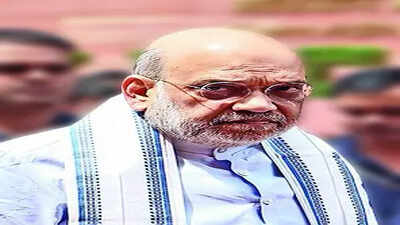
New Delhi: Home Minister Amit Shah Strongly defended the delimitation proposal on Friday, saying the current cap on the number of Lok Sabha seats since 1976 is a violation of the constitutional principle of “one person, one vote, one value”, reports Kumar Rakesh. He said that the number of voters in many seats has increased so much that an MP cannot do justice to his seat.He also rejected the allegation that the Women’s Reservation Bill is a ploy to delay the caste census. He said, “PM Modi had anticipated that doubts would arise and hence he approved the caste census from the Union Cabinet. This time there will be a column for caste in the enumeration process.”Responding to the debate on constitutional amendment bills for women’s reservation and delimitation, Union Home Minister Amit Shah said the two primary reasons behind the bills are to ensure time-bound implementation of women’s reservation by 2029 and to implement the idea of ​​”one person, one vote, one value” in the true spirit.The Malkajgiri Lok Sabha seat in Telangana has more than 39 lakh voters, Shah said, emphasizing that 127 constituencies have more than 20 lakh voters. He rejected the opposition’s charge that delimitation would result in the southern states losing importance in the Lok Sabha. On average, a Lok Sabha seat in the South has far fewer voters than in the North.On caste reservation, Shah said, “The BJP government will run as per the collective spirit of the Parliament. There should be no doubt about it.” He said that for the BJP, representation and participation of the people of the country (in the legislatures) is most important, showing a rare willingness to engage on the issue.However, he rejected the quota for Muslims and said it violated the Constitution. “We will not allow anyone to implement this.”Taking an aggressive stance on women’s quota, the Home Minister, as the Prime Minister had said on Thursday, warned the opposition of a strong reaction. “If you do not vote in support of the Bill, it will fall, but the women of the country are watching who stands in their way. You will have no place to hide in the elections. The Opposition will have to face the wrath of women not only in the 2029 Lok Sabha elections but at every level, in every election and everywhere.Later, he took to Twitter to scold the opposition for celebrating the defeat of the bills.The most dramatic moment during his reply came when he accepted Congress MP KC Venugopal’s demand that it be written in the bill that seats in every state would increase by 50%. However, he quickly rejected Venugopal’s other demand to delimit the Women’s Reservation Bill, saying it is a “tempting trap” to deny women quota in 2029.He took on Rahul Gandhi’s claim of Congress being a supporter of the OBC issue. Listing decisions like not implementing Kalelkar Commission recommendations for OBC reservation under Jawaharlal Nehru, Indira Gandhi not acting on Mandal Commission recommendations and Rajiv Gandhi opposing it, Shah said, “Congress is the most anti-OBC party.”He said, Congress has never made any member of the OBC community the Prime Minister, whereas BJP has given the country a Prime Minister from an extremely backward caste in the form of Modi.Recalling the opposition party’s stand on the Shah Bano verdict and triple talaq, he said the Congress and its allies in the Indian camp have a history of rejecting the legislative proposal for reservation five times since the idea was first introduced during the PV Narasimha Rao government, and at times it has depended on its allies to defeat the proposal. He said the Congress has clearly opposed all the signature initiatives of the Modi government – from scrapping special status for Jammu and Kashmir to the Citizenship (Amendment) Act.

Source link

Women’s quota, delimitation: Opposition rejects bill in Lok Sabha, NDA government’s first legislative defeat. india news

Women's reservation, delimitation: Opposition rejects bill in Lok Sabha, this is NDA government's first legislative defeat

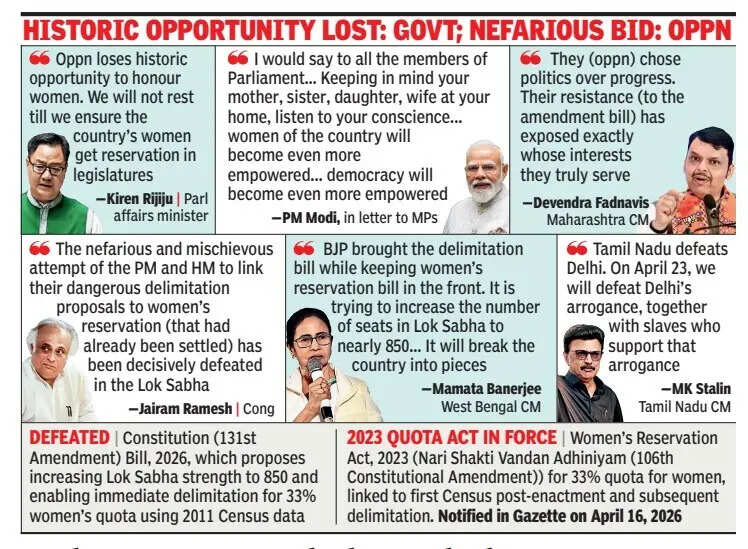
New Delhi: The united opposition on Friday rejected Prime Minister Narendra Modi’s “voice of conscience” and the Home Minister’s last-minute appeal. Amit ShahOffering to write into the Women’s Reservation Bill that Lok Sabha seats would increase by 50% in all states, handing the government its first legislative defeat in 12 years, the proposed legislation failed to receive the required two-thirds votes in the House. Opposition parties – who had alleged that the bill promising a quota for women from 2029 is a ploy to cut the south’s representation in the Lok Sabha, redrawing the political map for the BJP’s benefit and delaying the caste census – did not agree with Shah’s claim that the weight of southern states in the Lok Sabha would increase marginally under the proposed formula and that the government was committed to carrying out the caste census. The Constitution (131st Amendment) Bill received 298 votes in support and 230 votes against it. To pass it, at least 352 votes in favor of the members present in the House were required. With the passage of the Central Bill, the Parliamentary Affairs Minister Kiran Rijiju Said that two other bills “intrinsically” linked to the main proposal, including delimitation, would be withdrawn.

,

Shah told the opposition, you will have no place to hide in the elections.Responding to the debate on constitutional amendment bills for women’s reservation and delimitation, Union Home Minister Amit Shah said the two primary reasons behind the bills are to ensure time-bound implementation of women’s reservation by 2029 and to implement the idea of ​​”one person, one vote, one value” in the true spirit. The Malkajgiri Lok Sabha seat in Telangana has more than 39 lakh voters, Shah said, emphasizing that 127 constituencies have more than 20 lakh voters. He rejected the opposition’s charge that delimitation would result in the southern states losing importance in the Lok Sabha. On average, a Lok Sabha seat in the South has far fewer voters than in the North. On caste reservation, Shah said, “The BJP government will run as per the collective spirit of the Parliament. There should be no doubt about it.” He said that for the BJP, representation and participation of the people of the country (in the legislatures) is most important, showing a rare willingness to engage on the issue. However, he rejected the quota for Muslims and said it violated the Constitution. “We will not allow anyone to implement this.” Taking an aggressive stance on women’s quota, the Home Minister, as the Prime Minister had said on Thursday, warned the opposition of a strong reaction. “If you don’t vote in support of the bill it will fall, but the women of the country are seeing who is standing in their way. You will have no place to hide in the elections.” The opposition will have to face the anger of women not only in the 2029 Lok Sabha elections but at every level, in every election and everywhere. Later, he took to Twitter to scold the opposition for celebrating the defeat of the bills. The most dramatic moment during his reply came when he accepted Congress MP KC Venugopal’s demand that it be written in the bill that seats in every state would increase by 50%. However, he quickly rejected Venugopal’s other demand to delimit the Women’s Reservation Bill, saying it is a “tempting trap” to deny women quota in 2029. He took on Rahul Gandhi’s claim of Congress being a supporter of the OBC issue. Listing decisions like not implementing Kalelkar Commission recommendations for OBC reservation under Jawaharlal Nehru, Indira Gandhi not acting on Mandal Commission recommendations and Rajiv Gandhi opposing it, Shah said, “Congress is the most anti-OBC party.” He said, Congress has never made any member of the OBC community the Prime Minister, whereas BJP has given the country a Prime Minister from an extremely backward caste in the form of Modi. Recalling the opposition party’s stand on the Shah Bano verdict and triple talaq, he said the Congress and its allies in the Indian camp have a history of rejecting the legislative proposal for reservation five times since the idea was first introduced during the PV Narasimha Rao government, and at times it has depended on its allies to defeat the proposal. He said the Congress has clearly opposed all the signature initiatives of the Modi government – from scrapping special status for Jammu and Kashmir to the Citizenship (Amendment) Act.

Source link

Tamil Nadu elections: Sasikala, Ramadoss can spoil AIADMK’s game. india news

Tamil Nadu elections: Sasikala, Ramadoss can spoil AIADMK's game

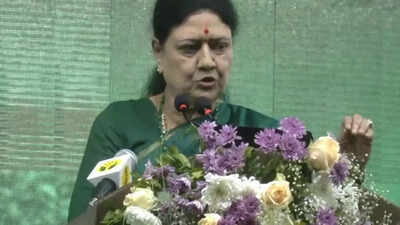
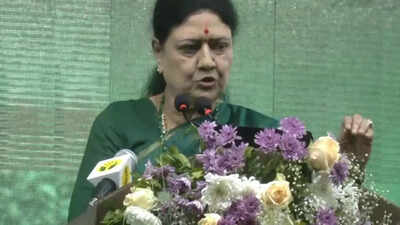
Chennai: Two weeks ago, in Tirupparankundram constituency of Madurai, VK SasikalaThe confidant of former Tamil Nadu chief minister late J Jayalalitha hinted at a clear mission for the April 23 assembly elections: wooing the Thevars, a dominant OBC community in the state’s southern and central regions, a block once seen as the backbone of the state. AIADMKsupport of. Through her campaign, Sasikala, who only last month founded a new organisation, All India Puratchi Thalaivar Makkal Munnetra Kazhagam, has consistently targeted the AIADMK general secretary. Edappadi K Palaniswami. Sasikala feels that many people in the community are unhappy with the EPS. He has also signed an agreement with PMK founder S Ramadoss. Both have a sense of betrayal – Sasikala was sidelined in the AIADMK after Jayalalithaa’s death, while Ramadoss has lost control of the PMK to his son. Sasikala has fielded 75 candidates, of which about 50% are in Thevar belt. Ramadoss has fielded candidates in 37 constituencies in the Vanniyar belt, including Dharmapuri, where his daughter-in-law Soumya Anbumani is in the fray. Vanniyars are a politically influential and numerically significant group in northern Tamil Nadu, comprising about 25% of the total population. Like Sasikala, the veteran PMK leader is also expected to spoil the game of the AIADMK front as he is targeting his son and PMK president Anbumani Ramadoss, which is part of the opposition alliance. Political observers say that with the state being a multi-cornered contest, even a division of around 1,000 votes could tilt the results. In 2021, the victory margin in 25 constituencies was less than 3,000 votes. Ramdas is giving an emotional statement accusing Anbumani of betraying him. Their candidates have continued their campaign targeting Anbumani more than her political opponents. “Sasikala’s criticism of Palaniswami and his supporters over her removal from party posts will have ramifications. Similarly, you cannot erase four decades of Ramdas and his politics for the community. Together, they will definitely work to spoil the AIADMK-led front in the northern, delta and southern districts,” said political critic Rajan Kurai Krishnan. Apart from Sasikala and Ramadoss, Puthiya Tamilagam founder K Krishnaswamy has fielded candidates in around 60 constituencies in the western and southern regions. He also targeted AIADMK. Meanwhile, Tamiliga Vazhvurimai Katchi functionary T Velmurugan has fielded candidates in several constituencies after walking out from the DMK-led front.

Source link

‘Each deity has specific rituals’: Sabarimala priest tells Supreme Court india news

'Each deity has specific rituals': Sabarimala priest tells Supreme Court

New Delhi: The chief priest of the Sabarimala Ayyappa temple, whose tradition of barring entry of menstruating women was abolished in 2018, said on Friday Supreme Court As Dhananjay Mohapatra reports, the rights and wrongs of the methods of idol worship that are central to Hinduism are juridically indeterminate when rituals are specific to each deity’s manifestation. Appearing for ‘Thantri’, senior advocate V Giri told a bench of Chief Justice Surya Kant and Justices BV Nagarathna, MM Sundaresh, Ahsanuddin Amanullah, Arvind Kumar, AG Masih, PB Varale, R Mahadevan and J Bagchi that a person who challenges a particular worship, ritual or custom of a deity is not a worshiper and, therefore, the courts have no jurisdiction to challenge any ritual. His petition should not be considered unless it is against public order and morality. Or health. He said, “Every Hindu deity has its own characteristics. The rituals and ceremonies followed in a temple will either be unique or at least specific to temples that fall in the same category. Rituals are always linked to the concept of the deity.” Senior advocate Rajeev Dhavan said the state’s right to make laws to eliminate social evils and bring about reforms cannot be extended to reform any religion, faith or belief.

Source link

Pune airport: Indian Air Force incident on Pune runway temporarily halts operations at the airport. india news

Air Force incident on Pune runway, operations at airport temporarily halted

New Delhi: Airport operations have been temporarily halted due to an incident involving an Indian Air Force (IAF) aircraft on the Pune runway on Friday. However, the IAF has clarified that the air crew is safe.social media platformDetails of the incident were not immediately available. However, standard safety protocols were instituted after the incident to ensure there was no risk to personnel or infrastructure. Airport authorities are coordinating with the Indian Air Force to restore runway operations as soon as possible.Pune Airport, which handles both civil and military operations, is one of the major aviation hubs in Maharashtra. Any disruption in runway availability usually affects many arrivals and departures during peak hours.

Source link

Built on sacrifice, a home for the lion-hearted pony-keeper of Pahalgam. india news

Built on sacrifice, a home for the lionhearted pony-wala of Pahalgam
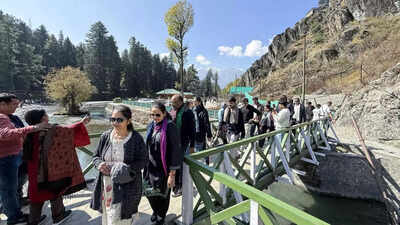
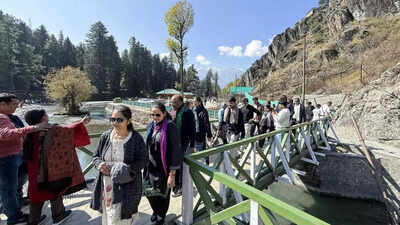
Pahalgam Valley (PTI Image)

Haptnar (Anantnag): His scorched hands and bullet-riddled body told the story of courage and sacrifice. Syed Adil Hussain Shah, the pony-tailed man who held the barrel of a terrorist’s rifle to save tourists during the horrific massacre at Baisaran Valley in Pahalgam last year, came to symbolize the spirit of Kashmir and the soul of India in his last act of selflessness.Adil was the sole breadwinner of his family when he was murdered on April 22, 2025. Over the past year, her family has gone through a profound and complex transformation – from a life defined by daily uncertainty and frugality to relative financial stability, even as they grapple with irreparable loss.Once living in a 40-year-old fragile house made of mud and wood, they are looking forward to moving into a newly constructed single-storey house adjacent to the old structure. The house, which cost around Rs 10 to 12 lakh, was financed by the party of Maharashtra Deputy Chief Minister and Shiv Sena leader Eknath Shinde. The family says Shinde is expected to visit them on the first anniversary of the attack, after which they plan to shift to a new residence.Additionally, the family has received financial assistance of around Rs 20 lakh from government sources and other organisations. Even Adil’s widow Nazim has been given a permanent job in the fisheries department, while her brother Najakat has got a daily wage job in the Waqf Board. Another brother, Naushad, who once drove a taxi, now owns a cab worth around Rs 12 lakh.His father Syed Haider Shah said, “We have no shortage of money now, but we miss Adil.” “My son used to earn around Rs 300-600 a day and we were happy with it,” he said. “They sacrificed their lives for humanity. When tourists came to Pahalgam, they trusted us and we tried to save them,” he said.Sitting outside the newly constructed house, Haider says he feels proud when people from across the country come and acknowledge his son’s courage. “He lost his life, but he made our lives more secure,” he said.Haider says that he knows that there are different opinions about his son in Kashmir and beyond. Haider, who is fluent in Pahari, Kashmiri and Urdu, says people from across the country keep coming to meet the family to express their condolences. “The people of the valley value what he did by giving his life to save the tourists and ensure their safety,” he says. “But people outside Jammu and Kashmir perhaps understand his sacrifice more deeply. They see that he did not think on religious lines and gave his life for others.He told that there were many people present in Baisaran that day who managed to escape. He says, “My son could have also saved himself. But he did not do so. His conscience did not allow it and I am proud of it.”Memories become fresh. He says, “His fingers were injured as he tried to snatch the rifle. Then he was shot in the back.”“That day was the heaviest day of our lives. It was the day of doomsday,” he says almost in a whisper. “When I heard there was firing in Baisaran, I started calling him. He didn’t respond. Since there was no network there, I thought he would respond. I kept calling till about 4 or 4.30 p.m. At 6 p.m., when there was no response, I went to Ashmukam police station and told them my son was missing. They asked me to go home.”He becomes silent for a while; Then, with a deep breath he says: “When I reached home, I was informed by the police that my son’s body was in Pahalgam Hospital…” Haider stops there, his eyes filling with tears.When the family reached Srinagar hospital to collect Adil’s body, a female tourist, who had lost a member of her family, said that Adil had tried his best to save them by snatching the gun from the terrorists. Medical reports showed that he had been shot at close range – there was a hole in his neck, there were bullet holes in his chest and part of one of his shoulders was mangled by a bullet.

Source link

The failure of the Constitutional Amendment Bill is the defeat of delimitation, not of women’s reservation: Opposition. india news

The failure of the Constitution Amendment Bill is the defeat of delimitation, not of women's reservation: Opposition
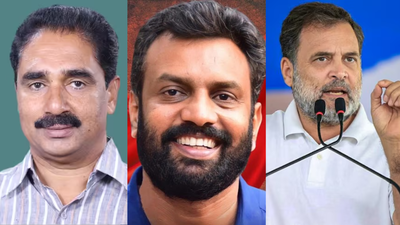
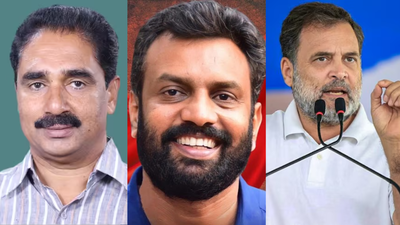
NK Premchandran, Sandosh Kumar, Rahul Gandhi

New Delhi: The victorious opposition termed the failure of the Constitutional Amendment Bill as the defeat of delimitation, not women’s reservation.After the opposition got the upper hand in voting. Congress Leader Rahul Gandhi Spoke to TMC heir apparent and MP Abhishek Banerjee and thanked him for the support. There were concerns that due to the election campaign in Bengal, only a few of the 28 TMC MPs might come to Parliament. But after repeated requests from India Bloc leaders, TMC sent 21 MPs, who impressed Mamata Banerjee Attendance at the debate and voting was crucial to thwarting the Modi government’s plan on delimitation. According to sources, Banerjee told Rahul, “The wind is blowing against the BJP.”Akhilesh Yadav called it the defeat of BJP’s malice.RSP’s NK Premachandran said the non-passage of the bill shows that the BJP should take advice from the opposition on important issues related to the country. He said, “This defeat is not about women’s quota, but about backdoor delimitation.”Priyanka Gandhi Vadra accused PM Narendra Modi of linking women’s reservation with delimitation based on the 2011 census. “But his hollow attempt to project himself as the messiah of women has failed today,” he said. Priyanka said that if these three bills had been passed in the Parliament, democracy would not have survived in India.Rahul Gandhi said, “They used unconstitutional tactics in the name of women to break the Constitution.” Congress whip Manickam Tagore said, “We have defeated ego.”CPI MP Sandosh Kumar said the collapse of the government law shows that there is strong opposition to any attempt to change the balance of representation in the country. He said that the women of the country should understand the BJP’s approach of delaying women’s reservation by linking it with census and delimitation. “This defeat is similar to what we saw during the farmers’ movement, when the unity of the people forced the government to repeal the farm laws.DMK chief MK Stalin, who led the protests in Tamil Nadu, said his party was concerned about delimitation, adding “careful consideration needs to be given to ensure that it is fair, especially for the southern states”. He said that the government should have separated women’s reservation from delimitation.

Source link

Before elections, recovery of election inducements in West Bengal, Tamil Nadu crossed Rs 865 crore. india news

Recovery of election inducements in West Bengal, Tamil Nadu before elections crosses Rs 865 crore

New Delhi: Cumulative seizures of potential election inducements in West Bengal and Tamil Nadu have crossed Rs 865 crore, including 96% of the value of liquor seized in the former and 88% of illegal cash seizures in the latter.While in Tamil Nadu, voting will be held on 23rd April, in West Bengal, voting will be held in two phases on 23rd and 29th April. The seizures of Rs 865 crore, made since the activation of the Election Commission’s Election Seizure Management System (ESMS) on February 26, 2026, have been shared almost equally by West Bengal (Rs 427 crore) and Tamil Nadu (Rs 438 crore). Of the total cash seizure of Rs 99 crore, Rs 78 crore is from Tamil Nadu and Rs 21 crore is from West Bengal. About 31.9 lakh liters of liquor worth Rs 81 crore was seized in West Bengal, while 97,107 liters of liquor worth Rs 3 crore was seized in Tamil Nadu.The value of free seizures for both the states is almost equal – Rs 172 crore in West Bengal and Rs 178 crore in Tamil Nadu. Tamil Nadu leads in terms of seizure of precious metals, worth Rs 105 crore, while in West Bengal the figure is Rs 54 crore. Drugs worth Rs 100 crore were seized in West Bengal and Rs 74 crore in Tamil Nadu. The Election Commission, in several review meetings with Chief Secretaries, Chief Electoral Officers and Director Generals of Police as well as heads of enforcement agencies of both the poll-bound states and their border states, has directed them to ensure violence-free, fear-free and inducement-free elections. It has deployed more than 5,011 flying squad teams and 5,363 static surveillance teams in both the states for this purpose.

Source link

World Hemophilia day: The bleed that never really stops | India News

World Hemophilia day: The bleed that never really stops

This disorder doesn’t announce itself. There’s no visible mark, no obvious sign, just blood that refuses to stop when it should. For the millions living with hemophilia worldwide, this invisible reality shapes everything from childhood play to the menstrual cycle, from a minor cut to the prospect of surgery.Every year on April 17, World Hemophilia Day puts a spotlight on this often-overlooked condition. The date was chosen by the World Federation of Haemophilia (WFH) to push governments and policymakers toward something deceptively simple: better treatment, better access, better care. The fact that this push is still necessary, decades after the day was established, tells you something about how quietly hemophilia gets sidelined.At its core, hemophilia is a disorder of clotting. The body is missing or low on specific proteins known as Factor VIII or Factor IX, which tell blood to stop flowing after an injury. Without them, even internal bleeding into joints or muscles can become life-threatening. It is rare, inherited, and above all, widely misunderstood.The condition is also deeply tied to genetics. Because hemophilia is linked to the X chromosome, men are far more likely to be diagnosed with it. A boy born to a carrier mother has a 50 per cent chance of having it. But the idea that hemophilia “only affects men” is a myth that quietly erases millions of women who carry the gene, and who face their own set of risks like heavy periods, complications during childbirth, and unexpected bleeds.That erasure is part of what World Hemophilia Day is trying to fix, not just in policy, but in perception.

The daily reality: Pain, precautions, and the constant risk of bleeding episodes

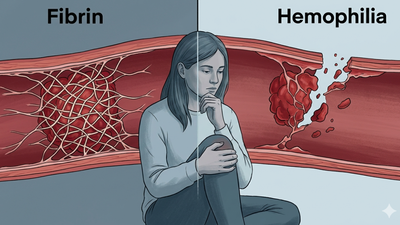
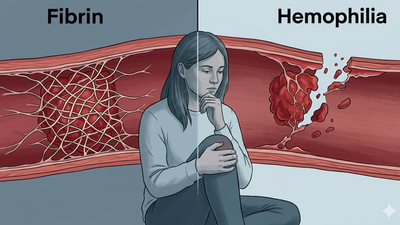
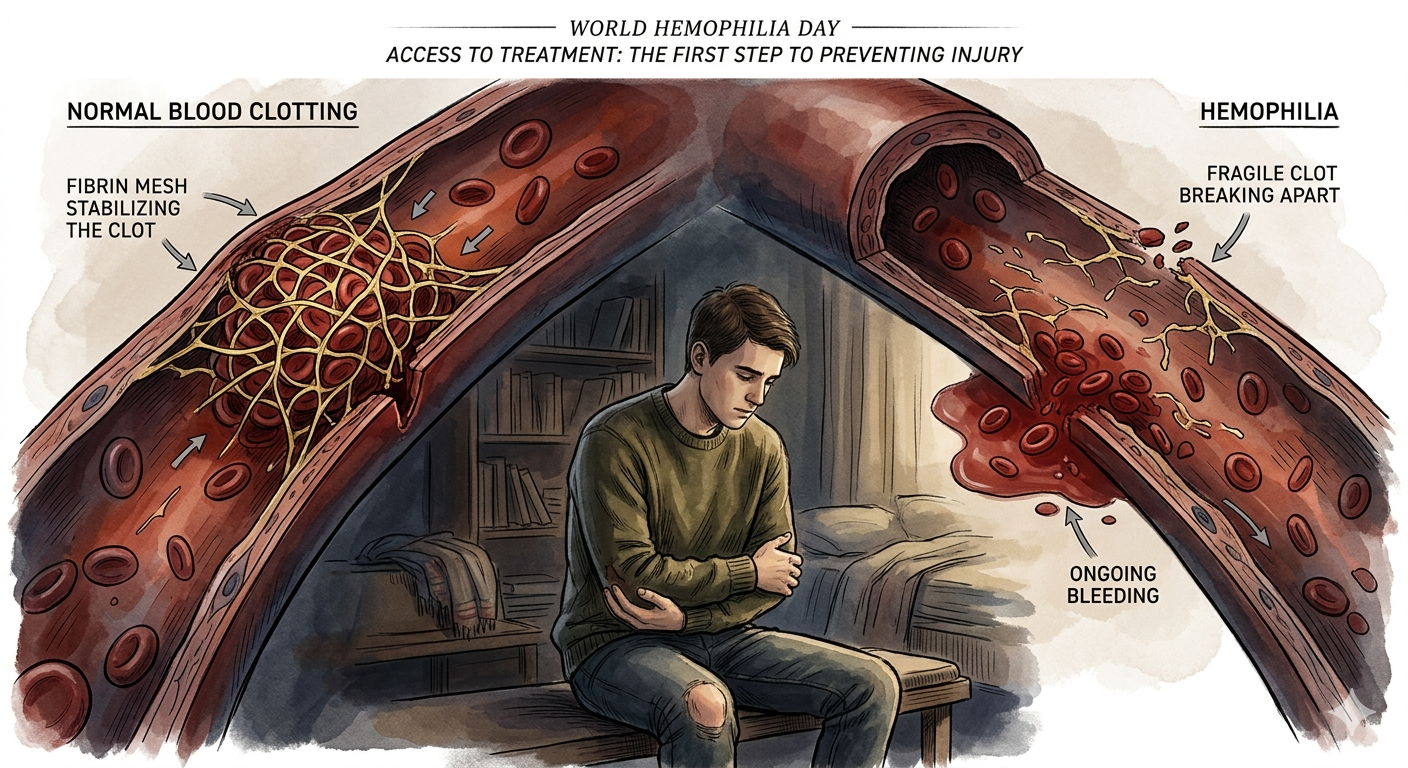
Most people picture hemophilia as a problem with cuts. Someone bleeds, and it refuses to stop; that’s the image. The reality is both less dramatic and way more serious than that.Here’s what actually happens when the body tries to stop bleeding: first, the injured blood vessel contracts, narrowing itself to slow the flow. Then platelets swarm the area, clumping together to form a temporary plug. Finally, clotting proteins in the blood weave a mesh of fibrin over that plug, a tight, strong seal that holds the wound closed while the body heals underneath.
AI generated image

AI generated image

For someone with hemophilia, the first two steps usually work fine. The vessel contracts. The platelets show up. But the third step, which involves the fibrin clot, either doesn’t form or forms so thin and fragile that it gives way. The bleeding doesn’t stop. Or it stops briefly and starts again.This is why the common assumption, that a person with hemophilia will bleed to death from a paper cut, is largely wrong, but not entirely reassuring. Small surface cuts are rarely the danger. The danger lives deeper.

When the body bleeds into itself

Internal bleeding is where hemophilia becomes life-altering. Blood has nowhere to go inside a joint or a muscle except to pool, press, and damage. The knees, elbows, and ankles are the most common areas that are targets. Over time, repeated bleeding into a joint, even when treated, breaks down cartilage, stiffens tissue, and causes a kind of arthritis that arrives decades too early.What makes this harder to manage is how ordinary the triggers are. A bumped knee during a morning commute. An elbow knocked against a doorframe. Injuries so minor that a person without hemophilia wouldn’t register them. For some, there is no trigger at all; bleeding begins mid-stride, in the middle of an otherwise unremarkable day. These are called “spontaneous bleeds”, and they are exactly what they sound like: unpredictable, uninvited, and urgent.The clock matters here. Unlike a cut that a bandage can address, an internal bleed has to be treated very fast with clotting factor infusions, before the pressure and damage compound. Waiting, or not recognising the bleed in time, means more pain, more joint damage, and a prolonged recovery time.This is the daily arithmetic of living with hemophilia: measuring risk against routine, reading the body for early signals, and carrying the knowledge that an ordinary Tuesday can turn very complicated very fast.“Patients suffering from hemophilia face multiple level of daily challenges. One of the primary issues is the constant risk of spontaneous bleeding, especially into joints, which can lead to chronic pain, swelling and reduced mobility over time. Managing the condition required regular infusions of clotting factor, frequent hospital visits, and strict adherence to treatment schedules which can be physically exhausting and a financial burden,” says Dr Geetika Jassal, Medical Spokesperson, Cryoviva Life Sciences.

From Diagnosis to delay: Why early detection still remains a global challenge

For a condition that has been documented for centuries, hemophilia remains very easy to miss.The reasons are layered. Hemophilia exists on a spectrum, severe, moderate, and mild, and each level behaves differently enough that it can look like three separate conditions. Someone with severe hemophilia may show signs early in childhood: unexplained bruising, bleeding after a minor fall, swollen joints that shouldn’t be swollen. But someone with mild hemophilia may go years, sometimes decades, without a single obvious episode. Their blood has just enough clotting factor activity to handle everyday scrapes and cuts. It’s only when something bigger happens like a surgery, a tooth extraction, a serious accident, or childbirth, that the body’s quiet insufficiency finally surfaces.By that point, the diagnosis often arrives as a shock.The family history gapMany families request newborn testing when hemophilia runs in their line. It’s a reasonable precaution, and it catches a significant number of cases early. But roughly one in three babies diagnosed with hemophilia carry a new genetic mutation, one that didn’t exist in either parent. No family history. No reason to look. Just a result that arrives without warning, often after something has already gone wrong.This means that for a substantial portion of people living with hemophilia, the condition was never on anyone’s radar until it announced itself.“Early indications of hemophilia are usually subtle and may be mistaken for normal childhood injuries. These include frequent bruising, prolonged bleeding from minor cuts, recurrent nosebleeds, and excessive bleeding after injections, vaccinations or dental procedures. In infants particularly, swelling in joints presenting as irritability or reduced movement of limb may go untreated. Many parents dismiss these signs as normal or routine problems which may delay the diagnosis. Since the symptoms are not always dramatic early on, hemophilia is often misdiagnosed or identified only after a major bleeding event or surgical complications,” Dr Jassal added.The women who get missedThen there is the group most consistently overlooked: women.The longstanding assumption that hemophilia is a male disease has quietly shaped how doctors ask questions and how women understand their own symptoms. A woman who carries the hemophilia gene can experience heavy menstrual cycles that go on too long, bleeding complications after childbirth, or wounds that take longer to heal than they should. These are real symptoms with a real cause. But without the right questions being asked, or the right awareness in the room, they can get misdiagnosed or dismissed entirely.

AI generated image

AI generated image

The diagnosis, when it finally comes, sometimes follows years of being told that nothing is wrong.What detection actually looks likeWhen hemophilia is suspected, the process is straightforward: a blood test checks whether clotting is happening properly, and if not, factor assays identify which protein is missing and how severely. The tests exist and so does the knowledge. The gap is rarely about medicine, it’s more about whether anyone thought to look in the first place.That gap is widest in low-income countries, where access to specialist care is limited and awareness among general practitioners is uneven. But it exists in well-resourced healthcare systems too, quietly, in the mild cases that never triggered alarm, in the women whose symptoms were explained away, in the newborns whose mutations arrived unannounced.Early detection changes outcomes significantly. It allows families to prepare, doctors to intervene before joint damage sets in, and individuals to understand their own bodies before a crisis forces the conversation. The medicine has moved forward. The awareness, in too many places, is still catching up.“Early diagnosis of hemophilia is crucial to prevent irreversible joint damage, life threatening bleeding episodes and long-term disability. Identifying the condition early allows for initiation of prophylactic clotting factor therapy, which significantly improves the quality of life and long term outcomes. However significant gaps in awareness still exists and continue to remain a major concern. Early signs such as prolonged bleeding after minor injuries, easy bruising or joint swelling are often overlooked or misdiagnosed, especially by primary healthcare providers,” said Dr Jassal.

From plasma bags to precision medicine: The evolution of Hemophilia treatment

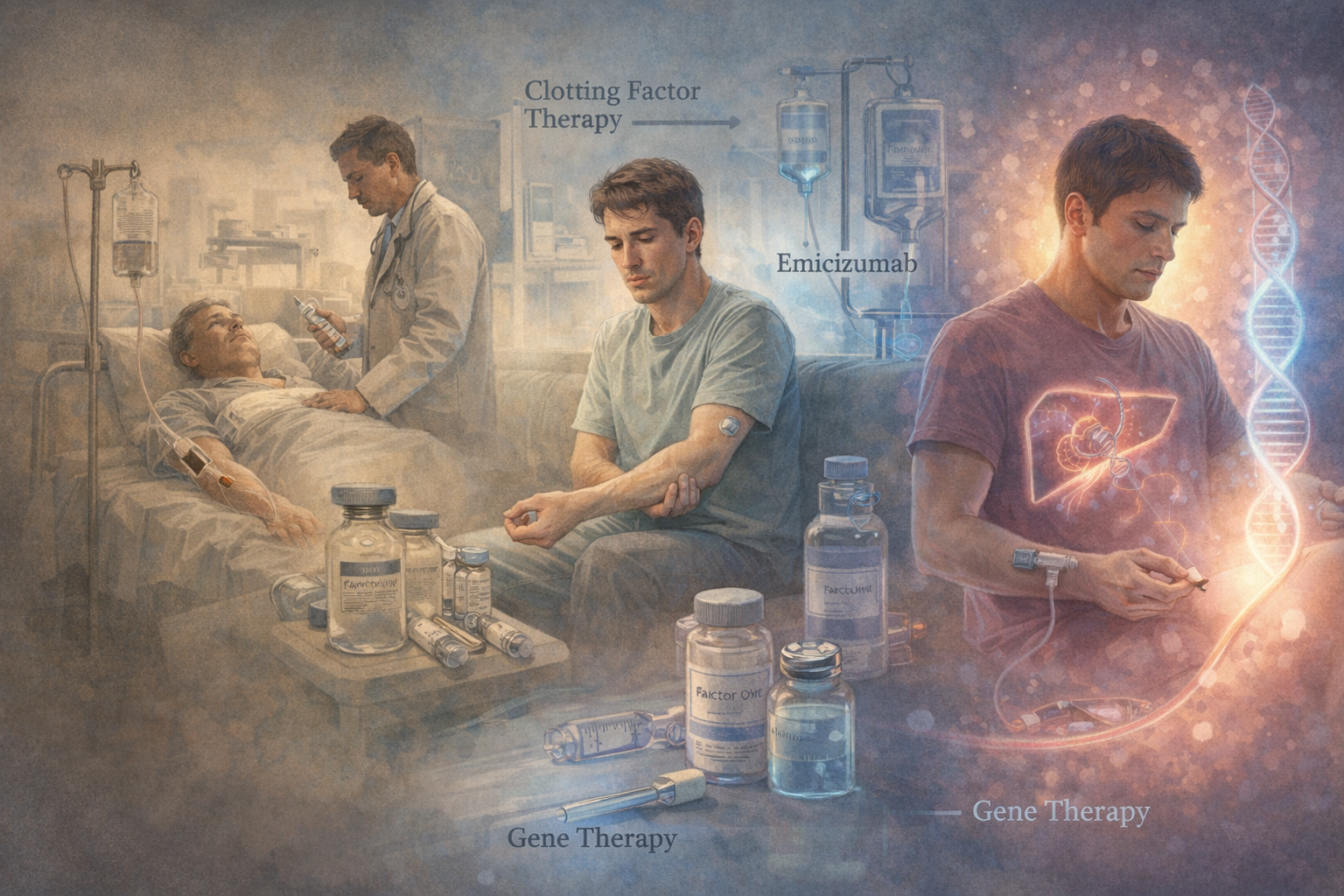
In 1964, when the first effective treatments for haemophilia were taking shape, the options were basic by any measure. Cryoprecipitate which is a frozen concentrate made from plasma, was essentially as good as it got. For most patients, treatment meant getting to one of a handful of cities that had the right equipment, hoping there was supply, and managing everything else through caution and luck.The distance between that world and this one that we currently inhabit is enormous.Treatment for hemophilia has moved from plasma-derived products to recombinant clotting factor concentrates, and more recently to extended half-life therapies that reduce how often patients need infusions. Where patients once injected clotting factors intravenously multiple times a week, newer therapies can be given less frequently. Some can be administered under the skin rather than into a vein, which marks a significant difference for children and for anyone living far from a medical facility.
AI generated image

AI generated image

Then came emicizumab, a bispecific antibody that works differently from traditional factor replacement altogether. It is administered subcutaneously, requires less frequent dosing, and does not trigger the inhibitor development that undermines traditional factor concentrates in some patients the kind of treatment that, a generation ago, would have seemed implausible.And now, at the frontier: gene therapy. Unlike all previous treatments, gene therapy requires only a single administration and works by prompting the liver itself to produce Factor VIII or IX the body doing what it was never able to do before, as cited by Science Direct. The FDA approved two gene therapies for hemophilia B, Hemgenix in 2022 and Beqvez in 2024, and one for severe hemophilia A. These are not incremental improvements. They are a different category of medicine.“Recent studies in hemophilia is exploring the well-advanced approaches such as gene therapy, and stem cell-based strategies, mainly aimed at addressing the root cause rather than just managing the symptoms. Stem cell research is still largely in the experimental stages, with the ongoing studies mainly evaluating its potential to enable sustained production of the clotting factors. While these kinds of developments hold the long-term promise, they are not the part of routine clinical practices,” said Dr Jassal.

Where does India stand?

India carries the world’s second largest burden of hemophilia, with an estimated 136,000 cases, yet the country that recently completed its first in-human gene therapy trial for the condition is also one where most of those patients still manage bleeds with rest, ice, and whatever else they can find. That contradiction sits at the heart of hemophilia care in India today: world-class science at one end, and a vast, underserved majority at the other.The insurance and money problemHemophilia sits in an awkward place in India’s healthcare economy, too rare to attract sustained policy attention, too expensive to treat without it. Private health insurance is largely out of reach for most affected families, and hemophilia’s classification as a low-volume, high-cost disease means insurers have little incentive to cover it well.The result is that economic circumstances dictate treatment in ways they shouldn’t. For a large share of patients, factor replacement therapy remains something they read about rather than receive. Instead, they manage with RICE (rest, ice, compression, elevation), alongside adjunct medications and wet products like fresh frozen plasma or cryoprecipitate whenever available. These aren’t treatments so much as ways of getting through the day.“In India, very much limited access to select research settings and specialized centres as well, with current standard care still centred around clotting factor replacement and new non factor therapies whenever it is available,” Dr Jassal said.The picture overall is of a system still treating a chronic condition as a series of emergencies. The cost of untreated hemophilia, hospitalisations, surgeries, long-term disability, lost productivity, ultimately burdens families and health systems which could be prevented by early care.

Source link

Women’s reservation bill fails floor test in Lok Sabha as NDA falls short of two-thirds majority India News

Women's reservation bill fails floor test in Lok Sabha as NDA falls short of two-thirds majority

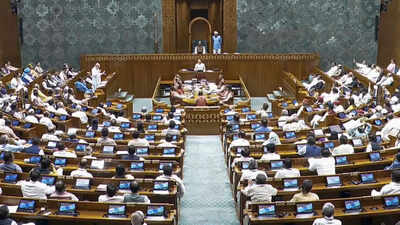
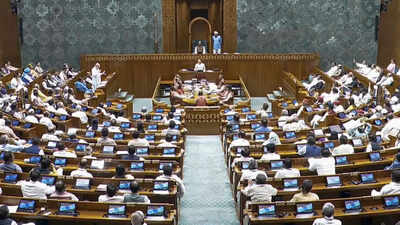
New Delhi: The Women’s Reservation Bill failed in the Lok Sabha on Friday as it failed to garner the required two-thirds majority after two days of intense debate on the bill and the proposed delimitation process.The Constitution Amendment Bill could not be passed as the ruling NDA fell short of the required numbers to push the “Women’s Bill”.

Watch

Women’s Reservation Bill explained: Why it came back and what changes it made ahead of 2029 elections

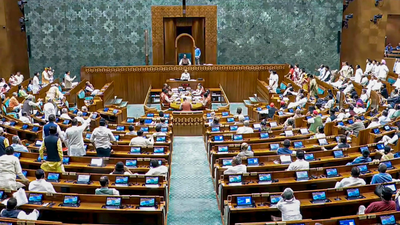
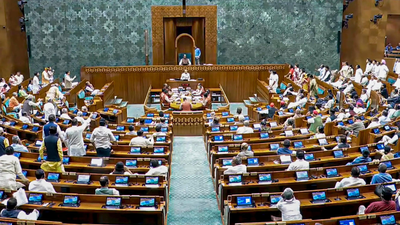
Lok Sabha Speaker Om Birla said, “The Constitution (131st Amendment) Amendment Bill was not passed as it did not get 2/3 majority during voting in the House.”There was a heated argument in the House on this debate. Union Home Minister Amit Shah termed the opposition as “anti-women” for opposing the bill.On the other hand, Leader of Opposition in Lok Sabha Rahul Gandhi called this bill “anti-national”. including many other opposition leaders Akhilesh Yadav And Priyanka GandhiAlso expressed strong objection.a day before, Prime Minister Narendra Modi During his address on this issue, he appealed to the MLAs not to politicize the bill.The BJP-led Center has decided to move ahead with the delimitation bill and a separate bill to amend the women’s quota in union territories after the defeat of the Constitution Amendment Bill.

Source link