ISRO and ATREE partner to map grasslands, improve land use planning. india news

ISRO and ATREE partner to map grasslands, improve land use planning

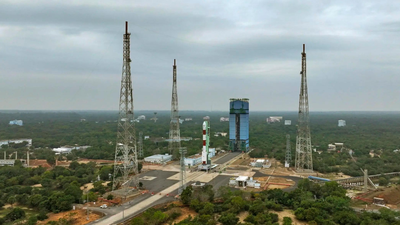
Bengaluru: ISROSpace Applications Center (SAC) has signed an MoU with Ashoka Trust for Research in Ecology and the Environment (ATREE) to combine satellite data with ecological field research.“This collaboration will focus on mapping India’s grasslands and other open natural ecosystems, which have often been under-represented in policy and planning. It will also assess the impact of restoration efforts on degraded lands and develop better methods to estimate both above- and below-ground carbon,” it said in a statement released on Thursday.The partnership will bring together SAC’s capabilities in large-scale geospatial mapping with ATRI’s interdisciplinary ecological research and on-the-ground experience. It aims to create reliable, policy-ready datasets that can aid decision making at both the national and state levels.“The two institutions will also work on creating standardized and scalable approaches to identifying and monitoring ecosystems such as grasslands, savannas and deserts. Despite being ecologically important, these landscapes have received limited attention compared to forests,” the statement said.The initiative is expected to boost land use planning, climate action strategies, conservation efforts and rural livelihood programs. By improving the way ecosystems are mapped and assessed, the collaboration seeks to provide a clearer picture of changes on the ground.This partnership is in line with India’s commitment to achieve land degradation neutrality by 2030 and contributes to the broader Sustainable Development Goals.

Source link

‘False story’: Amit Shah rejects claims that delimitation will weaken southern states. india news

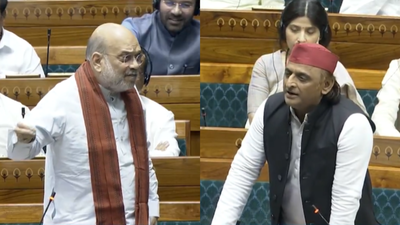
Women's Reservation Bill: Amit Shah, Akhilesh Yadav face to face over demand for quota in the bill

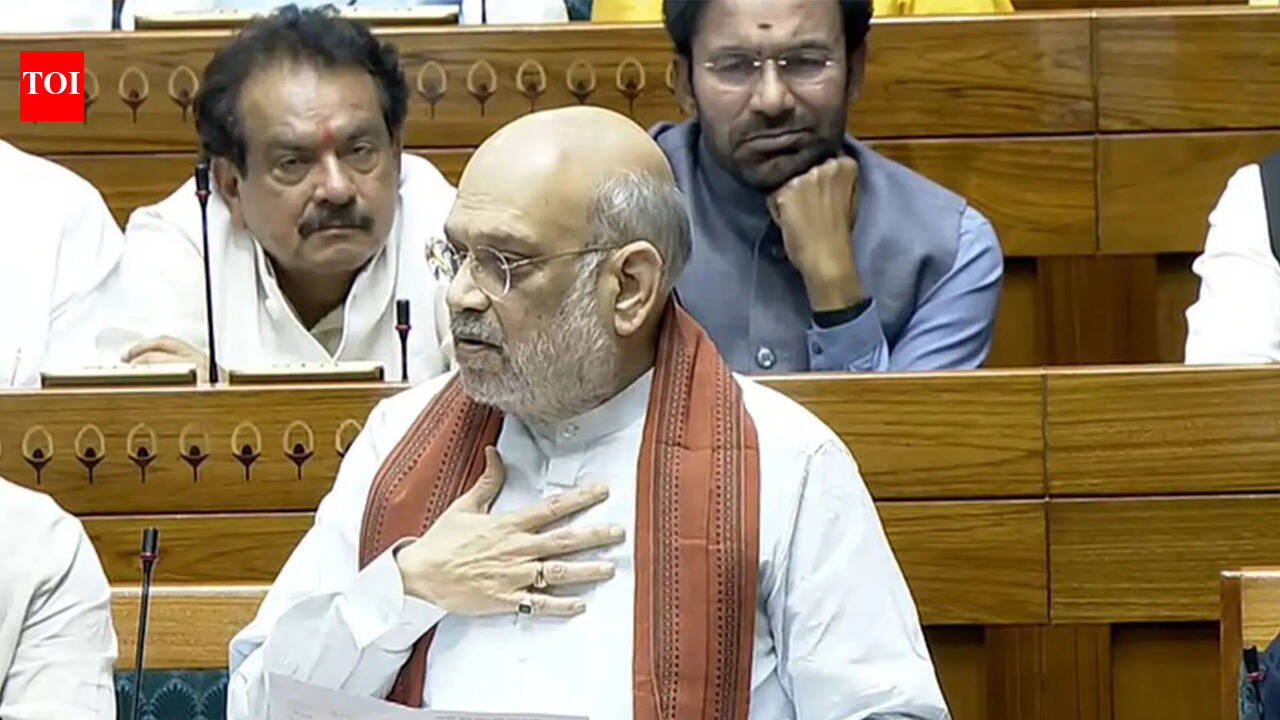
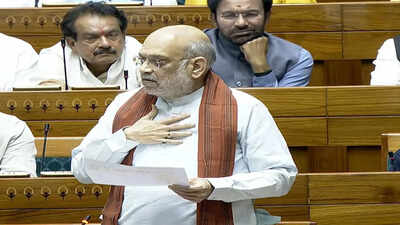
Union Home Minister Amit Shah

New Delhi: Union Home Minister Amit Shah told the Lok Sabha on Thursday that the representation of the five southern states in the House will increase from 129 seats to 195 once the proposed expansion of the Lower House comes into effect, rejecting claims that the Centre’s delimitation plan will dilute their political weight as a “false narrative” has been created to mislead people.Speaking during the debate on the amendment bills related to women’s reservation and the proposed delimitation framework, Shah said the total strength of the Lok Sabha will increase to 816 seats, although the law mentions a cap of 850 seats as the figure is rounded off. He said that 816 represents an increase of exactly 50 per cent compared to the existing 543 elected seats.

Watch

Women’s Reservation Bill: Amit Shah, Akhilesh Yadav face to face over demand for quota in the bill

Breaking down the revised numbers of the southern states, Shah said: “In Karnataka, the number of Lok Sabha seats will increase to 42 from the current 28; in Andhra Pradesh, the number of Lok Sabha seats will increase from 25 to 38; in Telangana, it will increase to 26 from the current 17; in Tamil Nadu, the number of Lok Sabha seats will increase to 59 from the current 39; and in Kerala, it will increase to 30 seats from the current 20.” Will go.”He said the combined share of the southern states in the Lok Sabha will increase slightly from the current 23.76 per cent to 23.87 per cent, taking the total to around 24 per cent.Rejecting opposition allegations that the government could manipulate the delimitation process, Shah said the current bill mirrors earlier legal provisions introduced under previous governments. “The Delimitation Bill is exactly like the previous law brought by your government. There is no change in it, not even a comma or a full stop,” he said.On the women’s reservation measure, Shah clarified that the quota will not be effective immediately and will be implemented only from the 2029 general elections. Till then, he said, every election including the 2027 Uttar Pradesh Assembly elections will continue under the existing electoral structure.Directly addressing Samajwadi Party chief Akhilesh Yadav, Shah remarked: “Akhilesh ji, you need not worry even though you are not going to win the elections in Uttar Pradesh,” he said.She also rejected suggestions that the timing of the Women’s Reservation Bill was linked to the upcoming West Bengal elections.On caste census, Shah said that the government has already approved the caste census and it will be conducted along with the population census process. Referring to the Samajwadi Party’s criticism, he said, “Right now, the counting of houses is going on and there is no caste of the houses. If the Samajwadi Party has its way, it will also determine the caste of the families.The Lok Sabha is currently considering the Constitution (131st Amendment) Bill, 2026, the Union Territory Laws (Amendment) Bill, 2026 and the Delimitation Bill, 2026. Under the proposed structure, 272 seats will be reserved for women in the expanded 816-member Lok Sabha, equivalent to one-third of the House.

Source link

‘Fence the Bangladesh border’: Himanta Sarma accuses Mamata Banerjee of allowing infiltration into Bengal. india news

'Fence the Bangladesh border': Himanta Sarma accuses Mamata Banerjee of infiltrating Bengal
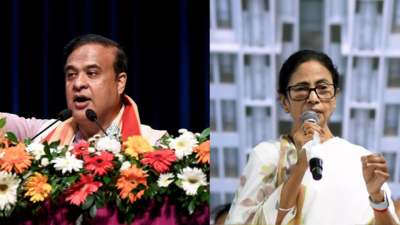
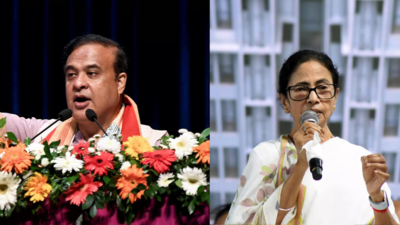
Himanta Biswa Sarma (left), Mamata Banerjee

New Delhi: Chief Minister of Assam Himanta Biswa Sarma On Thursday, he said it was important to fence West Bengal’s border with Bangladesh, alleging that “infiltrators” from the neighboring country were entering the state under Mamata Banerjee’s watch.Campaigning in the poll-bound state a few days after the elections in his state bordering West Bengal, the BJP leader expressed confidence that the party would emerge victorious in both.Himanta Biswa Sarma told reporters after addressing a public rally, “Our only concern is why Bangladeshis should be allowed to enter our country. Mamata Banerjee does not allow us to stop them from entering. Border fencing is very important, especially in West Bengal.”He said, “We will get 100 seats in Assam and 200 seats in West Bengal.”Sarma also criticized Banerjee over alleged cow smuggling in West Bengal and said the BJP would curb it if voted to power. He further said that meat has never been banned in BJP ruled states.He said, “Every day, the ritual of animal sacrifice is performed in Maa Kamakhya (temple in Guwahati), but meat has not been banned in Assam. Mamata ji fears that when BJP comes to power, meat will be banned. There are BJP governments in Assam and Bihar, but meat is not banned. She fears that with BJP coming to power, cow smuggling will stop in her state.”Voting in West Bengal will be held in two phases on April 23 and April 29. In the first phase, voting will be held on 152 seats out of 294 assembly constituencies, while the remaining seats will be voted in the second phase.Counting of votes for both Assam and West Bengal along with Kerala, Puducherry and Tamil Nadu will take place on May 4.BJP has been in power in Assam since 2016 and is aiming for a hat-trick. It is the main opposition party in West Bengal, where Banerjee’s All India Trinamool Congress, in power since 2011, is trying to come to power for the fourth consecutive term.

Source link

‘Terrorist act’: Petition in Supreme Court on TCS Nashik case; Demand for ‘strict steps’ against forced religious conversion. india news

'Terrorist act': Petition in Supreme Court on TCS Nashik case; Demand to take 'strict steps' against forced religious conversion
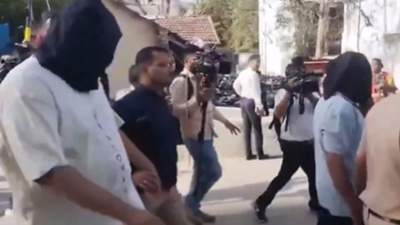
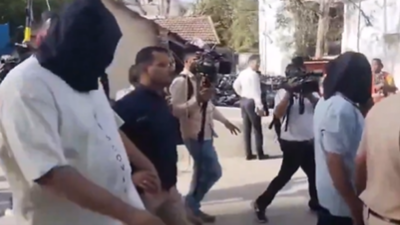
A confidential complaint about a change in the behavior of a young employee at TCS Nashik BPO triggered a secret police investigation.

New Delhi: Supreme Court lawyer Ashwini Upadhyay on Thursday filed a petition seeking to declare forced religious conversion a “terrorist act”.The petition comes in the backdrop of allegations of religious conversion and sexual harassment at the Tata Consultancy Services (TCS) office in Nashik, Maharashtra.Read this also TCS Nashik case suspicious: Police say accused acted like organized gang to target female colleaguesUpadhyay argued that “fraudulent religious conversion” is a serious threat not only to sovereignty, secularism, democracy and freedom, but also to brotherhood, dignity, unity and national unity.“The organized religious conversion in Nashik has shocked the conscience of the citizens across the country. Therefore, the petitioner is filing this application seeking directions and declaration to stop the fraudulent religious conversion,” the plea said.It said, “Conversion by force or fraud is not an isolated religious act but a systematic conspiracy, often funded by foreign entities, to alter the demographic balance and thereby threaten the unity, integrity and security of India. Thus, it falls within the ambit of the terrorist act as defined under Section 15 of the UAPA.”Also read: TCS Nashik office employees asked to work from home amid claims of religious conversion, harassmentUpadhyay also sought directions to the central and state governments to set up special courts to deal with cases related to religious conversion.The petition said that Article 25 of the Constitution guarantees freedom of conscience and the right to profess, practice and propagate religion, but this is subject to public order, health and morality.It argued that although all persons have the right to profess, practice and propagate religion, the freedom is not absolute and is subject to constitutional conditions, including public order, morality and health.Also read: Infosys issues statement on Pune harassment allegations; Investigation increased after Nashik TCS caseThe petition emphasized that freedom to practice one’s religion does not confer an unrestricted right to practice in its name, but is subject to reasonable limits.

voting

Do you support declaring forced religious conversion as a terrorist act?

Filed as part of Upadhyay’s pending petition seeking strict action against fraudulent religious conversions, the application reiterates the need for stronger legal safeguards.He said that religious conversion is a serious issue which should not be politicized. supreme court of india In 2023, assistance was sought from Attorney General R Venkataramani, the Centre’s chief legal advisor, on the matter.(With PTI inputs)

Source link

Tamil Nadu Elections: Vijay releases TVK manifesto; Free LPG cylinder, Rs 2,500 monthly assistance announced for women. india news

Tamil Nadu Elections: Vijay releases TVK manifesto; Free LPG cylinder, Rs 2,500 monthly assistance announced for women
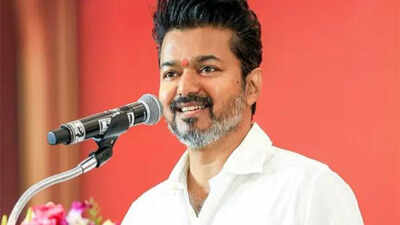
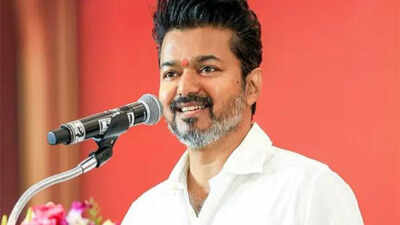
TVK chief Vijay (file photo)

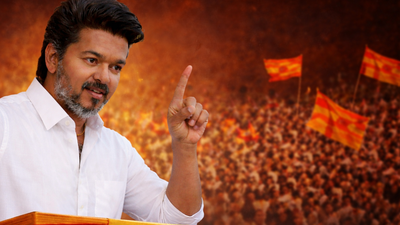
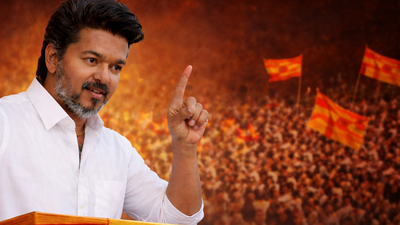
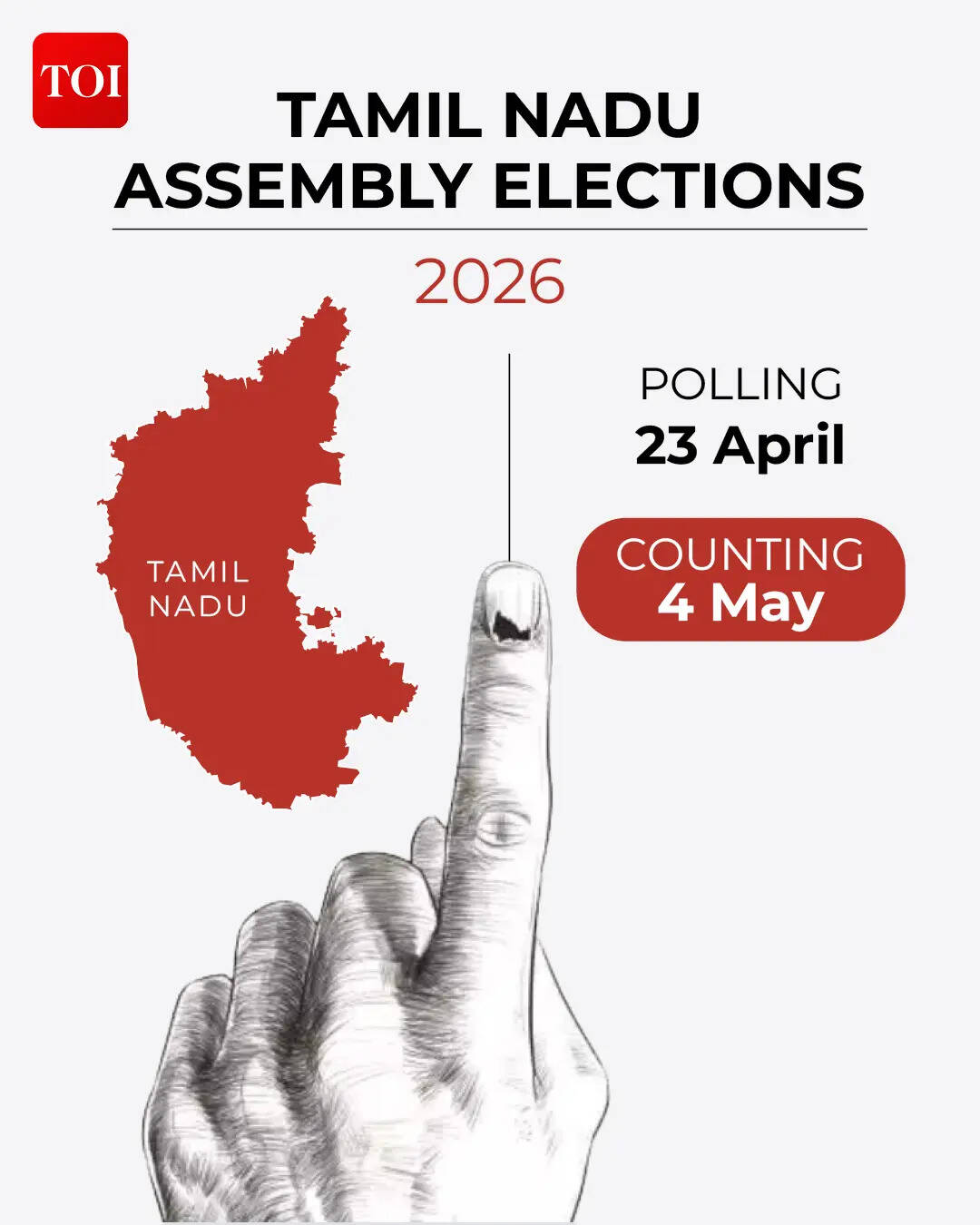
New Delhi: Tamilaga Vetri Kazhagam (TVK) chief Vijay on Thursday unveiled the party’s manifesto for the Tamil Nadu Assembly elections, a week before voting takes place in all 234 constituencies in the state.Counting of votes will take place on May 4.The actor-politician, who will launch TVK in February 2024, made the following announcements in the manifesto:

  • Monthly assistance of Rs 2,500 to women and 8 grams of gold for marriage assistance.
  • Interest-free loans of up to Rs 5 lakh for SHGs run by women, and Rs 15,000 annually to prevent school dropouts
  • 50% discount on agro-cooperative crop loans for farmers with more than 5 acres
  • AI Ministry, AI University, AI City
  • Assistance up to Rs 4,000 per month for unemployed graduates
  • 5 lakh internships and 5 lakh new government jobs with stipend
  • Rs 3,000 pension for elderly and disabled
  • 200 units free electricity
  • Health insurance of Rs 25 lakh for the family, modern hospital, annual free health checkup and medicine free Tamil Nadu
  • MSP of Rs 3,500 per quintal for paddy and Rs 4,500 per tonne for sugarcane.
  • Consideration of regularizing old pension scheme, contract workers including nurses
  • 6 free LPG cylinders per family per year

Earlier, TVK general secretary N Anand announced that, in strict compliance with the Election Commission guidelines, attendance at the event would be limited to 800 “authorized personnel”.He said that entry will be limited to officials issued specific QR code pass, no unauthorized person will be allowed.Pregnant women, children, students, senior citizens, the disabled and people with health issues were specifically advised to avoid visiting the venue. Instead, the party urged supporters and the general public to watch the event through live telecast on television and social media platforms.(With PTI inputs)

Source link

Delhi airport accident: Taxiing SpiceJet plane collides with stationary Akasa plane at IGI. india news

Delhi airport accident: Taxiing SpiceJet plane collides with Akasa plane parked at IGI

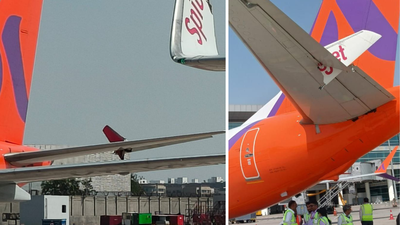
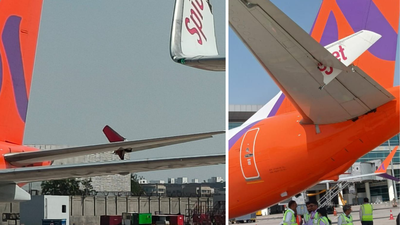
New Delhi: There was a ground collision between two aircraft at Indira Gandhi International Airport on Thursday, in which a SpiceJet aircraft while taxiing hit a stationary aircraft of Akasa Air, damaging both the aircraft.Officials said the collision occurred on the taxiway, causing the wings of the two planes to collide, forcing both to be grounded for inspection.According to a SpiceJet spokesperson, a B737-700 aircraft was involved in a ground incident while taxiing on April 16. The aircraft’s right winglet collided with the left-hand horizontal stabilizer of another aircraft of a different airline. The SpiceJet aircraft has been parked in Delhi for inspection.Meanwhile, Akasa Air confirmed that its aircraft, operating flight QP 1406 from Delhi to Hyderabad, was stationary at the time of the incident when it collided with another airline’s aircraft. The plane returned to the bay after the collision.“All passengers and crew were disembarked safely and our ground teams are making alternative arrangements to airlift passengers to Hyderabad as soon as possible,” an Akasa Air spokesperson said.No injuries were reported, and more information is awaited as officials assess the extent of damage and investigate the incident.

Source link

‘BJP is planning to plant bombs in Bengal’: Mamata Banerjee’s big allegation before the assembly elections. india news

'BJP is planning to plant bombs in Bengal': Mamata Banerjee's big allegation before assembly elections
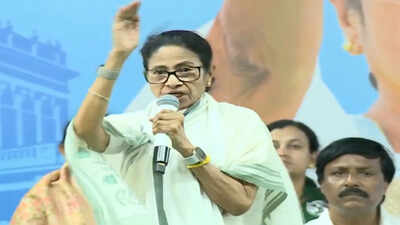
Mamta Banerjee (file photo)

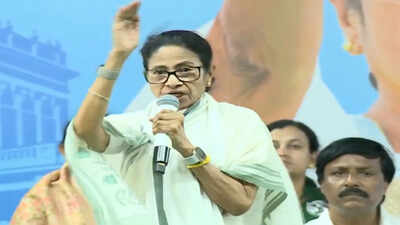
New Delhi: Chief Minister of West Bengal Mamata Banerjee alleged on Thursday that BJP Is planning to “plant bombs” during the upcoming state assembly elections.He further claimed that the ruling BJP at the Center and the major opposition in West Bengal would then bring in the National Investigation Agency (NIA) to investigate the blasts.(developing story)

Source link

Tamil Nadu elections 2026: Will TVK’s solo gamble split votes or fulfil Vijay’s CM dream? | India News

Tamil Nadu elections 2026: Will TVK’s solo gamble split votes or fulfil Vijay’s CM dream?

Actor Vijay has made his first political bet, with a bold but risky strategy.By taking the Tamilaga Vettri Kazhagam (TVK) into the 2026 Tamil Nadu Assembly election without allies, he is stepping into a political arena where alliances have historically determined winners. In a state long dominated by the Dravida Munnetra Kazhagam (DMK) and the All India Anna Dravida Munnetra Kazhagam (AIADMK), electoral success has typically depended on coalition-building as much as on individual popularity.

Election schedule

TVK’s decision to go solo, therefore, is not just a strategic choice but a structural challenge to how politics has functioned in the state for decades. It raises a central question as campaigning gathers pace; will TVK’s decision to go solo emerge as the defining flashpoint of this election, or will it prove to be a mere structural hindrance that ultimately reinforces the dominance of established Dravidian parties?

History check: Do solo players actually succeed in Tamil Nadu?

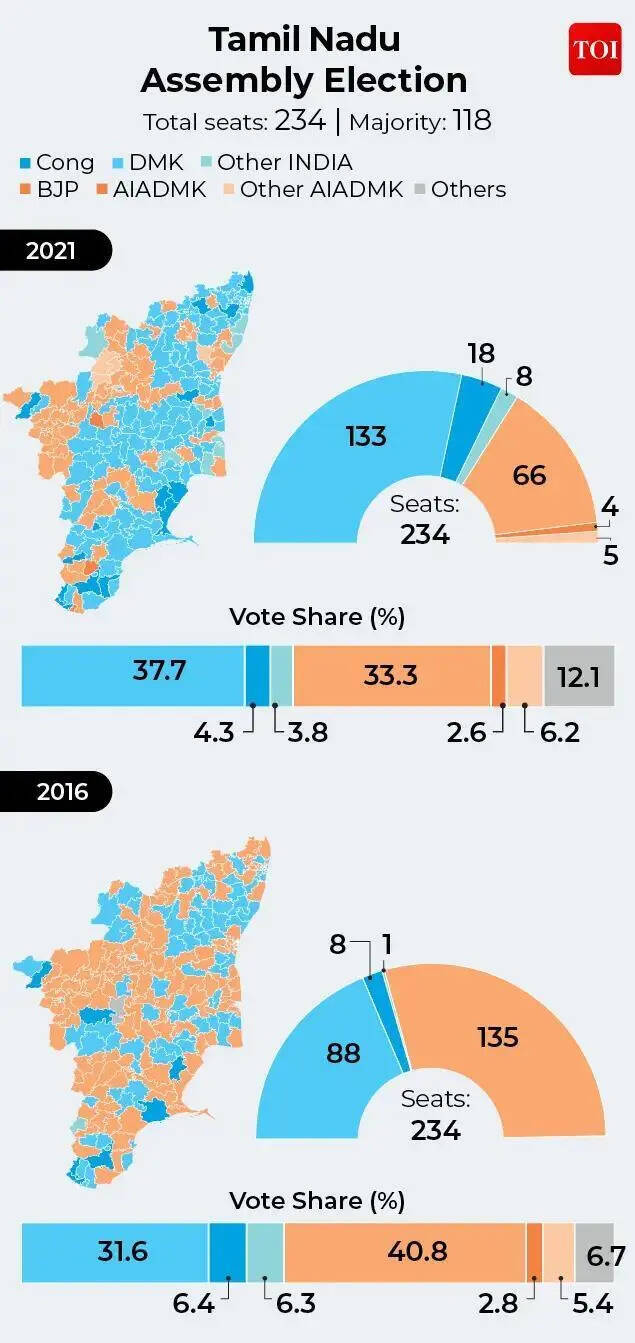
Tamil Nadu’s electoral system has, for decades, rewarded coalition depth and organisational spread over standalone appeal.Since the late 1960s, power has alternated almost exclusively between the Dravida Munnetra Kazhagam (DMK) and the All India Anna Dravida Munnetra Kazhagam (AIADMK), both of which have consistently depended on alliances and entrenched cadre networks to convert vote share into seats.This pattern is visible across election cycles. In 2021, the DMK-led Secular Progressive Alliance, comprising the Indian National Congress, Communist Party of India (Marxist), Viduthalai Chiruthaigal Katchi and others, secured a decisive majority. The AIADMK-led NDA, which included the Bharatiya Janata Party, still retained over 60 seats despite losing power.

Tamil Nadu assembly polls: 2021 snapshot

Go further back, and the trend holds.In 2011, the AIADMK stitched together a broad coalition with parties such as the Desiya Murpokku Dravida Kazhagam, translating alliance arithmetic into a landslide victory.In 2006, the DMK returned to power not on its own, but as part of a pre-poll alliance with Congress and Left parties. Even though it fell short of a majority on its own, the coalition ensured both vote consolidation and post-poll stability, reinforcing the centrality of alliances in the state’s electoral framework.The only partial deviation came in 2016, when the AIADMK under J Jayalalithaa retained power with a largely standalone contest. But even this was not a typical “solo breakthrough.” It reflected the strength of an already entrenched political force with an established vote base and organisational depth, rather than the success of a new, standalone entrant. Thus, the historical record is clear: Tamil Nadu’s elections have rarely rewarded standalone challengers, that too one without an established voter base.

The solo strategy: Assertion or overreach?

TVK has categorically ruled out alliances with both the AIADMK-led NDA and other regional players, framing its campaign as a clean break from entrenched Dravidian politics. Party leaders have been explicit: the objective is not incremental power-sharing, but a direct bid for leadership.TVK chief coordinator K A Sengottaiyan had said it early on this year that Vijay entered politics not to become a deputy chief minister, but with the objective of becoming the chief minister, in an apparent reference to reports that he was being offered the deputy CM’s post in a potential AIADMK-NDA arrangement after the election.This positioning gives TVK ideological clarity and preserves its anti-establishment appeal, particularly among urban voters and first-time entrants to the electorate. It also allows Vijay to avoid being subsumed within legacy party structures.However, in electoral terms, a solo contest significantly raises the threshold for success. Without alliance arithmetic, TVK must independently convert visibility into votes across 234 constituencies, a task that demands booth-level depth, not just mass mobilisation.

Watch

Tamil Nadu Elections 2026: M.K. Stalin vs AIADMK — Will Vijay Be the X-Factor?

The NTK precedent: Visibility without conversion

A useful contemporary parallel is Naam Tamizhar Katchi (NTK), led by Seeman and the trajectory it has followed over the past decade.NTK has consistently chosen to contest independently across elections, positioning itself as an ideological alternative rooted in Tamil nationalism. In 2016, NTK contested widely and secured a modest but noticeable vote share (around 1 per cent), marking its emergence as a statewide player.By 2019 (Lok Sabha), its vote share rose to roughly 3-4 per cent, indicating growing traction, particularly among younger voters.In 2021, the party contested all 234 Assembly seats and secured around 6-7 per cent vote share statewide, a significant jump in electoral presence.Yet, across these cycles, one outcome has remained unchanged – no seats won in the Assembly.Even in constituencies where NTK polled strongly, its votes were dispersed rather than concentrated, limiting its ability to cross winning thresholds under the first-past-the-post system.For a first-time entrant like Tamilaga Vettri Kazhagam, the comparison is instructive. The challenge is not merely to attract voters, but to convert dispersed support into concentrated victories; something that has historically proven difficult for solo players in the state.

The ‘vote-cutter’ dilemma

Rivals, particularly within the NDA, have already framed TVK as a potential spoiler. Leaders including Piyush Goyal have argued that a fragmented opposition could work to the advantage of the ruling DMK by splitting anti-incumbency votes.TVK’s core support base, youth, urban middle classes, and politically disengaged voters, overlaps significantly with segments the AIADMK-led alliance is attempting to consolidate. This creates a structural risk: TVK may erode opposition vote share more than it challenges the DMK’s core base.An alliance, by contrast, would have altered this dynamic. It would have reduced the number of direct competitors in key constituencies and allowed TVK to plug into an existing electoral network, benefiting from established cadre strength, caste coalitions, and booth-level mobilisation. More importantly, it could have expanded the party’s reach beyond its current urban and youth-heavy base by leveraging partners with deeper rural penetration.By going solo, it forgoes these network advantages and instead faces the full cost of building an organisational footprint from scratch in a highly competitive field. This increases the risk of vote fragmentation in its core pockets while limiting its ability to convert social appeal into geographically broad, booth-level electoral gains.

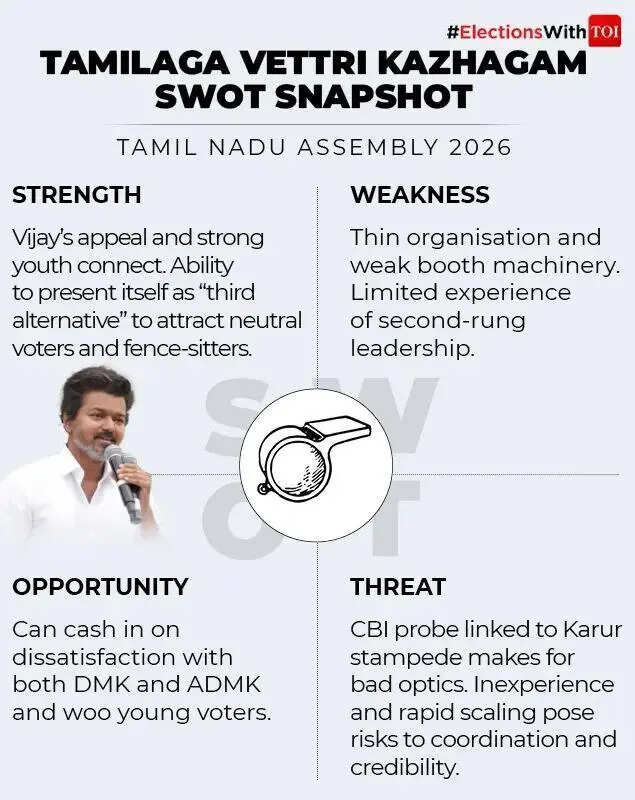
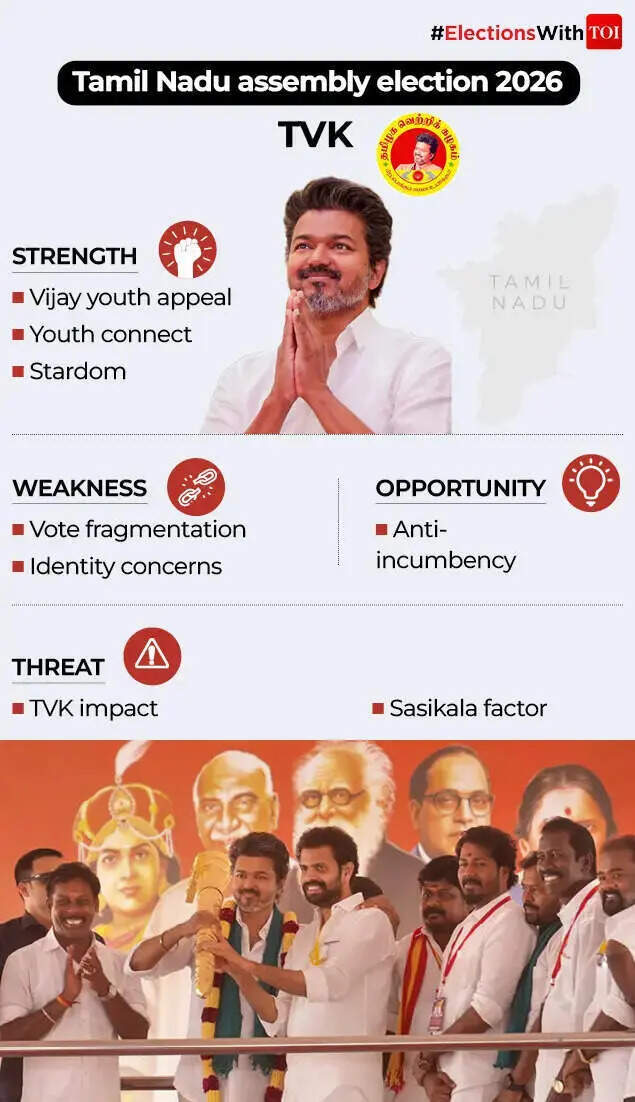
TVK SWOT analysis

From crowds to constituencies

Tamilaga Vettri Kazhagam (TVK)’s campaign has demonstrated strong crowd-pulling capacity, with large turnouts during Vijay’s nomination filings and rallies. His long-standing popularity as a film star adds to this momentum, giving the party visibility that few first-time entrants enjoy.But Indian electoral history offers repeated caution: crowd density and celebrity appeal do not reliably translate into vote share.The challenge is organisational. Established parties like the DMK and the AIADMK possess entrenched cadre networks, local influencers, and booth-level machinery built over decades. TVK, by contrast, is still in the process of ground structuring.Without this micro-level apparatus, even a favourable swing in sentiment, however amplified by Vijay’s personal appeal, can dissipate by the polling day.

Target constituencies and dual contests

By contesting from both Perambur and Tiruchirappalli East, Vijay is signalling an attempt to straddle urban and semi-urban electoral terrains. These are precisely the zones where voter volatility is highest, and where TVK’s message may find traction.Yet, these are also constituencies where multi-cornered contests tend to produce fragmented mandates. Here, the margin for error is narrow: TVK must not only mobilise support but also ensure it is not merely redistributing opposition votes.

Narrative vs structure

TVK’s campaign narrative, focused on anti-corruption, governance reform, and youth-centric economic promises, is calibrated to tap into emerging dissatisfaction. Proposals such as employment-linked incentives, support for creators, and a push towards localised job generation aim to differentiate the party from the welfare-heavy Dravidian model that has dominated the state’s politics.The messaging is particularly targeted at younger voters, first-time job seekers, and sections of the urban middle class who are increasingly vocal about employment opportunities and economic mobility. It also attempts to position TVK as a forward-looking alternative that prioritises structural change over incremental welfare expansion.But elections in Tamil Nadu have historically hinged as much on organisational strength and alliance management as on narrative appeal. Established players like the DMK and AIADMK combine policy messaging with deep grassroots networks, caste coalitions, and booth-level mobilisation strategies that ensure vote conversion.On both counts, TVK remains an untested entity, raising questions about whether its narrative can translate into electoral outcomes in a system where messaging alone has rarely been sufficient.

Experience gap: A political vulnerability?

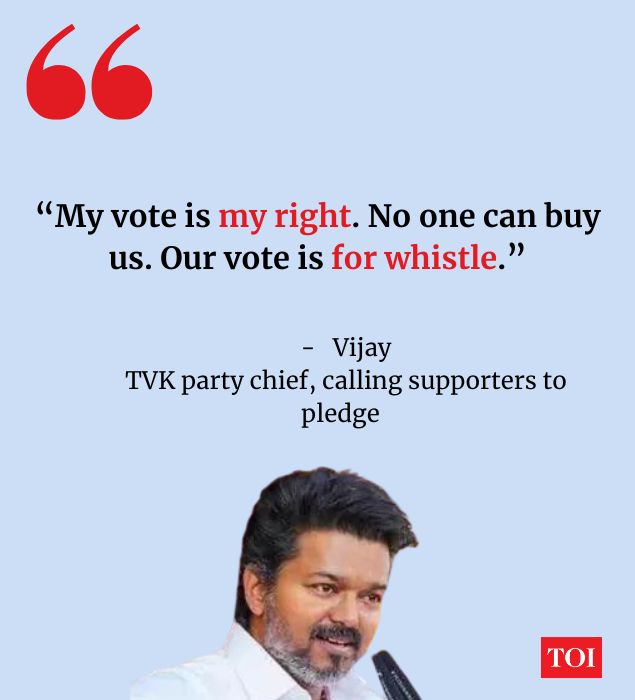
The party’s pitch is also being tested by a parallel line of attack from opponents, centred on inexperience. Recently, senior Congress leader P Chidambaram drew a sharp distinction between cinema and governance, saying, “Governance is not cinema, there are no retakes,” in a pointed reference to Vijay’s political debut.He went further, questioning the party’s preparedness and public engagement, remarking that the new entrant “has no political experience” and highlighting the need for debate and interaction in politics.However, Vijay had once turned this into a pitch of having no set agendas and just working for the people. Responding to criticism over the party’s inexperience, Vijay, earlier this year, had said, “We have no experience in looting.” He added that his government would rely on administrative support, stating, “I will do it.”At the meeting, he also called on supporters to take a pledge: “My vote is my right. No one can buy us. Our vote is for whistle.”

.

Thus, while TVK has drawn large crowds, translating that momentum into consistent, booth-level voter outreach remains a different challenge altogether. Building a statewide electoral machine requires not just visibility, but sustained ground engagement across constituencies.

What’s at stake

For the ruling M K Stalin and DMK, TVK’s presence could prove advantageous if it fragments opposition votes in closely contested constituencies, particularly in urban and semi-urban belts where margins are often narrow. Even a modest split in anti-incumbency votes could tilt outcomes in the currently-ruling party’s favour.For the AIADMK under Edappadi K Palaniswami, however, TVK represents a direct strategic threat. The party is attempting to consolidate anti-DMK sentiment, and any diversion of votes, especially among youth and urban voters, could weaken its revival efforts.For TVK itself, the election is existential. A credible vote share, even without significant seat wins, could establish it as a durable political force. A weak conversion rate, however, risks reinforcing the perception that it is merely a spoiler rather than a serious contender.

TVK

The final test

Going solo gives TVK full control over its narrative, candidate selection, and long-term positioning. It allows Vijay to present a clear, uncompromised alternative to both DMK and AIADMK, and to consolidate an anti-establishment identity that alliances often dilute.But the risks are structural, not just strategic.Without alliance partners, every vote TVK attracts must translate into a winning margin on its own. In a first-past-the-post system, even a respectable vote share can result in minimal or no seats if that support is spread thinly across constituencies. The NTK trajectory shows how this pattern can persist across election cycles.There is also the vote-split effect. If TVK draws disproportionately from anti-DMK voters, particularly in urban and semi-urban constituencies, it could weaken the AIADMK-led bloc more than it challenges the incumbent. In close contests, even a 5–10 per cent diversion can tilt outcomes decisively without delivering seats to the third player.Organisational depth is another constraint. Unlike DMK and AIADMK, which rely on decades-old cadre networks, caste coalitions, and booth-level mobilisation, TVK is still building its ground machinery. That gap becomes critical on polling day, when turnout management and last-mile voter outreach often determine results.Yet, the upside scenario cannot be dismissed.If TVK manages to concentrate its support in select constituencies, leverages Vijay’s personal appeal effectively, and converts its visibility into targeted vote blocs, it could break the pattern that has historically constrained solo entrants. Even a modest cluster of wins would be enough to establish it as a credible third force.The 2026 election, therefore, is not just about whether Vijay can win. It is about whether a new entrant can rewrite the rules of a system that has, for decades, rewarded alliances over assertion.In that sense, TVK’s solo gamble is less a conventional campaign strategy and more a structural stress test of Tamil Nadu’s electoral politics. The real question now is whether this new, rapid appeal can translate into electoral outcomes, or whether the weight of established networks and alliances will once again prove decisive.

Source link

‘Religion-based reservation is unconstitutional’: Amit Shah and Akhilesh Yadav clash in Lok Sabha over delimitation. india news

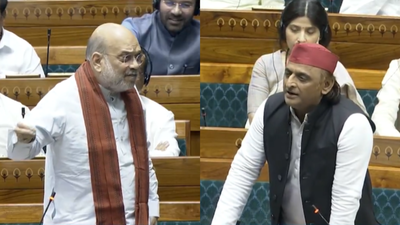
'Religion based reservation is unconstitutional': Amit Shah and Akhilesh Yadav clash in Lok Sabha on delimitation.
Amit Shah and Akhilesh Yadav clash in Lok Sabha.

New Delhi: There was a heated debate between the Home Minister Amit Shah And Samajwadi Party (SP) chief Akhilesh Yadav A special Parliament session was held on Thursday to discuss the Constitution Bill, Union Territory Law and Delimitation Bill.Speaking in the Lok Sabha, Yadav criticized the Center over its ‘hastyness’ in introducing the Women’s Reservation Bill in the absence of an updated census and accused the government of avoiding caste-based enumeration. Yadav said, “Why is the Center in a hurry for women’s reservation? We are in favor of it but why don’t you want to conduct the census? Start with the census first.”“They are delaying the census because when it happens, we will ask for a caste-based census, and they don’t want that,” he said.Responding to this, Shah said that the census process has started and the government has planned to include caste-based enumeration under it.Taking a dig at the opposition, Shah said, “The census process has already started in the entire country and after that we will also conduct a caste-based census. Currently, the work of making the list of houses is going on; the houses do not belong to any particular caste. If the SP has its way, it will nominate a caste in the houses also. I want to assure the House that a caste-based census is also going to be conducted.”Describing reservation on the basis of religion as unconstitutional, Shah said, “Any kind of reservation for Muslims on the basis of religion is unconstitutional.” On this, Yadav asked whether Muslim women are outside the 50% reservation limit. “Will Muslim women, who constitute half the population, also get separate reservation?” Yadav asked.Shah reacted by saying, “We are not stopping the Samajwadi Party from giving all its tickets to Muslim women.” The discussion turned more tense when Lok Sabha Speaker Om Birla urged members to maintain decorum during the proceedings.

Why is the opposition opposing the Women’s Reservation Bill? The answer lies in the Delimitation Bill

According to the Constitution Amendment Bill, it is proposed to increase the strength of the Lok Sabha from 543 to a maximum of 850 seats to implement the Women’s Reservation Act before the 2029 general elections. The expansion will take place after the delimitation exercise based on the 2011 census.The proposed law seeks to readjust the allocation of seats in the Lok Sabha and state and union territory assemblies, by redrawling regional constituencies across the country. The exercise is based on population-based correction using 2011 census data.The Bill projects delimitation as a broader political change, potentially altering the size and composition of both the Lok Sabha and state assemblies, including a proposal to increase the number of Lok Sabha seats from 543 to 850.However, the proposal has met with opposition, with many parties raising concerns over its impact on representation and the implications of relying on the 2011 census for such a significant realignment.

Source link

India identifies mental health, lifestyle diseases as new priorities for BRICS. india news

India identifies mental health, lifestyle diseases as new BRICS priorities

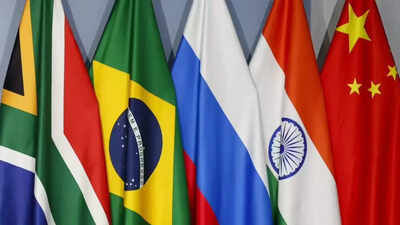
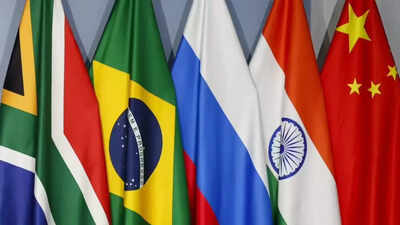
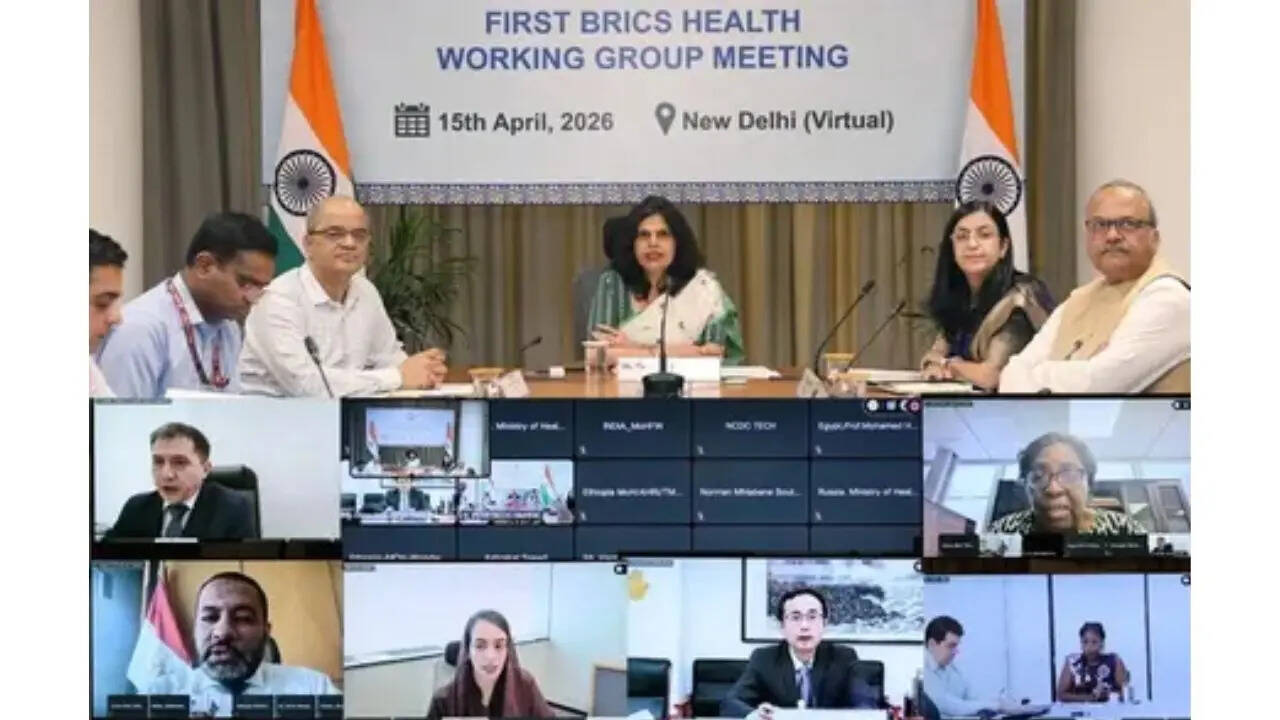
New Delhi: India on Wednesday proposed to focus more on mental health and healthy lifestyles under its BRICS chairmanship, as it hosted the first health working group meeting for 2026 in the capital.The meeting brought together senior health officials from partner countries as well as BRICS, a group of major emerging economies including Brazil, Russia, India, China and South Africa, to discuss collaboration on key public health challenges.

Union Health and Family Welfare organizes the first Health Working Group (HWG) meeting under the BRICS framework for 2026

Highlighting the preventive and people-centric approach, India launched two new priority areas – BRICS Mission for Healthy Lifestyles and Promoting Mental Health and Well-being – aimed at addressing risk factors such as unhealthy diet, physical inactivity, tobacco use and stress.Union Health Secretary Punya Salila Srivastava said the Health Working Group will focus on building resilient and adaptable health systems through collaboration, mutual learning and evidence-based policymaking while recognizing the diverse needs of member countries.The discussions also reiterated ongoing priorities including the BRICS TB Research Network, cooperation on regulation of medical products, digital health systems and early warning mechanisms for infectious diseases.Officials stressed the importance of strengthening health systems, improving access to affordable medicines and vaccines, and increasing cooperation in research and innovation.Member countries expressed support for India’s proposed priorities and highlighted the need for deeper cooperation on tuberculosis, equitable access to health technologies and addressing broader social determinants of health.The meeting concluded with agreement on a roadmap for future activities under the BRICS Health Track 2026, focusing on collaboration, innovation and strengthening public health systems in member countries.

Source link