‘Targeting commercial shipping unacceptable’: India urges safe navigation through Strait of Hormuz at UN india news
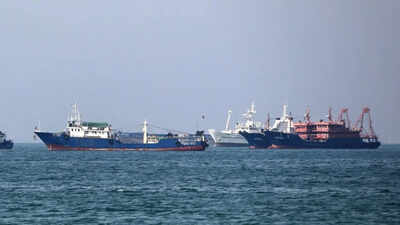
'Targeting commercial shipping unacceptable': India urges safe navigation through Strait of Hormuz at UN

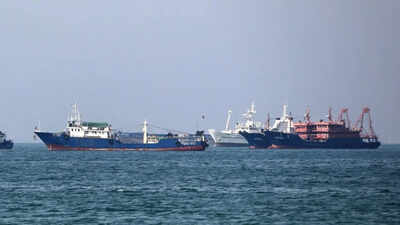
New Delhi: India on Thursday raised serious concerns at the United Nations over threats to commercial shipping in the Strait of Hormuz, urging immediate restoration of safe navigation and calling for restraint and de-escalation amid ongoing tensions in the Middle East.Addressing the UN General Assembly debate under the Veto Initiative on the “Situation in the Middle East”, India’s Permanent Representative Ambassador Harish P said maritime security was vital to India’s energy and economic interests.He said, “An aspect of particular concern to India’s energy and economic security relates to commercial shipping through the Strait of Hormuz. India condemns the fact that commercial shipping was targeted by military attacks in this conflict.”He said India strongly condemned the attacks on civilian maritime activities and stressed that such actions are unacceptable.“We reiterate that targeting commercial shipping and endangering innocent civilian crew members or otherwise hindering freedom of navigation and commerce in the Strait of Hormuz is unacceptable,” he said.Calling for adherence to international law, Harish urged the international community to ensure free movement of trade through the strategic waterway.“International law must be fully respected in this regard. We strongly urge that safe and unimpeded freedom of navigation and global commerce through the Strait of Hormuz be restored as soon as possible,” Harish said.Highlighting the humanitarian loss in the conflict, he said Indian civilians have also been affected.“Precious lives of Indian sailors aboard the ships have been lost during the conflict,” he said.Referring to the broader conflict in Iran and the Gulf region, Harish reiterated India’s consistent calls for restraint and diplomacy.“Since the outbreak of conflict in Iran and the Gulf region on 28 February 2026, India had expressed deep concern and urged all states to exercise restraint, avoid escalation of tensions and give priority to the safety of civilians,” he said.“We urge all states to promote dialogue and diplomacy to de-escalate tensions and purposefully address the underlying issues,” he said.Reaffirming India’s position on sovereignty, Harish said, “We have also called for respect for the sovereignty and territorial integrity of all states.”India’s comments come amid rising geopolitical tensions and growing concerns over potential disruptions in global energy supply routes through the Strait of Hormuz, one of the world’s most important maritime trade corridors.
Source link

How the interplay of caste, geography decides winners in Tamil Nadu. india news

How does the interplay of caste, geography decide winners in Tamil Nadu?

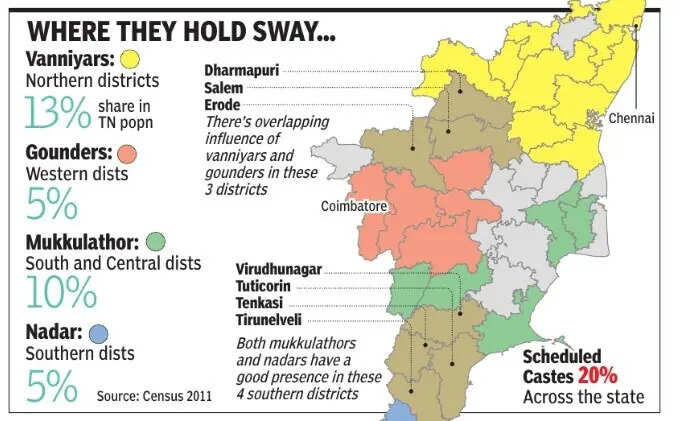
Elections in Tamil Nadu are not decided by party arithmetic alone. In all its regions, the dominant caste factions – Vanniyars in the north, Gounders in the west, Thevars in the south, and Dalit and Nadar communities in key areas – continue to shape alliances, candidate selection and, often, the final outcome.The Vanniyars are concentrated in the northern districts like Viluppuram, Dharmapuri, Krishnagiri, Salem, Cuddalore and Vellore. The influential OBC community rose to political prominence after the Vanniyar Sangam led by S Ramadoss led violent protests in 1989 before the M Karunanidhi government implemented the 20% quota for most backward classes.The community has since largely supported the PMK, which was founded by Ramadoss and is now under the disputed control of his son Anbumani Ramadoss. A large section of Vanniyars have also joined DMK and ADMK. This time, NDA member Anbumani’s PMK faction is contesting on 18 seats, while Ramadoss senior has fielded candidates on 35 seats, mostly in the northern belt.

,

Shortly before the 2021 assembly elections, the ADMK government introduced a 10.5% internal quota for Vanniyars, but the Supreme Court struck it down. The incoming DMK government adopted a cautious approach, saying that only the Center has the legal authority to conduct the caste census.The DMK government has three senior ministers from the community. CN Ramamurthy, founder-president of the Vanniyar Federation, says, “Both the DMK and ADMK allot more seats to Vanniyars, which shows the importance of the community.” The DMK also got a boost last week when Guru Viruthambigai, daughter of late PMK leader Guru, met CM MK Stalin to extend support.If the Vanniyars are in the center of the north, the Gounders are dominant in western Tamil Nadu, especially in Coimbatore, Erode and Salem districts. A large section of community leaders like ADMK general secretary Edappadi K Palaniswami and former ministers SP Velumani and P Thangamani continue to support him. KA Sengottaiyan, another stalwart from the community, has joined Vijay’s TVK.In the 2021 assembly elections, the western belt was the only region that remained with the ADMK, winning 29 out of 48 seats there. This time Stalin has handed over this area to former minister V Senthilbalaji. “DMK candidates will win in many constituencies in the western region and we will form the next government,” Senthilbalaji said. times of India . In southern Tamil Nadu, Thevar influence remains strong in districts such as Ramanathapuram, Sivagangai, Virudhunagar, Theni and Madurai. The Mukkulathor group – comprising the Kallar, Maravar and Agamudaiyar communities – has long been considered a key support base of the ADMK, especially during the tenures of MGR and Jayalalithaa.But that base has shown signs of stress. The alleged insult by Palaniswami angered some sections of the community, which expelled three of its key leaders from the party: AMMK chief TTV Dhinakaran, former chief minister O Panneerselvam, and Jayalalithaa’s aide VK Sasikala. In 2021, the ADMK won just 16 out of 58 seats in the south, where the DMK and Congress won 33 and eight seats respectively.After this Panneerselvam joined DMK. Sasikala has launched the All India Puratchi Thalaivar Makkal Munnetra Kazhagam and has fielded 77 candidates with the stated objective of defeating the ADMK candidates. His campaign focuses on the theme of “Palaniswamy betrayer”.Dalits remain another major electoral force, with their population ranging from 15% to 34% in many districts, except Kanyakumari, where their numbers are relatively small. SCs like Paraiyar, Pallar and Arunthathiyar hold significant political importance.DMK ally VCK, led by Thol Thirumavalavan, remains a major voice among Dalit voters, especially among the Paraiyar community in the north.Among Pallar leaders, Puthiya Tamilgam’s S Krishnasamy is contesting independently on 60 seats after alliance talks with ADMK failed. In the NDA camp, Dalit organization chief John Pandian has been fielded from Rajapalayam on the BJP’s lotus symbol. Vijay’s TVK and Seeman’s NTK have also made some dent in the Dalit vote bank.In many southern areas, the results also depend on Nadars, the economically dominant community in Tirunelveli, Tenkasi, Thoothukudi, Virudhunagar and Kanyakumari. Historically, the community has been associated with the Congress, primarily because of former CM K Kamaraj, a Nadar, who played a key role in enabling reservation for backward classes through the First Amendment to the Constitution.After Jayalalitha’s death, the ADMK lost most of its Nadar support due to the leadership’s perceived affinity towards the Gounders and Vanniyars. The DMK has since captured part of that space, with Kanimozhi Karunanidhi, the party’s MP from Thoothukudi, focusing heavily on the area. BJP leaders Tamilisai Sundararajan and Pon Radhakrishnan are also counted among the prominent faces of the community.

Source link

Public perception seems to be influencing demand for pardon: Delhi High Court to Mattoo convict. india news

Public perception seems to be influencing demand for pardon: Delhi High Court convicts Mattu

New Delhi: Delhi High Court examines Sentence Review Board’s decision to refuse premature release Santosh Kumar SinghPriyadarshini Mattoo, serving a life sentence in the 1996 rape and murder case, observed that the board’s decisions seem to be influenced by public perception.Justice Anup J Bhambhani on Thursday said that while there was no doubt that the crime was heinous and caused “permanent harm” to the family of the deceased, “the SRB is preying on public perception”.“You are an extremely unpopular person… Your name does not look good so I (SRB) am rejecting it,” the judge said, marking a trend detected by the HC in several petitions before it arising from the board’s rejection of premature release. The court said, “There is something called reformation… 30 years in custody.”It listed Singh’s petition on April 20 along with other similar petitions on the same issue. The court told Singh’s lawyer, “You will be treated fairly. You will be treated according to what I distill.”The High Court had last month directed convict Singh to surrender as the victim’s brother Hemant Mattoo had strongly opposed his plea seeking premature release. The court had then indicated that it would consider Singh’s pardon plea only if he surrenders, which would lead to termination of his parole.In July last year, a separate HC bench had set aside the board’s decision to reject Singh’s condonation plea, observing that he had shown signs of improvement and asked it to take a fresh decision. It had faulted the Board for relying only on the gravity, cruelty and depravity of the crime and the objections raised by the Delhi Police and the CBI.During Thursday’s hearing, senior lawyer Mohit Mathur sought early hearing of the mercy petition and argued that Singh had already spent 31 years in custody. He said that despite the comprehensive HC verdict last year, the board again rejected his case on the same grounds.Justice Bhambhani pointed out that there were many “worse cases”, including a convict spending 41 years in custody because the board was “just dismissing things” due to the heinousness of the crime despite receiving recommendations to the contrary.In his main petition, Singh challenged the board’s decision dated November 27, 2025, which had rejected his case for premature release after the HC referred the matter back to the board last year.While Hemant Mattoo’s lawyer opposed the plea to extend the hearing date, arguing that the convict had committed a serious crime, the HC replied that Singh was punished for the same.“There’s something called reform. There’s something called a custodial sentence of 30 years.” There is something called transfer in an open jail,” the court said.“I understand your feelings. What he did was unacceptable and the system punished him. He got life. The crime was heinous. What do we do? We imprison a man like this?” Justice Bhambhani expressed surprise and highlighted that Sushil Kumar, convicted in the 1995 Tandoor murder case, had also been released after serving 23 years in jail.Singh’s lawyer cited the example of the 1999 Jessica Lal murder convict, who was later released.Mattu, 25, was raped and murdered in January 1996. Singh, a Delhi University law student, was acquitted by the trial court in the case on December 3, 1999, but the Delhi HC overturned the verdict on October 27, 2006, convicting him of rape and murder and sentencing him to death.Singh, son of a former IPS officer, had challenged his conviction and death sentence in the High Court. In October 2010, the Supreme Court upheld Singh’s conviction but commuted his sentence to life imprisonment.

Source link

India, Austria sign 12+ agreements on defence, counter-terrorism and technology. india news

India, Austria sign 12+ agreements on defence, counter-terrorism and technology

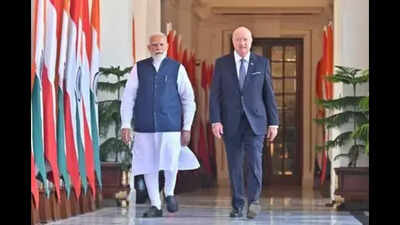
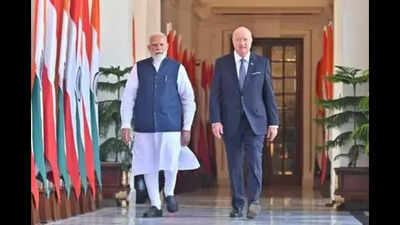
New Delhi: Interacting with visiting Austrian Chancellor Christian Stocker, Prime Minister Narendra Modi stressed that India and Austria support stable, lasting and lasting peace in Ukraine and West Asia, reiterating that military conflict will not resolve the issues. The first visit by an Austrian chancellor in 42 years resulted in more than a dozen agreements and announcements on counter-terrorism, military affairs and technology.In his media statement, Modi said that the world is going through a serious and stressful situation, which is affecting everyone. “In such a tense global environment, India and Austria agree that resolution cannot be achieved through military conflict. “Whether it is Ukraine or the Middle East, we support stable, durable and lasting peace,” he said, adding that both sides agreed that global institutional reform is essential.On West Asia, External Affairs Ministry Secretary Sibi George said both sides emphasized dialogue and diplomacy, including safe, unobstructed sea lanes. On Ukraine, he supported a comprehensive and lasting peace based on the UN Charter and international law.Modi said ending terrorism is a shared commitment. India and Austria signed an LOI to establish a Joint Working Group on Counter-Terrorism and condemned terrorism in all its forms including cross-border terror, Pahalgam attack and Red Fort incident. Another LOI will provide an institutional framework for military cooperation and defense technology partnership based on the India-EU Defense and Security Partnership.Bilateral ties were boosted by Modi’s visit to Vienna in 2024, the first by an Indian prime minister in 41 years. Apart from the six agreements, nine announcements were made in high-technology, education, space, startups and cyber security.Modi said the India-EU FTA marked a new phase, adding that relations with Austria are entering a new era with cooperation in defence, semiconductors, technology and biotechnology.

Source link

SC says extramarital affair not ground for abetment of suicide India News

SC says extramarital affair not a ground for abetment of suicide

New Delhi: The Supreme Court on Thursday said being in an extramarital affair cannot be a ground to prosecute a spouse if he commits suicide due to tension in the relationship, adding that abetment to suicide requires a positive act of abetment.A bench of Justices KV Vishwanathan and Atul Chandurkar said that to sustain the charge under Section 306 of the Penal Code, it must be shown that the accused contributed to the suicide through a direct or indirect act. Provocation requires an active act that leaves the deceased with no other option than to take his or her own life.Dismissing the case against a man who allegedly had an affair with the deceased’s wife, the Supreme Court said even if an illicit relationship is assumed, there is no reason for abetment of suicide. “There is no allegation that the appellant abetted her suicide or aided her in committing suicide by any act or illegal omission,” the bench said.The top court set aside the Chhattisgarh HC order which had allowed the trial to proceed on the grounds that the deceased was upset over his wife’s alleged affair. It rejected the prosecution’s argument that the presence of his partner amounted to inciting insult.However, the relief is only for that person, as the wife of the deceased, who is also an accused, did not challenge the case against her. “There must be some material to indicate a positive act of abetment,” the Supreme Court said, adding that such abetment must be close to the act of suicide to establish a clear nexus.

Source link

‘Experienced diplomat’: Trump congratulates former US envoy Taranjit Sandhu on appointment as Delhi LG india news

'Experienced diplomat': Trump congratulates former US envoy Taranjit Sandhu on appointment as Delhi LG

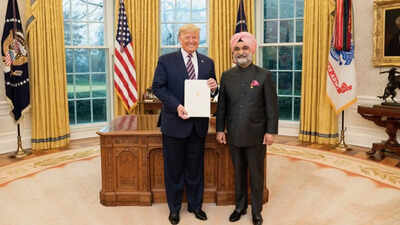
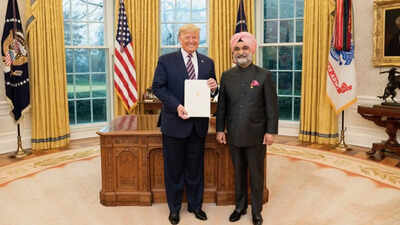
us President donald trump On Thursday congratulated Taranjit Singh Sandhu on his appointment as the new Lieutenant Governor of Delhi, lauding his diplomatic career and contribution to India-US relations.While sharing a photo with Sandhu on Truth Social, Trump said, ‘Congratulations to Taranjit Sandhu on becoming the new Lieutenant Governor of Delhi!’“As an experienced diplomat and former Ambassador to the United States, he has always shown a deep commitment to strengthening US-India relations. I wish him every success in leading Delhi’s progress and advancing global relations!” He added.Sandhu, a former Indian Ambassador to the United States, assumed charge as the Lieutenant Governor of Delhi on March 11 at a ceremony held at Lok Niwas, the official LG residence.The oath of office was administered by the Chief Justice of Delhi High Court in the presence of Delhi Chief Minister Rekha Gupta, cabinet members and senior officials.He replaces VK Saxena, who held the post for almost four years. His appointment was announced by President Draupadi Murmu as part of a wider reshuffle of gubernatorial posts.Sandhu, a 1988 batch Indian Foreign Service officer, has over three decades of diplomatic experience. He has served as India’s Ambassador to Washington DC, Deputy Chief of Mission to the US from 2013 to 2017, and previously as First Secretary (Political). He also served as India’s High Commissioner to Sri Lanka.In the reshuffle, RN Ravi was sent from Tamil Nadu to West Bengal as Governor in place of CV Anand Bose.

Source link

‘Why only professors, put judges also on election duty’: HC pulls up EC india news

'Why only professors, put judges also on election duty': HC rebukes EC
Panel comes under fire on polling officials for failure to submit notification

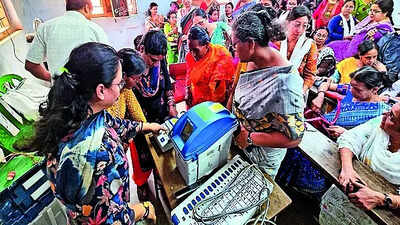
Kolkata: Calcutta HC judge, Justice Krishna Rao, on Thursday slammed the Election Commission for not issuing a notification stating whether assistant professors can be appointed as presiding polling officers in the assembly elections. “You (EC) can also appoint judges as polling officers under Section 26 (of the Representation of the People Act)… I am ready to go,” he said, giving the Election Commission another chance to obtain facts to support its action.A group of assistant professors challenged the Election Commission order directing them to join as presiding officers for the Bengal elections. He argued that the Election Commission had in a previous order said, “Group A-equivalent senior officers, including teaching staff of universities and colleges, should not be deputed for polling duties in the polling station premises without specific reasons to be recorded in writing by the DEO…”Section 26 states that a DEO may appoint a presiding officer for each polling station as required, but shall not appoint any person employed by or working for a candidate. Justice Rao, after hearing the arguments of the Election Commission’s counsel, said, “We can also go to the polling office… This is not a joke, every time you are changing your notification.”Vikas Ranjan Bhattacharya, representing the assistant professors, said that their main demand is not to assign the duty of the presiding officer. “There is a group of officers; let them be appointed. Teachers should not be humiliated like this.”Highlighting that the demand was for March 19 and the professor had come to the court very late, the Election Commission’s counsel said, “At this stage, interfering in the entire process will stall the elections.” On this, Justice Rao said that even if it is a day earlier, the petition should be decided as per law. “Show me the notification by which they are demanded.”When the Election Commission’s counsel pointed to the Supreme Court order appointing judicial officers for the SIR, Justice Rao said, “Okay, so I am referring the matter to the Supreme Court. The Supreme Court order is being used by the Election Commission in this way.”The case will be heard again on Friday.

Source link

J&K SIA files chargesheet against 10 in ‘white collar’ module case. india news

J&K SIA files chargesheet against 10 in 'white collar' module case

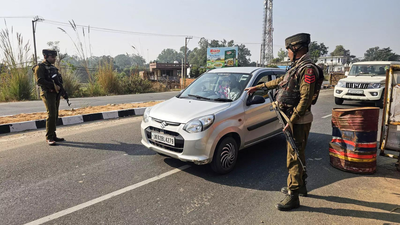
Srinagar: The State Investigation Agency (SIA) of Jammu and Kashmir police on Thursday filed a chargesheet against 10 people accused in the “white-collar” terror module case. One of them, Omar un Nabi, was killed in the Red Fort blast last November.The other nine accused are: Arif Nisar Dar, Yasir Ul Ashraf Bhat, Maqsood Ahmed Dar of Naugam, Irfan Ahmed Wage of Shopian, Zameer Ahmed Ahangar of Ganderbal, Muzamil Shakeel Ganai of Pulwama, Adil Ahmed Rather of Kulgam, Shaheen Saeed of Lucknow and Tufail Ahmed Bhat of Batmaloo. A case was registered against all of them at Naugam police station in Srinagar.“This case highlights the evolving and sophisticated nature of terrorist plots, including the misuse of professional institutions and digital platforms,” ​​the SIA said.The agency said provocative and threatening posters were pasted in Naugam on October 19, 2025, with the aim “to spread fear among the public, disturb public order and directly challenge the sovereignty and territorial integrity of India.” It said the operation was part of a larger, well-planned terrorist conspiracy aimed at reviving the banned terrorist organization Ansar Ghazwat-ul-Hind.The accused persons had formed a highly clandestine module, and were actively engaged in radicalization, recruitment and operational preparations to carry out terrorist attacks across the country. They were actively spreading extremist propaganda through digital platforms and had procured materials and experimental activities related to explosive manufacturing, including at residential complexes and facilities associated with Al-Falah University.The SIA said that through a comprehensive, evidence-driven investigation, it has successfully dismantled the entire terrorist network and its support structure. “The investigation has revealed solid and irrefutable evidence; including retrievals, digital forensics, scientific analysis and corroborative witness accounts, which firmly establishes the collusion, active participation and coordinated roles of each of the accused in the conspiracy.

Source link

‘Had to record the last sound’: Musician performing for global audience in Tehran ruins india news

'Had to record the last sound': Musician performing for global audience in Tehran ruins
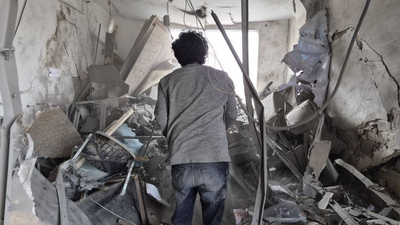
The ruins of the Honiak Music Academy after the strike.

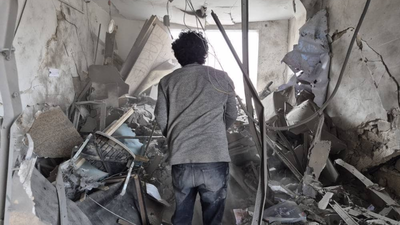
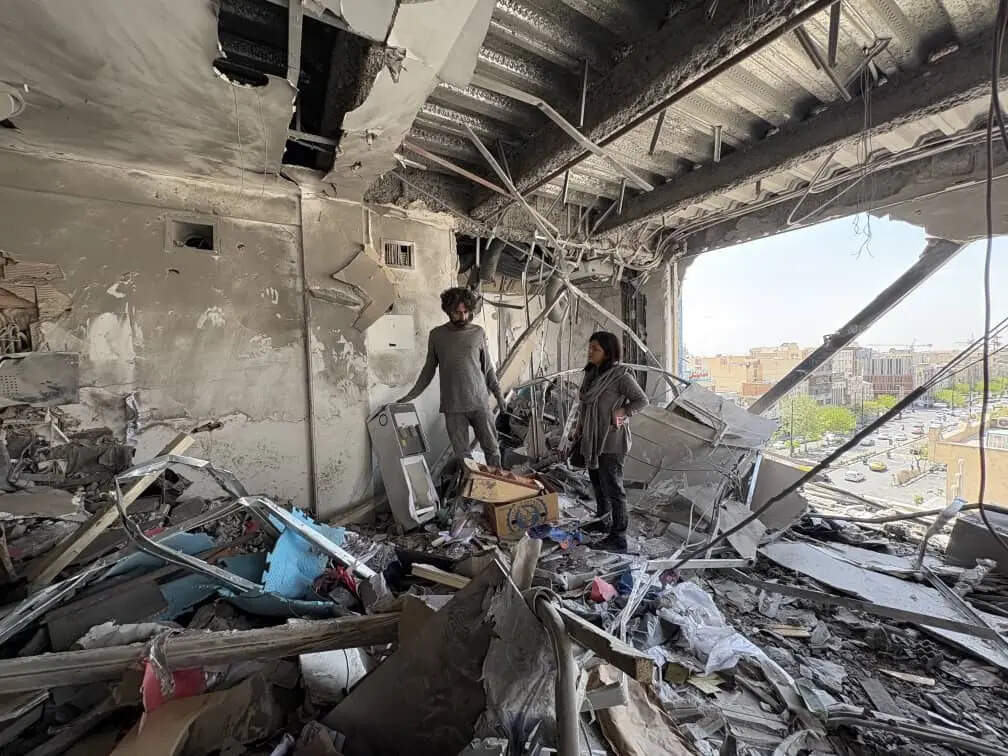
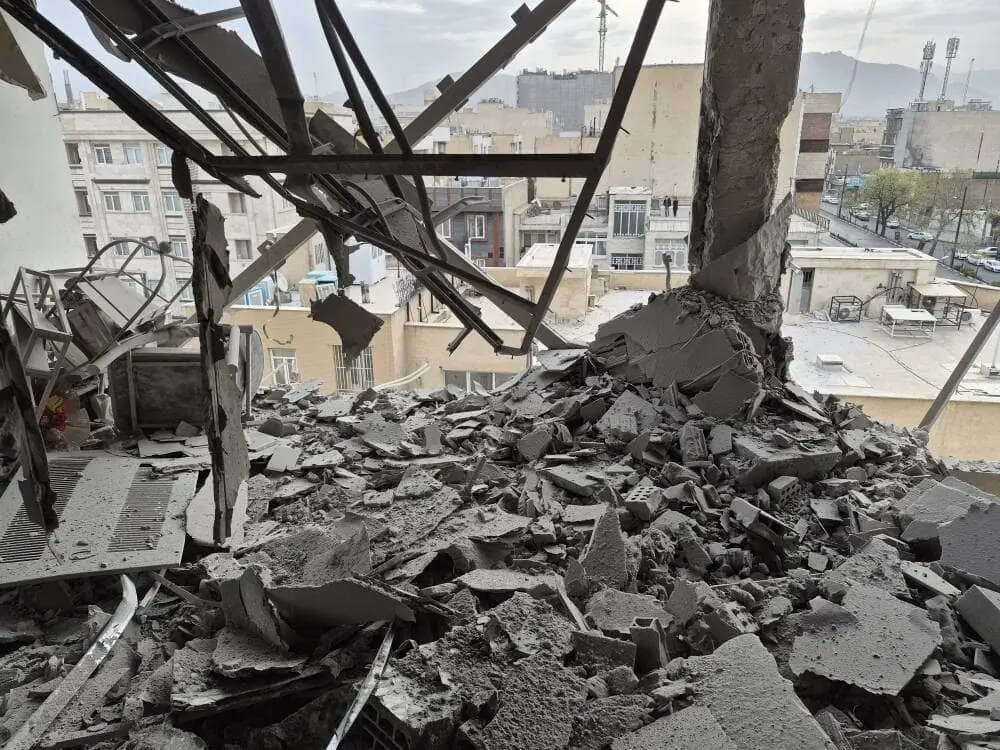
New Delhi: In the shattered remains of his 15-year-old music school, Iranian musician Hamidreza Afrideh sat on the debris-strewn floor, took out his bow and played with a kamancheh, what he called “the final sound” of a life’s work turning to dust.A few weeks after an attack destroyed the Honiak Academy of Music, Afrideh went back to the dangerous ruins on April 7, 2026, and recorded a harrowing video that traveled far beyond Tehran, capturing his moments of deep grief after the academy was destroyed and severely damaged by an airstrike on March 23.

-

The Honiak Music Academy, once a classroom, is now a field of debris.

“Today was the last day to say goodbye to my school. I wanted the last sound left in this place to be the sound of music…not explosions and missiles,” Afrideh wrote the same day in a now-viral post. Within days, their images and clips were viewed millions of times on Instagram,

-

Honiak Music Academy before the strike.

talking to times of India Afrideh recalled the day of the attack from Tehran. “I felt that a very important part of our memories, and the sounds that could have continued in that place – sounds that many artists could hear, see and live with for years – were suddenly destroyed by a missile and a drone.” The academy, built over a decade and a half by Afarideh and his wife Shida Ibadatdoust, is what they call “their shared life project.”“We worked with very limited resources, relying only on our dreams and dedication to build this academy. It is extremely hard to lose it suddenly. All our hard work, efforts, continuous action to bring people closer to music and instruments was lost in a single night. It is very difficult to accept this. Whatever we have built over the years…it will take many years to recover from this loss.”

-

The Honiak Music Academy, once a classroom, is now a field of debris.

Despite the risk of collapse, he returned to the damaged building. “I knew it was very dangerous… but I felt that if I didn’t record this sound, it would be in my heart forever. I probably wouldn’t be able to (survive) after this… I felt I had to go out there and make it the last image and the last sound left from this safe space we created.”For years, the academy echoed with children’s laughter, parents’ warm conversations and the sound of Persian classical music. The teacher says that voice disappeared after the attack. For Afarideh, the viral moment has drawn global attention — but it also underlined, he says, “the reality of war and destruction” faced by his 250 students — ranging from children to the elderly — and 22 teachers. His video has become a global plea for recognition of the cost of war, not only in bodies and infrastructure, but in the fragile ecosystem of art, memory and creativity that takes decades to create and minutes to erase.Taking shape over more than a decade, he calls the place a “second home,” where students come not only to learn music, but also to feel seen and felt – for him, too, this loss has been personal. “Students, who were supposed to return someday, are now scattered, stunned, and struggling to deal with what happened. One child crossed the building with his mother and did not speak for hours afterward. All students are going through the same emotions.Yet even in destruction, Afarideh insists on the universal power of art. He said, “Music…is a symbol of freedom.” “In times of war, it can heal – even if just a little – the pain of those who have lost everything.”

Source link