Cabinet approves proposal, Indigo will operate on Gaya-Bangkok route. patna news

Cabinet approves proposal, Indigo will operate on Gaya-Bangkok route

Patna: The state cabinet on Wednesday approved the Civil Aviation Department’s proposal to select Indigo Airlines for biweekly international flight operations between Gaya and Bangkok (Thailand). This service is expected to start soon.The cabinet meeting was held under the chairmanship of CM Samrat Chaudhary. Additional Chief Secretary, Cabinet Secretariat Department, Arvind Chaudhary said that M/s InterGlobe Aviation Limited, the holding company of Indigo Airlines, was selected through the tender process.He said the Cabinet approved a Viability Gap Fund (VGF) of Rs 10.40 crore for the airline operator for one year. Since the company was the only bidder, the selection was done on the basis of nomination.“Initially, the number of passengers may not be up to desirable levels. Therefore, a viability gap fund of Rs 5 lakh is being paid to the firm for each round-trip flight from Gaya to Bangkok and from Bangkok to Gaya, and this will be payable for one year.”He said the Cabinet approved the proposal looking forward to the early start of the international service.“The long-term feasibility of the international flight between Gaya and Bangkok is assured, as a large number of tourists from Thailand come to India every year to visit important Buddhist sites, with Buddhist sites in Bihar such as Bodh Gaya and other places holding special significance,” he said.He further said that this step will increase the number of tourists in the state and strengthen Bihar’s presence on the international tourism map, besides boosting economic activity in sectors like hospitality, hotels, transport and handicrafts.Overall the cabinet approved 13 proposals during the meeting.In another major decision, the Cabinet approved the release of Rs 428 crore to the Water Resources Department (WRD) for supplying water to the upcoming Dobhi Industrial Enclave under the Amritsar-Kolkata Industrial Corridor (AKIC).Officials said the required water supply will be ensured through reservoirs to be constructed by the WRD. According to the master plan, the industrial sector will initially require 8.5 million liters per day (MLD) of water, while the final demand is estimated to be 19 MLD. The annual water requirement has been estimated at 8.5 million cubic meters (MCM).For this, 324 acres of land will be provided by Bihar Industrial Area Development Authority (BIADA) near Dobhi for the construction of a reservoir with 8.5 MCM storage capacity. Water will be drawn from the rain-fed Leelajan river for 40 days to fill the reservoir and meet the estimated demand of 19 MLD.The Cabinet also approved the release of Rs 747 crore from the State Contingency Fund for central grants to the health sector for the financial year 2026-27 on the recommendation of the 15th Finance Commission.The amount will be used to strengthen health services in block-level primary health centers (PHCs), including opening diagnostic centers and setting up health and wellness centres.Another proposal approved by the Cabinet was to continue the recommendations of the Fifth State Finance Commission for release of grants to urban and rural local bodies during 2026-27, as the recommendations of the Sixth State Finance Commission have not been received yet.The Cabinet also approved the Young Professionals Selection Policy, 2026, which aims to appoint technical and specialized professionals to institutions under the Department of Science, Technology and Technical Education. This policy seeks to improve efficiency in technical institutions by involving young professionals.To strengthen the border security and intelligence network along the “highly sensitive” India-Nepal border, the Cabinet approved the creation of the post of Inspector General of Police (Border) in the Special Branch of the Home Department.

Source link

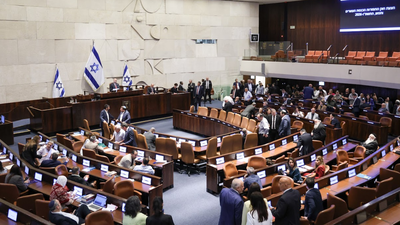
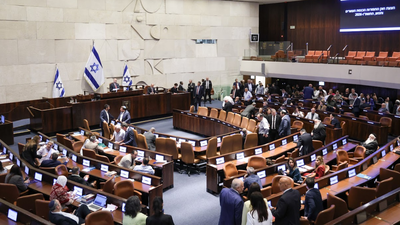
Israeli parliament votes on advance bill to dissolve the Knesset, paving the way for early elections

Israeli parliament votes on advance bill to dissolve the Knesset, paving the way for early elections
Image used for representative purposes

Israeli lawmakers voted overwhelmingly on Wednesday to advance a bill to dissolve the Knesset, a move that could pave the way for early elections and deepen political uncertainty for Prime Minister Benjamin Netanyahu’s coalition.In the initial reading, 110 out of 120 members of Parliament supported the motion, with no votes against it and the remainder abstained. The bill, introduced by the ruling coalition, has now moved to the committee stage before going through three more readings needed for final approval.If ultimately passed, the dissolution would automatically trigger elections within 90 days, potentially pushing voting to October 27.The development comes amid growing tensions within Netanyahu’s right-wing coalition, particularly over disputes with ultra-Orthodox parties. They have accused the prime minister of failing to meet commitments to pass a law granting military service exemptions to their communities, a long-standing political flashpoint in Israel.Coalition tensions have opened the door to opposition parties who are pushing for early elections and trying to capitalize on Netanyahu’s declining political standing in opinion polls. Israeli political columnist Miriam Shermer said, “The dissolution of the Knesset, approved in preliminary reading this Wednesday, could still be suspended if the exemption (for ultra-Orthodox students) is already passed.” He said the situation could still change depending on security developments or legislative deals, as cited by AFP.On Wednesday, coalition chairman Ofir Katz said: “This coalition has fulfilled its days.”Political analysts say the timing of the move could shape the election narrative, with some suggesting that Netanyahu may prefer to hold early elections to avoid the anniversary of the October 7 attacks dominating the election campaign.“The election campaign has begun,” opposition leaders have said, as rival factions begin setting the stage for another closely contested and fractured vote with so far no clear path to a stable majority.

Source link

No case of Ebola has been reported in India yet; Government increased surveillance after WHO alert. india news

No case of Ebola has been reported in India yet; Government increased surveillance after WHO alert

Quoting ANI sources, the government said on Wednesday that no case of Ebola has been reported in the country so far.The Ministry of Health and Family Welfare said no cases of Ebola have been reported in India so far, while surveillance and preparedness measures have been strengthened across the country after WHO declared Ebola a public health emergency of international concern.A high-level review meeting was held with Health Secretaries of all States and Union Territories under the chairmanship of Union Health Secretary Punya Salila Srivastava to assess the preparedness and response measures related to Ebola Virus Disease (EVD).During the meeting, states and union territories were advised to maintain preparedness at every level. The Center said detailed standard operating procedures (SOPs) covering pre-arrival and post-arrival screening, quarantine protocols, case management, referral system and laboratory testing have already been shared with all states and UTs.Srivastava stressed the need for coordinated monitoring, timely reporting and preparedness at designated health facilities during the review meeting. The government said all concerned ministries and departments have been sensitized and are taking preventive and surveillance measures in coordination with the health ministry.The ministry also said India has prior experience in dealing with such situations, including the Ebola outbreak in Africa in 2014, when similar precautionary measures were successfully implemented.The Ebola virus is highly contagious and spreads through contact with bodily fluids such as blood, vomit and semen. Common symptoms include fever, vomiting, diarrhea, muscle pain, and in severe cases, internal and external bleeding.The WHO has declared the outbreak a public health emergency of international concern and expressed concern over its “scale and speed”. The WHO representative in Congo has warned that the outbreak could continue for at least the next two months.Health officials said the outbreak involves the rare Bundibugyo strain of Ebola, which reportedly spread unknown for weeks after initial tests for the more common Ebola strain produced negative results.Investigations are still ongoing to determine when and where the outbreak began. “Given the scale, we’re thinking it probably started a few months ago,” said Anais Legrand, a technical official with the WHO emergency program, as quoted by the AP.There have been 51 cases confirmed so far in Congo’s northern provinces of Ituri and North Kivu, as well as two cases in Uganda. Additionally, authorities are tracking 139 suspected deaths and nearly 600 suspected cases linked to the outbreak.

Source link

Hazaribagh BJP MP vs MLA: Cricket match controversy gives rise to political rift. Ranchi News

Hazaribagh BJP MP vs MLA: Cricket match controversy gives rise to political rift

Hazaribagh: In the cricket season, when everyone loves to catch a glimpse of their favorite IPL stars on television or go to the stadium to watch the match, can politicians be different?It was learned that the ongoing tussle over the cricket match between BJP MP Manish Jaiswal and the party’s Sadar MLA Pradeep Prasad has now turned into an open duel.On 18 May, during a friendly match between the Hazaribagh District Cricket Association (HDCA) team and the Tata team, Prasad arrived at the venue and expressed strong displeasure at not being invited, and alleged deliberate neglect by the cricket association headed by Jaiswal.The MLA also threatened to stage a protest and stop the match, which surprised the crowd that had gathered to watch the match.Prasad claimed that despite being a representative of nearly five lakh people, he was repeatedly ignored by the association. He said the invitation card had the names of both the MP and the MLA, but only Jaiswal was formally informed.Accusing the association of disrespect, he said, “Programs are organized regularly, but I am not even informed.”HDCA secretary Bunty Tiwari on Wednesday clarified that he had no intention of disrespecting and that information about cricket matches is usually shared through the association’s social media groups.Jaiswal said that the MLA did not approach him at the stadium.“How do I go to talk to him?” When asked, he said he was willing to play the role of an older brother but added that he would not “bow down to an unruly younger brother.”Prasad had not attended the previous meetings but steps would now be taken to send individual invitations, he said, stressing that the body should work collectively and not as an “individual fiefdom”.

Source link

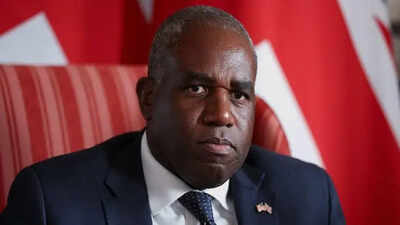
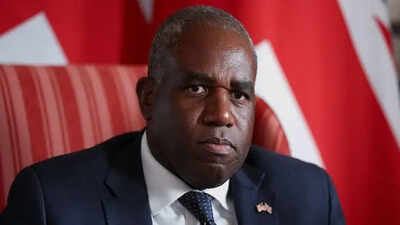
David Lammy unveils reforms to reduce youth prison sentences in the UK and protect vulnerable children

David Lammy unveils reforms to reduce youth prison sentences in the UK and protect vulnerable children

UK Justice Secretary David Lammy announced his plans to ensure a 25 per cent reduction in the number of children in detention before the end of this parliamentary term. The Justice Ministry is also planning a consultation on lifetime criminal records for those under 18, new youth intervention courts and tougher parental accountability measures for children involved in crime. For Lammy, the reforms were linked to his personal experience as he grew up in Tottenham during the 1980s. Prison was always a threat for him as a child as were many black boys like him who found themselves in the criminal justice system due to truancy from schools and committing minor crimes.He said, “Growing up in Tottenham in the 1980s, my greatest fear was being jailed. It may seem irrational, but in reality it was the fate of many young black boys like me”, as quoted by the Guardian.“You saw it happen gradually at first. People missed school, got into minor trouble and started hanging out with the wrong crowd. No one stepped in to pull them back. For us, going to prison wasn’t shocking or far-fetched. It felt almost inevitable. I could have been one of them, but was lucky enough to get a scholarship to a state boarding school, which gave me an outlet that others never had,” he adds.According to Lammy, short-term detention makes children and adolescents more likely to commit crimes in the future. He said, “For the most serious crimes, custody will always be necessary to protect the public; that will never change.”“But for many children, even a small shock inside can cause lasting damage, disrupting the most formative years of their lives and sometimes exposing them to greater violence and criminal influence.”The Ministry of Justice intends to allocate £15 million of funding each year to special teams that will support children who are at risk of becoming involved in criminal activity. It is feared that introducing more community sentences and reducing custodial remands will reduce the youth prisoner population by 20 per cent.These measures would include criminalizing child exploitation against adults who incite children to commit crimes. These pilot youth interventions will be delivered through court judges and support workers, who will develop individual plans.Children’s Commissioner Rachel de Souza supported the proposals. “I have been consistently clear about the need to reform the youth justice system,” she said.“We must create an approach that keeps children safe, keeps them away from crime wherever possible and prioritizes meaningful behavior change.”

Source link

‘Not an authorized delegation’: Congress issues show cause notice after Dalit leaders visit Mayawati’s house. india news

'Not an authorized delegation': Congress issues show cause notice after its Dalit leaders visit Mayawati's house
Mayawati (file photo/PTI)

New Delhi: Many Dalit leaders of Congress tried to meet Bahujan Samaj Party (BSP) supremo Mayawati reached her Lucknow residence on Wednesday, following which the grand old party issued her a show cause notice seeking an explanation for her “unauthorized” act.The leaders were turned away from the gate as they had not sought time to meet the former Uttar Pradesh chief minister, who belongs to the Dalit community.Congress Scheduled Caste department national president Rajendra Pal Gautam and the department’s Uttar Pradesh president and MP Tanuj Punia, who were among those who visited Mayawati’s residence, described the visit as a “sudden courtesy call” with “no political overtones”.Congress’ Uttar Pradesh in-charge Avinash Pandey told PTI that the party has taken note of the visit.“This was not an authorized party delegation. We have taken cognizance of the matter and issued a show cause notice. Although we respect him very much, those who attempted to meet him did so in their personal capacity,” Pandey said.Meanwhile, State Congress President Ajay Rai said that the party has not given permission for any such meeting.“Such programs are pre-planned and approved in advance by the top leadership,” Rai said.‘Not true’: Congress MP Punia refutes reports that Dalit leader wanted to send message to Rahul GandhiPunia denied reports which claimed that Dalit leaders had approached Mayawati to convey Rahul Gandhi’s message.Punia told PTI, “This is not right… A meeting of the party’s SC branch under the leadership of Rajendra Pal ji was held in Lucknow on Tuesday evening. Since our party office is close to the BSP chief’s residence, after the meeting, as we passed by Mayawati ji’s residence, we thought of paying a sudden courtesy call to her, as she also comes from our community and is a senior leader.BSP spokesperson Vishwanath Pal said that he had no information about the visit. “I don’t know who went to see Sister. I am not aware of any such visit,” he said, referring to Mayawati.Unfazed by the controversy, Gautam said the visit was “well-intentioned” and had no political implications, adding that its purpose was to check the health of the BSP leader.Gautam said, “It may be a juicy gossip for the media, but as far as I am concerned, I have known Mayawati’s relatives for a long time. Her brother I know well and we meet often. That is why, after our Lucknow meeting, when we passed by his residence, we decided to check if he was available for the meeting.”When asked whether a formal appointment should have been taken, he said that it was not considered necessary as he was familiar with their family.

Source link

Mohun Bagan among seven clubs deprived of AIFF license: What will happen now?

Mohun Bagan super giants have headlined the worrying list of seven clubs whose applications for AIFF Premier 1 licenses for the 2026-27 season have been rejected, casting fresh uncertainty over the future of several Indian Super League sides. The decision, taken by the AIFF’s Club Licensing Committee – First Instance Body (CLC-FIB), will now temporarily make several top-flight clubs ineligible to participate in national and AFC competitions until the situation is quickly resolved.

While some clubs managed to secure licenses with restrictions, many major ISL names failed to get approval from the AIFF.

The clubs that were granted licenses with approval were:

  • Northeast United FC
  • East Bengal FC
  • Jamshedpur FC
  • Mumbai City FC
  • bengaluru fc
  • FC Goa
  • punjab fc

Meanwhile, the clubs whose licenses were rejected are:

  • Mohun Bagan Super Giant
  • Kerala Blasters FC
  • Odisha FC
  • Chennaiyin FC
  • Mohammedan Sporting Club
  • Antar Kashi
  • Sporting Club Delhi

Many ISL clubs are already grappling with widespread uncertainty over the league’s commercial future, ownership concerns, sponsorship pressures and operational plans for next season. Now the licensing setback adds another administrative headache right in the middle of that chaos.

But unless those issues are resolved quickly, Indian football may soon face another off-field mess just months before the new season begins.

What does AIFF club license rejection mean?

AIFF’s Indian club licensing system is not just paperwork.

It is essentially the league’s quality-control system designed to ensure that clubs meet mandatory standards involving finance, infrastructure, youth development, administration and sporting operations before they can participate in professional competitions.

Every season, clubs must secure licenses to participate in the ISL, I-League and AFC tournaments.

So when a license is rejected, it effectively means that the club has failed to meet one or several mandatory criteria set out by AIFF and AFC rules.

Technically, this currently makes these clubs ineligible to participate in ISL and continental competitions for the 2026–27 season.

But the important thing is that it is not an immediate removal.

Clubs still have ways to avoid complete disaster.

What’s next for Mohun Bagan and other clubs?

Despite the rejection, it is still not the end of the road for the seven clubs. The AIFF rules still leave some loopholes open before the 2026-27 season officially begins.

What can rejected clubs do now:

  • File an appeal against the decision of the Club Licensing Committee
  • Submit additional documentation or clarification to address compliance deficiencies
  • Request special discounts to participate in national competitions
  • Try to resolve infrastructure, financial or administrative issues within the permitted timeframe
  • Will be temporarily ineligible for ISL and AFC competitions until approval is received

For Mohun Bagan in particular, the rejection has even greater significance given the club’s recent AFC troubles after refusing to travel to Iran for an ACL 2 match last year, which had already resulted in a heavy fine and a two-season continental ban.

And for clubs like Kerala Blasters, Odisha FC and Chennaiyin FC, this announcement will further heighten supporters’ concerns about where Indian club football is currently headed.

– ends

published by:

Debodinna Chakraborty

Published on:

May 20, 2026 21:14 IST

Source link

City shooting: 14-year-old boy used as courier to send advance cash to attackers gurgaon news

City shooting: 14-year-old boy used as courier to send cash advance to attackers

Gurgaon: A 14-year-old schoolboy, allegedly involved in a gangster conspiracy that smuggled money from Punjab to handlers based abroad, was asked to carry part of the advance money given to two hired shooters who opened fire outside the Gurgaon house of singer Fazilpuria’s former manager on May 2.Crime branch teams arrested Gursher Singh alias Shera (23) and Jaspal alias Babbal (28) from Tarn Taran, Punjab for the firing outside Saurabh Yadav’s house in Sector 45. Two days later, on 11 May, Gursher died while allegedly trying to escape from police custody.According to the police, fugitive gangster Satta Nowshera – who is a close associate of Lakhbir Singh Landa – had promised the two men Rs 20 lakh to kill Yadav. He reportedly received Rs 1.4 lakh in advance in two installments, including Rs 1 lakh delivered through a schoolboy near the Amritsar bus stand. The remaining amount was to be paid after the murder.Apart from the money, the shooters were also provided with three Glock pistols, which reportedly reached them about two months ago after being smuggled from Pakistan by drone through cross-border networks. Police said the shooters never met the courier who left the weapons for them at a designated location in Amritsar.Officials said the attack was planned for about a month. “They were in regular touch with the powers that be and had planned the attack for a month before carrying it out. Gursher had earlier carried out firing in Punjab on the instructions of the powers that be and was named in an attempt to murder case,” an officer said.Police said that these people had come to Gurgaon to target Yadav and opened fire outside his house to spread panic. Constable Kulbir, who was posted there following complaints of extortion, suffered injuries on his hands and legs. Babbal was allegedly riding the motorcycle during the attack while Gursher, who was sitting pillion, opened fire.The investigation is also probing the role of music producer-turned-gangster Deepak Nandal in masterminding the attack, which is believed to have stemmed from a monetary dispute. According to the police, after Nandal came in contact with Satta, he was assured of help in eliminating Yadav. “There is a possibility that Nandal may be providing financial support to the Satta Nowshera gang, which is mainly involved in cross-border arms smuggling into India through Punjab,” an officer said.Both Satta and Nandal have taken responsibility for the firing. Police are now trying to find out how the two came in contact.Landa was declared a terrorist by the Union Home Ministry in December 2023. Satta, who carries a reward of Rs 5 lakh, is accused of supplying arms across the border to gang members in Punjab and neighboring states with the help of associates in Pakistan.An FIR has been registered under charges of attempt to murder, criminal conspiracy, extortion, causing hurt to a public servant and provisions of the Arms Act.

Source link

A 78-year-old British great-grandmother was left in shock after a utility firm mistakenly declared her dead on a £60 bill. world News

A 78-year-old British great-grandmother was left shocked after a utility firm mistakenly declared her dead after paying a £60 bill.
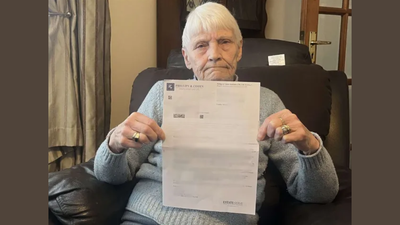
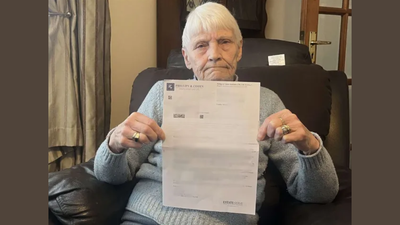
A UK utility company mistakenly declared a 78-year-old great-grandmother dead after failing to pay a £60 bill/Image: X, Metro UK

A 78-year-old great-grandmother in Britain was sent a debt collection letter addressed to the executor of her estate after she was mistakenly declared dead by a utility company.Ginette Bye later discovered the letter had been sent by debt collection agency Phillips & Cohen Associates on behalf of Southern Water over an alleged unpaid bill of £60.87, the Metro reports.The letter reportedly expressed condolences on her “death” before requesting payment linked to her water account, despite monthly payments continuing to be made from her bank account.This account was previously registered jointly with her late husband Paul Bye, who died in 2020, causing this error.Bye said Southern Water was notified of her husband’s death several years in advance and criticized the company for failing to contact her directly before referring the matter to debt collectors.“They have taken direct debits from my bank account every month for the last five years,” Bye told Metro.“If Southern Water had spoken to me and said, ‘Mrs Bye, you owe me £60, fine, I’ll pay it’. That’s what I’m angry about.”He also said the letter could have been very distressing for elderly people living alone without family support.The debt collection notice said Southern Water had been informed that he had “sadly passed away” and claimed the unpaid amount could become a liability of his estate.His son Mark Bye said the family is deeply troubled by the situation.“At first they thought it was a scam,” he said.“She’s almost 80. Something like this could seriously affect anyone.”Daughter Paula McVicar also questioned why payments were still being accepted when the company believed the account holder to be dead.“How can you talk to the bill payer when, according to you, she is dead?” He said.The account has since been completely transferred to Bye’s name and the disputed balance has been removed as a goodwill gesture.A spokesperson for Southern Water apologized for the incident and confirmed that an investigation had been launched.“We regret this error, which has caused unnecessary distress to Mrs. Bye,” the spokesperson was quoted as saying by Metro.“We are now reviewing our processes to understand exactly what went wrong and ensure it doesn’t happen again.”

Source link

From handing over ‘chicken neck’ to the Center to Vande Mataram mandate: 11 major decisions in 12 days of Suvendu government. india news

From handing over 'chicken neck' to Center to Vande Mataram mandate: 11 important decisions of Suvendu government in 12 days
West Bengal CM Suvendu Adhikari

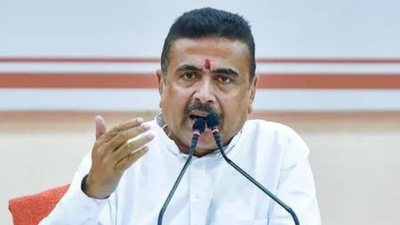
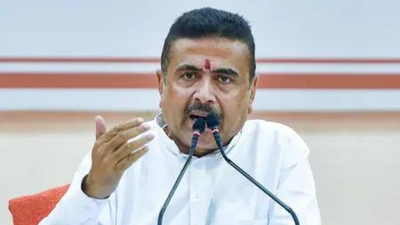
Within days of assuming power, the BJP government in West Bengal has initiated a series of high-impact administrative, welfare and governance decisions aimed at signaling a policy shift from the previous Trinamool Congress regime. These measures include welfare restructuring, recruitment reforms, changes in reservation policy, scrutiny of caste certificates, educational instructions and anti-corruption action. The government has attempted to strengthen nationalist symbolism in institutions while tightening administrative oversight of welfare delivery and reservation systems. Several steps hold both political and legal significance, especially those related to OBC reservations, caste certificate verification and investigation into alleged corruption under his predecessor.

‘Chicken Neck’ corridor transferred to Centre.

The West Bengal government approved the transfer of seven major national highways in the Siliguri Corridor, known as ‘Chicken Neck’, to central agencies with an aim to strengthen connectivity through the strategically sensitive stretch connecting the Northeast with mainland India and facilitate faster movement of armed forces.

Ayushman Bharat will be implemented

The newly formed BJP government in West Bengal announced the implementation of the Centre’s flagship Ayushman Bharat health insurance scheme during its first cabinet meeting on May 11. Under Ayushman Bharat, eligible families get annual health insurance coverage of up to Rs 5 lakh for secondary and tertiary health care treatment in empaneled hospitals.West Bengal had previously stayed out of the centrally sponsored scheme under the Trinamool Congress government, which operated the Swasthya Sathi program instead. The decision marks a significant policy shift by linking the state with one of the central government’s flagship welfare schemes. Along with Ayushman Bharat, the Cabinet also discussed the implementation of other central schemes and administrative measures, including transfer of land related to border fencing to BSF and recruitment reforms.

Annapurna scheme Lakshmir replaces Bhandar

The West Bengal government on Wednesday notified the Annapurna scheme, replacing the flagship Laxmi Bhandar scheme launched under the previous TMC government. Under the new programme, eligible women aged 25 to 60 will get a monthly assistance of Rs 3,000 through direct benefit transfer to Aadhaar linked bank accounts. Permanent government employees, pensioners and income tax payers are not included in this scheme. Existing Lakshmir Bhandar beneficiaries will be automatically transferred to the new scheme, however names that are dead, transferred, duplicated or deleted will be removed during the voter verification exercise. The government has also linked the scheme to electoral verification processes, making it politically significant. An online portal for fresh applications is scheduled to open from June 1, with district magistrates and Kolkata civic authorities designated as approving bodies for applicants.

Vande Mataram made mandatory in schools

The School Education Department, through a communication issued on May 13, directed all state-run and state-aided schools to sing Vande Mataram compulsorily during the morning assembly and implemented the same from May 18. School authorities were directed to ensure participation of all students and maintain video documentation as proof of compliance.The move adds the national song to existing assembly practices where schools traditionally sing only the national anthem, Jana Gana Mana, and in recent years, the state song Banglar Mati Banglar Jol. The decision holds strong symbolic and ideological significance as the BJP government has framed it as an effort to strengthen patriotism and respect for national symbols. However, the move has also generated debate among teachers and sections of civil society over concerns about the implementation arrangements and constraints in educational institutions.

Land transfer for fencing the India-Bangladesh border

The West Bengal government on May 11 began the process of transferring land to the Union Home Ministry for the Border Security Force to erect fencing on the unfenced stretches of the India-Bangladesh border, the CM had announced earlier this month.Announcing the decision after the first cabinet meeting of the new government, CM Suvendu Adhikari said that the required land will be handed over within 45 days. The move comes amid a prolonged judicial inquiry over delays in border fencing projects in the state. According to the data placed before the Supreme Court by the Central government, about 435 km stretch of the border remains unfenced, while more than 286 km stretch is pending mainly due to land acquisition issues. The Calcutta High Court had also earlier this year directed the state to immediately transfer the acquired land to the BSF.

OBC reservation revised for 66 communities

The government notified 66 communities under the Other Backward Class category, restoring the 7 per cent reservation framework following the Calcutta High Court order, which had earlier quashed TMC-era OBC notifications. The decision, formally notified on May 19 and publicly implemented on May 20, affects government jobs and educational admissions. The revised list includes communities like Kurmi, Kapali, Teli, Yadav and several Muslim groups including Hajjam (Muslim), Paharia Muslim and Jola (Ansari-Momin). The move is significant as it rolls back the previous 17 per cent reservation structure and aligns the state policy with the High Court’s direction that benefits already received by affected groups should continue without any disruption.

free bus travel for women

The state Cabinet on Monday approved free bus travel for women in state-run transport services. The move is being projected as a major women-centric welfare measure aimed at reducing the cost of daily commuting and increasing workforce participation. The scheme is expected to include government-run buses on urban and rural routes. It was announced as part of the government’s first major welfare package after assuming power.

Maximum age limit increased for government jobs

On May 18, the Finance Department formally raised the upper age limit for recruitment to state government posts by five years, fulfilling one of the BJP’s key promises to job aspirants. Under the revised rules, now the upper age limit is 41 years for Group A posts, 44 years for Group B posts and 45 years for Group C and D posts. The age limit for recruitment through statutory bodies, government companies and local authorities is uniformly fixed at 45 years. The existing relaxation for SC, ST, OBC and Divyang candidates will continue. The first recruitment process that is expected to benefit from this decision is the ongoing Assistant Professor recruitment in government-aided colleges, for which the application deadline will also be extended. The move is aimed at expanding employment opportunities for candidates who had earlier crossed the age limit amid years of delayed recruitment and stalled examinations in the state.

free bus travel for women

The West Bengal Cabinet on Monday approved free bus travel for women in state-run transport services as a part of the initial welfare measures announced after the new government took charge. The scheme will be applicable to government-run buses on urban and rural routes in the state. According to officials, the initiative aims to reduce travel costs for women who depend on public transport for work, education and daily travel. The decision is expected to impact a large section of regular commuters, especially in Kolkata and district cities where state transport services form a major part of public mobility. The announcement coincided with the implementation of Annapurna Yojana and other welfare measures. Detailed operational guidelines and implementation modalities for the transport scheme are expected to be issued separately by the Transport Department.

Approval for prosecution against Sandeep Ghosh

The West Bengal government on May 19 approved the prosecution of Sandeep Ghosh, former principal of RG Kar Medical College and Hospital, in connection with alleged financial irregularities related to procurement and administrative practices during his tenure. The sanction was granted under the provisions of the Indian Justice Code, Prevention of Corruption Act and Prevention of Money Laundering Act after scrutiny of the FIR and investigation records. The case gained national prominence in 2024 after the rape and murder of a doctor at the hospital, prompting a widespread investigation into alleged corruption within the institution. The CBI and the Enforcement Directorate are investigating the case after an investigation was ordered by the Calcutta High Court.

Re-verification of caste certificates issued since 2011

The West Bengal government ordered statewide re-verification of all caste certificates issued since 2011, with the Backward Classes Welfare Department issuing instructions to district magistrates on May 15. The exercise involves around 1.69 crore SC, ST and OBC certificates, including those distributed through government camps during the previous TMC regime. The government has been accused of massive irregularities and fraudulent issuance of certificates over the past 15 years, with ministers claiming that fake beneficiaries have illegally availed reservation and welfare benefits. Officials have been directed to scrutinize the certificates and cancel those issued through incorrect information or procedural violations.

Ending religion-based aid schemes

The new government had also announced that several religion-specific welfare and grant schemes launched during the TMC rule would be discontinued. Although details are still emerging, BJP leaders said the move was aimed at ending “appeasement politics” and moving towards religion-neutral welfare delivery. The decision is politically significant as it directly targets one of the central campaign themes of the BJP in Bengal.


Source link