17 properties with links to Abhishek under KMC lens

17 properties with links to Abhishek under KMC lens

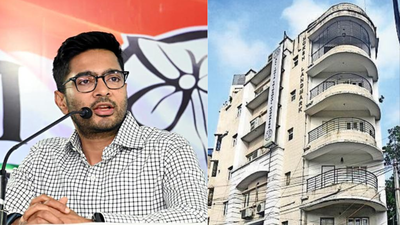
KOLKATA: ‘Santiniketan’ on Harish Mukherjee Road, where a notice was pasted on Monday for alleged unauthorized construction, is one of the 17 properties “owned or co-owned by Abhishek Banerjee, his company and family” that are under the Kolkata Municipal Corporation’s scanner, a KMC official said. Officials said notices issued for deviation from the approved plan under Section 400(1) of the KMC Act, 1980, have been pasted at all the 17 addresses. The KMC’s valuation department had initially prepared a list of 42 properties allegedly owned or co-owned by Banerjee, which was later reduced to 17. Banerjee vowed to fight back. At the meeting of TMC MLAs at Mamata Banerjee’s Kalighat residence on Tuesday, he said, “Let them do whatever they want. Destroy my house, send a notice. I will not bow down. Whatever happens, my fight against BJP will continue. In the notice pasted at ‘Santiniketan’, the persons concerned have been directed to appear before the Executive Engineer of the Building Department with the approved plan as well as the new drawing of the changes made. “Once the documents are submitted, we will give the owners an opportunity to appear for the hearing.”

Source link

Fuel blend standards up to E30 notified

Fuel blend standards up to E30 notified

New Delhi: The government has notified a new standard for high ethanol-petrol blends – E22, E25, E27 and E30 fuels – paving the way for ethanol blending in petrol above the current 20% level. The government has pushed to increase ethanol blending amid reports of availability of surplus ethanol and reduced crude oil imports due to conflict in West Asia, which has hit the energy supply chain. The new BIS standard published on May 15 sets out specifications for fuel blends made by mixing completely free-water (anhydrous) ethanol with motor gasoline for use in “positive ignition engine-powered vehicles”, or petrol-powered vehicles. The standard has defined technical and quality parameters, such as composition, blending requirements, permissible impurity levels, test methods and safety criteria.Meanwhile, amid concerns over the impact the use of E25 (25% blend in petrol) will have on existing vehicles in terms of mileage and engine life, the Petroleum Ministry has tasked the Automotive Research Association of India (ARAI) to conduct a detailed study on vehicles that are currently compliant with E10 and E20. Most existing vehicles are fully E10 compliant, as fully E20-compliant vehicles will only hit the market after April 2025. Experts said the notified fuel norms for various grades of ethanol and the ARAI study for E25 may provide enough room for the government to increase the blending by more than 20%, though less than 25%, in the near future to utilize the surplus availability of ethanol. TOI has learned that in an inter-ministerial group meeting last week, BIS said adding additional 1% ethanol over the existing 20% ​​in petrol would not be an issue. “But considering that increasing the blend to 25% would be a significant jump, ARAI will now conduct the study using E10 and E20 compliant vehicles,” an official said. The All India Distillers Association (AIDA) described the government’s move as an “important and timely step” towards advancing India’s ethanol blending program and reducing dependence on crude oil imports. People aware of the developments said there is a need to assess the engine life and performance (mileage) of vehicles not designed for higher ethanol blends, their emissions and upfront and recurring costs. As per best practices, vehicle samples should be driven for 60,000-70,000 km for proper evaluation.

Source link

Farmers, women, youth are ‘centre’ of governance, Finance Minister criticizes Rahul

Farmers, women, youth are 'centre' of governance, Finance Minister criticizes Rahul

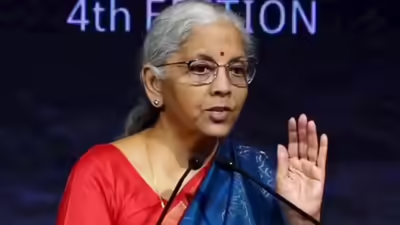
New Delhi: Finance Minister Nirmala Sitharaman Targeted the opposition leader on Tuesday. Rahul GandhiAnd rejected the allegations of ‘crony capitalism’. On the issue, he listed several welfare schemes and policies of the Modi government and underlined that farmers, the poor, women, youth and MSMEs are “at the core” of the governance structure. “We are focusing on the welfare of the common people,” he said in a social media post. He stressed that since 2014, the Modi government has served every sector and every section of the society through its “policies and initiatives”. Earlier in the day, Rahul had said that an economic storm is coming and the Ambani-Adani structure that the government has built will collapse. “It is sad that the common people will have to suffer,” she alleged. Hitting back at the allegation, Sitharaman said: “If the Congress and its leaders cannot contribute positively to nation building, then they should stop creating obstacles. A responsible opposition does not indulge in fear-mongering.” He said that the government has helped in opening 58 crore Jan Dhan accounts and 57 crore Mudra accounts. “…Is PM Vishwakarma Yojana, PM Internship Scheme for…? Is it E-Shram Card, GRAM G Act which provides 125 days of employment without leaks, Ayushman Bharat…? Is the over 9 crore PM Kisan disbursement…?” He posted on X. Sitharaman stressed that the government will continue to protect farmers by not passing on higher international fertilizer prices. “We brought ECLGS 5.0 for MSMEs. Is that…? Farm credit growth last year was 15.7%. Was that for…? Last year MSME credit growth was 33%. Was that for…?

Source link

PM Modi holds bilateral meeting with Prime Ministers of Denmark, Finland, Iceland

PM Modi holds bilateral meeting with Prime Ministers of Denmark, Finland, Iceland

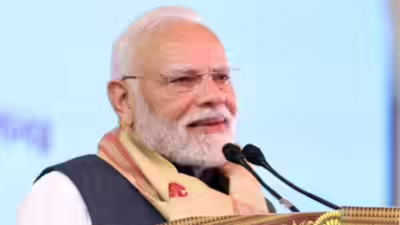
New Delhi: PM Narendra Modi on Tuesday held bilateral meetings with the leaders of Denmark, Finland and Iceland on the sidelines of the India-Nordic summit in Oslo. In his meeting with Mette Frederiksen, Acting Prime Minister of Denmark, both welcomed the progress made in the India-Denmark Green Strategic Partnership, which gives priority to cooperation in the field of environment and climate change and uniting efforts to support green transition in both countries. They also discussed cooperation in the areas of defense and AI, with PM Modi inviting Danish companies to set up presence in GIFT City, Gujarat. According to an Indian readout, PM Modi conveyed India’s readiness to welcome Danish technologies for green solutions in the fast-growing Indian economy. Meeting with their Finnish counterpart, Petteri Orpo, the Prime Ministers expressed satisfaction at the progress in the India-EU Strategic Partnership and underlined the importance of early implementation of the India-EU Free Trade Agreement. Both sides welcomed the steady growth in bilateral trade in goods and services despite global challenges and reaffirmed their commitment to double bilateral trade by 2030. According to an Indian readout, they reviewed cooperation in areas such as trade and investment, digitalization, AI, quantum technology, space, sustainability and renewable energy. PM Modi discussed efforts to deepen ties with Iceland PM Kirsten Frostdottir. An Indian readout said, “Both leaders agreed that TEPA provides an excellent opportunity to unlock real bilateral potential in trade, investment and manufacturing cooperation.” The two also reviewed progress in bilateral cooperation in areas such as geothermal energy, fisheries, innovative technologies, creative economy, culture, tourism, mobility and people-to-people contacts, while agreeing to enhance cooperation in Arctic research.

Source link

Mission change? Militants opt for cosmetic upgrades in India

Mission change? Militants opt for cosmetic upgrades in India

Lashkar-e-Taiba (LeT) operative Osman Jatt was on a mission – until pride got in the way. He successfully infiltrated into India from Pakistan with the aim of setting up a sleeper cell, but he was stopped while being examined at a medical clinic in Srinagar for hair transplant. Nor is Jatt the only case of a mission being defeated by a mirror. Sources say Shabbir Ahmed Lone, who was setting up a LeT cell in Bangladesh and was arrested by Delhi Police in March, had also undergone a dental procedure at a private clinic in Gurgaon.

.

.

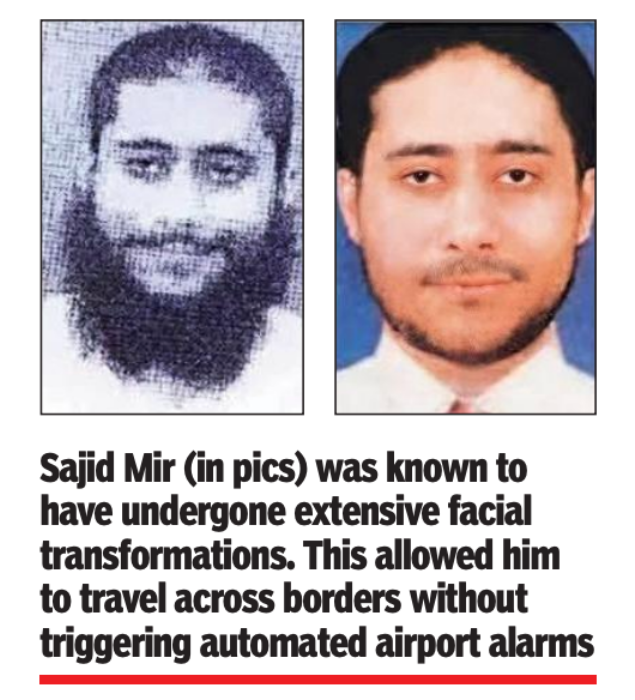
The Special Cell has given details of these treatments in the charge sheet to be filed soon. Lone was arrested in March after police traced alleged members of his cell, recruited from West Bengal and Tamil Nadu, to pasting inflammatory posters in the city ahead of the AI ​​summit. However, the makeover trend may not just be a case of vanity gone bad. For some, it may also be a deliberate effort to circumvent surveillance efforts and facial-recognition systems. Interestingly, his inspiration is 26/11 conspirator Sajid Mir, who had undergone plastic surgery to change his looks years ago.Facial alteration allows terrorists to forge passports and travel across bordersLeT operative Usman Jatt alias Cheeni admitted to interrogators that severe hair loss had seriously damaged his personal confidence and self-esteem. Surrounded by the peaceful reality of daily life, which completely contradicted the aggressive propaganda given to him in the training camps, his ideological fervor was broken. He decided to give priority to his receding hairline over his assigned mission. According to mental health experts, Jatt’s case is an excellent example of how personal vanity and psychological distress can overpower radical ideology. However, one investigator stated that although it is tempting to dismiss these incidents as mere anomalies, it is also possible that the obsession with cosmetic procedures is aimed at changing identities and evading international law enforcement.

.

.

“Modern counterterrorism relies heavily on artificial intelligence and biometric facial recognition software deployed at global transit centers. These algorithms don’t just look at a photograph; they map precise, fixed distances between a person’s eyes, the bridge of the nose, the jaw line, and the border of the forehead. For high-profile fugitives, replacing these specific anchor points is a matter of survival,” said one investigator. Sajid Mir and notorious Cold War-era killer Carlos the Jackal are both known to have undergone extensive facial alterations. Another policeman said, “This allowed them to travel across the borders using forged passports without triggering the automatic airport alarm.”

Source link

India, Vietnam to review defense partnership, discuss further cooperation in maritime security during Rajnath’s visit

India, Vietnam to review defense partnership, discuss further cooperation in maritime security during Rajnath's visit

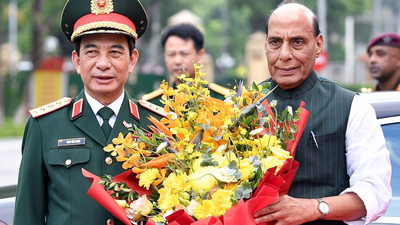
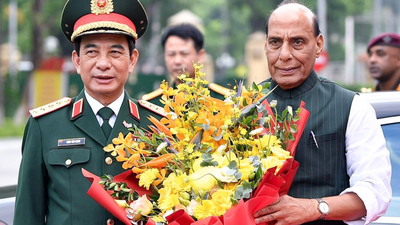
India and Vietnam on Tuesday stressed the importance of maintaining peace, stability and freedom of navigation in the Indo-Pacific region and pledged to work together in line with their “enhanced comprehensive strategic partnership”.As part of his visit to Hanoi, Defense Minister Rajnath Singh met his Vietnamese counterpart General Phan Van Giang. “The two ministers reviewed the growing defense partnership between the two countries and discussed ways to further deepen cooperation in maritime security, defense industry, training and regional stability,” the Defense Ministry said.“The two sides discussed ways to enhance cooperation in a range of areas including military training, defense industry cooperation, maritime security, capacity building, UN peacekeeping, cyber security and high-level exchanges,” the ministry said.After the talks, India and Vietnam signed an agreement for cooperation in the field of artificial intelligence and quantum technology. The Defense Minister’s visit to Hanoi comes days after India and Vietnam upgraded their ties to a comprehensive strategic partnership.The two Defense Ministers virtually inaugurated a Language Laboratory at the Air Force Officers College in Vietnam. This lab has been established with the help of India. Rajnath also announced the decision to set up an AI lab at the University of Telecommunications in Nha Trang.“It is my honor to extend greetings to the Secretary General and President of Vietnam on this visit to Vietnam. I convey Prime Minister Narendra Modi’s warm regards and reaffirm India’s commitment to deepening defense cooperation, a key pillar of the enhanced comprehensive strategic partnership between our two countries,” Rajnath posted on Twitter.Later, Rajnath left for Seoul for the second leg of his two-nation visit. Both India and South Korea are looking to deepen strategic military cooperation and expand the scope of bilateral engagement.

Source link

Hindus should be given full access to Bhojshala premises: ASI

Hindus should be given full access to Bhojshala premises: ASI

New Delhi: Keeping in mind the order of Madhya Pradesh High Court, ASI has allowed full entry to Hindus in the Bhojshala premises for worship of Goddess Saraswati.Taking inspiration from the May 15 judgment of the HC, the ASI said the court ruled that Bhojshala in Dhar district is a protected monument and a temple of Goddess Vagdevi (Saraswati).“The court has also recorded the finding that historical literature has established the character of Bhojshala as a center of Sanskrit learning associated with King Bhoj of the Paramara dynasty,” the May 16 ASI order said. It states that literary and architectural references associated with Raja Bhoja indicate the existence of a Saraswati temple, which is supported by ASI research.The order said the court quashed the ASI’s April 2003 directive that restricted Hindu worship rights and allowed Muslims to pray on the premises. The new ASI order said that since Bhojshala is a center of Sanskrit learning and a temple dedicated to Goddess Vagdevi, the Hindu community will have “unrestricted access” for worship.

Source link

Amit Shah says Naxalism in Bastar is the result of lack of development

Amit Shah says Naxalism in Bastar is the result of lack of development

Jagdalpur: Home Minister Amit Shah, who concluded his first visit to this erstwhile ‘red’ pocket borough after the end of Left-wing extremism, on Tuesday listed four dates as milestones in the journey of making Bastar Naxal-free, the first being December 23, 2024, when the BJP government was elected in Chhattisgarh; August 24, 2024, when the deadline to root out Naxalism was announced as March 31, 2026; 31 March 2026, before which Naxalism would have been completely uprooted; and May 19, 2026, which launched an initiative aimed at doorstep delivery of all government benefits to the tribals of Bastar by renovating security camps into one-stop public service centres. “It is a matter of great pride that Naxalism has been completely eliminated,” Shah said. But it also said that a major obstacle in this journey till December 13, 2023 was the lack of cooperation from the previous Congress government (led by Bhupesh Baghel) in Chhattisgarh. “I can now say without any hesitation that other non-BJP governments have cooperated in the fight against Naxalism, but the Congress government in Chhattisgarh has not,” he said at a press conference in Jagdalpur. “After the BJP government was elected in Chhattisgarh on December 13, 2024, we intensified our efforts. After reviewing the situation of Left Wing Extremism in the annual conference of police chiefs of all states on August 24, 2024, March 31, 2026 was declared the deadline to make the country Naxalism-free. The target was achieved even before the deadline.” The latest milestone he mentioned is May 19, 2026, when the initiative to create 70 Veer Shaheed Gunda Dhur ‘Seva Dera’ (public service camps) and pursue integrated development across Bastar was launched. He said, “Contrary to the narrative propagated by leftist intellectuals that Naxalism was due to lack of development in the affected areas, the reality is that Naxalism was a result of lack of development.” “There were far more backward areas in the country…Why is it that Naxalism did not raise its head in these areas? Other areas eventually developed, but Bastar remained backward and the local people were deprived of basic development.”..” “Now that Bastar has become Naxal-free, an initiative to pursue integrated development has been launched… It aims to compensate the local people who have been deprived of the benefits for the last five decades with doorstep delivery of government schemes and benefits.”

Source link

Underground power wiring project started on pilot basis in CM Mann’s native village

Underground power wiring project started on pilot basis in CM Mann's native village

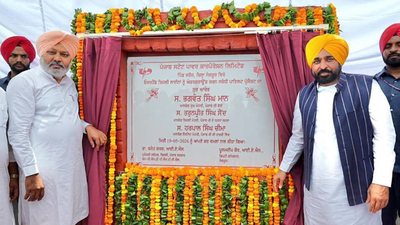
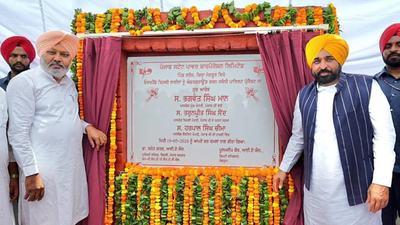
Sangrur: An underground power wiring project launched by Punjab Chief Minister Bhagwant Maan He described it as a first of its kind initiative to make the state the first state in the country to have poll-free villages on a pilot basis in his native village Satoj here.Mann said the project will prevent crop fires, fatal accidents and frequent power cuts due to overhead lines, and will also free villages from the maze of dangerous poles and tangled wires.Under the pilot project, 384 electric poles will be removed from Satauj and underground cables will be laid without digging the road.Describing the “Satauj Model” as a roadmap for the entire country, Mann said the Aam Aadmi Party (AAP) government has fulfilled its promise of creating wire-free villages for Punjab’s farmers and said underground power supply will also end politics over installation of electric poles in villages.“Today is a historic day for the villages of Punjab as a big project to free the villages from the web of electric wires and unnecessary poles is being launched here.Addressing a gathering here, Mann said, “Under this pilot project, all the overhead power lines in Satoj will be taken underground at a cost of about Rs 8 crore. This is the first project in the country and with this initiative Punjab will emerge as a model project for the entire country.”Giving technical details of the project, Mann said, “Under this project, seven kilometer long high tension lines, 9.5 kilometer long low tension lines and 41 kilometer long service cables connecting the houses of 800 consumers will be laid underground.”All the high tension lines connected to the 66 KV grid Satoj to the village through three 11 KV feeders and connected to 28 transformers will go underground. He said that after this, under a historic initiative, all the low tension lines from 28 transformers to meter boxes will also be laid underground.The cable connecting meter boxes to all houses will also be underground, removing 384 unnecessary electric poles.A special feature of the project is that there will be no need to dig roads for laying underground cables because trenchless drilling machines will be used to lay underground pipes. He said that these pipes will be laid three feet below the ground, which will prove to be a big boon for the common people.Highlighting the dangers posed by overhead power wires, Mann said that electric poles and overhead wires pose a risk of electric shock to animals and people, especially children.Accidents often occur when tractors, combine harvesters and other vehicles come in contact with overhead wires.Similarly, farmers suffer huge losses due to crop fire incidents.He said rains, storms and strong winds damage poles and wires, disrupting power supply and causing financial loss to the power corporation.The network of poles and wires also affects the aesthetic appearance of the villages. By shifting high tension and low tension lines underground, power leakage will be eliminated, thereby reducing transmission and distribution losses, Mann said.“Villages will get uninterrupted power supply, underground cables will significantly reduce accidents, crop fires caused by power lines will be prevented, and power supply will no longer be disrupted by rain and strong winds. Removing unnecessary poles and tangled wires will further enhance the beauty and appearance of the villages.”Recalling the tragic incidents in the village, Mann said, “Three youths from this village lost their lives due to electric shock in their combine harvester. They were the sole earners for their families. This project is a tribute to those youths as such tragic incidents should never happen in the future.”Referring to the anti-sacrilege law, Mann said the state government has enacted it against sacrilege, which has a provision of punishment up to life imprisonment, to ensure that in future no one would dare to disrespect the Guru Granth Sahib.He said, “The previous rulers neither had the intention nor the will to enact laws to prevent sacrilege, due to which desecration of Sri Guru Granth Sahib Ji became a regular occurrence during their reign. However, the Act passed by the Punjab Government will put a stop to it as no one would ever dare to indulge in this unpardonable crime.”

Source link

How to know when nation is under stress? When focus shifts to behavioural management

How to know when nation is under stress? When focus shifts to behavioural management

“We the people of India” saved the nation during Covid by “living like soldiers”. Today, citizens are again being asked to help the country by “living responsibly”.The language has changed from pandemic precautions to economic discipline, but the political pattern feels familiar.One way to detect coming trouble is to watch how governments speak. When administrations begin talking less about policy and more about behaviour — conserving fuel, avoiding excess spending, reducing travel, consuming responsibly — it often means the state is psychologically preparing society for harder economic measures.India has now seen this twice within five years: during Covid and now during the ongoing Gulf crisis triggered by the US-Israrel-Iran war.In both moments, governance shifted from direct administration to behavioural management. Citizens were no longer treated merely as taxpayers or voters, but as participants in national survival.The BJP-led NDA government has in the past resorted to direct administration when it believed it was necessary. Demonetisation, the rollout of GST are examples of high-impact executive action that had a huge impact on public life.However, during periods of economic or geopolitical stress, the Centre often changes tone before it changes policy.This is the politics of behavioural governance, and it may be one of the clearest early warning signs of a nation facing stress.

The grammar of distress

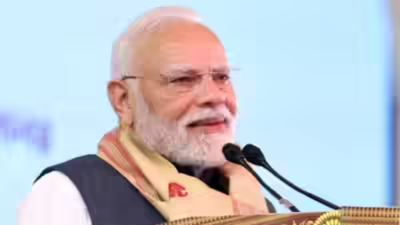
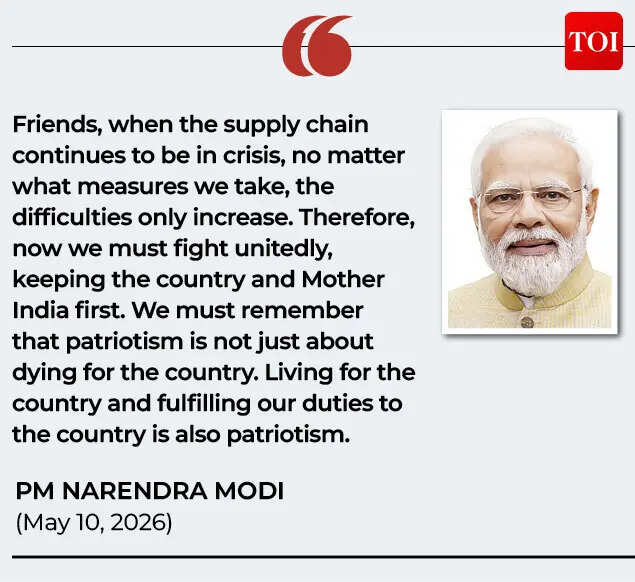
Prime Minister Narendra Modi‘s recent speech in Hyderabad carried echoes familiar to anyone who remembers the pandemic years. The message was framed as an appeal, not an emergency order. There was no announcement of rationing or restrictions. Instead, the emphasis was on restraint, conservation and collective responsibility.The tone mattered.

-

Governments rarely begin crisis management with force. They begin with persuasion.Economists often describe this as behavioural economics applied to governance — influencing public decision-making through messaging rather than compulsion. Instead of immediately imposing harsh measures, governments attempt to gently reshape behaviour first: consume less fuel, postpone discretionary spending, reduce imports, avoid panic buying, travel differently, work from home where possible.“The basic economics is that behavioural appeals are generally fast and low-cost because major fiscal interventions—subsidies, tax changes, stimulus packages, rationing systems, or price controls — require legislative approval, budget allocation, administrative coordination, and so on. Whereas, behavioural appeals, or a sort of signal, which sometimes also called ‘demand-side adjustment through norms’, shift part of the adjustment burden onto citizens voluntarily, reducing immediate state expenditure,” said Surya Bhushan, an alumnus of CESP, JNU, and now economics professor at DMI, Patna.Adding a political logic to it, he said “behavioural messaging avoids politically painful policies”.

Are crises psychological before they get administrative?

Economic distress is not only about shortages or numbers on a spreadsheet. They are also about public emotion.Bhushan argues that governments increasingly recognise this psychological dimension.“Crises are often partly psychological … economic crises are not only about material shortages; expectations matter enormously. For instance, if consumers panic: they hoard, rush to banks, speculate, overbuy fuel, or trigger inflationary spirals. In this regard, behavioural appeals aim to stabilize expectations and reduce panic behaviour.”This helps explain why official communication during crises often sounds calm even when underlying risks are serious. The objective is not only economic management, but emotional management.The speech itself becomes an economic tool.That was visible during Covid. It is visible again now amid fears surrounding oil supply disruptions and instability in the Persian Gulf that has impacted countries across the globe.

-

Has India seen this form of governance before?

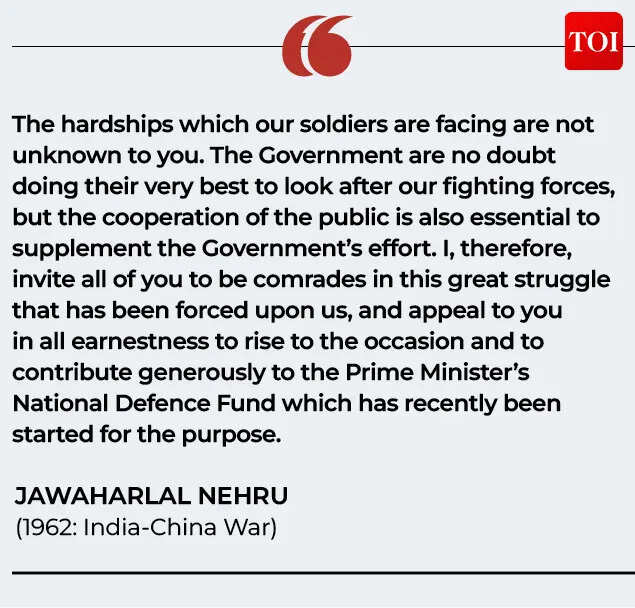
Yes, long before behavioural governance became an academic phrase, governments were already using it during moments of national stress.During the 1962 India-China war, then PM Jawaharlal Nehru appealed directly to citizens not merely for support, but for participation. Asking Indians to contribute to the Prime Minister’s National Defence Fund, he framed the war effort as a collective civic responsibility rather than a task for the state alone.“The hardships which our soldiers are facing are not unknown to you,” Nehru said, urging citizens to become “comrades in this great struggle”.The appeal was not only financial. It psychologically transformed civilians into stakeholders in national defence.

-

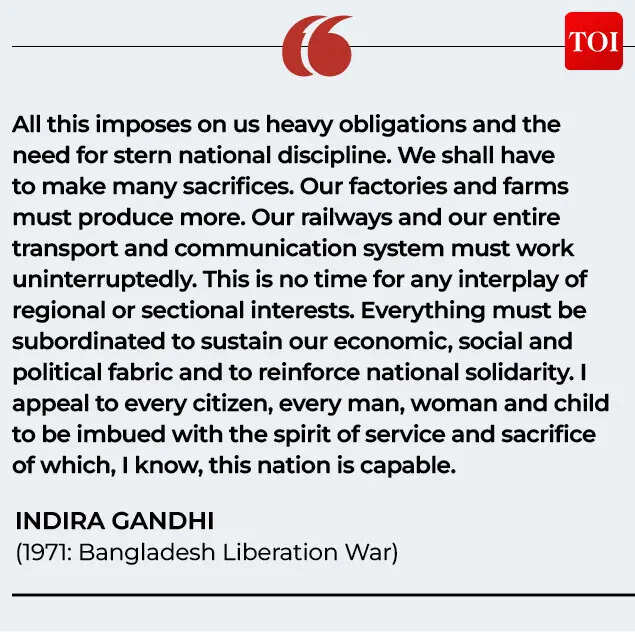
A similar pattern emerged during the 1965 Indo-Pak war, when Lal Bahadur Shastri urged citizens to voluntarily fast once a week to conserve food supplies amid shortages. Importantly, Shastri reportedly implemented the practice within his own household before asking the country to follow, giving the appeal moral legitimacy.By the 1971 war and the Bangladesh refugee crisis, behavioural messaging had become even more explicit. With the country’s economy under severe strain, Indira Gandhi appealed for “stern national discipline” and sacrifice.“Our factories and farms must produce more. Our railways and our entire transport and communication system must work uninterruptedly,” she said, warning that “everything must be subordinated” to preserving national stability.What connects these moments across decades is the language of collective duty. During crises, governments begin treating citizens not simply as governed populations, but as instruments of national resilience.

-

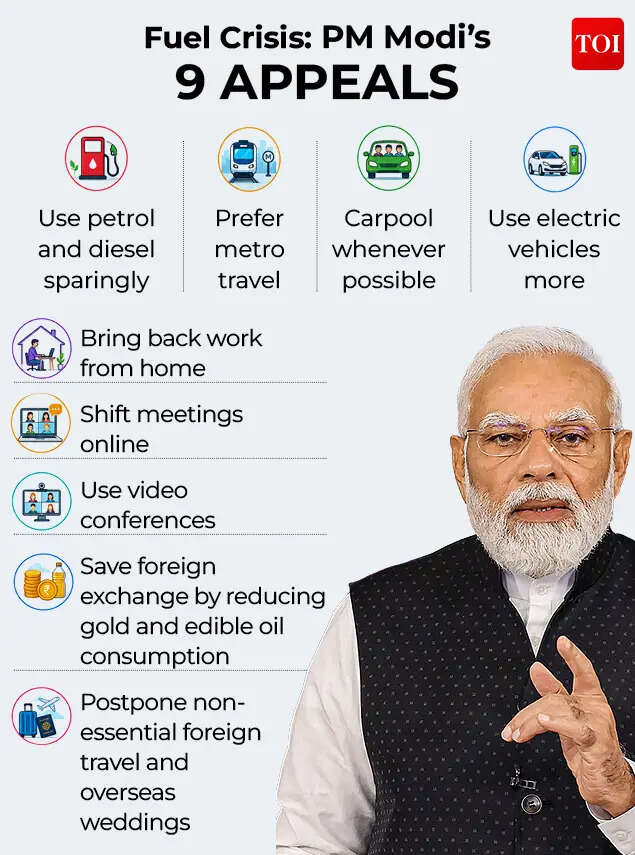
The current appeals around fuel conservation, restrained consumption and “duty-first” behaviour follow the same political grammar — only updated for a modern economy shaped by oil shocks, global supply chains and digital life.The recent fuel price increase is a case in point.Petrol and diesel prices are not just economic indicators in India. They are deeply political symbols. Fuel prices shape transport costs, food inflation and household budgets, affecting nearly every layer of daily life. That is perhaps why fuel prices were not raised in the last four years.Finally, when the fuel prices were hiked it was timed to avoid the ongoing assembly election period despite rising global crude prices linked to West Asian tensions. Economically, the increase reflected global pressures. Politically, the timing reflected management.And before citizens fully processed the implications, the language of conservation had already entered public discourse.

Why oil shocks hit India so deeply?

India’s vulnerability to energy shocks makes behavioural governance especially relevant.Bhushan points out that oil is not just another commodity in the Indian economy: “Of course, India is structurally vulnerable to a prolonged oil-supply disruption because crude oil sits at the center of multiple systems simultaneously: transport, agriculture, logistics, chemicals, inflation management, fiscal stability, and the rupee itself.”That interconnectedness explains why governments become cautious when disruptions emerge around the Strait of Hormuz or the wider Gulf region. A sustained oil shock quickly spills into inflation, transport costs, fertiliser prices, currency pressure and household budgets.“What needs to be kept in mind is that the government had already cushioned the impact by cutting the excise duty on petrol and diesel by Rs 10 at the end of March. That has significant fiscal impact on the finances of both the Central and state governments,” said Ananth Krishna Varahe, head of the Nation First Policy Research Centre (NFPRC).“As a country without significant petroleum resources, we are downstream of a huge oil shock that we have more or less not seen the full effect of. The Government of India has taken in my opinion a calibrated approach in managing that shock to the domestic economy, which was the only right approach,” he added.He further argued that rising prices were unavoidable “considering that the OMCs were making losses up to Rs 1,000 crore a day”.

How does behavioural governance work?

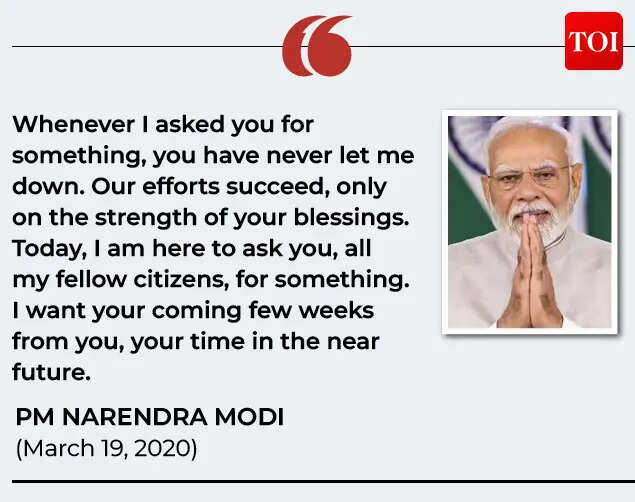
Behavioural governance works by making citizens feel like active participants in managing a national crisis rather than passive subjects of state control. Governments first shape public behaviour through emotion, symbolism and collective responsibility before enforcing stricter measures.The Covid-19 pandemic offered perhaps the clearest example of this strategy.Before the nationwide lockdown was announced, Prime Minister Narendra Modi appealed for a voluntary “Janta Curfew” on March 22, 2020. There was no immediate coercive enforcement attached to it. Yet millions across the country stayed indoors, roads emptied, markets shut and public life paused almost entirely.What made the appeal effective was not law, but psychological mobilisation.The language used during the period deliberately transformed ordinary citizens into participants in a national mission. PM Modi repeatedly framed the pandemic as a collective battle and citizens as “soldiers” fighting it together.A similar vocabulary is visible again in the current Gulf-linked economic stress. Speaking at a public event in Secunderabad, PM Modi argued that rising global energy prices and supply-chain disruptions required “collective restraint” and a “duty-first” approach from citizens, once again framing behavioural adjustment as part of a national response.“Crises are often partly psychological … economic crises are not only about material shortages; expectations matter enormously,” said Bhushan.

-

Can everyone equally participate in ‘national sacrifice’?

Behavioural governance works best when sacrifice appears collective. But in practice, the ability to participate in it is deeply unequal.The Covid experience exposed this divide sharply. While sections of the middle class shifted to online meetings, home offices and app-based services, millions of migrant workers and informal labourers faced immediate economic collapse once transportation systems shut down and work disappeared almost overnight.The migrant crisis during the lockdown became one of the starkest reminders of how unevenly national sacrifice is experienced. As cities closed and transport networks stopped, thousands of migrant workers were forced to walk hundreds of kilometres back to their villages, often without income, food or shelter. For many of them, “staying home” was never a realistic option because survival itself depended on physical mobility and daily wages.“Behavioural austerity has hard limits, we all know because of informality of the economy, like, a street vendor, factory worker, truck driver, or migrant labourer cannot easily ‘opt out’ of fuel dependence. So we still need to think and work towards energy security,” Bhushan said.

Crisis management or shifting responsibility?

Many argue that behavioural governance builds resilience during emergencies. Encouraging lower fuel consumption, restrained imports and moderated spending can genuinely reduce pressure on foreign exchange reserves during periods of global instability.Critics, however, ask where responsible citizenship ends and the shifting of state responsibility begins.Varahe rejected the argument that responsibility is being outsourced to citizens. “The state responsibility has not been ‘shifted’. While there has been a ‘call to action’ from the PM himself, the Government has introduced measures to increase duty on imported gold or cap import of duty free gold. Similarly, the petrol/diesel prices have been increased. There are likely going to be many other measures that the Government will take.He argued that the government is attempting to balance intervention with economic flexibility.“The line of thought is that the citizen should be pointed to ideal action, but not limited from making their own decisions.”Behavioural governance works because it turns citizens from passive recipients of policy into participants in crisis management. But it also raises a difficult question: how much of the burden of crisis should be absorbed by citizens themselves?That is why political language matters during uncertain times. When leaders begin speaking about discipline, restraint, conservation and sacrifice, they are also preparing society psychologically for the turbulence ahead.The speech becomes a policy instrument.And perhaps that is the real warning sign of a crisis – not when governments impose restrictions, but when they begin asking citizens to voluntarily change how they live.

Source link