Rajnath; Moving forward with speed and consensus for staging: CDS

Self-reliance and unity necessary for a future-ready force: Rajnath; Moving forward with speed and consensus for staging: CDS

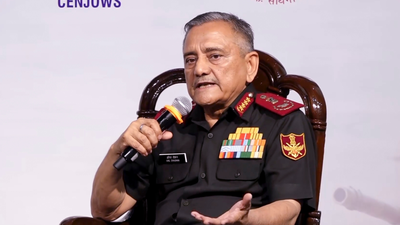
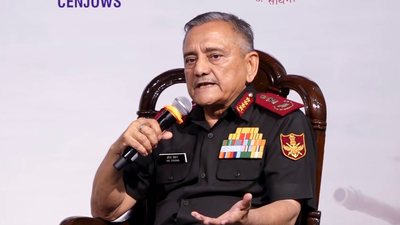
New Delhi: Defense Minister encouraged defense scientists to accelerate research and development work -Rajnath Singh “Tomorrow’s battlefield will reward those who can reduce the time between an idea, a prototype and operational deployment,” Thursday said.Addressing the Defense Strategic Dialogue Kalam and Kavach 3.0 in a video message here, Rajnath said, “The strength of a nation will depend on how fast its defense forces, laboratories and industries think and act”, underscoring the importance of self-reliance and jointness to secure strategic autonomy and be future-ready for emerging security challenges.“National security demands our preparedness, flexibility, innovation and strategic confidence,” he said.Rajnath described self-reliance as not only an economic goal but also a strategic necessity and said a nation that remains overly dependent on others for critical defense capabilities remains vulnerable in times of crisis.In the presence of Italian and Armenian envoys at the event, Minister of State for Defense Sanjay Seth told the foreign delegates that India strongly believes that global security and progress is strengthened through cooperation, trust and shared innovation. He said India’s defense exports, which were just Rs 686 crore a decade ago, have today reached a record high of Rs 38,424 crore. He said annual defense production has touched an all-time high of Rs 1.54 lakh crore in the financial year 2025-26 and reaffirmed the government’s resolve to achieve the target of defense exports of Rs 50,000 crore and defense production of Rs 3 lakh crore by 2029-30.CDS General Anil Chauhan said this while talking about Operation Sindoor in a special session in the program. indian armed forces The surge dominated metrics on all four days of the conflict.On the ‘JAI’ (Jointness, Aatmanirbharta and Innovation) triad, the CDS said as far as planned remediation is concerned, efforts in this direction have been made with “scale and pace” as India is 10-15 years behind other countries, which have already implemented such structures. “These joint structures that we are trying to create will be one of the most transformational reforms that India is undertaking...Our model was a little different. Some people had to bring laws, it was a top-down approach. I tried to work with consensus. The consensus was taking everyone along,” he said.

Source link

HC seeks government’s stand on Congress’s 7, Jantar Mantar Road petition

HC seeks government's stand on Congress's 7, Jantar Mantar Road petition

New Delhi: Delhi HC on Thursday sought response from the Center and Delhi government on a petition. Indian National Congress Demand to execute a sale deed in favor of the party for its former headquarters at 7, Jantar Mantar Road.Justice Purushindra Kumar Kaurav issued notice to the authorities but refused to pass any interim order. Even as senior lawyer Abhishek Singhvi, appearing for AICC, urged the HC to ensure that the premises are not allotted to anyone else, the court said it would first examine whether the petition was maintainable or not.Justice Kaurav said the petitioner will have to satisfy sustainability before seeking interim relief. “Let’s see what the government’s reaction is. You may have to file a civil suit. This appears to be going out of bounds,” the judge said.Singhvi argued that INC was an allottee who had owned the property for decades. “I have been asking repeatedly for execution of the conveyance deed. There is no denial. There is no response. I have been in possession for 70 years. I have all the documents and payments. They should not allot it to anyone else,” he told the HC.The Congress said it has been in possession of a portion of the property since February 1946, which was allotted in 1956. He had paid Rs 6.1 lakh in 1959 for the sale consideration. The plea said that since 2017, it has made representations to the Delhi government, which is responsible for the management of the property, seeking execution of the sale deed, but to no avail.

Source link

The present system allows the government to choose the CEC, EC of its choice.

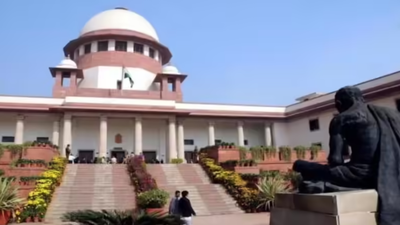
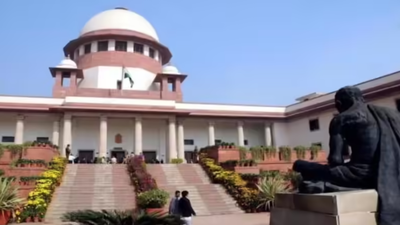
SC: Current system allows government to choose CEC, EC of its choice

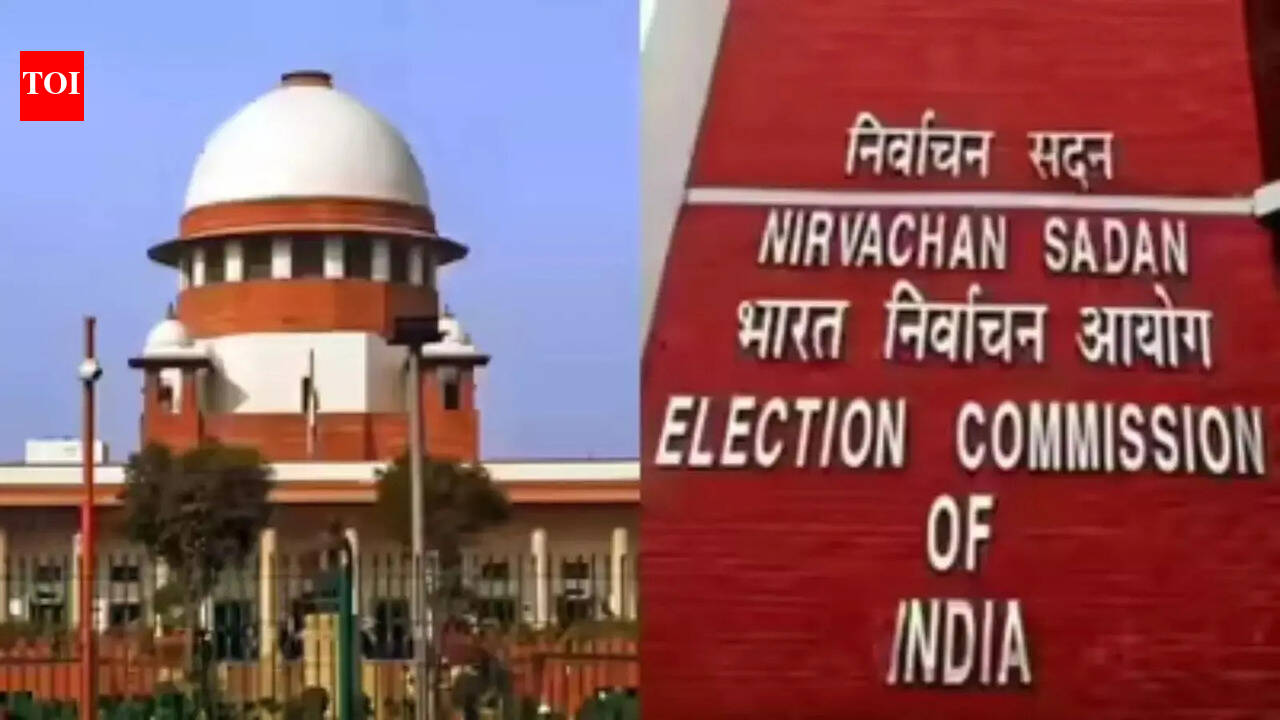
New Delhi: Questioning the appointment process of the Chief Election Commissioner/Election Commissioners, where a panel comprising the PM, a Cabinet minister and the Leader of the Opposition selects the candidate, the Supreme Court on Thursday said the current system allows the government to appoint a person of its choice as two out of three members will favor it and asked the government why it is “pretending about independence” in the appointment process. It was said that instead of the minister, an independent person should be made a part of the panel.Citing the Supreme Court’s earlier direction that the panel should include the PM, CJI and the LOP, a bench of Justices Dipankar Gupta and Satish Chandra Sharma said it was not necessary that the CJI participate in the process, but an independent person would have to be a part of it or the presence of the LOP would become merely decorative. It said that when a CBI Director is appointed by an independent panel comprising the PM, CJI and LOP, why should not the same practice be followed for the CEC/EC, which is all the more important as the institution is involved in maintaining democracy and ensuring free and fair elections in the country.Although Attorney General K Venkataramani said that the neutrality and independence of the CEC/EC arises from their functioning after their appointment, the bench said that it started with the appointment process itself. The court said that the Election Commission should not only act neutrally but also appear neutral.

SC seeks records on ‘hasty’ appointment of two ECs

“Why should a Cabinet minister be a part of this? Let us assume the ruling party has 300 MPs. The PM picks 25 of his best. Now you micromanage it again and bring in one of the 25. Why? Then why do you include the Leader of the Opposition in it? He is decorative. A minister will never go against the PM. It will always be decided by 2:1. Why this pretense of independence in the body,” the bench asked. Asked.The court is examining the validity of the law which was created after the Supreme Court passed orders that the appointments would be made by a panel of the PM, CJI and LOP to bring independence in the process.Deliberations on the search, selection and appointment of Gyanesh Kumar (now CEC) and SS Sandhu as Election Commissioner in 2024 came under question, with the bench asking the Center to bring before it the original records.The Supreme Court said that the CJI is part of the panel for the appointment of CBI director. It said that the role of the Election Commission is more important than that of the CBI because it is involved in maintaining democracy. The bench said, “We do not say that there should be a CJI. But why should there not be an independent member? Why should it be from the ministry?”

Source link

Delhi High Court judge decides to withdraw from Kejriwal excise case after initiating contempt

Delhi High Court judge decides to withdraw from Kejriwal excise case after initiating contempt

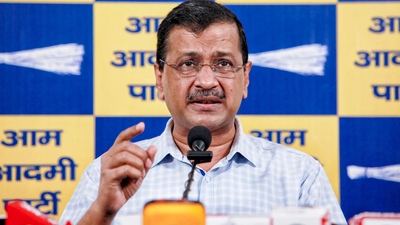
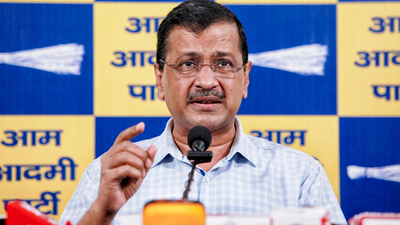
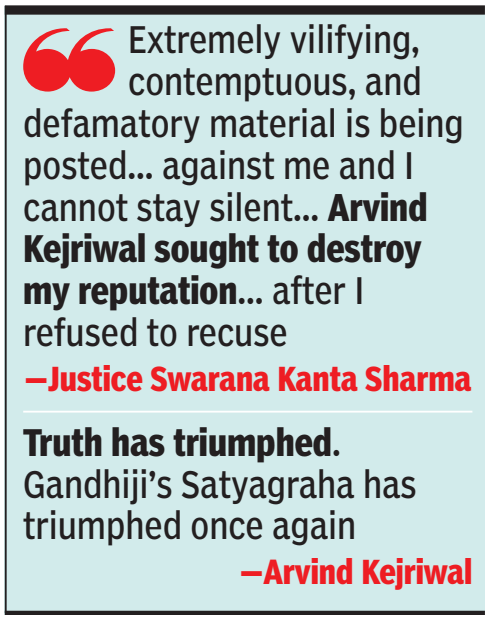
New Delhi: In a fresh twist in the ongoing CBI appeal hearing against the acquittal of all the accused in the excise policy case, Delhi High Court judge Swarn Kanta Sharma initiated criminal contempt proceedings against the former chief minister. Arvind KejriwalAAP officials Manish Sisodia, Durgesh Pathak, Sanjay Singh, Saurabh Bhardwaj and others abstained from hearing the main case.“Can’t surrender to a powerful litigant,” Justice Sharma said while initiating contempt proceedings against Kejriwal, saying he “launched a defamatory campaign” against him on social media instead of challenging the adverse orders against him in the higher court.She said she would now hear only the contempt case and transferred the appeal, so that the “defendants” would not later claim that she was biased against them. The judge said that while the hearing in the excise policy case was going on inside, “a parallel narrative was being constructed outside… and aspersions were being leveled on this court by contemporaries armed with political powers.”

-

Justice Sharma took exception to social media posts shared by Kejriwal and other AAP office-bearers which ascribed their “political allegiance” and targeted them by posting a misleading “edited” video of a speech delivered by them at an educational institution in Varanasi.Justice Sharma said, “After I refused to withdraw from the case, Arvind Kejriwal tried to destroy my reputation instead of availing legal remedies and this deliberate attempt to undermine the authority of the court under the guise of free speech cannot be allowed.”He said Kejriwal wanted to sow “seeds of distrust”, but warned that “judicial silence cannot afford to threaten judges into silence”.

Gandhiji’s Satyagraha won: Kejriwal

She said she would now hear only the contempt case and transferred the appeal, so that later the “defendants” would not claim that she was biased. The judge said that while the hearing in the excise policy case was going on inside, “a parallel narrative was being constructed outside… and aspersions were being leveled on this court by contemporaries armed with political powers.”Justice Sharma took exception to social media posts shared by Kejriwal and other AAP office-bearers which ascribed their “political allegiance” and targeted them by posting a misleading “edited” video of a speech delivered by them at an educational institution in Varanasi.Justice Sharma said, “After I refused to withdraw from the case, Arvind Kejriwal tried to destroy my reputation instead of availing legal remedies and this deliberate attempt to undermine the authority of the court under the guise of free speech cannot be allowed.”He said Kejriwal wanted to sow “seeds of distrust”, but warned that “judicial silence cannot afford to threaten judges into silence”.Referring to Kejriwal’s conduct, the judge said that hopefully the matter will be put to rest once his plea is decided.Justice Sharma said, “The plaintiff could have gone to the Supreme Court for challenge, but he did not, instead he released a video and repeated the same allegations and grounds which were rejected by this court.” He also referred to Kejriwal’s letter on X where he had announced his decision to boycott the hearing in his court.“The tone, tenor and manner of the criticism were not those of fair criticism. They have launched a campaign and social media campaigns have raised questions about the integrity, impartiality of this court,” the HC said. Detailed copy of the order is awaited. The judge read out parts of his order in a special sitting at around 6.30 pm and lasted for about 1.5 hours.Justice Sharma clarified that she is not recusing herself from the case but is transferring the matter to another bench as she has initiated contempt proceedings. “By selectively editing the letters and videos, the respondents tried to intimidate the court and tried to cast aspersions on my family members by dragging them in,” the judge said. He said they were intended as a “thoughtful insult”.Undeterred by Justice Sharma ordering contempt proceedings against him, the AAP chief lauded his decision to withdraw from the excise case. “Truth has won, Gandhiji’s Satyagraha has won,” Kejriwal said in his first reaction on social media platform X.

Source link

Why this pretense of independence in the appointment of CEC/EC, when it can be decided by the government? Center to SC

Supreme Court raised questions on CEC appointment process, expressed concern over 'independence'

New Delhi: Raising questions over the appointment process of the Chief Election Commissioner/Election Commissioners, where a panel of the Prime Minister, a Cabinet Minister and the Leader of the Opposition selects the candidate. Supreme Court Thursday said the current system allows the government to appoint a person of its choice as long as two out of three members are in favor of it and asked the government why it is “pretending about independence” in the appointment process. It was said that instead of the minister, an independent person should be made a part of the panel.Citing the Supreme Court’s earlier direction that the panel should include the PM, CJI and the LOP, a bench of Justices Dipankar Gupta and Satish Chandra Sharma said it was not necessary that the CJI participate in the process, but an independent person would have to be a part of it or the presence of the LOP would become merely decorative. It said that when a CBI Director is appointed by an independent panel comprising the PM, CJI and LOP, why should not the same practice be followed for the CEC/EC, which is all the more important as the institution is involved in maintaining democracy and ensuring free and fair elections in the country.Although Attorney General K Venkataramani said that the neutrality and independence of the CEC/EC arises from their functioning after their appointment, the bench said that it started with the appointment process itself. The court said that the Election Commission should not only act neutrally but also appear neutral.“Why should a cabinet minister be a part of this? Let’s assume the ruling party has 300 MPs. The PM picks 25 of his best. Now you micromanage it again and bring in one of the 25. Why? Then why do you include the leader of the opposition in it? He is decorative. A minister will never go against the PM. It will always be decided by 2:1. Why this show of independence in the body?”The court is probing the validity of the law – the CEC and other Election Commissioners (Appointment, Conditions of Service and Term of Office) Act – which was enacted after the apex court passed orders that appointments would be made by a panel of the PM, CJI and the LOP to bring independence in the process. Several petitions were filed, including by MP Congress functionary Jaya Thakur, alleging that the new law amounts to abrogation of the Supreme Court order and paves the way for the government to appoint people from its “neighborhood” to this important post.Deliberations on the search, selection and appointment of Gyanesh Kumar (now CEC) and SS Sandhu as election commissioners in 2024 came under question, with the petitioner alleging it was done in haste just a day before a crucial apex court hearing, with the bench asking the Center to produce the original records before it. Kumar appointed election commissioner Election Commission of India on March 15, 2024, after his retirement on January 31.The court further explained that it is the executive government which is in a position of control in taking decisions on appointments to the election panel. It said the CJI is part of the panel to appoint the CBI director who also works to maintain law and order and maintain the rule of law. The court said that the role of the Election Commission is more important than that of the CBI as it is involved in maintaining democracy. “We do not say that the CJI should be there. But why not have an independent member? Why should it be from the ministry? Let us be very clear. Today the Prime Minister chooses a name. And LoP chooses the second one. There is disagreement. Then whose side will the third member take?” the bench said.Arguing that the court should refrain from venturing into legislative territory while deciding the validity of a law, the AG said there has never been any allegation on the CEC/EC of compromising and joining hands with the government. He said the country has never seen such a devastating or tragic experience when an Election Commissioner has failed to advance the rule of law and there is no reason to doubt the existing system.

Source link

Caring, courage and clinical excellence take center stage

टीएफएम 2026 पुरस्कार: देखभाल, साहस और नैदानिक ​​उत्कृष्टता केंद्र स्तर पर हैं The four-member jury, each of whom had a different clinical lens to evaluate the nominees, shared how they chose the winners for the 2026 awards. The selection of award winners involved a two-stage process. The first stage involved selecting the top two contenders from the entries received in the respective categories, before extensive deliberations on choosing the winner, who was selected through secret ballot. Importantly, where a conflict of interest existed, jurors withdrew from both discussion and voting. Professor and Head of Department of Pediatrics at ABVIMS and Dr. RML Hospital. (Dr.) Dinesh Kumar Yadav underlined maternal care as a long-term investment for the country. “It’s not the safety of the birth process, it’s not the skilled manpower that is there, but the end result is that you have a healthy baby, who can grow up to be a good resource,” he said. With about 25 million annual births in India, Dr Yadav said the scope of assessment should be extended to adolescent health, nutrition and vaccination, which are the foundations laid long before a woman gets pregnant. For hospitals, Dr. Madhu Goyal, Director of Obstetrics & Gynecology at Fortis La Fame, analyzed the detailed checklist of NICU, blood bank, OT and LDR status, infection protocols, emergency response, rapid response teams, imaging facilities, fetal medicine specialists and more. However, she kept coming back to what the checklist couldn’t capture – women aren’t a percentage. “When an individual patient comes to you, they want everything to be perfect.” Dr. Goyal described a scenario that any physician would label a success – a premature baby, unexpected but ultimately healthy – that the mother had not experienced. Bridging that gap is about communication, he said. “The most important thing is communication.” Professor (Dr.) Manju Puri, Senior Professor of Obstetrics and Gynecology at SGT University, said that they evaluated the nominees through the lens of indicators while making a clear distinction between counting and measuring. For example, he said, the hemoglobin test is a process indicator, but whether the woman arrived at delivery without anemia is meaningful. “It’s not the numbers. There are numbers, big numbers in the public sector. “So those are the outcome indicators that we look at.” Dr Puri evaluated the nominees on maternal mortality rates, complication rates, perinatal outcomes, partogram maintenance, facility preparedness and response time and whether respectful care was provided. He explained that care costs nothing, while improving quality, in his framework, does not require large budgets or infrastructure changes. “This requires identifying what is broken, fixing the lowest hanging problems first, and sustaining improvement rather than treating it as a one-time exercise.” In Fertility and Fertility Care, Senior Director and Head of IVF and Reproductive Medicine at Max Group of Hospitals, Prof. (Dr.) Surveen Ghumman Sindhu evaluated the extent to which the centers provided care beyond clinical outcomes. “It’s not just the woman who is sad, the man is sad too. He’s in depression. So how many of us actually look at the husband and say, OK, I need to talk to you about things too.” Dr. Sindhu was equally vocal about language, for example, telling a patient that her IVF cycle failed was different from telling her that it wasn’t going to work this time. “Failed means she failed.” In their assessment, good fertility care begins three to six months before treatment, starting with pre-conception counseling, anemia correction, thyroid testing, and moving through how to communicate a negative result. The winners across the 13 categories of the Times Future of Maternity Awards 2026 were those who came closest to meeting this standard. In other words, it was not just about infrastructure and outcomes, but about the quality of care a patient experiences when things go according to plan and the quality of communication he or she receives when it doesn’t. Here is the complete list of winners in the gold, silver and bronze categories: 1.Comprehensive Maternity Hospital of the Year (regional)

  • Sagar Chandramma Hospital – silver
  • Cocoon Hospital – Bronze
  • Kamalnayan Bajaj Hospital – Bronze
  • Bhagirathi Neotia Women and Child Care Centre, Kolkata – Bronze

2.Nutritionist of the Year

  • Saloni Arora, Nutritionist and Founder, Femly – Gold

3.Reproductive and Reproductive Medicine Center of the Year

  • Ajanta Hospital and IVF Centre, Lucknow – Gold
  • Sagar Chandramma Hospitals & Fertility Center – Gold

4.High Risk Pregnancy and Maternal Critical Care Center of the Year

  • Aster Medcity, Kochi – Silver
  • MSD for Moms – Bronze

5.Baby Care Brand of the Year

  • R for rabbit – gold
  • Himalaya Wellness Company – Gold

6.Year of Neonatal Intensive Care Unit (NICU).

  • Neotia Bhagirathi Women & Child Care Centre, Newtown, Kolkata – Silver
  • Sagar Chandramma Hospital & Fertility Center – Silver

7.Best maternal and child hospitals in India for comprehensive care

  • Ankura Hospital – Sona

8.Maternal Health Policy, Advocacy and System Impact Award 9. Fetal Medicine Specialist of the Year

  • Dr. Vandana BansalSurya Hospital – Gold

10. Center of Excellence in Women’s Health 11.Fertility Specialist of the Year

  • Dr. Jayesh Amin – Bronze
  • Dr. Geeta Khanna, Ajanta Hospital and IVF Centre, Lucknow – Bronze

12.Transformational leader in maternal health care

  • Dr. V. Harshini, Raya Hospital – Silver
  • Dr. Sonal Jain Jaiswal – Bronze

13. Innovation in baby gear and baby safety

  • Grogether (Rimashi Lifestyle Pvt Ltd) – Gold

Source link

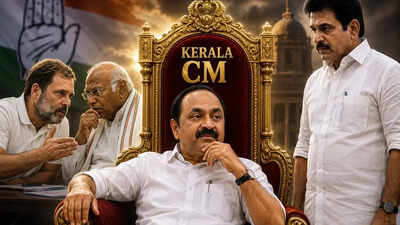
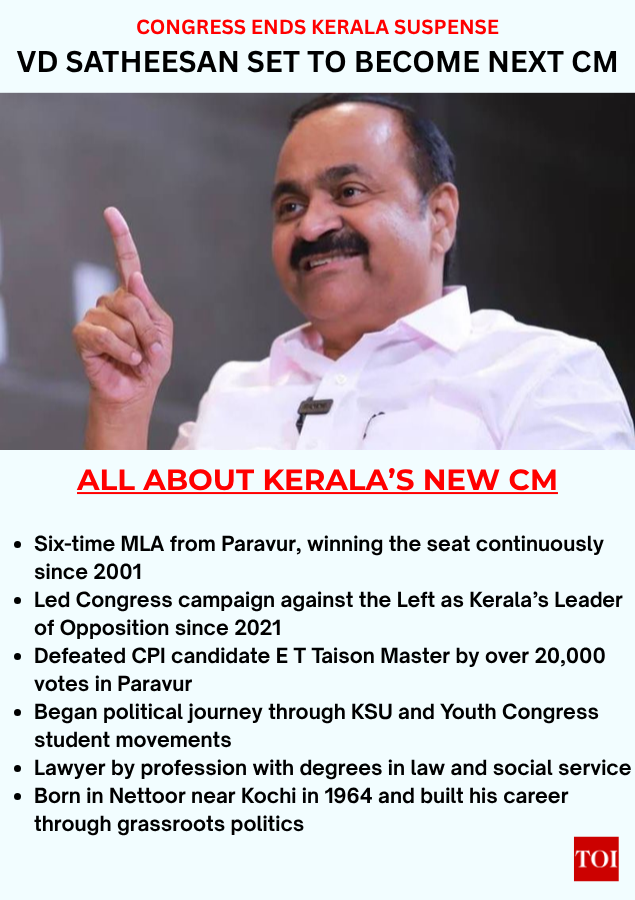
Why did Congress choose VD Satheesan instead of KC Venugopal?

10 days of 'brainstorming' for Kerala's 'Simhasanam': Why Congress chose VD Satheesan over KC Venugopal

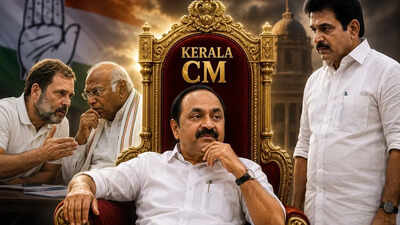
New Delhi: After 10 days of intense deliberations, lobbying and internal brainstorming, Congress On Thursday, the suspense over the post of Chief Minister of Kerala finally ended with the election of VD Satheesan for the top post.Satheesan emerged victorious in a closely watched leadership battle against senior leader KC Venugopal And Ramesh Chennithala weighed the alliance equations, grassroots sentiments, public perception and electoral calculations by the Congress high command before arriving at the final decision.Although Venugopal was seen as a strong contender with the support of a large section of MLAs and the party leadership in Delhi, several political factors ultimately tilted the balance in Satheesan’s favour.Satheesan, being a vocal and visible critic of the Pinarayi Vijayan-led LDF government, also worked heavily in his favour. Although the Congress had never formally presented its chief ministerial face before the elections, Satheesan had gradually emerged as the public face of the opposition against the Left Democratic Front government over the past five years.Satheesan also had the direct support of grassroots Congress workers. In the days following the election results, party workers openly campaigned for him to be made Chief Minister, arguing that the leader who led the election battle should also lead the government.One of the most important reasons was the stance adopted by key allies of the Congress-led United Democratic Front (UDF), especially the Indian Union Muslim League. The IUML, which has 22 MLAs in the 102-member UDF alliance, strongly supported Satheesan and saw the alliance’s landslide victory as an vindication of his leadership over the past five years as opposition leader.The Kerala Congress (Joseph) and the Revolutionary Socialist Party also supported Satheesan, strengthening his position within the alliance.The Congress leadership knew that ignoring IUML’s stance could lead to complications for the new government. IUML has long served as one of the strongest grassroots allies of the Congress in Kerala and has played a major role in Rahul Gandhivictory from Wayanad in 2019 and 2024, and the subsequent by-election victory of Priyanka Gandhi Vadra from the constituency.Within a section of the party, there was uneasiness over Venugopal, considered close to Rahul Gandhi, joining the race for the top post even though he had already indicated during the campaign that he was not seeking the post. Many activists believed that ignoring Satheesan after the UDF’s sweeping mandate would amount to denying him political credit for the victory.The Congress’s recent struggle in assembly elections in several Hindi-speaking states during Venugopal’s tenure as AICC organizing secretary also became a topic of discussion among leaders and workers in Kerala.Internal pressure was also visible at the constituency level. Several newly elected Congress MLAs, identified as supporters of Venugopal, reportedly faced opposition from local party workers. Some MLAs had to cut short their tours after the elections amid criticism from activists and social media campaigns questioning Satheesan’s opposition.Youth Congress leaders like Shafi Parambil and Mathew Kuzhalandan were also criticized online by party workers, who portrayed them as leaders going against the people’s mandate.Another important factor behind the Congress’ decision was the possibility of multiple by-elections if Venugopal had been selected as the Chief Minister.As the sitting Lok Sabha MP from Alappuzha, Venugopal will have to resign from Parliament and contest assembly by-elections within six months to remain chief minister. His resignation from the Lok Sabha would also trigger another parliamentary by-election.Within the UDF, there were concerns about forcing voters to go to fresh elections so soon after the assembly elections, especially at a time when the alliance was trying to consolidate its political gains.Congress leaders were also conscious of the political risks involved in contesting the by-election for a sitting chief minister. Even though Venugopal would have likely contested from a reserved Congress seat, party leaders did not want to bring avoidable uncertainty into the new government.Public perception also worked heavily in Satheesan’s favor.He was one of Vijayan’s sharpest critics and often targeted the LDF government on issues related to governance and corruption. Satheesan also built his image as a strong supporter of secular politics in Kerala.At a time when many Congress leaders avoided directly confronting controversial comments made by influential Hindu community leaders, Satheesan repeatedly warned against efforts to polarize Kerala politics. Vellapalli Natesan and G. By openly challenging leaders like Sukumaran Nair, he gained support among sections who saw him as a leader willing to take political risks.During the campaign, Satheesan also made a high-profile political announcement, stating that he would end his political career if the UDF failed to cross 100 seats. The alliance eventually easily surpassed that figure, cementing his image as a confident campaign leader.Even though Venugopal reportedly had the support of most Congress MLAs and had close ties with the central leadership, the delay in announcing the chief ministerial face reflects the party’s attempt to strike a balance between organizational control and political realities at the ground level.Satheesan, a six-time MLA from Paravur in Ernakulam district, was ultimately seen as a candidate with wide public acceptability, strong coalition support and deep grassroots support.Soon after being elected, Satheesan attempted to convey a message of unity within the party and praised both Venugopal and Chennithala.Satheesan said after the announcement, “I don’t see this post as a personal achievement… It was Venugopal who coordinated all the activities (and) his support was huge. Chennithala is also my leader.”“I will take them all into my confidence,” he said, adding, “I want the support of people from every section of the society… Only collective effort can create a new Kerala. No one can do it alone…”Venugopal also publicly accepted the decision and supported the party line.“Satheesan has been appointed chief minister. I was saying that the decision of the high command will be accepted and it is my responsibility to ensure that the decision is respected and implemented,” he told reporters.Satheesan’s rise to the top post has also been marred by years of internal political fighting within the Kerala Congress. After missing out on a ministerial berth in the cabinet headed by Oommen Chandy in 2011 and later losing the race for the post of Kerala Pradesh Congress Committee chief in 2016, Satheesan once again found himself in a tough competition against senior leaders like KC Venugopal and Ramesh Chennithala.Despite leading the Congress-led UDF to a landslide victory in the assembly, Satheesan was reportedly not the party high command’s automatic choice for the post of chief minister. Party insiders pointed to familiar concerns that had surfaced during earlier leadership contests, including his strained relationship with influential community lobbies, limited support within sections of the national leadership, and his outspoken political style, which often irritated even his own party leaders.In 2011, when Satheesan was denied a ministerial berth in the Oommen Chandy government, his “attitude” was widely cited as a reason in party circles. Unlike many leaders who actively sought support from influential community organizations such as the Nair Service Society, Satheesan was seen as reluctant to engage in lobbying for positions, a quality that contributed to his image as an independent-minded but uncompromising leader.However, the real test for Congress in Kerala will begin after the celebrations. The past 10 days have exposed the depth of factional friction within the party, even amid its biggest victory in the state in a decade. For now, Satheesan has moved quickly to show unity and Venugopal has publicly accepted the high command’s decision. However, senior leader Chennithala has not been active since the CM’s announcement.In the coming days, as Satheesan forms the government, it will be worth watching whether all the frontrunners fall in line to ensure a stable UDF government for five years, or whether the Kerala Congress faces a Karnataka-style feud similar to the rivalry between Siddaramaiah and DK Shivakumar.

Source link

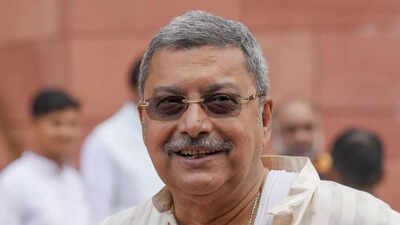
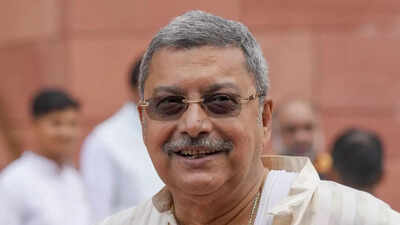
Kalyan Banerjee returned as Chief Whip of Lok Sabha

ममता बनर्जी ने टीएमसी रैंक में फेरबदल किया: कल्याण बनर्जी लोकसभा के मुख्य सचेतक के रूप में लौटे

Kalyan Banerjee (Image/PTI)

New Delhi: Former Chief Minister of West Bengal Mamata Banerjee on Thursday appointed Kalyan Banerjee as its new chief whip Trinamool Congress Kakoli Ghosh replaces Dastidar in the Lok Sabha. The announcement was made during an internal meeting of party MPs held at Mamata Banerjee’s residence in Kalighat, as the party leadership sought to regroup after the recent election shock in West Bengal. Kalyan Banerjee, who was removed from the post last year amid internal turmoil within the party following a public spat with Krishnanagar MP Mahua Moitra, has now been brought back at a time when TMC Trying to stabilize his organization and parliamentary strategy.The reshuffle was seen by party insiders as a sign that the leadership continued to value political aggression and loyalty during difficult times. In recent months, Kalyan Banerjee has emerged as one of the most vocal legal and political faces of the party, actively defending TMC in court battles and public confrontations during the election period.While the party retained Abhishek Banerjee as party leader in the Lok Sabha and Shatabdi Roy as deputy leader, Kalyan Banerjee’s withdrawal was considered the most important organizational decision taken during the meeting.According to party sources, the Kalighat meeting appeared to be a re-unification exercise after the party’s defeat, with discussions on maintaining unity and rebuilding morale among MPs and workers, PTI reported.Many leaders reportedly saw the move as recognition of Kalyan Banerjee’s aggressive role in protecting the party politically and legally. “Leadership values ​​those who stand up and fight in difficult times,” a senior TMC MP said after the meeting.During the meeting, Mamata Banerjee reportedly urged MPs to stay connected to their constituencies and maintain coordination with the local leadership as the party attempts to overcome one of its toughest political phases in years.Addressing the MPs, Abhishek Banerjee alleged that the TMC has fought not only the BJP but the ‘entire machinery’ deployed by the saffron party during the elections. He also claimed that there were irregularities during the counting and alleged that TMC counting agents faced restrictions at several centres.Later, TMC MP Sayoni Ghosh made defiant remarks, claiming that the party is not afraid of setbacks.He said, “TMC is not one to get scared or back down. Mamata Banerjee is a lioness, a fighter – she was here before and she will be here too. This vote is not the mandate of the people. The people of West Bengal did not want Mamata Banerjee’s government to be removed.”

Source link

CBI arrests two more accused in Maharashtra; the number increased to 7

NEET-UG paper leak: CBI arrests two more accused in Maharashtra; the number increased to 7
NEET-UG paper leak: CBI arrests two more accused in Maharashtra; The number increased to 7 (Image credit: PTI)

New Delhi: The Central Bureau of Investigation has arrested two more accused in connection with alleged irregularities in the NEET-UG 2026 paper leak and conducted searches at 14 locations across the country in the last 24 hours.The two arrested accused are Dhananjay Lokhanda of Ahilyanagar, Maharashtra and Manisha Waghmare of Pune, Maharashtra. The total number of arrests in the case has now reached seven.The CBI had registered the case on May 12 based on a written complaint by the Department of Higher Education of the Education Ministry regarding alleged irregularities and paper leak in the conduct of the NEET-UG 2026 examination on May 3.The FIR was registered for offenses under the Indian Justice Code including criminal conspiracy, cheating, criminal breach of trust, theft and destruction of evidence, offenses under the Prevention of Corruption Act and offenses under the Public Examinations (Prevention of Unfair Means) Act, 2024.So far, the CBI has arrested seven accused in the case – three from Jaipur, one from Gurugram, one from Nashik, and the latest two from Pune and Ahilyanagar. Many other suspects are still being interrogated.The agency has also conducted searches at several places across the country. During the search and arrest, several incriminating materials and electronic devices including mobile phones have been seized.The CBI is coordinating with the Rajasthan Special Operations Group, which conducted the initial investigation in the case, and is tracing all the leads through extensive technical and forensic analysis.

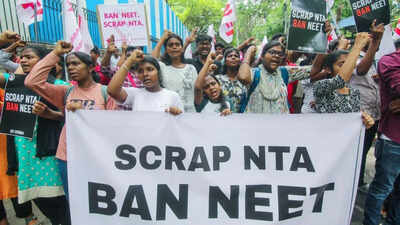
NTA canceled the exam, exam will be held again

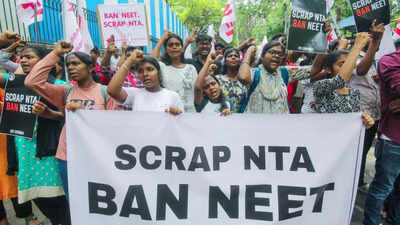
The Center on Tuesday canceled the NEET-UG 2026 exam held on May 3 amid allegations of paper leak and announced that the exam will be re-conducted on dates to be notified separately.NTA said the decision was taken after examining the inputs in coordination with central agencies and findings shared by law enforcement agencies raising concerns over the integrity of the examination process.Federation of All India Medical Associations has moved the Supreme Court challenging “systemic failure” National Testing Agency In conducting NEET-UG 2026 examination.Students across the country have protested against the decision to re-conduct the examination. NSUI workers protest at Shastri Bhawan in New Delhi, protesters were seen climbing the barricades.

Source link

How do BJP and Congress see election victory differently?

Bengal, Assam move fast while Kerala waits: How BJP and Congress see election victory differently

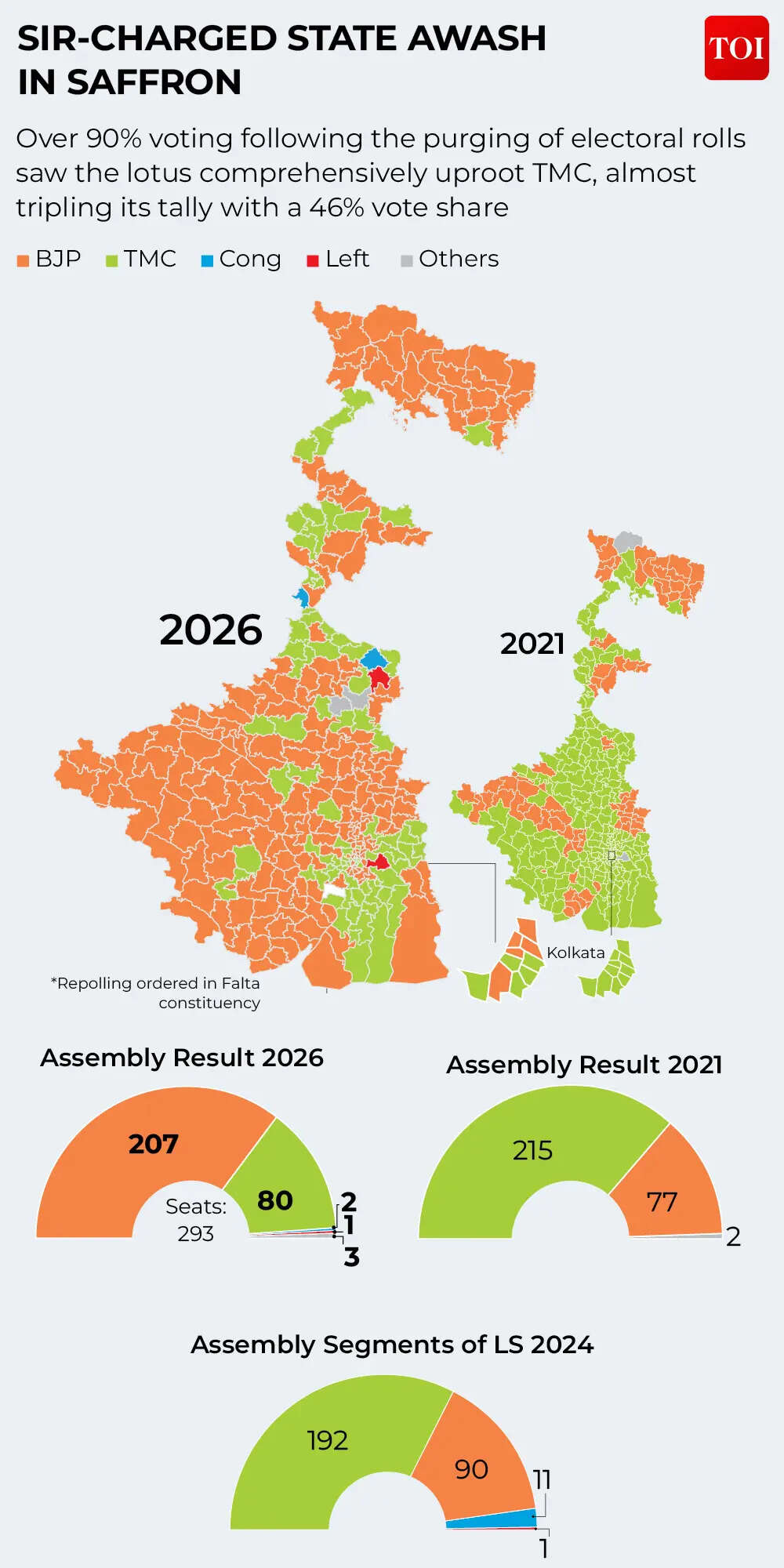
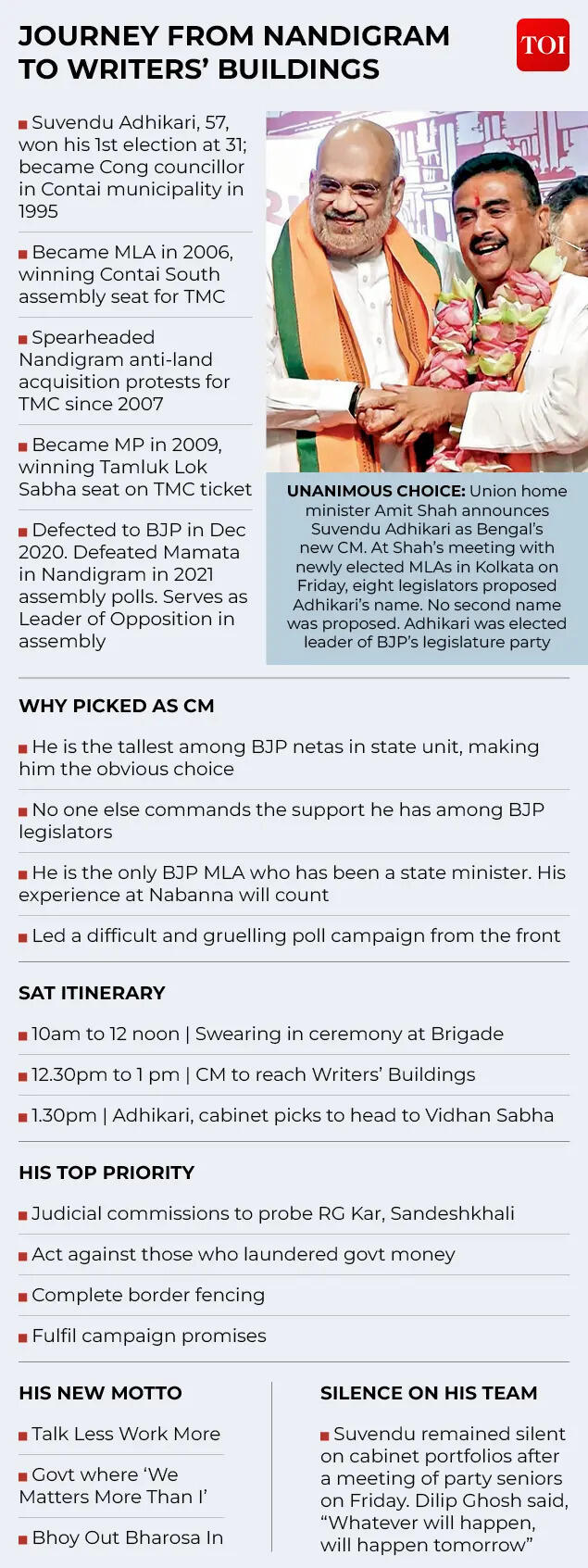
New Delhi: The Congress Finally, the suspense in Kerala ended on Wednesday. Ten days after the UDF’s historic mandate, VD Satheesan was named Chief Minister. For a party that had just won 63 seats while the UDF alliance had won 102, the delay was not about numbers or alliance arithmetic. It was about Congress being unable to get out of its own way.Across the country, in West Bengal BJP The same thing was done in about 48 hours. Won 207 seats, a state for the first time in the party’s history, and before the celebrations could properly begin (or Mamata had resigned) Suvendu Adhikari was named CM.

-

A similar scene was seen in Assam also, where the saffron party won a massive mandate. There was never much doubt about the BJP’s choice for Chief Minister. Himanta Biswa Sarma, who has led the party to consecutive victories in the state and has also played a key role in expanding the BJP’s footprint in the North East, was the obvious choice.Also read: How 2026 Assam victory establishes ‘outsider’ Himanta as the party’s next generation leader?The two parties achieved historic victories in the same election cycle, yet they took completely different approaches afterward. One walks as if he has done this before. Others believe that she is struggling with internal turmoil even after securing a historic mandate.One side sees victory as the beginning of control; Others often consider it a conversation starter.So, what does BJP understand about victory that Congress has to re-learn?

BJP’s favorite trick

The BJP’s approach in choosing chief ministers since 2014 has been following a clear pattern. When the party wins a state, it often avoids choosing a clear contender. Instead, it gives the top post to someone who is not well known outside the state but has worked closely with the grassroots or local leadership.The idea behind this strategy is simple. This prevents regional powers from becoming too powerful. It also ensures that victory is seen as a mandate for the party and its central leadership and not for any local leader. Also, it sends a message to party workers that loyalty to the organization matters more than personal ambition.The track record supports it. When the BJP won Haryana in 2014, it went with first-time MLA Manohar Lal Khattar. when it was changed Vijay Rupani Another first-time MLA Bhupendra Patel got a job in Gujarat in 2021. In December 2023, after winning in Rajasthan, Madhya Pradesh and Chhattisgarh, the BJP sent a clear message about its changing leadership model. Despite winning big, veterans Vasundhara Raje, Shivraj Singh Chouhan and Raman Singh were left behind for the top post. Instead, the party chose relatively low-profile leaders, Bhajan Lal Sharma, Mohan Yadav and Vishnu Dev Sai, in a sign of preference for new faces over strong regional stalwarts. Add Tripura’s Biplab Deb, Uttarakhand’s Pushkar Singh Dhami, Manipur’s N Biren Singh and Tripura’s Manik Saha to the list. These were not household names outside their states. However, he was chosen to rule quietly under the national banner of the BJP while the central leadership held the real reins.The BJP sometimes allows strong regional leaders to emerge. Yogi Adityanath Uttar Pradesh is a clear example of this; Leaders like Devendra Fadnavis, who worked in the RSS ecosystem for decades, were also rewarded with the top post. But this usually happens when the party is already firmly established there.

What does Congress do instead?

Before delving into why these cases in Assam and Bengal differ from the party’s general approach, it is worth looking at what the BJP’s tightly controlled chief ministerial selection process is designed to avoid: prolonged public power struggles after electoral victory.This contradiction became visible after Karnataka in 2023, when the Indian National Congress spent several days in an open feud between Siddaramaiah and DK Shivakumar. Both the leaders lobbied the MLAs, both presented their views in Delhi and the internal competition came to the fore. Siddaramaiah eventually became the Chief Minister, while Shivakumar was made the Deputy Chief Minister; However, their rivalry continues to make headlines even today.This too was not an isolated incident. After victories in Madhya Pradesh, Rajasthan and Chhattisgarh in 2018, the Congress turned every victory into a lengthy dialogue on leadership. There was a tough contest between Kamal Nath and Jyotiraditya Scindia for control in Madhya Pradesh. In Rajasthan, the feud between Ashok Gehlot and Sachin Pilot lasted longer than the government, almost leading to its fall in 2020.Now, in May 2026, the same drama played out in Kerala too. The Congress-led United Democratic Front won a major victory, securing 102 seats in the 140-member assembly, of which the Congress alone won 63 seats. But even after such a clear mandate, it took ten days for the party to announce VD Satheesan as the new Chief Minister of the state, while other poll-going states had already announced the name of their CM. The contest was reduced to three names: AICC general secretary KC Venugopal, leader of opposition in the assembly VD Satheesan and senior leader Ramesh Chennithala. Intense lobbying, competing camps and differing views within the party reportedly prolonged the process, while other states going to the polls had already named their chief ministers. Meetings between Rahul Gandhi, Mallikarjun Kharge and senior Congress leaders continued throughout the week, while the prolonged uncertainty led to memes, online ridicule and frustration among party workers.When the announcement finally came, Satheesan had long appeared to be the clear frontrunner.

VD Satheesan is sure to become the next CM of Kerala

First Himanta, then Suvendu

Then why did BJP deviate from its own strategy in both Assam and Bengal?The answer is simpler than it seems: it actually wasn’t. The playbook was never about casting unknown faces. It was about choosing people who would not dominate the central leadership or create independent power centres. Himanta Biswa Sarma is template. He joined the BJP from the Congress in 2015 and spent several years building the party’s footprint across the Northeast as convenor of the North East Democratic Alliance. By the time the BJP won Assam in 2021, he was a clear contender for the top spot. This was the reason why the party had the numbers to win. The central leadership recognized this and acted accordingly.

Suvendu's journey

Suvendu Adhikari’s path to the post of Bengal CM is also based on this logic.Adhikari’s political career started in the Congress before moving to TMC with his family when Mamata Banerjee formed the party in 1998. He was at the center of the Nandigram movement in 2007, the movement that broke the Left Front’s hold on rural Bengal and made Mamata a genuine mass leader. He won the Tamluk Lok Sabha seat in 2009 and held it in 2014. In 2016, he moved into state politics, winning Nandigram and moving into Mamata’s cabinet as transport minister, later also handling irrigation and water resources. His split with TMC in late 2020, due to his uneasiness with the growing role of Mamata’s nephew Abhishek Banerjee within the party, was the biggest blow to TMC ahead of the 2021 elections. He joined the BJP in December 2020 at a rally in Midnapore along with Amit Shah.Then came the decisive moments. In 2021, he contested against Mamata Banerjee in her chosen constituency Nandigram and defeated her by 1,956 votes. Five years later, in 2026, he did it again, this time in Mamata’s traditional stronghold of Bhabanipur, defeating her by over 15,000 votes. He also won Nandigram.

Insider benefits

What makes Adhikari’s appointment particularly significant is not what he did to TMC, but what he knows about it.He spent more than two decades building the Trinamool Congress from the ground up. He knows how rural networks work, how district power structures operate, and who the key operators are at the booth level in many districts.This makes a lot of sense for what happens next. BJP’s victory in Bengal is not the end of the story; This is the beginning of a consolidation challenge. TMC’s grassroots organization, which was built hard over 15 years, did not disappear overnight when it lost the elections. Party workers, district leaders, local powerful people who used to run things under TMC, they are all still there, and many of them are now looking which way the wind is blowing.

what will happen next

In the end, the contradiction between Bengal and Kerala was not really about Suvendu Adhikari or VD Satheesan. It was about what happens inside two parties when victory comes.BJP considers power as a system. Decisions are centralized, hierarchy is clear and uncertainty is reduced. Sometimes this means surprising chief ministers. Sometimes, like in Assam and Bengal, it means recognizing when a leader becomes too politically important to ignore. But either way, the party moves quickly, projects authority and ensures that the focus remains on the organization.Congress is still struggling with that trend. Even after major victories, it often appears stuck in negotiations, balancing factions rather than controlling them. What should look like confidence starts looking like hesitation. BJP believes in seizing power and consolidating it; Congress still considers it something worth talking about and sharing. One has a system. Conversation takes place with others.

Source link