TMC MP Mithali Bagh’s car vandalized, windshield broken; Party accuses BJP of ‘attempt to kill’ india news

TMC MP Mithali Bagh's car vandalized, windshield broken; Party accuses BJP of 'attempt to kill'

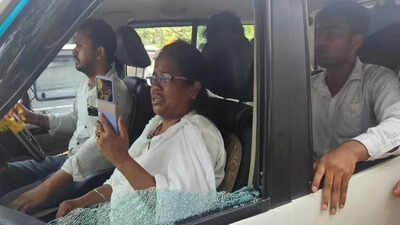
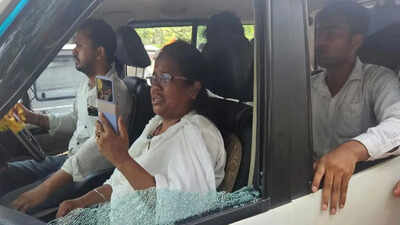
New Delhi: Trinamool Congress on Monday alleged that Bharatiya Janata Party “goons” attacked the car of Arambag MP Mithali Bagh on the last day of campaigning before the second phase of West Bengal assembly elections.In a post on Twitter, the TMC said Bagge was “brutally and cowardly attacked by BJP goons and goons. His car was vandalized. His windshield was broken. Shards of glass entered his body.”“Amit Shah threatened our leaders and party workers that anyone who came out of his house would be hanged upside down. Today, action was taken on that threat,” the party said.“This is an attempt on the life of an elected Member of Parliament. Amit Shah issued the order from the stage.” His scoundrels did it on the road. The chain of command is straightforward. The responsibility is theirs,” it said.Bag was reportedly admitted to a local hospital. Officials said that at present the situation in the area remains peaceful and security forces are maintaining strict vigil.The Arambagh seat is currently held by BJP’s Madhusudan Bagh, who defeated TMC’s Sujata Mondal by a margin of 7,172 (3.3 per cent) votes.Before the 2011 delimitation, this seat used to be a CPI(M) stronghold. TMC won this seat in 2011 and 2016 but lost it to BJP in the 2021 elections.BJP has fielded Hemant Bagh against TMC’s Meeta Bagh to protect the constituency. CPI(M)’s Bithika Pandit is also in the fray.Earlier in the day, West Bengal Police had arrested four people in connection with the violent clash between TMC and BJP supporters in front of Jagatdal police station.Voting for the second phase of elections is scheduled to take place on April 29, while counting of votes will take place on May 4.

Source link

Shahjahanpur tomb vandalized: ‘Iron lattice broken, stones pelted’: Tomb vandalized in Shahjahanpur, UP, FIR filed after burning bedsheet. india news

'Iron mesh broken, stones pelted': FIR filed after vandalism of tomb in Shahjahanpur, UP, burning of bedsheet

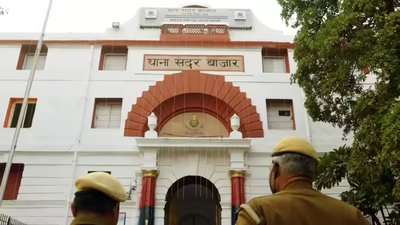
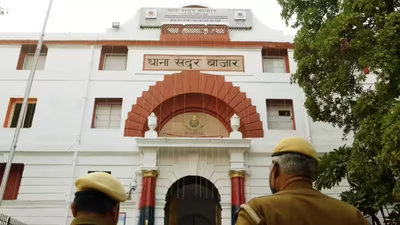
New Delhi: Police have registered an FIR against an unidentified person after a shrine was allegedly vandalized and a sacred cloth or ‘chadar’ was burnt in Chinaur area of ​​Uttar Pradesh’s Shahjahanpur district, officials said on Monday.The incident, which occurred under Sadar Bazar police station limits, sparked tension in the area, prompting officials to step up efforts to trace those responsible.Superintendent of Police Saurabh Dixit told news agency PTI that during inspection, burnt pieces of clothes were found at the spot. “It appears that someone removed the sheet covered over the mazar and set it on fire. Besides, the iron mesh around the mazar was found damaged,” he said.He said a complaint was lodged on Sunday, following which the police registered a case against an unidentified person and started investigation. “Police teams have been directed to identify and arrest the accused as soon as possible,” he said.Dargah caretaker Mohammed Ahmed, also known as Chand Mian, said the site is frequented by people from different communities. He said, “Hindus visit this shrine more than Muslims. Police visited the spot after the incident. We demand the immediate arrest of the person who broke the iron mesh around the shrine, burnt the bedsheet and pelted stones at the structure.”Police have registered a case under section 298 of the Indian Justice Code (BNS), which deals with causing harm or desecration of a place of worship with intent to insult the religion of any class.Officials said CCTV footage of the surrounding areas is being scanned to identify the accused and establish the sequence of events.

voting

Do you think the local community is doing enough to protect shared religious places?

Source link

7 out of 10 heart failure patients in India lack financial cover; Cost of treatment pushes families to the brink. india news

7 out of 10 heart failure patients in India lack financial cover; Treatment costs push families to the brink

New Delhi: For thousands of Indians living with heart failure, the biggest stress is not just the disease itself, but also the cost of avoiding it. A nationwide study found that seven out of 10 patients have no financial protection, leaving families to pay almost entirely out of pocket.published in journal global heartThe study led by Dr Panniamakkal Jeemon of SCTIMST, Thiruvananthapuram, analyzed 1,859 patients across 21 tertiary hospitals in India between September 2019 and December 2022.This shows that more than 90% of treatment costs are borne directly by patients, highlighting a deep gap in financial security for chronic diseases.The numbers reflect a harsh truth. On an average, a patient spends more than ₹1 lakh per year on treatment. Additionally, income is declining – nearly one in three patients and more than a third of families report a decline in income after diagnosis.Doctors say income often drops as patients stop working and families cut back on providing care. Nearly 38% face catastrophic spending and nearly one in six borrows money or sells assets, with many cutting back on basic expenses. The burden is greatest on rural, low-income and uninsured patients.Insurance provides some relief – but not enough. Schemes like Ayushman Bharat provide coverage for hospitalization, but shortcomings remain. Most plans don’t fully cover outpatient care, medications, and long-term follow-up – which are a major part of treatment in chronic conditions like heart failure. As a result, patients have to spend heavily out of their own pockets.“Heart failure care in India shows a clear distinction between acute treatment and long-term management, driven by affordability, accessibility and availability,” said Dr Mohit Gupta, cardiologist, GTB Hospital. “Costs often force patients to cut back on medications, delay follow-up, or skip trials. The biggest burden is not the medications, but frequent hospitalizations. We often treat patients according to their capacity. Insurance largely covers hospitalization, but heart failure is a chronic outpatient disease, and gaps in covering medications and follow-up care leave patients vulnerable. Increasing access to affordable medicines and structured follow-up can improve outcomes and reduce costs.Dr Ambuj Roy, professor in cardiology at AIIMS, said insurance schemes still prioritize one-time procedures rather than continuous care, while heart diseases demand long-term therapy. Even though new drugs have improved survival and quality of life, most patients pay out of pocket, making heart failure treatment a significant financial burden.Experts warn that financial stress leads to delays in care and skipping medications, worsening outcomes. Despite improved access, financial security is lagging, making coverage of outpatient care and medicines critical.

Source link

‘Goodbye piecemeal India alliance’: Kiren Rijiju on Raghav Chadha, 6 AAP MPs joining BJP | india news

'Goodbye to Tukde Tukde Bharat alliance': Kiren Rijiju on Raghav Chadha and 6 AAP MPs joining BJP

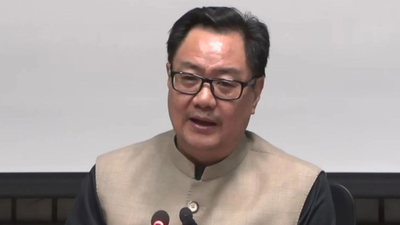
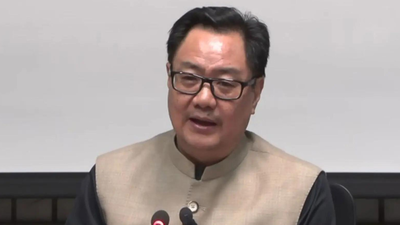
New Delhi: Union Minister of Parliamentary Affairs Kiran Rijiju welcomed on monday Raghav Chaddha And six other MPs who left the Aam Aadmi Party and decided to merge with the Bharatiya Janata Party.In a post on Twitter, Rijiju praised the parliamentary conduct of the newly inducted MPs, claiming that they “never indulged in any indiscipline or unparliamentary conduct” in the House.“Hon’ble Chairman Rajya Sabha Shri CP Radhakrishnan ji has accepted the merger of 7 AAP MPs BJP. Now, Raghav Chadha ji, Sandeep Pathak ji, Ashok Mittal ji, Harbhajan Singh ji, Swati Maliwal ji, Rajinder Gupta ji and Vikramjit Singh Sahni ji are members of the BJP Parliamentary Party. For a long time, I have observed that these 7 honorable MPs have not resorted to foul language and have never indulged in any indiscipline or unparliamentary conduct,” Rijiju said.“Welcome to Nation Building NDA “Goodbye to the fragmented Indian alliance under the visionary leadership of Prime Minister Narendra Modi.”AAP suffered a major blow on Friday when seven of its Rajya Sabha MPs resigned and announced their merger with the Bharatiya Janata Party, alleging that the Kejriwal-led party has deviated from its founding principles and values.“We have decided that we, two-thirds of the AAP members in the Rajya Sabha, will exercise the provisions of the Constitution of India and merge with the BJP,” Raghav Chadha said at a press conference.With this change, the BJP’s strength in the Rajya Sabha has increased from 106 to 113, while the NDA’s strength has increased from 141 to 148, including seven nominated members. With more than 30 seats vacant by the end of the year, the BJP is expected to gain at least five more seats, moving closer to the two-thirds majority mark of 163.Meanwhile you MPs… Sanjay Singh A petition has been formally submitted to Rajya Sabha Chairman CP Radhakrishnan to disqualify the seven MPs.

Source link

7 former AAP MPs formally join BJP; NDA’s strength in Rajya Sabha increased to 148, AAP reduced to 3. india news

7 former AAP MPs formally join BJP; NDA's strength in Rajya Sabha increased to 148, AAP reduced to 3.

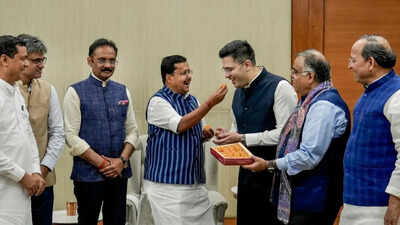
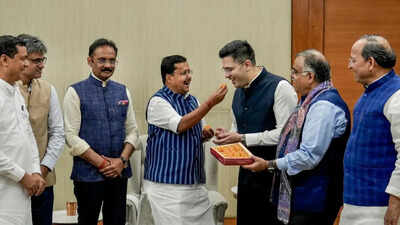
New Delhi: Seven rebel Rajya Sabha MPs of the Aam Aadmi Party were officially inducted into the Bharatiya Janata Party as the Rajya Sabha Secretariat updated the party’s position in the Upper House.Last month, after being removed from the post of deputy leader in Rajya Sabha, Raghav Chadha had left AAP along with six MPs and decided to merge with BJP.“We have decided that we, two-thirds of the AAP members in the Rajya Sabha, will exercise the provisions of the Constitution of India and merge with the BJP,” Raghav Chadha said at a press conference.The BJP had 106 members, and the NDA had 141 (including seven nominated members). These total numbers have now increased to 113 and 148 respectively. With more than 30 seats vacant by the end of the year, the BJP is expected to gain at least five more seats, moving closer to the two-thirds majority mark of 163.Why anti defection law Will not apply to AAP MPsDespite the Tenth Schedule, the anti-defection law will not apply to AAP MPs, as it allows two-thirds of the legislative party members to secede and merge with another party.The law says: “A member of a House shall not be disqualified under the Tenth Schedule if his original political party merges with any other political party and he claims that he and other members of his original political party have become members of such other political party or, as the case may be, members of the new political party formed by such merger.”If the numbers were less, those seeking merger would have had to give up their membership of the Upper House.Therefore, if Chadha had stepped down alone, he would have had to give up his Rajya Sabha membership. But this is not so because along with the outgoing AAP leader, Swati Maliwal, Harbhajan Singh, Sandeep Pathak, Ashok Mittal, Rajinder Gupta and Vikram Sahni are also included.

Source link

Raghav Chaddha: Raghav Chaddha reacts to joining BJP in new video, cites ‘toxic work environment’ in AAP. india news

Raghav Chadha reacts to joining BJP in new video, cites 'toxic work environment' in AAP

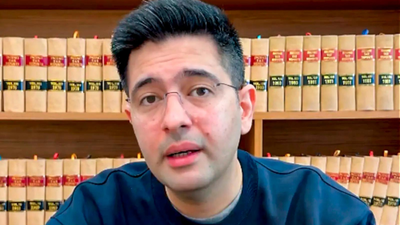
New Delhi: Raghav Chaddha On Monday addressed the criticism regarding his decision to join the Bharatiya Janata Partyexplaining why they left Aam Aadmi Party.In a video shared on Instagram, Chadha said that she has been receiving a large number of messages after her announcement. He said, “For the last three days I have been receiving a lot of messages from all of you. Most of you are wishing me good luck and congratulating me, while some want to know the reason behind my decision. Describing himself as a founding member of the organization, Chadha said that he has dedicated 15 years of his youth to the Aam Aadmi Party. He said, “I did not come into politics to make my career. I became a founding member of a political party. I gave 15 years of my youth to this party with my blood, sweat and hard work. He sharply criticized the present functioning of the party and alleged that it has changed with time and is no longer the organization it was earlier. He said, “Today this party is no longer the old party. Today the working environment in this party is poisonous. You are prevented from working. You are prevented from speaking in Parliament.”Explaining his decision to join BJPChadha said he was increasingly out of place within the party and described himself as “the right man, but in the wrong party”. He said he had considered several options, including exiting politics altogether, attempting internal reforms or shifting to another political platform, and ultimately choosing the latter.He also claimed that this decision was no different, saying, “Not one, not two, not three, not four, not five, not six – seven MPs have decided to break their ties with this political party.” He said, “One person may be wrong, two people may be wrong, but seven people cannot be wrong.”Responding to criticism that his exit was motivated by pressure or fear, Chadha rejected the allegation. “We left not out of fear but out of despair, disillusionment and hatred,” he said.He further said that despite you leaving, he would continue his political engagement and public outreach, adding, “I will continue to raise your issues with greater energy and enthusiasm.”Within 24 hours of announcing his exit from the Aam Aadmi Party and joining the Bharatiya Janata Party, Rajya Sabha MP Raghav Chadha reportedly saw a huge drop in his Instagram followers, losing over 1 million followers, which later increased to 2 million. His move sparked sharp reactions on social media with many of his supporters criticizing his decision to join the BJP. Additionally, his old video clips and previous statements in which he criticized the Bharatiya Janata Party resurfaced online, further intensifying the debate over his political transition.

Source link

SC panel makes ICU norms for hospitals. india news

SC panel makes ICU norms for hospitals

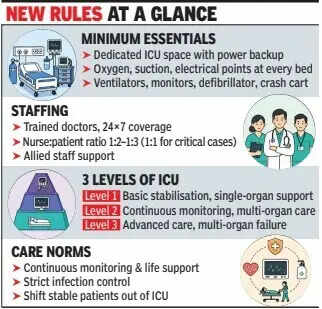
New Delhi: An expert committee constituted by the Supreme Court has set minimum standards for intensive care units (ICUs), defining what hospitals should qualify to have ICUs – including infrastructure, equipment and staff. The framework mandates a dedicated ICU space with power backup, sanitation and proper layout along with access to emergency services, operation theaters and laboratories. Bedside essentials include oxygen, suction and electrical points as well as equipment such as monitors, ventilators, defibrillators, crash carts, infusion and syringe pumps, glucometers and ECG machines.

New rules at a glance

New rules at a glance

Staffing is at the heart of the norms. ICUs should be led by trained doctors and staffed around the clock with nurse-to-patient ratios comparable to wards – ranging from 1:2 to 1:3 and up to 1:1 for critically ill or ventilated patients – supported by paramedic health care staff. The guidelines also emphasize the constant monitoring, life-support systems and strict infection control protocols required for ICU care. The criteria are part of the “Guidelines for the Organization and Delivery of Intensive Care Services”, a report prepared by a three-member committee and examined by medical experts, and endorsed by the court as “practical, implementable and necessary as a minimum standard for ICUs”. A bench of Justices Ahsanuddin Amanullah and R Mahadevan asked the states and Union Territories to identify the shortcomings and submit action plans and implementation strategies by May 18. The Supreme Court-appointed panel – comprising AIIMS doctor Nitish Naik, Additional Solicitor General Aishwarya Bhati and lawyer Karan Bharioke – has said clinical judgment should guide decisions on the level of care required. Dr Harsh Mahajan, chairman of Mahajan Imaging Lab and one of the experts who reviewed the guidelines, said it recognizes the gaps in rural and remote areas and suggests measures such as interim staffing norms and linking smaller ICUs to higher centers through e-ICU or tele-ICU support. Dr. Soumitra Rawat of Sir Ganga Ram Hospital, part of the group reviewing the guidelines, said, “The new guidelines classify ICUs into tiers, making it mandatory for even entry-level units to meet the defined criteria,” he said.

Source link

Wealthy clans now swear by ‘family constitution’ that codifies not just money matters, but also value system India News

Wealthy clans now swear by a 'family constitution' that codifies not only money matters, but also the value system

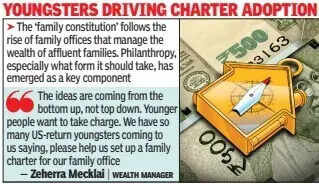
Mumbai: A growing number of wealthy Indian families, often driven by younger members, are adopting a “family constitution”, a document that lays out the principles governing wealth creation, philanthropy, succession planning and the family’s broader sense of purpose. Partly legal blueprint, partly moral guidelines, these charters attempt to codify not only money matters, but also the value system of the family. Reflecting the changing social landscape, many charters are now grappling with questions that older business dynasties once avoided: What happens if a gay family member marries abroad? Should a daughter who chooses ceramics or music over family enterprise lose financial rights? How can one accommodate family members who reject traditional expectations?
Charter Adoption Youth

Charter Adoption Youth

“A family constitution is a guiding charter that seeks to establish a framework for the family rooted in its ethos and values, rather than acting as a traditional legally binding document,” says Jhanvi Kohli, partner and head of private client practice at ANB Legal, who has recently seen a huge increase in families coming to her to draft such documents. “What is most clear today is that everyone wants an equal seat at the table,” she says. The real significance of these charters lies in how they signal a move away from the era of powerful patriarchs, whose toxic grip on family property often led to resentment and eventual rupture. Lack of clarity and growing ego have given rise to countless Mahabharats within Indian business families. Nevertheless, covert forms of control may occur. For example, many constitutions, especially among ultra-wealthy multi-generational families, call for an annual ‘retreat’ at which all family members must attend – much like what unfolds in twisted comedy shows like ‘Succession’ or ‘The Perfect Couple’. Defined as a ‘family retreat’, the Maldives holiday with grandpa and grandma is then written off as a business expense. Each branch of the family may also go on separate vacations, but the constitution allots a maximum amount each person can spend, or requires fuel reimbursement if a helicopter or jet is used for more than a set number of trips. “Philanthropy is a very important part of this charter,” says Neeta Shivdasani, managing director and principal of Heritage Waterfield Advisors. “One client said she wanted to work on protecting marine life, so our philanthropy team strategically found projects that work in that area. Many families want to contribute to medical research, especially towards cancer,” she adds. Clauses in various documents explain what can and cannot be done. For example, someone says: Donations should not be made for publicity. Or, there may be specific information about what types of donations are allowed. Another charter warns against mixing business with friendship, stating: The family recognizes that making business deals with friends and relatives can strain relationships and shall avoid such transactions, or do so only with the prior approval of the family business board. “Today, people are more willing to talk openly about money and how to distribute it within their lifetime rather than waiting for elders to pass away,” says Zehra Meklai, a wealth manager in the region. “The ideas are coming from the bottom up, not from the top down. Young people want to take charge. Young people who have returned from America are coming to us saying, please help us set up a family charter for our family office.” The rapidly evolving family office is essentially an entity that manages the wealth of affluent families – looking at investments within lifetimes and inter-generational transfers and distributions, including ring-fencing assets within private trusts, a common practice to protect assets in the event of divorce. Family offices in India have seen significant growth over the last 5-6 years, reflecting both new wealth creation and an aspiration for family branding. Covid forced many to confront mortality and plan for succession. Family offices, an old practice among the old-money in Europe and America, have since become a status symbol. “When someone says, ‘I manage my family office’ it’s a euphemism for ‘I have serious money,'” says one wealth manager. A family office often comes into effect when there is a “liquidity event,” a term used to describe the sale of a business or asset that generates a lot of cash. Investment experts suggest that a minimum combined asset base of Rs 100 crore makes it worthwhile to form a family office. And with the Family Office comes the Constitution. “I actually find it more difficult to address the non-financial aspects,” says Sanjay Goyal, a Delhi-based businessman who is in the process of working on his family charter.

Source link

In the talks on May 22, the government can give legislative powers to the local bodies of Ladakh. india news

Government may give legislative powers to local bodies of Ladakh in talks on May 22

New Delhi: The next round of discussions between the Home Ministry and representatives of Ladakh on security measures for the region will resume on May 22 – as Ladakh LG VK Saxena announced in a post on X Sunday – and ways to strengthen elected local bodies with legislative powers and provide more protection to the Ladakhi people in matters related to land, culture and employment may be considered.The talks – resumed after nearly three months – came in the wake of the worker’s expulsion Sonam WangchukThe detention under NSA was seen by experts as a cordial move by the Center to earn the trust of Ladakhi groups. While releasing Wangchuk, the Home Ministry had cited its commitment to “promote an environment of peace, stability and mutual trust in Ladakh to facilitate constructive and meaningful dialogue with stakeholders”.In early February, the ministry had heard the demands of Ladakh bodies apex body Leh and Kargil Democratic Alliance. Ladakhi leaders were asked to come back with a revised proposal. Ministry sources said they expected to hear a reply on this in the May 22 meeting.

Source link

Mamata cites ‘load-shedding’, warns against ‘EVM capture’. india news

Mamata cites 'load-shedding', warns against 'EVM capture'
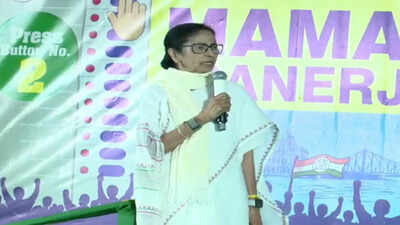
West Bengal CM Mamata Banerjee

Kolkata: West Bengal CM Mamata Banerjee On Sunday, he asked Trinamool workers to be alert about “EVM capturing” and said complaints of power cuts were coming from EVM strongrooms after the first phase of assembly elections in the state.“Look at the EC! It is your job to ensure that EVMs are not caught. Why is there so much load-shedding? It is clearly a sign of malicious intent. I urge you not to fall into their trap,” the CM said at her rallies in Bhawanipur, from where she is contesting.The Bengal CM said she was leading by 4,000 votes in Nandigram before the power failure at the counting center in the 2021 assembly elections.The trend reversed after supplies resumed and she ultimately lost the seat to BJP’s Suvendu Adhikari by less than 2,000 votes. Banerjee challenged the result in the Calcutta High Court and the case is still sub judice.Banerjee said in her rallies on Sunday, “Everyone should cast their vote. They will try to tamper with the EVMs. If a machine breaks down, come to vote again. Do not vote in a machine which has broken down before. Every EVM should be thoroughly checked. Central forces will try to capture the EVMs; they are influenced by the Election Commission. Let them do whatever they want. Women will be allowed to vote from the day of voting till the end of counting. EVMs should be protected.”Referring to Union Home Minister Amit Shah, the CM said, “HM uses abusive language. He is scared. He thinks he will win by spreading fear. Remember if you try to create fear, we know how to counter.”

Source link