Trump narrowly escapes shooting at White House dinner; AAP targets rebel MPs and other breaking news. india news

'Trump's attacker seen in IDF sweatshirt...': Speculation intensifies over possible Israel link

  • Trump was evacuated from there after the firing and he was not harmed. white house dinnerWhile an armed attacker was arrested and an officer was shot but was saved by a vest.
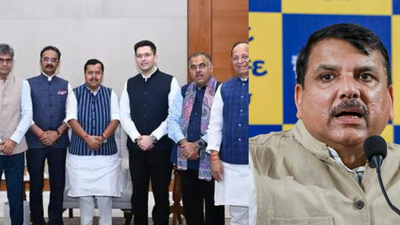
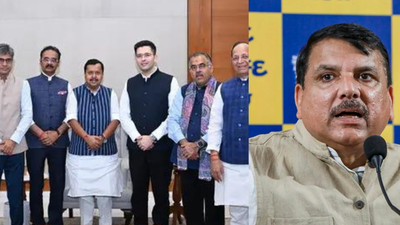
  • AAP has demanded the dismissal of seven rebel MPs who joined BJP. anti defection law Against Raghav Chadha, Swati Maliwal and others.
  • Rahul Gandhi attacked TMC over the murder of a Congress worker in Bengal and called it “TMC’s hooligan rule”.
  • “I know all your secrets”: Ishan Kishan jokes with 15-year-old Vaibhav Suryavanshi after his 37-ball century.
  • 40 years later Chernobyl has become a wildlife sanctuary, where wolves, bears and bison are thriving, as the IAEA says the absence of humans helps more than harms from radiation.

Here are the top 5 stories of the day

Shooting during White House dinner: Trump evacuated, suspect in custody

US President Donald Trump survived a shooting outside the White House correspondents’ dinner in Washington, prompting Secret Service agents to evacuate him, First Lady Melania Trump and Vice President JD Vance. The suspect, a 31-year-old tutor armed with a shotgun, handgun and knives, was captured. Read the full story.

Watch

‘Trump’s attacker seen in IDF sweatshirt…’: Speculation intensifies over possible Israel link

AAP has demanded the dismissal of 7 MPs who joined BJP.

Aam Aadmi Party has sent a petition to Rajya Sabha Chairman and Vice President CP Radhakrishnan demanding the dismissal of seven rebel MPs who merged with BJP. The party has invoked the anti-defection law arguing that the MPs have voluntarily given up AAP membership. Read the full story.

Rahul Gandhi attacks TMC on the murder of Congress worker

Rahul Gandhi condemned the killing of a Congress worker in West Bengal and blamed “TMC-affiliated thugs” for the incident. He accused TMC of intimidating opponents and resorting to violence even after voting, alleging that democracy has been replaced by “thuggery” in the state. Read the full story.

‘I know all your secrets’: Ishaan Kishan’s spat with 15-year-old Shatakveer Suryavanshi

After Sunrisers Hyderabad’s win over Rajasthan Royals, Ishan Kishan shared a light-hearted moment with 15-year-old Vaibhav Suryavanshi, who scored 103 off 37 balls – the third-fastest century in the history of the Indian Premier League. Kishan jokingly said, “Please be a little gentle towards my team when I am playing against you. I know all your secrets.” Read the full story.

Chernobyl: from nuclear wasteland to wildlife haven

Forty years after the world’s worst civilian nuclear disaster, a thriving wildlife sanctuary has emerged in the Chernobyl exclusion zone. Wolves, lynx, elk, wild boar, brown bears and European bison are now thriving despite continued radiation. The IAEA reports that the absence of human activity has had a greater positive impact on animal numbers than the negative impact of radiation. Read the full story.

Source link

Lights, camera…gone? The slow pace of India’s OG photo studio india news

Lights, camera...gone? India's OG photo studio slowing down

Sit straight! Chin up, look a little to the left… and just right!Do you remember those classic studio photos you grew up with? Deep velvet curtains, a plastic vase or a carved chair placed on the edge, and that soft glow on every face. Maybe it’s a passport photo, a neatly dressed family portrait, or that slightly tough photo from school, but you’ve surely seen at least one such image in an old album, hidden away among documents, or hung in a frame on the walls of your living room.But that era of ‘OG’ images is now long behind us. Those neighborhood photo studios, once bustling with people chasing the perfect frame, are now struggling to survive. That curious trip to the nearby ‘Suresh Photo Studio’ has been quietly replaced by the search for that perfect filter.It all started when cameras moved beyond the studios and into everyday homes. While photography had existed in India since the 1840s, it became truly common at the household level in the late 1990s and early 2000s, when digital cameras began to replace film.Before then, most families depended on film cameras from brands like KODAK and Agfa, or visited local studios for important pictures, as film rolls were limited and developing them cost money.

a gradual change

This change came with affordable digital cameras from companies like Sony, Canon, and Nikon, which made photography instant and limitless. By the 2010s, smartphones from Samsung and Apple made it universal, turning photography into an everyday habit rather than a planned event, and, looking back, made those old studio portraits even more special.

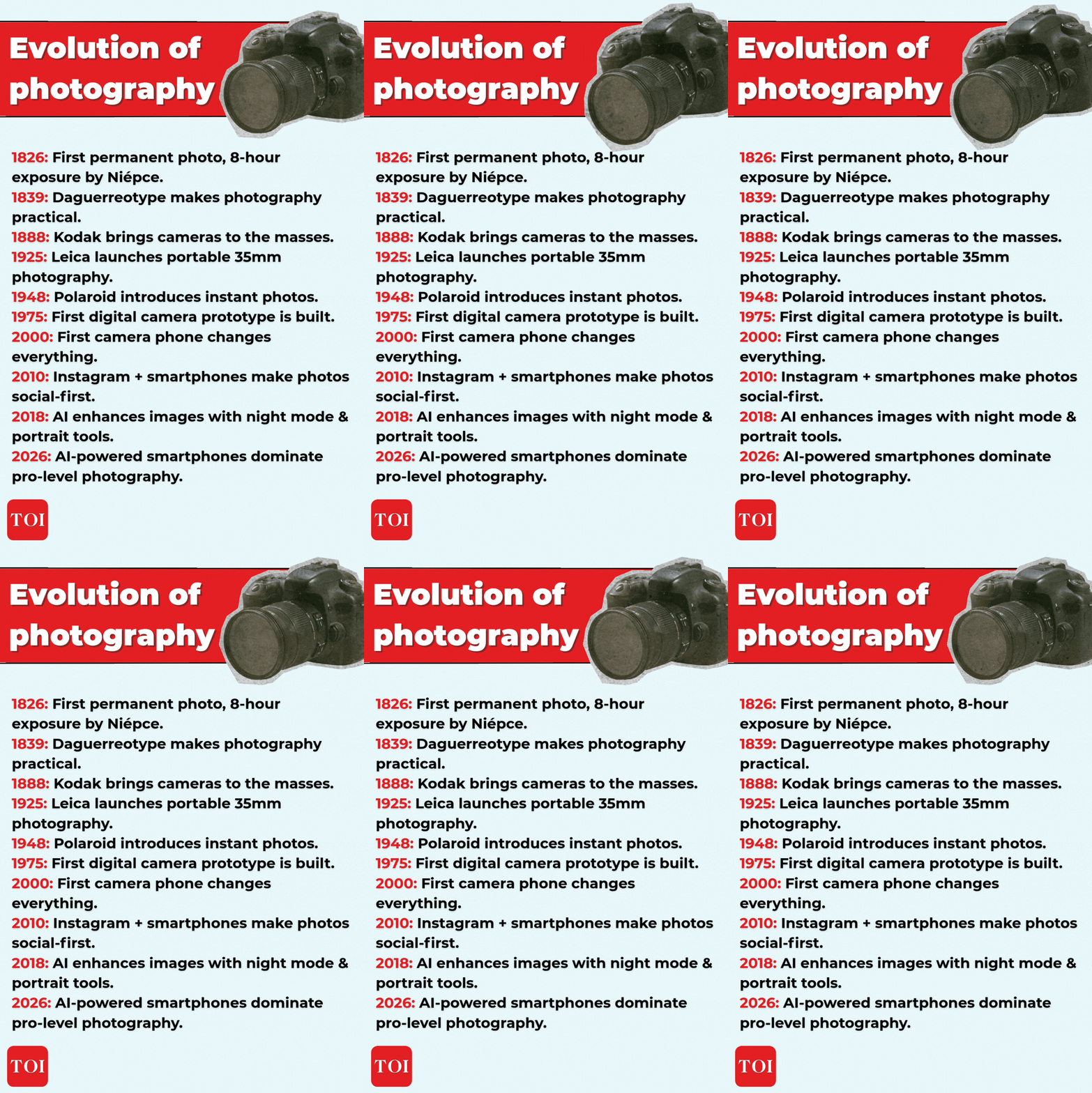
development of photography

Ironically, even a giant photo company like Kodak, which invented the digital camera through Steve Sasson in 1975, failed to benefit from this change and ultimately collapsed. Despite knowing that digital would replace film, it stuck to its traditional business, making poor strategic and leadership choices. By the time it tried to adapt, competitors had already taken over, making Kodak a classic example of losing the revolution it helped create.But Kodak wasn’t the only one that suffered losses. Its impact was equally keenly felt on the neighboring photo studio, which once thrived at the center of it all.

From long queues to silence

Those small shops where people used to wait patiently for their turn to get a good photo are now silent. Over time, the need to possess everything began to fade away as what was once an occasion turned into a habit. Now studios are wondering where they’ll fit.For many photographers, this change has been hard to ignore. Navneet Kumar Sharma, a generational photographer with 35 years of experience, recalls how things were different in the 1990s. “When I first entered the business, I used to work for 16 to 20 hours a day and even then, the work never ended. There was always something pending,” he told TOI. “At that time, the studios were almost always full, hardly stopping for a moment.”Today that crowd has almost disappeared. The Jaipur-based photographer says the rise of smartphones and easy access to cameras has clearly impacted his business, with bookings almost drying up. “We hardly get any appointments now, even during festivals, which used to keep our register full,” he says. “Occasions like Gangaur, Diwali or even birthdays used to be a steady source of income two decades ago, but now they have almost disappeared. Now customers come only for passport-sized photos.”
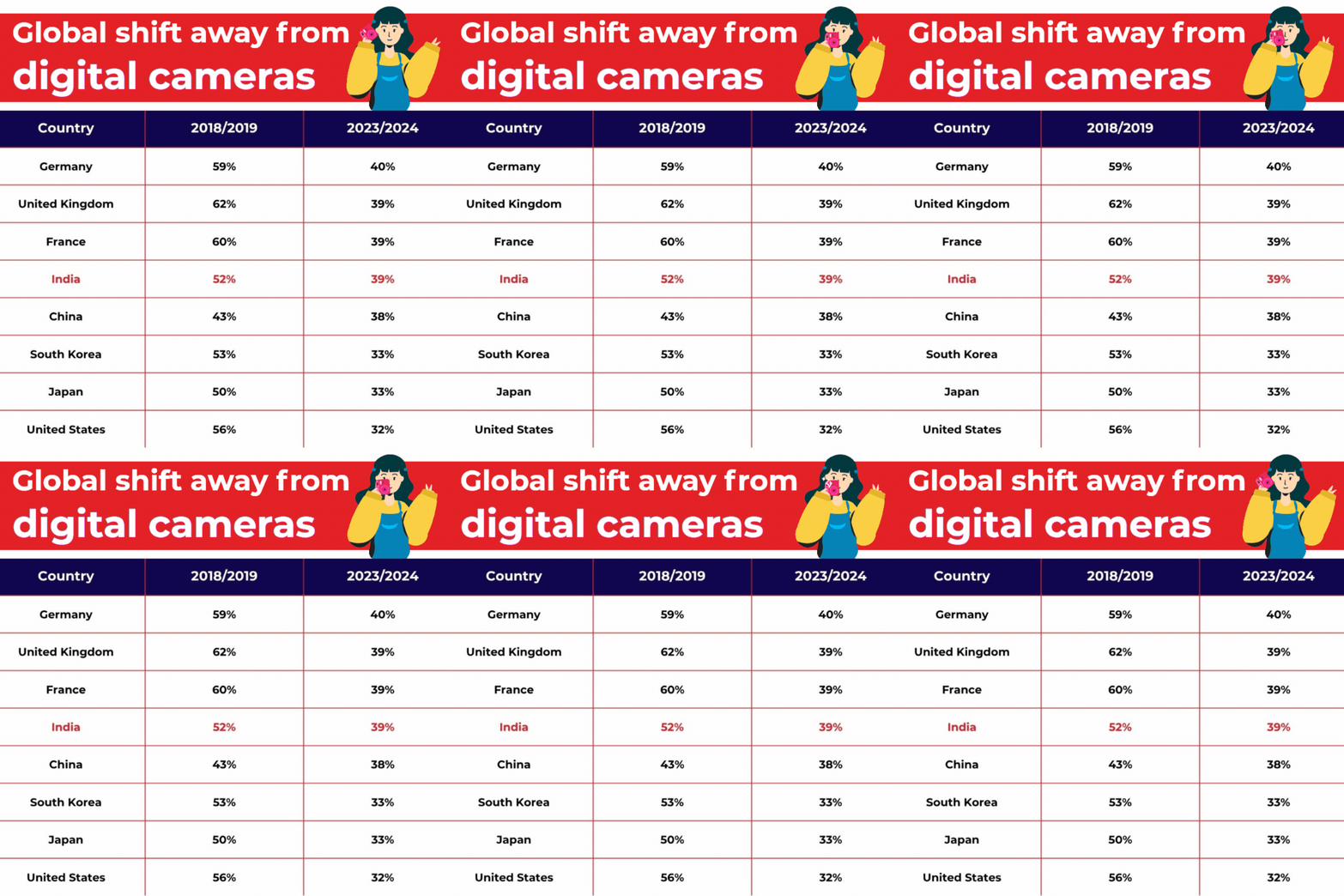
Info Credit: Statista

Info Credit: Statista

Romi, a middle-aged photographer, also describes the same situation. “We used to think photography was a safe profession because people would always want to have their photos taken, that’s how the memories stay alive,” he says. “But the change has been both sudden and gradual at the same time. The smartphone was basically the AI ​​of that era, taking over jobs here and there.”And for some, adaptation wasn’t enough. Girdhar, another photographer, says this change forced him out of his family’s studio and into a different job altogether. “I still work with cameras because it’s all I knew growing up. I watched my dad do it, and it became my world too. I’ve been passionate about this profession ever since.”He added, “The thought of learning something else never really crossed my mind.”

Then vs. Now – What does a day in your life look like?

From busy studios to silent waiting rooms“To sum it up in one word, every day feels like a struggle now,” Sharma said, reflecting on how much his work life has changed over the years. “It’s almost the same every day – opening the gates in the morning and then sitting and waiting for customers to arrive,” he added.He told how the nature of customers has also changed. “The number of visitors has already reduced, and those who come mostly come here only for passport-sized photographs. The whole job is over in five minutes,” he said.When the photo session became a five-minute taskReminiscing about the old days, Sharma talked about a very different atmosphere inside the studio. He said, “Earlier, people would come for proper photo sessions. They would pose, we would adjust the lights, adjust the curtains, change props here and there, it seemed like the whole setup was done. There was a kind of liveliness in the studio all the time.” “Now, it’s just the hope of getting a new order, a birthday, a wedding, a corporate event, anything that brings in some work.”

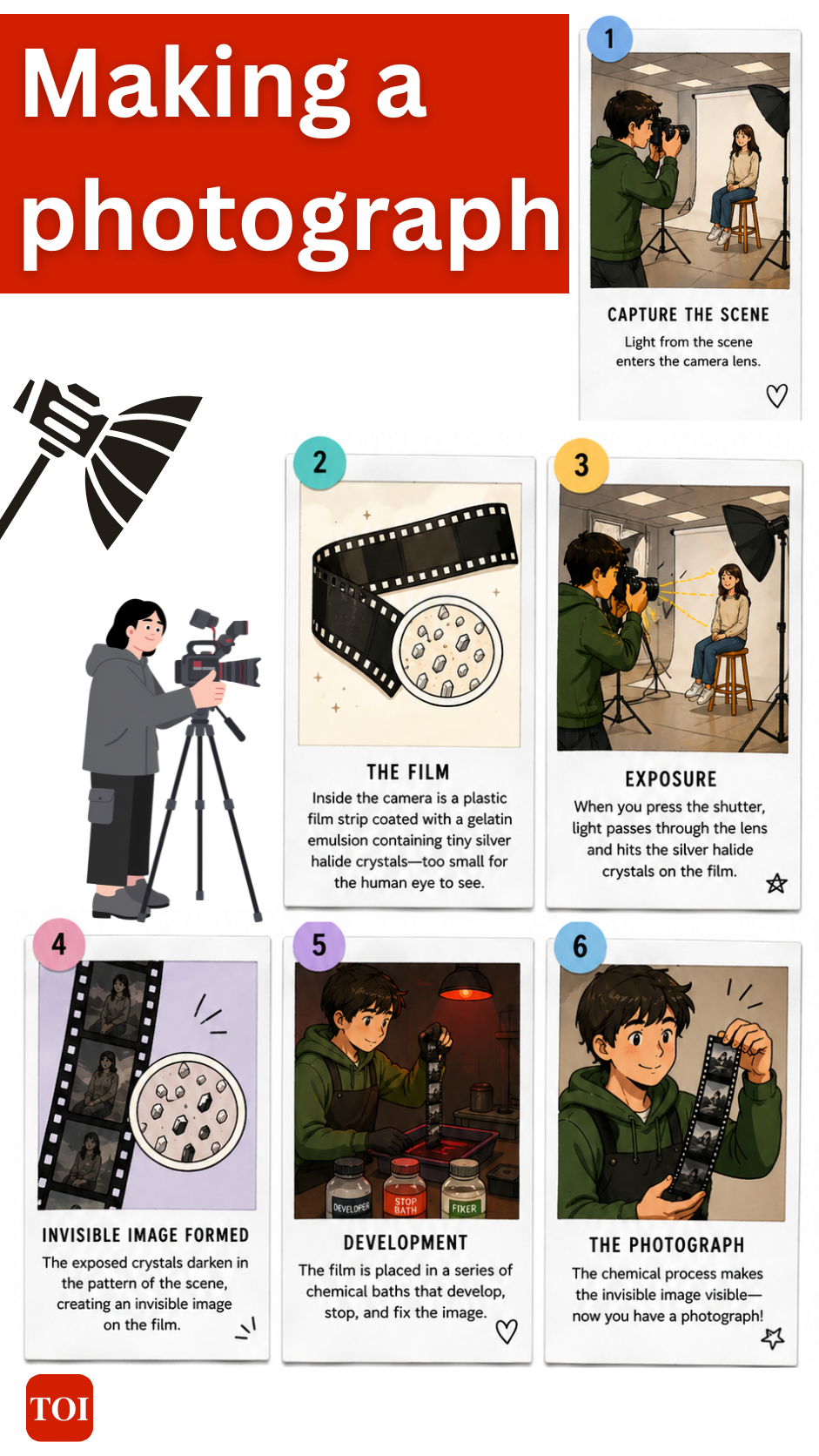
Photo Making - Process

Digital disruption and other challengesSharma also explained how the entire profession has changed with technology. He said, “The photography of yesteryear and the photography of today are like day and night, there is a huge difference.” “At that time, there was a standard rate and a standard way of doing things. But now, with digital, there are no reel costs, no cassette costs, everything has become smart and digital, stored on cards. Because of this, it is very difficult for photographers to stick to a fixed rate. One person works for Rs 1000, another does the same work for Rs 500, someone even does it for Rs 700.”He said the transition was not easy even for those already in the field. “When technology changed and new systems came in, we older photographers also had to adapt. The younger generation joined in later. Earlier, people would learn the job directly on the job. Now, there are colleges that also offer degrees in photography, with students studying it formally,” he said.“It has become very common now,” Romi said with a sense of resignation. “When I first entered this field, days felt like moments because there was so much happening. Now, it’s much slower. The wait feels longer than the work.”Sharma also highlighted how the entire medium has moved away from the studios. He said, “Earlier photography was done on cellulose tape and videos were recorded on VHS tapes, but now everything is digital.” “Most of the work that still exists has moved beyond the studio, it’s happening outside, on location.”He also explained how smartphones have changed customer expectations. “Customers often tell us that their smartphones take better photos than ours and they also question our pricing,” he said.

Many times I feel that I should leave this field. Because during the off-season, there is no work in the studio, no outdoor events. Very little work happens after April or May. And after May-June the wedding season also ends completely. In such a situation, it becomes very difficult to survive for four-five months. At that time I feel that I should leave it and do something else. There is so much family pressure and so many responsibilities that it becomes difficult to handle them. But what can I do? I never learned any other job, I never went anywhere else. That’s why it becomes very difficult. If I go, where should I go?

Navneet Kumar Sharma

A profession in transitionGirdhar also reflected on the fact that studio life had almost faded away. “A day of my life has never been the same,” he said. Like many in business, he eventually had to change careers due to declining business. “Now I have a job. When I realized that earnings were falling rapidly, I joined a local news channel as a camera person. It’s not the same, but I still have what I know best, camera skills. Thankfully, I can still work with the camera.”

a ray of hope

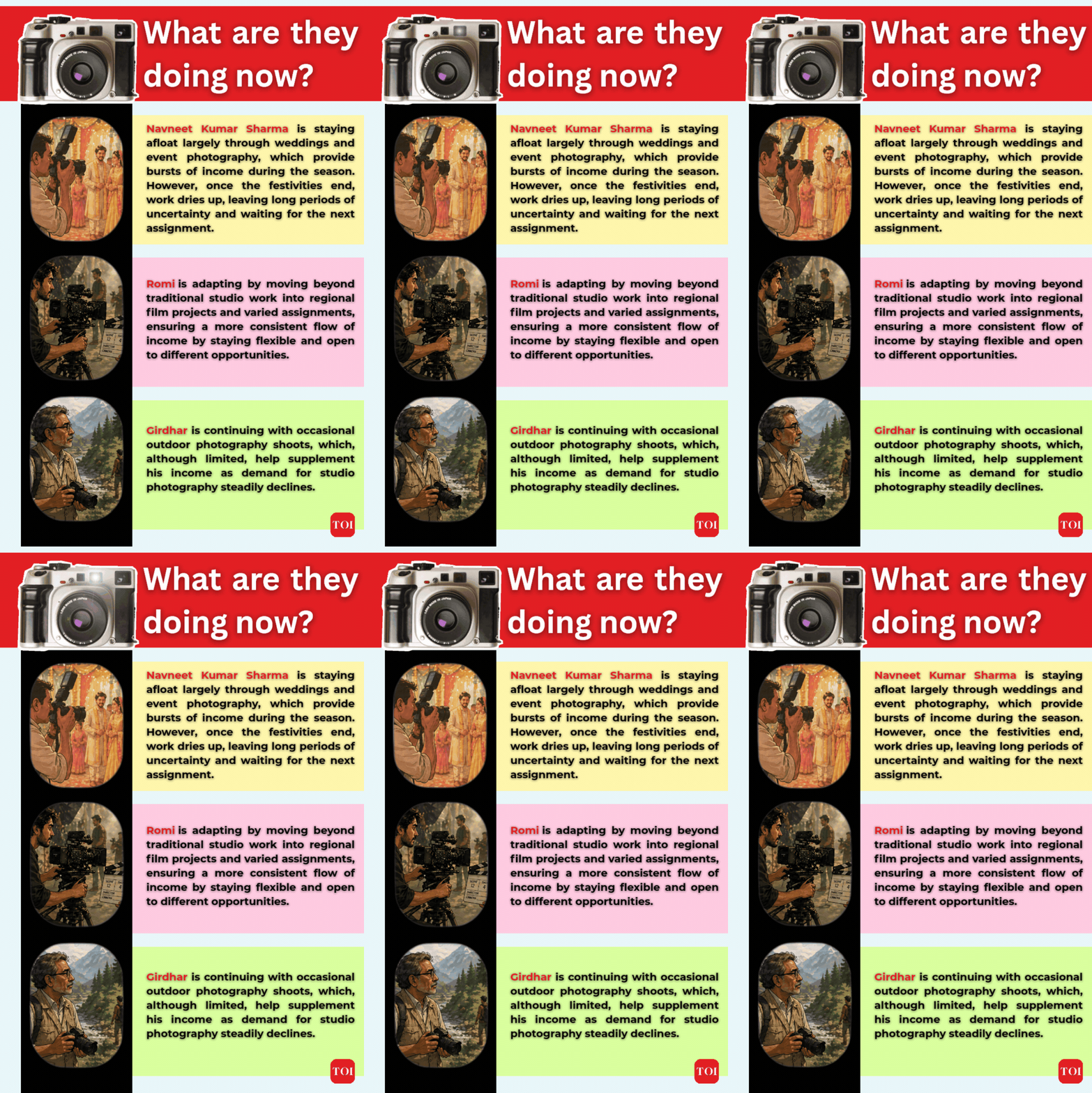
All is not lost for these photographers, they have slowly adapted to the changing times, even if the change has not been easy.Sharma reflects on how change was inevitable, but the older generation also learned to accept it. “Yes, when technology changed and new equipment came out, we were among the first to adapt.” Still the struggle for stable work continues. For Sharma, outdoor events are now the main source of livelihood. “Without weddings and functions, there is hardly any work… most days seem empty,” he quietly admits. The wedding season offers a sense of respite, he says. “Haldi, mehendi, pre-wedding shoots, these keep things going for a while. But once the season is over, everything goes quiet again. Then it’s just waiting… waiting for the next big moment,” he says, capturing the long stretches of uncertainty that now define his working life.Romi, who is working on regional film projects, said it has now become a major source of income. He said, “It is not just studio photography anymore. Work now comes from different places, sometimes a film shoot, sometimes an event. You have to keep moving forward with the work, otherwise you will be left behind.”Girdhar still occasionally does outdoor photography. “Studio work has reduced a lot, but outdoor shoots still happen, which brings in a little extra income,” he says.

What are they doing now?

bottom line

Ultimately, the decline of the neighborhood photo studio reflects a larger shift in the way society creates and consumes memories. What was once a skilled, time-consuming art built around patience, composition and personal interaction has been replaced by instant, self-paced photography on smartphones.For many studio photographers, change means declining income, irregular work, and constant pressure to adapt or exit the profession altogether. Yet, even as the business has faded, their role in shaping visual memory remains vital, capturing moments that once required intention and effort. Sharma suggests that some form of government support, such as minimum wage protection or skill-based support, could help stabilize incomes and give the sector a fair chance of survival amid rapid technological change.These studios now exist on the margins, no longer the first choice, but still a cool reminder of a time when every picture had weight, preparation and permanence.

Source link

West Bengal Elections: PM Modi promises to give citizenship to Matua Namasudras under CAA. india news

West Bengal Elections: PM Modi promises to give citizenship to Matua Namasudras under CAA

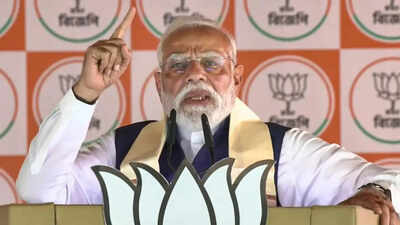
New Delhi: Prime Minister Narendra Modi on Sunday pledged to the Matua Namasudra community that they will get citizenship. Citizenship Amendment Act (CAA).“I pledge to the members of the Matua Namasudra community that they will get citizenship through CAA.” PM Modi Said at an election rally in Bongaon, BengalIn poll-bound West Bengal, the second phase of voting is taking place on April 29 in the Matua-dominated belt of North 24 Parganas and Nadia, with an unusual complication. A large section of voters are unsure whether they will be able to vote or not.The uncertainty has arisen from the Special Intensive Revision (SIR) of electoral rolls, which has led to significant deletions in Matua-heavy constituencies. In North 24 Parganas alone, around 3.25 lakh names have been removed from the voter list. Data from the main Matua pocket, Bongaon subdivision, shows that the deletion rate among those placed under the decision ranges between 67 per cent and 88 per cent. In Gaighata, 16,222 out of 22,278 marked voters were deleted, while in Baghdadh more than 15,000 deletions were recorded. Similar patterns have been reported in Bongaon North and South.In Nadia constituencies like Krishnanagar North, Krishnanagar South and Ranaghat areas, more than 90 per cent of the people who came under scrutiny did not make it to the final list. Administrative estimates show that a large proportion of the affected people are from the Matua Namasudra community.PM Modi also offered prayers at Thakurbari, the main temple of the Matua federation in Thakurnagar in West Bengal’s North 24 Parganas district, ahead of his election rally in the area.His visit to the community’s headquarters, which houses the temples of sect founders Hari Chand and Guru Chand Thakur, is seen as an outreach to Matua voters, who directly influence at least 34 assembly seats and another two dozen on the Bangladesh border.His support was instrumental in the BJP’s strong performance in the 2021 assembly elections.Founded by Hari Chand Thakur in the 19th century, the Matua Mahasangh is a socio-religious movement that has historically worked for the upliftment of the Namasudra community through education and social reform.Modi had visited the Thakurnagar temple in 2019 and also paid homage in Orakandi, Bangladesh in 2021.

Source link

‘Our nuclear scientists made India proud’: Top quotes from PM Modi’s ‘Mann Ki Baat’ address india news

'Our nuclear scientists made India proud': Top quotes from PM Modi's 'Mann Ki Baat' address

New Delhi: Prime Minister Narendra Modi, while addressing the nation on Sunday, praised India’s civil nuclear programIn the 133rd episode of his monthly radio program Mann Ki Baat, the Prime Minister said that this program is making an important contribution in nation building.Here are the top quotes from his address

  • Through your messages and letters amid the election turmoil, we have shared happiness on the achievements of the citizens. This time, let’s start ‘Mann Ki Baat’ with one such big achievement of the country. India has always linked science with the progress of the country. With this in mind, our scientists are taking the space program forward. Due to his efforts this program is making an important contribution in nation building.
  • Just a few days ago, our nuclear scientists have made India proud by achieving another major achievement. At Kalpakkam in Tamil Nadu, Fast Breeder Reactor has gained importance. This phase means the beginning of the operating phase of the reactor. This is a historic milestone in India’s nuclear energy journey. And the big thing is that this nuclear reactor has been built completely with indigenous technology.
  • In today’s ‘Mann Ki Baat’ I would like to talk about a power which is invisible… but without it our life is impossible even for a moment. This is the power that is taking India forward. This is our wind energy… This wind energy is writing a new story of India’s development today. India has recently made a major achievement in the field of wind energy. Now India’s wind generation capacity has exceeded 56 GW… Today India ranks fourth in the world in wind energy capacity.
  • The month of May is beginning with an auspicious coincidence. In a few days we will celebrate Buddha Purnima. I extend my best wishes to all the countrymen in advance. The life message of Lord Gautam Buddha is relevant even today. He taught us that peace begins from within. He said that victory over oneself is the biggest victory. The thoughts of Buddha are even more relevant at a time when the world is going through stress and conflict.
  • In our country, the festival of Republic is celebrated from 23 January i.e. the birth anniversary of Netaji Subhash to 30 January i.e. the death anniversary of Gandhiji. An important part of this festival is the Beating Retreat. Today I am discussing Beating Retreat with you because there is a special reason behind it… This event showcases diverse musical traditions with different bands. In the last few years, the popularity of Indian music has increased and the people of the country are also liking it. This year’s Beating Retreat ceremony was quite memorable. Bands of Air Force, Army, Navy and CAPF. Gave excellent presentations.
  • In this rapidly changing time, technology has become an integral part of our lives. Today, we are witnessing the miracle of technology; It seamlessly connects our past to the present. In this context, a recent development has brought great joy to those associated with education as well as those interested in history.
  • Just a few days ago, the National Archives of India shared a unique database on a dedicated portal. The organization has digitized and made public more than 200 million priceless documents… I urge you all to take a look: http://archive.patal.in. It will give you a wonderful experience of knowing our history.

voting

Do you believe that India’s achievements in the wind energy sector are significant?

Source link

AAP sent petition to Rajya Sabha Chairman to dismiss 7 MPs who had joined BJP. india news

AAP sends petition to Rajya Sabha Chairman to dismiss 7 MPs who joined BJP
Sanjay Singh held a press conference

New Delhi: Aam Aadmi Party has demanded Rajya Sabha Chairman and Vice President CP Radhakrishnan to dismiss all the 7 MPs who have left the party and joined the party. Bharatiya Janata Partythe leader said Sanjay Singh On Sunday.He said the AAP had consulted constitutional experts, including senior advocate Kapil Sibal and former Lok Sabha secretary general PDT Acharya, who were of the opinion that the MPs were “liable for disqualification under the law”.The political crisis within the Aam Aadmi Party (AAP) deepened when 7 Rajya Sabha MPs announced on Friday that they were quitting the party, triggering an intense legal and political dispute over the legality of the move and its implications under anti-defection rules.The MPs named in the controversy include Raghav Chadha, Sandeep Pathak, Ashok Mittal, Harbhajan Singh, Rajinder Gupta, Swati Maliwal and Vikramjit Sahni. Chadha suggested the departure was driven by “frustration, disintegration and hatred” within the party, while Sawhney cited governance concerns in Punjab, including debt stress, agricultural issues and drug abuse, as well as a perceived lack of access to leadership.Party insiders say the leadership was aware of possible defections and last-minute efforts were made to prevent at least some MPs from leaving the party, amid claims of political pressure and internal dissent.Earlier reports said Punjab CM Bhagwant Manna had also sought time from President Draupadi Murmu along with party MLAs to press for the recall of MPs, although the Constitution does not provide for any recall mechanism for Members of Parliament or state MLAs.You have strongly opposed development. Earlier, Sanjay Singh had said that defection of this nature is not legally valid and should lead to disqualification proceedings, citing the Tenth Schedule.However, legal opinion is divided. While AAP leaders argue that any such split is unconstitutional, many experts say the anti-defection law allows the merger if supported by two-thirds of the legislative party, raising questions about whether the move would actually attract disqualification.Singh also dismissed reports that the Punjab MLA is in touch with Raghav Chadha, calling it “false propaganda” aimed at creating confusion. He alleged that such things were being propagated by the BJP and others, and claimed that the leaders concerned were facing public backlash in Punjab. Singh said that people were protesting against him and his political position had become weak, adding that with his “membership about to expire”, it was unlikely that any MLA would join him.

Source link

West Bengal Assembly Elections: Election Commission to review major preparations in Kolkata ahead of second phase of voting. india news

West Bengal Assembly Elections: Election Commission to review major preparations in Kolkata ahead of second phase of voting
Image used for representative purposes

With just days left for the April 29 second phase of West Bengal Assembly elections, officials will convene a high-level coordination meeting in Kolkata on Sunday to assess poll preparedness in key districts.The meeting to be held at Dhan Dhanya Auditorium will bring together senior police officers, election officials and commanders of central forces manning Kolkata North, Kolkata South and South 24 Parganas.

Watch

‘I keep losing…’: Amit Shah responds to Mamata Banerjee on threat of legal action

“The meeting has been called to assess the overall preparedness in the electoral districts under Kolkata and ensure smooth coordination among all the agencies involved in the polling process,” the official told PTI.Officials said the discussions will focus on deployment of forces, vulnerability mapping, coordination between civil and police administration and final preparation of polling personnel. The participants will include Kolkata Police Commissioner, District Election Officer. Election Commission Observer, CAPF Commander and Returning Officer.The importance of the review has increased after more than 93 percent voting took place in 152 constituencies in 16 districts in the first phase on April 23. Similar meetings have been held across the state to ensure smooth, free and fair voting in the two-phase elections.

Source link

‘If you’re not close enough, your photo isn’t good enough’: Remembering Raghu Rai india news

'If you're not close enough, your photo isn't good enough': Remembering Raghu Rai

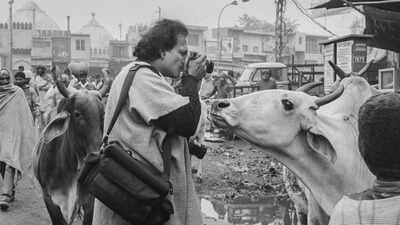
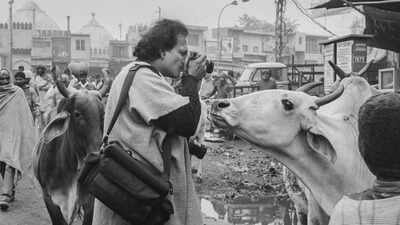
One of the scariest pictures of Raghu Rai bhopal gas tragedyA grieving father holds his dead child in his arms – the black and white image titled ‘Burial of an Unknown Child’ not only defines one of the world’s worst industrial disasters, but also the power of photojournalism.Rai, the renowned photographer who shaped India’s visual memory for more than five decades, died on Sunday. From the Bangladesh War to the Bhopal Gas Tragedy, from portraits of Indira Gandhi and Mother Teresa to everyday life on Indian streets, Rai’s work not only documented events but gave them permanence. “Visual history is more important than creating beautiful and great art photography. History is always being written and even rewritten.” But photo history cannot be rewritten,” Rai had told TOI in an earlier interview.Born in 1942, Rai came to photography almost by accident, but soon rose to international fame. In his late twenties, he was exhibiting in Paris, where his work attracted the attention of Henri Cartier-Bresson, who later nominated him for Magnum Photos in 1977. “My first exhibition was in Paris in 1972, with 50 photographs of my work in India and 25 photographs of Bangladeshi refugees and the crisis there. Bresson was the first visitor. I was not his student; He treated me as an equal because I had received very good reviews from the French press, saying, ‘It’s a great time for photography in Paris because Raghu Rai is showing here’,” Rai said of his association with the French master.At the core of his practice was an emphasis on closeness – to people, to moments, to truth. “In photography, they say if you’re not close enough, your photo isn’t good enough,” he said. He described the act of taking photographs as deeply immersive: “If your energy is focused, your mind, body and spirit come into tune, and in that moment, you take in all that is in front of you through your viewfinder.Rai began his career in the analog era, the permanence of which he valued highly. “Silver gelatin prints have become very expensive, but they have a life of 150 years and more,” he said, although he worked much with digital in his later years.He also reflected on how much the profession has changed. “The kind of freedom we got as photojournalists and the access we had under any circumstances, even to a prime minister, is unimaginable now,” he said.Over nearly four decades in active journalism, which included his stint at The Statesman, Rai remained conscious of the fleeting nature of news. “Stories die every day in the newspaper,” he said. “So, I was conscious of my photographs going beyond old stories.” Hours after his death, social media was flooded with some of his most unforgettable frames – among them the 1982 Baroda photo essay that depicted the wordless companionship between a blind Muslim beggar and a mentally challenged Hindu girl.In later years, he sharply criticized the direction of photography. He said, “The vast majority of photography these days is happy, flamboyant, colorful photographs that do not qualify as fine art.”He said, “Democratization is good. But what are these people actually doing? Selfies, self-love, making stupid faces? The worst thing is that even inside temples and churches, people are standing together and making faces. It has become unbearable now.”The role of photographer was important for Rai. He said, “A serious photographer, a serious writer will use his pen, his lens for meaningful expression that touches the society, and not to please himself.”Even in his eighties, Rai remained connected to the world, although age slowed him down. Even during the pandemic, he dared to take pictures of the CAA and farmers’ protests. In an age filled with images, his work reminds us that photography is not about capturing moments but keeping them alive.

Source link

Heavy voting signals change in Bengal and Tamil Nadu: Sitharaman india news

Heavy voting a sign of change in Bengal and Tamil Nadu: Sitharaman

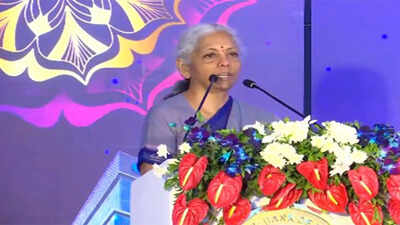
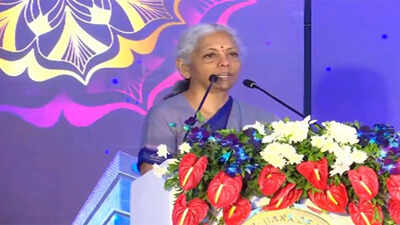
MUMBAI: FM Nirmala Sitharaman on Saturday said high turnout in West Bengal and Tamil Nadu points to a possible anti-incumbency wave and political change, even as she termed defections in the BJP as an appeal to the party’s governance and leadership.The Union Finance Minister linked the increased voter participation to dissatisfaction with current governments, saying that “normal election analyst analysis would say that only when there is a strong anti-incumbency wave… this kind of turnout happens,” adding that “this turnout will bring a change…”

Watch

Mamta got angry over the noise of BJP rally in Bhabanipur, left the stage, TMC-BJP workers clashed

On leaders from other parties joining the BJP, he said parties attract new people when they “run a responsive government” and are “absolutely fair in dealing with every section of the society.”Sitharaman also pointed to Prime Minister Narendra Modi’s record, saying his “honesty” and “governance” continue to attract people to the party.

Source link

‘Relieved to know that Trump, First Lady are safe’: PM Modi says violence has no place in democracy India News

'Relieved to know that Trump, First Lady are safe': PM Modi said violence has no place in democracy

New Delhi: Prime Minister Narendra Modi Expressed relief on the security of the US President on Sunday donald trumpFirst Lady Melania Trump and Vice President JD Vance following the shooting at the White House correspondents dinner.He said onThe shooting occurred during the White House Correspondents’ Dinner at the Washington Hilton, where a man armed with a firearm attempted to breach security near the main screening area. He opened fire, killing a Secret Service agent, although the officer was protected by a bullet-resistant vest and was not seriously injured. Panic spread across the packed hall as hundreds of guests ducked under tables and security personnel rushed in. The United States Secret Service immediately took the suspect into custody and all top officials, including Donald Trump, were evacuated safely.

Source link

Engine of Swiss Delhi-Zurich flight catches fire during take off roll; The plane was evacuated to the runway. india news

Engine of Swiss Delhi-Zurich flight catches fire during take off roll; The plane was evacuated to the runway

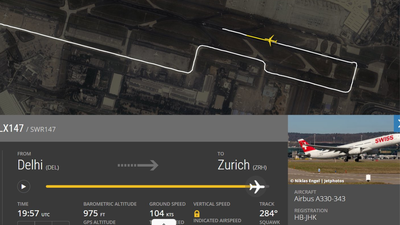
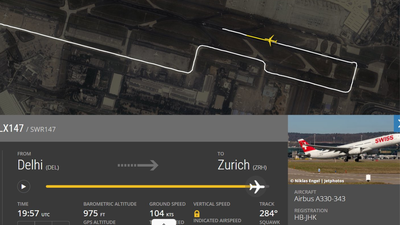
New Delhi: Six passengers aboard Swiss Delhi-Zurich flight LX 147 have been hospitalized after all on board the plane had to be evacuated using emergency slides on the IGIA runway on Sunday morning. The Airbus A330 was taking off at around 1.08 am when its engine number one failed and then caught fire. The crew abandoned takeoff and decided to evacuate the aircraft on Runway 28, carrying 232 passengers, including four infants, and crew members. Six passengers suffered injuries and were taken to Medanta Hospital.According to flight tracking site Flightradar24, the plane was traveling at a speed of 104 knots when the engine failed and the crew abandoned the flight. Runway 28 has been closed for use until the aircraft is removed.“We are aware of an incident involving flight LX147 over Delhi. The aircraft involved is an Airbus A330 (HB-JHK). SWISS has established a task force. There were 228 passengers and 4 infants on board the aircraft. Shortly after take-off, shortly after 1 am local time in India, a problem occurred with one of the engines. The crew rejected takeoff and after assessing the situation evacuated the aircraft as a precaution. “Decided,” SWISS said in a statement.“Six passengers are currently receiving medical attention, the crew were unharmed. All passengers and crew evacuated the aircraft via emergency slides. Six passengers are currently undergoing medical evaluation. Stairs were provided for some who were unable to use the slides.”“Passengers are currently being assisted. Local teams are working intensively to arrange rebooking or hotel accommodation for our passengers. They have received contact cards to ensure we can reach them reliably. Such a situation is stressful for everyone involved. Our local teams are looking after our passengers on site and are in direct contact with them. “We are working closely with local authorities.”“We are fully committed to understanding what caused this incident. Swiss technical experts will travel to Delhi to inspect the aircraft and take next steps. At the same time, we are working intensively to find a quick and appropriate onward travel solution for all passengers. The safety of our passengers and our crew is always our top priority,” the statement said.

Source link