


Lights, camera…gone? The slow pace of India’s OG photo studio india news

Sit straight! Chin up, look a little to the left… and just right!Do you remember those classic studio photos you grew up with? Deep velvet curtains, a plastic vase or a carved chair placed on the edge, and that soft glow on every face. Maybe it’s a passport photo, a neatly dressed family portrait, or that slightly tough photo from school, but you’ve surely seen at least one such image in an old album, hidden away among documents, or hung in a frame on the walls of your living room.But that era of ‘OG’ images is now long behind us. Those neighborhood photo studios, once bustling with people chasing the perfect frame, are now struggling to survive. That curious trip to the nearby ‘Suresh Photo Studio’ has been quietly replaced by the search for that perfect filter.It all started when cameras moved beyond the studios and into everyday homes. While photography had existed in India since the 1840s, it became truly common at the household level in the late 1990s and early 2000s, when digital cameras began to replace film.Before then, most families depended on film cameras from brands like KODAK and Agfa, or visited local studios for important pictures, as film rolls were limited and developing them cost money.
a gradual change
This change came with affordable digital cameras from companies like Sony, Canon, and Nikon, which made photography instant and limitless. By the 2010s, smartphones from Samsung and Apple made it universal, turning photography into an everyday habit rather than a planned event, and, looking back, made those old studio portraits even more special.
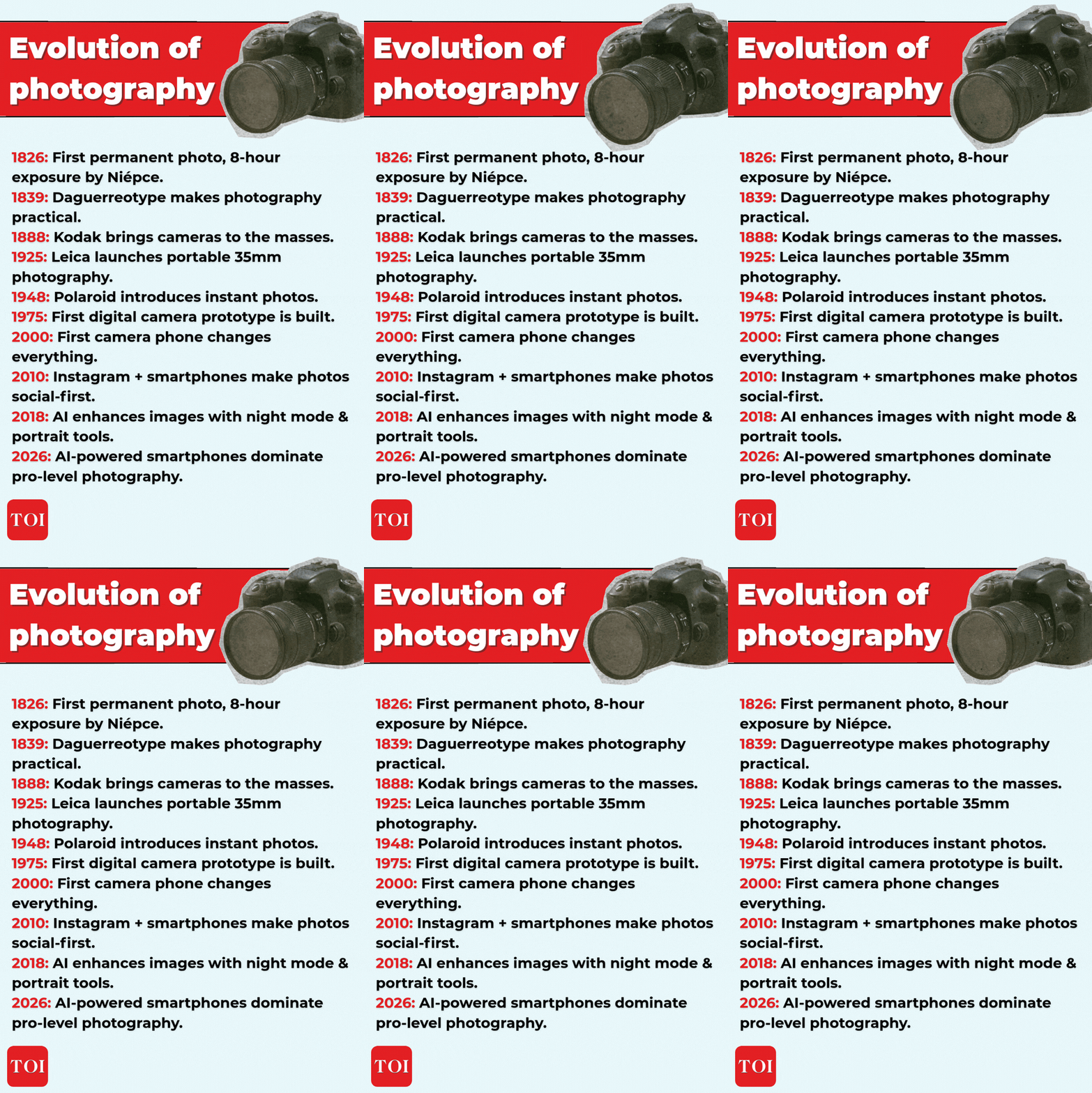
Ironically, even a giant photo company like Kodak, which invented the digital camera through Steve Sasson in 1975, failed to benefit from this change and ultimately collapsed. Despite knowing that digital would replace film, it stuck to its traditional business, making poor strategic and leadership choices. By the time it tried to adapt, competitors had already taken over, making Kodak a classic example of losing the revolution it helped create.But Kodak wasn’t the only one that suffered losses. Its impact was equally keenly felt on the neighboring photo studio, which once thrived at the center of it all.
From long queues to silence
Those small shops where people used to wait patiently for their turn to get a good photo are now silent. Over time, the need to possess everything began to fade away as what was once an occasion turned into a habit. Now studios are wondering where they’ll fit.For many photographers, this change has been hard to ignore. Navneet Kumar Sharma, a generational photographer with 35 years of experience, recalls how things were different in the 1990s. “When I first entered the business, I used to work for 16 to 20 hours a day and even then, the work never ended. There was always something pending,” he told TOI. “At that time, the studios were almost always full, hardly stopping for a moment.”Today that crowd has almost disappeared. The Jaipur-based photographer says the rise of smartphones and easy access to cameras has clearly impacted his business, with bookings almost drying up. “We hardly get any appointments now, even during festivals, which used to keep our register full,” he says. “Occasions like Gangaur, Diwali or even birthdays used to be a steady source of income two decades ago, but now they have almost disappeared. Now customers come only for passport-sized photos.”
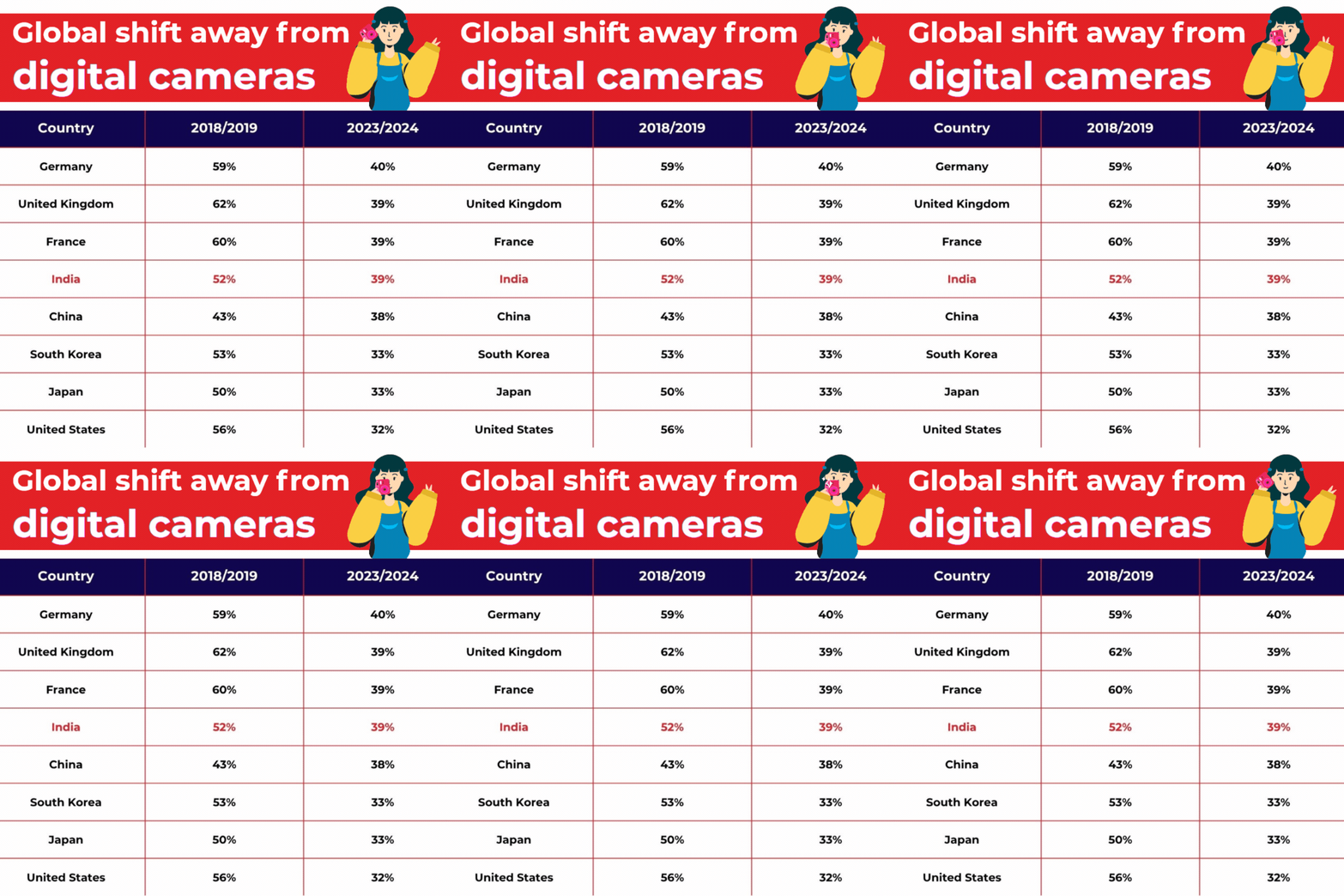
Info Credit: Statista
Romi, a middle-aged photographer, also describes the same situation. “We used to think photography was a safe profession because people would always want to have their photos taken, that’s how the memories stay alive,” he says. “But the change has been both sudden and gradual at the same time. The smartphone was basically the AI of that era, taking over jobs here and there.”And for some, adaptation wasn’t enough. Girdhar, another photographer, says this change forced him out of his family’s studio and into a different job altogether. “I still work with cameras because it’s all I knew growing up. I watched my dad do it, and it became my world too. I’ve been passionate about this profession ever since.”He added, “The thought of learning something else never really crossed my mind.”
Then vs. Now – What does a day in your life look like?
From busy studios to silent waiting rooms“To sum it up in one word, every day feels like a struggle now,” Sharma said, reflecting on how much his work life has changed over the years. “It’s almost the same every day – opening the gates in the morning and then sitting and waiting for customers to arrive,” he added.He told how the nature of customers has also changed. “The number of visitors has already reduced, and those who come mostly come here only for passport-sized photographs. The whole job is over in five minutes,” he said.When the photo session became a five-minute taskReminiscing about the old days, Sharma talked about a very different atmosphere inside the studio. He said, “Earlier, people would come for proper photo sessions. They would pose, we would adjust the lights, adjust the curtains, change props here and there, it seemed like the whole setup was done. There was a kind of liveliness in the studio all the time.” “Now, it’s just the hope of getting a new order, a birthday, a wedding, a corporate event, anything that brings in some work.”
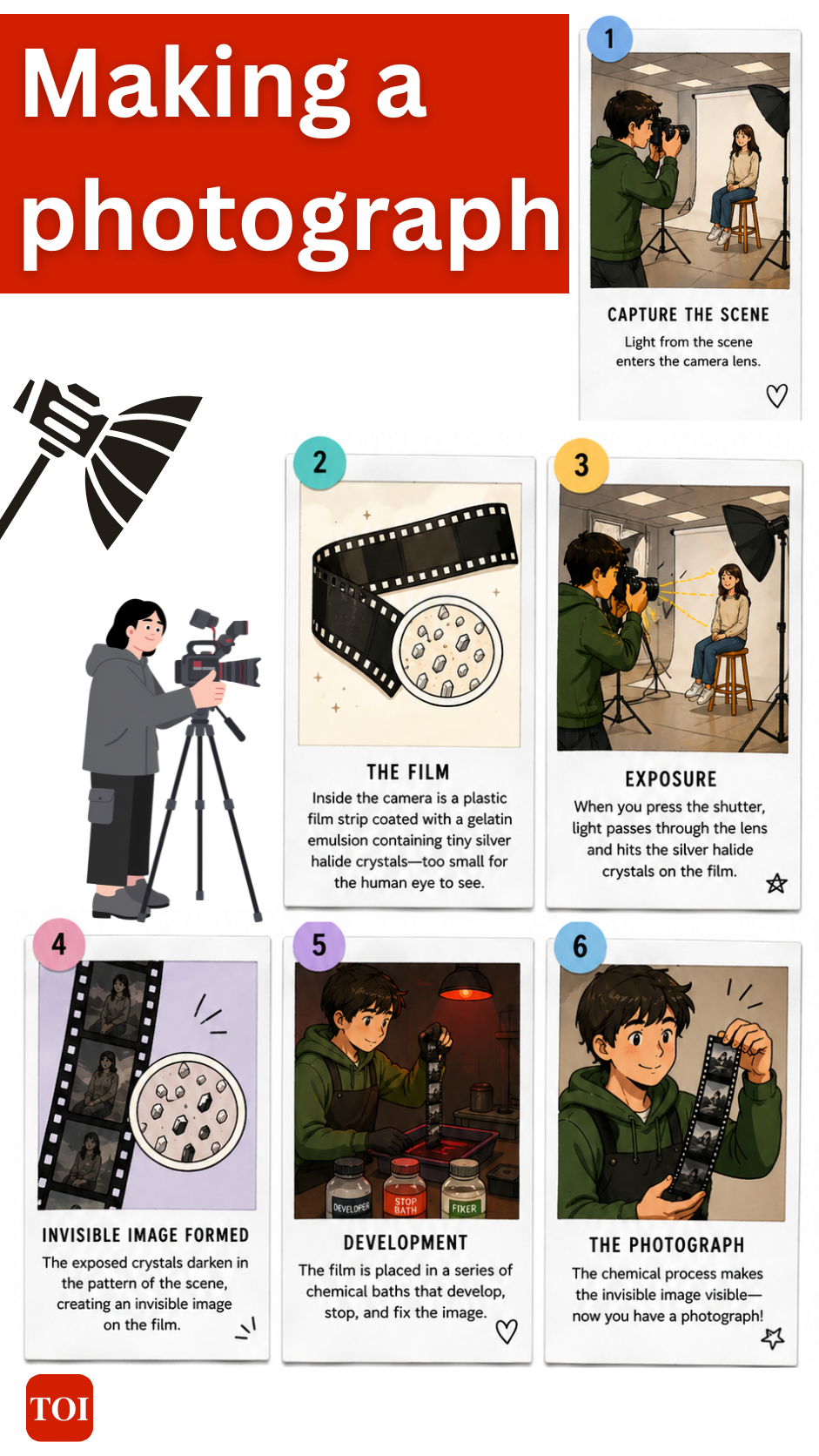
Digital disruption and other challengesSharma also explained how the entire profession has changed with technology. He said, “The photography of yesteryear and the photography of today are like day and night, there is a huge difference.” “At that time, there was a standard rate and a standard way of doing things. But now, with digital, there are no reel costs, no cassette costs, everything has become smart and digital, stored on cards. Because of this, it is very difficult for photographers to stick to a fixed rate. One person works for Rs 1000, another does the same work for Rs 500, someone even does it for Rs 700.”He said the transition was not easy even for those already in the field. “When technology changed and new systems came in, we older photographers also had to adapt. The younger generation joined in later. Earlier, people would learn the job directly on the job. Now, there are colleges that also offer degrees in photography, with students studying it formally,” he said.“It has become very common now,” Romi said with a sense of resignation. “When I first entered this field, days felt like moments because there was so much happening. Now, it’s much slower. The wait feels longer than the work.”Sharma also highlighted how the entire medium has moved away from the studios. He said, “Earlier photography was done on cellulose tape and videos were recorded on VHS tapes, but now everything is digital.” “Most of the work that still exists has moved beyond the studio, it’s happening outside, on location.”He also explained how smartphones have changed customer expectations. “Customers often tell us that their smartphones take better photos than ours and they also question our pricing,” he said.
Many times I feel that I should leave this field. Because during the off-season, there is no work in the studio, no outdoor events. Very little work happens after April or May. And after May-June the wedding season also ends completely. In such a situation, it becomes very difficult to survive for four-five months. At that time I feel that I should leave it and do something else. There is so much family pressure and so many responsibilities that it becomes difficult to handle them. But what can I do? I never learned any other job, I never went anywhere else. That’s why it becomes very difficult. If I go, where should I go?
Navneet Kumar Sharma
A profession in transitionGirdhar also reflected on the fact that studio life had almost faded away. “A day of my life has never been the same,” he said. Like many in business, he eventually had to change careers due to declining business. “Now I have a job. When I realized that earnings were falling rapidly, I joined a local news channel as a camera person. It’s not the same, but I still have what I know best, camera skills. Thankfully, I can still work with the camera.”
a ray of hope
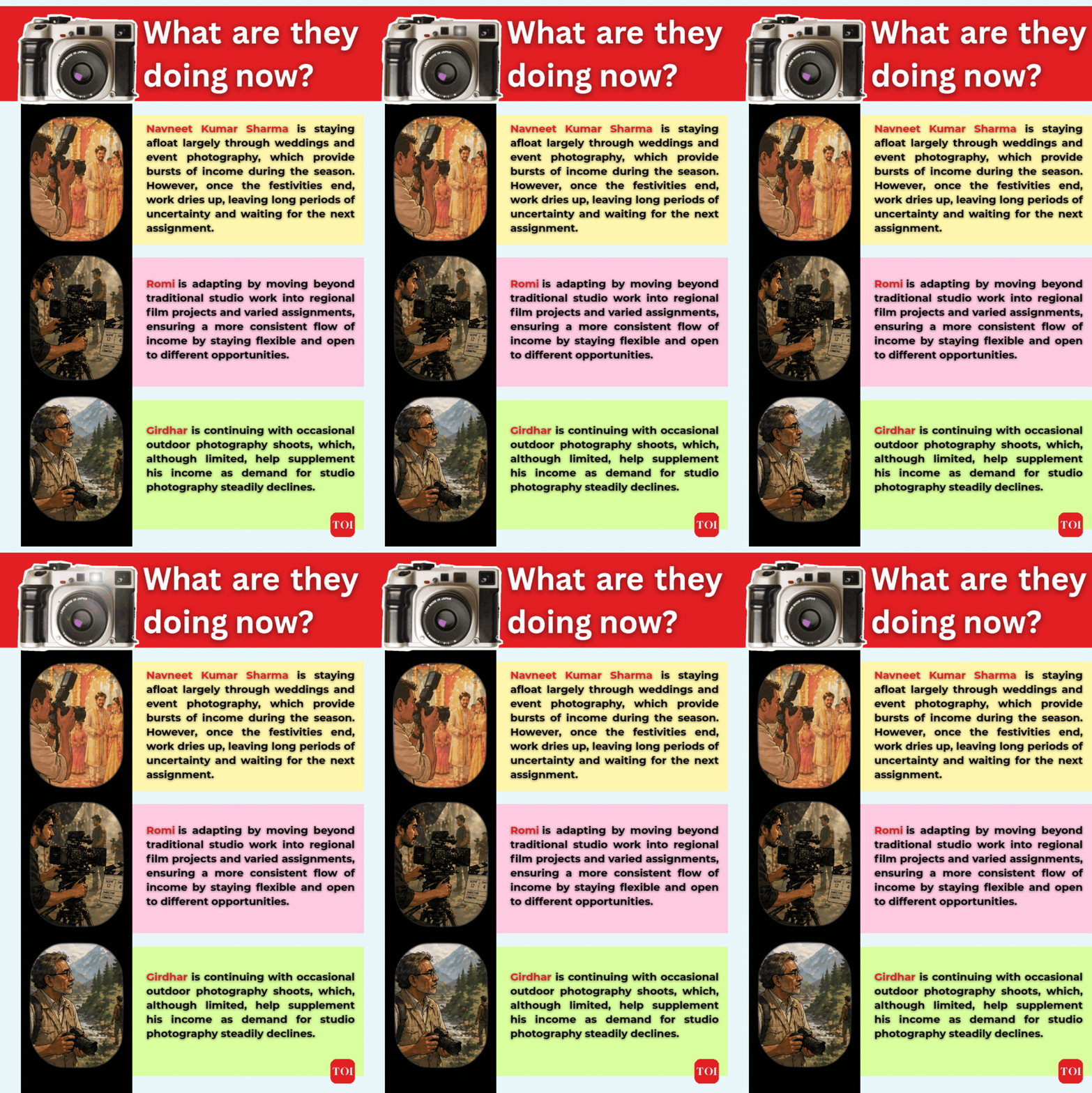
All is not lost for these photographers, they have slowly adapted to the changing times, even if the change has not been easy.Sharma reflects on how change was inevitable, but the older generation also learned to accept it. “Yes, when technology changed and new equipment came out, we were among the first to adapt.” Still the struggle for stable work continues. For Sharma, outdoor events are now the main source of livelihood. “Without weddings and functions, there is hardly any work… most days seem empty,” he quietly admits. The wedding season offers a sense of respite, he says. “Haldi, mehendi, pre-wedding shoots, these keep things going for a while. But once the season is over, everything goes quiet again. Then it’s just waiting… waiting for the next big moment,” he says, capturing the long stretches of uncertainty that now define his working life.Romi, who is working on regional film projects, said it has now become a major source of income. He said, “It is not just studio photography anymore. Work now comes from different places, sometimes a film shoot, sometimes an event. You have to keep moving forward with the work, otherwise you will be left behind.”Girdhar still occasionally does outdoor photography. “Studio work has reduced a lot, but outdoor shoots still happen, which brings in a little extra income,” he says.
bottom line
Ultimately, the decline of the neighborhood photo studio reflects a larger shift in the way society creates and consumes memories. What was once a skilled, time-consuming art built around patience, composition and personal interaction has been replaced by instant, self-paced photography on smartphones.For many studio photographers, change means declining income, irregular work, and constant pressure to adapt or exit the profession altogether. Yet, even as the business has faded, their role in shaping visual memory remains vital, capturing moments that once required intention and effort. Sharma suggests that some form of government support, such as minimum wage protection or skill-based support, could help stabilize incomes and give the sector a fair chance of survival amid rapid technological change.These studios now exist on the margins, no longer the first choice, but still a cool reminder of a time when every picture had weight, preparation and permanence.