


Vijay’s ‘Jana Nayakan’ release update, Vidya Balan to join Nandamuri Balakrishna’s next, JP Thuminad gets married: Top 5 South stories of the day |

‘Jana Nayakan’ Release Details
Vijay’s much-awaited film ‘Jana Nayakan’ is once again in the news, with a report from Filmibeat revealing that the makers are considering a new release date. According to the report, the film is expected to release in theaters on June 22, which also coincides with Vijay’s birthday.The film, directed by H Vinoth, was earlier scheduled to release on the occasion of Pongal, but was reportedly delayed due to certification issues. Later, leaked HD clips of the film surfaced on social media. The film features a stellar cast including Bobby Deol, Pooja Hegde and Mamita Baiju. This project is also being said to be Vijay’s last film before entering politics.
Avika Gaur on working in ‘Ugly Story’
Actress Avika Gor recently talked about her experience while shooting for the Telugu film Ugly Story during an event. He revealed that, for the first time in his career, he felt uncomfortable on a film set.According to the actress, the dark tone of the film and the nature of her character disturbed her and at times even disgusted her.
Discussion continues regarding the first glimpse of Junior NTR
Moving on to another major Telugu project, recent reports suggest that the theatrical print of Ram Charan’s ‘Peddi’ may include the first glimpse of Jr NTR’s rumored film ‘Dragon’, according to 123 Telugu.Both the actors previously shared screen space in RRR, and fans are excited at the prospect of another big screen connection between the stars. The teaser of Jr NTR’s film directed by Prashanth Neel is also reportedly expected to be officially released later this month on the actor’s birthday.
Vidya Balan in ‘NBK112’?
Another major update from Tollywood revolves around the tentatively titled NBK112, which is expected to bring together Nandamuri Balakrishna and director Koratala Siva.According to a report in Gulte, Bollywood actress Vidya Balan can play an important role in this project. However, there is no official confirmation regarding this yet.
‘Su From So’ fame JP Thuminad gets married
Kannada actor-director JP Thuminad, who gained widespread recognition after Su From So, recently tied the knot with his long-time partner Rashmika in a traditional ceremony held in Mangaluru.The wedding was attended by close friends, family members and some members of the Kannada film industry. The filmmaker also shared pictures from the ceremony on social media.

‘Deeply disturbing’: US judge criticizes Elon Musk’s DOGE grant cancellation based on race and gender

A US federal judge has criticized some terminations carried out under Elon MuskThe Department of Government Efficiency (DOGE) said the process was illegal, poorly designed and “deeply disturbing”.US District Judge Colleen McMahon ruled on Thursday that large-scale cancellations of grants from the National Endowment for the Humanities (NEH) could not be tolerated, barring the Trump administration from enforcing them and criticizing how they were carried out.“There can be no serious dispute that the review process implemented by DOGE was not consistent with, or even similar to, NEH’s normal grant-review process,” Judge McMahon wrote.The court found that DOGE staff lacked the proper authority to make the decision and said the dismissals were carried out in a manner that ignored established procedures. In his ruling, the judge concluded that protected characteristics were used improperly during the review process.“Judge McMahon declared the terminations unlawful, concluded that DOGE employees did not have the authority to make those decisions, and blocked the Trump Administration from terminating the grants.”He said that the method used by DOGE was discriminatory in practice.“The mere mention of black civil-rights history, Jewish testimony about the Holocaust, the often-forgotten Asian American experience, the shameful treatment of children of Native tribes, or a woman as a marker of lack of competence or extravagance is not valid,” she said.The judge also focused on specific cuts to projects involving Holocaust studies and said the reasoning behind them was worrying.She said, “At a time when the specter of anti-Semitism is looming again, for our government to deem a project about Jewish women offensive because it focuses on Jewish cultures and female voices is deeply troubling.”The decision comes after several nonprofit organizations challenged the grant cancellations in court, arguing that the cuts undermined humanities research and ignored congressional intent. He welcomed the decision and called it an important protection of cultural and educational works.The case focuses on actions taken after Donald Trump returned to the White House and empowered Musk to help drive federal cost-cutting efforts through the newly minted DOGE along with Ohio Republican primary Vivek Ramaswamy. Agencies had already been directed to suspend diversity-related programs and staff.Court documents and statements released earlier this year revealed how two DOGE employees, Justin Fox and Nate Cavanaugh, helped identify grants for cancellation using keyword filters. These included terms like “DEI”, “equity”, “inclusion” and “LGBTQ”.Kavanaugh acknowledged in testimony that the approach was blunt, though he defended the broader objective of cutting spending.“Aren’t you sorry that people may have lost vital income that supports their lives?” one lawyer asked Kavanaugh.Kavanaugh said, “No. I think it was more important to reduce the federal deficit from $2 trillion to close to zero.”“Did you reduce the federal deficit?” The lawyer asked.“No, we did not,” Cavanaugh said.Neither Fox nor Kavanaugh worked in government before joining DOGE.

Noise launches NoiseFit Halo 3 with AI transcription and QR Pass storage at Rs 5,499

Noise launches NoiseFit Halo 3 in India for Rs 5,499. The round-dial smartwatch is the first from the brand to include AI voice transcription and a built-in QR code storage feature. It is now available on gonoise.com, Amazon and Flipkart.The watch features a 1.43-inch AMOLED display at 1,000 nits, continuously tracks heart rate, SpO2, and stress on demand, and is rated for seven days of battery life.
Noise AI Pro Transcribes voice notes and summarizes your morning
Halo 3 runs Noise AI Pro, which converts spoken voice recordings into readable text, summarizes morning sleep and activity data, and accepts voice commands. On Android, Super Notifications filters incoming alerts to time-sensitive alerts – OTPs, ride status, delivery updates. A smart dashboard on the watch face supports up to five widgets.
Noise Vault stores boarding passes and event tickets on the watch
The feature called Noise Vault works like a digital passbook on the wrist. Users can save QR codes for flights, movies and concerts and scan them directly at entry points without taking out their phone. The watch is compatible with Android and iOS and comes in metal (black), leather (brown, blue), and silicone (black).
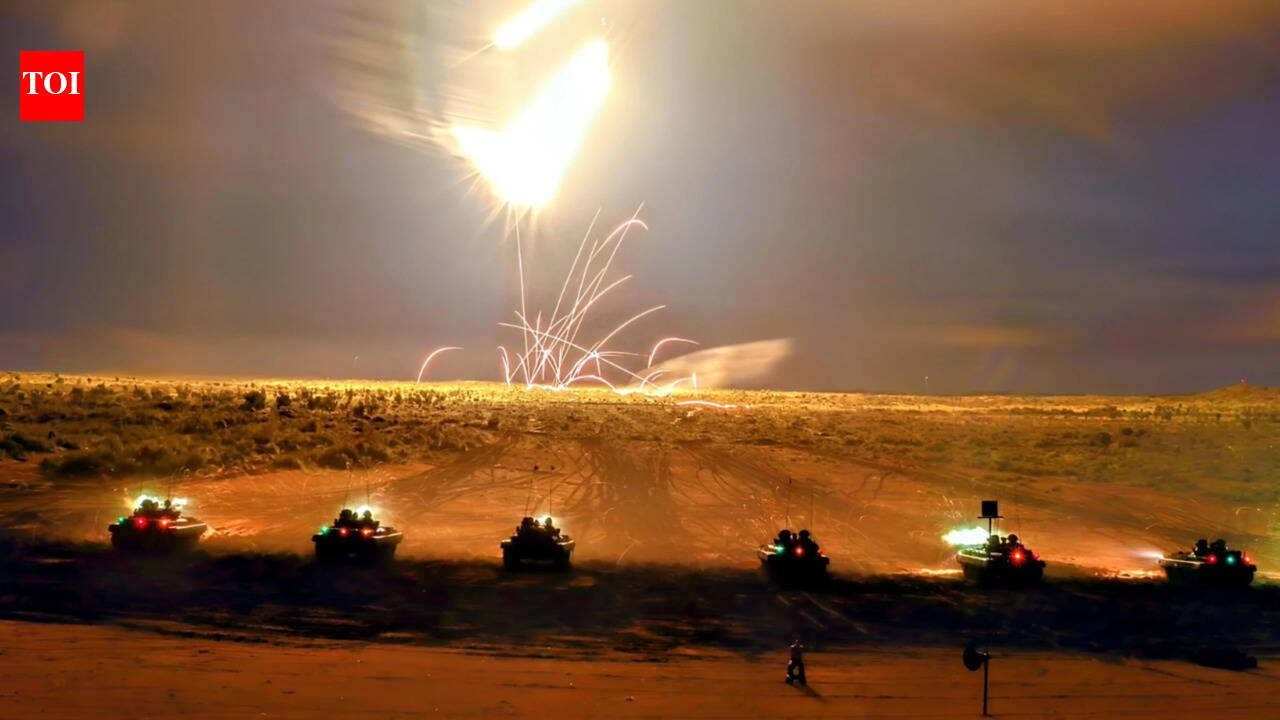
How the experience of Operation Sindoor is reshaping the Indian armed forces

India was forced to launch Operation Sindoor as a punitive action in response to the deadly terror attack in Pahalgam that claimed the lives of 26 people in a cold blooded manner. The 88-hour long operation demonstrated the unique ability of the Indian armed forces to start and end an armed conflict against a nuclear armed power. During the Eastern Ladakh crisis too, by securing the Helmet Top feature on the Kailash range in August 2020, forcing China’s hand at the negotiating table. Making India the only country to dominate the escalation ladder against two nuclear armed rivals.The Operation demonstrated India’s ability to hit any target across Pakistan. During the first few minutes of the Operation, India was able to hit targets separated over 500 kms longitudinally ranging from mountainous Muzzafarabad in the north to arid Bahawalpur in the south nearly simultaneously. As the conflict moved up on the escalation ladder, the Indian armed forces struck targets ranging from a Surface-to-Air Missile battery in Karachi, on the shores of the Arabian Sea, to a critical bunker at the Nur Khan Air Base in Rawalpindi, near the foothills of the Himalayas (Margala), while at the same time leaving a mark at some of the most crucial air bases and radar locations across Pakistan.Pakistan too tried to hit Indian air bases and take out the crucial S-400 Triumpf air defence complex with a supersonic CM-400AKG supersonic missile. This missile was shot down before ot could reach its target. Pakistani missile fired at other air bases, a long range fired towards Delhi was also intercepted by a Medium Range-Surface-to-Air Missile (MR-SAM), negating Pakistan’s offensive efforts. Although one Pakistani projectile did land at the Indian Air Force air strip in Udhampur.The four day operation demonstrated India’s conventional superiority over Pakistan, but there is also need to strengthen defences as the nature of warfare is changing. In Operation Sindoor although the air defence network was the toast of the town, there are still efforts to improve the system especially in light of the threat posed by drones and missiles.
Air Defence
India has embarked on a journey to produce its own system similar to the Israeli Iron Dome, called Mission Sudarshan Chakra. The system is being developed by the Defence Research and Development Organisation (DRDO). The project was announced by the Prime Minister during his Independence Day speech from the ramparts of the Red Fort, just months after the kinetic phase of Operation Sindoor ended.The upcoming system is a layered air defence system, which will be capable of firing interceptor missiles at ranges of 350 km, 250 km and 150 km. The first phase of this system is expected to be ready by 2029. DRDO has been testing parts of this system since August of 2025. Besides missiles of different ranges, the overall architecture of the system will also be able add directed energy weapons such as high powered lasers.The Indian Air Force is likely to get the fourth S-400 system in the next few months and the fifth contracted system by the end of the year. The fourth system is expected to be deployed on the western front, the first of these missile systems is deployed in Punjab and the second system is deployed in northern Gujarat, while the third system is deployed in the eastern sector.There is also a strong effort to improve the capability of the armed forces agaisnt drones. Efforts are underway to take down these unmanned system using a varierty of ways ranging from specific missile systems such as the Bhargavastra missile system developed by Solar industries. The army is also looking to procure ammunition for 40mm, 30mm and 23mm guns. Efforts are also underway to use new age methods such as electromagnetic systems, lasers and radio frequency jammers to take on drones.The importance of a robust system was demonstrated by the air force and the army during Op Sindoor. The ill effects of having such a system was demonstrated in West Asia, when Iranian missiles and drones were able to hit vital targets in a wide arc ranging from Oman in the east to Israel in the west.
Harnessing drone power
Drones have shown their utility in recent conflicts. The armed forces, once known as slow to adapt, are now quick to realign with the latest in technology. The armed forces are now imbibing the latest in drone technology, even as the field is evolving at a very fast pace. The army is procuring drones for different types of purposes such as attack, reconnaissance and logistics, among other uses. The armed forces are procuring different types of systems ranging from small First Person View (FPV) drones to pseudo satellites that will fly at super high altitudes, powered by the sun.The army is also rechanging internal structures to use these systems more effectively, with the induction of Ashni platoons for the infantry and Divyastra batteries and Shaktiban regiments for its artillery arm. The army is also looking at raising Shaurya squadrons for its armoured regiments.
Drone and unmanned technologies have added a new dimension to firepower delivery. It is novel, flexible and devastatingly effective at least cost. Drones, specially Loitering Munitions tech advances in precision, propulsion, warhead and other technologies have made ground based long range firepower extremely competitive in cost, effort and effect. Loitering systems will increasingly be in greater demand. Overall, they complement missile systems admirably to execute deep strikes with precision. As time passes, drones will become faster and the current rotary engines will be replaced by jet engines.Lt General PR Shankar (Retd), Former Director General, Artillery
Rocket force
The Indian army chief earlier this year, spoke about the requirement of a rocket-cum-missile force. The Indian army is now seeking its own rocket-cum-missile force. The advantage of having such a force would be that the forces will be able to send a long range vector deep inside enemy territory without risking fighter aircraft or other expensive platforms.The Pakistanis during Operation Sindoor attempted to hit targets deep inside India with Fatah-II rockets, which was intercepted over Sirsa. India too used long range missiles very effectively during the operation. Various Pakistani airbases and the Pakistani early warning radar system was destroyed by long range missile strikes that were carried out by aircraft. The IAF used Brahmos, SCALP and Rampage missiles for this task.Most of these strikes could be carried out by the upcoming variants of the indigenous Pinaka Multi-Barrel Rocket Launch (MBRL) system. It was reported by the Economic Times that a variant of the Pinaka with a 200 km range is currently under development. The army has also acquired the Precise & Universal Launching System (PULS) which has a range of 300 km and very high accuracy. These systems are cost effective, when compared to other systems and have proven to be very effective in recent and ongoing conflicts. Even a country such as Ukraine which has an effective air defence shield has not been able to effectively tackle these systems. Moreover, to defend against these projectiles, the defending force has to burn through its stockpile of expensive surface to air missiles.
5th generation fighters
Low observability, or stealth has been a critical aspect since the First Gulf War in 1991, when American F-117s and B-2s struck Baghdad, which was considered the most heavily defended air defence zone on the planet, as per American public broadcaster PBS. The F-117 in the opening night of the conflict the aircraft constituted 2.5% of the coalition ‘shooters’, but was responsible for 31% of targets destroyed.Even now, the low observable fifth generation F-35 lead the charge during the air campaign to bomb Iran in June 2025, Venezuela earlier this year and Iran again this year.The Indian Air Force currently lacks a fifth generation platform. India is making its own fifth generation fighter aircraft called the Advanced Medium Combat Aircraft (AMCA), but this aircraft is not expected to enter service before 2035. At the same time China is already operating a fifth-generation fighter aircraft called the J-20 and is on the cusp of inducting another fifth generation fighter called the J-35. The Pakistani Air Force too is expected to induct the J-35 fighter aircraft.In order to manage the gap the Indian Air Force is said to be looking at the Russian Sukhoi-57 as an interim measure.
Persistent ISR & Satellites
In order to keep a perpetual eye on the enemy the three services are setting up Space Based Surveillance (SBS) capabilities. The forces plan to establish a constellation of 52 satellites over a period of five years. The satellites will provide the three services the ability to keep an eye on enemy movements, keep an eye on the border and provide a satellite based communication network. Half of the satellites will be built by the private industry, while the remainder will be built by ISRO.The armed forces are also seeking to procure stratospheric airships that will have the capability to fly as high as 25 to 35 km, for context most airliners don’t fly over altitudes of 10-12 kms. These systems are envisioned to have systems that can cue targets using low probability of intercept radars and electro optronics. Besides this the armed forces are seeking to procure high altitude pseudo satellites are solar powered autonomous unmanned aircraft that are supposed to fly at altitudes of 60,000 feet for a duration of 90 days.These systems will provide the three services a web of assets that can keep a persistent set of eyes over the enemy. This is besides the large number of High Altitude Long Endurance (HALE) and Medium Altitude Long Endurance (MALE) Unmanned Aerial Vehicles (UAVs) that are already being operated and procured by the armed forces.
Jointness
During Operation Sindoor the three services acted in a cohesive and coordinated manner. The planning and execution was carried out in a synchronised manner. The targets were selected and attacked in a pre-determined manner, where the targets were divided between the army and the air force. The air defence during the 88-hour operation was also handled jointly by the army and the air force.India’s military modernisation is centered on restructuring through Integrated Theatre Commands (ITCs), designed to unify Army, Navy, and Air Force capabilities by geography and function. Studies are underway to establish Theatre Commands for land borders, maritime operations, and joint air defence, enhancing synergy and combat effectiveness. Chief of Defence Staff Gen Anil Chauhan stresses that jointness and integration are prerequisites, with ITCs separating operational roles from administrative Raise‑Train‑Sustain functions, enabling commanders to focus on security.These reforms mark a shift toward multi‑domain operations, integrating space, cyberspace, digitization, and data‑centric warfare. Complementing this, the Department of Military Affairs (DMA), created in 2020 under the CDS, promotes jointness in procurement, training, staffing, and restructuring of commands.
Information warfare: narrative dominance
Chief of Defence Staff General Anil Chauhan, stated that 15% of the armed force’s effort went into countering fake narrative initiated by the Pakistanis. The Indian armed forces in conjunction with the Ministry of Information and Broadcasting (MIB), took on the disinformation campaign started by the Pakistanis much before the first shot was fired. The campaign started by the Pakistani armed forces Inter Service Public Relations (ISPR).The Press Information Bureau (PIB)’s Fact Check Unit (FCU) in coordination with the armed forces, worked overtime to shatter fake Pakistani narratives. The fake narritves launched by the Pakistanis was in almost real time was fact checked by the FCU. Over 1,400 URLs, that were spreading fake news, were also blocked by the MIB.Operation Sindoor was a massive success for the India. India demonstrated that from no terror target in the country is safe. The Pakistanis also learnt that even when their armed forces are fully awake to the threat, Indian weapons will still get through and hit the pride of the Pakistani armed forces, as made evident in Karachi, Sargodha and Nur Khan.The Indian armed forces have gone through the 88-hour kinetic operation minute-by-minute and are now making full use of the experience. The gaps in capability are being closed and the strengths are being built upon. As Operation Sindoor is paused and not stopped, India has sent a very clear ‘desist or else’ message to Pakistan, in case of a new misadventure the next ‘or else’ could be one that no narrative build up could wipe off.
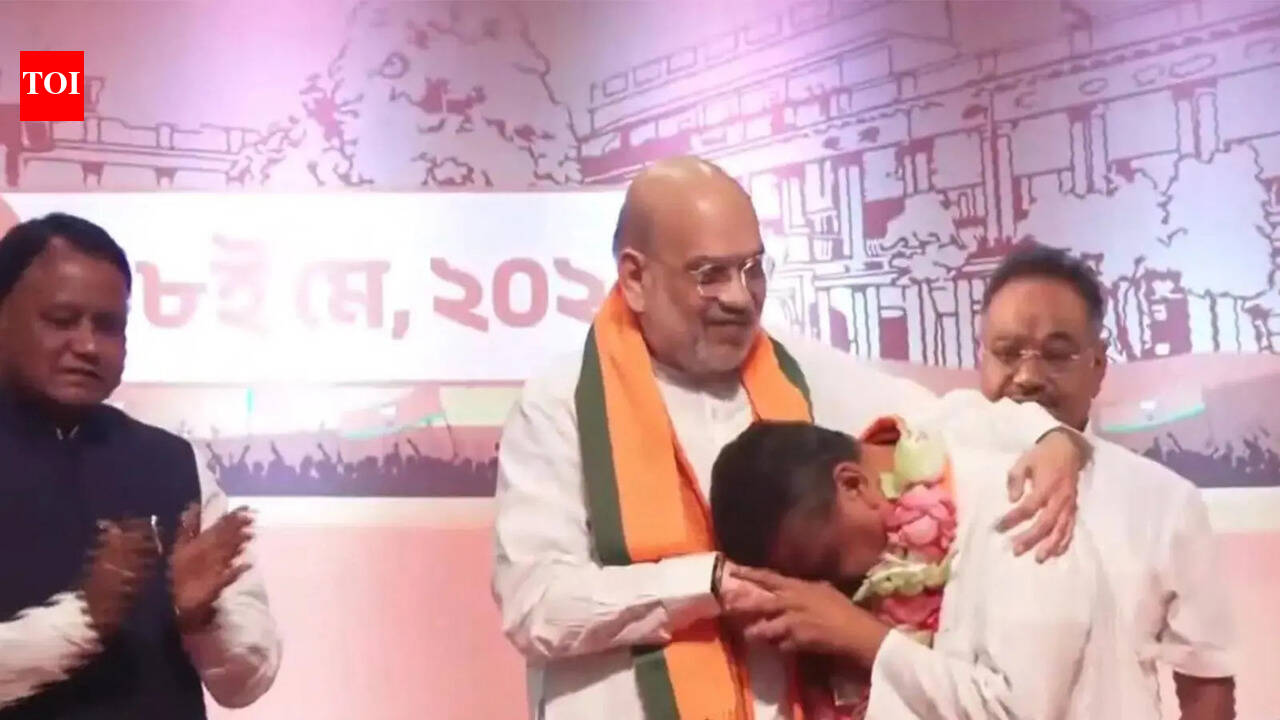
Suvendu Adhikari: Ex-Mamata loyalist, who defeated her twice, becomes first BJP CM of Bengal. india news
New Delhi: What seemed largely impossible in 2021, has become completely debatable after five years. Can Suvendu Adhikari defeat Mamata in her home constituency Bhabanipur? This question gets political legitimacy in 2026, given the exciting contest in the Nandigram battle of 2021, where Mamata challenged her former disciple.Fighting the battle in Suvendu’s stronghold Nandigram did not go well for Mamata as the BJP leader defeated her by over 1900 votes. That was the first round between Mamta vs Suvendu. The second round in 2026 was more intense, this time, Suvendu took the fight to Mamata’s bastion, Bhabanipur.This has been the rivalry with Suvendu Adhikari, who is Bharatiya Janata Party(BJP) with the elected Chief Minister Mamata Banerjee.The BJP legislature party chose Suvendu Adhikari as its leader, making him the obvious choice for Chief Minister, who will also be the first leader from the saffron party to take charge of West Bengal.“I announce the name of Suvendu Adhikari elected as the leader of the West Bengal BJP Legislature Party,” says Union Home Minister Amit Shah, who has been appointed as the central observer for the election of the legislature party leader in West Bengal.The contest between Mamata and Suvendu in the high-stakes Bhabanipur assembly constituency was back-and-forth, ending with a historic mandate in favor of BJP veteran Suvendu Adhikari, who defeated Mamata Banerjee by 15,105 votes.Mamata’s defeat in Bhawanipur, considered her bastion where the TMC cadre is deeply entrenched, echoes the bigger picture of West Bengal’s decision where the BJP demolished the ruling Trinamool’s 15-year rule.
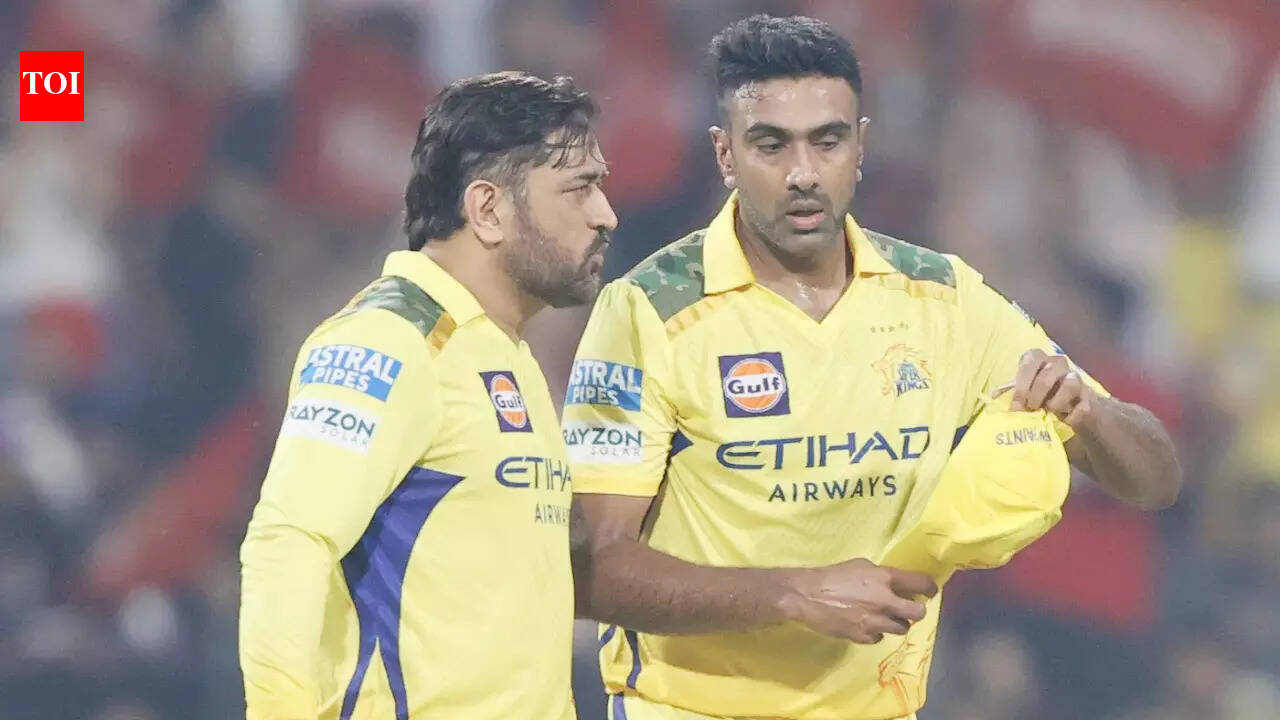
When MS Dhoni got angry with R Ashwin: The spinner recalls the moment CSK’s doors opened for him. cricket news

Ravichandran Ashwin has revealed an interesting story from the early days of his career, in which he recalls how his excessive celebration after dismissing MS Dhoni in the Challenger Trophy once angered the former Indian captain.Speaking on JioStar’s The Ravichandran Ashwin Experience, the recently retired off-spinner reflected on his struggle for opportunities during his early years. Chennai Super Kings And told how taking Dhoni’s wicket felt like a defining moment.Ashwin admitted that it was extremely difficult to break into CSK’s playing eleven during the early IPL years due to the presence of legendary bowlers like Muttiah Muralitharan.Ashwin said, “Muralitharan was in the team, a veteran player, bowling his full quota, so I was not getting opportunities. I didn’t play in 2008, but in 2009, I got my first match in Cape Town against Mumbai Indians and Sachin Tendulkar. Even between 2009 and 2010, I didn’t get many opportunities.”
According to Ashwin, the turning point came during the Challenger Trophy when he managed to dismiss Dhoni twice. Especially getting that one out is unforgettable for him and obviously for Dhoni as well.“Dhoni got out twice against our team. Once, he shot towards deep cover and I took a diving catch. I celebrated it so much that he got really angry,” Ashwin recalled with a smile.After this the former India spinner shared an entertaining conversation.“He was like, ‘What’s the point of celebrating so much?’ I told him, ‘It was my dream to get your wicket. Maybe this will open doors for me at CSK. Next year I got my chance.”Ashwin eventually became one of CSK’s most important bowlers and played a key role in the franchise’s golden era under Dhoni’s captaincy. Reflecting on the secret behind CSK’s dominance between 2010 and 2015, Ashwin credited the franchise’s balanced squad and the contribution of underrated domestic players.He said, “Chennai was one of the early teams which not only had good batsmen but also many quality bowlers. Along with that, some homegrown players like me, Murali Vijay, Badrinath and Shadab Jakati also came in, whom many might not know about, but they played heroics for CSK.”Ashwin retired from international cricket in December 2024 after one of the most illustrious careers for an Indian spinner.

Most people realize spiritual truth too late

What do you think life is?
Life is a journey which is full of many experiences, these experiences can be both good or bad but very few people are able to understand those experiences. They always see it as a blank canvas where they can paint whatever colors they want.
What if I told you that life is more than you think?
Yes, that’s because life often teaches the deepest lessons through the experiences you have in life and some experiences are all about spirituality. You must have seen people enjoying their life, fulfilling their desired desires and considering life as a medium of happiness. It is not until they experience some major failures, difficult challenges, loss, pain and internal struggles that they realize that life is something that is beyond enjoyment. These experiences can completely change your personality, thought process and the way you live your life. At a young age people are not mature enough to understand the deeper meaning of life and in some cases even older people are not able to understand what life is.
Why do you need to understand life closely?
First you need to understand that you are a soul and this is your soul’s journey. Most people take a lot of time to understand their life and journey and at that time they regret why they wasted so many years in ignorance and lived in darkness. You don’t need setbacks, heartbreaks, anxiety, and other challenges to get on track and understand your life’s purpose. You just have to be careful about what you are doing? And why are you doing this? The moment you get the answer to the what and the why, you are ready to come out of darkness and ignorance. Life is a wonderful opportunity for you to understand the purpose of your life, only then you will be able to have a deeper understanding about life.
Let us understand what are spiritual truth People realize this too late:
happiness comes from within
Happiness is the basic need of living life. People always have the illusion that materialistic things can make them happy. Materialistic things can make a big difference in life but happiness has nothing to do with materialistic life. Happiness cannot come from money, cars, success because these are temporary things. Happiness is related to peace and it comes directly from your soul. If you want to be truly happy you have to understand the soul.
everything is temporary
People are running after money, luxury, success and are giving priority to these things over people. But they are forgetting that everything here is temporary and they should understand this at an early age because in many cases they get seriously attached to materialistic things and ruin their lives later. Holding things too tightly can sometimes make you feel defeated and then you try to dominate her and during this process you become cruel and harsh. It is better to let things go and prepare yourself to get better opportunities in life.
Solitude is important for development
Have you ever seen someone sitting alone and eating food? If you have seen, then you form an opinion in your mind that how lonely that person is and often feel sad for that person. No, there is no need for that person to worry because many people like their solitude where there is no noise, no distractions, no social pressure and they disconnect themselves from everything. They protect their energy, strength and respect their individuality. During that time period, they understand every aspect of life from emotions to the purpose of their life.

Apple’s camera AirPods are almost ready, and now they’re waiting for Siri

AppleAirPods with built-in cameras have long been rumored to have reached the final stages of development, with employees inside the company already wearing prototypes on a day-to-day basis. According to Mark Gurman’s Bloomberg report, the earbuds have hit the Design Verification Testing (DVT) stage – the last major checkpoint before Apple starts making initial mass production units in the Production Verification Testing (PVT) stage.Hardware is close to locking. Cameras are housed in both the left and right buds, and the only visible gift is a slightly longer stem to fit the new components. Otherwise, they look a lot like the AirPods Pro 3.
Cameras are built for Siri, not for shooting photos or videos
These cameras are not here to replace your iPhone’s shooter. Bloomberg says they capture low-resolution visuals that provide Siri context about what’s in front of you. Look at the half-empty fridge and ask what to cook for dinner. Drive through an unfamiliar neighborhood and get turn-by-turn directions that name the actual landmark you’re about to pass. Apple is also testing reminders that activate when the camera sees something relevant — say, an item you previously added to a shopping list.To address the obvious privacy concern, Apple has created a small LED that lights up when scene data is sent to the cloud. As Bloomberg points out, whether anyone would actually notice that light on something so small is another question.
September’s Siri overhaul may determine when these AirPods ship
Apple originally wanted to have these AirPods on shelves in the first half of 2026. That plan failed because the new AI-powered Siri wasn’t ready. According to Bloomberg, the upgraded Siri is now on track for September, after Apple swapped out Alphabet’s Gemini model under the hood. Earbuds can come in the same window, although Apple can block them if it’s not happy with the visual intelligence experience.The project has been in the works for nearly four years and sits alongside Apple’s smart glasses and camera-equipped pendants, leaving the AirPods behind.
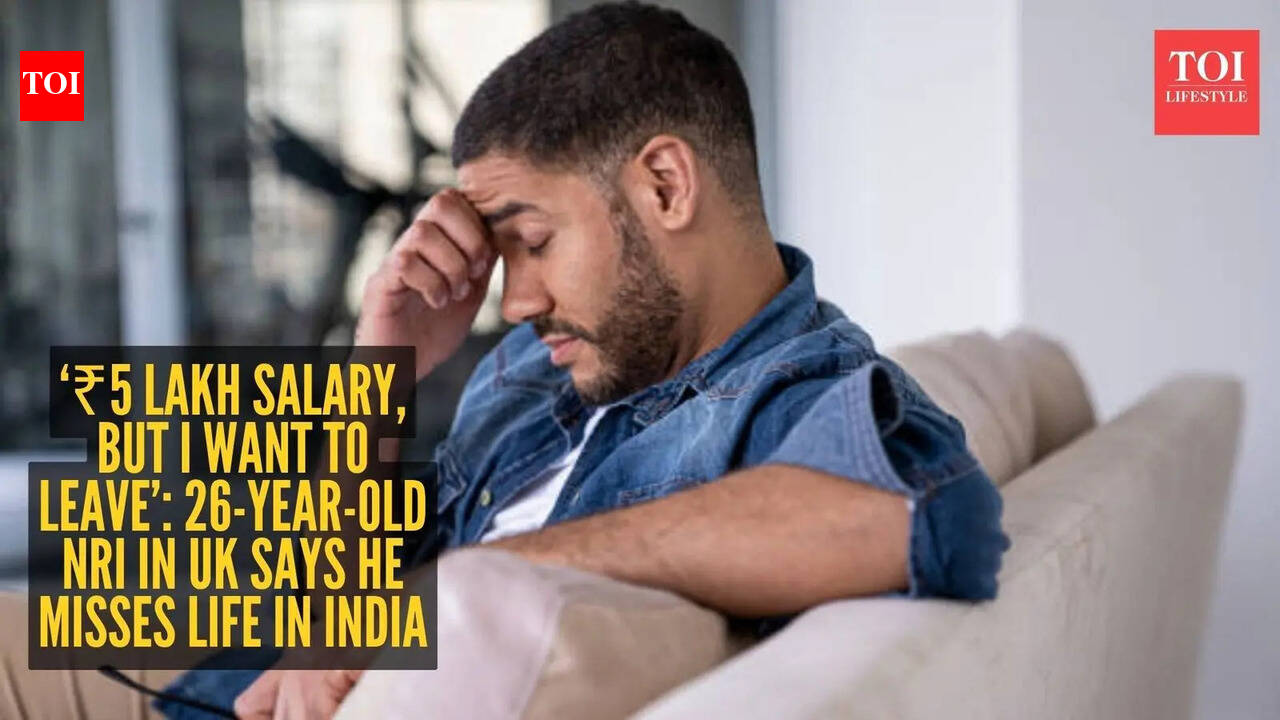
‘₹5 lakh salary, but no peace’: 26-year-old NRI in UK says he wants to go back to India, Internet divided

For many people, moving abroad is still seen as the ultimate dream – better money, better lifestyle, better opportunities. But for an Indian living in Britain, the reality looks much less rosy.A 26-year-old NRI recently spoke online about feeling emotionally exhausted and disconnected despite earning well and living a stable life abroad. His post has now impacted thousands of people online, especially millennials and Gen Z professionals quietly dealing with loneliness abroad. The man shared that he has been living in the UK for the last eight years after moving to the UK with his family at the age of 18. But according to her, this move was never really her choice.He admitted that while his life “looks good on paper”, internally things feel very different. He wrote that he earns around ₹5 lakh per month after tax, he has a good setup and he is doing well professionally. But despite financial stability, he says he constantly feels stuck and emotionally unfulfilled. And honestly, this is the part that a lot of people online can immediately relate to.

In his post, he talked about missing his life in India – the childhood friends, the familiar surroundings, the everyday interactions, and the sense of belonging that he no longer feels abroad. He said he still regularly talks to his old friends in India on vacation and those conversations often make him think seriously about returning home.Problem? Almost everyone around him tells him not to do this.According to him, his friends keep warning him that India has changed, opportunities are tough, stress levels are high, and moving away from steady foreign income could be a big mistake. But despite hearing all this, the thought of leaving Britain apparently crosses her mind almost every day. He admitted that sometimes he feels the temptation to quit his job, book a ticket and go back home forever. And that emotional conflict sparked a massive conversation online.Many people in the comments said they completely understood what he was feeling. Some NRIs confessed that they were going through exactly the same situation – financially secure, but emotionally cut off. One person wrote that they too live in the UK, earn well, and still think about going back to India because after a while life abroad starts to feel repetitive and isolating. However, others urged him not to make emotional decisions too quickly.Many users reported that the India they remember is probably linked to old memories – school days, college memories, childhood friendships and a phase of life that no longer exists as it used to. And to be honest, this weighed heavily on many readers as well.Because sometimes people don’t remember a country. They remember the version of themselves that was there.

Another section of users reminded them that happiness is not automatically guaranteed at any place. According to him, going back without proper planning, job security or emotional clarity can lead to a whole new set of disappointments later.Some also pointed out that life abroad can be especially difficult for immigrants due to the isolation, long winters, small social circles, and constant pressure to “make it worth it.”And in many ways, the conversation became much bigger than just one person’s desire to leave the UK. It turned into a discussion about burnout, homesickness, identity and the growing number of young Indians abroad who silently struggle with loneliness despite appearing successful online.Because social media often shows a glossy version of NRI life – exotic trips, salaries in pounds or dollars, swanky cafes, and fabulous LinkedIn updates. What it rarely shows is its emotional side.Missing weddings at home. Watching a friendship slowly end. Feeling culturally different in two different countries at the same time. There is money but no one is close enough to call at midnight. Maybe that’s why so many people liked this post. Not because the man wanted to leave the UK, but because he admitted something that many people are secretly afraid to say out loud: sometimes, success and happiness are not the same thing.
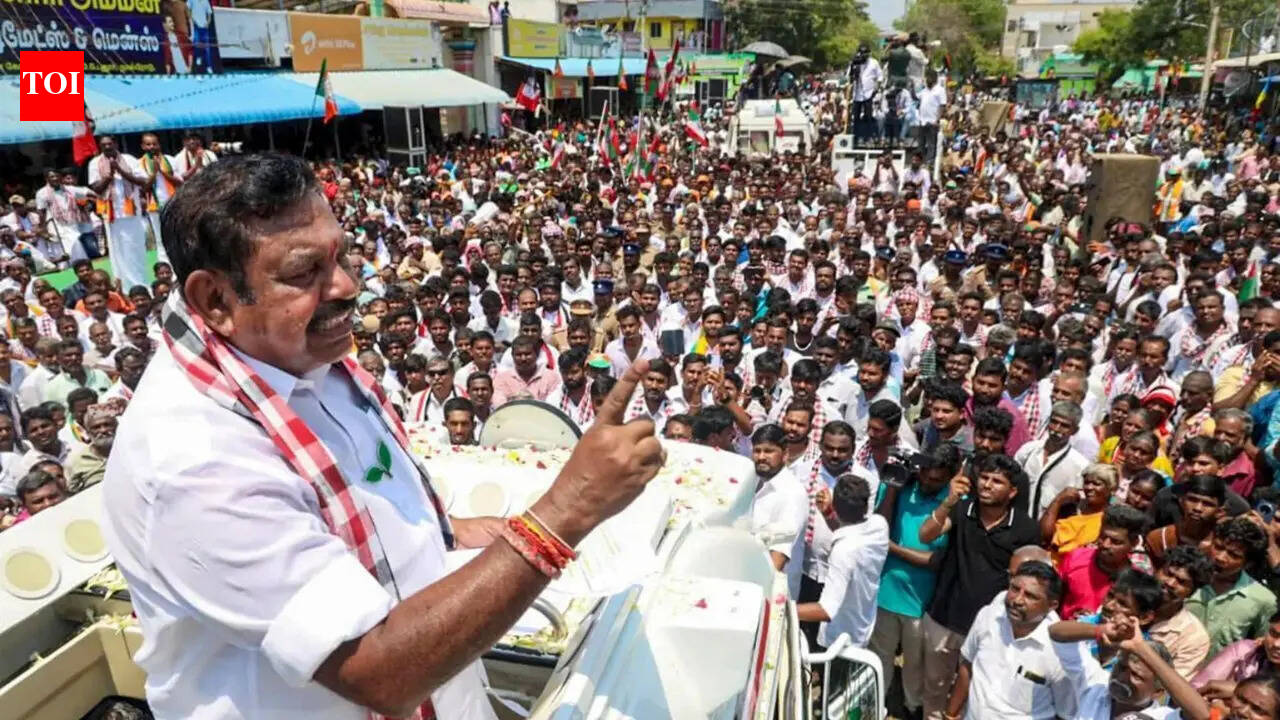
‘EPS is going to be the next Chief Minister of Tamil Nadu, wait and see’. chennai news
Chennai: Senior AIADMK leader Thambidurai has expressed confidence Edappadi K PalaniswamiPolitical talks have intensified in Tamil Nadu after a fractured mandate in the state assembly elections to return to power. After meeting the EPS in Chennai on Friday, Thambidurai said, “Let’s wait and see. Edappadiyar is going to be the next CM, and he will give good governance,” indicating pressure from the party to form a post-poll alliance. He further said, “The sentiment of the people was clearly in favor of our leader returning to power, as we saw during his campaigns. By the grace of God, this will happen at the appropriate time.” The comments come amid the volatile political situation in Tamil Nadu, where smaller parties have emerged as major players in government formation talks following a hung verdict in the 234-member assembly. Actor-turned-politician Vijay’s Tamilaga Vetri Kazhagam (TVK), which won 108 seats, has reshaped the political arithmetic. Congress has extended its support with five seats, taking the number of the emerging faction to 113. The Communist Party of India (Marxist) and the Communist Party of India, both with two MLAs each, are holding separate executive meetings to decide their next course of action. Their support could take the TVK-led group to 117 seats – just one short of the majority mark of 118. CPI(M) leader P Shanmugam said the party has received formal communication from TVK chief Vijay. He said, “The TVK chief has sent a letter to our party. Our state committee meeting will be held tomorrow morning; we will take our decision in that.” He said, “As per the Constitution, it is the TVK that should be allowed to form the government. We have never seen such a situation in a Tamil Nadu assembly election, and now we have a hung assembly. It is the Governor who should invite Vijay to form the government because he is leading,” Shanmugam said. Meanwhile, the Viduthalai Chiruthigal Katchi (VCK), which was earlier part of the DMK alliance and held two seats, is also set to call a high-level meeting to decide its stand. If CPI(M), CPI, VCK and Congress formally support TVK, the alliance will cross the majority threshold. Meanwhile, AIADMK, the third largest party with 47 seats, has intensified internal discussions as its leaders keep meeting General Secretary Edappadi K. Palaniswami will explore alliance options The Bharatiya Janata Party (BJP) is also scheduled to hold a review meeting on the election results under the leadership of state president Nainar Nagendran at its headquarters in Chennai. The series of meetings reflects the ongoing high-level talks following the hung assembly verdict, making government formation dependent on post-poll alliance.