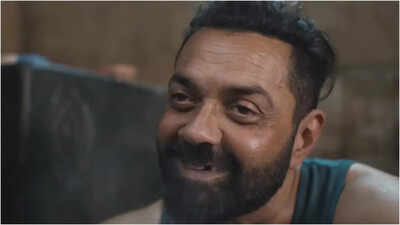
Bigg Boss Marathi 6 Finale: Genelia Deshmukh gets emotional as Abhishek Bachchan praises Riteish Deshmukh; ‘If you don’t cry with pride after watching the film, I will quit acting’

Bigg Boss Marathi 6 Finale: Genelia Deshmukh gets emotional as Abhishek Bachchan praises Riteish Deshmukh; 'If you don't cry with pride after watching the film, I will quit acting'

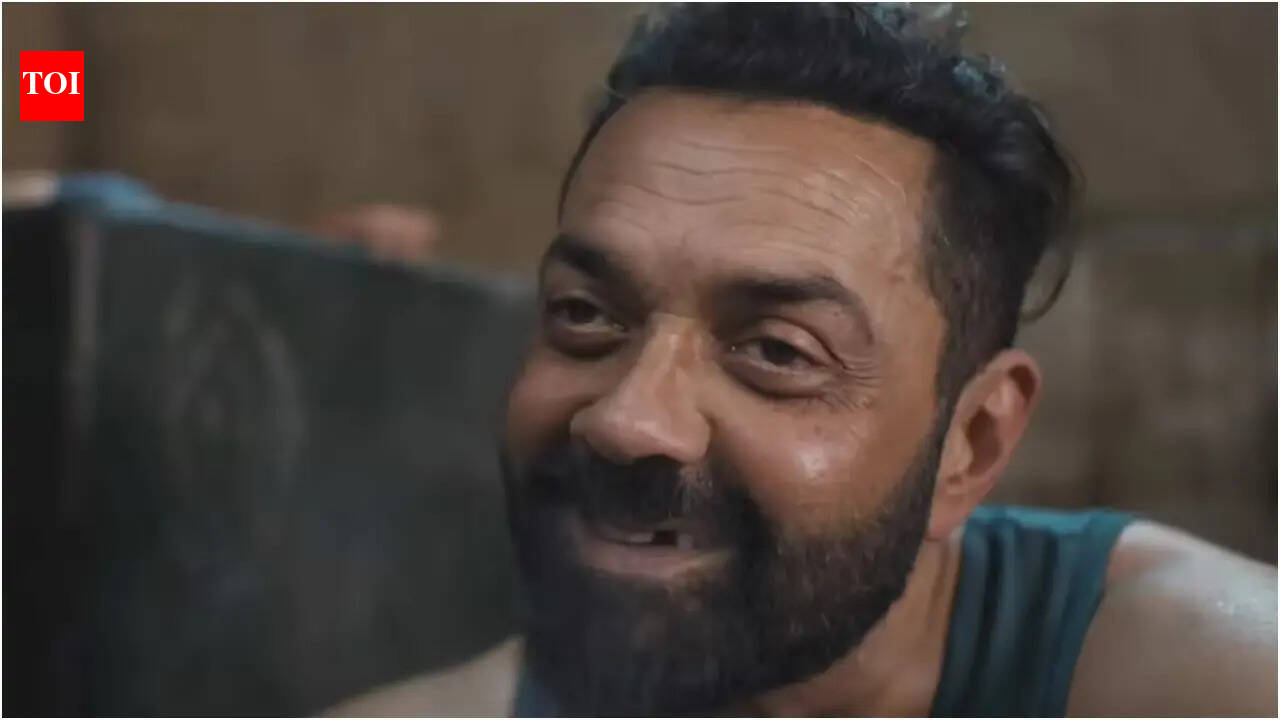
Bigg Boss Marathi Season 6 grand finale turns into a Bollywood star-studded movie Abhishek Bachchan And Genelia D’Souza is gracing the episode. Both came with their upcoming Marathi film Raja Shivaji. Ritesh DeshmukhGenelia and Abhishek Bachchan appeared during the grand finale and brought smiles to the audience’s faces with their bond. Genelia Deshmukh has not only acted in the film but is also a co-producer of the film. The actress had tears in her eyes during the episode. During his appearance, Abhishek first pulled Ritesh’s leg and removed his earring. He himself announced Genelia’s entry and invited her on the stage. Later he praised Ritesh’s direction. Abhishek Bachchan revealed that it was Riteish Deshmukh’s dream to make a film on Chhatrapati Shivaji Maharaj.

Watch

Bigg Boss Marathi 6: Shocking evictions and untold truths Karan Sonawane’s disclosure

Abhishek Bachchan later talked about his relationship with Riteish Deshmukh and said, “I have known him since 2001. We worked together for the first time on Zameen, and we were shooting in Latur. Riteish’s brother Amit had made all the arrangements for us there. During that time, I asked him what he wants to do apart from acting, and he said he wants to make films. When I asked him about the subject, he told me that his dream was to make a film on life. Had to make a film. Chhatrapati Shivaji MaharajSee more: Bigg Boss Marathi 6 Winner and Grand Finale Live UpdatesAbhishek Bachchan said that he was very impressed with Riteish Deshmukh on the sets of Raja Shivaji. Abhishek shared, “He has shown the life and work of Chhatrapati Shivaji Maharaj very beautifully. If you don’t cry with pride after watching this film, I will give up acting. He has made a brilliant film.”Abhishek further added, “Every actor has a wish list of directors, and Riteish was on my wish list. When he told me about the role of Sambhaji Raje, it helped me understand the character better. He treated every character with the respect they deserved.”See more: Tanvi Kolte wins Bigg Boss Marathi 6 trophy, Rakesh Bapat becomes first runner upGenelia, who was present on the stage, also could not control her tears and became emotional.Riteish Deshmukh said that Abhishek Bachchan has honored him by playing the part of Raja Shivaji and he will always be grateful.

Source link

After years of losses, DTC’s earnings increased; Increase by Rs 173 crore in 2025-26. delhi news

After years of losses, DTC's earnings increased; Increase by Rs 173 crore in 2025-26

New Delhi: Delhi Transport Corporation (DTC), which has been burdened with losses for a long time, has recorded a significant increase in income to about Rs 173 crore in 2025-26 (as of March 26). The total income of the corporation increased from Rs 822.5 crore to Rs 995.5 crore in 2024-25, reflecting better operational efficiency and reforms undertaken by the Delhi government.Describing this as a transformation, Transport Minister Pankaj Kumar Singh said that this reform has been driven by collective effort within the organization and decisive policy intervention. “The previous government had left DTC in a financially weak position, burdened with losses and inefficiencies. The present government has taken concrete steps to revive the corporation, streamline operations and make it a more financially stable and accountable public transport entity,” Singh said.DTC is the backbone of the city’s road-based public transport system. As of February, it operates 24 depots. As of March this year, the combined fleet strength was around 6,100 buses, including CNG and electric vehicles. It carries around 24.3 lakh passengers daily, operating over 32,500 trips on 517 urban routes and 15 NCR routes. It also runs an international bus service between Delhi and Kathmandu.Official data showed that ticket revenue increased from Rs 327.2 crore to Rs 379.8 crore, registering a year-on-year increase of Rs 52.5 crore. Income from special fare services increased from Rs 82.7 crore to Rs 99.2 crore, an increase of Rs 16.5 crore over the same period.“The sharpest increase has been recorded under miscellaneous income, which has increased from Rs 342.7 crore to Rs 446.6 crore – a jump of Rs 103.9 crore. This category includes revenue from advertisements, fare receipts and penalty collections, and has emerged as a major contributor to the overall financial improvement of DTC,” said an official.According to executives, the growth has been driven by improved performance across key revenue streams and a focus toward diversification. The average monthly income of the corporation has also seen an increase from Rs 68.5 crore to Rs 82.9 crore, indicating stronger financial discipline and better resource utilization.“Our vision goes beyond just raising revenues. It focuses on strengthening institutional capacity, improving service delivery and ensuring that citizens of Delhi get reliable, safe and accessible public transport,” Singh said. He said the government is committed to continuous improvement, revenue expansion and integration of modern, sustainable transport solutions to ensure long-term financial sustainability and better passenger experience.

Source link

‘Luck was on my side’: Rinku Singh reveals game-changing moment in KKR’s win over RR cricket news

'Luck was with me': Rinku Singh reveals game-changing moment in KKR's win over RR
Anukul Roy and Rinku Singh after the match. (IPL photo)

New Delhi: Kolkata Knight Riders finally broke their losing streak in IPL 2026 with a tense four-wicket win Rajasthan Royalsand vice-captain Rinku Singh Admittedly, there was a twist of fate that changed everything.A dropped catch early in her innings proved decisive as Rinku scored an unbeaten 53 and pulled KKR out of a situation of pressure and confusion leading up to the final over.Go beyond limits with our YouTube channel. Subscribe now!Rinku was honest about how much luck played a role in her match-winning innings, especially after getting a lifeline at a crucial stage.

Watch

Venugopal Rao explains the key decisions that helped DC defeat RCB

He said, “Sometimes it happens when some things do not go your way, you feel that intensity. But it was not that I was hesitant or unsure in playing my shots.” “My mindset was to take the game till the end as I had chatted with the coach and also with my batting partner. The idea was to take it deep because the match was in a difficult situation.”As it happened: KKR vs RR, IPL 2026He acknowledged the moment that shifted the game firmly in KKR’s favour, when Rinku Singh was dropped by Nandre Berger for eight – a regulation chance that ultimately proved to be the turning point of the match.“It happens sometimes. At that moment, the mind doesn’t work properly and you play such shots. But thankfully, luck was with me and we eventually won the match.”Rinku said that this innings came at a personally important time.He said, “I had played a lot of innings and was waiting for a big innings. This was a very good innings for me and was also very important for my confidence.”With KKR struggling at various stages of the chase, Rinku stressed on clarity in approach and communication.“There is no fixed position for me. I can bat at number five, down the order or even at number four. Wherever the team needs me, I am ready to bat in that position.”He also highlighted the importance of the team’s first win.“This will give us a lot of confidence as it is our first win of the season. From here we will carry the momentum forward.”KKR got this win after suffering repeated defeats earlier in the tournament, making this comeback all the more significant.kkr captain Ajinkya Rahane Called it an emotional success after a difficult start to the season and praised Rinku and the bowling unit for maintaining composure under pressure.for rr captain Riyan ParagThe match was lost due to missed chances, including the catch that gave Rinku life.“We couldn’t drop catches, it cost us the game,” admitted Parag. He also pointed to execution issues in the death overs.

Source link

Ram Gopal Varma talks about the underworld connection behind Salman Khan’s ‘Chori Chori Chupke Chupke’.

Ram Gopal Varma talks about the underworld connection behind Salman Khan's 'Chori Chori Chupke Chupke'

Chori Chori Chupke Chupke, a 2001 romantic drama directed by and starring Abbas-Mustan Salman Khan, Preity ZintaAnd Rani Mukherjee is often remembered for presenting one of Bollywood’s earliest portrayals of surrogacy, albeit in a flawed manner. However, beyond its story, the film is infamous for its unexpected ties to the Mumbai underworld, a connection of which its financier Bharat Shah initially had no knowledge. Recalling the events, the filmmaker Ram Gopal Vermawho co-produced ‘Dil Se..’ with Shah, shared how the project came to fruition. He shared during a conversation with Hussain Zaidi, “At one point of time, he (Bharat Shah) met a guy who told him that he had dates with Salman Khan. So, he said, ‘Okay, great.’ But since the guy did not have a film background and was not rich, Bharat Bhai called Salman,” Verma said. “Salman told him, ‘Yes, I have given her dates.’ This gave Bharat Bhai so much assurance that he gave the money and the film Chori Chori Chupke Chupke started,” he added.Things changed when Shah later learned that the film’s producer, Nazim RizviAllegedly had links with underworld kingpin Chhota Shakeel. Verma told about Shah’s mentality at that time. He said, “After some time they came to know that producer Nazim Rizvi has some connection with Chhota Shakeel. But they thought he was doing a legal business, and if the producer has any connection with the underworld, what difference does it make to them? He is not a criminal himself, but is just associated with a criminal.”The situation worsened when an unknown businessman from the film industry received an extortion call of Rs 5 crore. Desperate, he turned to Shah for help, hoping that Rizvi and Shakeel’s relationship could solve the problem. When contacted, the demand came down to Rs 2 crore.Soon, other personalities from the industry also started reaching out to Shah for similar assistance. Despite helping others, Shah was not benefiting financially from these interventions. “But he was not getting any money. He was just helping. But the police were tapping his phones,” Verma recalled, “He was trembling with shock and fear. The police suggested that perhaps Shakeel was working for you. So, Bharat Bhai said, ‘Why would he work for me? I am just a filmmaker.In 2001, both Shah and Rizvi were arrested by the Mumbai Police. Shah was convicted of failing to disclose Rizvi’s alleged underworld ties and sentenced to a year in jail. However, having already spent 14 months in custody during the trial, he was immediately released. Meanwhile Rizvi and his associate Mohd. abdul rahim Allahbaksh Khan was found guilty of maintaining links with the underworld and extorting money from members of the film industry. Each of them was fined Rs 15 lakh and sentenced to six years in jail.Before the controversy, Shah, who was also a prominent diamond merchant, was one of Bollywood’s most influential financiers. He supported major banners like Yash Raj FilmsDharma Productions, Dreamz Unlimited, and later Red Chillies Entertainment. His co-production credits include films like ‘Darr’, ‘Yes Boss’, ‘Dil Se..’, ‘Pukar’, ‘Devdas’ and ‘Main Hoon Na’, which include collaborations with filmmakers like Yash Chopra, Aziz Mirza, Mani Ratnam, Rajkumar Santoshi. Sanjay Leela BhansaliAnd Farah Khan.

Source link

Women’s Reservation Bill: 74 women MPs in 18th Lok Sabha; BJP ahead in terms of numbers, TMC’s ratio higher. india news

Women's Reservation Bill: 74 women MPs in 18th Lok Sabha; BJP ahead in terms of numbers, TMC's ratio higher
New Delhi: NDA women MPs protested after the Constitution Amendment Bill to implement reservation for women in assemblies and increase the number of Lok Sabha seats in 2029 was defeated. (PTI Photo/Shahbaz Khan)

New Delhi: Nearly 14% of the 18th Lok Sabha is women, with 74 women MPs elected in the 2024 general elections, data shows.Read this also Delimitation Revealed: What the Center tried to do, why the Opposition foiled it and what’s nextThe women MPs are spread across 14 parties, including 37 from the BJP-led ruling NDA and 35 from the Congress-led India Bloc, while one each from Shiromani Akali Dal and YSR Congress Party, which are not in alliance with either of the two major alliances.

Watch

Congress, TMC, DMK guilty’, PM Modi attacks opposition for stopping Women’s Reservation Bill

As the largest party in the House with 240 members BJP The number of women MPs is also highest at 31, which is about 13% of its total number. Among its allies, JD(U) and LJP (Ram Vilas) have two women MPs each, while TDP and Apna Dal (Sonilal) have one woman MP each.On the other hand, Congress has 13 women members out of total 99, followed by its allies Trinamool Congress (11 out of 29), Samajwadi Party (5 out of 37), and DMK (3 out of 22). India Block also includes one woman MP each from NCP (SP), RJD and JMM.Although ranking third in absolute numbers, nearly 38% of Trinamool Congress (TMC) Lok Sabha MPs are women – the highest proportion among parties with at least 10 women MPs.West Bengal Chief Minister and Trinamool Congress (TMC) supremo Mamata Banerjee – herself a former Lok Sabha member – also emphasized this point in her reaction to Prime Minister Narendra Modi’s address to the nation on Saturday.Read this also ‘PM Modi’s address on women’s reservation violates the Model Code of Conduct’: CPM, CPI write letter to Election Commission; Flag usage of state broadcasters“It is extremely unfortunate that the Prime Minister chose to mislead the nation rather than honestly address it. Let me put this on record. Trinamool Congress has always advocated higher political representation for women. We have the highest proportion of women elected representatives in both Parliament and State Legislatures. In the Lok Sabha, 37.9% of our elected members are women. In the Rajya Sabha, we have nominated 46% women members. Banerjee, who faces assembly elections in her home state on April 23 and 29, wrote on Twitter, “The question of opposing women’s reservation does not arise and has never arisen.”Read this also‘Cowardly, hypocritical and cowardly’: Mamata Banerjee hits back at PM Modi over women’s reservation billThe Prime Minister said this a day after the Women’s Reservation Bill failed to be passed in the House after it was blocked by the opposition. In her address she blamed Congress, TMC, DMK and Samajwadi Party for the defeat of the bill and described them as “anti-women”.

voting

Should political parties aim to increase the percentage of women MPs in the Lok Sabha?

Source link

Jewelery worth Rs 20 lakh looted from shop in broad daylight in Patna. patna news

Jewelery worth Rs 20 lakh looted from shop in broad daylight in Patna
In an audacious act that happened in broad daylight, five masked thieves riding on two motorcycles carried out a jewelery robbery in Patna on the occasion of Akshaya Tritiya celebrations. After violently attacking the shopkeeper, they looted precious gold and silver, estimated to be worth Rs 15-20 lakh.

Patna: On Sunday (Akshay Tritiya), in broad daylight, five bike-riding criminals targeted a jewelery shop under Ramakrishna Nagar police station area of ​​Patna and fled with gold and silver jewelery worth Rs 15 lakh to Rs 20 lakh. Police have started investigation and are raiding possible hideouts to nab the miscreants.According to the police, the incident took place in Dhanji Colony at around 1.45 pm. All the miscreants wearing helmets and masks reached the shop riding on two motorcycles. Two of them remained outside while three entered the outlet. They allegedly attacked the shopkeeper with the butt of the pistol, injuring him and looted the jewelery within two to three minutes before fleeing on their bike.On receiving the information, a team from Ramakrishna Nagar police station and Sadar sub-divisional police officer Ranjan Kumar reached the spot, recorded the statement of the injured shopkeeper and examined the CCTV footage of the surrounding areas. Superintendent of Police (East) Parichay Kumar also visited the crime scene along with senior officials and conducted a detailed inspection. The team examined the layout of the shop and surrounding streets to find out the escape route used by the criminals.The SP said that a special investigation team has been formed to solve the case as soon as possible. “Police are examining CCTV footage from the shop and nearby establishments, while technical surveillance including analysis of possible vehicle number plates and movement patterns is underway. Raids are also being conducted at suspected hideouts and checkpoints have been set up on major roads leading out of the city,” the SP said.The SP said that five criminals riding on two motorcycles committed the robbery and fled with about 100 grams of gold jewelery and 3 to 4 kilograms of silver items. The shopkeeper immediately raised an alarm and informed the police and claimed that jewelery worth Rs 15 lakh to Rs 20 lakh had been looted. “The matter is under investigation and further information will be shared within 24 hours,” he said.

Source link

Delimitation decoded: What the Centre tried to do, why opposition shot it down & what happens next | India News

Delimitation decoded: What the Centre tried to do, why opposition shot it down & what happens next

NEW DELHI: Parliament has voted down the government’s proposal to expand the Lok Sabha from 543 to 850 seats, implement 33% reservation for women, and redraw constituencies accordingly, but the defeat has not closed the issue. If anything, it has exposed how a once-technical constitutional mechanism has become one of the most consequential unresolved questions in electoral politics.It is important to note that the Women’s Reservation Act 2023, which provides for a 33% reservation for women in the Lok Sabha and state legislative assemblies, came into force on April 16, 2026 amid the ongoing debate on proposed bills.The opposition was unambiguous about these bills. “This defeat is not of women’s quota but of delimitation by the backdoor,” said Revolutionary Socialist PartyMP N K Premachandran. Samajwadi Party chief Akhilesh Yadav called it a “defeat of BJP’s malice.” Trinamool Congress, whose 21 MPs had been urgently mobilised by the INDIA bloc, proved critical to the margin. After the vote, Congress’s Rahul Gandhi spoke personally with TMC’s Abhishek Banerjee to thank him for the support.Congress’s Priyanka Gandhi Vadra was direct: “PM Modi maliciously linked women’s quota to delimitation based on the 2011 census. His hollow attempt to pose as the messiah of women has failed today.”CPI MP Sandosh Kumar put the charge differently- that women should “see through BJP’s approach of delaying women’s quota by linking it to the census and delimitation.”On the government side, home minister Amit Shah, as the bill’s fate became clear, offered to adjourn the House and return with an amended bill. “I have the amendment prepared,” he said, pressing the government’s commitment to the 50% seat expansion. Prime Minister Narendra Modi made a final appeal before voting, asking MPs to “reflect on your conscience” and act on behalf of women across the country.The bill failed. Two related pieces of legislation, including the one to set up a delimitation commission, were not tabled in the Rajya Sabha. Parliament was adjourned.

What government proposed

The government’s plan was architecturally different from any previous delimitation exercise. Its central proposal was to increase total Lok Sabha seats by 50%, from 543 to 850, while keeping each state’s proportional share of seats unchanged. Uttar Pradesh, which currently holds 80 seats, would have received 120; Tamil Nadu, with 39, would have received 58 or thereabouts.The mechanism for women’s reservation flowed from this expansion. If every state’s seats increased by 50%, one-third of the new total — 33% — could be reserved for women, equalling precisely the one-third of the expanded total. The arithmetic was designed to be self-contained: no state would lose share, and the reservation obligation would be met without redistributing existing seats.The proposed delimitation commission, as described in the bill circulated to lawmakers, would be headed by a former Supreme Court judge, with the chief election commissioner or a nominee as a member, consistent with past practice.The exercise for the Lok Sabha, government sources made clear, was to be delinked from the 2011 census. Constituency boundaries would be redrawn; the proportional shares of states in the Lok Sabha would not change. In that structural sense, it was closer to the 2008 delimitation exercise than to the full reallocation exercises of 1952, 1963, or 1973.

.

.

Why opposition read it as threat

The bill’s legal architecture contained a provision that drew sustained fire. As Vidhi Centre for Legal Policy’s Swapnil Tripathi, lead at Charkha (Centre for Constitutional Law), explained: “Currently, Article 82 requires that delimitation of constituencies and readjustment of seats among states be undertaken after completion of every census, using population data of that census. The present bill removes this obligation and instead leaves it to parliament to determine both timing of delimitation and census to be used for the exercise. Importantly, this transforms what was a constitutional obligation into a matter of legislative discretion.”That shift from constitutional mandate to parliamentary choice was the provision that most alarmed critics. It would have allowed parliament to decide, at will, which census data to use and when to act, stripping Article 82 of its periodic, automatic character.Congress lead speakers Gaurav Gogoi and K C Venugopal accused the government of using women’s quota as “cover” for a larger electoral reengineering. Gogoi invoked the American term explicitly- BJP was using delimitation “like gerrymandering in the US, where seats are redrawn for political exploitation.” He pointed to what he called precedents in Jammu & Kashmir, where a delimitation commission used census 2011, and in Assam, where the election commission used census 2001, bypassing norms of geographical contiguity and uniformity. “What was done in Assam and J&K, government wants to do it in the entire country,” he said.DMK chief M K Stalin, who had led protests in Tamil Nadu, said his party’s concern was squarely about delimitation–”which requires careful thought to ensure it is fair, especially for southern states.” He said the government should have delinked women’s reservation from delimitation entirely.Congress challenged the government to implement women’s reservation immediately in the existing 543-seat House without linking it to census or delimitation. The government declined.

.

.

Stakes for southern states

The underlying anxiety that animated the southern bloc is rooted in demography and mathematics that are not in dispute.India’s seat allocation in the Lok Sabha has not been updated since 1977. It rests on the 1971 census. In the five decades since, population growth has been sharply uneven. Northern states Uttar Pradesh, Bihar, Madhya Pradesh, Rajasthan grew faster. Southern states Tamil Nadu, Kerala, Karnataka, Andhra Pradesh invested earlier in public health and fertility reduction, and their populations stabilised sooner.Based on 2011 census data, Tamil Nadu has a population of approximately 7 crore and sends 39 MPs to the Lok Sabha. Uttar Pradesh has a population of roughly 20 crore, nearly three times as large, and sends 80. A Tamil Nadu MP represents approximately 18 lakh voters; and a UP MP represents approximately 25 lakh.Vidhi Centre for Legal Policy’s research quantifies what a strict population-based delimitation could produce: going by projected 2026 population, Tamil Nadu could fall to 31 Lok Sabha seats while Uttar Pradesh could rise to 90. More populous northern states have reason to argue their representation has been frozen unjustly. But southern states–which implemented family planning successfully, raised literacy, and reduced fertility–fear they are being penalised for effective governance.The government’s expansion plans–keeping proportional shares frozen while growing the overall House–was presented precisely as the resolution to this conflict. Each state keeps its share; all states gain seats; women get their quota. Critics, however, argued that the real issue was not the immediate arithmetic of the current bill, but the constitutional discretion it would have created for all future delimitation exercises.

.

.

What delimitation actually means

The word is used loosely in political debate to describe three distinct processes. The first is the allocation of seats among states — how many of the Lok Sabha’s total seats each state receives. This is the most consequential dimension and the one frozen since 1977. The second is the redrawing of constituency boundaries within states — carving a state’s allotted seats into geographic units of roughly equal population. The third is the reservation of specific constituencies for Scheduled Castes and Scheduled Tribes, placed in areas where those communities form the largest share of the local population.These three processes have different constitutional triggers and very different political stakes. The 2008 delimitation exercise, for instance, redrew boundaries within states using 2001 Census data — but left the inter-state seat distribution entirely untouched. The current debate is almost entirely about the first category, which has not moved in over five decades.

The Constitutional framework

The architecture begins with Article 81 — seats in the Lok Sabha shall be allocated broadly in proportion to state populations. Article 82 mandates that upon completion of each census, allocation and constituency division shall be readjusted by such authority as Parliament may by law determine. Article 170 mirrors this for state assemblies.Article 327 empowers Parliament to make laws on all matters relating to elections, including delimitation. Article 329(a) removes courts from the picture: the validity of any law relating to the delimitation of constituencies or the allotment of seats “shall not be called in question in any court.”The original design was automatic: every census triggered a readjustment, keeping representation tethered to population. It was a commitment to equal citizenship — one person, one vote, one value.

The Freeze: Why it happened

In 1976, the 42nd constitutional amendment suspended inter-state seat revision until after the 2001 census, freezing Lok Sabha seats at 543. The stated rationale was protective — states that had successfully implemented family planning should not be penalised in representation relative to faster-growing states.In 2001, the 84th constitutional amendment extended the freeze to the first census after 2026. The delimitation commission’s own guidelines, issued in 2002 under Secretary Shangara Ram, recorded the consequence plainly: “the total number of existing seats as allocated to various states in the House of the people on the basis of 1971 census shall remain unaltered till the first census to be taken after the year 2026.The 87th constitutional amendment (2003) permitted a partial exercise using 2001 data — constituency boundaries within states could be redrawn, and SC/ST reserved seat calculations updated — without altering state-wise seat totals. The 2008 delimitation order resulted from this partial exercise. It redrew boundaries. It did not reallocate seats. India has now operated under 1971 population figures for over five decades.

.

.

How a delimitation exercise proceeds

When the next exercise is triggered, it will follow a structured, multi-stage procedure documented in the delimitation commission’s official guidelines.Parliament first enacts a new delimitation act — each exercise requires fresh legislation, and the old act is repealed. The Union government then constitutes a delimitation commission, chaired by a retired Supreme Court judge, with the chief election commissioner and relevant state election commissioners as ex-officio members. For each state, the commission associates five MPs and five MLAs as nominated members. These associate members can attend hearings, consult on working papers, and submit dissenting notes. They cannot vote. They cannot block final orders.The commission then prepares working papers covering district-wise population data, seat entitlements, SC/ST population distributions, and proposed constituency boundaries. Guidelines specify that constituencies must be “geographically compact areas” with regard to “physical features, existing boundaries of administrative units, facilities of communication and public convenience.” A deviation of 10 percent plus or minus from the state or district average population is permissible where geography demands it.Draft proposals are published in the Gazette of India and in state gazettes, in at least two vernacular newspapers per state, with a deadline for public objections. Public sittings follow in each state. A final order, signed by the full commission, is then published. Copies are laid before the Lok Sabha and state assemblies, but — as the guidelines confirm — “no modification shall be permissible therein by them.” Parliament receives the orders. It cannot change them.The last such exercise, covering 28 states, took over six years from commission to final order.

The courts cannot intervene — and why

The insulation of delimitation from judicial review was definitively established in Meghraj Kothari vs Delimitation Commission (1967). The petitioner challenged a notification that converted his constituency, Ujjain, from a general to an SC-reserved seat, removing his right to contest it. The Madhya Pradesh High Court dismissed the petition on the short ground that Article 329(a) barred any such challenge. The Supreme Court upheld the dismissal.The court held that delimitation commission orders, once published in the Gazette, carry the same force as law made by Parliament itself under Article 327. The practical reasoning was explicit: if such orders could be challenged in courts, “any voter, if he so wished, could hold up an election indefinitely by questioning the delimitation of the constituencies from court to court.” Section 10(2) of the Delimitation Commission Act reinforced this — every such order “shall have the force of law and shall not be called in question in any court.This does not mean all constitutional questions are foreclosed. Whether Parliament had authority to enact a particular enabling statute, or whether a commission exceeded its mandate, remains theoretically arguable in narrow circumstances. But courts have historically exercised great deference in this space, and the constitutional design strongly discourages litigation that would delay elections.

What happens next

The defeated bill has not resolved the underlying questions–it has deferred them. The census itself is overdue. Scheduled for 2021, it was delayed by the pandemic and houselisting of census has been started this year. The ‘caste census’–which was accepted by the government after opposition parties demanded it–will be done in the second phase. Without published census figures, the constitutional trigger under Article 82 cannot fire. Whether it will be completed in time to enable delimitation before the 2029 general election is uncertain.If delimitation proceeds, Parliament will determine what form it takes. An expansion of the House, constitutionally permissible, could soften proportional losses for southern states while meeting the women’s reservation mandate. A full population-based reallocation within the existing 543-seat cap would produce the gains and losses that drove this week’s confrontation. A further extension of the freeze remains a third option.The bill defeated in Parliament had proposed to strip Article 82 of its mandatory character, giving Parliament discretion over both timing and census data. That change is now off the table. But the underlying tension — between the democratic principle that each citizen’s vote should count equally, and the federal principle that states should not be penalised for effective governance — has not been resolved. It has been sent back to Parliament, and to the constitutional negotiation that will have to happen before 2029.Delimitation has never been purely about constituency boundaries. It is India’s recurring constitutional effort to reconcile two things that periodically fall out of alignment: the democratic imperative that every citizen’s vote count equally, and the federal imperative that the compact between states remain intact.The freeze of 1976 resolved that tension by choosing federation over arithmetic. The 84th amendment of 2001 extended that choice for another quarter-century. What happens after 2026 will define which principle governs India’s political geography for decades to come

Source link

Ram Gopal Varma described ‘Mafia Queens of India’ as an excellent aspect of crime storytelling. events movie news

Ram Gopal Varma has described 'Mafia Queens of India' as an excellent approach to crime storytelling.
Filmmaker Ram Gopal Varma lauded S Hussain Zaidi’s new book, “Mafia Queens of India”, for its unique focus on the women of the underworld. He highlighted a new perspective on narrative, moving beyond typical male-led crime stories.

At the launch of S Hussain Zaidi’s latest book Mafia Queens of India, which he has co-written with his wife and veteran journalist Veli Thevar, filmmaker. Ram Gopal Verma There was sharp commentary on why this book stands out in a genre long dominated by familiar tropes.

mixcollage-19-apr-2026-04-30-pm-5325

(L-R) S Hussain Zaidi, Ram Gopal Varma and Kirti Kulhari In a panel discussion moderated by actress Kirti Kulhari, Varma focused on what he sees as the book’s defining strength; Its focus is on the women of the underworld. “When you hear the word ‘mafia,’ the first thing you rarely think of is women,” she said, underscoring how deeply ingrained this notion is in the popular imagination. For him, that change in perspective is what gives the book its edge. “I think it’s a great angle in itself,” commented Varma, pointing to the narrative novelty of exploring the crime through female characters instead of the usual male characters. Drawing attention to the author’s background, Verma highlighted the depth of reporting behind the work. He said that S. Hussain Zaidi’s experience lends authenticity to the stories, making them more than dramatic retellings of criminal life. “Going through these stories will be a whole new kind of experience,” he said. Throughout his remarks, Verma maintained a measured, analytical tone, focusing less on sensationalism and more on the craft of storytelling. His comments suggest that although the underworld has been widely explored in Indian cinema, such approaches have remained relatively unused. By framing the book as a reimagining of how mafia narratives can be told, Verma established it as both a literary and cinematic opportunity that challenges conventions while opening the door to new interpretations of crime and power.

Source link

‘Who is he to deprive a nation?’ Iran’s President Masoud Pezeshkian targets Donald Trump over claim of nuclear rights

'Who is he to deprive a nation?' Iran's President Masoud Pezeshkian targets Donald Trump over claim of nuclear rights

Iranian President Massoud Pezeshkian on Sunday questioned the right of the United States to limit Iran’s nuclear program and asked what legal basis Washington had for such demands.Pejeshkian said the US has no legitimate justification for denying Iran access to its technology, Reuters reported, citing the Iranian Student News Agency.Speaking publicly, Pezeshkian directly criticized the US Trump, saying, “Trump says Iran can’t use its nuclear rights, but doesn’t say for what crime. Who is he to deprive a country of its rights?” He asked question.His comments come as talks continue between Washington and Tehran, with the two sides still divided on key issues including the nuclear issue. A temporary ceasefire is also set to expire on Wednesday.Late Saturday, Iran’s parliamentary speaker Mohammad Bagher Ghalibaf said some progress had been made in talks aimed at ending the conflict, but major differences remained.“We are still very far from final discussions,” Ghalibaf said in a televised address. “We have made progress in negotiations, but there are many shortcomings and some fundamental points remain.”Iran claims that the US/Israeli strikes violate the UN Charter, the NPT, and sovereignty, lacking congressional approval or justification of imminent threat. No IAEA report conclusively proves NPT violations by Iran before the attack.

Source link

Tamil Nadu elections: Stalin unveils Chennai Super-6 plan, promises major urban transformation. india news

Tamil Nadu Elections: Stalin unveils Chennai Super-6 plan, promises major urban transformation

New Delhi: Tamil Nadu Chief Minister MK Stalin on Sunday unveiled DMK’s Chennai-centric manifesto, presenting an ambitious roadmap to reshape the city’s infrastructure, mobility and economy ahead of the assembly elections. Released at the Anna Arivalayam headquarters, the “Chennai Super-6” plan is part of the party’s broader Dravidian Model 2.0 vision, with a clear focus on urban transformation.The manifesto outlines six key pillars that aim to improve the quality of life in the capital, from improved public amenities and smart transportation to job creation and technology-led growth. The proposals were launched in the presence of district-level candidates, indicating the party’s intention to center Chennai’s development as a key campaign issue.The focus of the scheme is on upgrading housing facilities in the houses managed by the Urban Habitat Development Board. The DMK has proposed involving women-led welfare associations in implementing these reforms, supported by state funding. Basic services are also set to be strengthened, with RO drinking water facilities promised for metro water deficient areas and time-bound supply assured for connected households.A significant economic boost comes through a proposed Rs 10,000 crore investment in a global technology hub focusing on artificial intelligence, animation, visual effects and immersive technologies. The project is expected to create approximately 20,000 high-value jobs and establish Chennai as a global talent gateway.The announcement comes amid sharp political attacks from AIADMK leader Edappadi K Palaniswami, who accused the DMK of failing women and criticized its stand on the Women’s Reservation Bill, underscoring the intensifying electoral battle in the state.

Source link