


‘I am equally American…’: Indian-origin man trolled for posting girlfriend’s photo while voting in Virginia redistricting elections

An Indian-origin man was trolled and asked to go back to India after he posted a picture of his girlfriend voting in the Virginia referendum.
An Indian-origin man named Krishna Patel faced severe trolling after posting a picture of his girlfriend voting ‘yes’ in the Virginia redistricting elections. The result of the referendum was in favor of the Democrats but a court has now ruled the referendum illegal.However, the picture provoked a section of social media users who asked how a Patel could vote in the elections. “You are an Indian foreigner who shouldn’t even be here and definitely shouldn’t vote,” one wrote.Patel responded that he was born in America and that even his parents, but not his grandparents, were immigrants. “I am a natural-born citizen of the United States, born and raised in Orange County, California. My grandparents came to our great country as immigrants, worked hard for years, and became naturalized American citizens. “I may not have white skin, but I’m an American.”The war of words continued with Patel taking on his trolls. He wrote, “I was born in Orange County, California. I am as American as Ronald Reagan. My loyalty lies entirely with the United States of America.” She responded to another hater, “Want to see my passport? My REAL ID? Those were rhetorical questions – I’m sure you’re one of those idiots who thinks President Obama was born in Kenya, not Hawaii.”When a social media user speculated that he was Muslim, Patel said, “I am an atheist from a Hindu family, born in Orange County, California.”One comment said, “Birthright citizenship will be lost. You will be deported back to India. You are the enemy of free white people in America. Your girlfriend is a traitor to our people.”“You can say it’s racism, but that’s just Americans being real. Is it okay for you (or your family) to immigrate here, not assimilate, and then arrogantly take away representation from Americans whose families have lived here for hundreds of years? How would you feel if some Africans asked that some people do the same in India?” Read another comment.
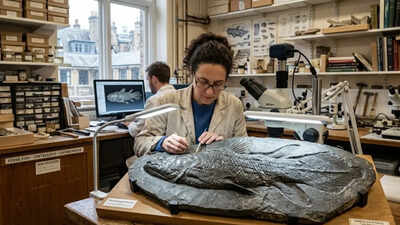
Archaeologists identify a new coelacanth species from a 150-year-old fossil in London. world News
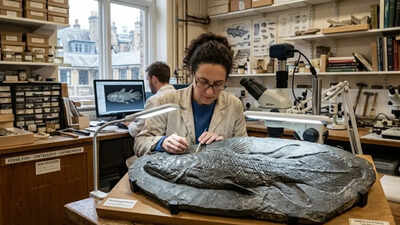
London’s Natural History Museum has discovered a previously unknown species of coelacanth from fossil remains, approximately 150 years old (Macropoma gombesse). The new coelacanth is important because it helps bridge a huge evolutionary gap of about 50 million years for coelacanths, one of the world’s most recognized ‘living fossils’.‘According to the study published by the University of Portsmouth, the fossil was re-evaluated by University of Portsmouth paleontology alumnus Jack L. Norton did this while examining historical collections, which he had already been studying for several years. To explore the internal anatomy of this ancient coelacanth fossil without destroying it, researchers from the University of Portsmouth and the Natural History Museum used advanced X-ray computed tomography (XCT) technology to examine the internal structures of a coelacanth fossil in a way that had never been done before. This discovery emphasizes the enormous amount of scientific potential present in museum collections around the world, and provides further evidence of how modern technological innovations can change the way we look at ancient groups, and show us the complexities of evolutionary processes that have gone unnoticed right under our noses for the past century.
discovery of a New coelacanth species from a 150 year old fossil
As the University of Portsmouth noted, a specimen called Macropoma gombesse was discovered in the Gault Formation of southern England, which dates to the Lower Cretaceous. This fossil has spent over 150 years sitting in plain sight in museum collections, until recently it was discovered that it was a missing link in the Latimeridae family (i.e. modern-day coelacanths). Gombesa is the Comorian name for the modern coelacanth used by local fishermen, from which the name is derived.
Revolutionary discoveries with X-ray computed tomography
The sample was identified using a technique called X-ray computed tomography (XCT), which allows scientists to examine the sample without damaging it, create a 3-dimensional image of the sample, and see the sample’s internal features in high definition. The fossil was then compared directly to similar specimens from different species and found to have enough distinctive structural features to classify it as a new species. It also provided a sample of the evolutionary history of coelacanth.
Revealing internal anatomy with advanced imaging
The researchers used X-ray computed tomography (XCT) to re-analyze the fossil (non-destructive method) through a three-dimensional visualization of the material and internal structures of the specimen; Thus they can perform comparative analysis on this specimen with known lineages to verify any unique physical characteristics of this specimen in relation to other fossils; These results indicate that this fossil represents a new coelacanth species and helps understand its evolutionary history.
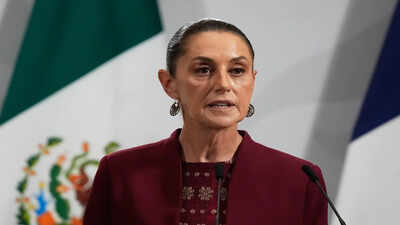
Can Mexico assure World Cup security? President issues statement after deadly pyramid attack. international sports news
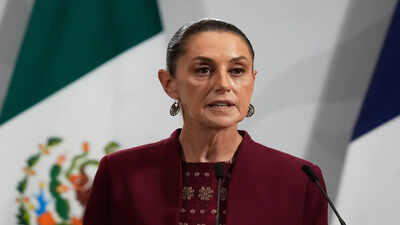
Mexico’s preparations for the 2026 FIFA World Cup have come under renewed scrutiny following a deadly shooting at the Teotihuacan pyramids on Monday, April 20, after which President Claudia Sheinbaum acknowledged lapses in security and called for stronger measures ahead of the tournament. The attack, which comes less than three months before the World Cup begins, has raised concerns about spectator safety as Mexico prepares to host matches with the United States and Canada.
what happened in teotihuacan
The shooting occurred just after 11:30 a.m. local time at the Pyramid of the Moon in Teotihuacan. UNESCO The World Heritage Site is located about an hour from Mexico City and is one of the country’s most visited tourist attractions. According to Mexican authorities, a lone gunman began firing from the top of the pyramid while dozens of tourists were present, and fired 14 bullets at civilians as well as National Guard military police. One Canadian tourist was killed and 13 others were injured. Those taken to hospital included six US citizens, three Colombians, two Brazilians, a Russian and a Canadian. The victims ranged in age from six to 61 years. Video footage broadcast by local media showed people scrambling for cover amid gunfire, and the attacker was seen standing on top of the structure. Authorities later confirmed that the gunman, identified as 27-year-old Julio Cesar Jasso Ramirez, died of a self-inflicted gunshot wound. A gun, knife and ammunition were recovered from his luggage.
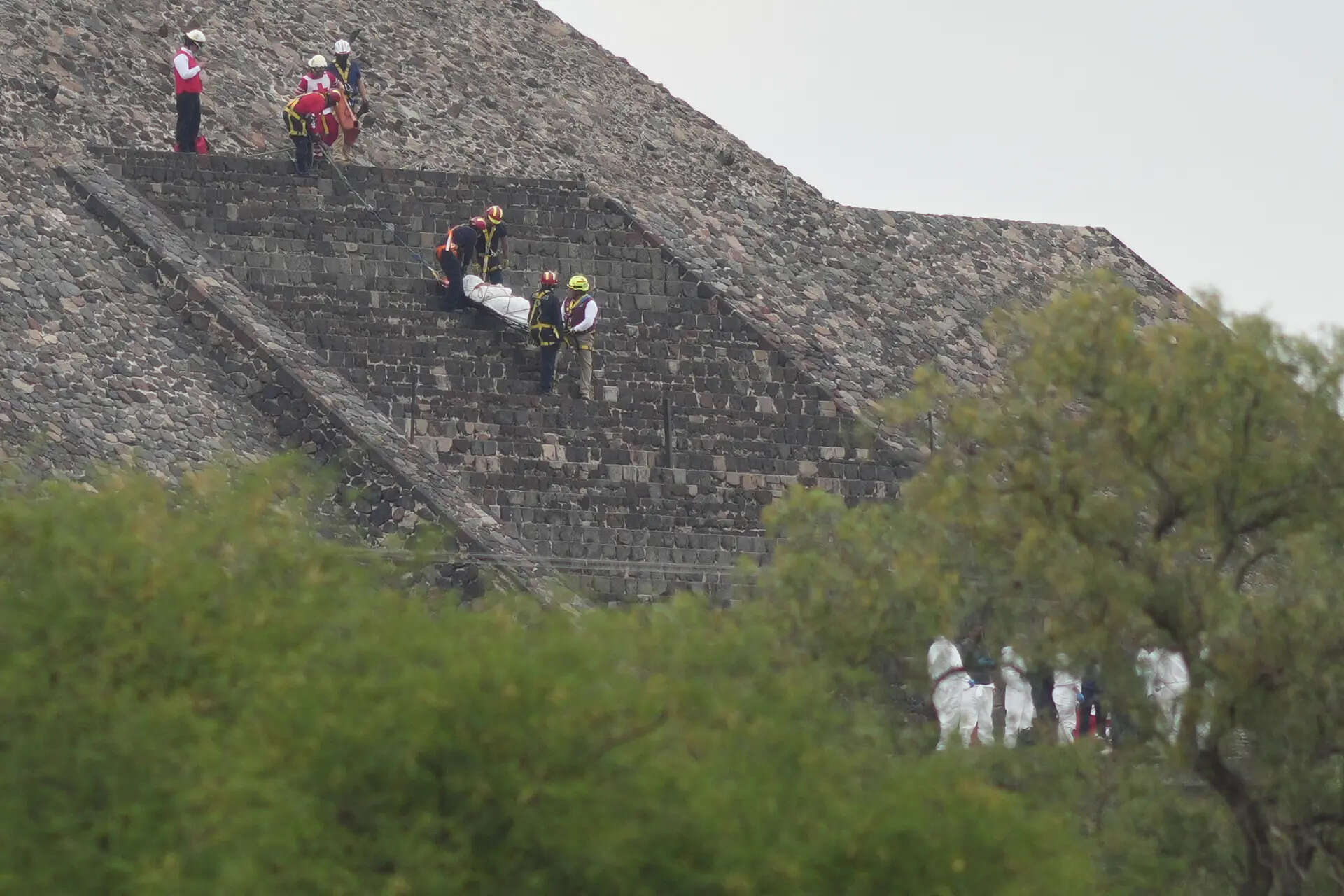
Forensic workers carry the body of a victim down a pyramid after a gunman opened fire on authorities in Teotihuacan, Mexico, on Monday, April 20, 2026. (AP Photo/Eduardo Verdugo)
Security officials said the attack “was not spontaneous”, Mexico state prosecutor José Luis Cervantes Martínez said the suspect “made several preliminary visits to the archaeological site, stayed in hotels near the site ahead of time and planned his violent acts from there.”
Government response and acceptance of security flaws
Speaking at his morning press conference in Mexico City on Tuesday, April 21, Sheinbaum said the site lacked adequate security measures to prevent such an attack. “Obviously, we need to tighten security,” he said, adding that authorities should ensure that “nobody can enter an archaeological site, a tourist site, with a firearm.” He described the shooting as “an isolated incident”, while also acknowledging the need for immediate action. “We have an obligation as a government to take appropriate measures to ensure that a situation like this does not happen again,” Sheinbaum said. “But clearly, we all know, Mexicans know, that this is something that hasn’t happened before.” The next morning after the incident, journalists asked questions about the country’s preparedness to host international spectators during the World Cup.
Wider context: World Cup planning and current concerns
Mexico set to co-host 2026 FIFA World Cup Along with the United States and Canada, the tournament will run from June 11 to July 19. The United States will host 78 of the 104 matches, while Mexico and Canada will each host 13. Mexico’s opening match will take place on June 11 in Mexico City, where the national team will take on South Africa in a repeat of the 2010 opener. The country will host 13 matches in three cities:
- Mexico City – 5 matches including the opening match of the tournament
- Monterrey – 4 matches, including the round of 32 match on 29 June
- Guadalajara – 4 matches, including Mexico vs South Korea on 18 June
The Teotihuacan site was expected to be a major destination for visiting fans in its own right, located close to the capital and attracting more than 1.8 million international visitors annually. Just days before the attack, local lawmakers had pushed to restart a nightly interactive light show at the pyramids for World Cup tourists, a project that had been suspended since the COVID-19 pandemic.
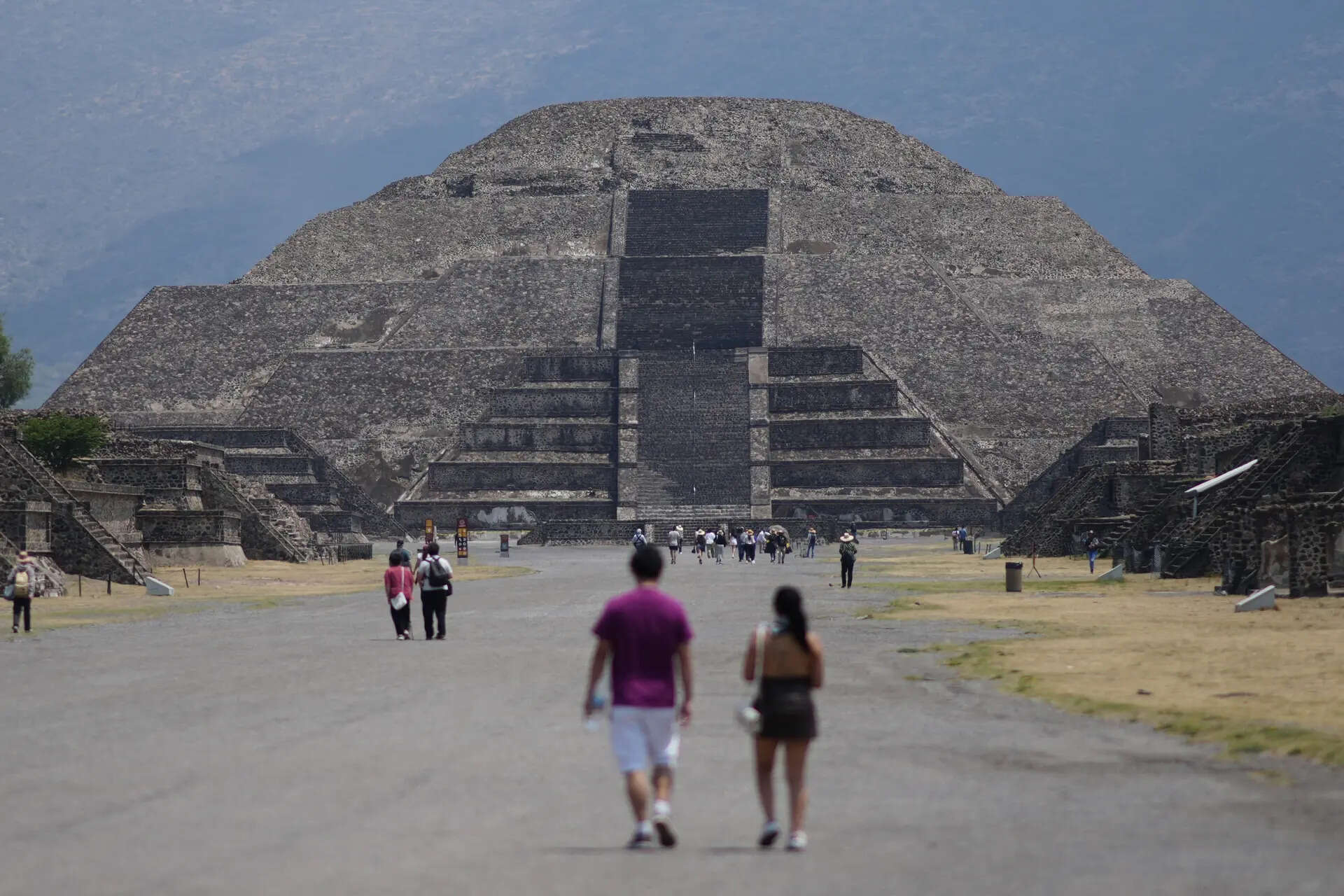
The Teotihuacan pyramids reopen to visitors on Wednesday, April 22, 2026, two days after a gunman opened fire at the archaeological site on the outskirts of Mexico City. (AP Photo/Eduardo Verdugo)
The shooting follows earlier concerns over security, particularly following an increase in cartel-related violence linked to the death of drug lord “El Mencho” (nemesio Rubén Oseguera Cervantes) in February.
Security measures and FIFA position
Mexican authorities have already outlined extensive security plans for the tournament. The government has committed to deploying 100,000 security personnel across the country, with a focus on the host cities Mexico City, Guadalajara and Monterrey. Authorities have also confirmed the use of drones, aircraft and more than 2,000 military vehicles along with a strong security perimeter around stadiums, airports and transport routes. “As you can see, we are very prepared for the World Cup,” Sheinbaum said in March.
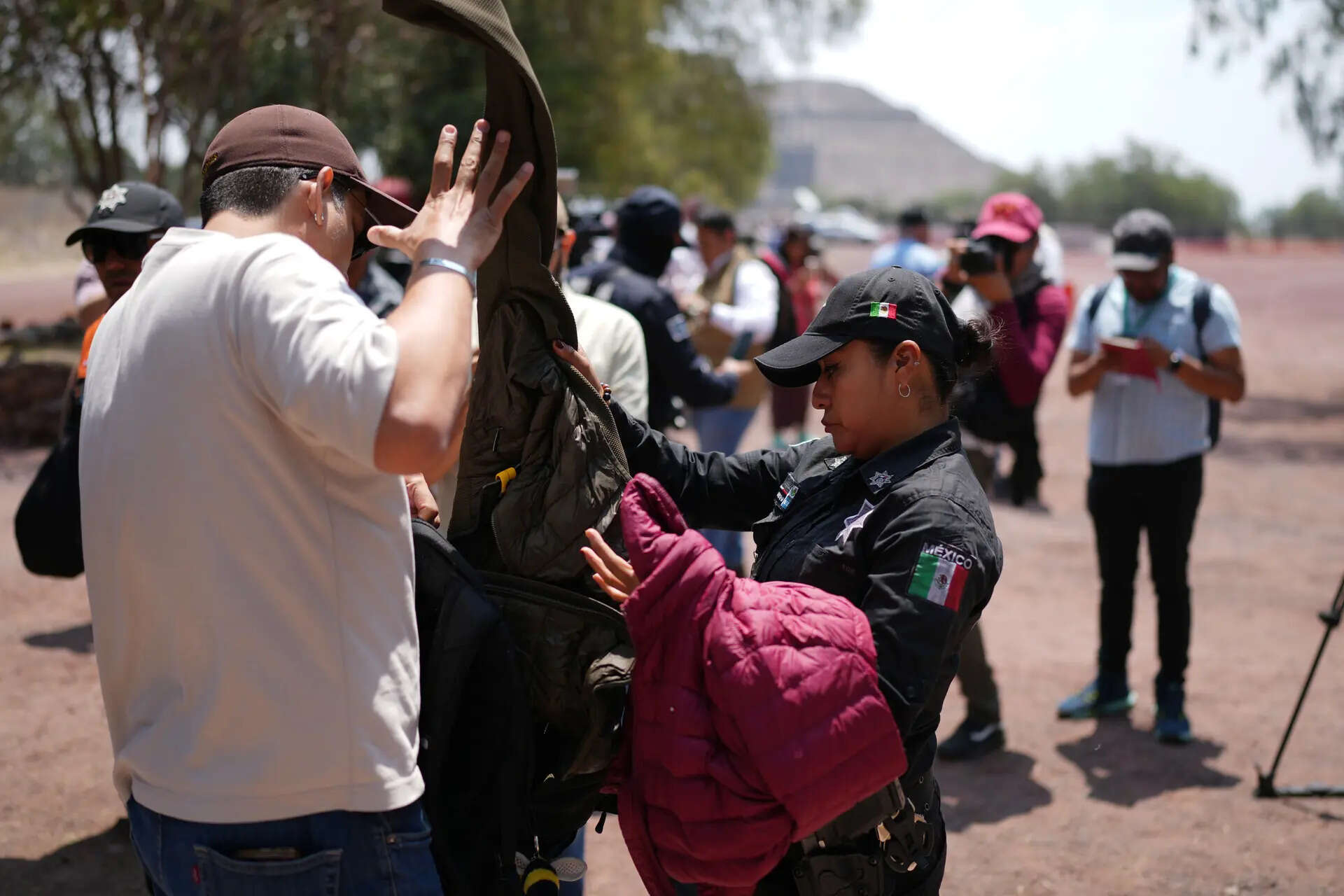
Police search visitors as the Teotihuacan pyramid reopens, two days after a gunman opened fire at the archaeological site on the outskirts of Mexico City, Wednesday, April 22, 2026. (AP Photo/Eduardo Verdugo)
FIFA President Gianni Infantino also supported Mexico’s readiness, saying: “I want to say from the beginning that we have full confidence in Mexico, in President Claudia Sheinbaum, in the authorities, and we believe that everything will work out in the best possible way.” He added, “As it happens in every country in the world, things keep happening, which is why we have the state, the police and officials who will ensure order and security… On behalf of FIFA, I have full confidence.”
where things stand
The Teotihuacan shootings have not led to any changes to the World Cup schedule, but have put a renewed focus on security, particularly at tourist destinations that are expected to see surges in tourist numbers during the tournament. Although officials are describing the incident as isolated, the fact that it was planned in advance and carried out at one of the country’s most prominent sites has raised questions about whether it is now underway as Mexico’s final stages of preparation take place.
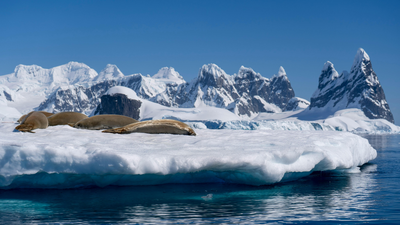
Antarctica’s melting: Antarctica’s “point of no return”: scientists warn melting could be unstoppable
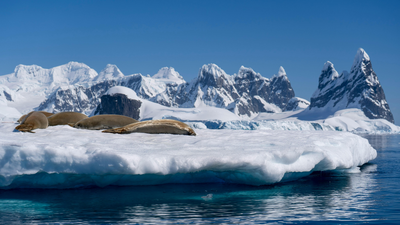
Antarctica has long been viewed as the Earth’s frozen shield, vast, remote and seemingly unbroken. Yet scientists are now warning that some of its most fragile areas could cross dangerous limits. What was once a slow, measurable retreat of the ice is now being described as something much more serious: a tipping point. This so-called “nightmare scenario” suggests that parts of Antarctica could continue to melt regardless of future climate action. Although this process has been going on for centuries, its consequences, particularly rising sea levels, could reshape coastlines and communities around the world.
Antarctic ice sheet tipping point explained
At the heart of the problem is the West Antarctic Ice Sheet, considered one of the most unstable regions of the entire continent. Experts consider it “an example of a tipping point” for the Earth’s climate system, meaning that when a certain tipping point is reached, changes become irreversible.The latest research suggests that some areas of Antarctica may have already reached this tipping point. According to a study conducted with the participation of institutions such as Potsdam Institute for Climate Impact According to research, significant ice basins contain a temperature range of 1-2 degrees Celsius above pre-industrial levels, which our planet has almost achieved. Furthermore, there is a concept of hysteresis where the melting process does not stop even though the temperature is constant. It was noted by the researchers that: “Even if global warming is controlled, the ice sheets may not stop melting.” This is why it was named Point of No Return.
Why the West? Antarctica is melting irreversible
The reason for such rapid melting is the high temperatures not only in the atmosphere but also in the oceans. For example, the water in the Amundsen Sea is warm enough to flow under ice sheets, causing them to melt rapidly. This results in them being unable to stop inland glaciers. Once melted, the glaciers begin moving rapidly toward the sea, melting the excess ice.This can be considered a part of what is known as marine ice sheet instability. Another important factor here is the nature of the ice sheets: most of them in West Antarctica lie below sea level. As a result, once retreat begins, the glaciers will move even closer to the warmer waters and continue to melt.According to Nature Communications, once temperatures rise above 1.8 degrees Celsius, “irreversible loss” of ice sheets becomes inevitable.
Global impact of Antarctica’s melting crisis
The impact of the above scenario reaches far beyond just Antarctica. Complete melting of the WAIS would result in sea level rise of several meters in the long run. There are predictions that such melting would eventually raise sea levels by about 4 metres, completely redefining Earth’s coastlines.What makes this issue so worrisome is that very little can be done to prevent it from happening. It appears to be a matter of time, and scientists believe that once started, the process will take centuries and even millennia to complete, because, as one scientist said:“It takes thousands of years for an ice sheet to form, but decades for it to become unstable.”Scientists say that although some damage has already been done, we can still make efforts to prevent things from worsening. In other words, the fate of Antarctica means the fate of our planet’s coastlines and climate, as well as the fate of all of humanity.

PM Modi: ‘Tell Putin to stop’: Zelensky calls on ‘big players’ Donald Trump, PM Modi and Xi Jinping to put pressure on Russia
 In a post on X sharing excerpts from his interview with CNN, Zelensky said mediation alone may not be enough to stop the conflict. “I think President Trump, President Xi, Prime Minister Modi and other big players in the world have to tell Putin that he has to stop this war. They can’t say to Ukraine, ‘You have to stop the war’. We are defensive. We are not the aggressor,” he said.He also questioned the effectiveness of neutral arbitration, saying, “If you’re mediating, it doesn’t have to feel guilty… If we really want to stop that, I’m not sure powerful countries can be arbitrators.”
‘Global pressure is needed, not compromise’
Zelensky stressed that ending the war requires unified international pressure, rather than compromise-based negotiations. He said, “Together we have to stop Putin. What does it mean to be a great leader? It means stopping war through diplomacy.” He further argued that the presence of foreign troops on the front lines could act as a deterrent against future Russian aggression, warning that without such measures, “no words will stop Putin.”
Ukraine expands defense ties in Middle East
In a separate post, Zelensky highlighted Ukraine’s growing defense partnerships, announcing agreements with Saudi Arabia, Qatar and the UAE on drone cooperation.“We signed three major security documents… these will translate into many different contracts,” he said. He said Ukraine was offering expertise, training missions and cost-effective drone systems.While cheap interceptors can counter expensive attack drones, he said, “They will destroy it not with a $3-4 million missile, but using a $10,000 interceptor.”Zelensky’s comments come amid concerns that rising tensions in the Middle East could affect Ukraine’s access to critical defense systems. He warned that a prolonged conflict involving Iran could jeopardize the US military aid package, particularly anti-missile systems.Despite this, he expressed gratitude for US support and said that Ukraine is ready to share its defense innovations with the US as well.
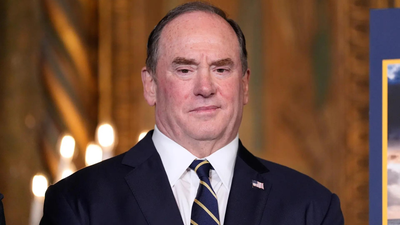
Hormuz Blockade: Why did Trump suddenly ‘dismiss’ the US Navy Secretary amid the Hormuz Blockade? What the reports claim
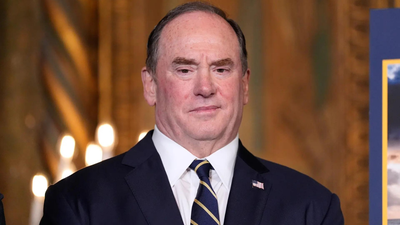
US Navy Secretary John Phelan has been fired after months of alleged tension with Defense Secretary Pete Hegseth and Deputy Defense Secretary Steve Feinberg over the Navy’s modernization agenda and shipbuilding priorities, according to US officials.Their removal was confirmed in a statement posted by Pentagon spokesman Sean Parnell, who said Hegseth and Feinberg “are grateful to Secretary Phelan for his service to the Department and the United States Navy.” Hung Kao, currently serving as Under Secretary of the Navy, has been appointed Acting Navy Secretary.Officials familiar with the matter, interviewed by The Wall Street Journal, said the decision came after growing disagreement with the president over the pace of implementation. donald trump’s naval priorities, especially shipbuilding and fleet modernization. Pentagon sources said Hegseth and Feinberg felt Phelan was not moving fast enough on key defense procurement targets.Phelan was reportedly informed of the firing in a phone call minutes before the announcement was made public. Earlier, WSJ sources said Phelan was meeting with lawmakers on Capitol Hill regarding the Navy’s budget request.Tension had reportedly been building within the Pentagon for months. Officials cited concerns over Phelan’s close communications with President Trump on naval issues, including direct exchanges on shipbuilding policy, which reportedly bypassed traditional Pentagon channels.Disagreements also emerged over major procurement proposals, including Phelan’s push for new naval programs, which Pentagon leadership felt was not properly coordinated within the chain of command.The leadership change comes amid widening divisions within the US defense establishment, with Hegseth overseeing a series of changes to senior military personnel in recent months.Phelan, who was sworn in as Navy Secretary in March 2025, had previously faced internal opposition regarding his management style and policy approach, particularly regarding acquisition reforms and the Navy leadership structure.The dismissals come at a time when the Pentagon is pursuing a major naval expansion and shipbuilding under the current administration, with senior officials pushing for faster delivery timelines and greater alignment with the White House’s defense objectives.

Dubai Metro: Dubai Metro Gold Line 2026: Dubai’s Ruler Sheikh Mohammed unveils Dh34 billion line connecting Business Bay, Dubailand and Jumeirah Golf Estates | world News

Dubai has unveiled its biggest transport project to date, with Sheikh Mohammed bin Rashid Al Maktoum announcing the Dh34 billion ($9 billion) metro Gold Line on April 22, 2026. This ambitious project is designed to reshape the movement of millions of people across the city, reinforcing Dubai’s long-term vision of becoming one of the world’s most connected urban centres. Described as a “fully integrated underground metro line”, the Gold Line marks a major leap forward in infrastructure planning, connecting historic districts with rapidly growing new communities.
dubai metro golden line 2026
The new line will extend 42 kilometers underground, running at a depth of 40 meters and passing through 15 key areas of Dubai.The route is expected to start in Al Ghubaiba and connect key locations:
- business bay
- Maidan
- Jumeirah Village Board
- Dubailand
- Jumeirah Golf Estate
It will also seamlessly integrate with the existing Red Line and Green Line, while connecting to the upcoming Etihad Rail network, creating a more integrated transport system across the emirate.With approximately 18 planned stations, the line is designed to serve both densely populated areas and emerging real estate hubs, ensuring smooth movement between the old and new Dubai.
Impact of Dubai’s Gold Line on travel time
The new Gold Line is expected to significantly reshape daily commutes across Dubai, with planners estimating it will serve approximately 1.5 million residents once fully operational. By reducing pressure on the existing Red Line and major road corridors, the project aims to make journeys in some of the city’s busiest districts faster and more predictable.At full capacity, the line can handle 465,000 passengers per day, providing a major boost to public transport usage as Dubai’s population continues to grow. The broader impact goes beyond convenience. With the addition of the Gold Line, the metro network is going to grow by about 25 per cent, taking the total track length to more than 160 kilometers and increasing the number of stations from 67 to 85.Officials also expect strong long-term economic returns, with estimates suggesting the project could generate returns of up to 430 percent over the next two decades, driven by increased demand for residential and commercial development around metro-connected areas.
Expected roll-out
The Gold Line is scheduled to be completed on September 9, 2032, a symbolic date that mirrors the original launch of the Dubai Metro on 09/09/2009. The timeline reflects both ambition and careful planning, with the tender process scheduled to begin in 2026, followed by contract awards in 2027. Construction is expected to begin shortly, using advanced tunneling technology to deliver one of the city’s most complex underground transportation systems.Once completed, the Gold Line will operate along with the Blue Line coming by 2029, forming part of a broader strategy to expand rail connectivity and reduce reliance on road transport. Together, these projects underline Dubai’s effort towards a more integrated, efficient and future-ready mobility network.
The future of travel to Dubai
More than just a new railway, the Gold Line represents a change in Dubai’s future development plan. By connecting 55 major real estate developments and linking historic districts with new urban areas, it aims to create a more seamless, sustainable city.It also reflects Dubai’s larger ambition to build a transport system that is not only efficient, but also future-ready, supporting economic expansion, tourism and daily life in one of the fastest-growing cities in the world.In simple words, this is not just another metro line, it is the backbone for Dubai’s next phase of development.
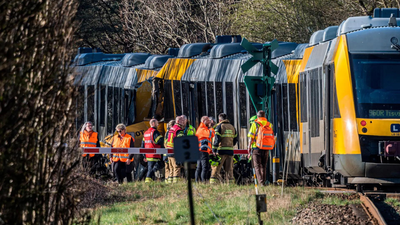
Denmark train collision: Denmark rail accident: Two trains collide head-on near Copenhagen, several injured
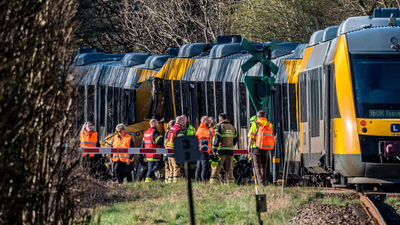
Denmark rail accident: Two trains collide head-on near Copenhagen, several injured
Two trains collided head-on in Denmark on Thursday, injuring several passengers and triggering a major emergency response.The accident happened on a railway line connecting the towns of Hillerode and Kagerup, about 40 kilometers north of Copenhagen, police said in a statement.Emergency services confirmed that two local trains were involved in the accident. “It’s two commuter trains that collided head-on,” a spokesman for the Greater Copenhagen fire department told Reuters.
There is information about someone injured, no one is trapped
According to public broadcaster DR, officials said five to 10 people were injured in the incident. However, officials insisted that all passengers had been evacuated safely.“There are no injuries to passengers. Everyone is out of the trains, so no one is trapped…” “Major resources have been dispatched to the scene,” a fire department spokesman said.The AP reported that the collision prompted a large-scale emergency response, with police describing it as a “major accident”, although the exact number of casualties was not immediately confirmed.Details of the cause of the collision were not immediately available, and authorities are expected to launch an investigation into the incident.The rapid evacuation ensured that no passengers remained trapped inside the trains, although emergency teams continued operations at the site.Further updates are awaited as officials assess the situation and determine the cause of the head-on collision.
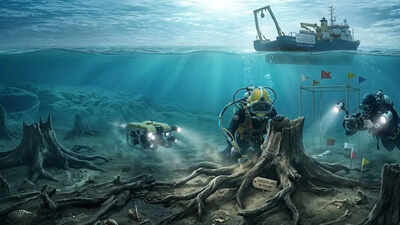
Prehistoric forest discovered: A hidden prehistoric forest has been discovered beneath the North Sea, revealing life 16,000 years ago. world News
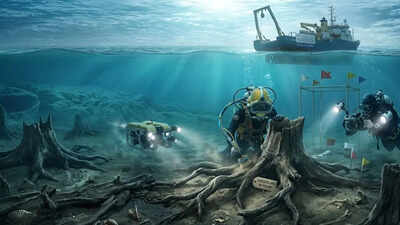
Beneath the surface of the North Sea, a long-hidden prehistoric forest has been discovered, revealing many new possibilities for the environment and climate of ancient Europe. By using sediment collected from ancient sites to collect and analyze ancient DNA (sedaDNA), researchers have shown that a sunken landscape now known as Doggerland contained lush, living forests of oak, elm and hazel thousands of years earlier than scientists thought. This research shows that Doggerland was an important habitat for plants, animals, and even early humans during the last ice age, and that parts of this lost environment remained above water for longer than researchers expected, thus providing more information about how the ecology of this region evolved in the past, before it all eventually sank beneath high sea levels.
400,000 years later: A hidden prehistoric forest Figured out
In a new study in the Proceedings of the National Academy of Sciences (PNAS), researchers have developed an alternative chronology of the forests of Northern Europe. Researchers analyzed 252 sediment samples collected from 41 marine cores and found DNA from temperate tree species that existed at least 16,000 years ago. In a particularly surprising discovery, the researchers also recovered DNA from Pterocarya (nut family) species that were believed to have gone extinct in the region 400,000 years ago – indicating that isolated ‘microrefugia’ allowed some species to survive longer than previously determined.
Why was Doggerland more than just a land bridge?
The Doggerland, once thought to be only an ephemeral landmass, is now likely to represent a permanent center of development in what was also a very fertile area. According to PNAS research findings, the existence of Tilia (lemon) trees 2,000 years earlier than the date these trees were first recorded in mainland Britain indicates that locally mild climatic conditions supported more complex ecosystems than previously thought.Researchers believe that these wooded areas could have provided both food and shelter to early Mesolithic human populations, and may explain the lack of early human archaeological material in Britain today due to constant submergence beneath the North Sea.
How new DNA evidence rewrites Europe’s glacial history
The existence of resilient ecosystems in Europe calls into question the accepted approach to forest regeneration across Europe after the last glacial event. New data from the University of Warwick shows that Doggerland survived significant environmental disturbances (such as the Storga tsunami (8,150 years ago)) and that some parts were still as habitable as 7,000 years ago. The application of the sedaDNA method to the exploration of marine sediment cores provides unprecedented detail about the past compared to traditional pollen studies and provides a reference for future excavation efforts to identify specific sites of human habitation on these submerged landscapes.
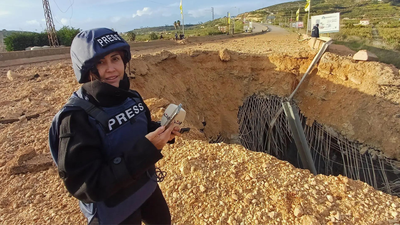
Lebanese journalist murdered: who was Amal Khalil? Lebanese journalist killed in attack as Israel-Hezbollah tensions escalate
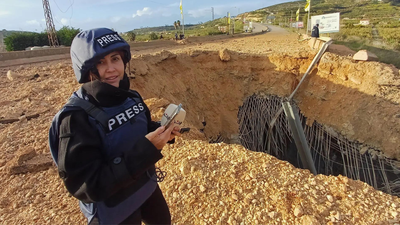
A Lebanese journalist was killed in an Israeli airstrike in southern Lebanon on Wednesday. Rescuers recovered his body hours after the attack, amid ongoing hostilities related to the Israel–Hezbollah conflict.Al-Akhbar reporter Amal Khalil took shelter in a house in the village of al-Tiri while covering the fighting. According to Lebanese officials, the attack on the house came shortly after an earlier Israeli attack in the area.Lebanese health ministry officials said two people were killed in the initial attack. After this, the second attack took place on the building where Khalil and his associate Zainab Faraz had taken shelter. Faraz was seriously injured and was pulled from the debris, but rescue teams were unable to immediately reach Khalil.The ministry said Israeli shelling in the area forced emergency responders to suspend their operations, causing delays in reaching the site. Khalil remained trapped under the debris for several hours before Lebanese Army units, civil protection teams and the Lebanese Red Cross were able to reach him. His body was recovered late at night, more than six hours after the attack.Israel’s military said it was reviewing the incident and ascertaining whether the villagers had violated the ceasefire and posed a threat to its forces. It denied deliberately targeting journalists or hindering rescue operations.Lebanon’s Information Minister Paul Morkos condemned the killing as a “gross violation of international and humanitarian law”.Khalil’s death came just ahead of a second round of talks in Washington between Israeli and Lebanese officials aimed at extending the ceasefire that took effect last week. conflict between israel and HezbollahTension continues to rise along the border, which flared up again in early March amid broader regional tensions linked to the US-Israel confrontation with Iran.
Who is Amal Khalil?
An experienced reporter from southern Lebanon, Khalil had covered conflicts in the region since 2006. His recent reporting focused on Israeli demolitions in villages where troops have established positions inside Lebanese territory.His killing brings to nine the number of journalists killed in Lebanon this year, according to media monitors cited by the Associated Press. Lebanese officials said at least 2,300 people have been killed and more than a million displaced in the widespread conflict.International press freedom groups condemned the incident. Reporters Without Borders had previously urged pressure on Israel to allow safe access for rescue workers, while the Committee to Protect Journalists said that explicitly targeting journalists and hindering rescue efforts could constitute war crimes.Lebanon’s President, Joseph Aoun, called for coordinated efforts involving the army, the Red Cross and United Nations peacekeepers to secure access to the site.The incident follows a series of deadly attacks on media workers in recent weeks. In late March, an Israeli airstrike killed three journalists in southern Lebanon, including Ali Shoaib of Al-Manar TV. Israel said he was affiliated with the Hezbollah intelligence agency, an allegation not proven.Fatima Fatouni, who worked with Al-Mayadeen TV, and her brother Mohammed Fatouni were also killed in the same attack. A few days earlier, Mohammed Sherry and his wife were killed in another airstrike in Beirut.