12 people died in fire in Sri Lanka nursing home, owner arrested for negligence

12 people died in fire in Sri Lanka nursing home, owner arrested for negligence

At least 12 residents have been killed and seven others injured in a massive fire at an elderly care home in western Sri Lanka, police said on Thursday.The fire broke out at the Mawapiya Sewana elderly care home in Angurwatota, about 65 kilometers south-east of Colombo in Kalutara district, around 5.30 pm on Wednesday. More than 70 elderly residents were at the privately run facility when the fire broke out.Police said 10 people were found dead at the scene, while two others died later in hospital. A total of 51 residents were rescued and taken to temporary accommodation in a nearby school. Treatment of the injured is continuing.Footage from the scene showed the building extensively damaged, with burnt furniture and equipment scattered throughout the complex. Firefighters, police officers and local residents worked together to control the fire and rescue survivors.Authorities have arrested the owner and director of the home on suspicion of causing the deaths due to negligence. A magistrate inquiry has also been held as investigators continue to investigate the cause of the fire.Initial reports suggest that a gas cylinder explosion may have contributed to the rapid spread of the fire, but police said the exact cause had not yet been established.

Source link

Missing nuclear scientist found dead a year later, skeletonized body with gunshot wounds found in New Mexico woods. world News

Missing nuclear scientist found dead a year later, skeletal body with gunshot wounds found in New Mexico forest

The disappearance of a Los Alamos National Laboratory employee that has puzzled investigators for nearly a year has taken a grim turn after his remains were found in a remote New Mexico forest. Melissa Cassius, 54, disappeared in June 2025 and was the subject of an extensive search effort. Authorities recently confirmed that human remains found in the Carson National Forest were those of Cassias. The report, citing a private investigator hired by his family, claimed that the body was found in a skeletal state with an apparent gunshot wound to the skull, raising new questions over the circumstances surrounding his death.

Remains found almost a year after disappearance

Cassias was last seen on June 26, 2025, after leaving his home in Ranchos de Taos, a community in northern New Mexico. About 11 months later, a hiker found human remains in the McGaffey Ridge area of ​​the Carson National Forest.The location where the remains were found was reportedly about six miles from where Cassias was last seen. New Mexico State Police later confirmed that the remains were those of the missing woman.This discovery ended the search but opened a new phase of investigation into what happened during his final days.According to former homicide detective Thomas McNally, who is investigating the case on behalf of Cascias’ family, the remains were found in skeletal condition.McNally told media outlets that the body appeared to have a gunshot wound to the skull and was found near an abandoned firearm. He also claimed that there were no clear signs that animals had damaged the remains despite the body being exposed in a wooded area for a long time.Authorities have confirmed that a gun was found near the remains, but have not publicly released an official cause of death or ruled on whether any foul play was involved.

Who was Melissa Cassias?

Casias worked at the Los Alamos National Laboratory, a historic New Mexico facility that was originally established during the Manhattan Project and is still involved in U.S. nuclear research and national security programs.She was a married mother of one child and had worked in a laboratory for years. Family members described her disappearance as completely out of character and said there were no clear indications that she had planned to leave voluntarily.His case attracted national attention because of its connection to one of America’s most important scientific institutions.

What happened the day she disappeared?

Investigators pieced together a timeline of Cassias’s last known activities through surveillance footage and witness statements.On the morning of her disappearance, she reportedly took her husband, Mark Cassius, to Los Alamos National Laboratory. She later returned home, where her daughter said she seemed completely normal.Before leaving, Cassias reportedly left behind her identification and mobile phone. Investigators later discovered that records had been erased from the devices.Surveillance footage captured him walking eastbound on State Road 518 near Taos around 2:20 p.m. On June 26, 2025. This was confirmed to be the last time he was seen.

Investigators believe foul play may have been involved

McNally has publicly stated that he believes Cassias’ death was not accidental and that foul play may have played a role.He has questioned aspects of the original investigation and suggested that the family could take legal action against the officials handling the case.However, law enforcement agencies have not publicly supported those findings. Investigators are continuing to examine evidence and have not announced any arrests or identified any suspects.

Part of a broader pattern?

The case has attracted additional attention because several other individuals associated with defense, aerospace, and government research programs have disappeared or died under unusual circumstances in recent years.They include former Los Alamos employee Anthony Chavez, aerospace engineer Monica Reza, government contractor Steven Garcia and retired Air Force Maj. Gen. William Neal McCasland.While the cases have fueled speculation online, authorities have not publicly established any connection between them.

investigation is ongoing

Although the discovery of Cassias’ remains has answered one of the biggest questions of the case, many others remain unresolved.Investigators are awaiting further forensic analysis to determine the exact cause and manner of death. Until those findings are released, the circumstances surrounding the Los Alamos employee’s death remain a mystery.

Source link

Bees helped scientists create tiny drones that navigate without GPS and find their way home

Bees helped scientists create tiny drones that navigate without GPS and find their way home

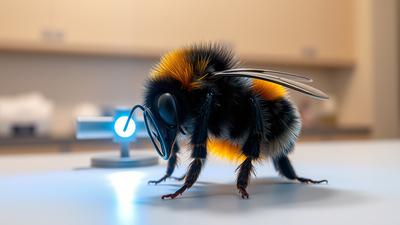
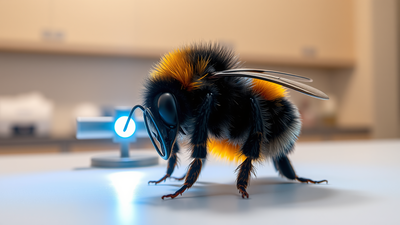
Most drones rely on GPS and powerful computers to find their way. This makes them heavy, expensive, and power hungry, which is basically not practical for anything small. But bees? They navigate perfectly with brains smaller than a grain of rice. Now, scientists at Delft University of Technology have discovered their secret and have created drones that do the same thing. The system, called B-Nav, allows small drones to fly hundreds of meters away and still find their way home without using almost any computing power. It all started with a simple question: If bees can do it with almost nothing, why can’t our robots? The answer always turned out to be hidden in nature, just waiting for someone to look closely enough.

How bumblebees find their way home: the inspiration behind B-Nav

Here’s what happens when a bee leaves its hive for the first time. It doesn’t fly and fly away just to find flowers. Instead, it takes a short learning flight right near home, memorizing the landmarks and the layout of its neighborhood. After those initial scout flights, the bee can fly far along winding, winding paths and still return almost straight home. It’s like stepping out of your house for the first time, walking down some streets, remembering what they look like, and then being able to walk back out of nowhere in the city.Scientists have understood its basics for years. Bees use something called odometry; They keep track of how far they have gone and in what direction, such as counting steps while walking. But odometry gets messed up over time. Small measurement errors add up. So bees also remember what their environment looks like in important places, especially around the house. They combine these two methods: approximate distance and direction estimation and visual memory. And it works brilliantly.The challenge was to discover what and how bees learn visually. That was the gap that needed to be filled. Researchers led by Guido De Kroon at Delft University wanted to know whether imperfect distance and direction estimation could still be enough for a machine to learn to come home. Could a small neural network store only visual memories without the need for detailed maps? This became the basic idea behind the B-Nav.

Building drones that think like bees: the Bee-Nav system explained

The research team included roboticists from Delft University and biologists from Wageningen University in Germany and Carl von Ossietzky University of Oldenburg. Together, they created something that mimics the actions of bees, in the same order that bees do it.First, the drone makes a short learning flight near its starting point. When it flies, it uses a tiny omnidirectional camera to capture 360-degree images of everything around it. These images are not stored in much detail. They’re processed by a compact neural network, basically a stripped-down AI brain that learns how the house looks from different angles and distances.Once the drone has completed its learning flight and collected its visual memories, it is ready to explore. The drone flies away from home on whatever path is available, using odometry to track its speed. But like the bee, the drone doesn’t rely solely on odometry. As it approaches a familiar area, it begins to use its learned visual memories to correct errors it made during its journey. The visual network says “Hey, I recognize this place” and guides the drone back home.according to Nature paper published in May 2026The system works remarkably well. The drone returned within 0.5 meters of home in 100 percent of flights between 30 and 110 meters. Even on long flights between 200 and 600 meters it was successful in 70 percent of the cases. These are solid numbers for something so light and simple.

The memory trick that makes everything work: why 42 kilobytes is enough

Here’s the part that blows people’s minds: The entire neural memory required for this system is only 42 kilobytes. This is not a typing error. It’s about the size of a small email attachment from the 1990s. For short flights in controlled environments, the memory requirement drops to only 3 kilobytes.Most autonomous drone systems use large-scale computers and continuous mapping systems. They require powerful processors, huge memory storage and lots of power. Bee-Nav does the same thing with a smaller fraction of the same. The philosophy is simple: don’t store what you don’t need. Store only what is important for navigation.This difference means everything when you’re trying to build a really small, lightweight drone. The whole approach assumes you can solve navigation with less hardware and better thinking. This is the kind of insight that only comes from carefully studying biology. Bees did not evolve brains specifically to navigate; They developed brains for many tasks. But somehow they are incredibly skilled at this particular task.

Real-world uses: Where these drones actually work

The most obvious application is greenhouse and agricultural monitoring. Lightweight drones can inspect tomato crops, detect diseases or pests early and help farmers increase yields while reducing wastage. These drones should be safe for people working nearby. You can’t move heavy machines around workers. Bee-Nav makes this possible.Disaster areas are another area where GPS fails. Search and rescue teams working after earthquakes or floods can use these drones to explore areas before sending people. Warehouse inspections, building surveys and even exploring caves where GPS signals don’t reach are all made practical with truly autonomous, lightweight drones.Scalability is also interesting. Researchers say that today you can easily install B-Nav on a drone weighing 30 to 50 grams. Ultimately, they want to reach true bee-sized drones, although this will require solving other problems such as small batteries. But the intelligence part? He is ready to go.

Why this matters for the future of robotics and autonomous systems

This research proves something important: You don’t need massive computational power and detailed maps to achieve autonomous navigation. You need clever algorithms and inspiration from nature. It’s a lesson the robotics field is learning again and again: The best solutions sometimes come from looking at what nature has already figured out.For a world that wants smaller, cheaper, safer autonomous robots, Bee-Nav is a step forward. This shows that small drones can be really smart without being expensive or dangerous. They can explore, learn and return home. It’s the foundation of everything engineers want to build on top. It turns out that bees were doing advanced robotics millions of years before humans invented computers.

Source link

Inside Onkalo: The world’s first nuclear waste vault built for 100,000 years of isolation world News

Inside Onkalo: The world's first nuclear waste vault built for 100,000 years of isolation

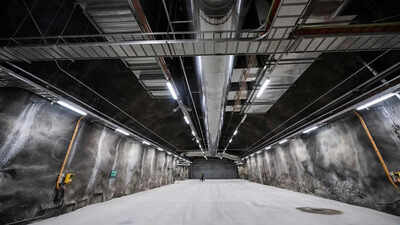
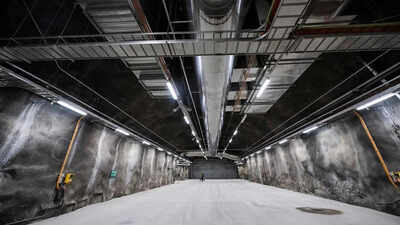
Beneath the pine forests of south-west Finland, rock comes before anything else. It is old in a way that makes human construction temporary, shaped by geological time rather than anything built on the surface. According to PBS, the underground facility known as the Onkalo nuclear repository is located near Eurajoki, where nothing above ground really gives any indication of what’s happening hundreds of meters below. At depth, tunnels lack the essentials: moist air, rocky walls, cables running over uneven surfaces, and the faint echoes of motion. This is not a place for relaxation or spectacle. It is built around a much more final thing, the long-term management of nuclear waste that cannot be easily forgotten or moved elsewhere.

How Finland is planning to seal nuclear waste inside ancient bedrock

Reportedly, the idea behind the site is less about storage in the usual sense and more about gradual removal from human access. The spent fuel is first sealed in corrosion-resistant copper canisters, then encased in bentonite clay, which expands when exposed to moisture. The purpose of this arrangement is to reduce movement, seal the gap, and limit any slow interaction with groundwater.Each canister is lowered into drilled holes cut into the tunnel floor. Once filled, the sections are permanently sealed with layer-by-layer reinforced plugs. The tunnels will eventually close one by one until there is nothing left to access the surface infrastructure. A capacity of approximately 6,500 tonnes of uranium fuel is planned, covering production from Finland’s existing reactor fleet.As reported by PBS, “We are now about 430 meters (1,411 feet) below zero,” geologist Tuomas Perre said as he drove a car through a maze of man-made tunnels. “We’re passing through rock that’s 1.9 billion years old.”

Nuclear waste disposal project in Finland has reached the final regulatory phase

The project has taken decades to reach its current stage, through design changes, political shifts and repeated safety reviews. The final regulatory assessment is now with the Finnish Radiation and Nuclear Safety Authority, known as STUK, which is expected to complete its final assessment before an operating license can be granted.The companies behind the site, including Posiva and utility operator Teolisuden Voima Oyj, have described a cautious start to operations after receiving approval. Initial fuel transfers are expected to begin gradually, with material already stored in nearby facilities awaiting underground transportation. Even at this stage, there is very little sense of completion. The system is built, but not yet fully activated, as if it is waiting for the point where the engineering turns into routine burial work.

Designing nuclear security across thousands of years

As reported in the study published in ScienceDirect, titled, ‘Awaiting Doom: Nuclear Imagination and the Politics of the Distant Future in Finland‘, what sets Onkalo apart is the time frame around which it is made. Security models extend 100,000 years into the future, by which time current infrastructure, languages, and political systems will have changed beyond recognition.Engineers focus on slow processes rather than sudden failures. Copper degradation, soil stability, groundwater flow and the potential for seismic changes during future ice ages are all part of the long-running assessment. No single factor is expected to cause failure on its own, but the interactions between them over vast time periods are treated with caution.The fuel will be safely stored more than 1,300 feet below the Earth’s surface in corrosion-resistant canisters, according to a YouTube video from the U.S. Department of Energy.

Public trust and quiet acceptance in Finland

In Finland, the attitude towards reserves has become established over time as a practical acceptance. Initial opposition existed, especially when the concept was first discussed decades ago, but it softened as the project moved from theory to visible construction.Researchers note that trust in national regulators and long-term scientific assessment have played a role in that change. There is also a legal requirement that nuclear waste produced in Finland must remain within the country, eliminating the option of exporting the problem elsewhere. Still the worries have not completely ended. Environmental groups continue to argue that no engineered system can be guaranteed to be safe over such an extended period of time, where natural processes and human oversight will inevitably fall apart.


Source link

Intelligence in an insect: Bumblebees break new ground with timing skills that astound researchers.

Intelligence in an insect: Bumblebees break new ground with timing skills that baffle researchers

For years, scientists believed that only humans and a handful of vertebrates could tell the difference between short and long periods of time, a skill as fundamental as reading the dots and dashes of Morse code. But researchers at Queen Mary University of London have turned that notion upside down, proving that buffalo-tailed bumblebees can do something previously thought impossible for insects: distinguish between light flashes of different lengths and use that information to find food. These tiny creatures, with brains no bigger than a poppy seed, learned to recognize the difference between quick flashes and long pulses in exchange for a sweet treat. The discovery challenges everything we thought we knew about the intelligence of insects and suggests that complex time processing may be more common in nature than anyone previously imagined. It’s a reminder that nature often surprises us when we delve deeper.

The big secret of the tiny brain: how bumblebees learn time and discrimination

Timing is everything in the natural world. When a hummingbird visits a flower, it needs to know when the nectar can return. When a cricket calls to a potential mate, the length of its chirp has meaning. When an animal runs away from a predator, a fraction of a second can mean the difference between life and death. Yet how insects actually process these small intervals of time remains one of the great mysteries of biology. Most researchers assumed that their brains were not designed for such precision. research teamLed by Alexander Davidson, a PhD candidate, and Dr. Elisabetta Versace, a senior lecturer at Queen Mary University, it was decided to test whether bumblebees could handle temporary tasks. They chose the buff-tailed bumblebee, Bombus terrestris, a common species found across Europe and many other parts of the world. What happened next surprised everyone involved. The bees did not fail. He did not struggle. He learned what scientists considered impossible.

Understanding Duration Resolution Test and Light Flash Experiments

The experimental setup was extremely simple. Bumblebees were housed in a specially designed wooden nest box, which was kept at a constant temperature on a normal day-night cycle. From this nest, they could access acrylic tunnels leading to an observation area and a testing chamber. Inside the testing room were three small boxes, each of which displayed bright yellow circles on a dark background in front of a monitor.The researchers controlled precisely when these circles blinked on and off. In one set of experiments, they tested whether bees could distinguish between a 5-second flash and a 1-second flash. In the second, they tested for 2.5 seconds compared to only 0.5 seconds. Each period was paired with either a tasty and beneficial sugar solution or a quinine solution that tasted bitter and unpleasant. Bees quickly learned to associate one period with sweetness and the other with something that should be avoided.Here it is noteworthy: the researchers made sure that brightness could not be the decisive factor. He designed some tests where a short flash was repeated several times adding up to the same total brightness as a longer flash. Even when this potential trick was introduced, bumblebees continued to choose correctly based on how long each flash lasted. They did not depend on cumulative light; They were actually processing time with real cognitive capacity.

Why did scientists expect insects to fail at this cognitive task?

Before this research, the scientific consensus was clear: This task should be impossible for insects. It was believed that discrimination of time on the second and sub-second scale required a brain of significant complexity. Humans can obviously do this. Vertebrates such as macaques and pigeons have shown this ability in previous studies. But insects? Their entire nervous system consists of about one million neurons, compared to 86 billion in the human brain.Scientists understand that the ability to process temporal information is important for animal activities such as foraging, mating, and defense against predators. But he believed that insects controlled time through circadian rhythms, biological clocks that control day-night cycles and seasonal patterns. They work on a scale of hours and days. How could such mechanisms possibly handle the precision required to distinguish between a half-second flash and a two-and-a-half second flash?There was also the issue of evolutionary relevance. In nature, bumblebees do not have to face flickering lights. They have no natural reason to develop this ability. Unlike some skills that obviously help with survival, this seemed like pure cognitive flourishing. If bumblebees can somehow do this, what does it say about how we have categorized intelligence in the animal kingdom?

Training Method: Sugar Rewards and Behavioral Success Rates

The training protocol followed the classical conditioning approach. To maintain consistency in the research, one bee from each colony was tested daily. Initially, bees were rewarded for choosing the correct period; Their preference was reinforced with sucrose solution. The team kept the bees in this learning phase until they reached a specific threshold: 15 correct choices out of 20 consecutive trials.That’s when the real test came. The prizes disappeared. The sugar solution was gone, and the bitter quinine remained. Will bees continue to discriminate between durations even without incentives? The answer was a resounding yes. Bees that were trained to recognize longer flashes still chose the longer flashes much more often than expected. Bees trained on smaller brightness still choose the smaller brightness. He had actually learned something, not only memorized the Chinese way, but also understood the underlying rule.The researchers tested 41 bees in 10 different colonies. They used a perfectly balanced design, meaning they trained some bees to expect a reward with a long-term incentive and others with a short-term incentive. This careful methodology ruled out the possibility that they were observing bees reacting to a preferred stimulus type.

What does this reveal about insect intelligence and neural efficiency

The implications of this work extend far beyond bumblebees. If a tiny insect’s brain can handle temporal discrimination at this level, it suggests that neural plasticity is more common than we expected. This marks the first time time-based visual discrimination has been demonstrated in insects, according to a groundbreaking study published in biology paper.The real revolution in thinking comes in efficiency. It’s not that bumblebees can do it, it’s that they can do it with an incredibly small nervous system. How do bees solve temporal problems without the vast interconnected networks of the vertebrate brain? What shortcuts does their neural architecture take? Is there something fundamentally different in the way tiny brains handle information that actually makes them more efficient than we expect?Engineers looking to create efficient artificial intelligence systems can learn from the way insect brains handle complex information with so few neurons. Bumblebee shows that you don’t need billions of neurons to solve complex problems. Sometimes, beauty comes from simplicity.

Source link

Klystron Gallery: Inside a 3 kilometer straight corridor to California: a 40-minute walk from the Klystron Gallery that never turns. world News

Inside California's 3km straight corridor: a 40-minute walk from the Klystron Gallery that never turns
PC: YouTube (SLAC From the Sky – Extended Edition)

On a piece of California land that, at first glance, looks like a low industrial sprawl, a straight building stretches for miles without changing direction. It doesn’t rise to the sky, it doesn’t turn into architectural spectacle, and it doesn’t really behave like a place designed for people to stay. The Klystron Gallery at the SLAC National Accelerator Laboratory is a structure you understand only in fragments, usually while standing inside it and feeling the corridors ahead that refuse to be finished in any visual sense. Walking from one side to the other can take about 40 minutes at a steady pace, although even this seems oddly impossible when you’re inside its repetitive industrial rhythms.

How a 3 kilometer physics corridor was built in California without a single turn

The gallery exists because there is a need for something far more demanding than building aesthetics. Below and beside it runs a linear particle accelerator, a machine designed to push electrons on straight paths over vast distances. That necessity alone determined the form above ground. No detours, no shortcuts, no architectural deviations.Instead of a traditional building plan, engineers were effectively following a scientific directive: Keep everything aligned for about 2 miles, and don’t let the structure stray out of precision. What sits above is no decorative shell but a working infrastructure, filled with equipment that feeds energy into the accelerator below. Inside, the corridors have a kind of repetition that becomes difficult to track after a while. Panels, cables, equipment bays, safety markings, then more panels. The lighting remains consistent, making it difficult to assess progress. You can walk for several minutes without any real feeling of change in distance.

The physics behind the gallery’s 3 kilometer long linear structure

The length of the gallery is not due to architectural ambition but to physics constraints. Particle acceleration to high energy levels requires space, and lots of space. Electrons require time and distance to gain momentum in a controlled manner, and compressing that process would have limited the entire experiment. Therefore the structure was extended in a straight line until the design requirements were met. That decision locked in a footprint of about 3 kilometres, something that now reads like a completely different category of infrastructure than anything like a traditional building.Above ground, the Klystron Gallery supports this process through rows of klystrons, devices that generate powerful bursts of radiofrequency energy. They are industrial in appearance, put together and arranged in long sequences, doing a job that has no real everyday comparison outside of specific physics.

Why is its claim as the ‘tallest building’ open to interpretation?

There is still little debate over whether it should receive the title of ‘tallest building’ or not. Definitions depend on how strictly one interprets the term building. If it should be fully enclosed, continuous, and designed for occupancy, the gallery sits in an awkward middle ground. It is enclosed, but not for living or working in the usual sense.Comparisons are then made with other large scientific establishments. The LIGO observatories in the United States are longer in raw distance, but they are vacuum tunnels rather than closed structures in the traditional sense. This difference itself changes the way they are classified, depending on who is drawing the line. Even large infrastructure such as dams, terminals or defensive walls are excluded for similar reasons. They are so fragmented in purpose or form that they cannot be considered a single building, even if they exceed it in scale.

Source link

Imran Khan: ‘Lack of effort’ to free Imran Khan? Pakistan Tehreek-e-Insaf MPs rebelled against the party leadership. world News

'Lack of effort' to free Imran Khan? Pakistan Tehreek-e-Insaf MPs have rebelled against the party leadership

A deep internal rift within Pakistan Tehreek-e-Insaf (PTI) in Khyber Pakhtunkhwa has emerged, with a group of MPs expressing dissatisfaction over the ‘lack of effort’ by the party leadership to press for the release of its jailed founder and former prime minister. imran khan.Dissident members of the Provincial Assembly (MPA), many of whom were deprived of posts during the recent cabinet expansion, held an emergency meeting in Peshawar before sending a letter to PTI chairman Gohar Ali Khan, news agency PTI quoted Dawn newspaper as saying.The meeting discussed the continued imprisonment of former Prime Minister Imran Khan, concerns over party workers, governance issues and the effectiveness of the ongoing campaign for his release.In the letter, the lawmakers said the handling of Khan’s release and health-related efforts was causing “concern among activists, supporters and patriotic citizens.” He argued that the campaign for his release had lost momentum and become ineffective.The letter said, “Activists feel that the release movement has deviated from its original direction and has become limited only to matters of health and treatment. The ongoing movement for the leader’s release appears to be largely limited to formal statements, restricted protest activities and symbolic measures. A new strategy should be formulated to make the movement effective, organized and result-oriented.”MPs warned that failure to address these concerns could have serious political consequences for the party.He also raised concerns about governance in Khyber Pakhtunkhwa, alleging “interference by irrelevant individuals in the affairs of the provincial government, deviation from competence, unfair distribution of resources and lack of proper consultation with relevant MPAs in decisions regarding powers and development resources of their constituencies”.The letter called for greater transparency, competence and consultation in government affairs, while demanding a “positive, comprehensive, effective and result-oriented strategy” for Khan’s release.An MLA told Dawn that about 20 MLAs are unhappy with not getting cabinet posts. The report also said the group boycotted a parliamentary meeting called by Chief Minister Sohail Afridi and instead traveled to Rawalpindi to protest outside Adiala jail. Copies of the letter were also sent to the party’s Central General Secretary and Central Information Secretary.

Source link

Trump hints at US-Iran nuclear deal while Iran reports no progress in talks World News

Donald Trump says US, Iran will jointly remove buried nuclear material; Tehran sees no success in talks

us President donald trump Said on Wednesday that talks with Iran are going “very well” and that Tehran has agreed to allow US personnel to enter Iran and recover buried nuclear material in coordination with Iranian officials after the war ends.“It’s very, very difficult to achieve… but still, I want to achieve it,” Trump told reporters at the White House.Despite recent attacks in the region, Trump said the US-Iran ceasefire that took effect in early April remains in place, suggesting that an interim agreement could be reached “over the weekend” as talks move forward.“The conversation itself has been very good – really, very good – even if it happens, and it may not happen, but if it happens, it could be like a weekend,” Trump said.Trump claimed that Iranian officials “have changed their minds several times, but as things stand right now, we will go in at some point in the near future.”Read this also ‘I was a little worried’: Donald Trump confirms calling Netanyahu ‘crazy’ over Lebanon attackIn sharp contrast, Iranian Foreign Minister Abbas Araghchi said on Wednesday that there has been “no concrete progress” in talks to end the Middle East war.“Communications with the Americans have not been cut, and messages have been exchanged regarding the need to stop aggression against Beirut, but there has been no concrete progress in the negotiation process,” Tasnim news agency quoted Araghchi as saying to Lebanon’s Al Mayadeen TV.Araghchi warned that any Israeli attack on Beirut would lead to a “full-scale resumption” of the conflict. “Any attack on Beirut would have serious consequences and would lead to a full-scale resumption of war. If Israel attacks Beirut, our armed forces are ready to attack it.”Iranian naval forces have also targeted the “command center” on a US destroyer in the Gulf of Oman in response to US “violations of the rules” of the Strait of Hormuz and its “hostile” actions against Iranian ships, state-owned IRIB TV reported on Wednesday. A few minutes later, US Central Command denied the claim at X.US lawmakers dealt Trump a political blow on Wednesday when the House passed a resolution directing the withdrawal of US troops from the Iran war.“This is a loud and clear message to Donald Trump on behalf of the American people: It is time to end his deeply unpopular and illegal choice in Iran,” the Democrats posted on Twitter.

Source link

US visa holder denied entry at Los Angeles airport after previous travel, held in CBP custody; The family is unable to contact him

US visa holder denied entry at Los Angeles airport after previous travel, held in CBP custody; The family is unable to contact him

A social media post about a foreign traveler being denied entry into the US at Los Angeles International Airport (LAX) has sparked controversy about visa rules and the powers of US border officials.The issue came to light after a Reddit user claimed that a friend traveling on a valid B-1/B-2 visitor visa was denied entry upon arrival and detained by US Customs and Border Protection (CBP).According to the Post, the traveler was in CBP custody for several days, causing concern for family members and friends after they lost contact with him.“A friend of mine with a valid B1/B2 visa was denied entry upon arrival at LAX. He has been in CBP custody for almost 3 days now, and neither I nor his family have been able to contact him,” the Reddit user wrote.The passenger managed to send a short message shortly after landing before all communications were cut off.“Immediately after arriving, he used his phone for about 5 minutes and messaged me that his visa had been rejected and they were holding him. Since then, his phone has been completely inoperable, and we have heard nothing further,” the post said.The Reddit user said relatives had become concerned as the days passed with no updates on his condition.According to the user, the person had gone to the US about seven to eight months ago and had stayed for about four to five months. The poster emphasized that visitors did not overstay beyond the period authorized by immigration officials.However, the user claimed that the traveler had taken up food delivery work during that trip when he was short of money.“For some context: He visited the US about 7-8 months ago and stayed for about 4-5 months. He did not overstay his authorized period of entry. However, while he was here, he ran out of money and worked under-the-table food delivery for a short time,” the Reddit user wrote.

Screenshot 2026-06-03 232505

The poster believes that immigration officials may have discovered evidence of alleged unauthorized work and linked it to the decision to deny entry.“My guess is that CBP would have discovered this and concluded that he violated his visa. Does this seem like a probable cause to deny entry?” the user asked.Immigration experts often point out that possessing a valid visa does not automatically guarantee entry into the US. CBP officers have the authority to question arriving travelers and determine whether they are eligible for entry. Unauthorized employment while visiting the US on a B-1/B-2 visitor visa may be considered a violation of immigration regulations and may affect future travel and entry decisions.

Source link

“I was so scared”: Pokimane’s nightmare birthday journey started with a medical emergency doctors rarely see

"I was so scared": Pokimane's nightmarish birthday journey begins with a medical emergency that doctors can rarely see
Twitch star Pokimane revealed she almost seriously injured her eye ahead of a trip to Paris for her 30th birthday. After experiencing severe pain and burning, an emergency optometrist discovered an eyelash stuck inside the tear duct, a condition the doctor had reportedly never seen before. The eyelash was successfully removed, allowing Pokimane to travel. His trip to France later faced additional challenges, including accommodation issues and refund disputes.

Twitch star Pokimane’s usual dinner before her long-awaited birthday getaway turned into a scary health scare. The popular streamer told her viewers that she was dealing with a serious eye problem after experiencing a sudden burning sensation in one eye just hours before flying to Paris.What started as a minor inconvenience soon turned into a major inconvenience, causing the content creator to request immediate medical attention. She was worried about her health and the possibility of missing a trip she had been planning for months due to that unexpected event.

Pokimane’s eye emergency surprises medical expert

Pokimane revealed the details during a recent broadcast, which were later uploaded youtube Title: I almost lost my eye. Looking back, she said that at first she was frightened by the symptoms.“My eye never turned pink and I was so scared wondering if there was something like that, you know what I mean?” he told the audience.The irritation got worse overnight, Pokimane said. The next morning his eye was very red and sore. She feared she was in serious trouble and went to an emergency optometrist before her flight.My eye is completely red. “I feel like there’s something there, but I don’t feel anything,” she explained.After a thorough investigation by the expert, the cause of the problem was revealed. One of his eyelids was stuck in the tear duct of his upper eyelid. The burning sensation and swelling at that strange place was continuously increasing.The medical professional’s response was even more shocking. The optometrist, who has about 10 years of experience, told Pokimane that she had never seen such a case before. This revelation turned a worrisome moment into something she could finally laugh about.Fortunately, the eyelash was successfully removed and the dreamer was able to continue with his travel plans without any permanent complications.

Pokimane’s trip to France was even more surprising

The eye problem was fixed, but the rest of Pokimane’s birthday adventure didn’t go 100 percent as planned.She said that she and a group of friends rented a castle for the festival, and when they got there they found several problems. Rumor had it that some rooms were closed due to mess left by previous guests. The property also experienced internet outages and plumbing issues, which was disappointing for the duration of the stay.The situation became more complicated when the group decided to leave early. Pokimane said he was offered a small refund and asked to sign a non-disclosure agreement. He did not take the deal immediately. He negotiated a better deal and got a bigger refund without keeping quiet.Despite the series of setbacks, Pokimane still had reasons to celebrate. The streamer celebrated her 30th birthday with friends, and later shared highlights of the trip online, proving that even a bizarre medical scare and travel woes weren’t enough to ruin the milestone celebration.

Source link