


Indian-origin couple earns $5 million by selling luxurious house they won through lottery in Perth: ‘I came to Australia…’

Indian origin winners Sweety and Sanju
An Indian-origin family in Australia has turned a charity lottery prize into a windfall of more than $5 million after selling a luxury beach house they won last year.Sanju and Sweety, who live in the Perth suburb of Success with their three children, initially won the MSWA Lottery Home with $100,000 cash in May. The total prize value at that time was $4.25 million.Instead of moving into the property, the couple decided to sell it. The Marmion beach front home was sold for $4.899 million last month, adding almost $649,000 to his original winnings and taking his total profit to more than $5 million, Australia Today reports.The couple said the win was a complete surprise. Sanju is a mechanical engineer who moved to Australia in 2019 and had been regularly buying lottery tickets for a few years, mainly to support a charitable cause.He said: “I came to Australia in 2019. I’ve been buying these tickets since 2020… a way to give back to society in some small way.”At first he did not believe that he had actually won. Sweety works as a nurse teacher and accepts the news only after verifying the results herself online. The couple initially thought the call informing them of the win might be a prank.The property itself was one of the standout features of the lottery. Located in Marmion, this is a four-bedroom, four-bathroom beach house with views towards Rottnest Island and Hillarys. The two-storey home includes an elevator, large windows, high ceilings and premium interiors.Outside, the home features a wraparound pool and an ocean-facing entertainment deck with clear views of the sunset. The reward alone was already enough but the decision to sell the house has significantly increased the family’s overall profit.
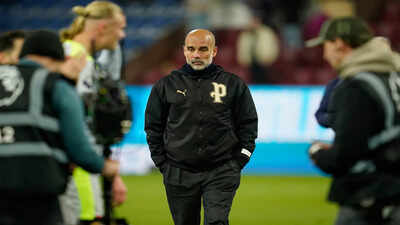
Italian job: Could Pep Guardiola be Italy’s next boss after World Cup disaster? Discussion on big reset international sports news
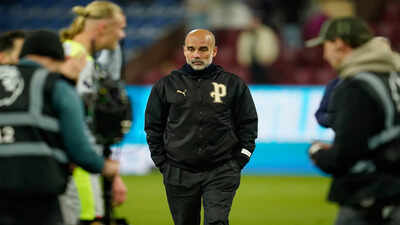
Pep Guardiola has emerged as a real target for Italy as the federation looks to rebuild after a series of results that have left the national team without clear direction and out of the World Cup for the third consecutive cycle. The scale of that failure has pushed talks beyond a routine appointment and into something more ambitious, with Guardiola’s name now part of the internal discussion over how far the reset should go.
Why has Guardiola entered the conversation?
The situation around the Azzurri changed rapidly after the play-off defeat to Bosnia and Herzegovina confirmed a third consecutive failure to qualify for the World Cup, extending an absence that had lasted back to 2014. Gennaro Gattuso is no longer in charge, while federation president Gabriele Gravina and delegation head Gianluigi Buffon have also stepped down, leaving the national setup without any clear long-term direction.
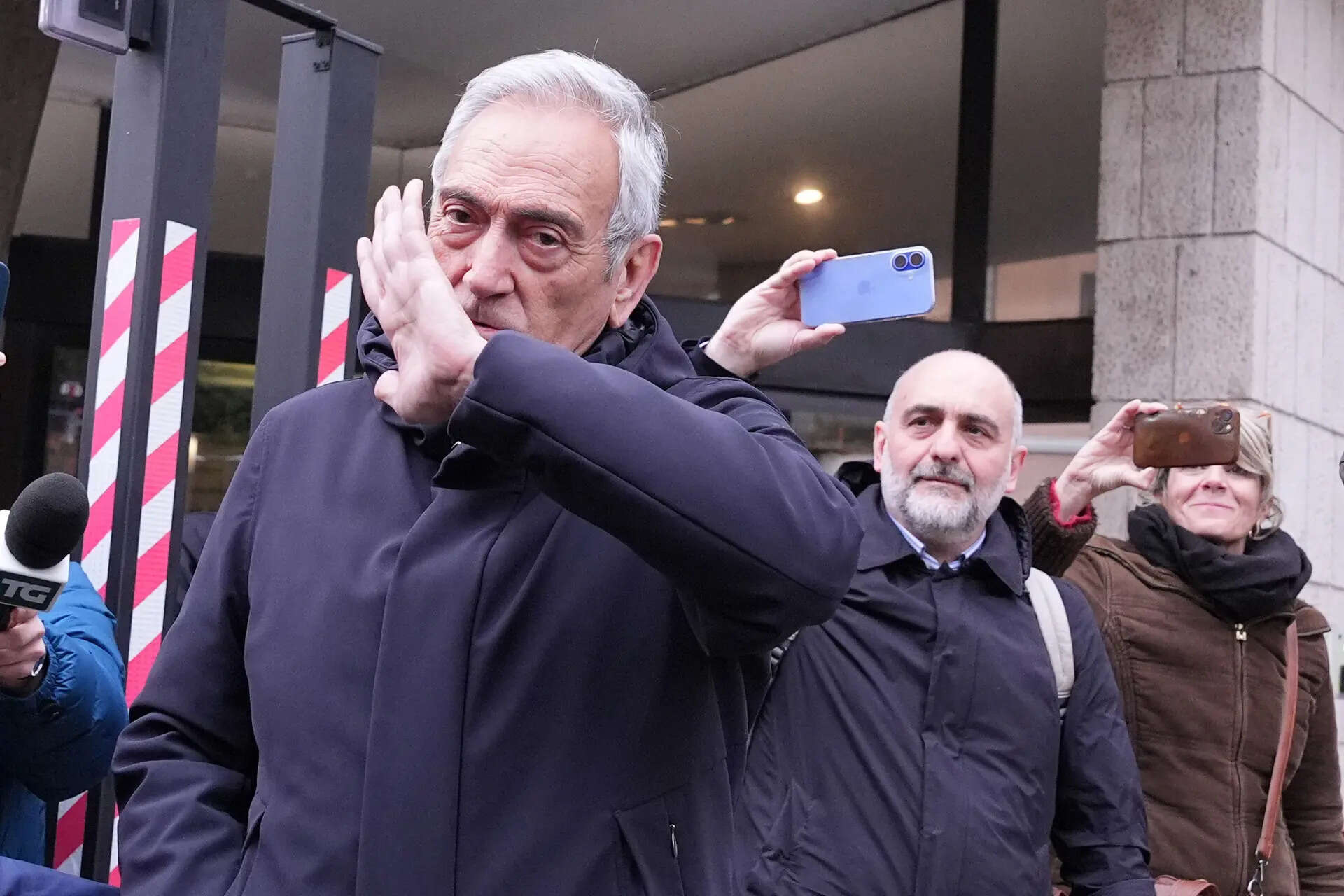
Italy’s football federation president Gabriele Gravina leaves the FIGC (Italian Football Federation) headquarters in Rome on Thursday, April 2, 2026, after resigning amid political pressure after the national team failed to qualify for a third consecutive World Cup. (Alfredo Falcone/LaPresse via AP)
Guardiola’s name has surfaced as part of an effort to make a clear break from recent years, with reports suggesting a move that could change the mood around Italian football, even if the idea sits close to the edge of the realistically achievable.
What is being said about the possible approach
There is also an expectation within the federation that opportunities will have to be explored. La Gazzetta dello Sport The report stated that officials feel “it is their duty to approach” Guardiola, with the same report indicating that they would be “happy to hear” if an offer is made, even if there is no certainty beyond that point.
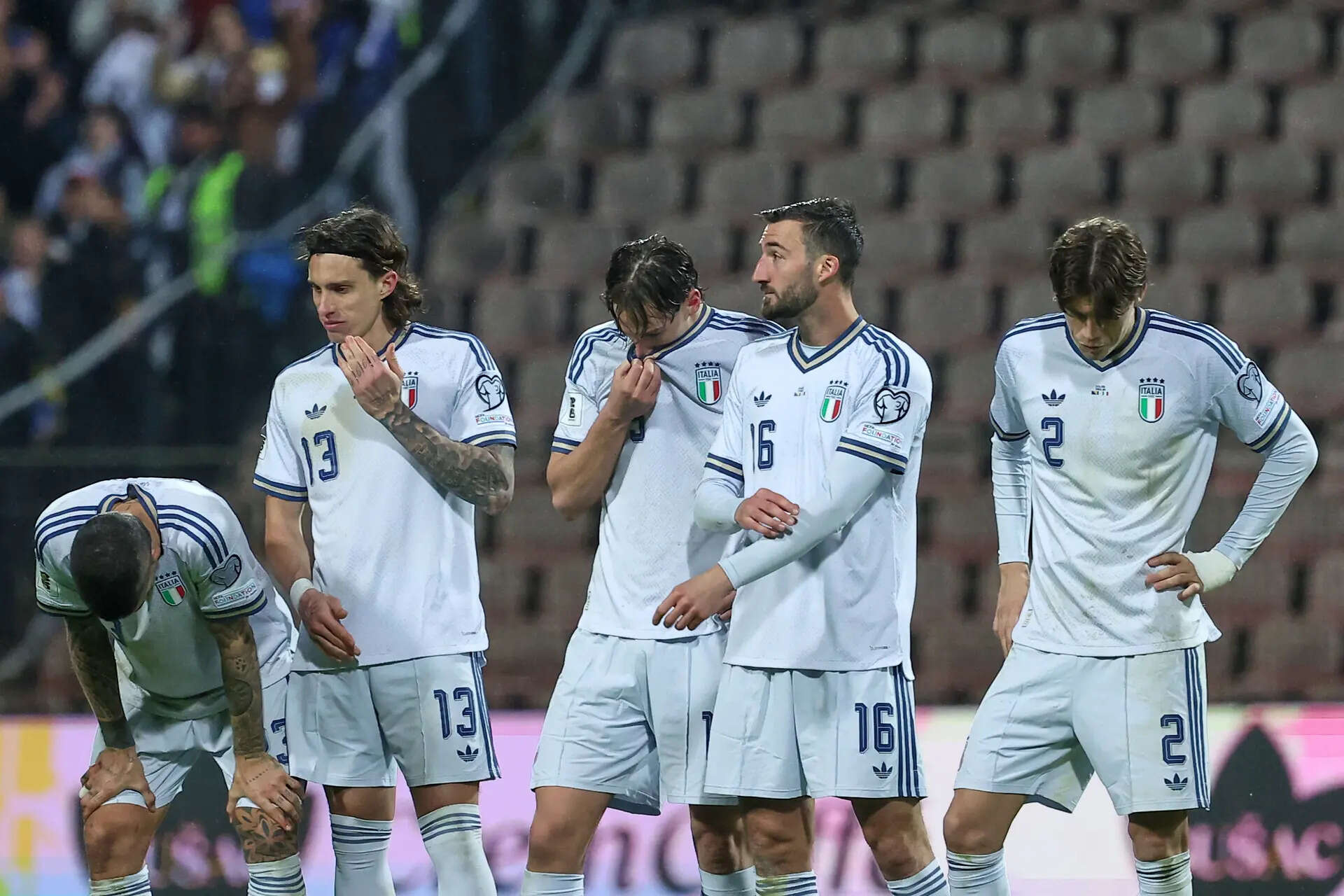
Italy players react during a penalty shootout during the World Cup qualifying playoff final soccer match between Bosnia and Italy in Zenica, Bosnia, on Tuesday, March 31, 2026. (AP Photo/Armin Durgut)
Any appointment will have historical importance. Guardiola would become only the second foreign manager to take charge of Italy, and the first since Argentinian-born coach Helenio Herrera, who held the role between 1966 and 1967.
Guardiola’s position Manchester City
At Manchester City, Guardiola is under contract until 2027 after signing a two-year extension in November 2024, and is currently focused on the end of the current season.City are chasing an eighth Premier League title in ten seasons, with the current campaign still running from 2014/15 to 2023/24, and also prepare for an FA Cup semi-final against Southampton at Wembley tomorrow. In his managerial career, which has included stints at Barcelona and Bayern Munich, Guardiola has won more than 40 trophies and could win even more this season. Only Sir Alex Ferguson, who won 49 titles in his long career, has won more titles. This record leaves Guardiola in a position where the next step in his career is entirely his decision, with Manchester City hoping he will accept whatever option he chooses after almost a decade of success.
Financial Reality and Possible Solutions
The biggest obstacle in any step is financial. Spanish media outlets marca report Guardiola earned a total of approximately €24.8 million at Manchester City, a figure far higher than the recent structure of the Italian federation, where Roberto Mancini earned a total of approximately €3 million even after winning the European Championship. However, there is precedent for bridging that gap. When Antonio Conte took charge of the national team in 2014, part of his wages were covered by a sponsor, and a similar model could be considered again, with Puma, which has ties with Guardiola, mentioned as a potential partner in such an arrangement. The idea would be to build something around Guardiola rather than simply appointing him, using his profile to reshape how the national team is perceived as well as how it performs.
Guardiola’s interest in international football and connection with Italy
Guardiola has already made it clear that he wants to coach the national team at some point. In a 2021 interview with ESPN, he said: “I would like to experience a World Cup, a European Championship, a Copa America, whatever. I would like to experience a major national team competition. I don’t know when, in five, 10 or 15 years, but I would like to play in a World Cup as a coach. To work in a national team, you have to be wanted and appointed, as is the case with clubs. I don’t know who wants me to work for the national team.” Italy is not unfamiliar territory for him. He played in Serie A for AS Roma and Brescia Calcio, speaks the language, and has spoken about his admiration for Italian football, once responding “Why not?” When asked about the possibility of working there in 2018.
Support from within the game and succession plans
This idea has the support of Italian football. Former defender Leonardo Bonucci said at the Laureus World Sports Awards: “If there is a real desire to start again, I would start with Pep Guardiola, because bringing in someone like him would mean a complete change compared to everything that has happened in the past. “I think it’s very difficult, but there’s no point in dreaming right now.” If Guardiola is to leave Manchester City, there is already buzz around a replacement. Fabrizio Romano reports that Enzo Maresca is part of a “clear plan” at the club. Maresca, who worked under Guardiola at City before moving into management, is currently unattached after leaving Chelsea FC in January 2026, having won both the UEFA Conference League and FIFA Club World Cup.
what comes next
Italy are expected to appoint a new federation president on June 22, and that decision is likely to determine how quickly the process progresses and whether a formal approach is made for Guardiola. For now, the situation rests on three dynamic parts: Italy’s intention to pursue a high-profile appointment, the financial structure needed to make it viable, and Guardiola’s own decision whether the next phase of his career will be at club level or with the national team.
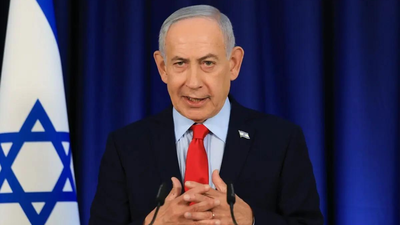
Netanyahu: Netanyahu accuses Hezbollah of ‘harming’ Lebanon peace effort, says Donald Trump is putting ‘strong pressure’ on Iran
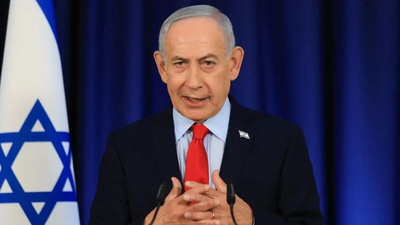 netanyahu The charge late Friday said efforts were underway to achieve “historic peace” between Israel and Lebanon following a three-week ceasefire extension. Hezbollah Attempts to derail the process.In his first remarks after the ceasefire extension, Netanyahu said he had an “excellent conversation” with US President Donald Trump, crediting Washington’s continued pressure on Iran and close coordination with Israel.Netanyahu said, “I promised you that we would change the face of the Middle East and that’s what we are doing… They are putting very strong pressure on Iran economically and militarily. We are working in full cooperation.”
Ceasefire extended, tension continues
The comments come after Trump announced a three-week extension of the ceasefire between Israel and Lebanon following talks with senior officials from both sides.“They have agreed to an additional three weeks … no more shootings,” Trump said. He warned that Hezbollah remains a major concern.US Vice President JD Vance described the extension as a “major, historic moment”, while Secretary of State Marco Rubio said it would provide more time to work toward lasting peace.
Hezbollah rejects ceasefire, clashes continue
Despite the expansion, the ground reality remains tense. Hezbollah has described the ceasefire as “meaningless” due to continued Israeli military actions, Reuters reports.“It is clear to us that Hezbollah is trying to thwart this,” Netanyahu said. He said Israel would maintain “complete freedom of action” against threats.According to Reuters, even after the ceasefire took effect, Israeli attacks and Hezbollah responses continued in southern Lebanon. Lebanese officials have reported casualties in recent airstrikes, while Hezbollah also claimed to have shot down an Israeli drone.
delicate peace amidst the vast regional conflict
According to Reuters, the ceasefire has largely reduced hostilities but has not stopped intermittent violence, with Israeli forces maintaining a “buffer zone” inside southern Lebanon.Netanyahu reiterated Israel’s position on security, saying, “We attacked yesterday and we attacked today. “We are committed to restoring security to residents of the North.”The ceasefire in Lebanon comes alongside broader regional tensions related to the Iran conflict, complicating diplomatic efforts. While the US has expressed optimism about a potential breakthrough, ongoing clashes on the ground underline the fragility of the ceasefire.Trade accusations and military actions between the two sides continue, and prospects for a permanent settlement remain uncertain despite a temporary pause in the fighting.

D4Vd court case: Prosecutors claim 40TB of data linked to D4vd contains child pornography in shocking court update

D4vd is in court again, and the latest update has shocked many. Prosecutors said they have about 40 terabytes of evidence in the case against them. This is a huge amount of data collected from his phone, cloud accounts and other devices. He told the court that this evidence included many files, photographs and recordings. The size and scale of the data has made this issue even more serious and attracted people’s attention.He also made a very disturbing claim during the hearing. Prosecutors said some of the data included illegal material involving children. This statement has added another layer of concern to the matter. D4vd has been charged with serious crimes including murder and abuse of a minor. However, he has pleaded not guilty. His legal team say they will fight the claims and believe the evidence will not prove he is responsible.
Prosecutors reveal massive evidence including D4vd disturbing illegal content Claim
In court, prosecutors explained how they collected such a large amount of data. They used a search warrant and examined several devices belonging to D4vd. He said the investigation took a long time and was meticulous.One major point he highlighted was an iPhone attached to him. He claimed that this phone has a “substantial amount” Of illegal material. This has become one of the most discussed parts of the case.Prosecutors also said they had other types of evidence. This includes DNA findings, photographs and recordings. He believes all of this strongly supports his case.He also shared what he thinks happened. According to him, D4vd had a relationship with a girl below 14 years of age. She claims things got worse when she threatened to expose it.D4vd’s lawyers disagree with all of these claims. They said they would vigorously defend him and were confident he would be proven not guilty.The case has shocked many due to the serious nature of the claims. More updates are expected as the trial continues, and a final decision will be made in court.
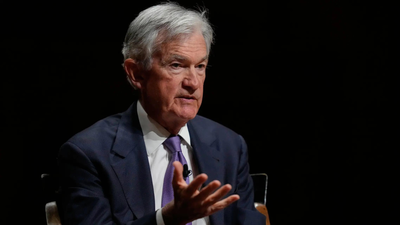
The US Justice Department closed the criminal investigation into Fed chief Jerome Powell, clearing the way for Trump candidate Kevin Wersh.
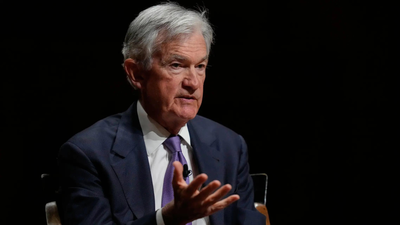
The US Justice Department is closing its investigation into Federal Reserve Chairman Jerome Powell, a move seen as removing a hurdle to the confirmation of President Donald Trump’s nominee Kevin Wersh to lead the central bank, with Powell’s term as chairman set to end on May 15.US Attorney Jeanine Pirro said the criminal investigation into cost overruns related to renovations at the Federal Reserve’s Washington headquarters will be closed, with the investigation now continuing through the Office of Inspector General (OIG), which is already reviewing the project, Reuters reports.“I have directed my office to close our investigation as the (Office of Inspector General) conducts this investigation,” Pirro said in a social media post. She also said she could reopen a criminal investigation “should the facts require doing so.”The move also comes amid Trump’s long-running clash with Powell over interest rates and broader concerns over the independence of the Federal Reserve.The investigation was examining the Fed’s $2.46 billion headquarters renovation project, including cost overruns, and statements Powell made in Congress last year.Reuters reported that the current budget is about $1.1 billion more than the 2020 allocation, with the increase mainly due to rising labor and material costs.According to The Guardian, the investigation was first made public in January when Powell revealed in a video that he had been subpoenaed by the Justice Department and said the investigation was being used to pressure the Fed on monetary policy.It suffered a major setback last month when Chief U.S. District Judge James Boasberg blocked subpoenas issued to the Fed’s Board of Governors, saying prosecutors had shown “essentially zero evidence” Powell committed a crime and finding the subpoenas were issued for an improper purpose.The investigation also blocked Wersh’s confirmation, with Republican Senator Thom Tillis saying he would not support the nomination as long as the investigation remained active. During Warsh’s confirmation hearing, Tillis said, “Let’s get rid of the investigation so I can support your nomination.”Trump defended Powell’s investigation last week, saying, “Whether it’s incompetence, corruption or both, I think you’ve got to find out”.Powell said he had no intention of leaving the Federal Reserve Board until the matter was resolved “transparently and finally.”Pirro said the Fed’s internal watchdog will continue to investigate the matter and Senate Banking Committee Chairman Tim Scott has asked for a briefing within 90 days.The US Supreme Court is expected to rule by June on whether Trump’s removal of Federal Reserve Governor Lisa Cook was constitutional, putting broader questions about the central bank’s independence under scrutiny.

IgumDrop: Streamer IgumDrop takes her cooking from Twitch to MasterChef and impresses Gordon Ramsay

The most famous Twitch creator Igumdrop has entered a new level in his career, as he is currently one of the contestants on the sixteenth season of MasterChef. What Igumdrop is famous for is her food recipes, which she streams on various social media channels. With over two million followers on platforms like Twitch, YouTube, and Instagram, he has made a name for himself.Now, she’s bringing her cooking skills from the internet to real-life cooking shows. This new season is called MasterChef Global Gauntlet, where home chefs from different parts of the world compete. iGumdrop shared the news with their fans via a short video on April 23. In the clip, she proudly shows off her MasterChef apron while representing Team Asia-Pacific. This moment was very special for him and his followers.
igamdrop affects Gordon Ramsay MasterChef with her cooking on stage
During the competition, Igumdrop was lucky enough to get the opportunity to cook in front of famous chef Gordon Ramsay. The dish he prepared was Wagyu Beef Satay in Peanut Sauce with Coconut Rice.While cooking she told Ramsay that she wanted to put Malaysian food on the map. Ramsay liked her passion and praised her. He also said that his social media following is “Incredible.” But Igumdrop made it clear that she did not come for fame. She said that she wants to prove that her food tastes good.As she was cooking, Ramsay even said, “It smells amazing,” And told him not to overcook the Wagyu. This showed that he was impressed with her dish.The show follows a particular format where chefs from different regions compete. Each contestant must earn a white apron to advance. iGumdrop did just that. He secured his spot for Team Asia-Pacific with his delicious dish.The judges liked his food very much. Chef Tiffany Derry calls her plate “Beautiful,” And Ramsay said it was “authentic” And “Delicious.” Her success on the show shows how far she has come since her streaming days.Ultimately, iGumdrop’s journey from online videos to a big cooking show is inspiring. He has shown that dreams can come true with passion and hard work.
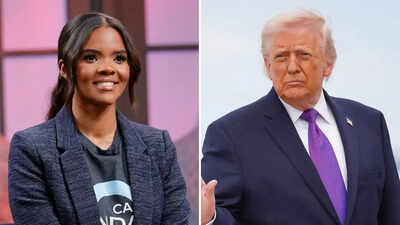
“Slut of the Year”: Candace Owens targeted by Donald Trump with doctored Time cover, calling her “low IQ”
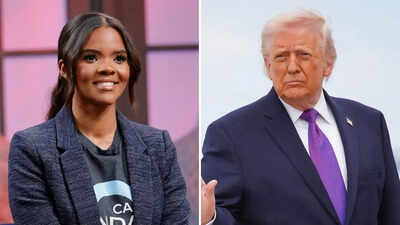
tension once again donald trump And Candace Owens has had a very public digital confrontation this time, which has attracted widespread attention. Now a controversial post on Trump’s social platform has revived their long-running feud, drawing sharp reactions from both the political and media circles. What might once have been a war of words has now become a more pointed, visual attack, adding another layer to a relationship that has been strained for some time.The latest episode did not go quietly. It started with a provocative image and even more provocative language, thrusting both figures back into the center of a growing online storm. As reactions poured in, the exchange became one of the most talked-about political issues of the week, raising questions about tone, accountability and the limits of public discussion.
Donald Trump escalates controversy with edited image and sharp comments
In a post shared online, Donald Trump circulated a manipulated magazine-style cover targeting Owens, combining it with direct criticism of her recent remarks. His statement read:“Candace Owens’s stock, which was never very high, has fallen significantly. Her attack on the First Lady of France is disgusting. I believe, in this case, without verification, that she is an extremely low IQ person!”The photos accompanying the post depicted Owens in an unflattering manner, using exaggerated claims and harsh language to undermine his credibility. The shift from verbal criticism to visual satire was a surprising development, clearly intended to provoke.This is not the first time Trump has targeted Owens. Earlier in April, he broadened his criticism to include several media personalities, saying:I know why Tucker Carlson, Megyn Kelly, Candace Owens, and Alex Jones have been fighting me for years, specifically the fact that they think it’s wonderful for Iran, the number one state sponsor of terror, to have nuclear weapons – because they have one thing in common, low IQ. They’re stupid people, they know it, their families know it, and everyone else knows it too!Owens did not remain silent. Responding on social media, he replied with a brief but pointed comment, “It’s time to keep grandpa at home.”The clash comes amid a separate dispute over Owens’ claims about Brigitte Macron, over which France’s leadership has already launched legal action. As the two figures continue to square off publicly, the episode underscores how quickly political disagreements can turn into deeply personal conflicts in the digital age.

Real walls with ears: Ancient Roman walls can hear you from meters away world News

In some parts of Rome, whispers could travel far beyond where it was spoken. Stand near a curved wall or under a giant dome and even a quiet sound can reach clearly into space. The effect seems supernatural, as if the building itself is listening. In fact, it is the result of geometry and materials working together. Ancient Roman structures, built of smooth stone and carefully shaped interiors, could direct sound in ways that kept it focused and heard at a distance, turning everyday conversation into something that reverberated through space with astonishing precision.
how does the roman wall listen
When sound originates near a curved surface, it does not propagate easily in all directions. Instead, it follows the contour of the wall, traveling along it on a controlled path. This is known as the whispering gallery effect. In domes or spaces with circular walls, sound waves are reflected efficiently and remain focused rather than quickly dissipating. As a result, a whisper can travel across the room and be heard several meters away with unexpected clarity.The most obvious example of this behavior is the Pantheon in Rome. Its massive dome and smooth interior surfaces allow sound to resonate and travel with remarkable consistency. Even small sounds can propagate through space, especially in quiet conditions.Roman theaters provide another insight into sound management. Designed for large audiences, these open-air structures used semi-circular layouts and tiered seating arrangements to display voices from the stage. Without any modern amplification, performers can still be heard clearly by spectators sitting at a distance. It reflects a practical understanding of how shape and structure affect sound.

Clarity of sound in these environments comes from a combination of architectural features. Stone and marble surfaces reflect sound rather than absorb it, allowing the waves to retain their strength. Curved shapes guide those waves on predictable paths, while enclosed interiors limit how quickly sound can spread. The smooth finish minimizes distortion, keeping sound clear while traveling. Together, these elements allow even quiet sounds to remain intelligible at great distances.
A legacy that still speaks
Ancient Roman builders focused on durability, symmetry, and scale, but their designs continue to exhibit complex acoustic behavior. In these places, the sound doesn’t just fade away. It reflects, travels and moves in the air, taking shape from stone and structure. A whisper can easily cross a room, giving the impression that the walls are listening, when in reality they are guiding the sound with quiet precision.
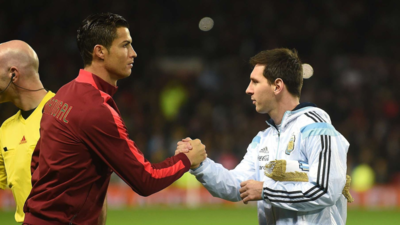
Ronaldo has three final career dreams that he needs to fulfill before retirement, Messi has already fulfilled them. international sports news
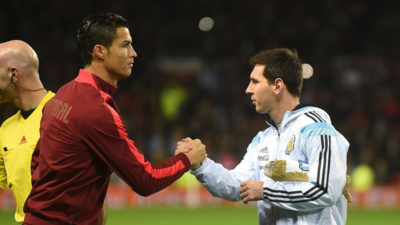
At a time when most players are years past retirement and have taken up coaching or pundits, the 41-year-old Cristiano Ronaldo Choosing his final act carefully, he still has three clear goals on his agenda. The Portugal forward is expected to make his sixth appearance at the 2026 FIFA World Cup, which he has hinted will be his last, ending his career with a final bid for legacy, numbers and something more personal.
The missing piece: a World Cup title
The most obvious goal is also the one that defined the final chapter of his international career. ronaldo Despite playing in five editions between 2006 and 2022, making 22 appearances and scoring eight goals, the club has never won the World Cup. His best performance was fourth place in 2006. Winning the World Cup is the biggest honor missing from their record, and it’s also an honor already achieved Lionel Messi. This comparison has been made between the two players for years, and remains a centerpiece of how their careers are measured. Portugal are not traditionally among the favourites, and have historically only reached the semi-finals twice, in 1966 and 2006. However, their European Championship win in 2016 serves as a reminder that they can compete beyond expectations. Despite a minor hamstring injury and a previous red-card suspension in March 2026, which was later overturned, Portugal coach Roberto Martínez considers Ronaldo an important part of the team going into the tournament.
1,000 race career goals
As well as international ambitions, Ronaldo is also closing in on a statistical milestone rarely seen in football history. He scored his 969th career goal on 19 April 2026 during Al Nassr FC’s 4–0 win over Al Wasl FC in the AFC. Champions League 2nd quarter-final, found the net in the 11th minute. This leaves him within reach of the 1,000-goal mark, a figure that has become an obvious personal goal.Messi, who currently has 905 goals, is also within striking distance, although the approach looks different. While Ronaldo is moving towards the milestone, Messi has shown less urgency, even giving up chances, including allowing Nicolas Otamendi to take a penalty so he could mark his farewell moment with the national team, a gesture that shows he is not chasing numbers in the same way. The contradiction is not one of ability but of intention. Ronaldo’s goal of 1,000 has become part of his closing narrative, a goal he is actively pursuing rather than something that can happen along the way.Also read: Can Ronaldo play with his son at Al-Nassr next season? Reports say the club are accelerating plans after the 16th birthday
A different kind of milestone: playing with Cristiano Jr.
The third objective is less traditional but equally important to Ronaldo. There is now a real possibility he could share the pitch with his son Cristiano Ronaldo Jr at senior level. The idea has been strengthened following reports that Al Nassr are considering promoting Ronaldo’s eldest son to the first team. Cristiano Jr. will turn 16 in June, and although the move will still depend on development and timing, the possibility is no longer distant. If that happens, it would put Ronaldo in a rare category of athletes who have competed with their children at the highest level. The most frequent comparisons are to LeBron James and Bronny James, who have reached similar milestones in the NBA. In football, such instances are extremely rare, especially at top-flight level, which is why this goal has a different kind of significance. It is not tied to trophies or records, but to a moment that will stand on its own in the history of the game.
Current form and final expansion
Ronaldo’s form shows that these goals are not purely symbolic. Even at the age of 41, he continues to influence games and make decisive contributions for Al Nassr, maintaining a level that keeps him relevant at club level and internationally. His current deal with the Saudi club runs until 2027, having signed a record-breaking extension that will keep him there for a 42nd year, with reports earning him around €200 million per season, plus performance bonuses and commercial add-ons linked to goals and success.On the international front, he remains central to Portugal’s plans for 2026 FIFA World Cup in June, in what is expected to be the final chapter of his international career. He has been instrumental in qualifying and leadership within the team, guiding the younger generation while still leading the attack as they prepare for their last major tournament together.
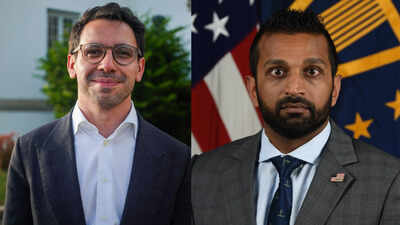
‘It was Indian food’: Florida Republican takes aim at Kash Patel, calls FBI director incompetent
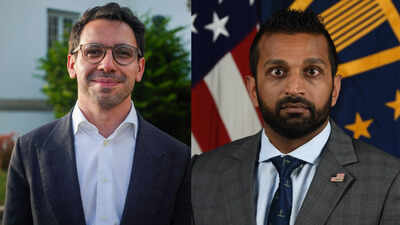
Florida Republican gubernatorial candidate James Fischbach has sparked controversy after using a stand-up style joke to mock the FBI director. Kash Patel And calling him incompetent.The clip was shared by commentator Richard Hanania on In the brief excerpt, Fischbach says: “I wouldn’t trust him to investigate what happened with my DoorDash last night. And to be fair to them, it was Indian food.”The comment was made during a recent campaign event and was part of a political speech in which Fischbach received a cheer from the audience. The clip was shared by Hanania, who said Fishbach is “basically running for governor while doing a standup routine.”Fishback’s comments about Kash Patel come amid political criticism of the FBI director, with a report in The Atlantic alleging issues such as drinking and missing meetings. Patel has denied the allegations and said he would file a $250 million defamation suit against the magazine. Atlantic stood by its claims and did not apologize. The allegations come even as the Trump administration has removed several high-profile figures from their roles in the government, including Pam Bondi and Kristi Noem.James Fischbach was born in 1995 in Davie, Florida, and is a hedge fund manager and political outsider running for governor. He attended Georgetown University but left before graduating. He later worked at Greenlight Capital from 2021 to 2023 before founding his own firm, Azoria Partners, where he serves as CEO and Chief Investment Officer. He is a fourth-generation Floridian and is running as a Republican despite holding no prior elected office.