

Ranking the 5 Tallest Walls on Earth
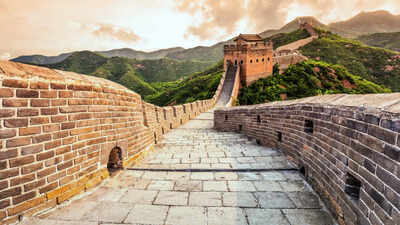
Ancient stone walls, built for strength and protection, vary dramatically in scale. While most function as cities or military fortifications, the Great Wall of China dwarfs all others, spanning 21,000 km.
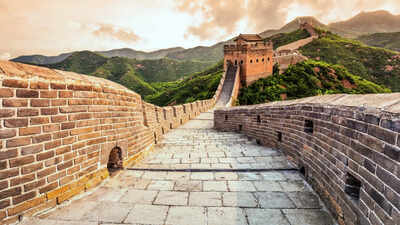
When we consider the monuments of the past that have become landmarks within our scenery, few images come to mind more vividly than those of massive stone walls looming across the horizon. Such constructions were designed to make an absolute statement in terms of strength, protection and eternity. When we imagine such ancient odds in competition with each other, we forget that we are dealing with two different leagues.When we talk about cities and even entire military fortifications in Europe, Asia and parts of the Middle East, all surrounded by massive stone walls, there is one particular engineering project from East Asia that stands out because of its scale – literally feeling like an achievement of planetary proportions. There is nothing else like it in the world because of its length.The scale divide: continental walls vs. city wallsThe numbers can help us appreciate the magnitude of these achievements only in terms of scale. Almost all long walls that survived throughout time served as city or military fortress circuits. These were designed to protect either a local area of people or an important hill position.According to an official survey documented by UNESCO World Heritage ConferenceThe true giants of history are classified not only by their height, but also by the total length of their surviving masonry. When we apply this standard, the gap between the top two places is so large that it is almost impossible to imagine. Here’s how the five most important living wall systems on the planet compare.1. the great wall of chinaThe Great Wall of China extends across the entire northern region of China and can be considered the most prominent ancient structure for defense. Most people think of just one section of the Great Wall – constructed during the Ming Dynasty – but in fact, there are moats, hills and walls built in different eras. The exact length of the wall, officially measured in China, is equal to 21,196 km.2. Kumbhalgarh Fort WallLocated in the Mewar Fort in Rajasthan, India, this wall is often affectionately called the Great Wall of India. It represents the pinnacle of Rajput military architecture. While it is clearly the runner-up on the world scale, its length is approximately 36 kilometers. This is a huge feat for a fortress, yet it is less than one percent of the length of the top slot.3. diyarbakir wallsThis basalt circuit in Türkiye is one of the most important surviving fortified lines in the Near East. Extending approximately 5.8 kilometres, the walls stood during the Roman, Byzantine and Ottoman eras, serving as a dark, impressive reminder of the city’s strategic value for thousands of years.4. the stone wallsOften referred to as the European Great Wall, this 5.5 kilometer long limestone barrier in Croatia was built to protect the salt pans of the Republic of Ragusa. It is an amazing example of how a relatively small community can muster enough resources to wall off an entire peninsula to protect its “white gold”.
Modern measurement techniques, including satellite imagery, have revealed its true, immense length, highlighting its unique position among global defensive structures. Image Credit: Wikimedia Commons
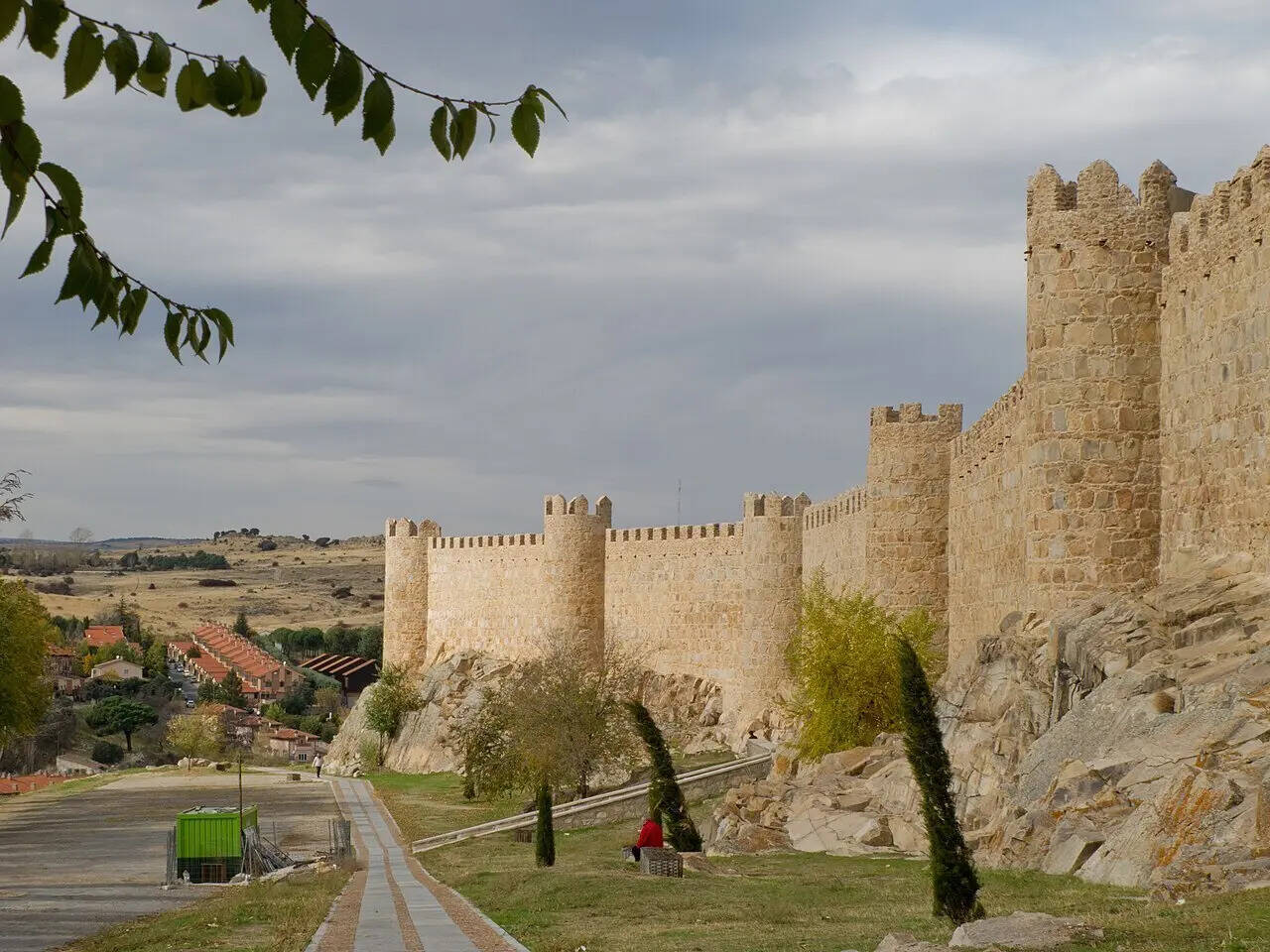
5. the walls of avilaThe list includes the most complete medieval circuit of Spain. These walls, approximately 2.5 kilometers long, have 88 semi-circular towers and are so well preserved that they look like a movie set. They represent the standard for a fully fortified medieval European city.Why do modern measurement maps keep changing?If you think the Great Wall has “grown” in length since you were in school, you’re not entirely wrong. The way we measure these ancient giants has evolved significantly with technology. A comprehensive study conducted by the UNESCO World Heritage Convention regarding the Great Wall of China shows that for centuries, we counted only the standing stone sections.Today, researchers use aerial photography and satellite imagery to identify buried sections and natural barriers that were officially part of the defense line. This is why the officially recognized numbers have increased from thousands to hundreds of thousands.Furthermore, an article in National Geographic This explains why wall rankings can be defined differently. While some scholars choose to count only the continuous length of the walls, others consider the total length of the branches. By the same logic, a fort like Kumbhalgarh can be considered as the second longest continuous wall in the world, while it is much shorter than the Great Wall complex of China.In short, these walls represent much more than a pile of rocks. They stand as a testament to the resilience of the human spirit. Whether they were built to protect a Spanish city or to mark the perimeter of an entire empire, they symbolize the idea that when people chose to build permanent structures, they changed not only the scenery but also the maps.