

Show trains that highlight ordinary lives that make history
In April 1980, Sumati Morarji, chairperson of the Scindia Steam Navigation Company and known as the First Lady of Indian Shipping, received a letter from the Prime Minister’s House in New Delhi. Indira Gandhi wrote, “Thank you for your letters, your prayers, offerings and mangoes.” Look carefully at the typed black words and you’ll find an adjective scribbled in blue pen at the last minute: “Delicious.”The caption below the correspondence reads, “Business and political relationships were always important… but somewhere along the way, they became personal and intimate.”Drawing on over 700 hours of interviews and over 6,500 digitized objects collected from across India in 17 languages, the four-day exhibition of this decade-old digital oral history project highlights the small human stories that make up the big records.
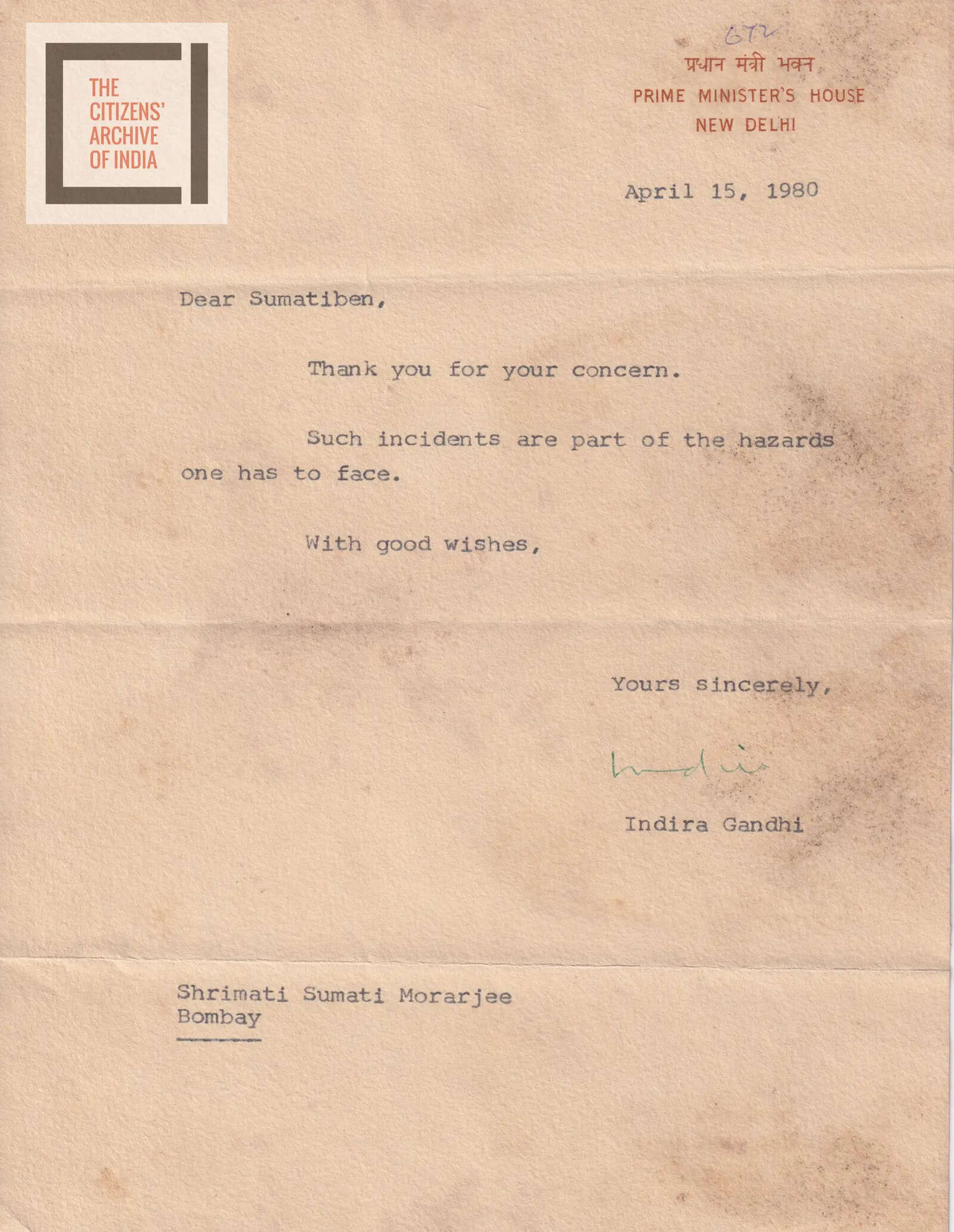
Indira Gandhi’s letter to Sumati Morarji, April 1980
“We wanted to record the stories of the people who lived in India before and after independence, because now we have a generation that can still tell us,” says Malvika Bhatia, director of CAI, during the show. “Ten years ago, it was still easy to get an interview. Now it’s becoming much, much harder.”Political upheavals do not appear as dates and events but as things that happened to people while they were trying to live normal lives. One woman remembers sleeping with her children fully clothed during the Assam movement – with shoes, socks, a torch and water nearby – so that they would not have to run away at night. Another, Rama Khandwala, remembered that his English-medium school in Burma was transformed overnight into a Japanese school during World War II. As a teenager in the Indian National Army, she broke her leg near the front lines and cried with homesickness. “Netaji himself came to my bed,” he recalled. “He said, ‘We don’t want to look back, we want to move forward.’”
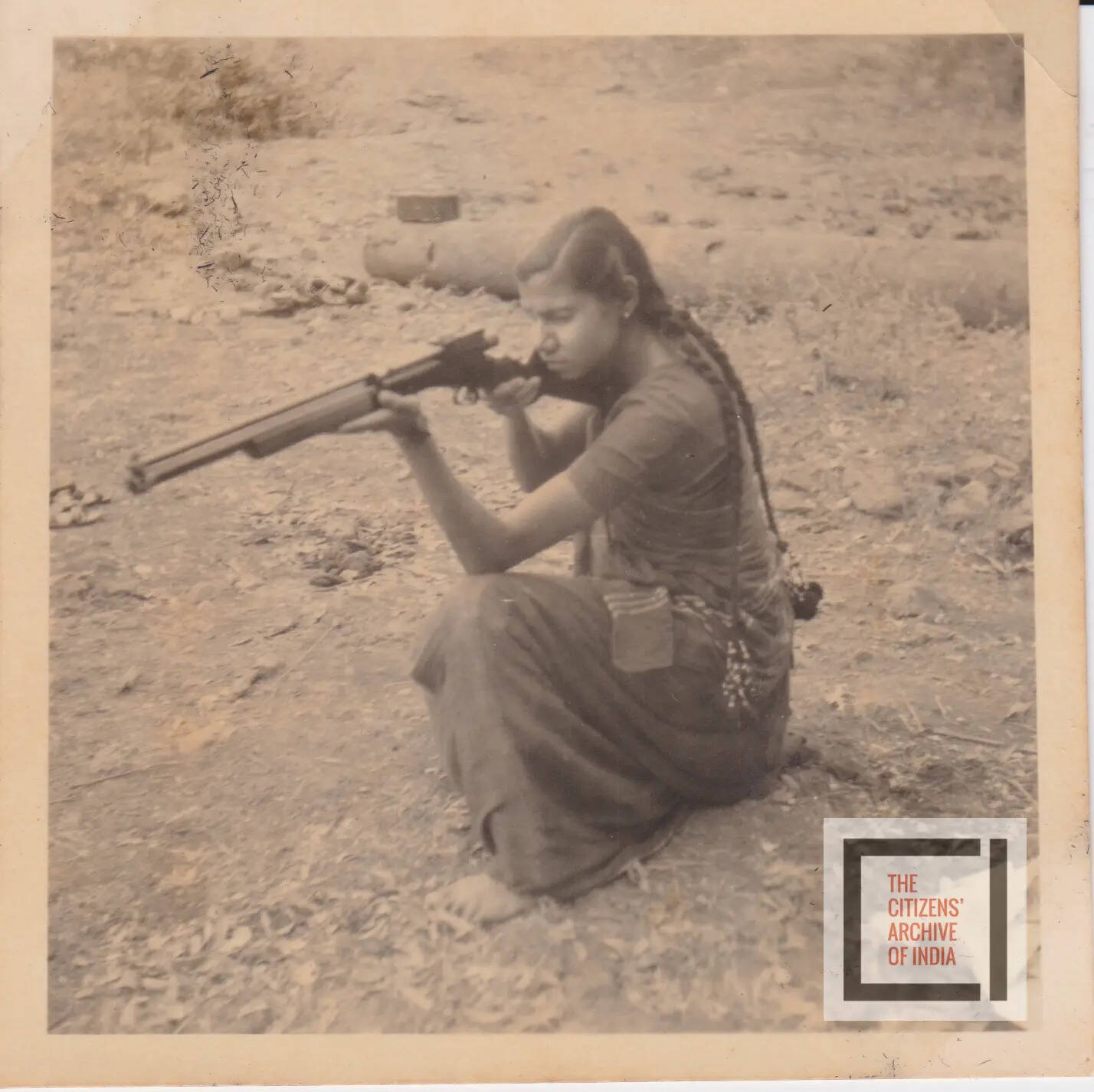
Rama Mehta is completing her training as part of the Azad Hind Fauj (Indian National Army). Photo Credit: The Citizens Archive of India, Collection of Rama Khandwala
Unlike traditional archives built around governments or institutions, CAI focuses on oral history and material memory – personal objects such as letters, photographs, diaries, passports and memorabilia as well as recorded interviews. The collection is entirely digital: contributors maintain the physical objects while CAI digitalizes them. That’s why the showcase features stories that have no obvious historical significance yet offer a glimpse of another time. The first sarees marked with huge jalebis. Newlyweds are sending photos to different continents so they can see how they have aged. A man who dropped out of college to work in a tractor factory and carefully preserved his testimonials from Keshub Mahindra.One of the most impactful interviews of the exhibition is of Dr Armida Fernandes, a leading neonatologist recently awarded the Padma Shri, who remembers her father as “a dreamer and a writer” who followed the freedom movement through poetry. Her mother supported seven children on a professional salary, which made it all easier. “We never wanted for anything. It was an open house.“Bhatia says interviews rarely start smoothly. Elderly participants worry that they will forget dates or facts. She disarms them with a simple question: “What’s your father’s name? What did he do?” Then, she says, “the nervousness disappears. Chances are they haven’t talked about their parents in years. Their eyes light up.”In the final room, visitors are given an old Mughal-e-Azam cinema ticket – an invitation to watch a short film about the collection. On the way out, a visitor tells Bhatia: “At first the stories seem very different. But you managed to show how they are connected.”