

2,000-year-old stone labyrinth discovered in India could change what we know about ancient Roman relationships
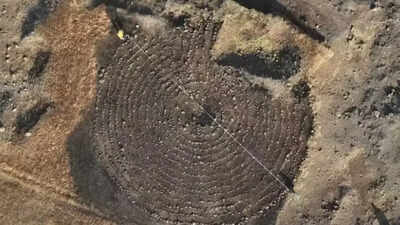
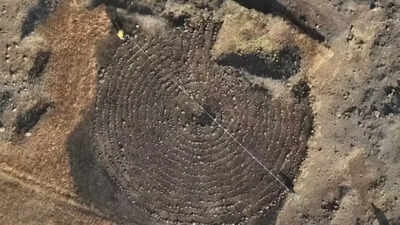
A mysterious circular stone structure discovered in the grasslands of Maharashtra is attracting the attention of archaeologists and historians around the world. Hidden in the Bormani grasslands of Solapur district, this structure is now considered to be India’s largest circular labyrinth, with experts estimating that it may be over 2,000 years old. The discovery is important not only because of its sheer size, but it may also reveal information about ancient trade routes connecting India with the Roman world.The Satavahana dynasty ruled large parts of the Deccan region between about 200 BC and 200 AD. During this time, India maintained extensive trade relations with Rome and other Mediterranean powers. Earlier excavations in Maharashtra have already revealed artefacts from the Roman world, including a bronze mirror and a figurine associated with the Graeco-Roman sea god Poseidon.Researchers say the labyrinth appears to share striking similarities with patterns seen in ancient Greek and Roman designs. That description has sparked renewed discussion about the deep commercial and cultural ties that existed between the civilizations of India and the Mediterranean during the Satavahana period.
India’s largest circular labyrinth has been hidden for centuries
The labyrinth is identified to be approximately 50 feet in diameter and consists of 15 circular circuits made of carefully arranged stone blocks. Archaeologists say this makes it the largest circular labyrinth ever discovered in India. While a large square labyrinth had previously been recorded in Tamil Nadu, no circular structure of this scale had been recorded before this discovery in Maharashtra.The site was identified in the Bormani grasslands of Solapur district, which is better known for wildlife conservation than archaeology. The labyrinth’s intricate design immediately stood out due to its unusual circular pattern and the precision of its stone layout. Researchers also found layers of soil between the stone rings, suggesting that the structure has remained largely untouched for hundreds, possibly thousands of years.
Ancient stone structure that may link India to the Roman world
Archaeologist Sachin Patil of Deccan College, Pune, believes that the labyrinth may have played an important role in guiding ancient traders traveling through western India. According to researchers, Roman traders were highly active in the Deccan region during the early century AD, and exchanged gold, wine, glass vessels and decorative objects in exchange for Indian spices, silk, beads and indigo dye.The areas around Kolhapur, Karad, Ter, Sangli, Satara and Solapur were reportedly part of a thriving inland trade network connected to India’s western ports. Historians have often described this route as an important commercial corridor that connected the Indian subcontinent to the Roman Empire through maritime trade in the Indian Ocean.The labyrinth resembles the design seen on ancient Cretan coins from the Roman period. International labyrinth expert Jeff Saward has reportedly described the Borramani structure as one of the most important labyrinth discoveries in India. He explained that the design relates to the classical labyrinth tradition but also includes features that appear distinctly Indian.
How can the ancient labyrinth be related to the Chakravyuh of Mahabharata?
This structure is also being linked to the concept of “Chakravyuh” described in the ancient Indian epic Mahabharata. In the Mahabharata, Chakravyuha refers to a complex circular military structure built to trap enemies within revolving defensive layers.Researchers say that the Borramani labyrinth shares visual similarities with these circular structures. In many Indian traditions, maze-like designs are associated with spirituality, meditation, fertility, and cosmic symbolism. Local communities reportedly refer to such patterns by names such as “code”, “manchakra” and “yamadwar”.
Discovery that revealed 2,000-year-old labyrinth
Interestingly, the ancient structure was not initially discovered by archaeologists. Members of a local conservation group reportedly noticed the unusual stone patterns while conducting wildlife surveys in the Boramani grasslands. The region is known for species such as the Great Indian Bustard and the Indian wolf.Researchers later confirmed that the labyrinth was likely ancient and historically significant. Archaeologists say the careful arrangement of the stones and the weathered conditions of the site strongly indicate that it dates back to the Satavahana era, which was known for intense trade activity and cultural exchange.