
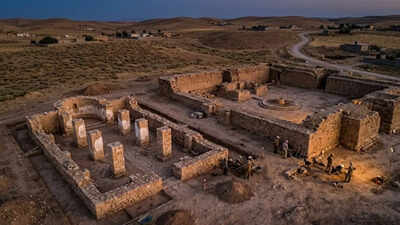

Archaeologists have found a 1,500-year-old church next to a Zoroastrian place of worship in Iraq. world News
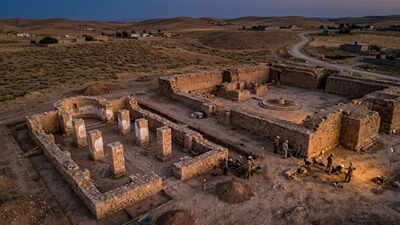
Archaeologists have unearthed a 5th- or 6th-century church next to a Sasanian fortress in the Gird-e-Kazhav region of Iraqi Kurdistan. This research study was conducted by researchers from Goethe University in Frankfurt and the University of Erlangen-Nuremberg; Their findings provide strong evidence for the existence of religious pluralism during the 5th and 6th centuries AD, a study from Goethe University Frankfurt reports.Based on the proximity to a Zoroastrian structure of a site dedicated to Christian worship, previous historians have suggested that there were differences of opinion between Christians and Zoroastrians during this period. The excavation site yielded three nacelle columns from a church and several pottery fragments bearing Maltese crosses, giving us insight into how different communities co-existed in rural Mesopotamia during the Sasanian period.
A church found next to a Parsi place of worship
In 2015, the archaeological site Gird-î Qazhav was located; It includes a large building complex that has been identified previously. Researchers have found that the stone columns and brick floors match building styles that were used when worship practices developed in early Christianity. The location of the site (which is next to a Sasanian fortress) represents an area where early Christians lived alongside other religions, practitioners of the Persian faith of Zoroastrianism.As noted in a study at Goethe University Frankfurt, this archaeological discovery provides another example of the recent shift in academia from focusing on imperial centers to rural settlements that provided the social and cultural basis for economic prosperity.
Evidence of Christian religious architecture
The research team concluded that the remains of the structure would be identified as a church based on identifiable archaeological features. Excavations have revealed five square pillars made of quarried stone, only partially covered with white plaster; Taken together with an architectural plan that indicates a three-nave pattern, these features suggest strong evidence of early Christian church design from northern Syria and Mesopotamia. Another piece of evidence indicating that religious worship took place at this location was the recovery of a piece of pottery decorated with a Maltese cross. This provides definitive evidence of Christian religious activity at this site during the discovery of the five pillars. The assemblage of material culture identified may indicate that the site served as an active site for Christian worship.
Tracing religious and social developments in Gird-î Qazhav
The study is part of a larger project tracking rural communities on the Shahrizor plain. The researchers aimed to develop a picture of the everyday lives of workers, farmers, and followers outside the imperial capital cities. Both the church and the Sasanian fortress were later followed by an Islamic burial site, reflecting the development of culture and religion throughout the northern Iraq region over thousands of years. Future research will incorporate archaeometry (archaeobotanical and forensic anthropology) to learn about the health, nutrition, and infrastructure of the people who lived there.