Give a befitting reply to Delhi’s landlords: Mamata in Bengali New Year message. india news

Give a befitting reply to Delhi's landlords: Mamata in Bengali New Year message

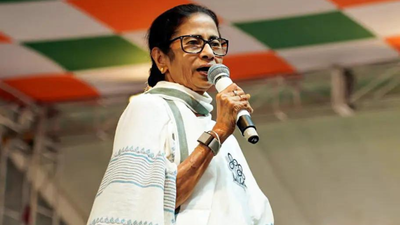
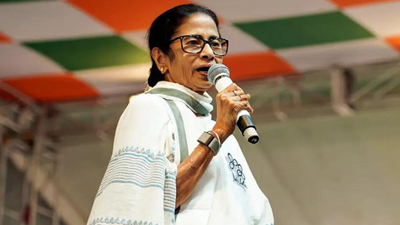
Kolkata: On the occasion of Bengali New Year, the Chief Minister of West Bengal… Mamata Banerjee Wished people a ‘Poila Boishakh’ and urged voters to give a befitting reply to the efforts of “landlords of Delhi” to snatch away people’s voting rights.In a post on X, he hoped that the Bengali New Year would make people’s lives “free of vices”. He also highlighted the cultural heritage of Bengal and said the state stands as a symbol of communal harmony.The outgoing chief minister alleged that some “malicious forces” were attempting to spoil this harmony, and accused “landlords of Delhi” of trying to usurp people’s voting rights.“Remember, we must give a befitting reply to them in a democratic manner,” Banerjee said in an ex-post.Calling for unity, he urged people to break down the “walls of narrow-mindedness” and resolve to remain united against divisive and authoritarian forces.He also appealed to the voters to uphold their democratic rights by voting in the upcoming assembly elections. Trinamool Congress.

Source link

Did China secretly help Iran monitor US targets? The ‘spy satellite’ in question india news

Did China secretly help Iran monitor US targets? The 'spy satellite' in question

New Delhi: Iran used a Chinese-made spy satellite to monitor and target US military bases in the Middle East during the recent conflict, according to a Financial Times investigation citing leaked Iranian military documents and satellite data.Meanwhile, China’s Foreign Ministry spokesperson rejected the claims, saying, “Media reports accusing China of providing military aid to Iran are completely fabricated. If the US moves forward with tariff hikes on China based on these allegations, China will respond with retaliatory measures.”The satellite, named TEE-01B, was secretly acquired by Iran’s Islamic Revolutionary Guard Corps Aerospace Force in late 2024 after being launched from China, the report said. Built by Chinese firm Earth Eye Company, the satellite was transferred into orbit under a little-known export model described as “in-orbit delivery”.Leaked documents, including time-stamped coordinate logs, imagery and orbital analysis, show that Iranian commanders used satellites to monitor key US military facilities before and after missile and drone attacks in March.Sites surveyed included Prince Sultan Air Base in Saudi Arabia, which was photographed by satellite on March 13, 14 and 15. On March 14, US President Donald Trump confirmed that US aircraft stationed there had been affected, with five US Air Force refueling aircraft damaged.The satellite also monitored Muwaffaq Salti Air Base in Jordan, areas near the US Fifth Fleet Base in Manama, Bahrain, Erbil Airport in Iraq, as well as Camp Buehring and Ali Al Salem Air Base in Kuwait. Additional targets include Camp Lemonnier in Djibouti and Duqm International Airport in Oman.Civil infrastructure in the Gulf was also observed, including the Khor Fakkan container port and the Qidafa power and desalination plant in the UAE, as well as the Alba aluminum facility in Bahrain, the report further said.Under the agreement, the IRGC received access to ground control infrastructure operated by Emposat, a Beijing-based provider with a global network. This enabled Iran to operate the satellite remotely, receive imagery, and conduct missions directly from multiple locations.According to the documents, in September 2024, the IRGC Aerospace Force agreed to pay about Rmb250 million, or about $36.6 million, for the satellite system, which included launch, technical support and data services.Experts said the satellite marks a major upgrade in Iran’s capabilities. Nicole Grajewski said, “This satellite is clearly being used for military purposes, as it is being operated by the IRGC’s Aerospace Force, not by Iran’s civilian space program.” “Iran really needs this foreign-provided capability during this war, because it allows the IRGC to identify targets ahead of time and verify the success of its attacks,” he said.The TEE-01B is capable of capturing imagery at approximately half-meter resolution, which is significantly sharper than Iran’s earlier systems such as the Noor-3, which offered about 5-meter resolution and could not clearly identify aircraft or detailed activity at bases.Analysts say the arrangement also reflects a broader strategy to protect Iran’s space assets. Jim Lamson said, “This is similar to Iran’s strategy of dispersing its space assets.” “Iran’s satellite ground stations, which were attacked in 2025 and 2026, can be very easily attacked by missiles from a thousand miles away. You cannot attack a Chinese ground station located in another country,” he said.Israel’s military has said it attacked several Iranian space and satellite-related facilities during the conflict, including a major research center linked to the Iranian space program.This development comes amid deepening cooperation between Iran, China and Russia in the space sector. China has positioned its commercial space sector as the civilian sector, although analysts point to growth in dual-use applications.US officials have previously raised concerns about Chinese satellite companies aiding actors hostile to US interests. The Financial Times previously reported that Chang Guang Satellite Technology had provided imagery to Iran-backed Houthi rebels in Yemen.Emposat has also examined its connections to China’s military ecosystem. It was identified in a report by the US House China Committee as being linked to the People’s Liberation Army Aerospace Force.Aidan Powers-Riggs said, “Amposat is a rising star in China’s commercial space sector, but it is still a product of the state and military establishment.” “It was founded by veterans of China’s state-run space program and was financed by investments from the national military-civilian fusion fund.”Former US intelligence officials have also suggested that Beijing’s support for Tehran may be part of a broader strategic calculation. Dennis Wilder said China has historically provided military assistance to Iran, including anti-ship missiles used in the Strait of Hormuz.A person familiar with the matter said the US has indications that China is considering supplying Iran with the shoulder-fired missiles that were reportedly used to shoot down a US fighter plane. The Central Intelligence Agency declined to comment, and the White House did not directly address the satellite link.Responding to questions, China’s embassy in Washington said, “We firmly oppose relevant parties spreading speculation and misleading misinformation against China.” Spokesman Liu Pengyu said, “We maintain an objective and impartial stance, and have made efforts to promote peace talks. We never engage in actions that escalate conflict.”The findings underscore growing concerns in Washington over the blurred lines between China’s commercial and military space capabilities and their potential role in conflicts in the Middle East.

Source link

Nicotine Gums: Experts warn that proposed nicotine product ban could hinder smoking cessation efforts in India. india news

Ban on nicotine gums, lozenges could make it harder to quit, experts say
India’s top drug advisory body has recommended restricting over-the-counter access to most nicotine replacement therapies, raising concerns that it will hinder smokers’ efforts to quit. While tobacco products are widely available, this move could create more barriers for people who seek help to quit smoking, potentially impacting public health initiatives.

New Delhi: Access to quit smoking aids like nicotine gum and lozenges may soon become tighter, raising concerns among experts that it could make it harder for smokers to quit.The trigger is a recommendation from India’s top drug advisory body to restrict over-the-counter access to most nicotine replacement products. The proposal allows exemptions only for unflavored 2 mg nicotine gum, excludes nicotine lozenges (2 mg), and excludes all other nicotine replacement products from exemptions.Currently, some of these products are available unlicensed, making them easier to access. The proposed changes could mean there will be fewer choices and more barriers for those trying to quit tobacco, even if tobacco products remain widely available.Experts say the concern stems from how addiction works. Nicotine—not the act of smoking—is an addictive substance, and withdrawal symptoms such as low mood and poor concentration often push users toward cigarettes.Nicotine replacement therapies – gums, lozenges and patches – help manage these symptoms by providing nicotine without the thousands of harmful chemicals in tobacco smoke that cause cancer, COPD and heart disease. But they are not a guaranteed solution. “Many users continue smoking with nicotine patches or gum, which does not serve the purpose and may also increase overall nicotine intake,” said Professor (Dr) GC Khilnani, Chairman, PSRI Institute of Pulmonary and former Head of Pulmonary, AIIMS, Delhi. He said, although nicotine is less harmful than tobacco smoke, it is not risk-free and can have cardiovascular effects, so medical supervision is advised. India, where more than 1.35 million tobacco-related deaths occur annually, is largely dependent on accessible tobacco quitting support. Experts warn that even small barriers — such as prescription requirements or limited availability — can discourage attempts to quit.There are also concerns about balance. Although the means to quit smoking are under strict scrutiny, tobacco products continue to be widely sold.The Panel has proposed safeguards, including a ban on sales to minors, monitoring of online sales, post-marketing surveillance, and possible restrictions on tobacco industry involvement in the marketing of these products due to conflict of interest concerns.However, some experts argue that the risk of abuse may be higher. Dr Priyanka Chaudhary Bindru, consultant pulmonologist at Maharaja Agrasen Hospital, said, “I have not found a single documented case of nicotine gum or lozenge abuse by a minor. These products have been available OTC in the US and UK for decades without causing a public health crisis. Banning a WHO-approved cessation aid without contemporary evidence is a step backward.The proposal is part of an ongoing policy debate over how to regulate nicotine products – whether to prioritize strict control or easy access to support quitting. The final decision will be taken by the government, but for now, the main question is: should help to leave be made easier, or harder?

Source link

Pawan Kheda’s bail: Himant wife passport dispute: Why did SC put a stay on Pawan Kheda’s transit anticipatory bail? india news

Himanta wife passport controversy: Why did SC stay Pawan Kheda's transit anticipatory bail?
Congress leader Pawan Kheda

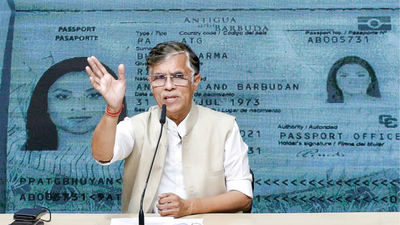
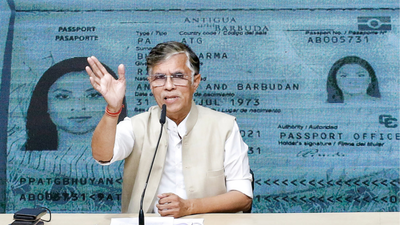
New Delhi: In a blow to Congress leader Pawan Khera, the Supreme Court on Wednesday stayed the Telangana High Court order granting him one week’s transit anticipatory bail in connection with the charges. Assam Riniki Bhuiyan Sarma, wife of Chief Minister Himanta Biswa Sarma.However, the top court said the Congress leader can seek anticipatory bail from the court having jurisdiction, meaning the court in Assam where the FIR was filed.

Watch

Assam passport dispute turns personal: Himanta Sarma takes ‘Peda’ jibe at Pawan Kheda, Congress responds

The apex court’s intervention came after the Assam government challenged the high court’s April 10 order, arguing that Khera had approached the wrong forum for relief.Appearing for Assam Police, Solicitor General Tushar Mehta questioned the maintainability of the petition before the Telangana High Court, citing what he termed “lack of territorial jurisdiction”. He said the FIR was lodged in Assam and Kheda did not explain why he could not seek anticipatory bail there.Mehta also pointed out that Khera had sought anticipatory bail in Telangana without clearly establishing his presence in the state, adding that jurisdiction cannot be conferred by “merely possessing some property”.He told the bench that it was a case of “complete abuse of process” and “choosing the forum”.During the hearing, Justice Dinesh Maheshwari said that Kheda had cited his wife’s residence in Hyderabad as the basis. However, the Solicitor General countered that Kheda’s Aadhaar records also showed a Delhi address, and occasional travel or property ownership could not justify jurisdiction, Live Law reported.The Telangana High Court had earlier granted limited transit anticipatory bail to Khera for one week. The court found that the apprehension of his arrest appeared to be “reasonable and supported by the material on record”, while imposing several conditions, including cooperation in the investigation and bar on making public statements that could adversely affect the investigation.The Assam government challenged the order, arguing that Kheda had not shown any solid reason for bypassing the Assam courts, where the case was registered.The FIR, lodged at the Guwahati Crime Branch police station, pertains to Khera’s April 5 allegations that Riniki Bhuyan Sarma had multiple foreign passports and undeclared foreign assets, claims which the Sarma family rejected as “false and fabricated”.

voting

Is political accountability sufficient to prevent abuse of legal processes in India?

The case has been registered under provisions of the Indian Judicial Code, including sections related to making false statements and fraud in connection with elections.

Source link

‘Transformative step’: Former President Pratibha Patil wrote a letter to PM Modi expressing support for the Women’s Reservation Bill. india news

'Transformative step': Former President Pratibha Patil wrote a letter to PM Modi expressing support for the Women's Reservation Bill.
Pratibha Patil supports Nari Shakti Act.

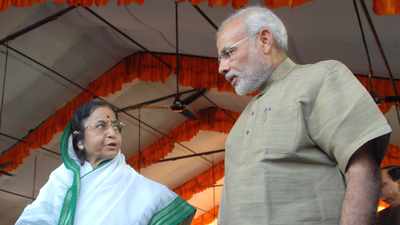
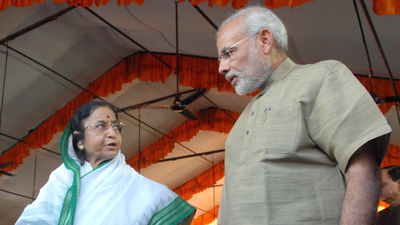
New Delhi: Former President Pratibha Devisingh Patil wrote a letter to the Prime Minister Narendra Modi Expressing its strong support for the implementation of the Women’s Quota Bill, calling it a ‘transformational step’ for India’s democracy.Patil, who served as the country’s first woman and 12th President from 2007 to 2012, said the ‘historic’ Nari Shakti Vandan Act constitutional amendment will significantly strengthen women’s representation in legislative bodies and deepen democratic participation.“India has consistently witnessed the extraordinary contributions of women in every sphere of national development, often overcoming formidable social and structural barriers,” Patil said. He said the law formally recognizes their immense potential and creates institutional pathways for their leadership at the highest levels of governance.“It marks a decisive step toward addressing historic inequalities and creating a more just and equitable society,” he said. His comments come ahead of the special session of Parliament starting on April 16, where amendments to the Act and the proposed Delimitation Bill to enable one-third reservation for women are expected to be brought in Parliament.In her letter, Patil described the law as “much more than a legal provision” and said it reflects a collective resolve to advance gender equality and promote inclusive governance. He said, “I am confident that this progressive initiative will ignite the aspirations of countless women, especially from rural and marginalized communities, encouraging them to take up leadership roles and contribute meaningfully to nation building.”Highlighting the broader impact, she said greater representation of women in Parliament and state legislatures would enrich the debate, promote more balanced policymaking and inspire future generations to participate in public life.Patil said, “I commend the leaders and all stakeholders who worked tirelessly over the years to turn this long-cherished dream into reality. This historic reform will undoubtedly play a vital role in realizing the vision of a more equitable, empowered and inclusive India. Best wishes for continued efforts towards women empowerment and national progress.”His support comes amid political differences Sonia Gandhi Criticized the timing of the bill, terming it a “secret strategy”.However, Patil expressed confidence that the reforms would encourage women, especially from rural and marginalized communities, to take up leadership roles and contribute to nation building, as well as signal India’s commitment to gender justice and inclusive democracy.

Source link

Campaign jingles are an old election staple, but now AI is crafting them. india news

Campaign jingles are an old election staple, but now AI is crafting them

As Tamil Nadu goes to polls on April 23, the election campaign is getting a new soundtrack – catchy, hyperlocal, AI-generated songs designed to stay in the minds of voters long after the rallies are over. From Coimbatore to the Cauvery Delta, candidates are trying to strike the right chord with voters through customized campaign tunes, with over 30 songs composed during the nomination phase alone. And this is no low-budget side act. Parties and candidates are willing to spend anywhere between Rs 10,000 to Rs 25,000 per song to increase their reach.The Playbook goes far beyond wall posters and van announcements. Political parties are now blending music, AI and social media algorithms to push more targeted campaigns, particularly on Instagram and Facebook, where ads are being tailored to suit budgets and voter demographics through meta ads.At the center of this fusion of music and politics is a growing ecosystem of AI creators. Ninth Direction’s creative head R Loganathan says they have delivered more than 30 AI-generated songs for 15 candidates alone, including many in Coimbatore. “Unlike previous elections, AI is now being used for better public outreach, especially through AI-generated campaign songs,” he told TOI. “There is a similar demand from DMK and ADMK candidates as well as some DMK alliance parties like Congress and Left parties.His client list spans party lines and geographies – from DMK and ADMK candidates in Tiruppur, Coimbatore and the Delta to DMK alliance candidates in the southern districts. Loganathan says his journalism background is helping him craft songs better tailored to individual candidates. “I have also received requests from former ministers for song packages ranging from Rs 10,000 to Rs 25,000. Depending on the package chosen, we provide a song in different tunes to the candidate.But the trend of digital is not limited to songs only. Campaigns are also going global. Sources say the DMK’s IT wing is running an intensive social media operation from the UAE, targeting audiences abroad and using platforms like TikTok, which is banned in India but is active in several Gulf countries. A Dubai-based social media manager confirmed the scale of that effort, saying that the DMK’s IT machinery is more robust there than rival parties. “To connect with the Tamil audience here, they use extensive SEO strategies,” he said. “TikTok is banned in India, but it is active in many other countries, including the Gulf, allowing them to share content from Tamil Nadu and reach Tamil populations abroad.”At home, campaign professionals say the real change came during the 2024 Lok Sabha elections, when the use of meta ads and algorithm-driven targeting increased. A popular YouTuber, now working as a freelance social media manager for the DMK, said this strategy has since become central to the IT wing of every major party.“Meta ads help target demographics and interests, while paid search engine optimization helps candidates better connect with niche and younger audiences,” he said. “For Tamilaga Vetri Kazhagam, it is easier because they are already using songs that are trending. But candidates who are new to social media or less active online have to rely heavily on paid promotions, and algorithms designed to deliver ads to targeted audiences in specific locations.But in the digital campaign sector, the price of visibility is very high. The more a candidate spends, the more often they appear on voters’ screens, the YouTuber said. “Although there is an official limit on election spending for each candidate, many spend over their budget through third-party services that are not reported.”

Not Vijay, it’s Vij-ai

He waved, grabbed the mic and was seen talking to the crowd. As a campaign vehicle of the Tamil Nadu Vettri Kazhagam passed through Kumbakonam in Tamil Nadu, for a few seconds many in the audience thought that party chief Vijay had actually arrived in person. Calls started coming in, discussions started circulating and excitement spread rapidly. But the crowd-pulling spectacle was actually a technological trick: an AI-powered holographic projection of the actor-turned-politician, mounted on a vehicle, with synchronized speech, realistic gestures and a surprisingly lifelike appearance that quickly went viral online. And this idea is gaining momentum. The companies behind the technology say candidates from all parties are now enquiring, with some even looking for holographic recreations of political icons like M Karunanidhi and J Jayalalitha.

Hologram campaigning in itself is not new – PM Modi used it in the 2014 general election – but the latest version comes with an AI boost. Better lip-sync, seamless body movement and easy portability are making these projections more effective even in small towns and rural areas. The Kumbakonam show was reportedly organized by a team of just six people, including young engineers, using a 3D hologram fan display system for sharper, more dynamic visuals than traditional projectors. However, this technology is not cheap, costing around Rs 50,000 per day.

Source link

Why Kamal Haasan missed the big role in multi-starrer Tamil Nadu politics. india news

Why did Kamal Haasan miss out on a big role in multi-starrer TN Politics?

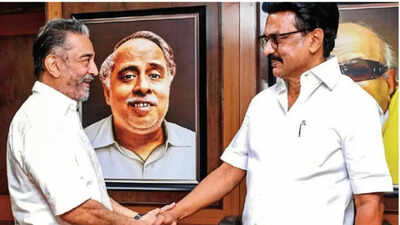
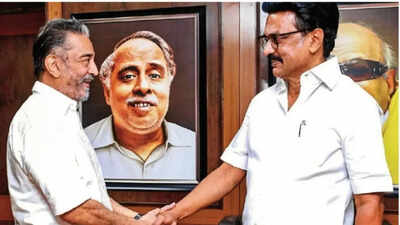
last month, when Kamal Haasan Anna went to Arivalayam DMK Headquartered in Chennai, to accept Rajya Sabha nomination from CM MK Stalin, it marked the end of the road Makkal Needhi Mayyam (MNM) founder’s promise to provide an alternative to the two Dravidian parties in Tamil Nadu.Haasan launched MNM in February 2018 to tap anger against power. MNM’s first political promo ahead of the 2019 Lok Sabha elections featured the actor breaking a TV set on which a speech was being played, apparently by Stalin. Cut to 2026 and, accepting the Rajya Sabha nomination, Haasan “generously” surrendered the three assembly seats that the DMK had offered to the MNM as an alliance offer.Why did Haasan, who redefined success in films, fail to live up to his promise as a politician? The mistakes, perhaps, started early. MNM, true to its name (‘Maiyam’ meaning centre), seeks to be a centrist force representing various sections of the society. That position itself was seen as lacking credibility, as Haasan was known for his leftist views long before his political entry. Being at the center of political discussion also reeks of political conflict.In the electoral arena, MNM faced continuous electoral failures. In the 2019 Lok Sabha elections, it contested 37 seats and did not win a single seat with 3.7% vote share. In the 2021 assembly elections, it fielded candidates on 154 seats, won none and its vote share dropped to 2.5%. In neighboring Puducherry it got only 1.8 percent votes. Ahead of the 2024 general elections, MNM joined the DMK-led alliance.After the demise of influential leaders like Jayalalitha and M Karunanidhi, many saw a new political space in Tamil Nadu, which film personalities like Haasan and Rajinikanth could potentially fill. While Haasan took the risk, Rajinikanth postponed his political plans in late 2020 citing health concerns.Haasan’s core team included people from diverse professional backgrounds – IAS officer Santosh Babu, retired IPS officer AG Maurya, businessman R Mahendran, entrepreneur CK Kumaravel, social activist Kameela Nasir, actor director Sripriya and writer Suka. Despite being notable in their respective fields, they were all political novices, and Haasan failed to attract veterans from other parties.Anusha Ravi, a lawyer who was MNM campaign secretary, says she joined the party attracted by Haasan’s call for change. “But, soon, he lost his confidence and I felt demoralized,” says Ravi, who will join the BJP in 2024. Haasan is fond of cinema, but not politics.Some political analysts believe that Hassan lacks a coherent political strategy. “The MNM has a weak organizational structure and limited connect with the people,” says political commentator Aazhi Senthilnathan. “Haasan’s appeal is largely limited to urban voters. After the 2019 defeat, many key members left the party, with some joining other parties like the DMK.”Political analyst Priyan Srinivasan says Haasan was unsure how to deal with the setbacks. He says, “Election defeat is normal; You have to have a plan to take the party forward.” “Look at the name Tamil Nadu Katchi. It faced several defeats, but its leader Seeman is less dejected and keeps the party relevant.Viduthalai Chiruthigal Katchi (VCK) general secretary D Ravikumar says Haasan’s electoral defeat by a narrow margin to Vanathi Srinivasan in Coimbatore in 2019 was a turning point. “Had he won, his political career would have been different. Sustaining a political party requires patience, grassroots work and long-term commitment,” says Ravikumar, who describes Haasan’s stay in the DMK as “pragmatic and retrograde”.Haasan, known as ‘Sakalakala Vallavan (Master of all Arts)’ in cinema, is known for displaying intellectual depth and creative outspokenness. However, many of his works struggled to connect with rural audiences, as his ideas were sometimes ahead of their time. Under the guidance of legendary director K Balachander, Haasan became one of the most famous actors of South India.Yet, the transition from cinema to politics brings a different set of challenges, where individual talent must give way to collective leadership and organizational strength.Haasan is not the first big star to fail in politics. Legendary actor Sivaji Ganesan tried his luck with the DMK and Congress before founding Thamizhaga Munnetra Munnani in 1988. After failing to make a mark in the 1989 elections, it merged with the Janata Dal. For Tamil Nadu’s latest film-to-politics crossover star TVK Neta Vijay, Haasan’s journey holds many lessons.Foreigner StarsMG Ramachandran The actor joined DMK after leaving Congress in 1953. In 1969 he was appointed party treasurer. In 1972, after internal differences led to his expulsion from the DMK, MGR formed his own party, the ADMK. He will be Chief Minister twice and will remain in office for 10 years.J Jayalalithaa She joined the ADMK in 1982 and rose rapidly to become its publicity secretary by 1983. Known as ‘Purachi Thalaivi’, or ‘Revolutionary Leader’, she was a five-time CM and was the ADMK chief, becoming the longest serving general secretary of the party.Shivaji Ganesan After leaving Congress, he founded Thamizhaga Munnetra Munnani Party in 1988. But the party failed to win seats in the 1989 elections, leading him to briefly join the Janata Dal before retiring from politics.Vijaykant Founded DMDK in 2005 and has been MLA from the party twice. DMDK emerged as the second largest party in the 2011 assembly elections and Vijayakanth remained the leader of the opposition in the Tamil Nadu Assembly from 2011 to 2016.R Sarath Kumar The actor founded the All India Samathuva Makkal Katchi (AISMK) in 2007. After leading the party for more than 16 years, he merged it with the BJP in 2024, citing the need for stronger collective action and ideological alignment with PM Modi.

Source link

Around 250 people feared missing after boat capsizes in Andaman Sea: United Nations india news

Around 250 people feared missing after boat capsizes in Andaman Sea: United Nations

DHAKA: Nearly 250 people, including children, are feared missing after a boat carrying Rohingya refugees and Bangladeshi nationals sank in the Andaman Sea, the United Nations said on Tuesday, Ahsan Tasnim reports. “The trawler, which had departed from Teknaf in southern Bangladesh and was en route to Malaysia, reportedly sank due to heavy winds, rough seas and overcrowding,” the United Nations High Commissioner for Refugees (UNHCR) said in a statement.The promise of better wages abroad, often coupled with misinformation spread by trafficking networks, leads individuals, Rohingya and Bangladeshis to take significant risks, said UNHCR and the International Organization for Migration. “This incident reflects the serious consequences of prolonged displacement,” UN agencies said. “We urgently call on the international community to increase solidarity and support for Rohingya refugees in Bangladesh, as well as sustain funding for Bangladeshi host communities,” he said.

Source link

CBI team in London for final formalities in Nirav Modi case. india news

CBI team is in London for final formalities in Nirav Modi case.

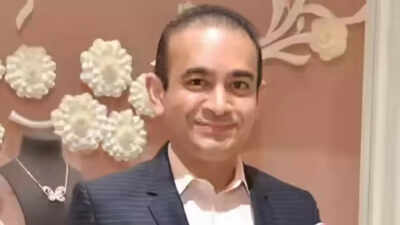
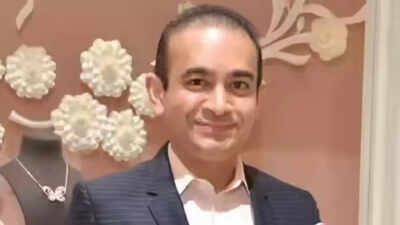
New Delhi: A team of CBI officers and legal experts is understood to have reached London to complete the final formalities in the Nirav Modi case. Sources said the team had gone there to discuss with lawyers as the fugitive diamantaire has exhausted all his legal options in Britain.The move comes after his plea to reopen proceedings against his extradition order by the UK courts was rejected by the High Court, King’s Bench Division, London.Sources said the team will also discuss a petition filed in France seeking help from the European Court of Human Rights, which has marked the case as confidential. The hearing in Strasbourg may take place in mid-April in the presence of the Indian side.Developments indicated that his extradition from a UK prison was now imminent. In late March, the application to be reopened was vigorously argued by counsel for the Crown Prosecution Service, assisted by a special CBI team, including investigating officers, who traveled to London for the hearing.The High Court had said that the petition for reopening and the circumstances surrounding it were not extraordinary, making it appropriate to reopen.CBI is demanding extradition of Nirav in the case pnb scam Up to Rs 6,400 crore. Following his arrest in the UK in 2019, courts approved his extradition and rejected earlier appeals.

Source link

There is a provision in the Delimitation Bill for the Election Commission to conduct the exercise in Pakistan occupied Jammu and Kashmir. india news

The Delimitation Bill has a provision for the Election Commission to conduct the exercise in Pakistan-occupied Jammu and Kashmir.

New Delhi: In a move in line with New Delhi’s consistent position that Pakistan-occupied Jammu and Kashmir (PoJK) is an integral part of India, a provision has been included in the Delimitation Bill, 2026 Election Commission To delimit the Jammu and Kashmir constituencies which are currently occupied by Pakistan, whenever they “cease to be occupied”.The number of elected members of Jammu and Kashmir Assembly is 90; This does not include the 24 seats in PoJK that remain ‘vacant’ and are not taken into account in calculating the total membership of the Assembly. The Union Territory Laws (Amendment) Bill, 2026 authorizes the Delimitation Commission to decide on the revised strength of the Jammu and Kashmir Assembly, which will not be less than the existing 114 seats. It withdraws the provision of the Jammu and Kashmir Reorganization Act to exclude PoJK area and seats while delimiting the regional constituencies of Jammu and Kashmir.The Bill proposes to amend Section 15 of the Jammu and Kashmir Reorganization Act to increase the number of women nominated to the Jammu and Kashmir Assembly by the Lieutenant Governor from two to three. However, this will increase only after the readjustment of constituencies based on fresh delimitation comes into effect.According to the Statement of Objects and Reasons of the Bill, the provisions of the Union Territory Government Act, 1963, the Government of National Capital Territory of Delhi Act, 1991 and the Jammu and Kashmir Reorganization Act, 2019 are based on the existing constitutional framework relating to population, delimitation and reservation.

Source link