
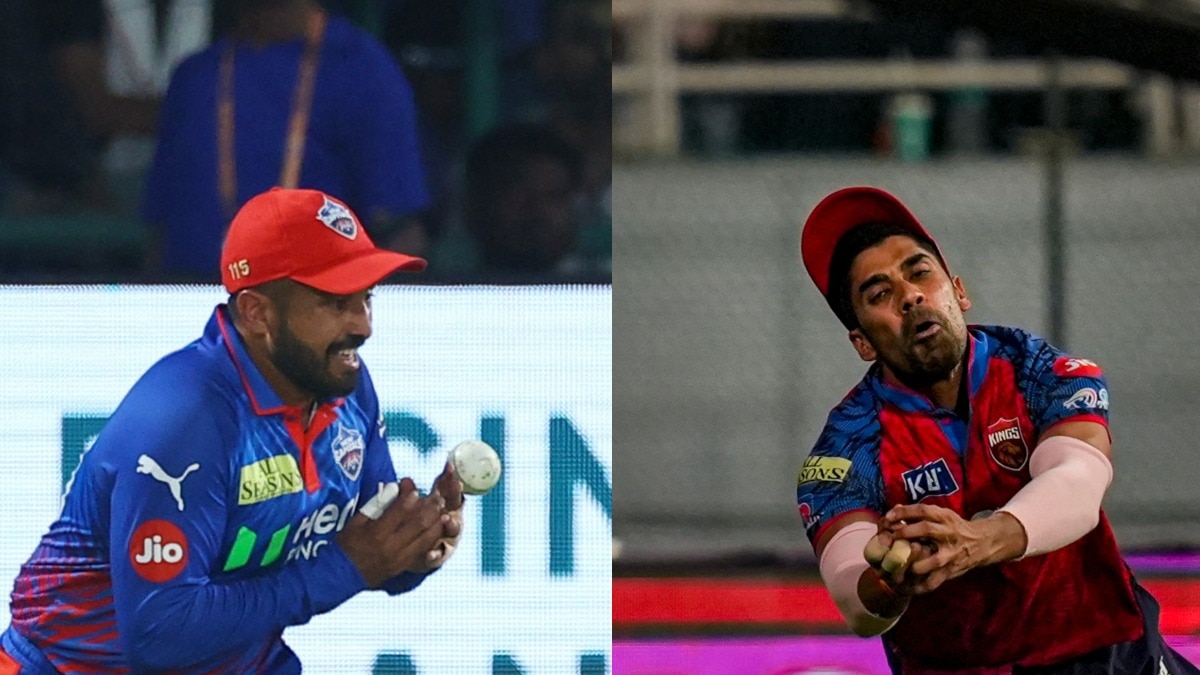

IPL 2026: Why are teams giving up so many catches this season?
A virus is spreading in the Indian Premier League. This is a kind of virus which you do not catch, but leave. take him? No? Ok. We are talking about the catch-drop virus, which has taken over the 2026 season of the Indian Premier League. Big chances are falling short in every single match, effectively changing the fortunes of the game.
The latest example of the spread of the virus is Delhi Capitals’ match against Punjab Kings. Playing at the Arun Jaitley Stadium, the hosts scored a total of 264 runs, one of the highest ever scores in the history of the Indian Premier League.
dc vs pbks, IPL 2026: highlighted | Achievement:
Delhi were helped by a crucial chance dropped by KL Rahul in the third over of the game. Shashank Singh, posted on the leg side boundary, failed to catch a direct chanceThe ball fell from his hand.
Rahul punished Punjab hard by scoring 152 runs, which is the highest score by an Indian in the history of the tournament.
But once Shashank sneezed, sorry, the catch was missed, the virus spread. Delhi Capitals dropped six catches on the field That same evening.
One of them came from the bat of Shreyas Iyer in the 15th over. Iyer, who has a sensational record of remaining unbeaten while chasing big scores, got a lifeline from Karun Nair at long-off and moved forward. Guide your team to achieve the highest ever T20 target in the history of the tournament.
Delhi vs Punjab was not the only example. A total of 17 catches fell between the 2 matches played on 25 April. Later the same evening in the Rajasthan vs Hyderabad game, Jaipur missed several chances as SRH chased down 229 with ease.
It needs to be pointed out that the culprits in question – Karun Nair, Shashank Singh, or, for that matter, Lungi Ngidi, who stumbled badly while trying to take the catchNot a bad fielder. In fact, fielding is one of their most defining characteristics, and they are regularly placed in areas of high activity, also known as hotspots.
But somehow they continue to drop catches.
Continuous decline in catching efficiency since 2020
At this point, it should be pointed out that this catch-drop virus is not new. Since 2020, there has been a steady decline in catching efficiency in the Indian Premier League.
In 2020, 85 out of every 100 catches were being taken. IPL. This number had fallen to 76 out of 100 midway through IPL 2025. This year, it is likely to be even lower.
This means the problem isn’t just a few bad nights under the lights. This has turned into a pattern.
In an era where players are faster, fitter and more athletic than ever before, it seems strange that something as basic as catching has become such a recurring problem. But perhaps that is exactly the point. Catching up is not glamorous. It is repetition, sharpness, awareness and concentration. And when fatigue sets in, it’s often the first thing to disappear.
Why are so many catches decreasing?
Interestingly, Yuzvendra Chahal, one of the frequent patients of this catch-drop virus, had said at the beginning of the season that no one comes into the game thinking that they will drop a catch. They happen, and they’re just a part of the game.
Now check out this attempted catch by Chahal in Punjab’s match against Mumbai earlier this season.
Yes, brother Yuzi, no one wants to leave them. But of course closing your eyes before the ball arrives doesn’t help.
Shashank Singh, one of Punjab’s best fielders, has missed four of his last five chances. An opportunity he didn’t miss, he didn’t even try. He stood on the boundary and watched the ball cross the rope, despite the ball not being very far from his reach.
Is it a lack of awareness of the game?
India Today spoke to former IPL player Shrivatsa Goswami on this issue. Goswami, who was a sensational wicketkeeper during his playing days, was himself largely immune to the virus. Reacting to the number of catches dropped, the former Bengal star believed that it was down to one thing: awareness of the game.
When those players were on the field they were not switched on.
While this may explain the fielding efforts of players like Yuzvendra Chahal, whom teams often hide in easy positions, it does not explain this particular chance dropped by Washington Sundar.
While fielding at short midwicket, Washington dropped a dolly on the ball of Virat Kohli.
outcome? you guessed it.
Chasing the target of 206 runs, Kohli guided RCB with a stormy innings of 81 runs, which helped the team achieve the target in just 18.5 overs.
Sometimes, awareness is the answer. Sometimes, it’s just fatigue.
unforgiving schedule
Since Covid-19, cricketers have been stuck in an unimaginable calendar. At least one ICC event every year, multiple franchise tournaments around the world and a stressful bilateral schedule have forced players to live in a constant state of frenzy.
In 2024, players got barely a week’s break between the IPL and the T20 World Cup. The story was almost the same in 2026 also. The World Cup ended on March 8, and players reported to IPL camps just a week and a half later.
Too much cricket is real. Fans feel it all the time. Probably it has affected the players also.
The IPL schedule itself is unforgivable. Delhi Capitals lost a heartbreaking match on Saturday. They will have to overcome the physical and mental fatigue from that defeat and prepare for the second match on Monday.
In such scheduling nightmares, teams often ask their first XI players to prioritize recovery. This means pool sessions, massages, muscle recovery, and just mentally switching off. This also means less fielding practice and less catching sessions.
And ultimately this is reflected in the game.
Mohammad Kaif, one of India’s best fielders, said that there is no doubt about it. If players do not practice their fielding skills will not improve. However, the bigger question is when exactly they should get the time.
Kaif said on his YouTube channel, “Fielding is like a hasty meal, it’s like breakfast. Constant traveling over a period of a month makes players tired. They use the breaks to massage, to recover. It means you are reducing your fielding load in training over time, and you concentrate on your specialist job, batting or bowling. You will see in every single IPL that as the tournament progresses, more and more catches are dropped. Are.”
This year, especially, there has been no respite from the heat waves across the country. In Delhi, the sun was so bright that you could hardly catch the ball if it went up in the air. The heat physically exhausted the players, causing them to suffer severe fatigue, dehydration and cramps.
Although dropping catches is no excuse, it would be unfair to solely blame the players without taking into account external factors.
Yes, the implementation is at fault. But so are the calendars, the heat, and the frustrating travel schedules.
Then again, the catch-drop virus isn’t really a secret. This is characteristic of a game that rarely stops, with players who are constantly traveling, constantly recovering, and constantly preparing for the next game before the previous one is completely over.
No one comes to a match with the desire to remove a sitter. No one is planning to become the next viral clip on social media. But in a relentless tournament like the IPL, sometimes the easiest chances turn out to be the hardest to retain.
ipl 2026 | ipl schedule | ipl points table | ipl player stats | purple cap | orange cap | ipl video | cricket news | live score
– ends
tune in