

How could BJP’s Bengal victory affect India-Bangladesh relations?
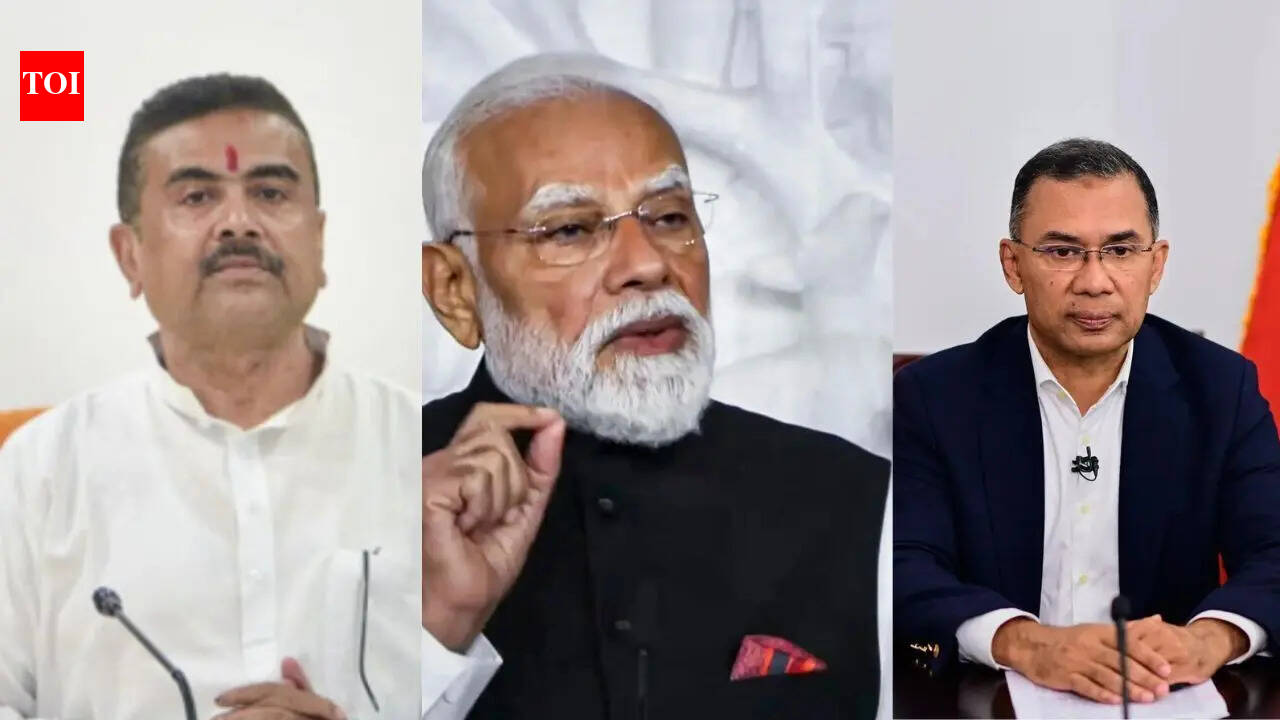
The recent West Bengal assembly elections received wide coverage in Bangladesh, as did the Bharatiya Janata Party (BJP).BJP) a historic landslide victory, which brought the party to power for the first time in the strategically important eastern border state. The BJP’s success is the first time since 2014 – when the Narendra Modi government first took power at the Center – that the political system in Kolkata is ideologically aligned with New Delhi. The victory comes at a time when Bangladesh is also under new leadership: Bangladesh Nationalist Party (BNP) President Tariq Rahman became prime minister 18 months after public protests in February’s general election ended the 15-year uninterrupted rule of Awami League’s Sheikh Hasina.New Delhi–Dhaka relations fell to unprecedented lows under the caretaker Muhammad Yunus administration, which succeeded Sheikh Hasina and oversaw the transition to the BNP government.The BJP’s rise to power in West Bengal – the state that shares the longest border with Bangladesh – is expected to significantly shape bilateral relations, at least in the near future.
border fencing
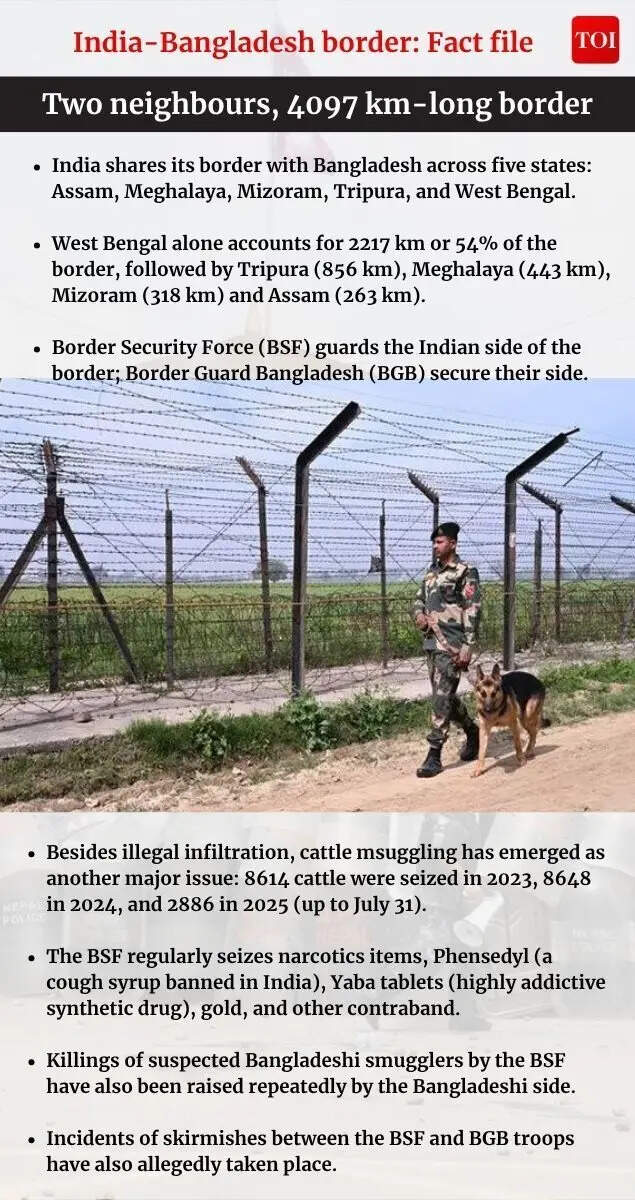
The BJP now rules three of the five states bordering Bangladesh, while one, Meghalaya, is ruled by an ally (the National People’s Party). Of those, West Bengal’s 2,217-km-long border alone accounts for about 54% of the total 4,096-km-long border with the neighboring country – making the state particularly vulnerable to illegal immigration attempts. For years, the BJP accused Mamata Banerjee’s Trinamool Congress (TMC) – which was voted out of power after 15 years in power – of protecting Bangladeshi “infiltrators” as a “vote bank” and obstructing the Border Security Force (BSF) from acquiring land needed to erect the border fence. In response, one of the first decisions of the new administration was to transfer the land to the Union Home Ministry, under which the BSF operates for fencing, and the acquisition was to be completed within six weeks.
India-Bangladesh border
The move drew an immediate reaction from Dhaka, with Prime Minister Rahman’s foreign affairs adviser Humayun Kabir saying Bangladesh was “not afraid of barbed wire.”
The people of Bangladesh are not afraid of barbed wires…the Bangladesh government is also not afraid; Where we need to talk, we will talk
Humayun Kabir, Foreign Affairs Advisor to Bangladesh PM
According to the Home Ministry, by August 2025, about 1,648 km (74%) of the West Bengal–Bangladesh border had been fenced. Of the remaining 569 km, 456 km were considered viable for fencing, while the remaining 113 km were classified as non-viable. Within the 456 km potential extension, land for 78 km was handed over to the executing agency (BSF). For the remaining 378 km, the previous state government had not yet started land acquisition for 149 km, while the remaining 229 km was still going through various stages of acquisition, mainly due to what was described as delay by the TMC dispensation. ‘chicken neck’In another major move, the Suvendu government has approved the transfer of seven important national highways in the Siliguri corridor, popularly known as Chicken Neck, to central agencies. Chicken Neck is the only land route connecting the northeastern states to mainland India.
‘Assam Model’ in West Bengal?
A picture, they say, is “worth a thousand words.” A photo shared by Himanta Biswa Sarma after his swearing-in on May 12, marking his second consecutive term – and the third of the BJP-led government in Assam – was aimed at sending a message. The picture shows Sarma with his West Bengal counterpart Suvendu Adhikari, with the cryptic caption: “Bad days… (you know who).” Although the comment did not explicitly name anyone, it was widely interpreted as a reference to alleged illegal infiltrators from Bangladesh.Sarma’s administration has adopted a policy of “pushback” to send suspected illegal immigrants back across the border to the neighboring country. Despite the criticism, he has declared that “Assam will fight and the push will continue.”On 25 April, Sarma announced that “20 illegal immigrants” had been deported, the largest number since 21 people were similarly deported on 1 March. He said that “uncivilized people do not understand soft language” – remarks that prompted Dhaka to summon New Delhi’s acting high commissioner to lodge a protest. The public friendliness between Sarma and Adhikari suggests that West Bengal may also consider adopting the “Assam model”. With Adhikari’s past comments on Bangladesh and the BJP’s stance on infiltrators, this possibility is increasing.
Teesta Water-Sharing Agreement
However, there are hopes for a positive outcome on one front: the long-pending Teesta river water-sharing agreement. Although the treaty was close to being signed when then Prime Minister Dr. Manmohan Singh visited Dhaka in September 2011, it was stopped by Mamata Banerjee, who was a few months into her first term as Chief Minister.The Trinamool supremo remained steadfast in her opposition to the agreement, reiterating as recently as July 2024 that sharing Teesta waters would deprive northern West Bengal of its drinking water and irrigation needs.While congratulating the BJP, Bangladesh’s ruling BNP described Banerjee as an “obstacle” to the agreement, with its senior leader Azizul Bari Helal saying both the Modi government and Dhaka were “desirous of an agreement.”The Teesta dispute centers on the river that originates in the Himalayas, flows through Sikkim and West Bengal in India, and then enters Bangladesh through Rangpur Division before merging with the Jamuna River. Teesta is approximately 414 km long, of which about 305 km lies in India and the remaining 109 km in Bangladesh.An ad hoc agreement was signed in July 1983, intended to remain in force until the end of 1985. Under this arrangement, India was to receive 39% of the Teesta waters, Bangladesh 36%, while the remaining 25% was not allocated.A new treaty was almost passed in 2011 but Banerjee’s government in West Bengal blocked it.
India’s reach to Bangladesh
The BJP’s victory in West Bengal comes days after the appointment of former Union minister Dinesh Trivedi, who has deep roots in the state, as India’s next High Commissioner to Bangladesh. The move marked a rarity – the appointment of a politician rather than a career diplomat to the ambassadorial role – signaling New Delhi’s intention to re-establish ties with Dhaka through political engagement rather than regular diplomacy.In an article for The Times of India, Constantino Xavier, a senior fellow at the Center for Social and Economic Progress (CSEP), New Delhi, described Trivedi’s appointment as a “signal of India’s clear commitment” to improving bilateral ties.Sensing the inevitability of a BNP victory, New Delhi had started reaching out to Rehman following his return in December 2025 after 17 years in the UK. Following the demise of Rehman’s mother, former Prime Minister Khaleda Zia, External Affairs Minister S Jaishankar attended her funeral in Dhaka and also delivered a condolence letter from Prime Minister Narendra Modi to the bereaved family.In February, Lok Sabha Speaker Om Birla and Foreign Secretary Vikram Misri attended Rahman’s swearing-in ceremony, underscoring India’s intention for continued engagement with Bangladesh’s new leadership.Nevertheless, the decisions of the BJP administration in Kolkata are expected to be important going forward.
the way forward
BJP’s much-hyped “double engine” model has finally reached West Bengal. According to the party’s own political doctrine, this will lead to closer coordination between the Center and the state – in the case of West Bengal, especially on matters related to Bangladesh.Having made illegal infiltration a central political issue in both West Bengal and Assam, the BJP will now have to strike a careful balance between fulfilling its election promises on border security and immigration and ensuring that its actions do not further strain India’s already fragile relations with Bangladesh – especially at a time when both sides are attempting to rebuild trust and overcome the bitterness of the recent past.The BJP may have created history on May 4 when votes were counted in West Bengal, but the real test of the Adhikari government is yet to come.