

Real work starts after flight: ISRO chief puts mission operations at center of space ambitions india news
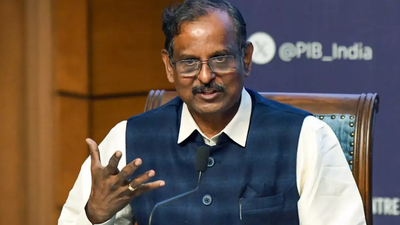
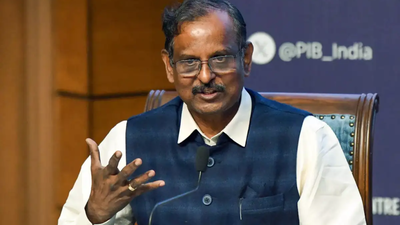
BENGALURU: India’s space missions may make headlines at the time of launch, but their real test begins only after the rocket is decommissioned. ISRO Chairman V Narayanan said here on Wednesday that mission operations, the long, invisible phase that keeps satellites alive for years, will define the next phase of the country’s space ambitions.Speaking at the Spacecraft Mission Operations (SMOP) conference, Narayanan underlined that while launches last barely 15 to 25 minutes, the spacecraft must function reliably for years, sometimes up to 15. “Ensuring that the spacecraft remains fully operational in orbit … continuous monitoring, simulation and command operations. This is a very important domain,” he said, placing mission operations at the center of future space efforts.Narayanan spoke at a time when ISRO is grappling with launch failures and project delays, which is drawing criticism, especially given that the Indian space program is transitioning from milestone-driven missions to sustained space activity. He pointed to three major achievements since the last SMOP conference: the successful docking experiment in space, the Chandrayaan-3 moon landing, and the Aditya-L1 solar mission.He described the docking experiment as particularly complex, in which two satellites traveling at more than 15,000 km per hour were brought together with precision. Highlighting the risks involved, he said, “Any wrong order… you know what the end result will be.”On Chandrayaan-3, Narayanan credited the mission operations teams for executing an autonomous landing sequence near the Moon’s south pole. He also mentioned India’s entry into an elite group of countries to study the Sun with the Aditya-L1 mission.The Chairman emphasized that mission operations are not limited to one team but involve designers, software engineers and system experts working together. He described their role as “very important” and often under-recognized.Looking ahead, Narayanan said technologies such as artificial intelligence, machine learning and cloud-based ground systems will become important. “What was considered advanced 10 to 15 years ago is now the need of the hour,” he said.He also placed mission operations in the broader context of India’s expanding space ecosystem, pointing to the increasing involvement of private players and start-ups. Private companies are contributing to both technical capacity and talent development, he said.On human space flight, a program that has been announced several times by the Center and ISRO, Narayanan described it as “not just another activity” but a big step requiring constant operational precision. Drawing comparisons with April 12, 1961 – the date of the first human space flight – he said India is now preparing for its own crewed missions.As ISRO moves towards more complex missions, including the future Chandrayaan-4 and 5 projects and human spaceflight, Narayanan’s message was clear: success will depend less on the spectacle of the launch and more on the discipline of operations that follow.