

Supreme Court says judiciary cannot interfere with devotees’ sacred right to worship – India News
 Supreme Court On Thursday, prima facie it was agreed that the right of devotees to decide the way and manner of worshiping God is non-judicial.The Supreme Court’s comments came after senior lawyer J Muth Raj argued that in Hinduism, every village has a ‘Gram Devta’, every family has a ‘Kul Devta’ and ‘Ishta Devta’, whose worship varies, and it is impossible for the court to examine the essentiality of such practices when it is linked to an umbrella religion.
Conscience and faith are private of individuals: Supreme Court
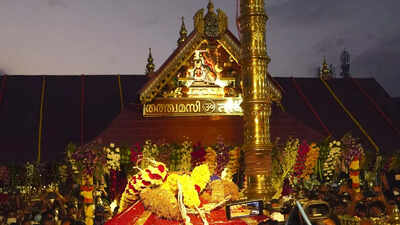
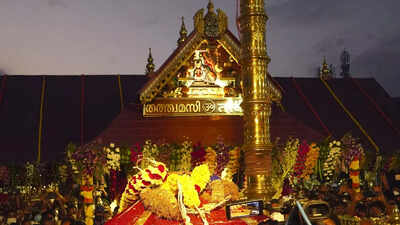
The bench hearing the Sabarimala case included CJI Surya Kant and Justices BV Nagarathna, MM Sundaresh, Ahsanuddin Amanullah, Arvind Kumar, AG Masih, PB Varale, R Mahadevan and J Bagchi. CJI Kant and Justices Nagarathna, Sundaresh, Kumar and Mahadevan, through their observations, seemed to agree that it would be difficult for the court to examine the validity of the manner and method of worshiping God by a devotee. Raj asked that since there is no provision for such worship in any religious text, what would be the baseline for judicial investigation? The CJI and Justice Nagarathna said that conscience and faith are personal to an individual.Justice Sundaresh said, “Article 25 protects the rights of a believer from a non-believer. It gives importance to the individual’s conscience to practice, propagate and propagate religion. The mode of worship is part of conscience and is a personal space for the devotee and God. It cannot be given a restrictive meaning.” Justice Mahadevan said, “Faith is belief. Its validity cannot be tested.”All major religious communities, represented by senior advocates NK Kaul, K Radhakrishnan, Krishnan Venugopal, Guru Krishna Kumar, Shyam Diwan and Arvind Datar, argued in unison that long-standing practices like those of the Sabarimala temple were based on faith and non-justiciable.