Omar Abdullah meets Amit Shah, discusses statehood of Jammu and Kashmir. india news

Omar Abdullah meets Amit Shah, discusses statehood of Jammu and Kashmir

Srinagar: Union Home Minister Amit Shah met on monday Jammu and Kashmir Chief Minister Omar Abdullah in New Delhi and discussed, among other things, “restoring statehood”.A government spokesperson said the meeting “discussed the prevailing security and economic situation in Jammu and Kashmir, with emphasis on ensuring continued peace, stability and inclusive development for the people.”“Transaction of commercial rules, rationalization of reservation and other key governance and public welfare issues related to Jammu and Kashmir were discussed,” he said.Abdullah stressed the importance of addressing governance-related concerns and accelerating developmental and welfare initiatives. “He also highlighted the need for continued coordination between the Center and the Government of Jammu and Kashmir on issues of public importance,” he said. He said that the discussion took place in a cordial atmosphere.

Source link

ST community gave 2 days time to the government for quota formalities. goa news

ST community gives 2 days time to government for quota formalities

Panaji: Leaders of Goa’s tribal community are angry over the lack of initiative shown by the state government in completing the process of demarcation of constituencies for the Scheduled Tribe community in Goa ahead of the assembly elections. Mission Political Reservation for STs of Goa, which has been fighting for political reservation for three years, has given the government a two-day ultimatum to complete the formalities of reservation in the state assembly under Article 332 of the Constitution of India.Leaders of the movement accused the BJP-led government and Chief Minister Pramod Sawant of taking the tribals lightly. “The tribal minister keeps saying he is trying, but we need something concrete from him and the government. They will extend it beyond 2027. This is injustice. They think we are voiceless and powerless,” said Joao Fernandes, president of the Mission Political Reservation for STs of Goa.ST community members from different parts of Goa gathered outside the Tribal Department office to demand clarity regarding political reservation for STs.Tribal Welfare Director Nilesh Dhaigodkar said that the process of giving reservation to ST community in the assembly elections is under process. While the tribal leaders have threatened to intensify their agitation if their demands are not met in two days, they did not reveal their long-term plans for the assembly elections.Tribal leader Govind Shirodkar said, “Now the government is yet to issue a notification authorizing the Election Commission of India to demarcate constituencies for the ST community. They have now come up with all-India delimitation, and they are using it to hang delays on our necks. The efforts are now stuck. That is why we are giving them a two-day ultimatum.”Members of Mission Political Reservation said that the agitation will continue outside the department until the final notification is issued.

Source link

Quote of the Day by German philosopher Friedrich Nietzsche: “I cannot believe in a God who wants praise all the time.” world News

Quote of the day from German philosopher Friedrich Nietzsche:
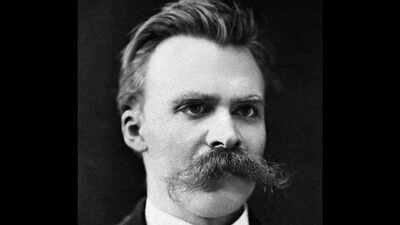
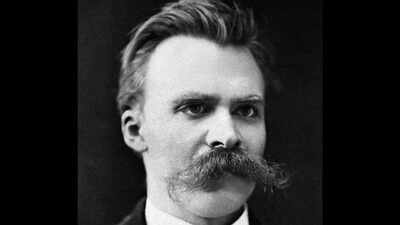
Friedrich Nietzsche (Image: Wikipedia)

Few philosophers in history have had the courage to challenge human thinking as boldly as Friedrich Nietzsche. More than a century after his death, his words continue to be debated as they challenge authority, morality, religion, truth, and the way society shapes human behavior. One of his most quoted comments is still, “I cannot believe in a God who wants to be praised all the time.” The quote is short and precise, but it reflects Nietzsche’s larger philosophical struggle with the idea of ​​organized religion, blind obedience, and unquestioning authority.It was never about turning away from religion. Rather, it was a critique of Nietzsche’s discomfort with systems that demand constant devotion and adoration and yet do not allow for doubt, questioning, or individualism. He often wrote about the philosophy that humans should think for themselves and create meaning for themselves, rather than inheriting beliefs from society.Nietzsche’s words still resonate today because they are about something fundamentally human: the tension between obedience and individual freedom. His quote feels surprisingly contemporary at a time when institutions, ideologies and power structures are being questioned on a daily basis. This is part of what makes Nietzsche one of the most read and discussed philosophers in the world.

Quote of the Day by Friedrich Nietzsche

“I can’t believe in a God who wants praise all the time.”

The meaning behind Nietzsche’s famous quote

At first glance, this quote appears to be a direct criticism of religion. But Nietzsche’s philosophy was more layered than just a rejection of faith in general. He wondered what power was, why society so often encouraged blind loyalty.Nietzsche argued that authority that always requires admiration is in danger of stifling free thought. He believed that human behavior is changed by fear, guilt, and obedience. His criticism was not just of religion but of those systems where individualism was suppressed.Nietzsche believed that true human development arises from self-discovery, courage, and a willingness to face difficult truths. He believed that people should not believe in things that have been passed down for generations.This quote touches on his broader concern about dependence on external approval and authority. Nietzsche thought that humans should seek authenticity, not endless acceptance of institutions or social expectations.

Why does Nietzsche’s philosophy still seem relevant today?

Although many of his ideas were written in the 19th century, they are still very relevant in today’s society. Questions of identity, freedom, morality and conformity remain central to human life.Modern culture often puts pressure on people to conform to expectations, whether social, political, religious, or professional. Nietzsche warned him about “herd mentality”, where people stop thinking about themselves and just follow the herd. His ideas seem even more relevant in today’s digital world. Social media sites reward recognition, approval, praise and popularity. Many people are always looking for approval from others, even at the expense of their own authenticity.Nietzsche believed that people should be strong enough to think for themselves and not just follow what society says. This idea still influences readers who feel constrained by social pressure or expectations.

The philosopher who challenged traditional morality

Nietzsche became famous because of his attack on traditional ideas of morality. He wondered whether moral systems were truly universal or just things created by society to maintain order and control.One of his most misunderstood ideas was the phrase “God is dead.” Nietzsche did not mean this literally. Rather, he thought that modern society was gradually moving away from traditional religious certainty through science, rational thought, and social change.But they also feared what would replace those old systems of meaning. He feared that without purpose and values, people would descend into nihilism, the belief that life has no meaning.His answer was not one of disappointment. For Nietzsche, humans can create meaning through creativity, courage, discipline, and personal responsibility. He asked people to be self-aware, to be their best.

How Nietzsche’s life shaped his thinking

Nietzsche’s philosophy was greatly influenced by his personal life. Born in Prussia in 1844, he was raised in a religious household after losing his father at an early age. He was initially educated in the classics, theology and philosophy.He initially studied theology but later distanced himself from organized religion. He was made professor of classical philology at an early age, but struggled with health problems throughout his life.Chronic illness, isolation and loneliness were the background to much of his worldview. Many historians believe that these personal challenges influenced his intense focus on suffering, resilience, and human strength.After abandoning his academic career, Nietzsche spent much of his later life writing by himself. His work was little read during his lifetime, but after his death in 1900, his ideas became extremely influential in philosophy, psychology, literature, and political theory.

Nietzsche’s influence on psychology and modern thought

Nietzsche’s influence extended far beyond philosophy. His work inspired many later thinkers, including psychologists, writers, and social theorists.His investigation of the unconscious, hidden motives, and internal conflict had an influence on later psychological theories. The parallels between Nietzsche’s ideas and later developments in psychoanalysis are often cited by scholars.He also inspired writers and artists because he was very interested in human emotions, suffering, ambition, fear and self-discovery. His writings have inspired people to confront inconvenient truths rather than shy away from them.Nietzsche has also been interpreted in different ways by political thinkers from different schools of thought, although some interpretations are controversial. Experts often caution against oversimplifying his philosophy as his writings are often symbolic, complex, and at times open to interpretation.

The idea of ​​personality in Nietzsche’s philosophy

The theme of personality is one of Nietzsche’s most powerful themes. He thought that many people lived by the expectations imposed by others rather than finding their own identity.He urged people to overcome fear and achieve what he called self-mastery. This meant that an individual had to take responsibility for his or her own life, choices, and values, rather than relying solely on external systems.Nietzsche praised creativity, courage, and freedom of thought. “Development is often painful because you have to deal with ambiguity and old assumptions,” he said.His philosophy still resonates with those who break away from rigid social conventions or seek a more profound sense of personal purpose.

Why does Nietzsche remain controversial?

Nietzsche’s influence is controversial today. Some critics say that his writing can be rigid, elitist, or difficult to follow. Some also think that his ideas were misinterpreted or co-opted by later political movements.Historians have often said that Nietzsche has been misunderstood, and his philosophy misinterpreted. His writing was complex, poetic, and often deliberately provocative, and could easily be misunderstood if taken out of context.Meanwhile, many intellectuals still view Nietzsche as a philosopher who championed intellectual honesty and critical thought rather than blind obedience.His philosophy is interesting because of his work and the controversy surrounding it. His ideas force the reader to ask difficult questions about morality, identity, truth, and freedom.

What does Nietzsche’s quote mean in today’s world?

Nietzsche’s quote on praise and authority still strikes a chord in society today because it relates to universal human experiences. Many people feel the pull of institutions, work, communities, and even online culture. Sometimes, the need to be accepted and validated can outweigh the need to be authentic.Nietzsche’s philosophy forces us to question whether we are living up to our values ​​or simply meeting other people’s expectations. His words are not easy answers. They greatly challenge readers to think about themselves and what they really believe.This may be one reason why Nietzsche’s work has survived through the ages. His philosophy certainly does not reassure us: it forces us to look within ourselves.

Other famous quotes from Friedrich Nietzsche

  • “Without music, life would be a mistake.”
  • “It is not lack of love, but lack of friendship that makes unhappy marriages.”
  • “There is always some madness in love. But there is always some reason in madness.”
  • “The advantage of a bad memory is that one often enjoys good things the first time.”

Nietzsche’s legacy continues to shape intellectual history

Nietzsche remains one of the most influential philosophers of all time, even a century after his death. His questions about truth, morality, personality, and power are still very relevant today. His writings are still studied in universities around the world.His work has influenced philosophy, literature, psychology, political theory, and even pop culture. Nietzsche does not provide easy answers to the problem of human existence, and this is what many readers find attractive about his writings.His views are still controversial, and people either love him or hate him. The enduring influence of philosophy is a testament to its power to challenge assumptions and force society to think differently.Nietzsche believed that it was important to face life head-on, even if the truth was unpleasant. His famous quote regarding praise and authority is in the same spirit. It challenges blind obedience and forces people to think beyond inherited beliefs.In a world dominated by institutions, ideologies and social pressure, these questions are as powerful today as they were in Nietzsche’s time.


Source link

Barrierless tolling leads to recovery of Rs 30 lakh as half of users pay dues india news

बैरियरलेस टोलिंग से 30 लाख रुपये की वसूली हुई, क्योंकि आधे उपयोगकर्ताओं ने बकाया चुका दिया

Free Flow Fee Plaza (PTI Image)

New Delhi: Breaking the perception that people avoid paying pending highway tolls, NHAI on Monday said half of those who received e-notices after the first multi-lane free flow (MLFF), or barrierless tolling, started on NH-48 in Gujarat have paid their dues – about Rs 30 lakh.E-notices were issued to vehicle owners for failure to pay toll after the introduction of the MLFF system by IHMCL, the tolling and technology arm of NHAI, from May 1. Road Transport Minister Nitin Gadkari inaugurated the second such facility in Delhi on Monday.“This seamless system will make travel easier as no one will need to stop. This will save time, fuel and NHAI’s expenses for toll collection. We will save at least Rs 6,000-7,000 crore annually.” This will also prevent leakage of toll revenue. People have no objection to paying toll if it is uninterrupted,” he told TOI.NHAI Chairman Santosh Yadav said that 50% of vehicle owners pay the pending toll, which “proves the hypothesis that people are generally law abiding”. He said IHMCL has so far bid for 17 MLFF plazas and bids have been invited for another 108.Gadkari said once all 700 toll plazas become barrier-free, it is estimated to save Rs 295 crore per year in terms of fuel and help reduce 81,000 tonnes of CO2 emissions besides reduction in travel time and increase in logistics efficiency. “Our operating cost of toll collection will increase from the current 12-15% to 3-4% and this savings will be used for more highway projects,” Gadkari said.The minister said that high-powered cameras installed at MLFF toll plazas will also help in curbing traffic violations. Yadav said that learning from the earlier MLFF tolling, measures would be taken at subsequent toll plazas to alert drivers about the barrier-less tolling space.Yadav also announced several initiatives that will be launched soon to inform and alert drivers about diversions, fog, cattle and landslide prone areas on their mobile phones and to track ambulances in case of emergency. These alerts will be shown on navigation apps.

Source link

Dwyane Wade opens up about transgender daughter Zaya Wade and the parenting lesson that changed everything nba news

Dwyane Wade opens up about transgender daughter Zaya Wade and the parenting lesson that changed everything
Dwyane Wade and Zaya Wade (Image via Getty)

Life after basketball has given former NBA star Dwyane Wade a very different kind of spotlight. Instead of the pressures of championships and playoffs, Wade has spent the past few years speaking openly about family, parenting and supporting his daughter Jaya Wade after she came out as transgender. The former Miami Heat great recently reflected on that trip and how it completely changed the way he looks at parenthood.Wade first shared Zaya’s story publicly in 2020 when she was 12 years old. Since then, he and wife gabrielle union Has continued to support LGBTQ+ youth and talk about the importance of listening to children. Speaking in earlier interviews, Wade admitted that becoming a better parent meant learning, adjusting to, and understanding experiences that were different from his own upbringing. According to Business Insider, Wade called supporting Jaya “one of my greatest strengths as a parent”, while discussing how the experience also helped him grow personally.

Dwyane Wade says daughter Zaya Wade helped him rethink parenting and identity

Long before Zaya came out publicly, Dwyane Wade said he noticed his child was expressing herself differently. Looking back now, the three-time NBA champion admitted that changing his mindset wasn’t immediate. Wade grew up in Chicago in an environment where traditional ideas about masculinity dictated how many people viewed boys and men. Because of this, he said he had to learn how to move past old beliefs and focus more on what his child really needed from him as a father.The biggest moment came when Jaya opened up to her family about her identity. During a previous appearance on “The Ellen DeGeneres Show”, Wade recalled a conversation he had with her. He said, “Once Zion came home and said, ‘Call me Zaya,’ and ‘I’m ready to take it,’ I looked at him and said, ‘You’re a leader. This is our opportunity to allow you to be the voice.”Over time, Wade became more comfortable sharing how much he learned from his daughter. In interviews and her memoirs, she explained that parenting does not mean forcing children to conform to someone else’s expectations. Instead, he believes that parents should help children become comfortable with themselves. Wade once said, “Help them along the way and push them into what they want to do, not just push them into what we want.The former NBA star has continued to use his platform to speak about acceptance, family support and learning through fatherhood, something he said became one of the most meaningful parts of his life.

Source link

‘One last wish’: Why Napoleon Bonaparte wanted to preserve his hair after death world News

'One last wish': Why did Napoleon Bonaparte want to preserve his hair after death?

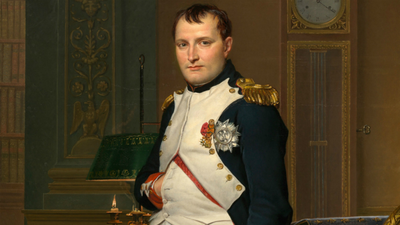
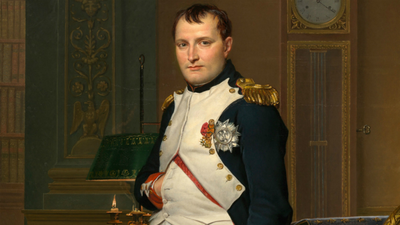
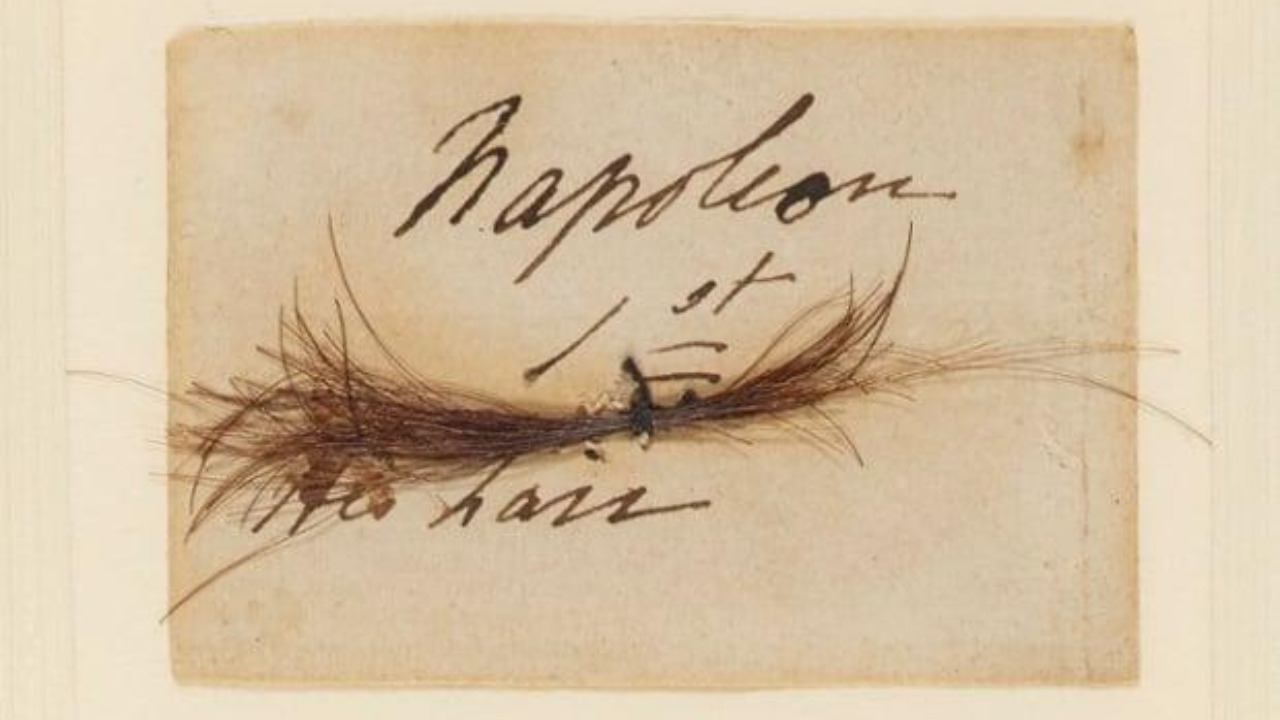
When Napoleon Bonaparte died in exile on St. Helena in 1821, he left behind much more than a military legacy and a political legend. In her will, she directed that her hair be preserved and fashioned into a bracelet, with the hair sent to her family members, including her mother, siblings, and son. That request reflects a widespread 19th-century practice of keeping hair as a personal memorial after death. Napoleon’s hair was cut off before the autopsy, and the hair that remained became some of the most interesting relics associated with him.

Napoleon Bonaparte’s last wish written in his will

Napoleon’s will makes the request unusually clear. It stated that her servant Marchand should preserve her hair and make it into a bracelet, pieces of which would be sent to close family members and other members of her inner circle, including Queen Marie-Louise, her mother, and her brothers and sisters, with a larger bracelet for her son. In other words, this was not some wild legend that developed later; This was a documented instruction in the emperor’s own testament.To modern readers, the idea of ​​preserving hair may seem untenable. In the Napoleonic world, this was a familiar act of mourning. Hair was often turned into souvenirs and “memento mori” items, a way to physically hold on to someone after death. Museums and historical collections still preserve hair remains belonging to Napoleon, including mourning rings and locks given to admirers shortly after his death.The request mattered so soon after his death. A 2004 medical history article states that because Napoleon wanted his hair distributed among family members, his head was shaved just before dissection so that the hair could be saved. This decision is one reason why so many authentic or purportedly authentic specimens survived into later centuries.

Napoleon's hair, taken from the battlefield of Waterloo. Photo: Royal Collection Trust

Napoleon’s hair, taken from the battlefield of Waterloo. Image: Royal Collection Trust

Hair later revealed a big secret

Napoleon’s preserved hair became important for another reason: it added to the long-running debate about how he died. Some researchers have argued that the arsenic levels in the hair samples point to poisoning, while others have said that the evidence does not support that conclusion and is consistent with environmental exposure in the early 19th century. The extensive historical record still leans toward stomach cancer as the most likely cause of death, although the poisoning theory remains part of the public’s fascination.

a small remnant of a much larger life

Napoleon’s request was probably not about vanity or immortality. This fits in very well with the mourning habits of that era: a fallen emperor wants to leave one last, physical connection to those closest to him. That’s why her hair continues to exist as both a sentimental memento and a historical artefact, bearing a strangely intimate trace of one of the most powerful figures in history.

Source link

IPL 2026: Tim David lands in trouble after obscene gesture during RCB’s dramatic win over MI Cricket News

IPL 2026: Tim David lands in trouble after obscene gesture during RCB's dramatic win over MI
Tim David and Rajat Patidar (PTI photo)

tim david He has been fined 30 per cent of his match fee and given two demerit points for the breach IPL Code of conduct during Royal Challengers Bangalore’s thrilling last-ball win over Mumbai Indians in Raipur. The incident occurred during emotional celebrations after RCB’s dramatic two-wicket win at the Shaheed Veer Narayan Singh International Stadium on Sunday. Chasing 167 on a difficult surface, Bengaluru sealed victory on the last ball after Rasikh Salam Dar took the winning second run.

Watch

Krunal Pandya played the match-winning innings and took RCB to the playoffs.

As the RCB dugout erupted in celebration, cameras captured Tim David making an aggressive hand gesture while celebrating Mumbai Indians’ exit from the tournament. The moment quickly went viral on social media amid the chaotic scenes following the finale. The IPL confirmed the punishment in an official media advisory on Monday. “Tim was found to have breached Article 2.6 of the IPL Code of Conduct, which deals with ‘using obscene, offensive or insulting gestures’,” the statement said. The Australian all-rounder accepted the penalty imposed by match referee Amit Sharma. “Tim pleaded guilty to the offense and accepted the punishment imposed by match referee Amit Sharma,” the advisory said. The controversy came after a match of the IPL 2026 season. RCB escaped a dramatic collapse after losing Virat Kohli for a golden duck and slipping to 47/3 in the powerplay. After this, Krunal Pandya scored a struggling 73 runs despite severe cramps, while Bhuvneshwar Kumar performed brilliantly with both bat and ball. After earlier taking 4 for 23 to dismantle Mumbai’s top order, Bhuvneshwar hit a crucial six in the final over to swing the match back in RCB’s favour. The win took RCB to the top of the IPL 2026 points table, while Mumbai Indians’ playoff hopes are officially over.

Source link

ED arrests former Bengal minister Sujit Bose in municipality recruitment scam case. india news

ED arrests former Bengal minister Sujit Bose in municipality recruitment scam case

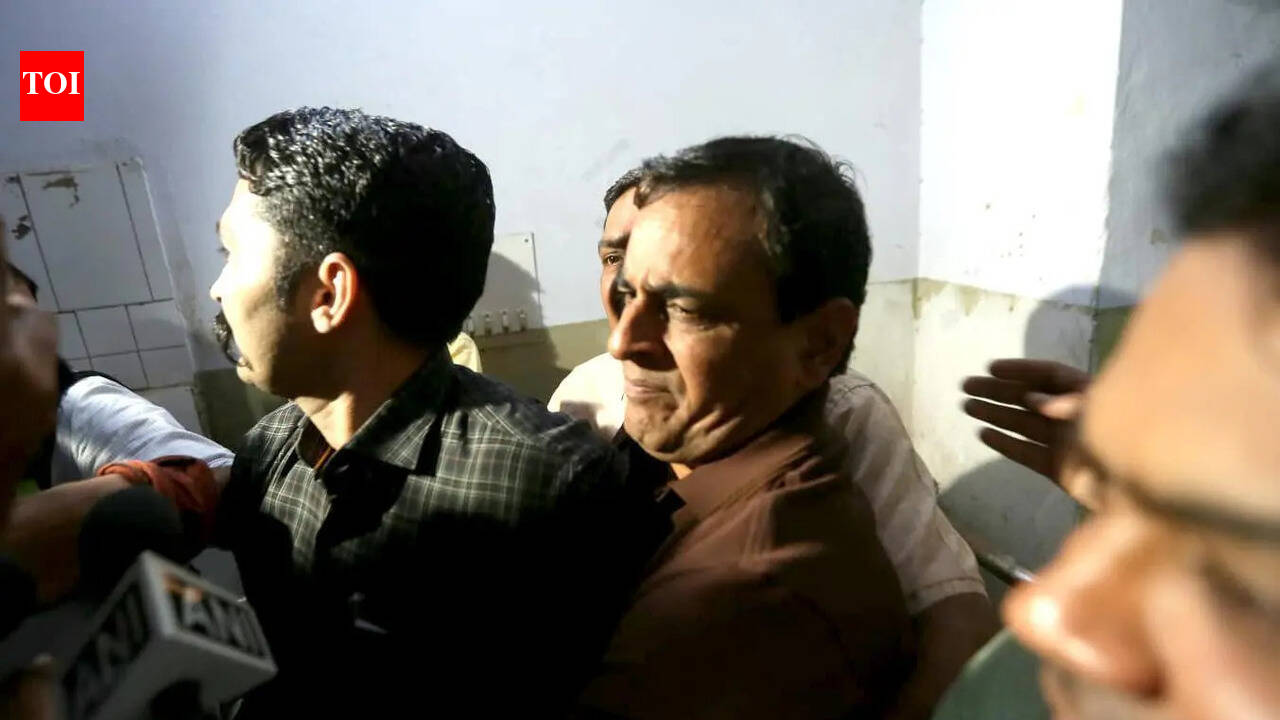
New Delhi: The Enforcement Directorate (ED) on Monday arrested former West Bengal minister and TMC leader Sujit Bose in the municipality recruitment scam.Days after TMC’s defeat in West Bengal, the ED questioned senior party leader Sujit Bose in connection with its probe into the municipality recruitment ‘scam’ case.Bose is accused of illegally recommending 150 candidates for various posts under the South Dumdum Municipality in exchange for financial benefits. Before the arrest, the ED traced the direct proceeds of crime in the form of flats acquired by him in return for providing municipality jobs to various persons. Additionally, the anti-money laundering agency also detected huge amounts of cash deposited in bank accounts under his control. The former TMC minister will be produced in the special court on Tuesday morning.Former fire minister Bose, who had lost in his stronghold Bidhannagar, was directed by the court to join the investigation.While CM Mamata Banerjee’s terms were marked by a series of alleged scams, one that stands out is the transaction of money related to recruitment in municipalities, ED sources told TOI, which had grown close to her nephew and Diamond Harbor MP Abhishek Banerjee, who is seen as Mamata’s presumptive successor, who was widely known as the CM-invader until the BJP’s landslide. Trinamool Congress’s ambition to prolong its rule has not been buried. Several money laundering cases being investigated by the ED, including that of political consultancy firm I-PAC in the coal smuggling ‘scam’, are set to return from Delhi to Kolkata.The investigation was stalled because ED officials in Kolkata were allegedly being “intimidated” and several accused refused to cooperate despite repeated summons. Sources said the ED may resume questioning of the accused including Abhishek, his wife Rujira, former DGP Rajeev Kumar, former Kolkata Police Commissioner Manoj Verma, then DCP Priyabrata Roy besides I-PAC chief Prateek Jain, from whose premises Mamata had taken files seized by the agency during the January 8 search operation in the presence of her police officers.

Source link

JJM scam: ACB arrests Joshi’s aide Badhaya from Delhi airport. jaipur news

JJM scam: ACB arrests Joshi's aide Badhaya from Delhi airport
Former minister Mahesh Joshi and his associate Sanjay Badaya appeared in the ACB court of Jaipur on Monday.

Jaipur: Rajasthan Anti Corruption Bureau has arrested Sanjay Bhatya, a close aide of former PHED Minister Mahesh Joshi. Delhi Airport In the early hours of Monday in connection with the alleged Rs 900 crore Jal Jeevan Mission scam. acb director general Govind Gupta Confirmed the arrest.Badhaya was returning from Thailand after attending a wedding when immigration officials alerted the ACB. He was taken into custody at around 2 am. The agency had issued a lookout notice against the accused and was searching for Joshi since his arrest on May 7.“He is suspected to be one of the masterminds behind the scam and has acted as a middleman in financial transactions, transfers, postings and tender-related activities. Badhaya had close links not only with Joshi but also with retired IAS officer Subodh Aggarwal, who was arrested in the same case on April 9 and is currently in jail,” said an ACB official.Badhaya was arrested earlier Enforcement Directorate Got bail from the Supreme Court on July 16, 2024 and later on December 17, 2024.Investigators alleged that Badhaya, who worked in an insurance company and was expected to earn around Rs 7 lakh annually by 2022, amassed substantial wealth during the period of the alleged scam. The ED investigation found that Badhaya and his wife were linked to a real estate firm that were allegedly involved in large financial transactions and attempts to encroach on Jaipur Development Authority land by using forged documents. If found guilty under the Prevention of Corruption Act, the accused can be jailed for up to 10 years.Joshi and Badhaya were produced in the ACB court in Jaipur on Monday. The agency sought police remand of three days for Joshi and five days for Badhaya. However, the court sent Joshi to judicial custody and granted three-day police remand for Badhaya.Outside the court, Joshi alleged that the investigation was being conducted due to political pressure. “Justice will be done. I have nothing to hide or disclose,” he told reporters. Joshi also objected to the lookout circular issued against Badhaya and said that Badhaya had traveled abroad after taking permission from the court.

Source link

Protecting life: Poland spends millions on an artificial island to protect rare birds and conserve wildlife world News

Protecting life: Poland spends millions on an artificial island to protect rare birds and preserve wildlife

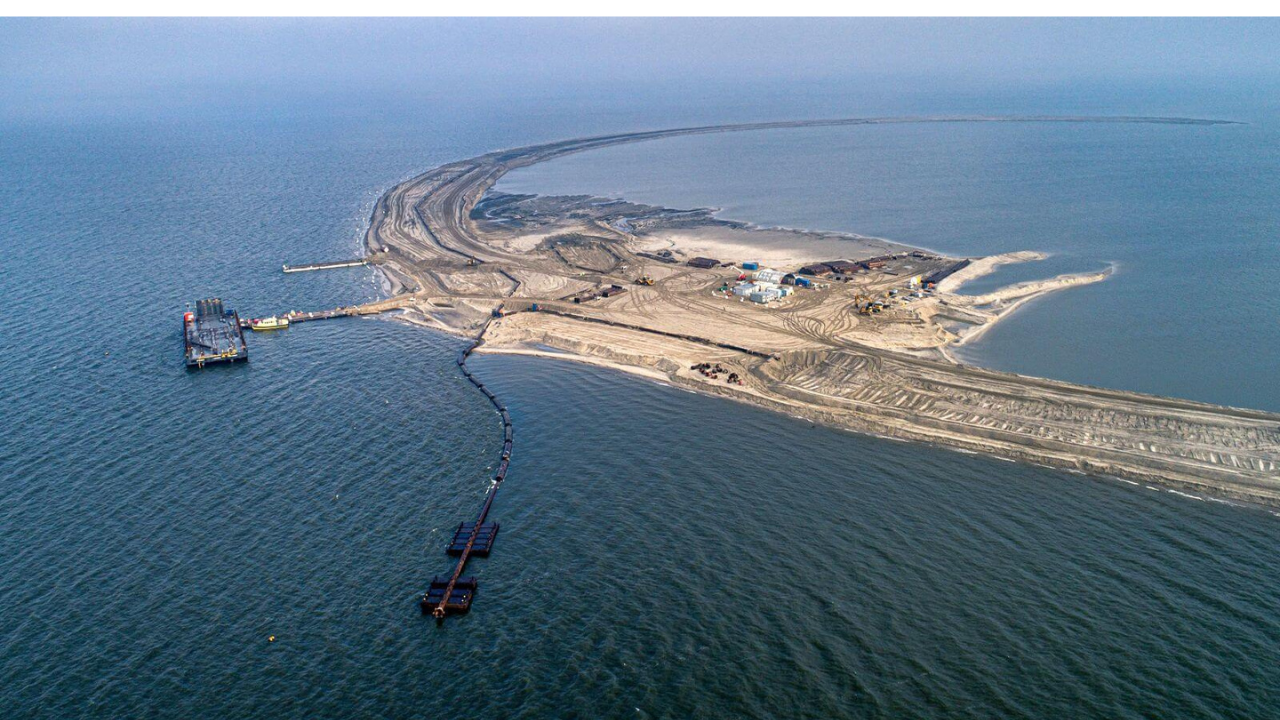
In an era when artificial islands are usually associated with luxury developments, airports or tourism projects, Poland created an island for an entirely different purpose. Emerging from the waters of the Szczecin Lagoon near Świnoujście, the artificial island known as Wispa Jana Zabawi-Wroblewskiego was created using sand dredged from a major shipping project. But instead of converting the new land into a commercial area, the authorities closed it to the public and turned it into a protected sanctuary for birds and wildlife. Today, scientists are watching as nature slowly reclaims the barren island, turning it into one of the Baltic region’s most unusual conservation experiments.

How the island was created to protect life and wildlife

The island was formed during the deepening of the Szczecin–Świnoujście Shipping Channel, a major infrastructure project designed to allow large cargo ships to travel more easily between the Baltic Sea and the port of Szczecin. As engineers excavated the lagoon floor, they removed millions of cubic meters of sand and sediment from the waterway.Rather than dispose of the material elsewhere, Polish authorities used it to build a new artificial island in the Szczecin Lagoon. The island was completed in 2021 and covers approximately 180 hectares, spanning approximately 1.2 kilometers at its widest points.What makes this island unusual is that it was never intended for tourism or development. Public access was restricted almost immediately after construction as the area was to serve as a protected habitat for rare water birds and delicate wetland ecosystems.

How the island was created to protect life and wildlife

Environmental experts saw the project as an opportunity to address some of the ecological disruption caused by dredging. Over time, the sandy terrain and shallow waters surrounding the island began to attract gulls, terns and migratory birds looking for undisturbed places to nest.Instead of roads, hotels or marinas, the island was deliberately left largely untouched so that wildlife could gradually establish itself.

A real-time ecological experiment

Scientists monitoring the island have described it as a rare example of ecosystem formation occurring almost from scratch. When the project was completed, the island consisted mostly of open sand and sediment. Since then, populations of plants, insects and birds have gradually begun to inhabit the area through a natural process called ecological succession.Researchers are particularly interested in how quickly birds adapt to newly created habitats in the Baltic region, where coastal ecosystems have long been transformed by industry, shipping and urban expansion.Since humans are largely absent from the island, scientists have a rare opportunity to observe how wildlife react when given protected space to evolve naturally.

Naming controversy around the island

The island also became the center of a local naming controversy. During a public vote, many residents supported the name “Brisna”, a historical Slavic name associated with the area. However, Polish authorities later officially named the island after Jan “Zabawa” Wroblewski, a participant in the Warsaw Uprising during World War II.Although the official name remains Wyspa Jana Zabawy-Wroblewskiego, many local and regional media outlets still continue to use Brysna unofficially.

Transforming infrastructure into conservation

The project is increasingly being seen as an example of how large infrastructure developments can incorporate environmental protection rather than simply reshaping landscapes for industrial purposes. While dredging operations often raise concerns about habitat destruction and ecological damage, Poland’s artificial island demonstrates how that impact can be redirected into conservation initiatives.Today, the island is closed to tourists and largely untouched by human activity. What began as a practical solution for excess dredged sand has evolved into a growing refuge for wildlife, where birds flocked long before any human visitors were allowed to set foot on the shore.

Source link