


Becoming a Permanent Resident in US: List of Top 10 Countries with Maximum Green Card Earnings

New green card The rule announced by the US Citizenship and Immigration Services has caused great confusion and concern among green card applicants, as according to the new rule one cannot be allowed to reside in the US before obtaining their permanent residence. They will have to go back to their country and file an application at the Consulate there. USCIS said that people who come to the US temporarily have until now been allowed to change their status in the US, which should not happen because their intentions do not match: they come temporarily but want to become permanent residents. Therefore, they should go back to their country with the intention of becoming permanent citizens and follow the proper procedure there.Experts say that this is not a change in the law but a minor change can have a big impact. Earlier, Donald Trump administration had imposed travel ban, visa ban on many countries but unlike previous immigration restrictions, this can affect any country. But the countries most affected are the ones that get the most green cards.
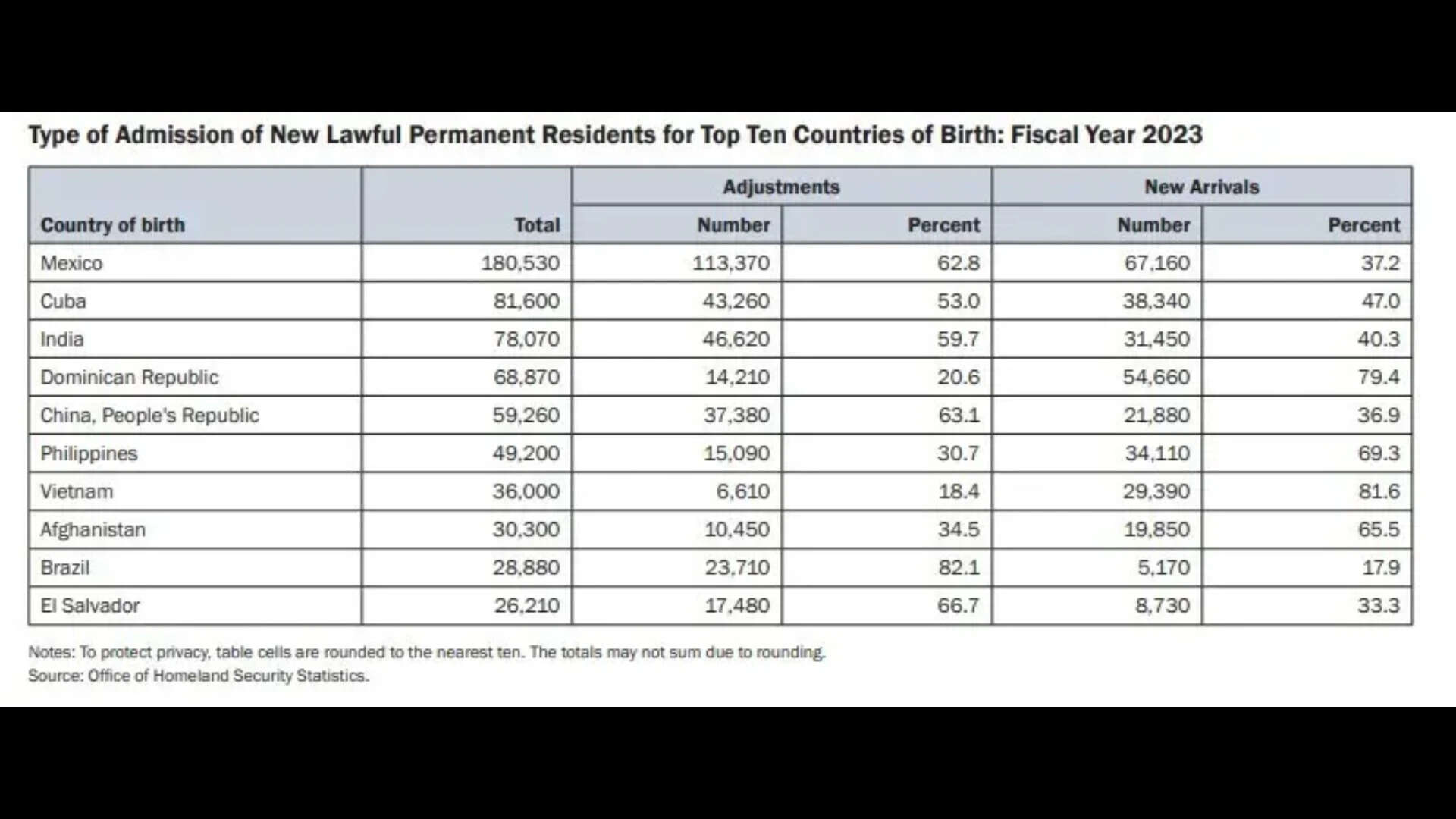
Countries that will get the most green cards in 2023.
List of top 10 countries with highest number of green card recipients
According to 2023 records from the Department of Homeland Security, the top 10 countries with the highest number of green cards are:Mexico: 180,530Cuba: 81,600India: 78,070Dominican Republic: 68,870China: 59,260Philippines: 49,200Vietnam: 36,000Afghanistan: 30,300Brazil: 28,880El Salvador: 26,210There are many types of green cards and India dominates employment-based green cards, while Mexico remains the largest overall source of family-based green cards. Cuba and Afghanistan rose sharply in the charts due to humanitarian and asylum-related routes.Mexico, India, the Philippines, and China all have long backlogs for their respective green cards, meaning applicants have to wait decades to receive their green cards. According to experts, the implementation of the new rule will vary from case to case.